Buyer Fit Snapshot
| Best fit | Custom Kraft Pouches Supplier projects where brand print, material claims, artwork control, MOQ, and repeat-order consistency need to be specified before quoting. |
|---|---|
| Quote inputs | Share finished size, material target, print colors, finish, packing count, annual reorder estimate, ship-to region, and any compliance wording. |
| Proofing check | Approve dieline scale, logo placement, barcode or warning zones, color tolerance, closure strength, and carton packing before bulk production. |
| Main risk | Vague material claims, crowded artwork, missing packing details, or unclear freight terms can make a low unit price expensive after revisions. |
Fast answer: Custom Kraft Pouches Supplier: Film, Print, MOQ, and Carton Packing should be specified like a repeatable production item. The safest quote records material, print method, finish, artwork proof, packing count, and reorder notes in one written spec.
Production checks before approval
Compare the actual filled-product size with the drawing, then confirm tolerance on folds, seals, hang holes, label areas, and retail display edges. Reserve space for logos, QR codes, warning copy, and material claims before decorative graphics fill the panel.
Quote comparison points
Review material grade, print process, finish, sampling route, tooling charges, carton quantity, and freight assumptions side by side. A quote is only useful when the supplier can repeat the same color, closure quality, and packing count on the next order.
If you are searching for a Custom Kraft Pouches supplier, the real question is not who can print a brown pouch and send it out. Many factories can do that. The harder question is who can build packaging that protects the product, runs through your filling line without drama, and still looks like somebody paid attention to the brand.
Buyers often begin with graphics. They choose the color, the logo placement, maybe a window shape, and only later discover that the inside structure does most of the heavy lifting. Kraft is the visible layer. The liner, barrier film, seal quality, and closure design decide whether snacks stay crisp, coffee keeps its aroma, or supplements hold shelf appeal long enough to matter. A pouch that looks premium but fails on performance is a costly ornament.
That split matters for two reasons: brand image and operations. A well-specified pouch can lift shelf presence. A bad one can slow filling, create seal failures, or force a reorder far earlier than planned. If you also need matching cartons or launch kits, our Custom Packaging Products page is a useful place to compare formats that work together.
What a Custom Kraft Pouches Supplier Actually Does
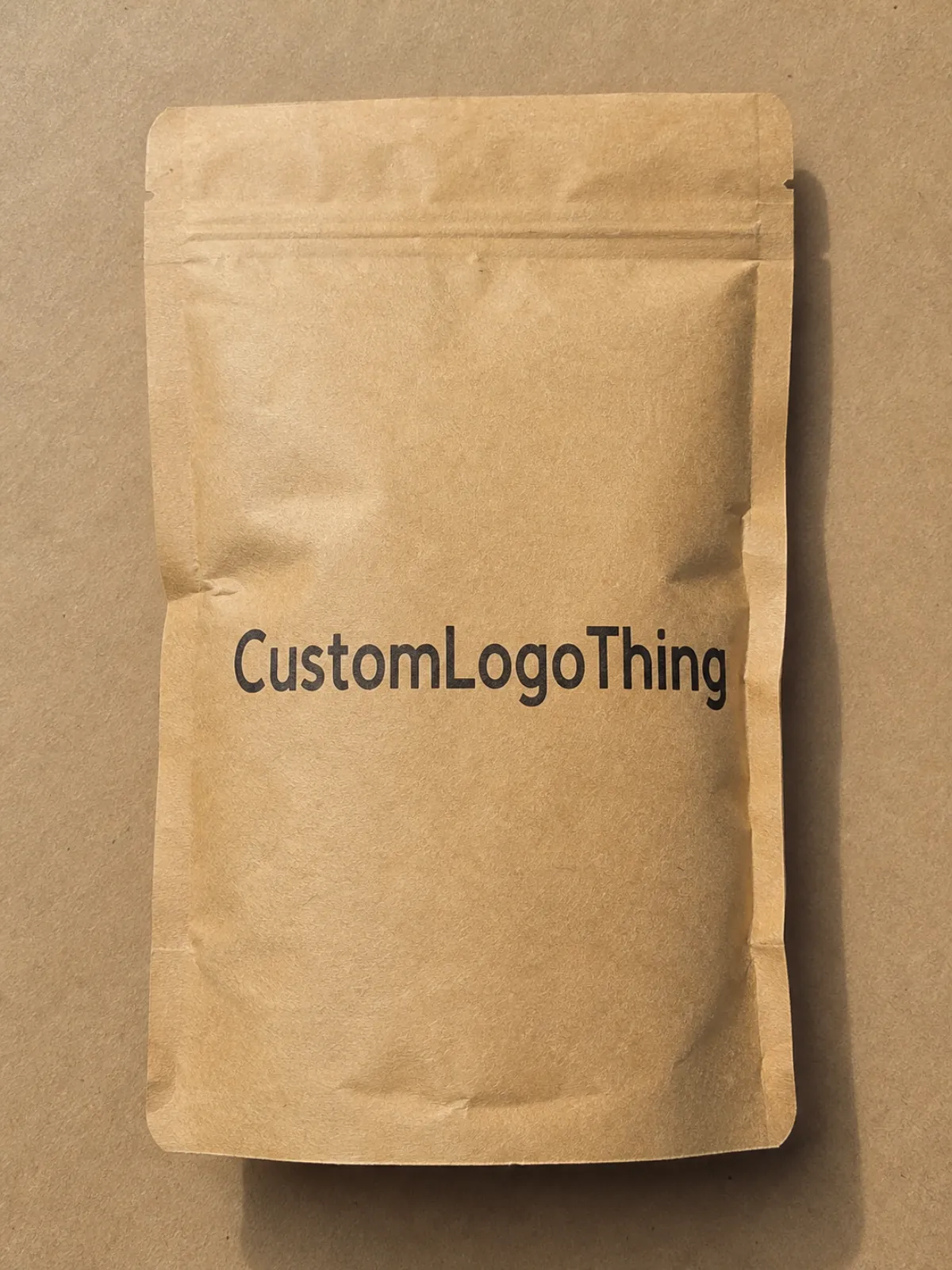
A custom kraft pouches supplier does a lot more than put a logo on paper. The supplier has to source the paper face, match it with the right film and barrier layer, convert roll stock into a finished pouch, control print registration, and make sure the final pack survives handling after it leaves the factory. Simple on a mockup. Far less simple in production.
The work starts with structure selection. Dry snacks, coffee, powders, pet treats, and supplements do not share the same packaging needs. Some products need strong moisture resistance. Others need oxygen protection, odor control, or a one-way valve. After that comes converting, the stage where the pouch shape is formed, the sides are sealed, and details such as zippers, tear notches, degassing valves, or clear windows are added. Printing and laminating may happen before or during that process, depending on the method.
In a real buyer scenario, the first sample is often wrong for a very ordinary reason: the team asked for a pretty pouch, not a pouch matched to product behavior. A roasted coffee brand may need a high-barrier inner layer and a valve because fresh beans release gas. A protein powder brand may care more about fast filling and clean zipper action than a fancy window. A snack brand may want moderate moisture resistance and a structure that stands upright in a retail tray. Same category, different engineering problem.
- Material sourcing: kraft paper, PET, PE, CPP, aluminum foil, or barrier films
- Printing: flexographic, gravure, or digital, depending on quantity and artwork complexity
- Lamination: bonding layers for print protection and barrier performance
- Finishing: matte, gloss, soft-touch, window patch, zipper, tear notch, degassing valve
- Quality control: seal integrity, size checks, print registration, scuff resistance
- Shipping support: carton packing, palletizing, freight documents, and export paperwork if needed
The gap between stock pouches and true custom packaging is larger than many teams expect. Stock pouches come in fixed sizes and structures, so they are often used with labels or limited over-printing. That is fine for quick launches or short runs. Custom Printed Pouches let you change dimensions, barrier level, closure type, and artwork placement. Once shelf life, fill speed, or shelf impact matters, that flexibility starts paying for itself.
Take coffee as an example. A brand may need a stand-up pouch with a valve and a high-barrier liner. A protein powder label may need a wider opening for faster filling and a stronger bottom seal. Dried fruit may call for a clear window plus moderate moisture resistance. Same family of packaging, different technical demands. A supplier worth using asks those questions early. A supplier that skips them is selling decoration, which is an expensive way to learn packaging basics.
Common pouch formats buyers actually use include stand-up pouches, flat-bottom pouches, side-gusset pouches, zipper pouches, windowed pouches, and tear-notch styles. Valves are common for coffee, while clear windows are often used for retail packaging that needs visual product cues. The right format is not a trend decision. It is a functional choice tied to filling, storage, display, and shipping.
“A pouch can look premium and still fail if the barrier is wrong. Buyers usually discover that after the launch order, which is the expensive time to learn it.”
If the supplier understands both package branding and line performance, you are already ahead of the average quote request. That difference separates a vendor from a packaging partner.
Custom Kraft Pouches Supplier Process and Timeline
The order path for custom kraft pouches usually follows the same sequence whether you are buying 5,000 units or 500,000. Inquiry, quote, spec review, artwork setup, proofing, sample approval, production, inspection, shipment. The labels shift. The pressure points stay familiar.
Incomplete specs cause the first delay. If the supplier does not know the product type, fill weight, shelf-life target, closure preference, and pouch size, the quote is little more than an educated guess. Better suppliers will ask for your current pack dimensions, desired thickness, print count, and any special features such as windows or valves. A physical sample from your current packaging or a competitor’s pack helps too. It gives the factory something real to measure instead of chasing assumptions.
Sampling usually moves faster than full production. A digital prototype or white sample may be ready in a few days to two weeks, depending on complexity. Production takes longer. Once artwork approval, plate or cylinder work for traditional printing, lamination, converting, inspection, and shipping are all added together, the practical timeline often lands between 15 and 35 business days after proof approval. Specialty finishes and peak-season workloads can stretch that further.
Delays tend to show up in the same places:
- Artwork changes after proof approval
- Missing dielines or unclear panel copy
- Window shape revisions
- Barrier upgrades after the quote is issued
- Sample testing that reveals seal or fit problems
- Factory congestion during busy production windows
Material choice also affects turnaround more than buyers expect. A basic kraft-and-PE structure is easier to source than a multi-layer high-barrier construction. Matte finish, soft-touch lamination, metallic effects, and clear windows all add steps. None of that is mysterious. It is simply more material handling, more coordination, and more chances for a deadline to slip if the spec changes halfway through.
Practical rule: build buffer time into the launch plan. If marketing says the product needs to ship in six weeks, the packaging order should begin well before that. Manufacturing does not work backward from your campaign calendar.
If you are packaging several SKUs or planning a broader launch, aligning pouch specs with cartons or labels can keep the line coherent. Our Custom Packaging Products page is helpful if you need matching retail packaging across multiple items.
Custom Kraft Pouches Supplier Cost, MOQ, and Quote Basics
Pricing for custom kraft pouches is driven by a handful of variables, and none of them are mysterious once you know where to look. Size, material structure, print colors, finish, closure type, quantity, and special features all change the number. A larger pouch with a matte finish, zipper, valve, and full-color print will cost more than a small one-color flat pouch. Not because suppliers enjoy pricing drama. Because material, setup, and machine time all have a cost.
Typical cost ranges vary widely, but rough expectations help. For simple structures at moderate quantities, unit prices may sit in the low tens of cents. Add more colors, higher barrier, windows, or premium finishes, and pricing can move into the higher cents or beyond. Low-volume orders usually carry much higher per-unit costs because setup work gets spread across fewer pieces. That is not a penalty. It is arithmetic.
For buyers, the surprise usually comes from the quote that looks low until the details are unpacked. A 30,000-piece coffee order with a valve, printed artwork, and a true high-barrier liner is not the same job as a 30,000-piece tea pouch with a simpler laminate. The difference may be only a few words on paper, but in production those words change film sourcing, lamination steps, and inspection requirements.
| Pouch Style | Typical Use | Relative MOQ Pressure | Cost Pressure | Watch-Out |
|---|---|---|---|---|
| Flat pouch | Samples, small snacks, sachets | Lower | Low to moderate | Less shelf presence and less fill volume |
| Stand-up pouch | Coffee, snacks, powders | Moderate | Moderate | Needs better bottom seal control |
| Flat-bottom pouch | Premium retail packaging | Higher | Higher | More material and more converting steps |
| Side-gusset pouch | Coffee, dry foods, pet items | Moderate to higher | Moderate | Can be slower to fill depending on equipment |
| Windowed pouch | Retail foods, teas, dry goods | Moderate | Moderate to higher | Window placement can complicate print layout |
MOQ is usually the first number that frustrates buyers, but the reason behind it is practical. Suppliers price around machine setup, waste, testing, and material minimums. Digital printing can handle lower quantities more comfortably than plate-based or cylinder-based processes. Traditional flexo or gravure becomes more economical at larger volumes. A 1,000-piece order may be possible, but the unit cost will not look friendly. It is not meant to.
Quote comparison only works if the specs are identical. I mean identical. Same pouch size, same material structure, same finish, same closure, same print method, same shipping terms. If one quote includes a high-barrier liner and the other uses a basic structure, the cheaper number is not a better deal. It is a different product.
Hidden costs matter too. Buyers often forget plates or cylinders, sampling charges, freight, duties, repacking fees, and artwork revisions. Some quotes also leave out delivery to the final destination, which makes the “cheap” option more expensive later. Ask for landed-cost pricing, not just a unit rate. That is the number that actually helps with budgeting.
Where should you spend more? Barrier performance, print consistency, and a structure that protects shelf life deserve the budget. Where can you save? Simplify the print count, avoid unnecessary special finishes, and choose a pouch format that fits your existing filling setup. Paying extra for cosmetic effects that do not sell more product is just branding vanity wearing a spreadsheet.
Key Quality Factors That Decide Shelf Life and Print Results
The kraft layer on the outside does not tell the full story. The inner layer decides whether the pouch truly protects the product. Paper gives the pack its natural look, which is useful for brand positioning. The barrier film inside controls moisture, oxygen, light, and odor transfer. If that layer is wrong, the outside can look beautiful while the product quietly deteriorates.
For snacks, coffee, pet food, and supplements, shelf life depends on the right balance of barrier and seal quality. Coffee often needs strong oxygen control and sometimes a valve. Snacks may need moisture resistance. Pet treats may need odor protection and puncture resistance. Supplements can be sensitive to light and humidity. No single structure solves all of that. The supplier should recommend the material based on the product, not force the product to fit a random structure.
Seal strength matters more than many teams realize. A pouch can pass visual inspection and still fail in distribution if the seal peels, leaks, or splits under pressure. Puncture resistance is equally important if the fill contains sharp edges, irregular particles, or heavier weights. Drop durability matters because retail packaging gets handled, stacked, and tossed around more than mockups ever suggest.
On the print side, look at registration, ink consistency, and scuff resistance. A clean design can lose credibility quickly if the logo drifts, the colors shift between runs, or the surface rubs during transit. Matte finishes hide fingerprints well but can show abrasion differently than gloss. Soft-touch can feel premium, though it is not always the best choice for damp environments or rough distribution chains.
If you are making sustainability claims, be precise. A kraft outer layer does not automatically mean the pouch is recyclable or compostable. The full structure matters, including adhesive, liner, zipper, and window materials. For responsible sourcing and performance guidance, it helps to check standard references such as the FSC standards for fiber sourcing and the ISTA test methods used for package performance testing.
Testing is not optional if the product matters. Ask for product-filled samples before a full run, then check seal behavior, zipper closure, odor retention, and how the pouch handles a drop or squeeze test. A pretty pouch that fails on the line is just expensive paper with confidence problems.
For food and supplement packs, ask your supplier whether the inks, adhesives, and inner structure suit your intended use. If the pack touches food directly, that distinction matters. If you are selling through retail channels, also think about how the pouch looks after shipping. Retail packaging has to survive both the shelf and the trip to the shelf. That is a very different test.
Step-by-Step: Choosing the Right Supplier for Your Product
Start with the product, not the trend. What is being packed? How heavy is it? How long does it need to stay fresh? Will it sit on a shelf, ride in a subscription box, or spend time in a freezer? Those questions shape the spec. A supplier who starts talking about foil, windows, and matte finishes before asking about the product is guessing. Guessing is a poor procurement method.
Build a shortlist around actual capability. Do they make the pouch style you need? Do they offer the print method that matches your quantity? Can they provide barrier options, spec sheets, and proofing support? Can they help with retail packaging requirements if your product goes through a distributor or chain-store review? Those questions matter more than polished sales language.
Then request samples. Not just attractive samples. Ask for the closest material structure they can offer, plus a spec sheet that lists thickness, barrier layers, closure type, and finishing. Handle the sample. Feel the stiffness. Check whether it stands up. Open and reseal it if there is a zipper. If possible, test it with the actual product. A pouch that fills beautifully with one powder may be awkward with another.
Communication speed matters, though accuracy matters more. A quick reply helps, but if the supplier keeps changing specs or answering loosely, the time savings disappear. The best suppliers confirm changes in writing and flag early when a requested feature affects cost or timeline. That sort of communication protects launches.
One practical detail that buyers often miss: your best supplier is not always the one with the lowest MOQ. If a vendor can only hit a low minimum by using a less suitable laminate, the order may create more problems later. A better supplier will explain that tradeoff plainly and let you decide whether the short-term savings are worth the performance risk.
Here is a practical decision framework:
- Define the product requirements and the shelf-life target.
- Choose the pouch format that fits filling and display needs.
- Compare two or three suppliers with matching specs only.
- Review samples with your actual product, not just by eye.
- Pick the supplier that offers the best total value, not the lowest headline number.
Total value means unit cost, freight, lead time, communication, and risk. The cheapest quote with weak follow-through is not cheap. It is a delay in cleaner typography. If you need supporting formats to keep the launch consistent, our Custom Packaging Products page can help you line up pouch, box, and branding choices without making the order feel stitched together from three different vendors.
From a packaging buyer’s point of view, the best supplier is the one that makes the spec easier to execute, not harder. That often means choosing a vendor with fewer surprises and better documentation, even if the quote is not the absolute lowest.
Common Mistakes Buyers Make with Kraft Pouch Orders
The first mistake is buying on appearance alone. The pouch looks natural, the mockup looks premium, and everyone nods in the approval meeting. Then the product arrives with the wrong barrier and the wrong seal performance. Freshness drops, and the launch team gets a lesson in packaging reality. Branding does not replace product protection.
The second mistake is comparing quotes that are not truly comparable. One supplier quotes a basic kraft laminate. Another quotes a high-barrier structure with a zipper and valve. The cheaper quote wins the spreadsheet contest and loses in the real world. If the specs are not the same, the comparison is fiction.
The third mistake is ignoring equipment compatibility. Buyers sometimes approve a pouch that looks ideal but does not fit the filling machine, the seal width, or the intended fill weight. That leads to slow filling, messy seals, or rejected inventory. The pouch has to work on your line, not just in a mood board.
The fourth mistake is treating lead time like a suggestion. It is not. Once art is approved and production begins, revisions get expensive. If a launch has retail deadlines, buyer presentations, or seasonal windows, the packaging order needs buffer time. Otherwise everyone ends up pretending the factory can speed itself up by wishful thinking.
The fifth mistake is skipping real testing. A sample that looks good on a desk can fail when it is filled, stacked, dropped, or exposed to humidity. Test the product-filled pouch before mass production. Check the seal, the zipper, the print surface, and how the package behaves after shipping vibration or compression. If the product is temperature-sensitive, test that too.
Other common misses include:
- Forgetting to confirm exact dimensions and fill tolerances
- Leaving out barcode placement or regulatory copy until late
- Using a window where product odor or barrier needs make it risky
- Choosing a finish that scuffs too easily for the shipping route
- Assuming sustainability language is valid without checking the full structure
None of these mistakes is rare. They happen because packaging feels simple until it is time to buy it. A custom kraft pouches supplier should help reduce those risks, not hide them behind a polished sample photo.
Expert Tips and Next Steps Before You Request a Quote
If you want cleaner quotes, make the supplier’s job easier. Prepare a one-page spec sheet before you ask for pricing. Include product type, target fill weight, pouch style, dimensions, finish, print count, barrier needs, closure type, and desired quantity. If you already have a rough shelf-life expectation, include that too. The more exact the brief, the less pointless back-and-forth you get.
Decide which parts of the spec are fixed and which can move. Maybe the pouch size is locked because of the filling machine, but the print finish can change. Maybe the barrier is non-negotiable, but the window size can shift. Suppliers can quote far more cleanly when they know the hard limits. That also makes comparison easier on your side.
Send visual references. Good ones, not random screenshots. Photos of your current packaging, competitor packs, and the filling setup can show the supplier problems that numbers alone will miss. If you are planning a broader rollout across multiple SKUs, it may be worth checking how the pouches coordinate with other branded packaging formats so the line feels deliberate rather than assembled in a rush.
Ask three specific questions before you approve anything:
- What exact material structure are you recommending, and why?
- What is the sample path, and how long does each step usually take?
- What is the landed cost, including freight and any setup charges?
Those questions force clarity. They also reveal whether the supplier knows the business or only knows how to send a quote template. You want a partner who can explain tradeoffs in plain language: better barrier versus lower cost, premium finish versus longer lead time, lower MOQ versus higher unit price. That is what useful packaging advice sounds like.
One more thing. Do not try to optimize everything at once. If you want the lowest cost, the fastest timeline, the strongest barrier, the most premium finish, and the smallest MOQ, you are asking for a fantasy, not a manufacturing order. Pick the top two priorities and build around them. That is how smart buying works.
Before you commit, compare two or three suppliers side by side. Look at spec accuracy, sample quality, responsiveness, and landed cost. Then move forward with the custom kraft pouches supplier that fits both the product and the schedule. That is usually the one that causes the fewest surprises, which is what good procurement looks like in the real world.
Frequently Asked Questions
What should I ask a custom kraft pouches supplier before ordering?
Ask what material structure they recommend for your product’s freshness, shelf life, and handling. Confirm MOQ, sample timing, production lead time, and what is included in the quote. Request proofing and test options so you can check fit, seal, and print before mass production. If the answer feels vague, keep asking until it does not.
How much do custom kraft pouches usually cost?
Cost depends on pouch size, print complexity, material structure, finishes, and order volume. Unit price usually drops as quantity rises, but setup and freight can change the real landed cost. Always compare quotes with identical specs so you are not comparing apples to a very different apple.
What is a realistic MOQ for a custom kraft pouches supplier?
MOQ varies by print method and pouch style, with smaller runs usually available at a higher unit cost. Digital printing can often support lower quantities than traditional plate-based printing. If your volume is uncertain, ask whether the supplier supports phased orders or multi-SKU programs.
How long does production take with a custom kraft pouches supplier?
Sampling is usually faster than full production, especially when artwork and specs are already finalized. Lead time depends on material sourcing, print method, finishing, and current factory workload. Add buffer time for shipping, approvals, and any revision rounds because delays usually stack.
Can custom kraft pouches be recycled or composted?
It depends on the full structure, not just the kraft outer layer, so paper-looking pouches are not automatically recyclable. Ask the supplier for the exact material breakdown and any local recycling guidance for your market. If sustainability claims matter, verify them before printing them on the pack. Guessing is expensive.
Choosing a custom kraft pouches supplier is really about matching the pack to the product, the line, and the shelf. Get the barrier right, confirm the timeline, compare quotes with the same specs, and test before you commit. Do that, and the pouch stops being a headache and starts doing its actual job.

