Buyer Fit Snapshot
| Best fit | Custom Kraft Shipping Envelopes projects where brand print, material claims, artwork control, MOQ, and repeat-order consistency need to be specified before quoting. |
|---|---|
| Quote inputs | Share finished size, material target, print colors, finish, packing count, annual reorder estimate, ship-to region, and any compliance wording. |
| Proofing check | Approve dieline scale, logo placement, barcode or warning zones, color tolerance, closure strength, and carton packing before bulk production. |
| Main risk | Vague material claims, crowded artwork, missing packing details, or unclear freight terms can make a low unit price expensive after revisions. |
Fast answer: Custom Kraft Shipping Envelopes: Material, Print, Proofing, and Reorder Risk should be specified like a repeatable production item. The safest quote records material, print method, finish, artwork proof, packing count, and reorder notes in one written spec.
Production checks before approval
Compare the actual filled-product size with the drawing, then confirm tolerance on folds, seals, hang holes, label areas, and retail display edges. Reserve space for logos, QR codes, warning copy, and material claims before decorative graphics fill the panel.
Quote comparison points
Review material grade, print process, finish, sampling route, tooling charges, carton quantity, and freight assumptions side by side. A quote is only useful when the supplier can repeat the same color, closure quality, and packing count on the next order.
A brand can lose real money on custom kraft shipping envelopes if the fit is off by half an inch. The damage is rarely dramatic on a single order; it shows up in small leaks, wasted filler, extra packing seconds, and the occasional damaged return that should never have happened. The flip side is just as real. A well-spec'd mailer can cut wasted air, shorten pack-out time, and reduce carrier costs without making the shipment feel cheap. That is why custom kraft shipping envelopes deserve more attention than they usually get in packaging meetings. They sit at the crossroads of product packaging, brand presentation, and logistics, and those little crossroads are where profit often gets decided.
From a buyer's point of view, that is the interesting part. A smart paper mailer can protect flat goods, present better than a generic brown envelope, and still keep material use under control. For some SKUs, custom kraft shipping envelopes are a cleaner alternative to Custom Poly Mailers; for other products, the job still belongs to Custom Shipping Boxes. I have watched teams try to force a mailer onto a product that really wanted a carton, and the first batch usually tells the truth fast. The reverse happens too: a box can be pure overkill for a thin, stable item. The real skill is knowing which format earns its place.
If you are evaluating custom kraft shipping envelopes for ecommerce shipping or retail packaging inserts, start with the item, not the supplier brochure. Size, stock weight, closure style, print coverage, and carrier behavior all matter. Once those variables are clear, the conversation gets a lot less fuzzy. And, frankly, less annoying. A good spec sheet saves everyone from guessing.
What Custom Kraft Shipping Envelopes Are and Why They Matter
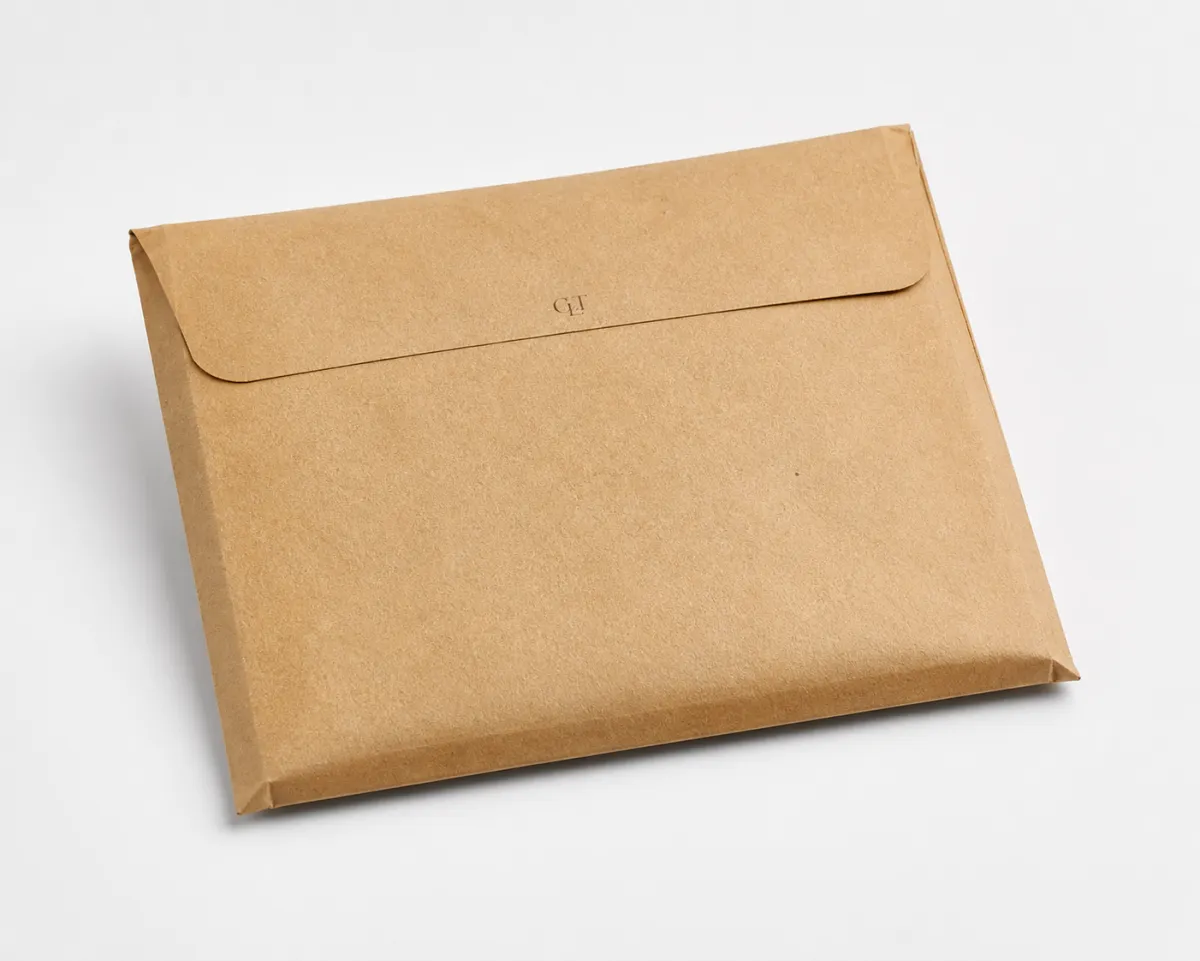
Custom kraft shipping envelopes are paper-based mailers built to carry flat or lightly padded items while presenting a cleaner, more branded finish than an off-the-shelf brown envelope. In practice, they usually combine kraft face stock, a pressure-sensitive or peel-and-seal closure, and a size that fits the packed item closely enough to prevent bounce without crushing the contents. They are simple objects. The effect can be surprisingly large.
Picture a subscription brand shipping folded apparel in a small carton because that is how the process started years ago. They are paying for extra air, extra packing time, and, in many cases, a dimensional-weight penalty that has nothing to do with the product itself. A slimmer mailer may not fit every SKU, but for the right one it can reduce waste immediately. That is where custom kraft shipping envelopes stop being a supply item and start acting like a margin tool.
The storage benefit is easy to overlook. Boxes eat floor space in a warehouse or kitting area, and order fulfillment teams feel that every day. Stacked mailers are easier to stage, easier to count, and easier to move. For brands that run frequent drops or seasonal bursts, that matters more than the marketing team may realize. It also makes packaging standardization easier across product lines, which is a nice side effect when the catalog keeps growing.
There is a branding angle too. Generic mailers do the job, but they do little for package branding or repeat recognition. Custom kraft shipping envelopes can carry a logo, a return address, a short brand line, or even a QR code that points customers to reorder pages or care instructions. That is not flashy. It is useful. Good branded packaging should not scream; it should make the shipment feel intentional and trustworthy.
Here is the unexpected connection: a small reduction in envelope weight or dimensions can move the economics when multiplied across thousands of shipments. A difference of a few cents per parcel may not sound dramatic, yet across 10,000 units it becomes a line item with teeth. If you save $0.03 on material and another $0.02 on packing labor, that is $500. If the savings reach $0.07, you are looking at $700. Suddenly the "minor" packaging decision does not look minor at all.
If a package saves one handling step and one carrier bracket, it is not a cosmetic change anymore. It is a logistics decision.
That is why the conversation should not be about "brown versus branded." It should be about fit, protection, throughput, and the kind of product packaging that supports the business model instead of complicating it. Custom kraft shipping envelopes can do that, but only if the structure matches the use case.
How Custom Kraft Shipping Envelopes Work in Transit
In transit, custom kraft shipping envelopes behave very differently from rigid cartons. They are lighter, flatter, and easier to sort through carrier networks, but that does not mean they can be flimsy. A good build uses kraft face stock with enough fiber strength to resist tears, a closure that stays shut under pressure, and, in some cases, internal reinforcement at the seams or opening edge. When the contents have sharp corners, a weak seam is usually the first failure point.
The anatomy matters. A basic envelope may use a single kraft layer and a peel strip. A stronger version may add gussets, a reinforced lip, or a secondary liner to stabilize the contents. For lighter products, that extra structure is not always necessary. For items that are likely to rub against conveyor bends or get stacked under other parcels, the extra reinforcement can be the difference between a clean delivery and a damaged complaint. That is the part people do not see in a mockup.
Custom kraft shipping envelopes are best suited to specific product types: folded apparel, documents, magazines, books with modest thickness, samples, flat inserts, and certain ecommerce shipping orders that do not need the rigidity of a box. If the item is bulky, fragile, or moisture-sensitive, the mailer may stop being the right tool very quickly. A paper envelope is not magic. It is a material with strengths and limits, and the limits matter.
Custom printing changes the experience without changing the physics. Logo placement on the front panel, a small repeat pattern, or a discreet interior message can improve presentation without interfering with carrier labels or handling instructions. The most effective branding usually stays disciplined. One or two colors, clear typography, and a strong return address block often look better in real-world use than a crowded layout. That is a common lesson in packaging design: more decoration does not always mean more value.
For teams comparing formats, it helps to think about how the package travels, not just how it looks on a table. A carton protects by structure. A mailer protects by fit and fiber strength. If the product slides around, the wrong package will telegraph that movement throughout the delivery path. With custom kraft shipping envelopes, the best results come when the packed item stays stable enough to survive sorting, stacking, and the last-mile handoff.
Industry testing logic reinforces that point. Carrier simulations and handling tests used in ASTM and ISTA frameworks are built around compression, vibration, drop exposure, and repeated handling. If the envelope cannot survive a realistic test sequence, it will not perform reliably in distribution. That is also why many packaging teams keep samples on hand and test them with real product, not just empty structures. You can read more about packaging resources at packaging.org and distribution testing standards at ista.org.
Key Factors That Shape Strength, Branding, and Sustainability
Three things shape the final outcome more than anything else: fit, construction, and print. Get those right, and custom kraft shipping envelopes usually perform well. Miss one of them, and the package can feel compromised even if it looks fine on a proof. The tricky part is that each variable affects cost, appearance, and logistics at the same time.
Fit first, always
Size is the first technical decision. A snug envelope helps keep the product from bouncing, while too-tight dimensions can stress the seams or corners. Teams often quote to product dimensions rather than packed dimensions, which is a mistake. The packed size should include inserts, tissue, protective sleeves, or any reseal feature that changes the envelope thickness. With custom kraft shipping envelopes, an extra few millimeters can be the difference between a clean seal and a split edge.
I once watched a brand approve a mailer based on the bare product size, then discover that the folded insert pushed the thickness just enough to wrinkle the seal line. The fix was not expensive, but the delay was. That kind of miss is avoidable. Measure the real shipping package, not the item in isolation.
Construction choices that change performance
Paper weight matters, but not in isolation. A heavier gsm or caliper can improve puncture resistance, yet the real question is whether the added stock solves an actual handling problem. Recycled content may be important for brand positioning, but recycled fiber can behave differently from virgin kraft in certain constructions, especially around stiffness and scuff resistance. Reinforced seams, gussets, and tear-strip features also change how the mailer behaves. The best spec is usually not the heaviest one; it is the one that survives the route with the least waste.
For brands comparing custom kraft shipping envelopes with Custom Printed Boxes, the tradeoff is straightforward. Boxes bring structure. Mailers bring speed and lower material use. If your product needs crush resistance, boxes win. If it is flat, light, and stable, mailers may be the smarter investment. That is not a branding decision first. It is a product-fit decision first.
Closure and user experience
Seal style affects both security and fulfillment speed. Peel-and-seal closures are common because they are fast, consistent, and easy to teach. Self-seal options can work well in high-volume packing lines. Tear strips help the customer open the package cleanly, while resealable closures add return flexibility or multi-use convenience. Each one adds a different layer of experience. For custom kraft shipping envelopes, the choice should match the return policy, the opening experience, and the risk level of the contents.
Printing and brand control
Print coverage changes the package from a shipping supply into branded packaging. One-color logos are usually the most efficient. Multi-color graphics can look strong, but they may raise setup complexity and push lead time. White ink on kraft is possible in some production environments, though the coverage and opacity need to be tested carefully. Interior printing can create a nice reveal, but it should not crowd out practical information such as care instructions, recycling guidance, or order details.
Sustainability claims should stay accurate. Many custom kraft shipping envelopes can be recyclable if they are made from paper-based materials and avoid hard-to-separate plastic layers, but that depends on the complete construction. Adhesive strips, coatings, and mixed materials can change the disposal path. FSC certification, where applicable, can support fiber sourcing claims, and it is better to say exactly what the material is than to use vague environmental language. If the brand wants to support responsible sourcing, the FSC system is one place to verify claims and terminology.
Teams often overcomplicate the brief. They ask for a sustainable mailer, then add coatings, mixed substrates, and heavy graphics that make recycling harder. A cleaner spec is usually the smarter one. Custom kraft shipping envelopes should support the story the brand wants to tell, not make that story harder to defend. That can feel kinda boring on a sample board, but boring is often what ships best.
Custom Kraft Shipping Envelopes: Cost, Pricing, and MOQ
Cost is where enthusiasm meets arithmetic. Custom kraft shipping envelopes can be economical, but only if the spec is controlled. Size, paper weight, number of print colors, closure style, coatings, and reinforcement details all move the price. MOQ matters too, because a lower quantity spreads setup, proofing, and production overhead across fewer units.
For a mid-size run, a simple one-color build might land in the range of $0.20-$0.35 per unit at 5,000 pieces, depending on size and stock. Heavier constructions, more coverage, or specialty closures can move the unit cost into the $0.35-$0.70 range. At lower quantities, especially under 1,000 pieces, the unit cost can rise sharply because fixed setup costs do not shrink just because the order is smaller. That is normal. It is also why comparing quotes without matching specs creates false savings.
The real number to watch is landed cost. Freight, sampling, tooling, storage, and pack-out configuration can change the total spend enough to overturn the headline quote. Two suppliers can both quote custom kraft shipping envelopes at a similar unit price and still land miles apart once one includes inland freight, proof charges, or a higher minimum order requirement. A buyer who compares only unit cost can get the wrong answer quickly.
| Build Type | Typical Unit Cost | Best For | Tradeoff |
|---|---|---|---|
| Plain kraft mailer | $0.18-$0.30 | Low-risk flat goods, internal shipments, basic ecommerce shipping | Less branding impact, fewer customization options |
| One-color branded mailer | $0.20-$0.35 | Most retail packaging and direct-to-consumer orders | Requires artwork approval and print setup |
| Reinforced or heavier stock | $0.30-$0.55 | Books, samples, items with sharper edges | Higher material cost and slightly more shipping weight |
| Low-MOQ pilot run | $0.60-$1.20 | New SKUs, seasonal drops, product testing | Useful for validation, expensive at scale |
That table is not a promise. It is a decision lens. If a brand is shipping thousands of units, paying more for stronger custom kraft shipping envelopes may still be cheaper than absorbing returns, damage, or repacking labor. If the volume is low and the product is stable, a simpler build can protect margin without sacrificing presentation.
Quote comparisons also need clean inputs. Ask every vendor to price the same size, the same stock, the same print area, the same closure type, and the same delivery destination. Otherwise, you are comparing apples to a fruit basket. Some suppliers bundle setup fees into the unit price. Others separate them. Some will quote ex-works, others delivered. The differences are not cosmetic; they affect purchasing decisions and planning.
The smartest buyers treat custom kraft shipping envelopes like a controllable packaging category, not a one-time expense. If the design reduces pack time by ten seconds per order and improves dimensional efficiency, that value can outweigh a slightly higher unit cost. That is the math worth doing.
Custom Kraft Shipping Envelopes: Process, Timeline, and Lead Time
Production works best when the brief is tight. The usual path for custom kraft shipping envelopes starts with a product review, then a dieline or spec sheet, artwork prep, proofing, sampling, the press run, finishing, packing, and shipment. Each step is predictable on paper. In real projects, the delays usually come from artwork revisions, unclear dimensions, and late decisions about closure style or print coverage.
A simple run can often move in 12-15 business days after proof approval, assuming materials are available and the artwork is ready. More complex builds, specialty finishes, or low-MOQ custom jobs can take longer, often 20-30 business days once sampling and freight are included. That range is not unusual. It shows the process doing what it should: checking the product before it enters order fulfillment.
Lead time stretches fast when teams change the size after quoting or skip the proof review. The problem is not just the delay. A revised dimension can change the carton count, packing rhythm, and storage plan for the whole launch. Custom kraft shipping envelopes are usually easiest to manage when the pack size is finalized before print approval. If the product is still moving, the packaging should wait.
A practical ordering sequence helps:
- Request samples or a spec test package first.
- Confirm the packed dimensions, not just the product dimensions.
- Lock the closure style and stock weight.
- Approve the artwork proof only after the dieline is correct.
- Schedule production, then book freight with arrival time in mind.
That sequence sounds basic, but it prevents avoidable friction. It also makes it easier to coordinate custom kraft shipping envelopes with other packaging components such as inserts, labels, or a companion carton. Some brands discover that the right mailer can eliminate the need for a second packaging layer. Others realize that the mailer should sit alongside a more rigid outer pack. Either way, planning backward from inventory arrival is cleaner than scrambling after the product is already ready to ship.
When timelines matter, the safest move is to work backward from launch or replenishment, then add buffer for sample approval and inbound freight. If the envelopes must support a seasonal drop or a promotional kit, the schedule should be even more conservative. The best projects do not race the calendar. They respect it.
Common Mistakes When Ordering Custom Kraft Shipping Envelopes
The most common mistake is also the easiest to miss: buyers spec the envelope to the product dimensions instead of the packed dimensions. That ignores tissue, inserts, sleeves, and any protective layer that changes the thickness or shape. With custom kraft shipping envelopes, the difference between "fits" and "fits well" can be very small. Measure the real shipping package, not the item on its own.
Another frequent error is choosing the cheapest stock without testing it. A lower-priced envelope may look fine in a quote but fail under pressure from corners, conveyor bends, or stacking. Seam strength, scuff resistance, and moisture behavior matter in actual transit. The envelope that saves a cent but produces damage is not a savings. It is deferred cost.
Print design can go wrong too. Some teams overdesign the surface until the branding competes with the shipping label, recycling icons, or handling instructions. That creates friction for carriers and customers. Good packaging design should support readability. It should not force people to hunt for the label or decode a busy visual system. Custom kraft shipping envelopes work best when the brand presence is clear, restrained, and easy to process.
Transit conditions are often underestimated. Mailers do not travel in a vacuum. They hit conveyor curves, get pressed in stacked cartons, slide across bins, and endure more handling than most buyers imagine. If the envelope is built for a desk photo rather than a distribution network, it will show. This is where products that seem fine in a sample can disappoint in a real route test.
There is also a quantity-break trap. A small unit discount can disappear once freight, setup fees, or storage costs are added back in. Teams sometimes chase a lower per-piece number and end up paying more overall. Comparing custom kraft shipping envelopes across suppliers means comparing the full delivered economics, not just the quoted print price. That includes sampling, timing, and any cost associated with over-ordering to hit the next tier.
One more issue: picking paper based on assumption instead of data. If a pack passes a drop test in an empty state, that means very little. Test the actual item, with the actual insert, under the actual closure conditions. A practical test can reveal corner pressure, seam stress, and surface wear that no spec sheet will catch on its own.
Expert Tips and Next Steps for Custom Kraft Shipping Envelopes
The best way to approve custom kraft shipping envelopes is to run a small, realistic test matrix. Use the actual product, not a placeholder. Check drop behavior, abrasion, humidity exposure, and label adhesion. If the envelope is supposed to replace a carton, test it under the same route assumptions. A five-minute lab test can save weeks of customer service cleanup.
Create a one-page spec sheet before you request quotes. Keep it simple:
- Finished dimensions and packed thickness
- Kraft stock preference and target gsm or caliper
- Seal type and whether a tear strip is needed
- Print count, ink colors, and logo placement
- Target quantity and backup quantity tier
- Delivery window and ship-to location
That document helps suppliers quote apples to apples. It also keeps internal teams aligned. If marketing wants a more detailed graphic but operations wants faster packing speed, the brief makes the tradeoff visible. Custom kraft shipping envelopes are easier to approve when the priorities are written down instead of implied.
I also recommend comparing at least three quotes, but not as a race to the lowest number. Put unit cost next to MOQ, lead time, freight terms, proofing process, and sampling options. A slightly higher quote can be the right choice if it arrives sooner or performs better in transit. That is especially true for new SKUs, promotional drops, or product packaging that will be used across multiple channels.
Before committing to full production, ask for a sample run or pilot order. Even 250 to 500 pieces can expose problems that a digital proof will never show. Maybe the seal feels weak. Maybe the print reads too dark on kraft. Maybe the product slides more than expected. Better to learn that early. Custom kraft shipping envelopes should be validated in the same environment where they will actually ship.
After that, the path is straightforward. Audit your current packaging. Shortlist the specs that matter most. Request samples. Compare landed cost, not just the headline quote. Then move forward only when the data says the mailer is doing real work for the business. In many cases, custom kraft shipping envelopes are not just a packaging choice; they are a cleaner shipping system hiding in plain sight.
That is the point worth remembering. If a mailer reduces waste, speeds fulfillment, protects the product, and still carries the brand well, it is doing more than looking good. It is earning its space. For the right shipment, custom kraft shipping envelopes can be one of the most practical decisions in the entire packaging lineup.
Actionable takeaway: build a one-page spec, test the real packed product, and compare landed cost across at least three suppliers Before You Order. If those three checks line up, you have probably found the right mailer. If they do not, keep adjusting the spec until the numbers and the transit performance agree.
FAQs
What paper weight is best for custom kraft shipping envelopes?
Choose the lightest stock that still passes your product test, because extra weight can add cost without improving performance. Heavier paper or reinforced construction makes sense for sharper edges, repeated handling, or shipments that face more abrasion in transit. Ask suppliers to compare gsm or caliper options side by side so you can match durability to the actual contents, not just the brand look.
Are custom kraft shipping envelopes strong enough for apparel or books?
Yes, they often work well for folded apparel, paper goods, magazines, and thin books when the size and seal are correctly specified. They are a weaker choice for fragile, bulky, or moisture-sensitive items unless you add protection or switch to a sturdier format. Test with the real packed item, not an empty envelope, because corner pressure and shifting content usually reveal the weak point.
How long do custom kraft shipping envelopes usually take to produce?
Lead time depends on artwork readiness, material availability, quantity, and the print method, so there is no single universal timeline. Simple orders move faster when specs are final and proofs are approved quickly, while complex or highly customized jobs take longer. Build extra time for sampling and freight, because the slowest part is often approval and logistics, not the print run itself.
What affects the price of custom kraft shipping envelopes the most?
Size, stock weight, print coverage, and quantity usually drive the biggest swings in unit cost. Special finishes, reinforced seals, and low MOQs can raise the price quickly because they add setup complexity and material usage. Compare total landed cost, not just unit cost, so freight, tooling, and proofing do not surprise you later.
Can custom kraft shipping envelopes be recycled?
Many can be recycled if they are made from paper-based materials and do not include hard-to-separate plastic layers or excessive coatings. Check the full construction, because adhesive strips, windows, laminates, or mixed materials can change the recycling path. Use clear disposal language on the package or insert so customers know whether the envelope goes into curbside recycling or another stream.

