Buyer Fit Snapshot
| Best fit | Custom Label Rolls for Products projects where brand print, material claims, artwork control, MOQ, and repeat-order consistency need to be specified before quoting. |
|---|---|
| Quote inputs | Share finished size, material target, print colors, finish, packing count, annual reorder estimate, ship-to region, and any compliance wording. |
| Proofing check | Approve dieline scale, logo placement, barcode or warning zones, color tolerance, closure strength, and carton packing before bulk production. |
| Main risk | Vague material claims, crowded artwork, missing packing details, or unclear freight terms can make a low unit price expensive after revisions. |
Fast answer: Custom Label Rolls for Products: Print Tolerance, Proofing, and Reorder Cost should be specified like a repeatable production item. The safest quote records material, print method, finish, artwork proof, packing count, and reorder notes in one written spec.
Production checks before approval
Compare the actual filled-product size with the drawing, then confirm tolerance on folds, seals, hang holes, label areas, and retail display edges. Reserve space for logos, QR codes, warning copy, and material claims before decorative graphics fill the panel.
Quote comparison points
Review material grade, print process, finish, sampling route, tooling charges, carton quantity, and freight assumptions side by side. A quote is only useful when the supplier can repeat the same color, closure quality, and packing count on the next order.
Custom Label Rolls for Products: What to Know Before Buying
Custom label rolls for products may look like a small line item on a packaging budget, but they often shape three things that matter every day on the production floor: line speed, labor time, and how finished the product feels in a customer's hand. A label that peels cleanly, feeds predictably, and lands square on the container saves real time. It also helps the package look intentional instead of kinda thrown together.
That matters on bottles, pouches, cartons, jars, and mailers, where the label is doing more than just carrying a brand name. It may need to hold a barcode, ingredient list, warning copy, batch code, or shipping information, and it has to do that while still looking good under bright retail lights or inside a warehouse tote.
What custom label rolls for products are, and why they matter
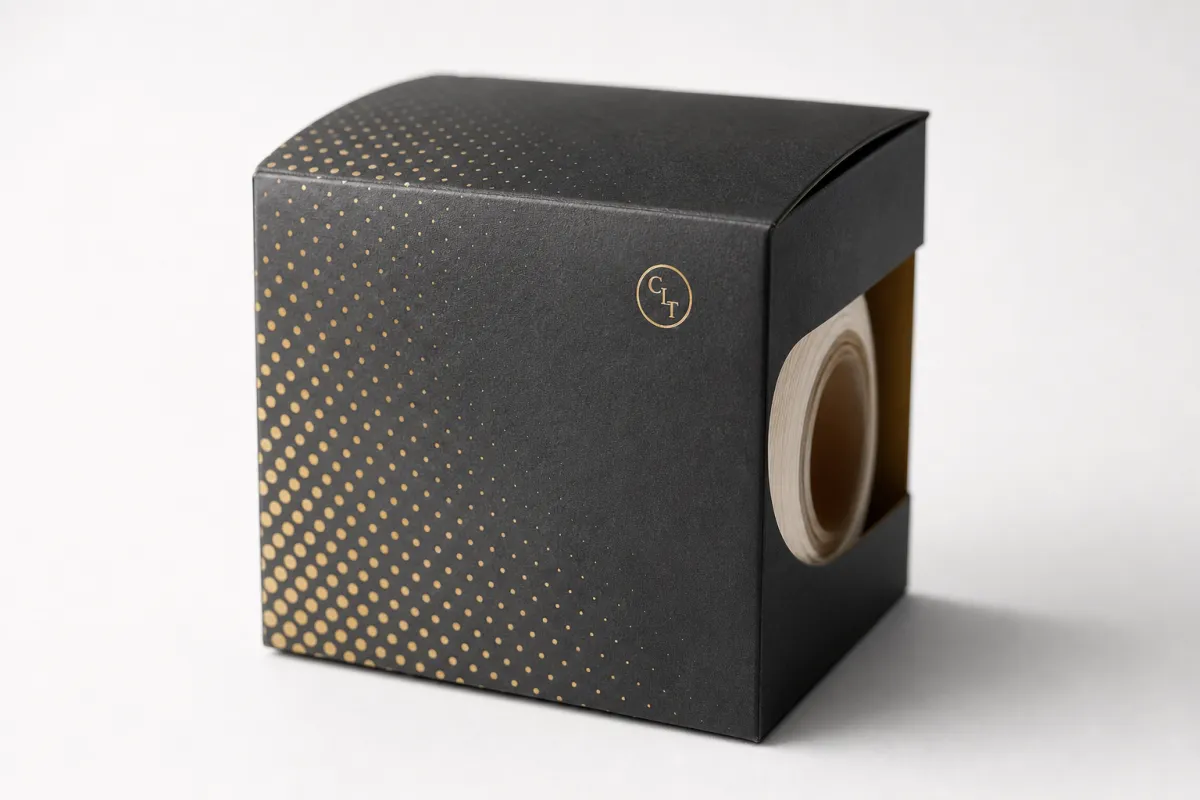
Custom label rolls for products are pressure-sensitive labels wound onto a roll so they can be dispensed by hand, by a semi-automatic applicator, or by a fully inline labeling system. The format sounds simple, but the details behind it are where most of the work lives. Face stock, adhesive, liner, core size, unwind direction, gap, and roll diameter all affect how the label behaves in real use.
For a packaging buyer, custom label rolls for products are not just a print purchase. They are part of the process that keeps the line moving and the product presentation consistent. A roll that feeds smoothly can reduce touch time, cut waste, and make reorder planning far easier. If one SKU needs to sit beside four others on the shelf, a clean and repeatable label spec helps the whole line feel organized.
Common uses for custom label rolls for products include beverage bottles, food jars, supplement tubs, cosmetics, industrial pails, folding cartons, and shipping mailers. Brands often pair these labels with Custom Labels & Tags and Custom Packaging Products so the product label, retail packaging, and outer carton all speak the same visual language.
I have seen teams underestimate the roll format because the artwork looked finished on a screen. Then the labels arrived, the applicator started misfeeding, and suddenly the whole packing table was slowing down. That is usually the moment everyone realizes the spec is part of the product, not just the decoration. A roll delivered in the right format is easier to store, easier to dispense, and less likely to cause avoidable rework.
"A label that feeds cleanly disappears into the workflow. A label that doesn't becomes the only thing anyone talks about."
That is why custom label rolls for products deserve the same attention as the jar, pouch, or Custom Printed Box around them. If the last thing a customer notices before buying is the label, the label has to carry its weight without introducing friction upstream.
How custom label rolls for products work in print and application
The anatomy of custom label rolls for products starts with the face stock, which is the printed surface, and the adhesive, which does the actual work after application. The liner supports the label before it is applied, while the unwind direction and core size determine how the roll feeds through the applicator. A 1-inch core is common on some desktop and semi-auto systems, while a 3-inch core is more common on larger production lines.
The workflow usually moves from artwork prep to proof approval, then to printing, die-cutting, matrix removal, rewinding, inspection, and final pack-out. That order matters. A missing dieline can stall prepress. A late change to finish or adhesive can force a new setup. Good printers spend time checking the spec early because that is a lot cheaper than finding a mismatch after thousands of labels are already on the roll.
Manual application still makes sense for smaller custom label rolls for products because it gives flexibility on odd-shaped containers, short runs, and pilot batches. Semi-automatic applicators become more valuable as volume rises, and inline systems matter once hand placement starts becoming the bottleneck. The jump in speed can be dramatic, but only if the roll is built for the machine and the peel point stays predictable.
Orientation matters for practical reasons, not just technical ones. With custom label rolls for products, roll width, unwind direction, gap size, and roll diameter all need to match the applicator or the labels can skew, jam, or waste material. A curved jar, a textured carton, or a refrigerated bottle can change the final result too. A label that looks perfect in mockup can lift at the corner once condensation, flexing, or cold storage enters the picture.
In production work, that is one of the first things I look at: not just whether the artwork is right, but whether the physical build supports the way the label is actually going to be handled. Paper can work beautifully on a dry retail item, yet the same construction may be a poor fit for a chilled bottle. The material has to match the life of the package, not just the moment it leaves the printer.
Custom label rolls for products: cost, pricing, MOQ, and quote basics
Pricing for custom label rolls for products depends more on material, ink coverage, finish, shape complexity, roll configuration, and total quantity than on size alone. A plain paper label with black text is one thing. A full-bleed film label with white ink, foil detail, or fine type is another. The second job takes more setup and more press attention, which is why it costs more. That is not a penalty; it is simply the work involved.
MOQ for custom label rolls for products is a practical concern, not a theoretical one. Digital runs may start around 500 to 1,000 labels, while more traditional setups often become efficient at 2,500 to 5,000 pieces or higher depending on the press and the material. Smaller runs usually carry more setup cost per label, so the unit price rises even when the design stays the same.
| Option | Typical use | Approx. unit cost | Notes |
|---|---|---|---|
| Paper roll labels | Dry retail items, short runs, promo packs | $0.03-$0.10 | Good for controlled environments and simple graphics |
| Polypropylene roll labels | Beverages, personal care, refrigerated products | $0.05-$0.15 | Better moisture resistance and a cleaner shelf finish |
| Polyester or specialty film | Industrial, chemical, outdoor use | $0.08-$0.22 | Built for durability; may need a stronger adhesive |
| Applicator-ready custom rolls | Higher-volume packaging lines | Varies by setup | Roll width, core, and unwind direction matched to machine specs |
Hidden costs can show up through white ink, foil accents, tight proofing cycles, specialty adhesives, or a custom roll spec that needs to match a specific applicator. Even when the print area seems modest, the job may need extra testing or an additional prepress pass. A buyer who asks for the lowest price without asking what is included can end up comparing quotes that look similar but cover very different amounts of work.
A direct comparison helps because custom label rolls for products are easier to judge when the spec is broken into plain categories instead of a single lump sum. The cheapest quote is not always the lowest cost if it creates misfeeds, rework, or shelf failures. A label that saves two cents but slows the line by ten minutes can wipe out the savings fast. Compare print price, waste rate, applicator fit, and storage life together.
There is also a quiet cost that teams sometimes miss: operator frustration. If labels split, curl, or peel inconsistently, the line keeps stopping for small corrections. Nobody budgets for that in a spreadsheet, but it shows up every time a person has to stop, rethread, and start again. That is why the quote needs to reflect the full use case, not just the artwork file.
Production steps, timeline, and lead time: from proof to shipment
The production path for custom label rolls for products usually starts with file review and proof approval, then moves into printing, finishing, slitting or rewinding, quality inspection, and shipment. The sequence looks tidy on paper, but any weak point can push the schedule. A missing barcode spec, a low-resolution logo, or a vague roll direction note can send the job back to art. A small mistake becomes a time problem very quickly.
- File review and proof approval
- Prepress and color check
- Printing and finishing
- Slitting, rewinding, inspection, and shipment
The usual schedule killers for custom label rolls for products are artwork changes, missing dielines, specialty materials, complex finishes, and peak press time. Every change after proof approval adds friction because the printer may need to pull inventory, reset a die, or recheck the roll build. None of that is mysterious. It simply takes time, and it often takes more time than buyers expect.
Lead time for custom label rolls for products covers the full window from approved proof to labels in your hands, not just the hours the press is running. A clean digital run might move in 5 to 10 business days after approval, while a more complex job can stretch to 12 to 20 business days depending on material availability and finishing. The schedule should always be treated as a range because print shops work with shifting demand.
The fastest way to shorten turnaround is pretty straightforward: submit print-ready files, confirm roll specs early, and freeze the design before production starts. Rush orders can happen, but they often narrow material choices or add cost. Planning ahead leaves more room for testing and fewer surprises if the first proof reveals a problem with barcode quiet zones, adhesive choice, or container fit.
For some teams, the proof stage is where the real decisions happen. A screen can hide ink density issues, minor type contrast problems, or a label shape that feels slightly off once it sits on the container. A physical proof or test roll is worth the time if the product has to work in cold storage, a wet environment, or a high-speed packout area.
How to choose the right label spec for your product line
Choosing the right substrate for custom label rolls for products starts with the environment, not the artwork. Paper works well for dry retail packaging and short runs. Polypropylene handles moisture better and usually looks cleaner on chilled products. Polyester or other specialty films are stronger choices for industrial or outdoor use, where abrasion, heat, or chemicals can punish a weaker face stock. The right material depends on the real handling conditions, not the sample room.
Adhesive selection matters just as much as the printed face stock. Permanent adhesive is common for most consumer goods, removable adhesive helps with temporary promotions or returnable packaging, freezer-grade adhesive is built for cold-chain conditions, and aggressive adhesive suits rough or low-energy surfaces. Glass, PET, HDPE, and coated cartons each behave differently, so a label that sticks well to one container may fail on another.
Container testing should never be skipped for custom label rolls for products, especially on curved bottles, textured pails, or flexible pouches that move during filling and shipping. For transport checks, the ISTA test framework is a useful place to start. For paper sourcing and chain-of-custody basics, FSC explains how certified material is tracked. Those references do not choose the label for you, but they help keep the conversation grounded in real conditions.
Design and compliance questions can shape custom label rolls for products just as much as material choice. Barcode readability, ingredient panels, warning copy, batch codes, and a clear hierarchy of information often decide the final label size. A sample roll tells you more than a mockup on a monitor. It shows whether the ink density holds, whether the edges stay crisp, and whether the label still feels like part of the package branding after it is actually applied.
One practical habit I recommend is building the spec around the hardest part of the journey. If the product is going into a refrigerator, test for condensation. If it will be handled by gloved workers, test the tack and the edge hold. If it needs to sit in a warehouse for months, test storage stability. That approach keeps the label from being designed for an ideal world that never shows up.
Common mistakes that make roll labels more expensive or less effective
One common problem with custom label rolls for products is adhesive mismatch. Labels can lift on cold bottles, oily surfaces, curved jars, or rough cartons even when the print quality is excellent. That creates waste, but it also creates a visible problem: the product reaches a buyer looking unfinished. In retail, a lifted corner can do more damage than a small print defect because it suggests the whole pack was rushed.
Another way custom label rolls for products become expensive is through overdesigned artwork. Too many finishes, tiny type, tight copy, and busy graphics can raise the quote while making the label harder to read at arm's length. Good packaging design knows where to stop. White space is not wasted space; it gives the hierarchy room to work. A clean label often looks more premium than a crowded one.
Ignore applicator specs and custom label rolls for products can become a line-speed problem. Core size, roll diameter, gap, and unwind direction need to match the equipment or the rolls will feed poorly. Even manual application benefits from consistency, because operators move faster when every roll peels the same way and every label starts in the same place. Small geometry issues can turn into real downtime.
Storage and reorder planning matter more than many teams expect. Custom label rolls for products that sit in heat, humidity, or dusty storage can curl, shift, or lose adhesive performance before they ever reach the line. Reorder files should also be version-controlled. If a team cannot find the exact spec note from the last run, the next purchase starts with avoidable guessing, and guessing is expensive in branded packaging.
There is a reason seasoned buyers ask about the storage window on labels. A roll that is perfect on delivery day can still fail later if it sits too long in a hot room or next to equipment that throws off dust and oil. That kind of failure is avoidable, but only if the packaging plan includes what happens after the labels arrive.
Expert tips and next steps for custom label rolls for products
The best results with custom label rolls for products start with a one-page brief. Include the product type, container material, environment, label size, quantity, application method, and any compliance text. That brief does not need to be fancy. It just needs to be specific enough that the quote reflects the real job rather than a vague concept. Precision at the start saves time later.
Samples matter because custom label rolls for products can look fine in a PDF and fail once the container is cold, curved, or handled by a gloved operator. Ask for test rolls if possible. Check adhesion, print clarity, unwind behavior, and shelf appearance. A ten-minute test on the actual product is usually more useful than a long email thread, especially if the pack has to move through production quickly.
If you compare suppliers for custom label rolls for products, look past the unit price and ask how they handle proofs, sample requests, rush jobs, and repeat orders. Response speed tells you a lot. So does whether the printer can match your applicator without a round of trial and error. Building a reorder calendar around your sales cycle is a simple way to avoid panic buying, especially if the label and the packaging need to arrive together.
Handled well, custom label rolls for products support packaging design, simplify production, and keep retail packaging looking deliberate. They also protect the story your brand tells on shelf and in transit. If the same line uses custom printed boxes, line up the label spec with the carton spec so the entire pack feels consistent. That is the real payoff: custom label rolls for products that fit the operation, not just the artwork.
Before you place the next order, confirm the label is built for the container, the applicator, and the storage conditions, then ask for a physical test if there is any doubt. That one extra check can save a lot of rework later, and honestly, it is usually the difference between a label that just prints and one that actually performs.
Frequently asked questions
What are roll labels used for?
Roll labels are used for branding, compliance, barcoding, and product identification on items like bottles, jars, cartons, pouches, and mailers. The roll format makes labels easier to dispense by hand or through applicators, which helps when speed and consistency matter. They are especially useful when a brand needs repeated labeling across many units or multiple SKUs.
How do roll labels compare with sheet labels?
Roll labels are better for fast application and machine compatibility, while sheet labels are often better for low-volume office use. Rolls usually store and dispense more efficiently in production settings. Sheets can be simpler for very small runs, but they are not ideal when labor time or packaging speed is a priority.
What affects the price most?
Quantity, material choice, adhesive type, finish, and print complexity usually have the biggest impact on pricing. Special requirements such as freezer adhesive, white ink, foil, or custom roll specs can increase the quote. Lower quantities often mean higher unit cost because setup is spread over fewer labels.
How long does production usually take?
Turnaround depends on artwork readiness, material availability, finishing needs, and the printer's current schedule. A clean file with approved specs can move much faster than a project that needs multiple proof rounds. Rush options may exist, but they often narrow material choices or raise total cost.
What should I prepare before requesting a quote?
Have your container type, label dimensions, quantity, application method, and storage conditions ready. Share any compliance text, barcode needs, and preferred finish so the quote reflects the real production setup. If possible, include photos of the product and a target timeline so the supplier can recommend the right spec.

