Buyer Fit Snapshot
| Best fit | Custom Label Rolls with Logo projects where brand print, material claims, artwork control, MOQ, and repeat-order consistency need to be specified before quoting. |
|---|---|
| Quote inputs | Share finished size, material target, print colors, finish, packing count, annual reorder estimate, ship-to region, and any compliance wording. |
| Proofing check | Approve dieline scale, logo placement, barcode or warning zones, color tolerance, closure strength, and carton packing before bulk production. |
| Main risk | Vague material claims, crowded artwork, missing packing details, or unclear freight terms can make a low unit price expensive after revisions. |
Fast answer: Custom Label Rolls with Logo: Material, Adhesive, Artwork, and MOQ should be specified like a repeatable production item. The safest quote records material, print method, finish, artwork proof, packing count, and reorder notes in one written spec.
Production checks before approval
Compare the actual filled-product size with the drawing, then confirm tolerance on folds, seals, hang holes, label areas, and retail display edges. Reserve space for logos, QR codes, warning copy, and material claims before decorative graphics fill the panel.
Quote comparison points
Review material grade, print process, finish, sampling route, tooling charges, carton quantity, and freight assumptions side by side. A quote is only useful when the supplier can repeat the same color, closure quality, and packing count on the next order.
Custom Label Rolls with logo can change how a product feels almost immediately. A jar, bottle, pouch, or mailer often reads as more finished the moment the label stock, adhesive, and roll format are matched to the job, and that shift shows up in production speed, visual consistency, and shelf presence before anyone even gets to the copy. I have watched plenty of packaging projects look fine in a mockup and then feel kind of ordinary in the hand; the right label spec is what usually closes that gap.
What custom label rolls with logo really change on the shelf
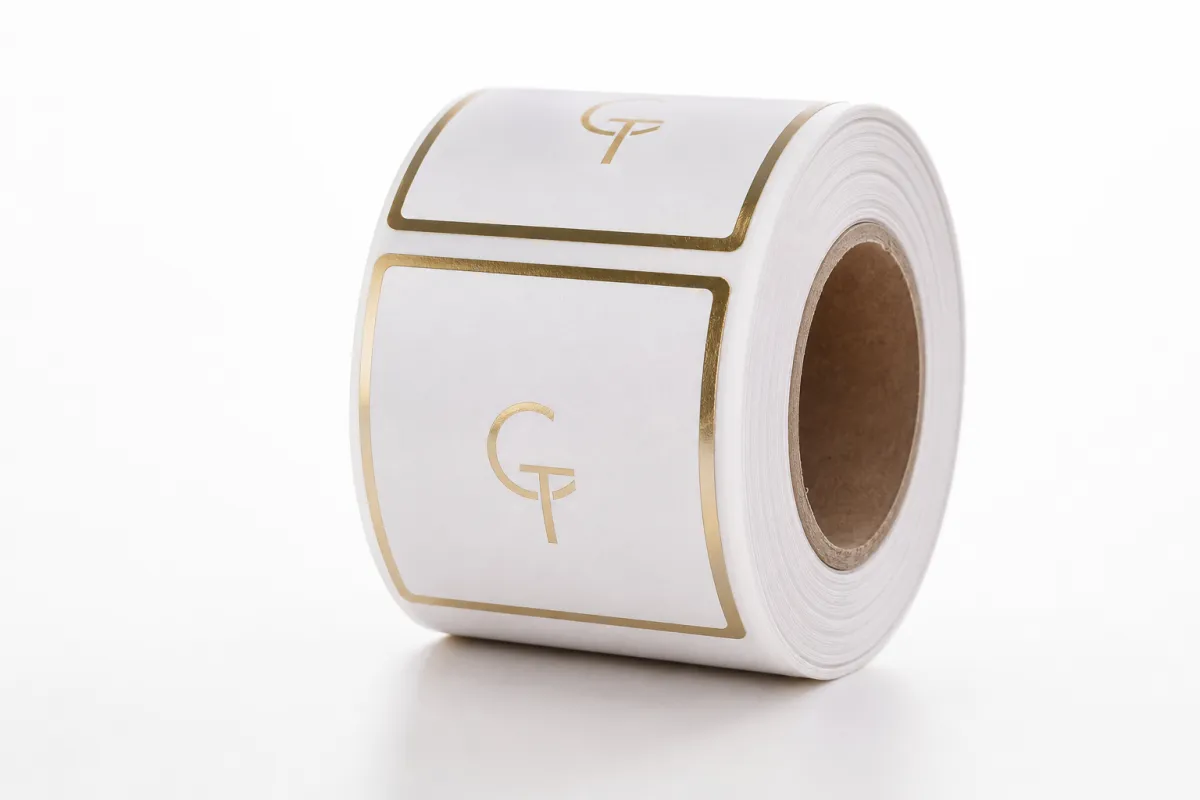
For a packaging buyer, Custom Label Rolls with logo are more than decoration. They sit inside the production workflow, they affect the brand system, and they can keep packaging moving without extra handling. A clean roll label can make a modest product look more deliberate on shelf; in the packing area, it can cut down on touchpoints and keep operators focused instead of stopping to peel, sort, or square up individual sheets. That difference matters whether the brand ships a few hundred units a week or tens of thousands.
The format itself carries practical advantages. Custom label rolls with logo are easier to stage, easier to store, and usually easier to feed by hand or through applicators than sheet labels. A sheet has to be picked up, separated, and positioned every single time. A roll keeps the sequence intact, which matters when a team is applying labels to hundreds of packs per hour. Less handling usually means fewer misaligned pieces, less strain on the operator, and fewer damaged labels sitting at the bench waiting to be tossed.
The visual side gets underestimated a lot. The same artwork can look flat on an unsuitable surface and sharply finished on a well-specified roll with the right face stock, finish, and adhesive. In branded packaging, that difference is obvious. Custom label rolls with logo can tighten retail packaging, support product packaging for food, beauty, and wellness, and bring a more consistent package branding system across SKUs. That is why many brands use them alongside Custom Labels & Tags and broader Custom Packaging Products so the shelf presentation feels connected instead of pieced together.
The real question is not whether the label looks good on a computer screen. It is whether custom label rolls with logo will sit correctly on the package, run properly in the hand, and avoid hidden costs after the first shipment leaves the dock. If the answer is yes, the label is doing its job. If the answer is no, an attractive design can still turn into waste.
Here is the practical comparison most buyers need:
- Roll labels usually win on throughput, storage, and applicator compatibility.
- Sheet labels can work for low-volume, highly variable work, but they add handling.
- Spec discipline matters more than artwork polish once a line is involved.
"Most label problems are not design problems. They are spec problems."
That line saves money because it moves the conversation away from color alone and toward the parts that make custom label rolls with logo behave in the real world: adhesive, liner, roll direction, core size, and substrate. Get those right and the label earns its keep. Get them wrong and the brand pays for it every time a unit is packed.
Custom label rolls with logo: process, timeline, and production steps
The production path for custom label rolls with logo looks simple on paper, but each stage has a place where a job can slow down. It usually starts with artwork intake, then moves through proofing, print setup, finishing, slitting, rewinding, and final inspection. A clean order keeps the timeline short. A vague one invites back-and-forth that burns days, and nobody wants to spend three afternoons chasing a missing dieline when the packaging launch is already breathing down the neck.
Most printers need a few details before they can quote accurately: logo files, exact dimensions, intended quantity, material preference, finish preference, adhesive needs, roll direction, and core size. If the label will be applied by hand, say so. If it will run through an applicator, that matters even more. Custom label rolls with logo made for equipment need tighter control than labels applied one by one at a packing table.
Lead time changes with the number of moving parts. A simple job with ready artwork and stock materials can often move in about 7 to 12 business days after proof approval. Add special die cuts, metallic stocks, laminated finishes, or multiple proof rounds, and 12 to 18 business days is more common. Rush orders can move faster, though they usually cost more because setup, drying, inspection, and shipping all have less room to breathe.
In practice, the biggest delay is rarely the press. Missing files, unclear measurements, and proofs approved without a real-world test are the usual culprits. A label can look perfect in a PDF and still fail on a curved bottle shoulder or a chilled carton. That is why custom label rolls with logo should be tested on the actual surface whenever possible. A printer can catch a lot, but they cannot stand in your packing room and feel the exact way a bottle rolls under a gloved hand.
One useful way to think about production is as a chain of decisions:
- Artwork - confirm logo files, brand colors, and readable text size.
- Material - choose paper, BOPP, polyester, or a specialty stock.
- Adhesive - match tack and permanence to the surface and the environment.
- Roll specs - define core size, outer diameter, and winding direction.
- Finish - select matte, gloss, soft-touch, or protective coating.
- Quality check - test fit, adhesion, and print clarity before release.
A good supplier will ask practical questions instead of simply taking the file and printing it. What surface is the label going on? Is there condensation? Oil? A rough kraft carton? A freezer? Those details matter because custom label rolls with logo are often the first point of contact between the brand and the product. That contact can either support the packaging design or expose a weak spec right away.
For buyers who want a standards-based lens, it helps to compare the label's intended use against common references. If the product ships through parcel networks, ISTA testing guidance is worth reviewing at ISTA. If the face stock is paper and sustainability claims matter, FSC-certified options can support sourcing conversations. If adhesion needs testing, ASTM methods such as peel performance checks offer a useful benchmark. The goal is not to turn label buying into a lab exercise. It is to avoid guessing.
If your packaging mix includes cartons, inserts, or mailers, the label process should not sit in a silo. Custom label rolls with logo usually work best when the artwork system is aligned with package branding across Custom Packaging Products, rather than treated as a one-off print run. A label that matches the box structure, type hierarchy, and finish gives the whole presentation more weight.
Custom label rolls with logo pricing: cost, MOQ, and quote factors
Pricing for custom label rolls with logo is not random, though it can feel opaque if the quote only shows one total. The main drivers are size, material, adhesive, print process, finish, and quantity. Setup costs matter too. On a small run, those fixed costs get spread across fewer labels, which is why a 1,000-piece order often carries a much higher unit price than a 10,000-piece run.
For a common two- to three-inch label with moderate print coverage, paper labels may land around $0.10 to $0.18 per unit at 5,000 pieces. BOPP often falls closer to $0.14 to $0.24. Polyester can rise into the $0.18 to $0.32 range, especially if the job calls for better durability or weather resistance. These are not exact quotes, because size and coverage can move the number fast, but they give buyers a realistic frame.
MOQ means minimum order quantity, and it is usually tied to how efficiently the job can be run. A printer may accept smaller runs, but custom label rolls with logo at very low volume often cost more per label because machine setup, proofing, and finishing time stay nearly the same. That is why buyers sometimes think they are saving money by ordering less, only to pay more across repeated reorders.
There are hidden costs that do not always show up in the first number on the page. A poor spec can create waste during application. A finish that looks elegant but slips in cold storage can force a reprint. A label that curls at the edges can slow down a packing team. The cheapest quote is not always the cheapest outcome. Custom label rolls with logo should be judged by total cost of ownership, not only by the unit line.
| Material | Typical Use | Approx. Unit Cost at 5,000 | Strengths | Watchouts |
|---|---|---|---|---|
| Coated paper | Dry indoor product packaging | $0.10-$0.18 | Good print clarity, familiar look, lower cost | Less resistant to moisture and abrasion |
| BOPP film | Bottles, jars, pouches, beauty items | $0.14-$0.24 | Moisture resistance, clean finish, durable handling | Can cost more than paper; finish choice matters |
| Polyester | Long-life, high-contact labels | $0.18-$0.32 | Strong durability, better in harsh conditions | Usually higher cost and less forgiving on budget jobs |
| Clear film | Minimalist retail packaging | $0.16-$0.28 | Subtle look, lets package color show through | Adhesive and surface prep are more sensitive |
That table is where many pricing conversations should begin. If the product sits in a dry warehouse and the label is mostly decorative, paper may be enough. If the package may get handled with damp hands or go through refrigeration, BOPP or polyester is often the safer bet. Custom label rolls with logo should be priced for the environment, not just the artwork. Otherwise you save a few cents and spend much more fixing the mistake later.
When comparing quotes, ask what is included. Are plates part of the price? Is proofing included? Does shipping add another line? Are rush fees separate? Is the label measured by finished size or die line? Those details change the final number more than many buyers expect. A quote that looks 12 percent lower can become the more expensive option once every piece is visible.
A simple decision rule helps with finish selection: pay for extra durability when the label touches a premium shelf, needs moisture resistance, or has to survive frequent handling. That is where custom label rolls with logo start acting like a sales tool instead of a cost center. If the product is sitting beside other retail packaging on the same shelf, the finish can affect how long the eye stays on it.
Step-by-step guide to ordering custom label rolls with logo
The easiest way to order custom label rolls with logo is to treat the job like a packaging spec, not a decoration request. Start by defining the use case. What is being labeled? Who applies it? Is the surface rigid, flexible, glossy, textured, cold, or oily? A label for a straight-sided carton has a very different spec from one for a curved cosmetic jar or a freezer-safe pouch.
Next, measure carefully. Confirm the exact label dimensions, the core size, the maximum outer roll diameter, and the winding direction. Those details are not background information; they decide whether the roll can be used on the actual line. A roll that fits the artwork but not the applicator creates immediate friction. Custom label rolls with logo should remove work, not add it.
Artwork preparation deserves more attention than it usually gets. A logo that looks sharp in a digital mockup may need more breathing room at the size you are printing. Tiny legal lines, web addresses, and claims can disappear if the type is too small. Good packaging design balances recognition with readability. If the logo is the hero, let it breathe. If the label has to carry instructions or ingredient copy, build the hierarchy around that.
Here is a practical buyer checklist:
- Send vector artwork when possible.
- State Pantone or CMYK references if brand color matters.
- Share the package surface material and texture.
- Say whether the label must be removable or permanent.
- Specify hand application or machine application.
- Include temperature, moisture, and handling conditions.
Once the proof arrives, test it on the real package. Do not rely only on the digital PDF. Apply the label to a sample unit, leave it in the intended environment, and inspect it after a few hours or a few days. Cold storage, humidity, condensation, curved surfaces, and fast application can all expose a problem that the proof hides. Custom label rolls with logo are meant to survive actual use, not just approval screens.
A common timeline for a well-run order looks like this: one to two days for quote and file review, one to three days for proofing, several days for production depending on material and quantity, then final packing and shipping. If the buyer responds quickly and the spec is clean, the whole process can stay compact. If the design changes after proofing starts, the clock resets.
Good rule: approve production only after the sample passes both visual and functional checks. That means the logo looks right, the adhesive behaves properly, and the roll feeds as expected. Then set a reorder point before inventory runs low. Custom label rolls with logo that arrive after a sales spike can force brands into emergency decisions that usually cost more than a planned reorder.
Common mistakes with custom label rolls with logo
The biggest mistake is choosing appearance before adhesion. A beautiful label that peels at the corner is still a failure. That sounds obvious, but it happens often because buyers start with color and finish, then treat the adhesive as a minor line item. In practice, adhesive is part of the brand experience. If custom label rolls with logo do not stay put, the product looks less trustworthy.
Another common error is ignoring roll specs. Core size, roll direction, and outer diameter sound technical because they are. They are also the details that determine whether a roll works on the bench or in an applicator. A 3-inch core may be standard for one setup and wrong for another. A winding direction mismatch can stop production before the first label is placed.
Design can also get crowded. Too much text makes the logo smaller, and smaller logos are easier to miss at arm's length. For retail packaging, the first job is recognition. The second job is support information. When those are reversed, the label can look busy instead of clear. Custom label rolls with logo should make the brand easy to identify quickly, not force a shopper to decode a paragraph.
Environmental testing is another place where brands lose time later. A label that performs on a room-temperature box may fail on a refrigerated pouch, a textured kraft mailer, or a jar handled with oils on the fingers. Humidity, condensation, and storage swings matter. If the product will travel, parcel handling adds another layer. That is where standards discussions, including ASTM-style adhesion checks and ISTA-style transit thinking, become useful rather than theoretical.
There is also an inventory trap. Some teams order a large quantity before field testing, then discover the wrong adhesive or finish after the first run. That locks cash into the wrong spec. It is smarter to run a pilot order, inspect results on the line and on shelf, then scale once the material is proven. Custom label rolls with logo reward patience more than optimism.
A quick list of avoidable errors:
- Skipping sample testing on the actual package.
- Choosing a finish that fights the environment.
- Under-sizing the logo so it disappears in use.
- Forgetting to confirm machine compatibility.
- Ordering too much before the adhesive is proven.
Brands that sell across multiple formats should also think about consistency. If the same logo appears on custom printed boxes, jars, pouches, and mailers, the label spec should support that family look. Otherwise the packaging system feels stitched together rather than planned. That is a small detail, but buyers notice it fast.
Expert tips for stronger custom label rolls with logo
If the label has to work hard, design for recognition first. Make the logo legible at a glance. Then add secondary copy only where it earns its place. A restrained label often reads as more expensive because it gives the eye fewer things to sort through. That is true in beauty, specialty food, supplements, and many forms of retail packaging.
Finish choice should match the context. Matte can feel quieter and more refined, especially on wellness or craft goods. Gloss can intensify color and help the label stand out under bright lights. Soft-touch can create a more tactile feel, but it is not always the right choice if the package will be handled heavily or stacked tightly. Custom label rolls with logo should support the product story, not fight the conditions around it.
Think in roll economics, not just print aesthetics. Longer rolls, fewer changeovers, and cleaner application can save time on the packing table. That matters even more for brands with multiple SKUs, because every changeover creates a small risk of error. Custom label rolls with logo that run cleanly can trim labor, reduce label waste, and make the line easier to manage during busy periods.
One of the best habits is to standardize file naming and version control. Label artwork tends to drift over time: a claim changes, a barcode shifts, an address updates, or a legal line moves. Without version control, a production team can print the wrong file and no one notices until boxes are already packed. That is a painful mistake because it is avoidable, and it is the sort of thing that turns a simple reorder into a late-night scramble.
Another useful practice is to build one label system that can support more than one format. A single visual language can carry across jars, cartons, pouches, and shipping mailers. That does not mean every label is identical. It means the brand mark, color family, and type hierarchy feel related. In packaging design, that consistency can matter as much as the label itself.
For brands trying to tighten the whole product packaging experience, custom label rolls with logo are often the fastest place to gain control. They are less expensive than a full packaging redesign, but they still influence the moment of truth: first impression on shelf, first touch in hand, first scan from a packing team, first glance after shipping. That is a lot of work for a relatively small component.
Practical takeaway: if the product must look premium and move quickly, start with the label spec, not the artwork alone. The combination of substrate, adhesive, finish, and roll setup often determines whether custom label rolls with logo feel like a brand asset or a recurring headache.
What to do next with custom label rolls with logo
The smartest next step is an audit, not a guess. Walk through your current packaging touchpoints and mark where labels slow down production, where branding looks inconsistent, and where application creates waste. Then decide which issues are visual and which are mechanical. Custom label rolls with logo are most effective when the spec solves both.
After that, shortlist two or three material and finish combinations. Compare them side by side. If one sample looks prettier but runs worse, the prettier one is not the better answer. Measure the difference in application time, peel quality, waste rate, and how the label looks after handling. That makes the decision concrete instead of fuzzy.
Gather the right quote inputs before you send anything out. A good request includes artwork files, label dimensions, quantity, core size, roll diameter limits, winding direction, surface type, target delivery date, and any environmental notes. If you know the label needs to survive moisture, cold storage, or frequent handling, say so early. Custom label rolls with logo get better results when the printer sees the real use case, not a vague description.
If you are scaling a new product line, place a small pilot order first. Check the rolls on the line, then check them on the shelf. That double test tells you more than a mockup ever will. Once the spec is proven, reorder on a schedule that protects inventory without tying up too much cash. That is a better use of money than correcting a bad full run later.
Custom label rolls with logo are one of the smallest packaging decisions that can have a surprisingly large effect on speed, consistency, and brand perception. Get the material right, get the roll right, and get the artwork right. Then the label stops being a task and starts acting like part of the sales system. If you only do one thing next, start with a real sample test on the actual package before you place a full order.
What are custom label rolls with logo used for?
They are used to brand packaging quickly and consistently across jars, boxes, pouches, bottles, and mailers. Roll format is especially useful when labels are applied by hand or with an applicator on a packing line. They help a product look more polished without changing the package itself.
How do I choose the right material for custom label rolls with logo?
Match the material to the package surface and environment first, not just the design. Paper can work for dry indoor use, while BOPP or polyester is better for moisture, oil, and handling. Choose the adhesive based on temperature, texture, and whether the label needs to stay removable.
What affects the price of custom label rolls with logo?
Main drivers include size, material, adhesive, print colors, finish, quantity, and setup requirements. Lower quantities usually raise unit cost because the fixed production setup is spread across fewer labels. Proofing, rush service, plates, and shipping can also change the final quote.
How long does production take for custom label rolls with logo?
Lead time depends on artwork readiness, material availability, print complexity, and finishing steps. Simple jobs with approved files can move quickly, while special materials or revisions add time. Rush orders are possible, but they usually require clean specs and may cost more.
What should I send for a quote on custom label rolls with logo?
Send artwork files, label dimensions, quantity, roll core size, and winding direction. Include the package surface, finish preference, and any application or storage conditions that matter. Add your target deadline and whether you need a sample or proof before production.
If you want custom label rolls with logo that hold up in real production, start with a clean spec, a real sample test, and a clear reorder plan. That is usually the difference between a label that just looks good and custom label rolls with logo that actually improve the work behind the package.

