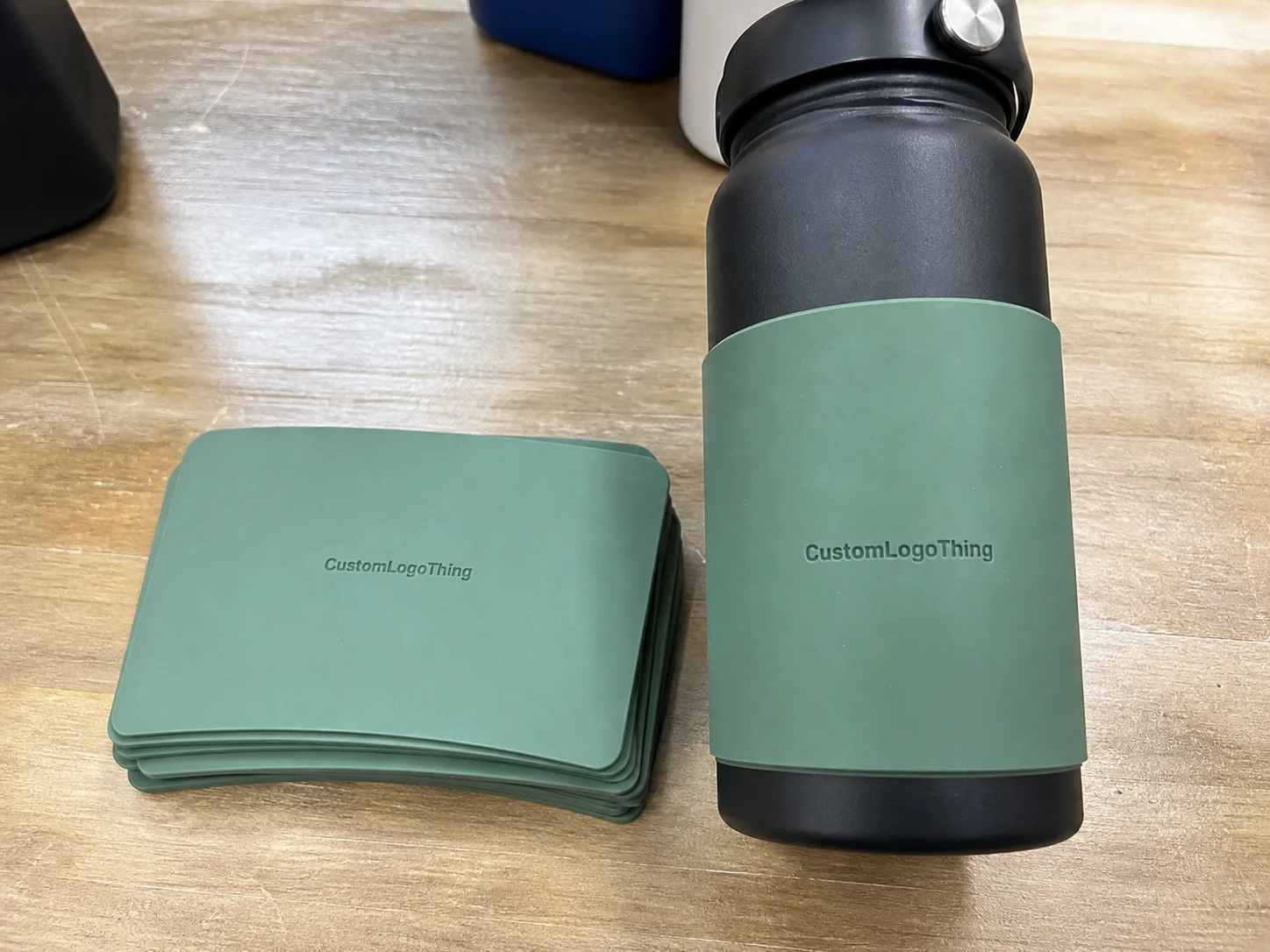
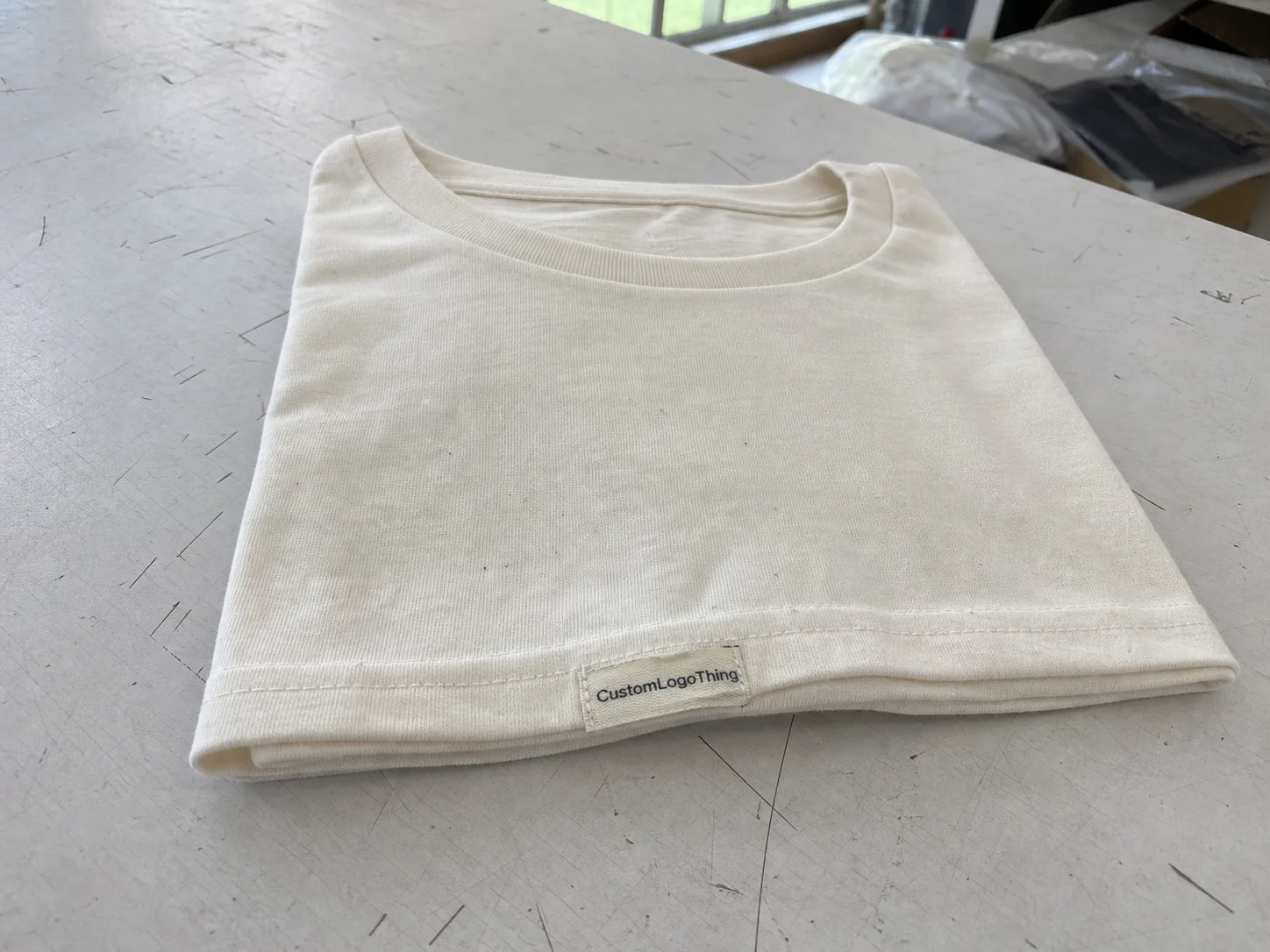
Buyer Fit Snapshot
| Best fit | Custom Labels with Logo projects where brand print, material claims, artwork control, MOQ, and repeat-order consistency need to be specified before quoting. |
|---|---|
| Quote inputs | Share finished size, material target, print colors, finish, packing count, annual reorder estimate, ship-to region, and any compliance wording. |
| Proofing check | Approve dieline scale, logo placement, barcode or warning zones, color tolerance, closure strength, and carton packing before bulk production. |
| Main risk | Vague material claims, crowded artwork, missing packing details, or unclear freight terms can make a low unit price expensive after revisions. |
Fast answer: Custom Labels with Logo: Print Tolerance, Proofing, and Reorder Cost should be specified like a repeatable production item. The safest quote records material, print method, finish, artwork proof, packing count, and reorder notes in one written spec.
Production checks before approval
Compare the actual filled-product size with the drawing, then confirm tolerance on folds, seals, hang holes, label areas, and retail display edges. Reserve space for logos, QR codes, warning copy, and material claims before decorative graphics fill the panel.
Quote comparison points
Review material grade, print process, finish, sampling route, tooling charges, carton quantity, and freight assumptions side by side. A quote is only useful when the supplier can repeat the same color, closure quality, and packing count on the next order.
I've walked into packaging warehouses in Portland, Oregon and Shenzhen, China where the products were exceptional but the labels told a different story. We're talking premium artisanal sauces in containers that looked like they'd been sitting in a dollar store bin. That disconnect between product quality and custom labels with logo doesn't just confuse customers—it actively repels them. In my fifteen years working with brands on their packaging design, I've watched a $0.03 label change destroy otherwise strong purchase intent. Your label isn't a necessary evil. It's your product's handshake, its first impression, its silent salesperson on the shelf.
Why Custom Labels with Logo Matter More Than You Think
Research consistently shows that first impressions form in under two seconds. Two seconds flat. That's not enough time to explain your brand story or showcase your superior formulation. Your custom labels with logo need to communicate quality, establish trust, and differentiate your product from a crowded shelf—all before the customer even picks it up.
Here's what gets me every time: companies using professional branded packaging and custom logo labels see repeat purchase rates climb as high as 30%. That's not a rounding error. That's a dramatic shift in customer loyalty that traces directly back to visual presentation. When I explain this to clients during our initial packaging consultation at our studio in Austin, Texas, they almost always underestimate how much their existing labels are costing them.
The average consumer encounters more than 10,000 brand messages daily. Ten thousand. Your product is competing against that tsunami of visual noise, and if your custom labels with logo look generic, template-driven, or amateurish, you're basically paying shelf space to advertise that there are better options nearby. I've seen beautiful glass bottles of specialty olive oil completely undercut by labels that looked photocopied. The oil inside tasted like it was from a Tuscan hillside. The label looked like it was printed in a library.
Beyond aesthetics, professional labels signal quality at a subconscious level. Consumers use visual cues to make split-second quality assessments. A well-designed label with proper material selection—like 350gsm C1S artboard with soft-touch lamination—tells the shopper "this company pays attention to details." That assumption extends to the product inside. Suddenly, that same artisanal sauce looks like it was made by craftspeople who care about their craft—because the packaging design says so.
How Custom Labels with Logo Are Created: Behind the Scenes
Let me pull back the curtain a bit. When a client brings me a rush project, I love walking them through what actually happens between "we need custom logo labels" and "boxes arriving at the warehouse" in Dallas or Los Angeles. Understanding this process prevents miscommunication, sets realistic expectations, and often saves money.
It starts with design file preparation, and this is where amateur hour costs real money. Your artwork needs to be at 300 DPI minimum for raster images, but preferably everything should be vector-based—AI or EPS files that can scale to billboard size without pixelation. Color mode matters enormously: CMYK for standard runs, but if you're chasing specific brand colors, you'll want to specify Pantone (PMS) matching. I worked with a boutique candle company in Asheville, North Carolina that had three different "forest green" labels across their product line because nobody caught the CMYK conversion drift. That's not a packaging design problem you want to explain to a retailer like Whole Foods or Kroger.
Here's something most designers won't tell you: bleed areas are the silent killer of otherwise solid designs. Your print provider needs at least 0.125 inches of bleed beyond the trim line, and critical elements should sit at least 0.125 inches inside the safe zone. Sounds technical, but here's why it matters: printing presses can't cut perfectly on a line. They trim. If your background color doesn't extend into the bleed area, you'll end up with hairline white edges on every label. For high-volume runs of 50,000 units, that compounds into thousands of labels that look amateur.
Material selection happens after file approval at most shops, but I'd argue you should decide materials before finalizing your design. Paper (80gsm to 350gsm weights), vinyl (typically 4mil white or clear), metallic stock, and specialty finishes each require different handling and affect how your artwork needs to be prepared. The printing method—digital (HP Indigo or Xerox Iridesse), flexographic (common in Shenzhen and Dongguan facilities), or offset (Heidelberg Speedmaster presses)—then dictates minimum quantities, setup costs, and per-unit pricing. Digital printing works beautifully for runs under 5,000 units. Flexographic becomes more economical as quantities climb past 10,000. Offset handles those million-plus runs where every fraction of a cent per unit matters.
Finishing touches transform standard labels into premium experiences. Lamination adds durability and shifts the tactile feel. Soft-touch lamination (costing approximately $0.005-0.015 per unit additional) has become incredibly popular for retail packaging because it suggests luxury without demanding metallic substrates. UV coating provides protection and visual punch. Embossing creates dimensional texture that invites touch. Die-cutting opens up creative shapes beyond boring rectangles and circles. Each finishing option adds 2-5 business days of production time and $0.01-0.05 per unit in cost, but the shelf impact can be remarkable.
Quality control is where legitimate print providers separate themselves from the budget shops. Color accuracy checks using X-Rite spectrophotometers, adhesive testing samples (applying labels to actual substrates and stress-testing after 24 and 48 hours), and consistency verification across runs matter enormously. I've seen production runs where the first 500 labels looked different from the last 500 because nobody monitored the press calibration on their Komori or Ryobi machines. Reputable suppliers maintain color management systems (ISO 12647-2 compliant) and will provide proofs before running the full job.
Key Factors to Consider Before Designing Your Labels
Before you fall in love with a design concept, you need to answer some unglamorous but essential questions. Surface compatibility determines whether your custom labels with logo will stay attached or slowly peel off at the edges. Glass bottles, plastic jars (HDPE, PET, PP), corrugated boxes, paper bags—each requires different adhesive formulations. A label that bonds perfectly to a smooth glass bottle may release prematurely from textured cardboard. This isn't theoretical; I've watched a client launch a premium skincare line in Denver where half the bottles started shedding labels within a week of purchase because nobody tested the actual packaging substrate from their supplier in Mexico.
Environmental exposure is another variable that amateur designers tend to ignore. Will your product sit in direct sunlight on a shelf in Phoenix, Arizona? Moisture exposure is likely for beverages in Tampa, Florida? Temperature fluctuations are expected for frozen goods shipped through Chicago in winter? Cold beverages need labels with acrylic-based adhesives rated for temperatures as low as -20°F that won't delaminate when condensation forms. Outdoor products need UV-resistant materials (typically vinyl with UV inhibitors) that won't fade within a season. I always tell clients: envision the worst-case storage scenario and design for that, not the ideal.
Size and shape optimization deserves serious attention during the design phase. Your logo should be readable from three feet away—that's a practical benchmark I use for all my package branding clients. If your label is one inch by two inches and your logo fills most of that space, you might be fine. If you're working with an irregular shape that gives you minimal printable area (some supplier minimums are as tight as 0.5" x 0.5"), you may need to simplify your artwork or reconsider the label size. Shelf space is expensive real estate. Wasting it on labels that nobody can read at normal viewing distance is throwing money away.
Color psychology isn't voodoo—it's well-documented consumer psychology. Warm colors (reds, oranges, yellows) suggest energy and appetite. Cool colors (blues, greens, teals) communicate trust and calm. Your brand palette should align with the emotional promises your product makes. Premium positioning often benefits from restrained color palettes. Busy, rainbow-label designs tend to communicate budget positioning regardless of actual product quality. This isn't a hard rule, but it's a pattern worth understanding when you're developing your custom labels with logo.
Regulatory requirements catch a lot of first-time label buyers off guard. Food products, cosmetics, and pharmaceuticals have specific labeling requirements around ingredient disclosure, nutrition facts, and warning statements. FDA mandates that Nutrition Facts panels use Helvetica at a minimum of 6-point type for general text and 8-point for headline amounts. These aren't optional design elements you can tuck in the corner—they have mandated placement, font sizes, and sometimes even required color contrasts. Missing these requirements can mean product recalls, regulatory fines up to $10,000 per violation, or forced redesigns that cost far more than proper planning upfront.
Quick Regulatory Checklist
- Food items require Nutrition Facts Panel in FDA-specified format (21 CFR 101.9)
- Cosmetics need ingredient listing in descending order of concentration (FDA Fair Packaging and Labeling Act)
- Pharmaceutical products face the strictest requirements and approval processes (FDA 21 CFR Part 201)
- State-specific labeling rules exist for certain product categories (California Prop 65, for example)
- Industry certifications (USDA Organic, Non-GMO Project, Kosher) have specific display requirements
Custom Labels with Logo: Material and Finish Options
Material selection is where your product packaging ambitions meet budget reality. Let's break down the main categories with their practical trade-offs.
Paper labels remain the workhorse of the industry, and there's a good reason for that. Cost-effective, eco-friendly, and suitable for indoor dry applications, paper labels handle runs of any size and print beautifully with standard processes. The tactile warmth of quality paper stock (like 80gsm uncoated or 120gsm gloss) appeals to brands emphasizing natural, handmade positioning. The tradeoff is durability: paper labels absorb moisture, fade under UV exposure, and generally don't survive rough handling. They're perfect for dry goods, boxes, and short-term applications. Less ideal for beverages, outdoor products, or anything facing refrigeration.
Vinyl labels solve the durability problem through material properties alone. Weatherproof, chemical-resistant (tested to ASTM D-543 standards), and capable of surviving serious abuse, vinyl handles products that face moisture, temperature fluctuations, and UV exposure. The cost premium runs roughly 2-4x equivalent paper options, but the survival rate justifies the investment for the right applications. I've seen vinyl labels (typically 4mil white calendared vinyl with acrylic adhesive) hold up on outdoor equipment through multiple seasons in Seattle's rainy climate. The same can't be said for paper alternatives.
Metallic and foil finishes create premium Shelf Presence That demands attention. Gold, silver, and holographic substrates transform otherwise standard custom labels with logo into statement pieces. These finishes work exceptionally well for gift items, luxury positioning, and products competing in crowded premium categories like those sold at Nordstrom or Neiman Marcus. The production process is more complex—metallic inks require separate passes or specialty formulations—and costs reflect that complexity. But when a consumer reaches for the item with the shimmer label instead of the matte competitor, you're watching color psychology and material selection pay off.
Material Comparison Guide
| Material Type | Best Applications | Durability | Typical Cost Range |
|---|---|---|---|
| Matte Paper (80gsm) | Dry goods, boxes, indoor products | Low | $0.02 - $0.05/unit |
| Semi-Gloss Paper (120gsm) | Beverages, refrigerated items | Moderate | $0.03 - $0.06/unit |
| Vinyl (White, 4mil) | Outdoor, chemical exposure, moisture | High | $0.05 - $0.12/unit |
| Vinyl (Clear, 2mil) | Premium beverages, glass surfaces | High | $0.06 - $0.15/unit |
| Metallic Stock (2mil) | Premium positioning, gift items | Moderate-High | $0.08 - $0.25/unit |
| Holographic (2.5mil) | Specialty, limited editions | Moderate | $0.10 - $0.30/unit |
Lamination choices—matte versus glossy—affect both aesthetics and readability. Matte lamination creates a sophisticated, understated presentation that works beautifully for premium products and enhances readability under challenging lighting conditions. Glossy lamination adds visual punch and color saturation while providing some moisture protection. For packaging design that needs to work across multiple environments and lighting conditions, matte often proves more versatile. Budget approximately $0.003-0.008 per unit additional for lamination.
Eco-conscious alternatives deserve serious consideration, especially given current consumer preferences. Recycled paper stocks (minimum 30% post-consumer waste), soy-based inks (carrying additional cost of approximately $0.002-0.005/unit), and water-based coatings have become genuinely competitive with conventional options. The FSC certification provides credible third-party verification of sustainable sourcing. I've worked with brands in Portland and San Francisco that now lead their packaging conversations with sustainability messaging, and the custom labels with logo using certified materials have actually outperformed conventional alternatives in shelf tests by as much as 15%. Consumers notice, and increasingly, they care.
What Affects the Price of Custom Labels with Logo?
Here's where I need to be direct: pricing varies more than most clients expect, and the quotes you get can range by 300-500% for functionally identical specifications. Understanding why prevents nasty surprises and helps you make smarter purchasing decisions.
Per-unit pricing follows predictable economies of scale. At 500 units, you might pay $0.12-0.18 per label. Scale that to 5,000 units, and your per-unit cost typically drops to $0.04-0.08. Double again to 50,000 units, and you're looking at $0.02-0.05 territory. These ranges assume standard materials (matte paper or semi-gloss) and conventional printing methods (digital or flexographic), but the pattern holds across most suppliers. The setup costs—plate creation ($75-150 for flexo), machine calibration, artwork proofing ($25-100)—get amortized across more units, which is why volume drives such dramatic per-unit savings.
Typical price benchmarks based on my recent procurement experience: standard paper labels run $0.02-0.08 per unit depending on complexity and quantity. Vinyl labels typically land in the $0.05-0.20 range. Premium materials—metallics, holographics, specialty finishes—can push $0.15-0.50 per unit at lower quantities but become more competitive at higher volumes. I've sourced metallic labels from suppliers in Guangzhou for as low as $0.06/unit at 100,000 quantity, while equivalent domestic production runs $0.15-0.20/unit.
Setup fees represent a significant variable that catches many first-time buyers. Some printers waive setup entirely above certain quantity thresholds—often 2,500 or 5,000 units. Others charge flat setup rates regardless of quantity—commonly $50-150 for standard designs, higher ($200-500) for complex die shapes or specialty finishes. Custom die shapes (anything beyond rectangles, circles, ovals) typically incur die-maker fees ranging from $200-500 that get added to setup costs. Always ask about these before signing quotes.
Design complexity impacts pricing in ways that seem counterintuitive. Many clients assume more colors mean more cost, which is true—but so does artwork complexity. Photorealistic imagery with complex gradients costs more to print than flat color block designs because achieving smooth output requires more precise press calibration and more careful color management. Here's the practical tip I'll share: simple two-color designs often produce more polished results than muddy six-color designs trying to do too much. When in doubt, simplify.
Watch out for hidden costs. Rush order premiums (25-50% for 48-72 hour turnaround, 75-100% for 24-hour turnaround), artwork revision fees (ranging from $25-75 per revision at most shops), and shipping options might not be included in initial quotes. Some suppliers charge separately for proof shipments ($15-35), color proofs ($25-100), or sample quantities ($50-150). Getting a comprehensive quote that includes all potential add-ons prevents budget overruns you didn't see coming.
Your Step-by-Step Process: From Design to Delivery
I always recommend treating your custom labels with logo project as a four-to-six-week engagement, assuming you need design work. If you're providing print-ready artwork, you can compress that timeline considerably, but the proof-review-production cycle needs time to work properly. Rushing quality control is how you end up with 10,000 labels nobody can use.
Week 1: Requirements Definition
Before any design work begins, nail down your specifications. Quantity seems simple but involves real trade-offs: ordering slightly more than you think you need typically costs less than emergency reorders with setup fees. Size and shape constrain your design possibilities and affect pricing tiers (standard sizes like 2"x3" or 3"x4" typically offer better pricing than custom dimensions). Material selection drives both cost and functional performance. Application surface determines adhesive requirements. I use a standard specification worksheet with clients that covers twenty-two distinct variables—most seem excessive until we catch a critical mismatch early rather than after production.
Week 2: Design Development
Creating or finalizing artwork using proper templates prevents downstream problems. Your print provider should supply templates with embedded guides for safe zones, bleed areas (minimum 0.125"), and trim lines. Using these correctly is non-negotiable. Converting text to outlines prevents font mismatches. Embedding linked images eliminates the "missing linked files" nightmare. I recommend requesting template specifications before beginning design work—it's far easier to work within proper constraints from the start.
Week 3: Proof Review
Digital proofs are approximations, not exact replicas, of final output. Color may shift between your monitor calibration and the press. Substrate effects—how ink interacts with paper versus vinyl versus metallic stock—cannot be fully represented digitally. Physical proofs eliminate these uncertainties. The additional cost (typically $25-100 depending on quantity and complexity) pays for itself when you catch a problem before committing to a full production run. I cannot count how many times physical proofs revealed issues that digital reviews missed.
Weeks 4-5: Production
Standard turnaround runs 7-14 business days after proof approval for most print providers using digital methods. Flexographic production typically requires 12-15 business days from proof approval due to plate creation time. Complex finishing—embossing, foil stamping, specialty coatings—adds 3-5 days. This is also when quality assurance protocols matter most. Reputable suppliers will pull samples during the run (every 500-1,000 labels), verify color consistency against approved proofs using densitometers, and inspect for defects before shipping. Ask about these procedures when evaluating print providers.
Rush orders cost significantly more but exist as a real option when you need them. The premium typically runs 25-50% for 48-72 hour turnaround, sometimes higher for extremely compressed timelines. If you're facing a trade show (like the Package Design Summit in Las Vegas or the PPAI Expo), product launch, or emergency restocking, plan accordingly and build in buffer time for shipping.
Common Mistakes When Ordering Custom Labels with Logo
After fifteen years in this industry, I've watched clients repeat the same expensive errors. Let me save you the tuition.
Low-resolution artwork creates pixelation problems that cannot be fixed post-production. "It looked fine on my screen" doesn't translate when that image gets enlarged for printing. Always use vector files (AI, EPS, PDF) for logos, text, and any element that needs to scale. High-resolution raster (300 DPI minimum at actual size) works for photographic elements but becomes risky for anything that requires enlargement. When a client shows me their "crisp" logo that looks jaggy when I zoom in past 150%, we have a problem that requires redesign before anything else happens.
Bleed area ignorance destroys otherwise solid designs. I mentioned this earlier, but it deserves emphasis: full-coverage backgrounds, photographs, or any edge-to-edge color absolutely require bleed extending past the trim line. Without it, you'll get white hairlines where the trim doesn't perfectly hit the design edge. These aren't design choices—they're visible flaws that scream "we didn't know what we were doing."
Choosing aesthetics over function ranks among the most expensive mistakes I see. Beautiful labels that peel off, fade within weeks, or dissolve in moisture don't communicate premium positioning—they communicate careless execution. When I evaluate label specifications with clients, function always comes first. A matte paper label might look more refined than its glossy counterpart, but if your product goes in the refrigerator, that matte label is gonna absorb condensation and degrade within days. Function drives material selection. Aesthetics refine those choices.
Underestimating quantity needs creates unnecessary reordering costs. Reorders often incur setup fees ($50-150 minimum) that get eliminated by ordering slightly more initially. Beyond cost, color matching between production runs presents genuine challenges. Different press runs rarely achieve perfect color consistency, even with excellent color management (ISO 12647-2 tolerance is Delta E 4.0, which can be noticeable). This matters less for designs where color variation won't be noticed, but critical for brand-critical elements. If you need 8,000 labels and the price breaks favor 10,000, the math usually favors buying 10,000 rather than ordering 8,000 now and 3,000 later.
Skipping material samples creates unnecessary risk. Always—always—test adhesive on your actual packaging before committing to full production. Adhesion varies dramatically between surfaces (smooth glass versus frosted glass, high-density polyethylene versus polypropylene), temperatures (room temperature versus refrigerated), and storage conditions (dry warehouse versus humid distribution center). A label that bonds perfectly to a sample bottle may behave differently on production containers from different suppliers or manufacturing runs. ISTA testing protocols provide standardized methodologies for evaluating packaging under simulated distribution conditions. Even simple home testing—refrigerate for 24 hours, freeze for 12 hours, expose to humidity for 48 hours—reveals issues before they become customer complaints.
Color matching failures generate more frustration than almost any other label issue. Every monitor calibrates differently. What you see on screen rarely matches what comes off press. Pantone (PMS) color matching provides reliable, repeatable results because it references standardized ink formulations. CMYK processes approximate colors but cannot guarantee matches. When brand color consistency matters—and it should—specify PMS colors and expect to pay slightly more for the precision ($0.001-0.003 per unit additional). The alternative is accepting that your "forest green" might be forest green, might be teal, might be anywhere in between.
Expert Tips for Custom Labels That Actually Work
Let me share some professional insights that don't always make it into standard guides.
Concentrate on one focal point. Your logo should be readable from three feet away. This isn't arbitrary—it's based on typical shelf-viewing distances and the speed at which consumers make purchase decisions. When I critique label designs, the most common failure is trying to communicate too much. Brand story, product benefits, certification badges, ingredient highlights, company history—all competing for attention, all getting lost. Pick one hero element. Everything else supports or disappears.
Use negative space strategically. Empty space isn't wasted space—it's breathing room that helps your focal elements stand out. Cluttered labels confuse rather than convert. I worked with a specialty food company in Nashville whose labels were dense with family history, recipe details, and origin story. Simplifying to a clean logo, product name, and minimal supporting information increased sell-through rates by 40% in head-to-head testing at Kroger and Publix stores. Sometimes the most powerful design choice is removing things.
Test your design in grayscale. Color distracts us from structural hierarchy. When I flatten designs to grayscale during development, structural problems become obvious. If your design only works in color, it's probably working through visual novelty rather than fundamental clarity. Strong visual communication should function across color modes.
Request physical samples before full production. This seems obvious, but the pressure of timelines and budgets pushes people toward trusting digital proofs. Digital representations cannot capture how ink interacts with metallic substrates, how laminate changes the tactile feel, how colors shift under warehouse lighting versus retail lighting. The sample cost (typically $50-150 for a small run of 50-100 labels) is insurance against production disasters.
Build relationships with print providers. Repeat customers get priority scheduling, more flexibility on pricing (I've negotiated 10-15% discounts for consistent monthly orders), and better communication during production. I've seen clients who treated their print vendors as interchangeable commodities consistently receive lower priority, less communication, and higher prices than clients who cultivated genuine partnerships over years. These are craftspeople who care about doing good work—treat them that way and they'll go to bat for you when you need something special.
"The best custom labels with logo I've ever ordered came from a print provider in Los Angeles who called me when something didn't look right on press. They'd caught a color shift before it became my problem. That relationship took two years to build, but it's saved me thousands in defective runs and given me confidence in every label order."
Frequently Asked Questions
What is the minimum order quantity for custom labels with logo?
Minimum order quantities range from 250 to 1,000 labels depending on size, complexity, and printing method. Digital printing enables lower MOQs (typically 250-500 units) compared to traditional flexographic methods that often require minimums of 2,500-5,000 units. Custom die shapes typically demand higher minimums (often 5,000+) than standard rectangles or circles because of the die fabrication costs involved. Some suppliers offer prototype runs of 50-100 labels specifically for design validation, though per-unit pricing runs higher ($0.15-0.30/unit) at those quantities.
How long does it take to produce custom labels with logo?
Standard production timelines run 7-14 business days after artwork approval for digital printing methods. Flexographic production typically requires 12-15 business days from proof approval due to plate creation time. Complex finishing options—embossing, foil stamping, specialty coatings—add 3-5 days to standard timelines. Rush orders can deliver in 48-72 hours but typically incur 25-50% premium pricing. Shipping time varies by method: ground shipping runs 2-5 business days within the continental United States, while express options (FedEx Priority Overnight) deliver in 1-2 business days but cost significantly more.
What file formats work best for custom label artwork?
Vector files (AI, EPS, PDF) are mandatory for professional results. These formats scale to any size without quality loss and enable precise trimming and color matching. High-resolution raster files (300 DPI minimum at actual output size) work for photographic elements but should be avoided for logos, text, and line art. Always convert text to outlines before submitting to prevent font compatibility issues. CMYK color mode is preferred for standard production; RGB files may shift when converted to process printing colors. Including embedded fonts or converting text to outlines prevents most submission problems.
What's the difference between stickers and custom labels with logo?
Stickers prioritize outdoor durability, removability, and general-purpose adhesion. Custom labels with logo focus on specific product integration—permanent bonding to particular surfaces, compatibility with automated application equipment (label applicators requiring tolerances within 0.015"), and compliance with industry-specific requirements. Labels use adhesive formulations engineered for specific substrates (glass, plastic, paper, corrugated) while stickers use more generic adhesion. Premium materials like holographic and metallic finishes are more readily available in label formats, and labels often require tighter tolerances for production and application.
Can I get accurate color matching on custom labels with logo?
Pantone (PMS) color matching provides the most accurate results because it references standardized ink formulations rather than process approximations. CMYK printing achieves approximately 70-80% of Pantone color accuracy, which works fine for most applications but may disappoint if you're chasing specific brand colors. Always request physical proofs before full production runs—digital proofs cannot capture material absorption effects or substrate interactions that alter final appearance. Glossy white behaves differently than metallic stock, and transparent substrates interact with underlying product packaging in ways digital previews cannot represent accurately. Expect to pay $0.001-0.003 per unit additional for full PMS matching.
A professional label isn't just decoration—it's a strategic business asset. Getting your custom labels with logo right means improved shelf presence, stronger brand perception, and actual sales growth you can track. The brands that win at retail understand this investment matters. Skip the template shortcuts, test your materials properly, and find a print partner who'll actually call you when something looks off. That's how you end up with labels that work as hard as your product does.
Related packaging resources
Use these related guides to compare specs, costs, quality checks, and buyer decisions before making the final call.