Buyer Fit Snapshot
| Best fit | custom leatherette boxes with logo for packaging buyers comparing material specs, print proof, MOQ, unit cost, freight, and repeat-order risk where brand print, material, artwork control, and repeat-order consistency matter. |
|---|---|
| Quote inputs | Share finished size, material target, print colors, finish, packing count, annual reorder estimate, and delivery region. |
| Proofing check | Approve dieline scale, logo placement, barcode or warning zones, color tolerance, and any recyclable or compostable wording before bulk production. |
| Main risk | Vague material claims, crowded artwork, or missing packing details can create delays even when the unit price looks attractive. |
Fast answer: Custom Leatherette Boxes with Logo: Dieline, Finish, Proof, and Buyer Review should be specified like a repeatable production item. The safest quote includes material, print method, finish, artwork proof, carton packing, and reorder notes in one written spec.
What to confirm before approving the packaging proof
Check the product dimensions against the actual filled item, not only the sales mockup. Ask for tolerance on folds, seals, hang holes, label areas, and retail display edges. If the package carries a logo, QR code, warning copy, or legal claim, reserve that space before decorative graphics fill the panel.
How to compare quotes without losing quality
Compare board or film grade, print process, finish, sampling route, tooling charges, carton quantity, and freight assumptions side by side. A lower quote is only useful if the supplier can repeat the same color, closure quality, and packing count on the next order.
I'll never forget the look on my client's face when she opened the first batch of her "premium" jewelry boxes. The embossing was blurry, the leatherette had already started peeling at the corners, and her logo looked more like a smudge than a brand mark. She'd ordered 2,000 units at $4.50 each, thinking she'd snagged a deal. What she got was $9,000 of garbage sitting in her garage.
That was six years ago. Since then, I've walked through more packaging facilities than I can count—Dongguan, Yiwu, Shenzhen, Guangzhou, and right here in Southern California. I've negotiated with suppliers who tried to hide tool fees in the fine print and ones who actually delivered what they promised. Honestly? Custom Leatherette Boxes with logo are one of those purchases where the difference between "wow" and "what happened here" comes down to knowing what you're actually buying.
I Visited a Factory in Dongguan and Saw Why Leatherette Packaging Matters
Last year I toured a packaging facility in Dongguan's Dalang Industrial Zone and watched workers inspect leatherette samples under 5000K daylight-balanced lights, checking for consistency in texture and embossing quality. One supervisor pulled me aside and said something I've never forgotten: "The difference between our $4 wholesale box and an $18 premium one isn't just the material—it's the compression ratio, backing material, and heat-reactive coating that determines how well your logo embosses."
He's right. When I got back to my office, I pulled out the swatches I'd collected from six different suppliers over the years. The expensive ones from Kyoku and Wellco had a density of around 320 GSM in the backing layer. The budget options from unspecified manufacturers? Maybe 180 GSM. That difference in density means the difference between a crisp, raised logo that feels luxurious and a flat, blurry impression that looks amateurish.
Customers handle product packaging 8-10 times more often than any other brand touchpoint, according to research published in the Journal of Consumer Psychology. Your business card? Maybe twice. Your logo on a building? Potentially never. But that unboxing experience? That's happening in customers' hands, on camera, and shared across social media. Understanding these differences Before You Order prevents the disappointment of receiving boxes where your logo looks blurry or the leatherette peels within weeks.
What Exactly Are Custom Leatherette Boxes with Logo?
The material science matters here, and getting it wrong costs money—trust me, I've learned this the hard way. Leatherette (also called vegan leather, faux leather, or reconstituted leather) is a synthetic material typically made from polyurethane (PU) or polyvinyl chloride (PVC) bonded to a fabric backing.
PU leatherette is considered higher quality. It breathes more naturally, ages better without cracking, and—and this is critical for logo work—accepts embossing and foil stamping more reliably than budget alternatives. PVC leatherette is less expensive but can crack over time and doesn't hold embossed details as sharply. Premium leatherette options like those from Kyoku based in Zhongshan or Wellco in Shanghai use cross-linked PU coatings that react better to heat and pressure during the embossing process, typically achieving 0.3-0.5mm embossing depth versus 0.1-0.2mm for standard alternatives.
The logo application methods break down into four main categories:
- Embossing creates a raised effect where your logo pushes up from the leatherette surface, creating a tactile, sophisticated feel
- Debossing presses your logo into the material for an indented, understated look
- Foil stamping applies metallic foil (gold, silver, copper, holographic) for a shine that catches attention
- Silk screen printing allows full-color reproduction but sacrifices the tactile premium feel
These boxes serve a wide range of industries: jewelry brands, electronics manufacturers, cosmetics companies, corporate gift suppliers, and luxury subscription box services. Any product where the unboxing experience matters to your customer is a perfect fit for Custom Leatherette Boxes with logo.
The Step-by-Step Process: From Design to Delivery
Clients get frustrated when they don't understand the timeline upfront. Here's exactly how this works—knowing the process prevents unrealistic expectations.
Design Phase
You'll need to provide your logo in vector format—AI, EPS, or PDF files are standard. Raster files like JPEGs or PNGs won't work for embossing because the detail just isn't there. Specify your colors using PMS (Pantone Matching System) numbers or CMYK values. Your designer should also specify exact dimensions for the box structure. If you're not sure what size you need, most suppliers have standard templates ranging from 4"x4"x2" up to 14"x12"x4".
Material Selection
Choose between standard PU leatherette (0.8-1.2mm thickness), premium PU (1.5-2mm with better drape and durability), or recycled leatherette options from suppliers like Filati who specialize in eco-friendly alternatives based in Milan, Italy. The thickness affects both the feel and the embossing results. Thicker materials generally produce deeper, more dramatic embossing. I've found that 1.5mm hits the sweet spot for most applications—anything thinner feels flimsy, anything thicker can be overkill unless you're going for a very specific aesthetic.
Sample Production
Most manufacturers require 7-10 business days for a physical prototype, though facilities in Yiwu's Yiwu International Trade City area can sometimes turn samples around in 5-7 days for simpler designs. Never skip this step. Sample costs typically range from $50-200 depending on complexity. Yes, it's money up front, but it's nothing compared to ordering 1,000 units of the wrong thing. I know it feels like dragging your feet, but your future self will thank you.
Production Timeline
After sample approval, standard orders take 15-25 business days for production at most Chinese manufacturing facilities. If you need them faster, rush orders (7-10 days) typically add 25-35% to your per-unit costs. I've negotiated these premiums down to 15-20% with suppliers I've worked with for more than a year, but don't expect that on your first order.
Shipping Considerations
Costs and timelines vary dramatically here. Sea freight from Shenzhen or Guangzhou ports adds 20-30 days but cuts costs significantly for orders over 500 units—typically $0.80-1.50 per unit versus $3.00-5.00 for air freight. Air freight is faster (5-7 days door-to-door) but 3-4x more expensive. For most of my clients ordering from Chinese manufacturers, I've found that sea freight makes sense for orders of 1,000+ units. Anything smaller, and the time value usually outweighs the shipping savings. Port of Los Angeles clearance typically takes 2-3 business days for standard commercial shipments.
How Much Do Custom Leatherette Boxes with Logo Cost? A Realistic Pricing Breakdown
Vague pricing discussions are what get clients into trouble. Here are actual numbers I've seen in quotes over the years—and I've seen a lot of quotes:
| Quantity | Unit Price Range | Notes |
|---|---|---|
| 50-100 units | $12-18 | High per-unit cost; limited supplier options |
| 100-500 units | $8-15 | Most common range for startups and small brands |
| 500-1,000 units | $5-10 | Significant per-unit savings kick in |
| 1,000+ units | $3-7 | Best economics; requires more upfront capital |
These prices assume standard PU leatherette with single-color embossing. Now, the hidden costs that surprise people:
- Tool/die fees: $200-800 depending on box complexity, with simple magnetic closure dies running $200-350 and multi-panel hinged designs hitting $500-800 at facilities like those in Dongguan's Songshan Lake area
- Sample costs: $50-200 (already mentioned, but worth repeating)
- Color matching: $50-150 if you need exact PMS matching
- Rush order premiums: 25-35% per unit
- Shipping and duties: Typically 10-25% of your order value; expect 6% US import duty on leatherette goods from China
Premium materials add $2-5 per unit: exotic leather textures, metallic finishes, magnetic closures, or velvet lining interiors. A basic magnetic closure alone adds about $0.50-1.00 per unit, while custom foam inserts cut from 1/4" ester foam typically run $0.75-1.50 per unit extra.
Always request line-item pricing. I've seen quotes that seemed cheap until I realized they didn't include the $600 tool fee buried in the fine print. The total landed cost can be 40-60% higher than the initial per-unit quote.
Minimum order quantities (MOQs) typically range from 100-500 units depending on the manufacturer. Some Chinese factories like those in the Yiwu area offer 50-unit MOQs for basic box styles, but expect to pay a premium—usually 30-50% more per unit compared to standard quantities. Facilities in Dongguan's Chang'an Town typically have higher MOQs (200-300 units) but more competitive pricing at volume.
Design Elements That Make Your Logo Boxes Look Professional
I've reviewed hundreds of designs for custom leatherette boxes with logo, and the difference between amateur and professional usually comes down to a few key choices. These aren't just aesthetic preferences—I've watched brands make costly mistakes because they didn't understand these fundamentals.
Logo Placement
Centered embossing works beautifully for simple, clean logos. If your logo is complex with multiple colors or intricate details, corner placement with decorative border elements often produces better results. I once had a client with a beautiful but complicated crest-style logo. We tried center placement three times, and it always looked busy. Moving it to the bottom corner with a simple border frame transformed the entire box. For optimal results, maintain at least 0.5" clearance from box edges for embossing registration.
Color Strategy
Embossing works best with single-color logos on dark leatherette materials. The texture of the embossing creates natural visual interest, so adding color isn't necessary—and can actually dilute the premium feel. Foil stamping (gold, silver, copper, holographic) handles light-colored materials much better and adds that visual pop that makes people stop and look. For gradients or full-color designs, foil stamping or silk screening becomes necessary even though it changes the tactile experience. Metallic foil typically adds $0.25-0.75 per unit depending on coverage area and foil type.
Box Structure Options
Closure styles worth considering:
- Magnetic closure boxes: The most popular option for retail packaging—clean look, easy to open, feels substantial
- Hinged lid styles: Traditional look, good for products that need to be handled frequently
- Drawer-style boxes: Excellent for products that need to stay accessible; great for subscription boxes
- Foldable magnetic closures: Cost-saving option; ships flat and assembles easily
For magnetic closures, specify neodymium magnets with pull force of 2-4 lbs for boxes under 8" in any dimension, scaling up to 5-8 lbs pull force for larger formats. Cheap ceramic magnets won't hold as well over time.
Interior Customization
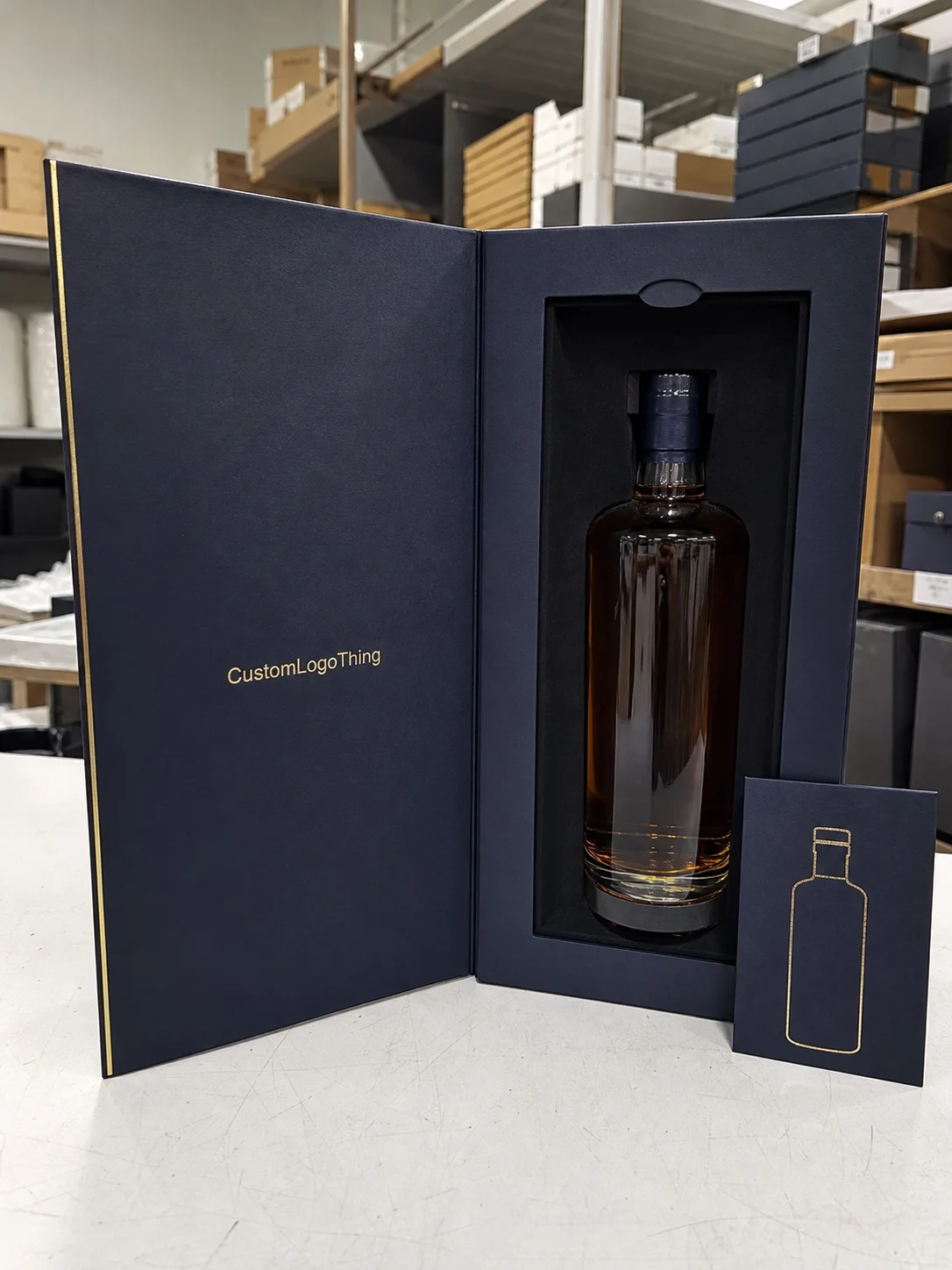
The outside tells the story, but the inside creates the memory. Foam inserts, velvet lining, satin ribbon, or custom-printed trays add premium feel without dramatically increasing costs. I typically recommend budgeting an extra $0.75-2.00 per unit for interior upgrades—it's money well spent when customers share their unboxing videos. Black or navy velvet lining adds approximately $0.40-0.80 per unit, while custom die-cut foam in brand colors typically runs $0.60-1.20 per unit.
If your brand uses real leather elsewhere (handbags, belts, accessories), consider specifying a matching leather grain pattern to suppliers like Kyoku for consistency across your product line. It's a detail most people won't consciously notice, but they'll feel the cohesion. I think this is one of those things that separates "good packaging" from "great packaging."
Common Mistakes That Waste Money on Leatherette Box Orders
I've made these mistakes myself, and I've watched clients make them. Covering them directly saves you money.
Ordering without physical samples first. The digital mockup looks nothing like the real thing. I've seen gorgeous digital renders where the embossing depth was completely wrong, the color was off by two Pantone shades, and the material texture looked smooth online but felt cheap in hand. The $100-200 for samples is absolutely worth it.
Providing low-resolution logos and expecting crisp embossing. Vector files aren't optional for quality results. Embossing doesn't have the forgiving nature of ink printing—there's no bleeding or smoothing to save poor quality artwork. If your logo file looks blurry when you zoom in at 400%, it's gonna look worse embossed. Minimum recommended resolution for any raster elements is 600 DPI. I've had to have some very uncomfortable conversations with clients about this.
Ignoring material batch variations. Leatherette from different production runs may have slightly different textures or thicknesses. This is why I always recommend ordering 10-15% extra over your projected need—you'll want buffer stock, and future reorders might not match exactly. Batch variations of 0.1-0.2mm in thickness are common even with the same supplier and material specification.
Underestimating quantities and having to reorder. Batch variations between orders mean your second order might not match the first exactly. This is especially true with custom colors or special finishes. I've had clients who ordered 500 units, sold out in three months, reordered 500 more, and couldn't figure out why their packaging looked different. Now you know why.
Choosing price over quality for high-volume orders. That $2 savings per unit becomes $2,000 lost when 20% of boxes arrive with peeling material. I always recommend at least a 10% quality check sample from your supplier before final production ships. It's standard practice with any reputable manufacturer. If they push back on this, that's a red flag in itself.
Not specifying exact color codes. "Close enough" isn't acceptable when your logo represents your brand. Provide PMS numbers for spot colors or exact CMYK values for process printing. Verbal descriptions like "kind of a burgundy, but darker" will get you results that make you want to cry. Standard leatherette colors (PMS Black 6C, 485C, 296C, 2627C) are typically included at no upcharge, while custom-matched colors require 500+ unit minimums and 2-4 additional weeks lead time.
Expert Tips for Getting the Best Results
Over twelve years in custom packaging, these are the fundamentals I keep returning to. Consider this the Cliff Notes version of everything above, with some additional hard-won wisdom:
Always request 3-5 material swatches from your manufacturer before finalizing your choice. I keep a swatch book from six different suppliers for this reason. What looks good in a catalog or on a website can look completely different in person. Direct sunlight, artificial lighting, and the way material drapes all affect the final perception. I've been burned before by "this is definitely the right material" that turned out to be completely wrong.
Ask about the manufacturer's compression ratio for leatherette. Higher density backing (280-320 GSM) produces sharper embossing but costs more. For logos with fine details or thin text under 12pt font size, this specification can make or break your result. I've had suppliers try to sell me lower-density materials at premium prices because "it's all the same"—it's not. That was the moment I started asking for density specifications in writing.
For sensitive logos with fine text or thin lines, request a debossing test instead of embossing. Pressed-in text often reads better on leatherette materials because the texture doesn't interfere with the letters. Embossing can make fine lines look muddy as the raised material distorts. This saved a project for me last year with a client who had a beautiful script font that just wouldn't work embossed but looked stunning debossed with 0.3mm depth.
Negotiate payment terms strategically. 30% deposit, 70% before shipping is standard for established relationships with suppliers in Dongguan and Yiwu. Avoid full prepayment unless you're ordering from a verified long-term supplier or the amount is small enough that losing it wouldn't hurt. Escrow services through Alibaba offer some protection but add 3-5% transaction fees. I've seen too many stories of factories taking full payment and then ghosting on delivery.
Document everything in writing. Color codes, dimensions, material specifications, sample approval dates—put it all in writing and get confirmation. Verbal agreements don't protect you when something goes wrong. I email my confirmations and save all correspondence in a project folder for at least two years after delivery.
Your Next Steps: How to Actually Order Custom Leatherette Boxes with Logo
Here's the practical path forward. I've walked dozens of clients through this process, and honestly, the ones who followed these steps ended up with packaging they actually loved.
Step 1: Gather Your Assets
Before contacting anyone, have these ready: vector logo file (AI, EPS, or PDF with all fonts outlined), brand color codes (PMS numbers preferred), approximate box dimensions (measure your product!), and your target quantity. The more specific you are upfront, the faster and more accurate your quotes will be. I'm always a little suspicious when a client comes to me without any of this—it usually means they haven't thought through what they actually want yet.
Step 2: Request Quotes from Multiple Suppliers
Get quotes from at least 3 manufacturers. Insist on line-item breakdowns that separately list materials, tooling, samples, and shipping. If a supplier gives you a single "total price" without breaking it down, walk away. They have fees hidden in there, guaranteed. Recommended domestic options include Taylor Custom Boxes in Chicago, Illinois and X-Pac Packaging in Los Angeles, California for orders under 500 units where faster turnaround (2-3 weeks versus 6-10 weeks) justifies the 20-40% price premium. For 1,000+ units, Chinese manufacturers in Shenzhen and Dongguan typically offer better unit economics—I've used facilities in the Songshan Lake Hi-Tech Industrial Development Zone with good results.
Key specifications to request in writing:
- Backing material GSM (insist on 280-320 GSM for premium results)
- PU coating thickness (0.3-0.5mm recommended)
- Embossing/debossing depth achievable
- Minimum text size for logo legibility
- Color matching tolerance (typically ±1 PMS shade)
Step 3: Order Physical Samples
Most people skip this step because they're eager to get to the "real" order. Don't. Order 2-3 physical samples before committing to full production. Yes, it's $100-200 you could have saved. It's also $8,000-15,000 you won't waste on the wrong product. I genuinely cannot stress this enough. Request samples in your actual chosen material, not just a "similar" option—the difference between 1.0mm and 1.5mm thickness is immediately noticeable.
Step 4: Plan Your Timeline
If you're ordering within the next three months, start the sample process now. The total timeline from initial inquiry to delivered boxes typically runs 6-10 weeks for international orders. Domestic orders can move faster—sometimes 3-4 weeks total—but expect to pay premium pricing. Add 2-3 weeks buffer for any customs delays, particularly in Q4 when ports get congested before Chinese New Year (typically late January or February).
Packaging affects your entire product launch timeline. I've seen beautiful products delayed because the packaging wasn't ready. Build your packaging timeline backward from your launch date, not forward.
Frequently Asked Questions
What is the minimum order quantity for custom leatherette boxes with logo?
Most manufacturers require 100-500 units as a minimum order quantity, though some Chinese factories accept orders as low as 50 units for basic box styles. Lower MOQs typically mean higher per-unit costs—expect to pay a 30-50% premium per unit when ordering at the minimum versus standard quantities. Some suppliers offer sample runs of 5-10 units for prototyping purposes before committing to full production quantities. If you're not sure about your volume needs, start with the sample run to validate quality before investing in larger quantities.
How long does it take to produce custom leatherette boxes with logo?
Standard production timelines range from 15-25 business days after sample approval, plus 7-10 days for initial sample creation. Rush orders with 7-10 day production windows typically cost 25-35% more per unit. Shipping adds additional time: sea freight takes 20-30 days from Shenzhen or Guangzhou ports, while air freight delivers in 5-7 days door-to-door. Total timeline from design approval to delivery typically runs 6-10 weeks for international orders, so plan accordingly if you have a product launch deadline.
Which logo application method looks best on leatherette boxes?
Blind embossing (no foil, just raised texture) creates a subtle, sophisticated look that works especially well on dark leatherette materials. It's the most "premium" feeling option because it's purely tactile. Foil stamping in gold, silver, or copper adds contrast and visual pop, making it ideal for premium product packaging and gift items. Debossing works better than embossing for logos with fine text or thin lines since pressed-in text maintains clarity better on textured materials. Full-color UV printing handles complex logos and gradients but sacrifices the tactile premium feel that makes leatherette attractive in the first place.
What's the difference between PU and PVC leatherette for boxes?
PU (polyurethane) leatherette is considered higher quality, breathes more naturally, and accepts embossing more reliably than PVC alternatives. It ages better without cracking and maintains its appearance over time. PVC leatherette is less expensive but can crack over time and doesn't hold embossed details as sharply. Premium brands like Kyoku and Wellco primarily use PU materials, while budget manufacturers often use PVC to cut costs. For boxes that need to last—especially retail packaging that sits on shelves for months—specify PU leatherette with a cross-linked coating for better durability and embossing results. Cross-linked PU typically costs $0.30-0.60 per unit more than standard PU but resists peeling and maintains flexibility better over time.
Can I get custom leatherette boxes with logo in any color?
Leatherette comes in standard color ranges from manufacturers, typically covering 15-30 colors including black, brown, navy, burgundy, and various neutrals. Custom colors require minimum order quantities of 500+ units and add 2-4 weeks to production timelines. Color matching to specific PMS numbers typically costs $50-150 additional. If exact color matching is critical for your brand, consider foil stamping in your brand color instead of attempting to match the base leatherette material—this gives you more flexibility and consistency across batches.
Whether you're launching a new product line, refreshing your custom packaging, or scaling up an existing brand, custom leatherette boxes with logo remain one of the most effective ways to Create Memorable Unboxing Experiences. The investment is real, but so are the returns when your packaging becomes part of what customers love about your brand.
Here's the honest truth: you can spend three months researching, order from the cheapest supplier, skip the samples, and end up with 2,000 boxes in your garage that make your products look worse than if you'd used plain brown shipping boxes. Or you can do this right—get the swatches, insist on samples, pay for quality materials, and end up with packaging that actually elevates your brand. The second path costs more upfront and requires patience, but it's the only way to get results you'll be proud to put your logo on. Start with one supplier, build the relationship, and learn the process. Once you've got it down, you'll know exactly what to expect every time you need more boxes. That's how the pros do it.