Buyer Fit Snapshot
| Best fit | Custom Logo Box Sleeves projects where brand print, material claims, artwork control, MOQ, and repeat-order consistency need to be specified before quoting. |
|---|---|
| Quote inputs | Share finished size, material target, print colors, finish, packing count, annual reorder estimate, ship-to region, and any compliance wording. |
| Proofing check | Approve dieline scale, logo placement, barcode or warning zones, color tolerance, closure strength, and carton packing before bulk production. |
| Main risk | Vague material claims, crowded artwork, missing packing details, or unclear freight terms can make a low unit price expensive after revisions. |
Fast answer: Custom Logo Box Sleeves: Board, Finish, Dieline, and Unit Cost should be specified like a repeatable production item. The safest quote records material, print method, finish, artwork proof, packing count, and reorder notes in one written spec.
Production checks before approval
Compare the actual filled-product size with the drawing, then confirm tolerance on folds, seals, hang holes, label areas, and retail display edges. Reserve space for logos, QR codes, warning copy, and material claims before decorative graphics fill the panel.
Quote comparison points
Review material grade, print process, finish, sampling route, tooling charges, carton quantity, and freight assumptions side by side. A quote is only useful when the supplier can repeat the same color, closure quality, and packing count on the next order.
A plain carton can pick up a far more finished, retail-ready presence the moment you add Custom Logo Box sleeves, and that small move often does more for package branding than a full box reprint ever would. From a packaging buyer’s point of view, the appeal is pretty straightforward: keep the box that already works, then add a printed outer layer that sharpens presentation, messaging, and shelf impact without rebuilding the structure from scratch.
That is why Custom Logo Box sleeves show up so often in branded packaging, promotional kits, and seasonal product packaging. They also make sense when a line needs artwork to change often, because the base carton can stay stable while the outer graphics shift for launches, holidays, bundles, or region-specific SKUs. If you already use custom printed boxes, a sleeve can still be the smarter move when you want a stronger first impression without changing the structural box.
Over the years, I’ve seen sleeve projects rescue packaging that was functionally fine but visually flat. A good sleeve can do that kinda quietly: it does not ask the carton to become something it is not, it just gives the package a stronger voice.
Why custom logo box sleeves add value without changing the box
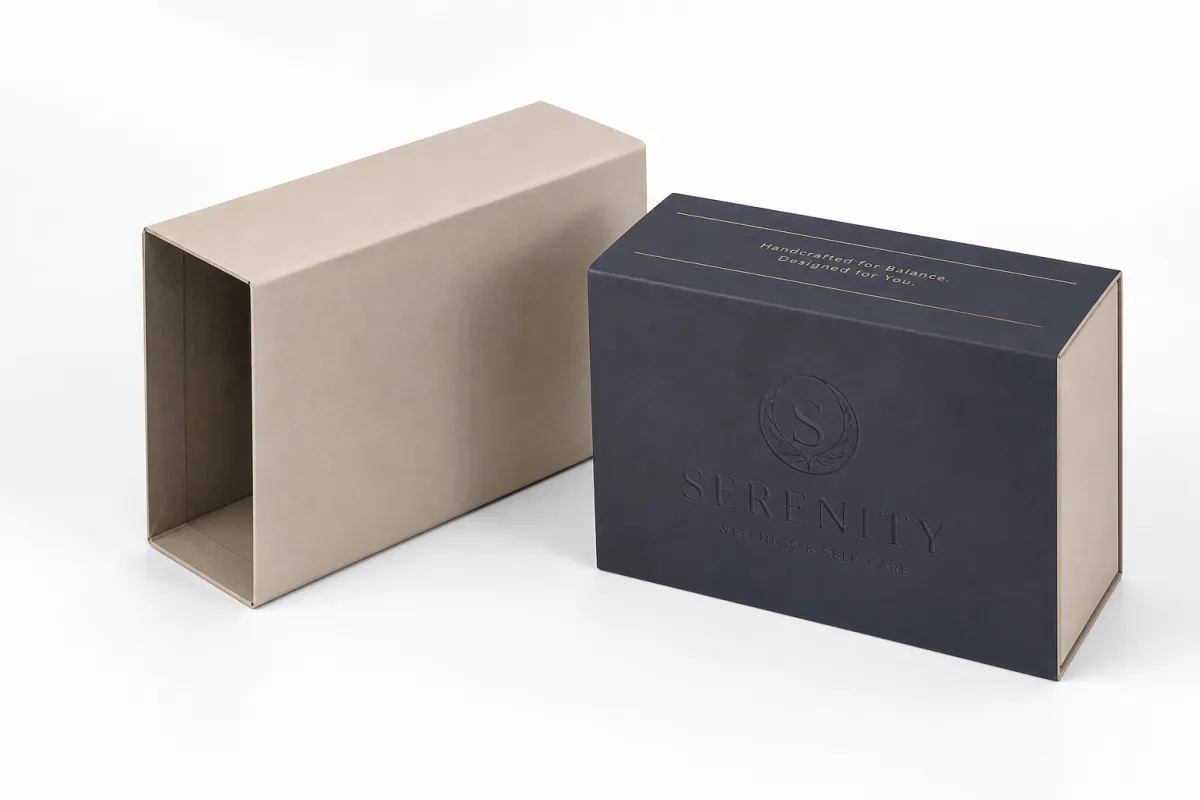
A sleeve is easy to picture once you see how it sits on the package. It is an outer printed wrap that fits around an existing box, adding branding, messaging, and visual structure without forcing a redesign of the carton itself. In practice, the format can turn a plain mailer, folding carton, or rigid box into packaging that looks intentional the moment it leaves the shipper.
The practical surprise is how much visual weight a narrow band of print can carry. A clean sleeve can frame the logo, spotlight product claims, add a holiday message, or create a premium reveal, and it can do that with far less paperboard than a full structural rework. That is why many brands use custom logo box sleeves for product launches, subscription boxes, holiday editions, and short-run promotions where the artwork changes more often than the base pack.
One common mistake is treating the sleeve like an afterthought. A well-planned sleeve is not only decoration; it belongs to the packaging design language. When the panels line up cleanly, the sleeve supports the product story, helps the shopper find the logo quickly, and makes the whole package feel more deliberate. That matters whether the brand is selling candles, apparel, cosmetics, food, or gift sets.
Here is the real advantage: custom logo box sleeves let you separate structure from graphics. That means you can keep one durable carton size in inventory and refresh the exterior look as often as needed. For teams that manage multiple SKUs, that flexibility can reduce waste, simplify purchasing, and keep package branding consistent even when the inside assortment changes.
There is also a supply-chain benefit that gets overlooked. If the base carton is already tested for fit, drop performance, and shelf presentation, the sleeve becomes the variable part of the system instead of the entire box. That lowers risk during product packaging changes because you are not reopening the structural design every time the campaign changes. In a busy operation, that kind of stability matters more than it sounds.
A sleeve is often the smartest move when the box is fine but the story is not. The base carton does the job; the printed outer layer does the selling.
When people ask where sleeves work best, I usually point to launches, bundled kits, and any program that needs a seasonal or limited-edition identity. The sleeve gives you a fast visual reset, and that matters when you need branded packaging to feel current without paying for a whole new box line. It also helps retailers that want the same carton size across several product families, because the sleeve can distinguish one version from another at a glance.
As a simple planning rule, think of sleeves as the layer that answers three questions: what is this, who is it for, and why should the buyer care right now. If those answers need to change often, the format usually offers a cleaner path than redesigning the entire package. That is why they are so common in retail packaging and direct-to-consumer kits that need speed, flexibility, and a neat presentation.
From a packaging buyer’s point of view, that mix of speed and control is hard to ignore. You can keep the core carton in place, then adjust the visual message for a retailer, region, season, or bundle type without requalifying the whole package system. That makes custom logo box sleeves useful not only for marketing teams, but also for operations teams that need fewer moving parts on the packing floor.
How custom logo box sleeves fit on existing cartons
The mechanics are straightforward, but the details matter. A sleeve is sized from the finished box dimensions, then wrapped or slipped over the carton so the printed face area lands where the brand wants attention. With custom logo box sleeves, the artwork is usually built around the front panel, side panels, and seam location, because those are the places where the shopper will see the strongest visual cues first.
Exact measurements matter more than people expect. A box with a lid, a tuck flap, a shoulder, or an internal insert can look simple on paper and still behave differently once assembled. If the sleeve is based only on the flat box dimension, it can end up too tight, too loose, or positioned a few millimeters off center. For sleeves, those millimeters are not trivial, because a small fit problem often becomes a production problem when packing speeds rise.
The most common applications are folding cartons, rigid boxes, mailer boxes, and product bundles. A sleeve can be the right choice when you want a printed wrapper around an existing structure, but it is not always the right choice for every box style. If the box already prints well and does not need seasonal changes, a direct print may be better. If the structure is stable but the graphics need to move often, the format usually wins on flexibility and convenience.
Artwork placement should be planned before anybody approves a final dieline. The front panel should carry the logo and the core message, while the side panels can hold secondary claims, ingredients, directions, or campaign copy. Leave the seam area quiet whenever possible, because a seam can interrupt small text or make a decorative image look awkward. With custom logo box sleeves, barcode zones, legal copy, and regulatory marks need the same attention as the visible brand face.
For teams new to the format, a simple mock-up helps. A paper dummy or digitally imposed proof can show where the sleeve sits on the assembled carton, how the graphics wrap across the edges, and whether the logo lands in the right visual field. That little step often prevents expensive back-and-forth later, especially when the sleeve is part of a larger product packaging roll-out.
When the box has a special opening style, I like to ask one question early: does the sleeve need to slide on from the top, or does it need to wrap around a box that opens in a way the sleeve must not block? The answer affects both the dieline and the application method. In other words, these sleeves are simple only when the box shape is simple, and the fit has to be designed around the actual assembly sequence, not around a flat drawing alone.
Another detail worth checking is how the sleeve behaves during loading. If the carton is packed on a semi-automated line, a sleeve that catches, wrinkles, or shifts can slow everything down. That is why I like to test the first samples with the actual pack-out flow, not just with hand assembly. Custom logo box sleeves should feel like part of the system, not like a fragile add-on that needs careful handling every time it is applied.
Materials, finish, and durability
Fit starts with dimensions, but it does not end there. You need the finished length, width, and height of the assembled box, plus the board thickness or wall thickness if the carton is rigid. Clearance matters too. A sleeve that is too tight can scrape ink, bow at the corners, or slow down packing, while one that is too loose can shift in transit. A practical starting point is usually a small but real allowance built into the dieline, then adjusted after a sample is tested on the actual box.
Material choice changes both the feel and the durability of the sleeve. Many projects land on 14pt to 24pt paperboard, with 18pt SBS or a 300-350gsm coated stock serving as a common middle ground. Heavier board feels more substantial and resists curl better, but it can cost more and may need more careful scoring. If you want a cleaner premium look, custom logo box sleeves often use coated art board or C1S stock, while a more natural brand might choose uncoated kraft or a textured sheet that supports a warmer package branding style.
If sustainability is part of the brief, ask whether the board is FSC certified and whether the finish still supports recyclability. Paperboard options can vary a lot, and not every coating behaves the same in a recycling stream. A supplier that understands FSC-certified material sourcing, like the standards described at FSC, can help you balance appearance with responsible material choices. That matters for branded packaging that needs to look premium without sending the wrong environmental signal.
Print and finish decisions may have the biggest effect on perceived value. Matte varnish gives a softer, quieter look; gloss makes color pop; soft-touch lamination adds a velvety feel; foil can emphasize a logo or emblem; and spot UV can add selective shine over a darker field. Each option changes the cost and the handling experience. I usually advise buyers to choose one strong finish rather than stacking too many effects, because the best results often come from clear contrast, not from overloading the surface.
Durability is about more than whether the sleeve survives a flat ship carton. Ink rub resistance, corner scuffing, shelf wear, and handling during fulfillment all matter. If the sleeve will move through a packing line, the print needs to tolerate repetitive contact from hands, trays, and cartons. If it will live in retail display for several weeks, the surface needs to hold its color and finish without looking tired after the first day. In practical terms, the sleeves should be judged by how they look after handling, not just how they look in a proof.
For products that travel through the mail, testing against recognized shipping and distribution methods can save headaches later. Organizations such as ISTA publish test frameworks that help teams think about vibration, drop, and compression in a more disciplined way. That does not mean every sleeve needs full lab testing, but it does mean the packaging should be designed with real transit conditions in mind, especially if the sleeve is part of a Premium Product Packaging program.
One more practical point: the sleeve should match the box style in spirit, not just in size. A thick, rigid luxury box can support a more tactile finish and heavier board, while a light folding carton may look better with a cleaner, simpler print treatment. That balance is why these sleeves deserve the same attention as the base carton. The best fit is the one that feels intentional from the outside and behaves predictably during packing.
In some cases, the finish choice changes how the sleeve is handled more than how it is seen. Soft-touch coatings can feel premium, but they may pick up fingerprints if the pack-out area is dusty or the product is handled frequently. A matte aqueous finish may be less dramatic, yet it can be easier to live with on a busy line. That is the sort of tradeoff a good packaging partner should explain plainly before production starts.
A sleeve is only cheap if it fits first. The moment you need hand-adjustment on the line, the labor cost can eat the paper savings very quickly.
Custom logo box sleeves pricing: what moves the unit cost
Pricing usually follows the same pattern as any other printed packaging project: size, stock, print coverage, finishing steps, number of colors, setup complexity, and whether special die cuts are needed. A small sleeve with one or two colors on standard stock will generally cost less than a large sleeve with foil, spot UV, or a custom window opening. The real price driver is rarely one thing; it is the combination of format, finish, and quantity.
MOQ matters because press setup and die cutting are fixed costs spread across the run. Lower quantities usually carry a higher unit price, especially when the sleeve is highly customized or finished with specialty effects. For simple runs, some projects can start in the low hundreds, but many practical orders sit around 500 to 1,000 pieces or more, and the unit cost usually improves as quantity rises. That does not mean ordering more is always right; it just means the pricing curve rewards scale.
When you compare quotes, do not stop at the headline number. Ask whether proofing, plates, tooling, freight, and packaging are included. One supplier may quote a lower print price but add separate charges later for die setup, while another may bundle more of those costs into one line. Fair comparison means matching the same stock, same size, same finish, and same delivery method before you judge which quote is truly lower.
| Option | Typical run | Typical unit cost | Best for | Main tradeoff |
|---|---|---|---|---|
| 14pt SBS, 4-color print, aqueous coat | 1,000-5,000 | $0.18-$0.34 | Simple retail packaging and short promotional runs | Less tactile luxury than heavier stocks |
| 18pt C1S, matte finish, accurate die line | 1,000-10,000 | $0.24-$0.42 | Balanced look for branded packaging and product packaging | Moderate cost increase over basic stock |
| Soft-touch laminate with foil accent | 2,000-10,000 | $0.45-$0.95 | Premium gift sets and elevated package branding | Higher setup and finishing cost |
| Kraft stock, 1-2 color print | 500-5,000 | $0.20-$0.36 | Natural, earthy brand systems | Less color saturation than coated board |
| Custom die cut with window or special panel | 1,000-7,500 | $0.40-$0.70 | Retail displays that need a stronger reveal | More tooling and sample time |
The table above is a planning tool, not a quote engine. Real pricing shifts with print coverage, carton dimensions, shipping method, and how much finishing you want on the outside. Still, the spread is useful because it shows where sleeves can save money: you keep the base box, change only the exterior branding, and avoid a full custom printed boxes redesign when the structure already works.
That is especially helpful for seasonal launches and SKU families. A brand can run the same outer carton year-round, then change the sleeve graphics for a holiday set, limited edition flavor, or retailer-specific promotion. In those cases, custom logo box sleeves often provide a better return than rebuilding the whole package system, because the packaging design stays stable while the communication changes.
If budget is tight, the easiest savings usually come from reducing special effects, simplifying the die, and keeping the sleeve dimensions as close to a standard sheet layout as possible. Even a small change in nesting efficiency can affect cost. That is why clear measurements and a realistic quantity estimate matter so much when you ask for quotes. The cleaner the input, the cleaner the number you get back.
Another useful habit is asking for two quote paths at once: one with the premium finish you want, and one with a more restrained finish that preserves the same visual hierarchy. That side-by-side view helps a buyer see where the money is actually going. Often, the second option keeps most of the visual strength while trimming enough cost to make the program easier to approve.
Custom logo box sleeves process and timeline: from dieline to delivery
The process usually starts with the finished box dimensions, not the artwork. That detail comes first because the sleeve has to fit the assembled carton, and the dieline depends on the actual outer size. Once the dimensions are set, the supplier creates or confirms the sleeve template, the designer places artwork on it, and the team reviews the proof. For custom logo box sleeves, that first measurement step is where the project either stays smooth or starts drifting.
The most time-sensitive stage is dieline and artwork approval. A small sizing error here can create delays that affect every later step, because the printer does not want to produce a run until the fit is confirmed. If the sleeve has a seam, a window, a barcode, or a special finish, that approval round matters even more. In many cases, custom logo box sleeves move faster when the art is ready in vector format and the box sample is available before final signoff.
A typical timeline depends on complexity. Simple projects can often move from proof approval to production in about 12 to 15 business days, while more finished sleeves with foil, embossing, or multiple proof rounds can take longer. Sampling may add a few days, and shipping can add another few days depending on the lane. That is why I tell buyers to treat custom logo box sleeves as a scheduled production item, not as a last-minute accessory that can be squeezed in after everything else.
Here is the sequence I would expect on a well-run order:
- Collect finished box dimensions, quantity, stock preference, and artwork files.
- Confirm the sleeve dieline and any seam, fold, or window locations.
- Review a digital proof or physical sample for fit and color.
- Approve print production and finishing details.
- Run the job, trim or die cut, and inspect the finished sleeves.
- Pack and ship with the application method matched to the packing line.
Each step can hold up the next one. If the proof needs revision, the schedule shifts. If the finish is more complex than expected, the press queue may move. If the shipping method is air rather than ground, cost rises but the lead time shrinks. That is the basic rhythm of production: a little up-front precision saves a lot of time later, especially when the sleeves are tied to a launch date or trade show.
Buffer time is a wise habit. Even a clean project can hit a delay if a file needs rescaling, a sample needs one more round of adjustments, or a finishing queue runs long. When these sleeves are part of a seasonal program, I usually advise leaving enough room for proofing, transit, and one unexpected correction. That extra margin does not sound exciting, but it often protects the campaign.
For brands that are coordinating multiple packaging pieces at once, the sleeve schedule should sit next to the carton, insert, and label schedule. The more those pieces depend on one another, the more important it is to keep the sleeves aligned with the final box sample. In practice, these sleeves work best when the box, the sleeve, and the filling line are planned together instead of in separate silos.
One detail that saves a surprising amount of time is deciding how the sleeves will be packed before they arrive at the plant. Flat-packed bundles are usually easy to store, but they need a clean application process so the team can move without confusion. If the sleeve count, bundle size, or carton labeling is vague, the first few hours on the floor can turn into sorting instead of packing.
Common mistakes and better production habits
The first mistake is measuring the wrong thing. Buyers sometimes measure only the body of the box and forget the lid, the tuck flap, or the extra thickness from a rigid board. That can make a sleeve feel fine on paper and wrong in the hand. With custom logo box sleeves, the measurement must reflect the assembled package, not a simplified sketch of it.
The second mistake is approving artwork before a final sample exists. A file can look perfect on screen and still fail once it wraps around the actual box. Small text can drift too close to a seam, a logo can get chopped by a fold, and a background color can look flatter on real stock than it did in a monitor preview. I have seen more than one project lose time because the team skipped the sample check and had to correct something that a physical mock-up would have caught immediately.
Design issues are often subtle. Weak contrast is one of the biggest. Dark text on a textured kraft stock can disappear, and a delicate serif font can blur once the print lands on coated board at production speed. Another common issue is letting artwork wrap awkwardly across an edge where the eye expects a clean line. In retail packaging, that kind of misalignment is easy to spot. Good sleeves keep the focal point clear and let the seam disappear into the background whenever possible.
Here are a few practical production habits that save headaches:
- Request a physical sample whenever the schedule allows.
- Check the sleeve on a fully assembled box, not a partial mock-up.
- Confirm how the sleeve will be packed and applied on the line.
- Leave room for barcode, legal, or regulatory copy before final art approval.
- Choose one finishing effect that supports the product instead of competing with it.
That last point matters more than people think. A heavy foil pattern can look luxurious, but if it overwhelms the product message, the package loses clarity. A subtle matte sheet with one controlled highlight often feels more confident. For packaging teams, the best finish is not the flashiest one; it is the one that makes the brand easier to understand and easier to trust.
There is also a line between premium and impractical. A sleeve that is beautiful but slow to apply can create labor cost on the packing floor, and a sleeve that looks good but scuffs too easily will not hold up in transit or on shelf. That is why production-minded buyers think about handling, storage, and application as part of the design brief. These sleeves should help the operation, not just decorate it.
Another habit that pays off is keeping a simple approval trail. Save the final dieline, the approved proof, the sample photo, and the carton specification in one place. If the project is repeated later, that file set becomes a reliable reference instead of a fresh round of guesswork. In packaging, repeatability is a real asset, especially for programs that rely on custom logo box sleeves across multiple product cycles.
Clean results usually come from restraint, clear measurements, and one good sample, not from piling on effects and hoping the press sorts it out.
If you keep the logo readable, the panels aligned, and the fit tested on the real carton, the project usually lands well. That is the practical side of sleeve work: they reward discipline. A buyer who respects the measurements and the production flow usually gets better print quality, fewer surprises, and a sleeve that looks like it belonged with the box from the start.
How to prepare a stronger sleeve project
The fastest way to improve a quote is to give the supplier the right inputs. Gather the finished box dimensions, estimated quantity, artwork files, preferred stock, and any finish ideas before you ask for pricing. If you already have the base carton, send that detail too. That reduces revision rounds and helps custom logo box sleeves quotes come back with fewer assumptions and fewer hidden surprises.
A simple approval checklist goes a long way. Fit, color expectation, finishing, barcode placement, and packing method should all be reviewed before the run starts. If your sleeves are part of a retail launch, also check how the package will be displayed, stacked, or shipped. Those details shape the final production choice, and they matter just as much as the artwork itself when you are trying to keep the project on schedule.
It also helps to compare two or three material and finish options instead of choosing the cheapest line item on the page. A modest upgrade in stock can improve stiffness, while a simpler finish can keep the project on budget and on schedule. That balance is the heart of good packaging design. You want the sleeve to support the product, not overpower it, and you want the cost to make sense for the use case.
If you are still planning the broader package system, it can help to review other Custom Packaging Products alongside the sleeve concept. Sometimes the right answer is a sleeve over an existing carton, and sometimes a fresh box structure is better. The point is to choose the format that fits the brand, the schedule, and the order quantity rather than assuming one format solves every problem.
For food, cosmetics, apparel, and gift packaging, I also like to think about how the sleeve supports the customer’s first touch. Does the box open cleanly? Does the sleeve help the product feel organized? Does the logo face the shopper as soon as the package is picked up? Those details are not decorative extras. They are part of why custom logo box sleeves can make a simple box feel more deliberate and more valuable.
My practical recap is simple: think about shelf impact, production readiness, and fit on the actual box. Those three decisions determine whether the project feels easy or frustrating, and they matter every time custom logo box sleeves move from concept to production. If you start with a real sample, clear measurements, and a sensible finish choice, the final result usually looks more polished and costs less in trouble than a rushed redesign would.
That last point is the one I would keep in mind if you are building the next round of packaging. The sleeve is not just a printed band; it is a working part of the package system, and custom logo box sleeves perform best when the design, the fit, and the production plan all support each other from the start. The most reliable next step is to measure the finished box, mock up the sleeve on a real sample, and approve the seam placement before you commit to a full run.
FAQ
What boxes work best for custom logo box sleeves?
Rigid boxes, folding cartons, and mailer boxes usually work best because they provide a stable shape for the sleeve to grip and display the artwork cleanly. Uneven surfaces, oversized inserts, or unusual closures may still work, but they need extra testing before production. The safest choice is the box you will actually ship or display, because custom logo box sleeves should always be checked on the final assembled package.
How tight should custom logo box sleeves fit?
They should feel secure without scraping, bowing, or forcing the box shut. That usually means the finished dimensions need to account for material thickness and closure details, not just the flat box measurements. A good fit comes from testing on a real sample, and sleeves that are too loose or too tight tend to create either shifting during handling or damage during application.
Are custom logo box sleeves cheaper than printing full boxes?
They often are when you already have a usable box structure and only need branding on the outside. They can be especially cost-effective for seasonal or limited-run graphics because the base carton stays the same. For very small quantities or highly finished luxury looks, the gap can narrow, so custom logo box sleeves should be reviewed line by line rather than assumed to be the cheapest option every time.
How long does production take for custom logo box sleeves?
The timeline depends on artwork approval, sample needs, print complexity, and finishes such as foil or specialty coating. Simple sleeve projects usually move faster than detailed or heavily finished ones. The safest plan is to allow extra time for proofing so the final fit and color are approved before the run starts, especially when custom logo box sleeves support a fixed launch date.
What do I need before requesting a quote for custom logo box sleeves?
Have the finished box dimensions, estimated quantity, artwork files, and preferred stock or finish ready. Include details about how the sleeve will be used, such as retail display, shipping, gifting, or seasonal promotion. If you already have a box sample, send that too so the supplier can confirm fit quickly and reduce revisions. In practice, the strongest custom logo box sleeves projects start with clear measurements, a real sample, and a realistic deadline.
What finish gives the most premium look?
That depends on the brand, but soft-touch lamination with a restrained foil accent usually feels elevated without becoming loud. Gloss can look bright and commercial, while matte feels quieter and more controlled. For many packaging buyers, the best answer is the finish that supports the product story and still holds up well after handling.

