Custom Logo Garment Bags: Buyer Guide for Retail Packaging
A pressed blazer can leave production looking sharp and still arrive on the floor looking tired if the packaging is wrong. The damage is usually not dramatic. It is dust, scuffing, a wrinkled collar, a snagged hanger, or a bag that was too flimsy to survive one more transfer. Those small failures add up, which is why custom logo garment bags deserve more attention than they usually get.
For apparel teams, these bags sit inside a larger packaging system. They protect the garment, support the brand, and reduce the amount of handling required to keep product presentation consistent. They also sit alongside branded packaging, tissue, hang tags, cartons, and Custom Packaging Products that shape how the whole line feels before a customer ever touches the garment. If one piece is off, the mismatch shows.
A garment bag is straightforward in structure: a flexible sleeve sized to cover a hanger-loaded item. The simplicity is misleading. The spec determines whether the bag works as retail packaging, storage protection, a shipping layer, or a display aid. A dry-cleaning sleeve and a retail garment cover are not the same object, even if they look similar at a glance. One is built to be temporary. The other has to hold a presentation standard.
That distinction matters because buyers often start with appearance and only later discover the operational issues. A bag can look clean in a proof and still slow down packing, catch on a hook, or arrive with a seam split. The useful question is not whether a bag exists. It is whether it fits the garment, the workflow, and the cost target without creating avoidable rework.
A low-quality bag can make a premium garment feel less finished. A well-spec’d bag does the opposite without drawing attention to itself.
Why custom logo garment bags do more than protect apparel
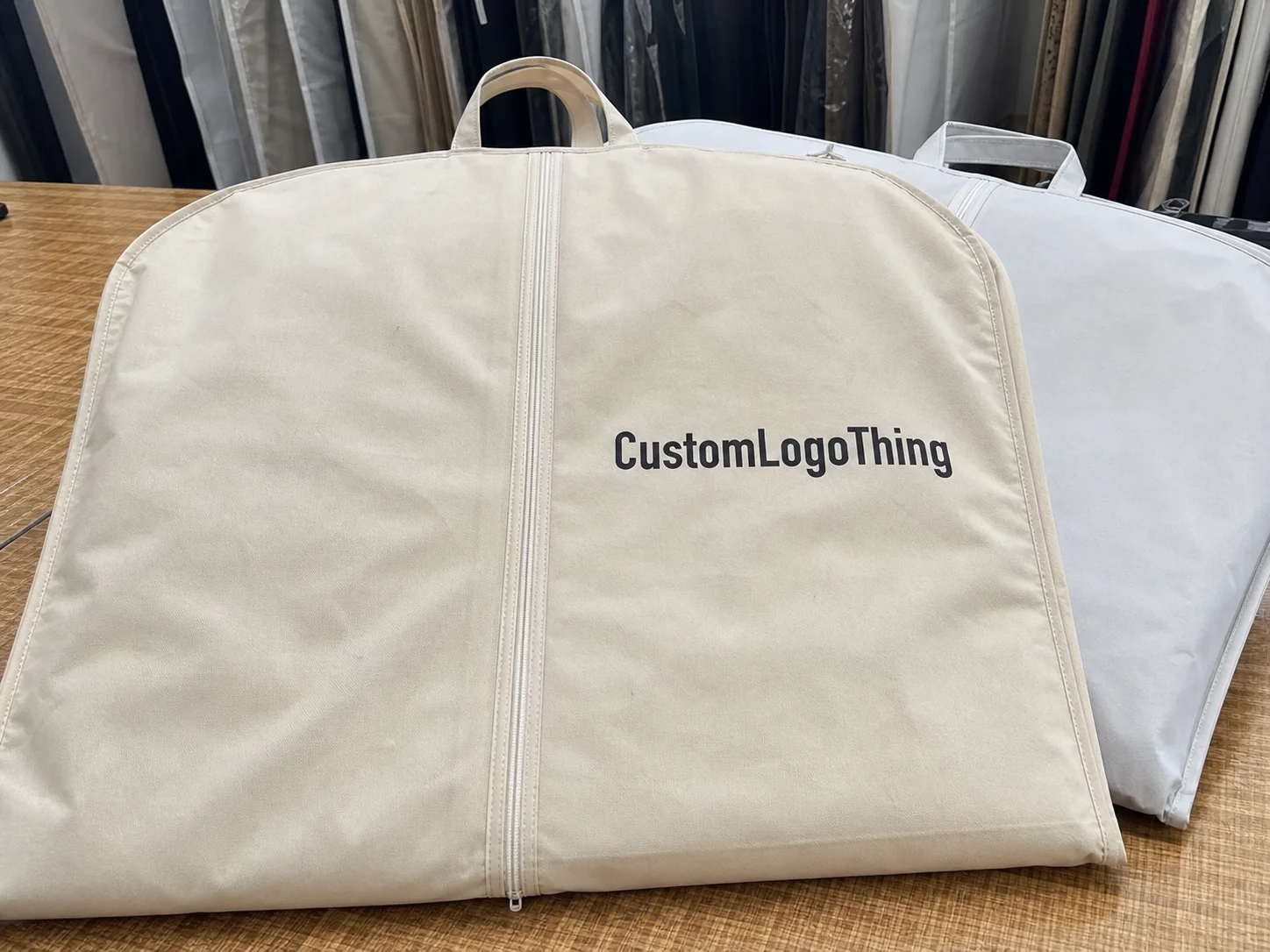
In a retail or fulfillment setting, the bag is often the first thing a handler touches after pressing or hanging the garment. That seems minor until you count how often garments move between stations. Every transfer is a chance for dust, friction, or a bad fold to show up later. A good bag reduces those risks while keeping the product grouped, visible, and easier to manage across storage, replenishment, and floor-ready merchandising.
custom logo garment bags also help a program look organized. Consistent sizing and print placement make a rack look intentional instead of improvised. That visual order matters more than many buyers expect. A bag that is too loose, too short, or too glossy can make even well-made apparel feel less controlled. The reverse is true as well. A clean, properly sized sleeve can make a basic item feel more deliberate.
The practical value is not only presentation. A better bag reduces rebagging, sorting confusion, and the small delays that happen when a team has to stop and fix packaging before a garment moves forward. On high-volume programs, those minutes become labor cost. On smaller programs, they become inconsistency. Either way, the bag is doing more than covering fabric.
Retail buyers also use these bags for storage between seasonal resets, transfers between locations, and shipping pressed product to a store. That means the same bag may need to tolerate warehouse handling, light transit stress, and repeated visual inspection. A design that only looks good on a mockup will not survive those conditions for long. A useful spec accepts that the bag is part of the operating system, not a decorative extra.
That is especially true if the garment itself is expensive or delicate. A tailored coat, structured dress, or formal piece deserves packaging that protects the shape as much as the surface. In those cases, the bag should be judged on fit, durability, and handling performance first, then branding second. If the order is being used as part of broader package branding, that hierarchy keeps the whole system honest.
How garment bag construction and print methods work
The details that matter most are usually the ones buyers skip past on first review: film type, thickness, seam style, opening design, gusset depth, and print method. Each one affects how the bag behaves in real use. A sleeve that is fine for a short blouse may be a poor choice for a long coat or layered outfit. The wrong combination leads to tearing, cramped storage, or bags that feel overly flimsy during packing.
Most Custom Garment Bags use polyethylene film, commonly LDPE or LLDPE, because the material is flexible, economical, and easy to print. Clarity is useful when the garment should remain visible. Opacity is useful when the brand wants a cleaner outer surface or needs to disguise mixed inventory behind a logo panel. Gloss film usually gives a brighter retail feel. Matte film cuts glare and can make the logo easier to read under harsh store lighting.
Print method affects both appearance and lead time. Flexographic printing is common for larger runs, especially when the artwork is simple and uses one or two colors. It is efficient, but setup takes time, and more colors increase plate work and proofing complexity. Buyers sometimes ask for more ink coverage than they need. That usually raises cost without improving legibility. A bold logo with good contrast often performs better than a crowded design.
The geometry matters too. Side seams can change strength and the way the bag hangs. Gussets add room for bulky garments, but they also increase material usage. A reinforced hook area or hang hole should match the hanger system in use, not a theoretical one. If the hanger and bag fight each other, the rest of the spec becomes irrelevant.
Some programs use open-ended sleeves because speed matters more than enclosure. Others need a fold-over top, adhesive flap, or zipper-style closure because the bag will be reused or moved more often. The right choice depends on whether the bag is primarily for storage, display, or shipping. There is no universal best option, only the one that matches the work the bag has to do.
For buyers comparing custom logo garment bags across suppliers, the most useful question is not “Which looks nicest?” It is “Which spec holds up under our packing conditions?” That question narrows the field faster than almost anything else.
Common print choices buyers compare
- One-color branding: usually the cleanest, least expensive option for bold logos and simple layouts.
- Two-color print: useful when brand identity depends on a second color but the artwork stays straightforward.
- Large print panels: stronger visual impact, but they raise setup cost and ink use.
- Clear bag with printed logo: good when the garment should remain visible while the brand stays prominent.
Material, gauge, and closure choices that affect performance
Gauge is one of the first numbers buyers ask about because it has a direct effect on durability. Thinner film is lighter and cheaper, and it can be enough for short-term storage or low-touch showroom use. Thicker film holds up better during packing, unpacking, and shipment. For many retail applications, the practical range sits around 1.5 to 3 mil, though garment weight, transit distance, and handling frequency should drive the final choice.
Thickness is only part of the story. A softer film tends to glide over garments more easily, which helps in high-volume packing. A stiffer film can look more structured on the rack and may hold its shape better during storage. That difference matters for programs that need both protection and a neat visual profile. A bag that collapses too easily can look cheap; one that is too rigid can be awkward to pack.
Size and shape deserve the same attention. Long garments need length allowance. Bulky garments need width and, often, a gusset. If the hem is pressed against the bottom seam or the shoulders are crowded against the hanger opening, the bag is too small even if the nominal dimensions look reasonable on paper. Always measure the finished garment on the hanger, not the flat fabric alone.
Closure design changes how the bag is used. Open-ended sleeves are fast and economical. Fold-over tops improve presentation and help keep dust out. Adhesive closures work well in controlled environments or for single-use shipping. Zip closures are useful when the bag will be reused or accessed repeatedly, but they add cost and are not necessary for every retail program. The right choice is usually the least complicated one that still fits the workflow.
| Closure style | Best for | Typical cost impact | Operational notes |
|---|---|---|---|
| Open-ended sleeve | Fast packing, showroom storage, basic retail protection | Lowest | Simple to run, but offers less closure security |
| Fold-over top | Cleaner presentation, dust reduction, moderate handling | Low to moderate | Good balance of appearance and ease of use |
| Adhesive flap | Shipping-ready apparel, controlled warehouse flow | Moderate | Closure quality must stay consistent across the run |
| Zip closure | Reusable garment storage, premium presentation | Highest | Best for repeated access, not always needed for standard retail |
There is also a transit question that buyers should not ignore. If the garments will move in cartons across multiple touchpoints, the packaging has to handle vibration, compression, and drop stress, not just warehouse hanging. Packaging teams often refer to ISTA test protocols for that reason. Those tests are useful when the order contains high-value apparel or when the route is rough enough to expose weak packaging quickly.
For broader packaging systems, paper inserts, hang tags, and cartons may be part of the same buying decision. If paper-based components matter to your program, FSC certification can be worth considering. It does not solve packaging performance on its own, but it helps align the paper side of the system with brand expectations.
Process and timeline: from artwork to production steps
A clean order starts with complete information. The supplier needs garment dimensions, the logo file, the bag style, the film gauge, the closure type, and the quantity target. If those details are missing or still being debated, the project slows down immediately. That is not a sales problem. It is a production reality. Good specs reduce back-and-forth because they leave fewer gaps for someone else to fill in.
The usual path is simple enough: spec gathering, artwork review, proofing, sample or pre-production approval, production, finishing, packing, and freight planning. The front end can move quickly if the logo is already finalized and the size is standard. It slows down when the buyer is still deciding whether the bag should be clear or opaque, open-ended or folded, one color or two.
Sampling is rarely wasted time. A proof may look right and still fail once it meets an actual garment. The logo might sit too close to a seam. The opening might be too narrow for the hanger. The bag might look fine on a flat table but slump once a jacket is inside it. That is the kind of issue that is easy to miss and annoying to correct after production starts.
Timeline discipline matters as much as design. A straightforward run may take about 12 to 15 business days after proof approval, but that window can stretch if the artwork changes or the film spec is unusual. Freight adds another layer. A quote that looks fast on paper may still miss a store date if shipping is not planned early. Seasonal resets make that mistake expensive because apparel is often ready before the packaging is.
If the same program includes custom printed boxes or other retail packaging components, review those approvals together rather than in separate lanes. That reduces the chance of one element being approved while another is still changing. The final package looks more deliberate that way, and the schedule tends to behave better too.
Practical rule: build the packaging calendar backward from the in-store or launch date. That gives enough room for proofs, small corrections, and freight delays without having to rush the entire order.
Cost, pricing, MOQ, and what drives your quote
Pricing for custom logo garment bags is driven by a small set of variables: bag size, film gauge, print colors, coverage area, closure style, and quantity. Larger bags use more material. Heavier film costs more. More colors increase setup work. Gussets, zippers, reinforcement, and special finishing all push the number upward. That is why the cheapest quote is often the least useful one unless the specs are identical.
MOQ, or minimum order quantity, reflects production efficiency rather than arbitrary policy. Standard sizes with simple print layouts can often begin around 3,000 to 5,000 units. Specialized designs may require more volume to make the run economical. Smaller orders are possible in some cases, but the unit price usually rises because the setup cost is spread over fewer pieces.
For planning purposes, a simple retail run might land around $0.14 to $0.28 per unit at 5,000 pieces, while smaller custom orders can cost substantially more. Thicker film, larger print areas, and closure upgrades can move that number quickly. A quote that does not specify size, gauge, and print count is not really a quote yet. It is a starting point.
Freight changes the final math. A low factory price can be offset by oversized cartons, pallet space, or rush shipping. If the bag is bulky, dimensional weight matters. If the schedule is tight, expedited freight may cost more than the product itself. Buyers should compare landed cost, not just line-item unit pricing. That keeps the discussion grounded in actual budget impact.
A practical quote comparison usually includes the following:
- Confirm that size, gauge, closure, and print coverage match exactly.
- Check whether setup, plates, and packaging are included.
- Ask how freight is handled and whether it is prepaid or estimated.
- Compare MOQ to actual usage, not to a theoretical target.
- Verify whether proofing or sample bags are included in the offer.
That level of comparison is useful across apparel packaging, retail packaging, and Custom Packaging Products more broadly. It keeps the buyer from comparing two different specs as if they were the same thing.
Common mistakes that cause fit, print, or shipping problems
Sizing errors cause the first set of failures. A bag that is too short for a long dress or coat forces the garment into an awkward fold. One that is too narrow presses into the fabric and creates a cramped look. A bag that is too large can slide around, twist on the hanger, and look sloppy. The right measurement starts with the garment on its hanger and includes the actual bulk of the piece, not just the flat dimensions.
Finish and opacity create the next layer of problems. If the film is too transparent, the garment can overpower the logo and weaken the branding. If the surface is too glossy, store lighting can create glare that makes the mark harder to read. If the film is too light and the finish too dull, the bag can look thin rather than premium. A sample under real lighting tells you more than a proof file does.
Artwork mistakes are expensive because they are easy to miss until the run is already approved. Fine lines, weak contrast, low-resolution files, and logos placed too close to seams all increase risk. Artwork should be checked at final size and, ideally, while the bag is filled. A centered logo on an empty sleeve can shift visually once the hanger and garment are inside.
Shipping failures often come from cutting material too aggressively. Thin film tears more easily. Poor palletization can crush the lower layers. Loose bundles snag in handling. If the bag is part of a larger retail packaging system, the problem may be system-wide rather than isolated to the bag itself. The bag, carton, and packing method need to work together if the product is going to travel well.
One more mistake shows up often: using a storage spec for shipping. Those are different jobs. Storage cares most about dust and presentation. Shipping cares more about strength, stackability, and movement control. A bag that performs in one setting can fail in the other, so the spec should match the harder use case if the bag has to do both.
The cheapest option is rarely the least expensive once you count rework, damaged presentation, and the labor it takes to fix avoidable errors.
Expert tips and next steps for ordering the right spec
The fastest way to get a useful quote is to build a simple spec sheet before you ask for one. Include the garment type, finished hanger-on dimensions, hanger style, bag size, film gauge, closure, print colors, quantity, and the intended use. That gives suppliers enough information to quote accurately and gives your team a clean basis for comparison.
Then test a sample garment in the proposed bag style. Not just for size, but for handling. Check whether the film slides smoothly, whether the hanger opening catches, whether the logo stays legible once the garment is loaded, and whether the bag still looks orderly after packing. A short sample check can prevent a full run from going sideways over a small design issue.
It also helps to think about replenishment early. If the bag will become part of a standard program, choose a spec that can be repeated without redesign. If the line is seasonal, leave room for a future artwork refresh without changing the core construction. Good packaging design is not only about the first order. It is about whether the item can be reordered six months later without starting from zero.
There is a practical buying sequence that works well:
- Gather the logo in a clean vector format.
- Measure the garment on its hanger.
- Decide whether the bag is for storage, display, or shipping.
- Request pricing with exact dimensions, gauge, and closure details.
- Compare the finished spec against the current packing workflow.
If you follow that sequence, custom logo garment bags stop being a generic packaging purchase and start functioning as part of the garment program itself. That is the real test. The right bag protects the apparel, supports the brand, and avoids creating extra labor. Anything less is just a sleeve with a logo on it.
FAQ
What size should custom logo garment bags be for retail apparel?
Measure the finished garment while it is on the hanger, then add enough extra length and width for easy loading without compressing the fabric. Long hems, bulky shoulders, and hanger hook space should all be part of the sizing decision.
Which material works best for custom logo garment bags?
The best material depends on whether the bag is used for storage, display, or shipping. LDPE and LLDPE are common because they balance flexibility, clarity, and cost, while heavier film improves durability when the bag will be handled often.
How does printing affect the price of garment bags?
More colors, larger coverage, and more complex artwork usually raise the price and can extend setup time. Simple branding tends to produce the best balance of cost, readability, and production efficiency.
What MOQ should buyers expect for custom logo garment bags?
MOQ varies by size, print method, and customization level, but standard custom runs often begin around 3,000 to 5,000 units. Smaller orders are possible in some cases, although the unit cost usually rises as volume drops.
How long does it take to produce custom logo garment bags?
A straightforward order can take about 12 to 15 business days after proof approval, but changes to artwork, nonstandard specs, or freight delays can extend that window. Build the schedule around the launch date, not just the production quote.
For retail programs that need to look organized in storage and still feel clean on the floor, custom logo garment bags are worth specifying with the same care as the garment itself.


