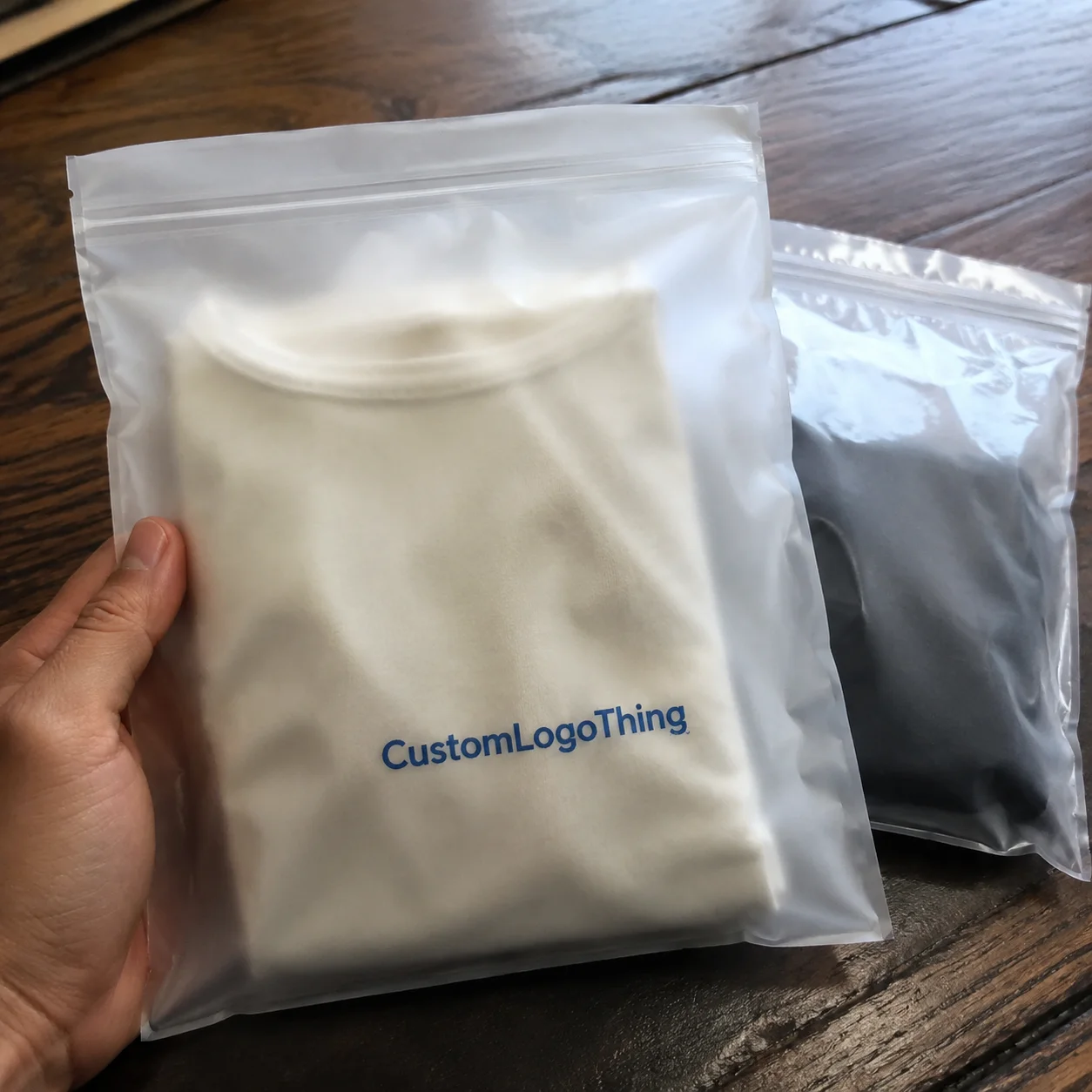
Logo Printed Garment bags do more than cover clothing. They are often the first physical brand touchpoint a customer sees, sometimes before the hanger, the tissue, or the garment itself. For a packaging buyer, that first impression can shift how the product is perceived, especially in apparel shipping where protection and presentation have to work together.
That is the practical value of logo printed garment bags: they protect garments, carry brand identity, and help the package feel intentional without moving into premium box territory. The result depends on details that are easy to overlook at the quoting stage. Film choice, print method, bag size, and minimum order quantity can change the final outcome as much as the logo artwork.
What logo printed garment bags do for apparel brands
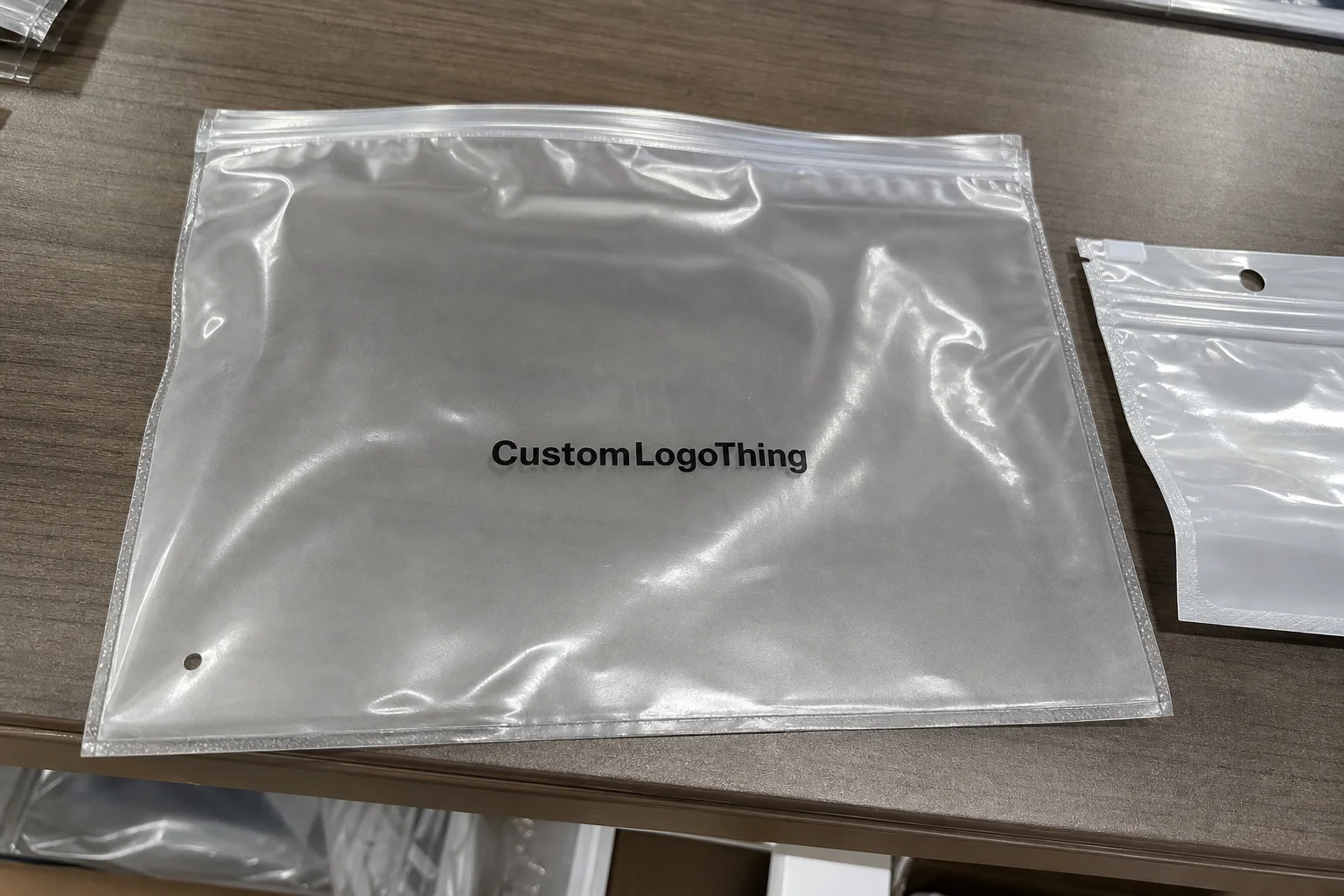
At the most basic level, garment bags are sleeves or covers for clothing. They help shield fabric from dust, scuffs, and handling marks. In retail and logistics, that sounds modest. In practice, it can be the difference between a shirt arriving crisp and arriving with a crease that reads as avoidable damage.
Once a logo is printed on the bag, the packaging takes on a second job. It becomes a brand carrier. That matters in ecommerce, where a customer may open a shipper and pull out a garment before they see a box insert or a hangtag. It also matters in dry cleaning, retail back stock, uniform distribution, and event apparel, where a branded sleeve can make the product look more organized and easier to manage.
There is also a perception issue. A plain poly sleeve reads as functional. A branded sleeve reads as planned. That difference can be small, but small signals carry a lot of weight in apparel. Premium basics, bridalwear, tailoring, and uniforms tend to benefit most because the packaging supports the price point instead of competing with it.
Compared with rigid packaging, garment bags are lighter, cheaper to store, and less expensive to ship. Compared with a plain poly bag, they add branding without the cost structure of a carton system. That makes them a useful middle option for brands that want a cleaner presentation without overspending on packaging.
Packaging reality: a garment bag is often judged before it is consciously noticed. If the logo is crisp, aligned, and sized correctly, the package feels more expensive than the materials alone suggest.
For buyers, the real question is not whether to add a logo. It is where that brand mark adds value and where it becomes decoration. The answer usually depends on product price, channel, and how the garment will be handled after packing.
How the print process works from artwork to finished bag
The production path usually starts with artwork preparation. Suppliers generally want vector artwork whenever possible, usually in AI, EPS, or PDF format. If the logo is only available as a raster image, the print may still work, but only if the resolution is high enough. On flexible film, fuzzy edges Stand Out Faster than they do on paper.
From there, the supplier matches the film and the print method. Flexographic printing is common for larger runs because it is efficient and handles repeat branding well. Rotogravure can support higher-end output and long runs, especially when detail consistency matters. Digital printing can work for shorter runs or variable artwork, though not every film or plant setup supports it.
Placement affects both appearance and cost. A centered logo on one side is usually simpler than a full-repeat pattern. One-color branding is often the cleanest option when the goal is recognition rather than decoration. More colors can work, but each additional color increases setup complexity and often raises the chance of color shift between proof and production.
Surface treatment matters more than many buyers expect. Ink adhesion on plastic depends on the film type, surface energy, and any treatment applied during production. If the film is too slick or the ink system is poorly matched, the logo may look good on the proof and disappoint on the actual run. That is why proofing is more than a formality. It is the point where scale, placement, contrast, and color can still be corrected before the order is committed.
A logo that looks elegant at 2 inches wide can disappear on a 24-inch bag panel. A good proof answers the questions that are obvious later but easy to miss in the moment: Is the logo too small? Too pale? Too close to the edge? Those errors are inexpensive to fix before production and expensive to fix after.
Key factors that affect quality, durability, and appearance
If you are comparing logo printed garment bags, start with the film, not the print. The base material drives most of the buying experience. Thickness, clarity, gloss level, tear resistance, and flexibility all affect how the bag performs in storage, transit, and retail display.
Gauge is usually one of the first specs to compare. Thinner film lowers cost, but it can tear more easily when garments have sharp hangers, buttons, or zippers. Thicker film feels sturdier and generally improves perceived quality. That said, there is no universal best gauge. A boutique retail cover and a warehouse transit sleeve do not need the same specification.
Logo visibility depends on contrast. Clear film can make a logo appear sharper if the ink color is strong. Frosted or tinted film can soften the look, which may be useful if the brand wants a quieter presentation. Opaque ink helps on darker substrates, but heavy coverage can make a design feel dense. If the bag is gusseted, folded, or heat-sealed, the print area may behave differently across seams and bends.
Environmental and compliance expectations are also changing buying behavior. Some brands want recyclable polyethylene, recycled-content film, or supplier documentation that supports sustainability claims. If that is part of the brief, ask for the exact material structure and any certification support. For broader recycling guidance, the EPA’s packaging resources are a useful reference: epa.gov/recycle.
Here is the buyer comparison that usually matters most: what looks premium on a showroom rail may fail in a parcel network. If a garment will go through automated handling, stacking, or extended storage, the bag needs more tear resistance and better surface durability than a static display cover. That tradeoff is where many spec sheets get too optimistic.
| Use case | Typical film preference | Branding style | Priority |
|---|---|---|---|
| Retail floor presentation | Clear or frosted medium-gauge film | Centered logo, clean one-color print | Visual clarity |
| Ecommerce garment shipping | Heavier film with better tear resistance | Small-to-medium logo, practical placement | Protection plus brand recognition |
| Warehouse storage | Cost-controlled clear film | Minimal branding or repeat mark | Dust and scuff protection |
| Uniform or event distribution | Durable film with consistent finish | Simple logo, usually one or two colors | Organization and easy identification |
Surface finish is another detail worth comparing. Glossy film tends to show detail well but can reflect store lighting and make fingerprints more visible. Matte or frosted film softens that effect, though it can reduce clarity if the logo is already delicate. Buyers often focus on the print color and ignore the finish, but finish affects how the logo reads from a distance.
Seals and closure style also influence durability. A bottom-sealed bag behaves differently from a side-sealed one, and a zipper-style closure is a different category altogether. If the garment bag will be reused, the closure becomes part of the quality discussion. If it is a one-time transit sleeve, seal strength and tear resistance matter more than opening convenience.
Cost, pricing, and MOQ factors buyers should compare
Pricing for garment bags is driven by a predictable set of variables: bag size, thickness, print colors, print method, custom structure, and order quantity. If a quote feels hard to interpret, one of those variables has usually not been fixed yet.
Setup costs matter a lot on smaller orders. A run of 1,000 bags can carry a higher unit price than 10,000 because the supplier still has to prepare plates, set color, and approve proofs. Higher volumes spread setup costs over more units, which lowers the cost per bag. That is why a quote that looks expensive at 500 pieces may look reasonable at 5,000.
MOQ is one of the easiest places for buyers to misread value. A lower minimum order quantity gives flexibility, which is helpful for a new design or a seasonal launch. Higher MOQs often unlock better pricing and more finish options, but they also create inventory risk. If the assortment changes quickly, a lower MOQ may be the better business decision even if the unit price is slightly higher.
Hidden costs deserve attention. Freight can move landed cost more than the bag price itself, especially on packaging that is bulky but light. Proofing charges may be included or billed separately. Pre-production samples can add time and money, but they often prevent a costly reprint. Ask whether the quote includes the packing format, carton count, and delivery to one location or multiple receiving points.
For a cleaner comparison, ask suppliers for three numbers:
- Unit cost at your target quantity
- Cost per 1,000 units so volume tiers are easy to compare
- Total landed cost including freight, samples, and any setup charges
That framework is more honest than a headline price alone. A quote of $0.22 per bag may look better than $0.25, but if freight, tooling, and sample fees are buried, the cheaper option can become the more expensive one quickly.
For context, a practical price range for custom printed Plastic Garment Bags can land around $0.18 to $0.28 per unit at 5,000 pieces, depending on size, film thickness, print coverage, and the print method used. That range is only a working benchmark. Thicker gauge, more colors, tighter tolerances, or specialty finishes can push cost higher.
| Order profile | Typical cost behavior | Best for |
|---|---|---|
| Small test run | Higher unit cost due to setup | Trial launches and seasonal checks |
| Mid-volume order | Balanced pricing and flexibility | Growing apparel brands |
| High-volume order | Lower unit cost, stronger economies of scale | Repeat programs and stable SKU demand |
It is also worth checking whether a supplier charges separately for repeat artwork revisions. Some will update a plate or digital file at no cost if the changes are minor. Others treat every revision as a new setup. That difference rarely appears in a basic quote, but it can matter if the brand refreshes frequently.
Process and timeline: from approval to delivery
The production path is straightforward, but every step depends on the one before it. It starts with RFQ, then artwork submission, proof approval, sampling, production, inspection, packing, and shipment. If a packaging schedule slips, the weak point is usually a handoff rather than the machine.
Delays often come from missing artwork specs, slow approval cycles, or last-minute color revisions. Material shortages can also stretch lead time, especially if the film grade or print system is not a stock item. First orders generally take longer because both sides need to validate the file setup and printing expectations.
One detail buyers often confuse: a sample timeline is not the same as the full production timeline. A sample can arrive quickly, but that does not mean the full run will ship at the same pace. Sampling may use a different line, a smaller batch, or a different packing method. Always ask whether the sample reflects the final spec exactly.
Custom printing and higher-volume runs can add time when color matching is involved. If your logo uses a brand-standard Pantone, the supplier may need to test against film color, ink opacity, and print speed. That is normal. It is also why urgent orders are easier when the artwork is simple and the film is standard.
A sensible planning rule is to build extra time for first orders, holiday peaks, product launches, and retail rollouts. If the bags need to arrive before a campaign or a seasonal store reset, treat lead time as part of the budget, not an afterthought. For packaging performance testing in transit, organizations like ISTA publish useful standards: ista.org.
Lead times also vary with run size and finishing requirements. A simple one-color print on stock film can move faster than a bag with custom dimensions, special thickness, and a multicolor logo. In practice, the difference can be several days or several weeks, depending on whether raw material is in stock and whether the supplier has to adjust the line for the job. Buyers who plan only for the print stage often underestimate the material and QC stages.
Common ordering mistakes that create waste or reprints
Low-resolution artwork is still the classic mistake. A logo that looks fine on a screen can fall apart on flexible packaging if the file is blurry, stretched, or built without clean vector edges. When the bag is glossy and transparent, those flaws become even more visible.
Another common miss is guessing the bag size. Measure the garment after folding and include the hanger if the product ships that way. A suit cover needs a different footprint than a dress bag, and the amount of empty space matters. Too much slack can look sloppy. Too little can wrinkle the garment or make closing awkward.
Overdesigned branding can backfire. Tiny type, thin lines, and too many colors often disappear on plastic. Strong logos with fewer elements usually print cleaner and read faster. On a moving conveyor, readability beats artistic complexity every time.
Storage and transit conditions deserve more attention than they usually get. If bags will sit in humid stockrooms, get stacked tightly, or rub against other packages, film choice becomes a real performance issue. A bag that looks perfect in a flat sample may scuff or stretch more easily than expected after a week in distribution.
Skipping sample review is another expensive shortcut. A proof does not always reveal how transparent, glossy, or reflective the final bag will appear under store lighting or warehouse LEDs. That is why experienced buyers often ask for a physical sample before approving a longer production run.
Practical rule: if the artwork, bag size, and material are all changing at once, ask for a sample. Changing all three without a check is how reprints happen.
There is also a quiet procurement mistake that shows up later: approving artwork before the final bag dimensions are confirmed. A logo can be perfectly fine on a mockup and still feel off-center once the actual seal allowances and gusset depth are accounted for. On paper, the artwork is correct. On the finished bag, it can look shifted. That is why final artwork should always be reviewed against the real dieline or production spec.
Color drift is another issue that rarely gets enough attention. A brand Pantone may reproduce differently on clear film than on frosted film, and differently again depending on the ink opacity. If exact color matching matters, set expectations early. Plastic packaging is less forgiving than paperboard in that respect.
Expert tips for a cleaner logo and better buyer experience
Design for contrast first. A simple logo with enough breathing room usually reproduces better than a dense mark full of tiny details. If the brand can work in one or two colors instead of four, the print often looks cleaner and the order becomes easier to manage.
Match the print style to the use case. For storage or backstage garment handling, subtle branding is usually enough. For ecommerce or retail presentation, the logo can be more prominent, but it should still respect the bag’s function. A branded sleeve is not a billboard. It is part of the product experience.
Ask for side-by-side samples if you are choosing between clear, frosted, or tinted film. What looks premium in a PDF can feel very different in hand. Clear film tends to show product detail best, while frosted film can hide minor imperfections and give the branding a softer look.
A short internal checklist helps reduce waste:
- Garment dimensions after folding
- Hanger size and closure method
- Logo file type and color references
- Target quantity and reorder expectation
- Delivery date and receiving location
One more thing buyers underestimate: a slightly better bag specification can improve presentation more than extra ink coverage can. Thicker film, cleaner edges, and better clarity can make a logo feel intentional even when the print itself is simple.
Quality control should also look at practical details that do not show up in a mockup. Seal integrity, edge trim, consistent print registration, and fold alignment all affect how the bag performs at receiving and on the sales floor. A logo can be technically correct and still look wrong if the trim or sealing is uneven.
What to do next before requesting a quote
Before requesting pricing, gather the basics: dimensions, estimated volume, film preference, artwork files, and your delivery window. If those five things are clear, suppliers can quote faster and more accurately. If they are vague, the quote will usually be vague too.
Request one production quote and one sample or proof option so you can compare cost against visual impact. That comparison matters because the cheapest bag is not always the one that supports the best customer experience. In apparel packaging, the right answer usually sits between overbuilt and underwhelming.
Write down must-haves and nice-to-haves before you talk to a supplier. That simple step reduces back-and-forth and keeps scope creep under control. It also helps decide whether the order is mainly about protection, branding, or both.
From a buyer’s point of view, the best logo printed garment bags are the ones that balance protection, branding, and price without pretending any one of those matters alone. Confirm the specs, confirm the lead time, and confirm that the artwork is ready. Then the final product is far more likely to match the brief instead of the guess.
FAQs
What size should logo printed garment bags be for suits or dresses?
Measure the garment’s width and length after folding, then add room for the hanger and closing method. The goal is enough coverage to protect the fabric without leaving so much empty space that the package looks loose or wasteful.
What print method is best for logo printed garment bags?
Flexographic printing is common for larger runs because it is efficient and cost-effective. Digital printing can work well for shorter runs or detailed artwork, but compatibility depends on the film type and the supplier’s equipment.
How much do logo printed garment bags usually cost?
Price depends on size, thickness, print colors, order quantity, and setup fees. Ask for both unit cost and total landed cost so you can compare offers fairly instead of focusing on the lowest headline number.
What artwork file should I send for a branded garment bag?
Vector files such as AI, EPS, or PDF usually produce the cleanest reproduction. If only raster files are available, send the highest-resolution version you have and confirm with the supplier before proofing.
How long does production usually take for custom garment bags?
Timeline depends on proof approval, material availability, order size, and print complexity. First orders often take longer because sampling and artwork checks add steps before full production begins.