Buyer Fit Snapshot
| Best fit | custom logo printed cartons for packaging buyers comparing material specs, print proof, MOQ, unit cost, freight, and repeat-order risk where brand print, material, artwork control, and repeat-order consistency matter. |
|---|---|
| Quote inputs | Share finished size, material target, print colors, finish, packing count, annual reorder estimate, and delivery region. |
| Proofing check | Approve dieline scale, logo placement, barcode or warning zones, color tolerance, and any recyclable or compostable wording before bulk production. |
| Main risk | Vague material claims, crowded artwork, or missing packing details can create delays even when the unit price looks attractive. |
Fast answer: Custom Logo Printed Cartons: Design, Cost, and Process should be specified like a repeatable production item. The safest quote includes material, print method, finish, artwork proof, carton packing, and reorder notes in one written spec.
What to confirm before approving the packaging proof
Check the product dimensions against the actual filled item, not only the sales mockup. Ask for tolerance on folds, seals, hang holes, label areas, and retail display edges. If the package carries a logo, QR code, warning copy, or legal claim, reserve that space before decorative graphics fill the panel.
How to compare quotes without losing quality
Compare board or film grade, print process, finish, sampling route, tooling charges, carton quantity, and freight assumptions side by side. A lower quote is only useful if the supplier can repeat the same color, closure quality, and packing count on the next order.
Custom Logo Printed Cartons: Design, Cost, and Process
Custom logo printed cartons do more than move a product from point A to point B; they shape the first tactile impression a customer gets, often before the product itself is visible. In packaging terms, they sit right at the intersection of protection, presentation, and cost control, which is why the buying decision usually turns on details rather than a single headline price.
For many brands, the goal is not simply to put a logo on a box. It is to make sure the carton fits the product, prints cleanly, survives transit, and supports the kind of product packaging story the business wants to tell. That might mean one-color branding on a kraft shipper, or it might mean full-color retail packaging with coatings, inserts, and carefully placed artwork. Either way, the carton is doing real work.
I have seen projects stall because teams treated cartons as an afterthought, then had to scramble when the first sample looked off by just enough to bother everybody. That tiny mismatch between intent and execution is usually where packaging quality gets decided.
Custom Logo Printed Cartons: Why the Smallest Box Can Do Big Branding Work
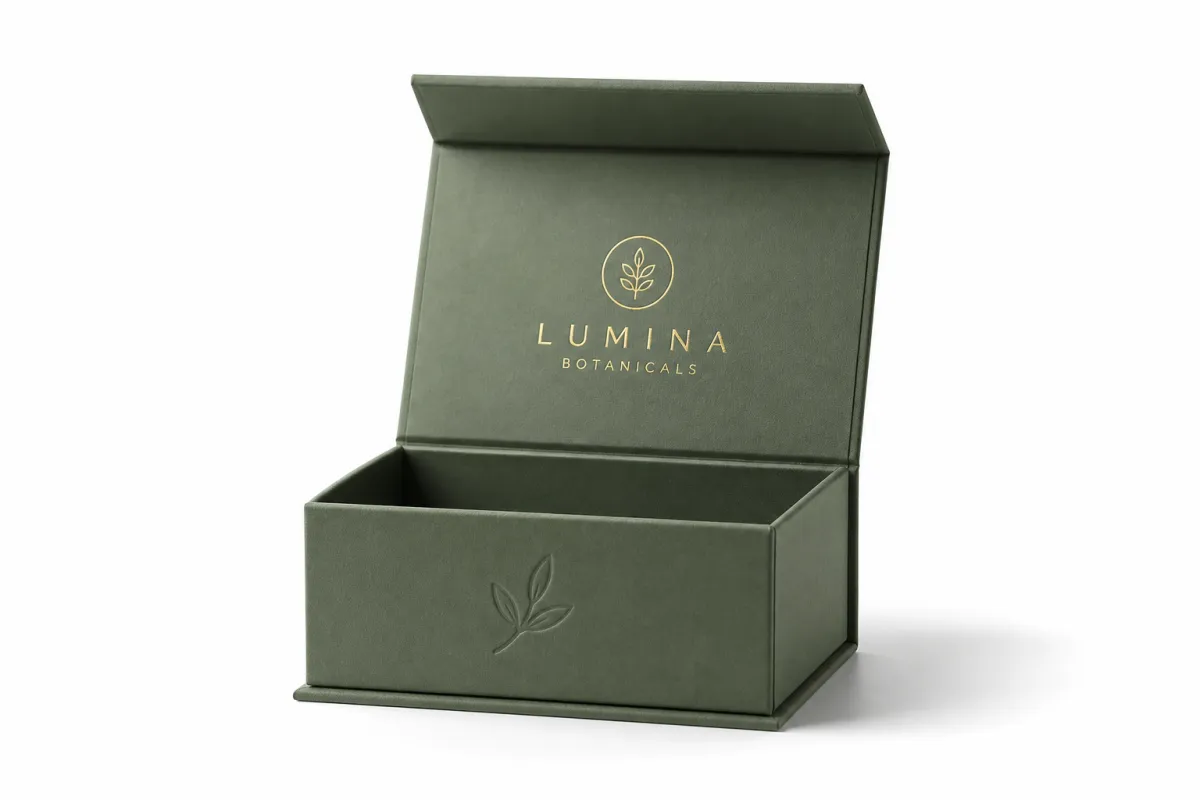
A plain carton can carry freight. A printed carton can carry perception. That difference becomes obvious the first time a buyer compares a blank shipper with custom logo printed cartons that have color, type, and structured brand marks built into the board itself. The outside of the box often reaches the customer before the product does, so the carton becomes the first physical proof that the brand paid attention to the details.
From a buyer's point of view, custom logo printed cartons matter because they reduce visual ambiguity. A warehouse team can sort faster when cartons are clearly marked. A retail associate can identify a line quickly. A customer opening a parcel sees a package that feels intentional rather than improvised. That is not decoration. That is package branding doing measurable work.
People sometimes assume printed cartons are only about premium presentation, but that misses half the story. Good branded packaging can also support fulfillment accuracy, product identification, and channel separation. If one SKU is meant for ecommerce and another for shelf placement, the carton can help distinguish them at a glance. In a busy operation, that saves time and cuts avoidable errors.
There is also a cost truth that gets overlooked: a plain carton with a label is not the same as a true printed carton. Labels can work for small batches or variable data, but they add a second application step and often look less integrated. Custom logo printed cartons start with the artwork on the structure itself, which gives a more unified appearance and often better repeatability across a run. That matters when you are trying to make packaging feel deliberate rather than patched together.
A carton does not have to be loud to be effective. In many runs, the strongest result comes from a restrained layout, one accurate color, and a clean structure that fits the product without forcing it.
That is why custom logo printed cartons show up across so many categories: cosmetics, nutraceuticals, electronics accessories, apparel, specialty foods, and subscription kits. Each category asks for a slightly different balance of strength, finish, and visual impact, but the principle stays the same. The carton is part container, part communication tool, and part quality signal.
I keep coming back to a simple question: what should the customer understand the moment the box lands on the table? If the answer is "this is organized, trustworthy, and worth opening carefully," then the carton has already started doing its job. That is the advantage of custom logo printed cartons over generic packaging that says nothing at all.
For brands comparing structure options, a useful starting point is Custom Packaging Products, because the right carton style depends on whether the box needs to survive parcel handling, sit on a shelf, or carry a premium unboxing moment. The visual language changes with the job, and so does the material spec.
How Custom Logo Printed Cartons Move Through the Process
The production path for custom logo printed cartons usually starts with a brief, not an artwork file. A strong brief includes product dimensions, target quantity, shipping method, expected shelf life, and the level of branding the team wants on the finished carton. From there, the supplier builds or confirms the dieline, checks board thickness, and sets up the print plan around the selected carton style.
That flow sounds straightforward, but the process has a lot of checkpoints. The carton style changes everything. A regular slotted shipping carton is built for stacking and transit, so the print layout may be limited to a few panels and one or two ink colors. A folding carton, by contrast, can support tighter print detail, richer coatings, and more controlled presentation on the shelf. Mailer-style custom logo printed cartons sit somewhere in between, because they need retail polish and transit strength at the same time.
Here is the usual sequence in plain language:
- Review product dimensions, weight, and handling risk.
- Select the carton structure and board grade.
- Build or confirm the dieline with safe zones, glue areas, and fold lines.
- Place artwork and technical copy on the correct panels.
- Approve digital proofs or physical samples.
- Print, finish, die cut, crease, and fold the cartons.
- Pack and ship the finished cartons for assembly or direct use.
Every one of those steps affects the final quality of custom logo printed cartons. The file prep stage is especially sensitive. Logos need the right resolution or vector format. Barcodes need clear contrast and enough quiet space around them. Small type has to remain readable after print gain, folding, or coating. If the artwork team ignores those basics, the carton can still be produced, but the result often feels less crisp than intended.
Timeline pressure tends to show up in the same places every time. Artwork approval is one. Ink matching is another. Die cutting and post-press finishing can also add time, especially if the carton has windows, specialty folds, or a custom insert. For standard runs, simple digital custom logo printed cartons may move through production in roughly 7 to 12 business days after proof approval. More complex offset jobs, especially with custom tooling, often run closer to 12 to 20 business days, and that does not include freight. Those are practical planning ranges, not guarantees, because plant schedules and freight lanes can shift quickly.
That is why process discipline matters. The cleaner the setup, the fewer surprises later. Fewer surprises usually means better registration, tighter fold accuracy, and less waste. It also means the buyer gets a more predictable turnaround, which matters a great deal when the packaging is tied to a launch date or replenishment cycle. Nobody wants cartons showing up a week late and forcing the whole launch plan to wobble.
For teams that need to validate transit performance, testing against standards such as ISTA package testing guidance can be useful, especially for ecommerce cartons that face drop, vibration, and compression during parcel handling. That kind of testing does not replace good design, but it helps confirm that the structure can survive real shipping conditions.
Material and Print Choices That Change the Final Result
The board you choose for custom logo printed cartons will shape almost everything the customer sees and feels. Corrugated board is the familiar choice for shipping strength. It comes in fluted constructions such as E-flute, B-flute, and C-flute, each with different crush resistance and print tradeoffs. Paperboard, especially coated one-side or two-side board, is more common in retail packaging because it supports sharper imaging and a more polished hand-feel. Kraft grades bring a natural, earthy look, while recycled boards can support a lower-impact story when the brand wants to speak honestly about material responsibility.
Print method matters just as much as board choice. Flexographic printing works well for many shipping cartons and larger runs because it is efficient and cost-conscious. Digital printing is useful for shorter runs, variable data, faster setup, and design changes without plate costs. Offset lithography usually gives the sharpest image quality for premium custom logo printed cartons, especially when the design includes fine type, gradients, or rich photography. The right method depends on quantity, appearance goals, and the substrate itself.
Color coverage is another variable that buyers often underestimate. A small logo on a kraft carton is not the same as a full flood coat with multiple spot colors. Heavy coverage can raise ink cost, slow dry time, and affect how the carton folds. Fine line art can look excellent on coated board, but the same artwork may soften on absorbent kraft. Type below a certain point size can lose clarity, especially if the carton has a textured surface or the press is compensating for sheet movement. That is why sample approval matters so much in custom logo printed cartons.
Finishing choices add another layer of control. Matte coating gives a softer, quieter look. Gloss coating creates higher shine and stronger color pop. Aqueous coating is a common water-based option that adds scuff resistance without a heavy plastic feel. Varnish can protect specific areas or the whole panel. Embossing can elevate a logo, while spot color control helps maintain exact brand standards. None of those finishes are mandatory, but each one changes the tone of the final carton in a visible way.
For buyers asking about responsible sourcing, the board spec can be aligned with certification needs, including FSC options where appropriate. A supplier should be able to tell you whether the carton material supports chain-of-custody documentation and how that affects the quote. The FSC system is a useful reference point for brands that want traceable forest stewardship claims rather than vague sustainability language. Honest sourcing claims build trust; vague ones do the opposite.
Here is the practical part: choose the material based on function first, then shape the print and finish around that function. If the carton is mainly a shipper, prioritize compression strength, crease performance, and legibility. If it is a premium product box, prioritize print fidelity, surface feel, and presentation. The best custom logo printed cartons do not try to be everything at once. They solve the specific packaging problem in front of them.
For many jobs, the choice comes down to a few realistic combinations:
- Corrugated + flexo: strong, efficient, and common for transit packaging.
- Paperboard + offset: cleaner image quality for retail display and premium brands.
- Kraft board + digital: good for shorter runs, fast changes, and an earthy visual style.
- Coated board + spot varnish: useful when the carton must feel more polished without going overly ornate.
In practice, the best choice is the one that matches the product, the shipping route, and the customer expectation. That sounds simple, but it is where many carton projects win or lose their value.
Custom Logo Printed Cartons Cost and Pricing: What Drives the Quote
Pricing for custom logo printed cartons is usually built from the same basic variables every time: carton size, board grade, quantity, print coverage, number of colors, finishing steps, and any custom structural features such as windows, inserts, or special locking tabs. The quote changes when any one of those changes, and sometimes the smallest detail has more impact than the buyer expects.
Large runs usually lower the unit price because setup cost gets spread across more cartons. That is the simple version. The more useful version is this: a print method with higher setup cost can still be economical if the quantity is large enough, while a short digital run can be the smartest option if the project only needs a few hundred or a few thousand units. There is no universal "cheap" carton. There is only a carton that fits the business case.
One-time setup costs often include tooling, plates, die creation, proofing, and machine adjustment. Recurring production costs include board, ink, labor, finishing, and packing. Buyers sometimes compare two quotes and assume one supplier is overpriced, but the spec may not be the same. A carton with reinforced seams, a Custom Die Cut, and coated print will never price like a plain shipper with a one-color logo.
| Carton Type | Typical Spec | Best Run Size | Rough Unit Cost Range | Notes |
|---|---|---|---|---|
| Simple corrugated shipper | One-color flexo on kraft board | 1,000 to 10,000+ | $0.22-$0.60 | Strong value when the carton is mostly for transit |
| Retail folding carton | Paperboard, full-color offset, aqueous coating | 5,000 to 50,000+ | $0.18-$0.45 | Good image quality for shelf-facing product packaging |
| Mailer-style branded box | Corrugated or paperboard hybrid, printed inside and out | 500 to 10,000 | $0.45-$1.25 | Often used for ecommerce and premium unboxing |
| Specialty custom printed boxes | Custom inserts, windows, coatings, or multi-panel artwork | 1,000 to 25,000 | $0.60-$2.00+ | Higher cost, but strong brand impact when the project needs it |
Those ranges are not promises; they are practical reference points. A small carton with heavy ink coverage can cost more than a larger plain one if the spec is complex enough. Likewise, a simple size with standard board can become very economical at volume. That is why a detailed brief matters. It helps the supplier compare apples to apples instead of making guesses based on a vague description of custom logo printed cartons.
Structural complexity can move the number quickly. Extra die cuts take time. A window patch adds labor and material. Reinforced flaps improve shipping performance but add board usage. Interior print increases the visual impact and the cost. Even the location of the logo can matter if it requires more precise registration or a second print pass. I have seen buyers save money just by shifting a graphic away from a difficult fold line or by reducing the number of print colors from four to two.
There are also ways to control cost without flattening the brand. Standardize box sizes where possible. Simplify large background coverage if the carton will be shipped under labels or tape. Use a single accurate brand color instead of multiple decorative inks. Order enough volume to avoid constant reprints, but not so much that cartons sit unused while artwork or product specs change. For many projects, the sweet spot is a balance between inventory risk and unit economics. Kind of boring, sure, but that is how packaging budgets stay healthy.
One detail worth calling out: lead time can affect cost even if the carton spec stays the same. Rush freight, revision loops, and partial reworks are expensive. A well-planned carton project is often cheaper because it avoids expediting and waste. That is one reason custom logo printed cartons are worth planning early rather than treating them as a final-step purchase.
For brands comparing quotations, the fairest approach is to request the same carton style, board grade, print method, finish, and quantity across each vendor. Then compare not just the unit price, but also setup fees, sample charges, lead time, and shipping assumptions. That is the real cost picture, not the number that looks lowest in a spreadsheet.
Step-by-Step: Planning a Carton That Prints Cleanly and Ships Well
The cleanest custom logo printed cartons start with product data, not graphic ideas. Measure the product carefully, including any closures, inserts, or protective wrap. Record weight, fragility, and storage conditions. If the product is moisture-sensitive, temperature-sensitive, or likely to shift in transit, that changes the structure and the board grade. A carton that looks fine on screen may fail if the internal fit is loose or the material is too light for the load.
After the product dimensions are locked, choose the carton application. Is this mainly for ecommerce transit, shelf presentation, or a hybrid role? A hybrid carton needs enough structural stiffness to survive delivery and enough print quality to support the brand story. In that case, the spec often leans toward higher-grade corrugated or coated paperboard with stronger finishing. If the box is purely a shipper, the focus shifts toward stacking strength, tape performance, and practical identification marks.
Then comes the dieline. This is where many projects go sideways if the artwork team is not disciplined. The logo needs to stay clear of folds. Critical text needs safe margins. Glue tabs need to remain clean. Barcodes need enough quiet space. If the design crosses panel transitions, the print team has to control registration carefully so the image does not feel split or crooked. Good packaging design respects those mechanical realities instead of fighting them.
A simple prepress checklist helps:
- Use vector logos whenever possible.
- Keep type sizes readable at final print size.
- Confirm exact color values, not just screen images.
- Check fold lines, tuck flaps, and glue areas before signoff.
- Verify barcode placement and scan contrast.
- Ask whether the carton will be printed flat, then shipped flat, or built for immediate use.
Proofing is where you catch problems before they become expensive. A digital proof helps with layout and copy. A physical sample tells you much more about fit, color, fold behavior, and panel alignment. For premium or fragile goods, I usually prefer a sample because a carton can look correct on a screen and still feel wrong in the hand. That difference matters in custom logo printed cartons, especially if the carton is part of the unboxing experience.
Timing needs to be counted backward from delivery, not forward from approval. If a launch date is fixed, give the project enough room for brief creation, artwork revision, proof review, production, and shipping. A simple run may only need a short window, but a complex carton with inserts or specialty finishing can require several rounds of review. If the team compresses that window too far, the result is often rushed approvals, rushed freight, or both.
From a practical scheduling point of view, a good rule is to build in buffer for three things: artwork corrections, production variability, and transit time. Even a strong supplier can hit delays if a file is missing a dieline note or if the customer changes copy late in the process. That is not unusual; it is simply how packaging projects behave when many moving parts are involved.
Brands that want a more structured process can start with a packaging brief that includes dimensions, quantity, carton application, print expectations, and a target budget. That brief makes it much easier to quote custom logo printed cartons accurately and avoid repeated back-and-forth.
Common Mistakes When Ordering Custom Logo Printed Cartons
The first mistake is designing before sizing. A nice layout can become unusable if the carton structure is wrong for the product. I see this often with teams that fall in love with a graphic concept and only later discover that the fold lines cut through the logo or that the box depth cannot actually protect the item. The structure has to come first, then the artwork for custom logo printed cartons.
The second mistake is ignoring print behavior on the chosen substrate. A logo that looks sharp on coated board may look softer on kraft. Thin type may disappear after ink gain. Pale colors can vanish on recycled stock. In other words, material selection is not only a strength question; it is also a visual question. That is where good packaging design and print reality need to meet each other.
The third mistake is treating file prep like a minor detail. Low-resolution logos, missing dielines, and unclear copy slow everything down. The production team can only work as fast as the information they receive. If the file package is incomplete, the carton may still move forward, but the chance of revision rises sharply. That can push lead times and raise total cost.
The fourth mistake is chasing the lowest quote without checking the full spec. A cheaper carton can look attractive until the first shipment arrives damaged or the print appears muddy. A brand may save a small amount per unit and then lose more in returns, customer complaints, or poor presentation. That is especially true for custom logo printed cartons that are meant to represent a premium line.
The fifth mistake is underestimating timing. Shipping cartons, inserts, and display-ready box formats often depend on tooling, samples, and final approvals. If a launch date is close, expediting can get expensive very quickly. It is better to plan an extra week or two into the schedule than to pay emergency freight or accept a compromised design.
There is also a strategic mistake that shows up in mature brands. Some teams use one carton for everything because it seems efficient, but that can create friction in the long run. A carton optimized for retail presentation is not always the best carton for shipping abuse. A shipper built purely for transit may not support the customer experience the brand wants. Sometimes the smarter move is to separate those roles and use different custom logo printed cartons for each stage.
If you are trying to reduce risk, ask for a sample, confirm the board grade, and insist on a print-ready file review before the run begins. That extra discipline usually pays for itself.
Expert Tips and Next Steps for Better Custom Logo Printed Cartons
If I had to reduce the whole process to one piece of advice, it would be this: build the carton brief before you build the artwork. A solid brief should include product dimensions, unit weight, fragility, storage conditions, target quantity, budget range, and launch timing. Once those basics are clear, the supplier can steer the project toward the right style of custom logo printed cartons instead of guessing.
For premium goods, fragile items, or high-volume launches, request a sample or prototype. That step catches the mistakes that are hardest to see on screen: panel alignment, tuck-fit friction, barcode readability, and how the box actually feels in the hand. A sample can also reveal whether the branding is too busy for the surface area available. Many strong carton designs are surprisingly restrained, which is a good thing.
Confirm print expectations early. Spell out the logo placement, exact brand colors, finish preference, and any text that must remain visible after folding. If the carton needs regulatory copy, ingredient lines, or warning statements, place those details on the dieline before approval. For custom logo printed cartons, this is where a little rigor saves a lot of rework.
Compare quotes only after the specs match. One supplier may be quoting coated board while another is quoting kraft. One may include proofing, another may not. One may have a stronger minimum order quantity, while another is better suited to shorter runs. You cannot judge value accurately unless the carton structure, print method, and finishing steps are aligned across the comparison.
For brands that want a cleaner buying process, a practical sequence looks like this:
- Gather product measurements and handling requirements.
- Decide whether the carton is for shipping, retail, or both.
- Choose the board and print method.
- Prepare or request the correct dieline.
- Review a proof or sample.
- Approve production only after all details are checked.
- Build in time for printing, finishing, and freight.
That sequence keeps the project grounded in real production conditions rather than assumptions. It also gives the buyer a better chance of controlling cost without compromising presentation. In my experience, the strongest custom logo printed cartons are rarely the fanciest. They are the ones that fit the product, survive the journey, and make the brand look like it knows exactly what it is doing.
If you are ready to improve the next carton run, start with the dimensions, choose the application honestly, request a detailed quote, review the proof carefully, and schedule production with enough buffer for the full process. Done that way, custom logo printed cartons become less of a guessing exercise and more of a reliable part of your product packaging strategy.
One final practical takeaway: lock the structure first, lock the artwork second, and lock the schedule last. That order keeps the print clean, the carton honest, and the budget from wandering off in a hurry.
FAQ
What materials are best for custom logo printed cartons?
Corrugated board is usually the strongest choice for shipping and heavier products, while paperboard is often better for retail presentation and sharper print detail. The right material depends on protection needs first, then appearance. If the carton has to survive parcel handling, strength should lead the decision; if it sits on a shelf, print quality may matter more.
How long do custom logo printed cartons usually take to produce?
Timing depends on artwork approval, structure setup, print method, quantity, and any finishing steps. Simple digital runs can move faster than custom die-cut or higher-volume printed jobs. In practice, build in extra time for samples, revisions, and shipping so the carton does not become the thing that delays the launch.
What affects the price of custom logo printed cartons the most?
Size, board grade, print coverage, and quantity usually drive the biggest price changes. Finishing steps, special coatings, inserts, and structural complexity can raise the quote as well. Lower unit cost often comes from larger runs and simpler specifications, but only if the carton still does its job properly.
Can custom logo printed cartons work for both shipping and retail?
Yes, but the structure has to balance transit protection with shelf-ready presentation. Some brands use one carton style for both jobs, while others separate shipper and display packaging to get better results in each channel. The right choice depends on fragility, brand goals, and the kind of unboxing experience the customer expects.
What artwork should I prepare for custom logo printed cartons?
Provide a vector logo, exact color references, and copy placed on the correct dieline. Keep critical elements away from folds, seams, glue areas, and barcode zones. A print-ready file reduces revisions, helps the production team quote accurately, and gives the final carton a cleaner, more professional result.

