Buyer Fit Snapshot
| Best fit | Custom Luxury Boxes with Insert projects where brand print, material claims, artwork control, MOQ, and repeat-order consistency need to be specified before quoting. |
|---|---|
| Quote inputs | Share finished size, material target, print colors, finish, packing count, annual reorder estimate, ship-to region, and any compliance wording. |
| Proofing check | Approve dieline scale, logo placement, barcode or warning zones, color tolerance, closure strength, and carton packing before bulk production. |
| Main risk | Vague material claims, crowded artwork, missing packing details, or unclear freight terms can make a low unit price expensive after revisions. |
Fast answer: Custom Luxury Boxes with Insert: Design, Cost & Fit should be specified like a repeatable production item. The safest quote records material, print method, finish, artwork proof, packing count, and reorder notes in one written spec.
Production checks before approval
Compare the actual filled-product size with the drawing, then confirm tolerance on folds, seals, hang holes, label areas, and retail display edges. Reserve space for logos, QR codes, warning copy, and material claims before decorative graphics fill the panel.
Quote comparison points
Review material grade, print process, finish, sampling route, tooling charges, carton quantity, and freight assumptions side by side. A quote is only useful when the supplier can repeat the same color, closure quality, and packing count on the next order.
Custom luxury boxes with insert shape the first real moment a customer has with a product. Not the printed mockup. Not the render. The moment the lid lifts and the item stays exactly where it should be. I have watched otherwise beautiful packaging lose its authority in a second because the product slid, tilted, or rattled inside the cavity. A luxury box without a precise insert can still look expensive from the outside, but inside it feels unresolved. And customers notice that contradiction immediately.
Three problems disappear when custom luxury boxes with insert are built properly: movement, mismatch, and visual drift. Fragile items stop colliding with the box walls. The reveal unfolds in a controlled sequence. Empty space stops competing with the product for attention. In branded packaging, that matters because people remember tension. They remember a bottle knocking against the sides. They remember a lid opening to reveal a product that was not centered. They remember when something felt slightly off, even if they could not explain why.
Rigid boxes, drawer styles, folding cartons, and display-oriented retail packaging all depend on the same principle: the insert is not a filler piece. It is structural. It is sensory. In many premium programs, it does more work than the outer wrap, because it determines whether the package feels made for the product or merely adjusted to fit it. If you are comparing outer structures before finalizing the internal layout, the Custom Packaging Products catalog is a useful place to weigh the box styles first and then map the insert geometry around them.
I have seen a simple paperboard tray make a modest candle set feel more expensive than a heavily printed box with no internal structure. Fit changes perception faster than graphics do.
Custom luxury boxes with insert show up repeatedly in cosmetics, jewelry, candles, premium spirits, electronics, gift sets, and limited editions. Those categories have one thing in common: the package is not just protecting the product. It is staging the reveal. Good packaging design controls the opening sequence, and the insert controls the pace, the angle, and the finish of that moment.
What custom luxury boxes with insert really solve
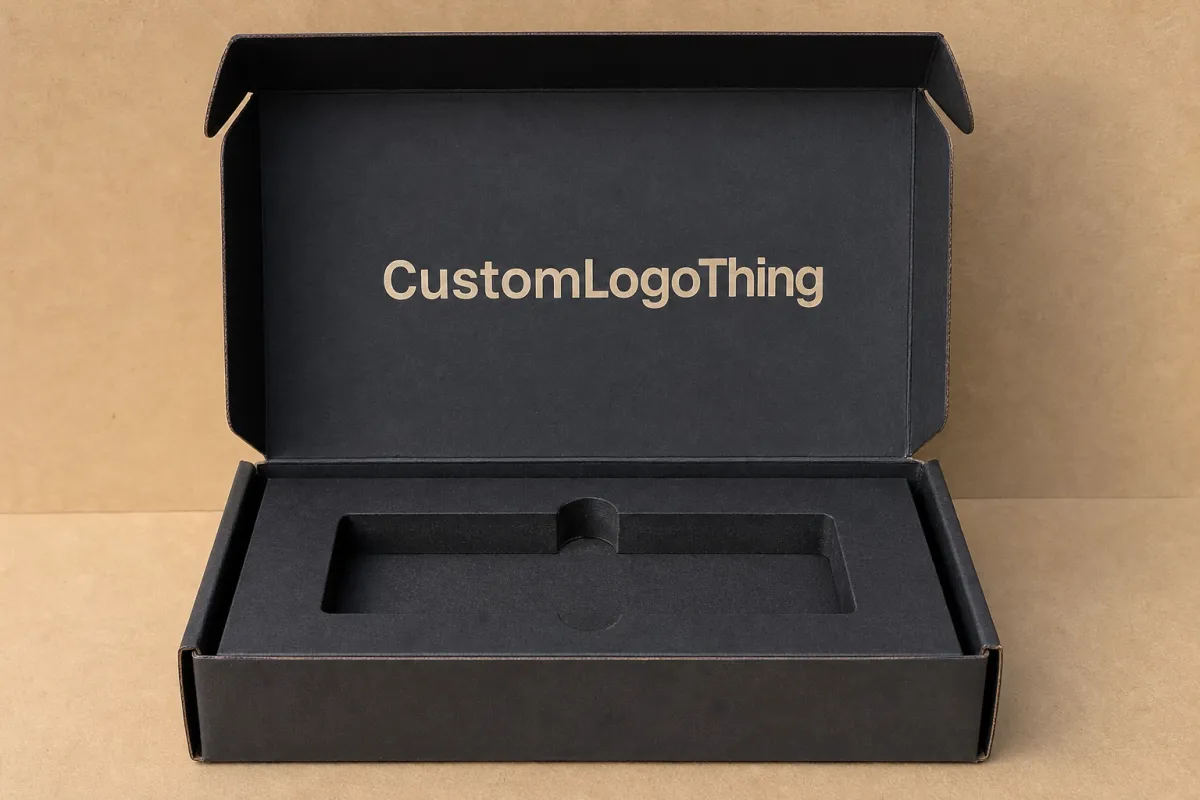
The insert often influences the first impression more than the lid printing. That sounds counterintuitive until you compare two boxes side by side. One has rich graphics, but the product sits low, crooked, or loose. The other uses the same print finish and the same outer structure, yet the item is framed tightly and cleanly. The second box feels more expensive because it looks deliberate. Custom luxury boxes with insert remove guesswork from the interior.
Structurally, custom luxury boxes with insert combine an outer shell with an internal support that holds one product or a multi-piece set in place. The shell might be rigid board wrapped in specialty paper, heavy paperboard, or laminated stock. The insert might be paperboard, molded pulp, EVA foam, polyurethane foam, or a hybrid assembly with cut and folded support zones. The right choice depends on weight, fragility, shipping conditions, and the emotional cue the brand wants to create when the lid opens.
The insert usually performs four jobs at once. It protects the item from movement and pressure. It directs the eye to the main product. It reduces friction during unpacking. It reinforces the sense that the box was designed for a specific object instead of borrowed from a generic run. Those jobs overlap, but they are not identical. Protection is mechanical. Presentation is visual. Unboxing is tactile. Perception is the final layer: does this feel like Custom Printed Boxes made for one item, or like stock packaging trying to pass as premium?
That is why custom luxury boxes with insert are so common in categories where even small handling errors can damage both the product and the brand story:
- Cosmetics and skincare - glass bottles, droppers, jars, and secondary components need separation and upright support.
- Jewelry - small items need a strong reveal and a cavity that prevents scratches.
- Candles - fragile glass and finish-sensitive surfaces benefit from a snug, stable fit.
- Electronics - devices, cables, and chargers need compartment control rather than loose void fill.
- Spirits and gift sets - multiple pieces need to arrive aligned instead of knocking into each other.
- Premium accessories - belts, pens, wallets, and watches look better when the package tells a clean visual story.
Movement has a cost in perception, and that cost is often larger than the cost of the material itself. A product that shifts a few millimeters may survive shipping without damage, then still lose the sense of precision that luxury buyers expect. Many brands miss that distinction. They invest in foil, embossing, matte lamination, and strong print coverage, then leave the insert vague. The box looks polished in a rendering and unfinished in the hand.
For sustainability-focused programs, the insert shapes the message as much as the outer box. A molded pulp or paperboard insert supports a cleaner disposal story. A heavy foam insert can conflict with a brand that is selling recycled content or FSC sourcing as part of its identity. If certification matters, ask for documents, not assumptions. FSC chain-of-custody is not decorative language; it is evidence. The FSC resource library at FSC is a practical reference when board sourcing enters the conversation.
The retail shelf benefits too. With custom luxury boxes with insert, the product sits exactly where the brand intended it to sit, which keeps the front-facing story consistent. In crowded categories, consistency is a form of trust. A tilted bottle looks accidental. A centered bottle looks considered. That is package branding at a structural level, not just a graphic one.
Process and timeline for custom luxury boxes with insert
The production flow for custom luxury boxes with insert starts with measurement, not artwork. A capable packaging partner will ask for exact length, width, height, weight, finish sensitivity, break points, and any accessories that need to sit beside or below the primary item. Pumps, caps, cables, sleeves, manuals, and chargers all change cavity depth and compartment layout. Skip that step and the insert is wrong before the first sample is cut.
Once the product spec is clear, the packaging team builds a dieline or structure drawing. That drawing turns the product dimensions into box geometry and cavity dimensions. A first sample usually tests three things: cavity depth, finger access, and lid closure. Finger access is easy to underestimate, yet it can make a premium package feel awkward in seconds. If the item sits too tightly and there is no pull tab, ribbon, lift point, or friction cut, the customer has to dig or tug. The reveal begins with frustration instead of control.
In a typical project, the schedule moves through these stages:
- Measurement and spec review - 1 to 2 business days for clean product data and a clear brief.
- Dieline and sample build - 3 to 7 business days for a simple structure, longer if the insert has multiple cavities.
- Artwork proofing - 1 to 3 business days if the print layout is already prepared.
- Insert fabrication - faster for stock paperboard, slower for custom foam or molded tooling.
- Assembly and quality control - final inspection, fit checks, and packed sample verification.
- Pack-out and shipping - final carton count, master case configuration, and freight booking.
Production speed is not equal across every custom luxury boxes with insert project. A simple paperboard insert paired with a standard rigid box can move through production in roughly 10 to 15 business days after proof approval, depending on order size and factory load. A custom EVA insert, molded pulp tooling, or multi-compartment layout can stretch that timeline because the insert itself needs tooling, sampling, and correction rounds. Add foil, embossing, soft-touch coating, or specialty lamination and the calendar stretches again.
Stock and custom inserts behave very differently on the schedule. Stock paperboard inserts are often cut from existing tooling or from straightforward custom dies, which keeps risk lower and timelines shorter. Custom foam or molded inserts usually need more setup because the cavity shape has to match the product more precisely. That precision improves the fit, but precision takes time. Brands launching on a fixed date should build in margin rather than hoping the first sample lands perfectly. It usually does not.
Testing should happen before the run is approved. If the package will travel through parcel networks, ask whether the supplier can align testing with common transit methods such as ISTA protocols or ASTM-based distribution testing. The ISTA site is a practical reference when the conversation shifts from theory to shipping performance. Route, fragility, and retail-readiness all change the test plan, so no protocol should be copied blindly.
For custom luxury boxes with insert, the insert is often the part that speeds up or slows down the whole project. A reusable structure with clean die lines can be efficient. A highly tailored system with magnetic closure, nested compartments, and a lifted reveal can take longer because every piece has to fit the others. That is not a flaw. It is the cost of control.
Cost and pricing for custom luxury boxes with insert
The biggest cost drivers in custom luxury boxes with insert are usually the factors buyers try to simplify first: box size, board grade, insert material, print coverage, finish complexity, cavity count, labor, and quantity. That is not a coincidence. Each variable changes material usage or setup time, and setup time is where pricing becomes less intuitive. The first hundred boxes carry a much heavier share of prep work than the last hundred.
MOQ and setup fees matter more than many teams expect. Die-cut tooling, proofing, sample approval, insert fitting, and assembly preparation all happen before volume begins to smooth the unit cost. A 500-unit run spreads those fixed costs thinly, which raises the price per box. A 5,000-unit run distributes the same setup more efficiently. That is why custom luxury boxes with insert can look expensive at low quantities and far more competitive as the run grows.
For a realistic pricing frame, these ranges are common enough to be useful, though they still vary by region, size, and finish:
| Insert Material | Typical Cost Impact at 5,000 Units | Best Use Case | Trade-Off |
|---|---|---|---|
| Paperboard | $0.18-$0.35 per unit | Lightweight products, simple cavities, lower-cost luxury runs | Less cushioning for delicate or heavy items |
| Molded Pulp | $0.25-$0.60 per unit | Eco-forward programs, moderate protection, shaped support | Surface finish is less crisp than board or foam |
| EVA Foam | $0.45-$1.20 per unit | Precision fit, premium devices, fragile items with exact cavities | Higher tooling precision and a weaker recyclability story |
| Polyurethane Foam | $0.40-$1.00 per unit | Soft support, shock absorption, display-focused product packaging | Can compress over time and may feel less architectural |
Those numbers only tell part of the story. The outer box itself can land anywhere from roughly $0.85 to $2.40 per unit in many rigid programs, and that range widens quickly once specialty lamination, foil, magnetic closures, or oversized dimensions enter the brief. A small cosmetic box may sit near the lower end. A heavy two-piece gift set with a printed sleeve and a precise foam insert will sit much higher. Custom luxury boxes with insert need to be priced as a complete system, not as separate guesses.
Board grade also changes pricing in a way buyers can feel in the hand. A 1.5 mm rigid board may be enough for lightweight sets, while a 2 mm or 2.5 mm board gives a firmer feel for premium gifting. Paperboard inserts built from 16pt to 24pt stock can stay economical, while thicker layered board or laminated assemblies add cost and weight. Air freight makes that extra weight visible quickly. Freight is not glamorous, but it shows up in the margin.
Assembly labor is another place where costs climb. Complex custom luxury boxes with insert can require more gluing, more folding, more alignment checks, and more hand insertion during pack-out. Labor rises fast when the insert has multiple cavities or when the box uses a drawer style with ribbon pulls and nested compartments. The prettiest design is not always the most efficient one. A box that looks simple on the shelf may hide a production process that is anything but simple.
Freight, rework, and damage rates can outweigh a small upgrade in materials. If a slightly better insert reduces breakage from 3 percent to 0.5 percent, the math may favor the stronger insert even if the unit price climbs. That is especially true for glass, ceramics, premium cosmetics, and electronics. Packaging economics rarely reward the cheapest quote. They reward the lowest total cost after returns, replacements, and customer complaints.
When brands compare options, the smartest move is to ask for an itemized quote. Structure, insert, printing, finishing, and assembly should each appear separately. That creates a clear view of what is actually being purchased in custom luxury boxes with insert. It also makes supplier comparisons much less slippery.
Step-by-step guide to choosing the right insert
The best insert choice starts with the product, not the box. Measure the item at its widest point, not its easiest point. That sounds obvious, but many fit problems begin with a measurement taken from the middle of the product instead of the shoulder, cap, corner, or attached accessory. Fragile areas should be identified early. A glass pump bottle may need support at the neck. A watch may need support at the band. A device may need corner clearance plus cable management.
For custom luxury boxes with insert, the most useful question is not, "What looks best?" It is, "How should this product behave inside the cavity?" Should it cradle, suspend, separate, or display? A perfume bottle may need a snug cradle with a visible top. A jewelry set may need compartments that keep components separate without forcing the customer to sort through layers. A premium tech accessory may need a firmer restraint so the product stays centered after parcel handling. That decision belongs before style, not after it.
The outer structure comes next. Rigid two-piece boxes are popular because they feel substantial and can be produced with clean print wraps. Magnetic closure boxes work well for a controlled reveal, although they add thickness and cost. Drawer styles suit gift sets because they create a pull-out motion that feels deliberate. Sleeve formats work best when the product or insert already has a defined inner tray. Each structure creates different constraints for custom luxury boxes with insert.
Insert material should match both the brand story and the shipping reality. A cosmetic brand building elegant branded packaging may favor paperboard or a clean molded pulp tray if sustainability is central to the message. A luxury gadget maker may prefer EVA foam because precision matters more than recyclability in that context. A spirits brand launching a collector edition might choose a layered board insert that adds visual depth without looking industrial. The material should match the promise, not only the mood board.
Sample testing is where the useful truth shows up. Handle the sample the way a customer would and the way a warehouse picker would. Shake it gently. Turn it upside down. Open it on a table. Close it again. Check whether the product lifts cleanly without digging, whether the lid closes without compression, and whether accessory pieces stay where they should. A package can look perfect in a flat proof and still fail in the hand. That is why custom luxury boxes with insert need physical testing, not only visual approval.
Tolerance deserves real attention. A snug cavity is good; an over-tight cavity can scuff finishes, deform labels, or slow assembly. In many programs, a clearance of roughly 1 to 2 mm can work for board-based inserts, while foam may be dialed tighter because it compresses differently. That is not universal. Coatings, humidity, product shape, and finish sensitivity all change the answer. A tolerance plan still beats a hopeful guess.
If the line may expand later, build flexibility into the design now. A well-made outer box can sometimes accept revised inserts for seasonal bundles, deluxe editions, or SKU changes. That matters for brands running limited drops or gift set extensions. Rebuilding the whole package every time the assortment changes is expensive and slow. Smart custom luxury boxes with insert are designed with enough discipline to support the current item and enough flexibility to support the next one.
Common mistakes with custom luxury boxes with insert
The costliest mistake is designing around a rough estimate of the product. If the item changes after the insert is built, the package can end up loose, crushed, or expensive to remake. That is especially painful in custom luxury boxes with insert because the insert translates the product's exact geometry into a premium experience. A change of even 2 or 3 mm can create a visible gap or a cavity that stresses the finish.
Another trap is choosing a material for looks alone. A glossy insert may photograph well, yet poor compression performance will leave the product exposed during transit. Soft foam can feel luxurious in the hand, but if the brand is making an eco claim, the sustainability story becomes complicated fast. This is why product packaging decisions should account for the aesthetic and the disposal path. The best choice is rarely the one that only looks good in a sample room.
Brands also weaken the experience when they ignore access points. A package may be secure, yet if the lid lifts too hard, the product sits too deep, or the customer has to peel away layers before seeing the hero item, the reveal feels awkward instead of elegant. That is a subtle failure, but it affects perception. Luxury often comes from effort removed, not effort added. Custom luxury boxes with insert should make the opening sequence feel calm and obvious.
Overspending on finishes while underinvesting in fit is another common problem. Foil stamping, soft-touch lamination, and embossing can create a beautiful outer shell, but a sloppy cavity still reads as careless. The user may never say it out loud, yet the package has already told the story. In premium retail packaging, fit is part of branding. A tight, clean insert can make a modest print design feel more expensive than a showy box with weak internal structure.
Complex assemblies can also create tolerance stack-up. The box wrap, the board, the insert, the adhesive, and the final pack-out each add tiny variations that can accumulate. One layer is manageable. Four layers can drift. If the program needs exact alignment, ask how the supplier checks each assembly stage. Quality control should be concrete, not vague, especially for custom luxury boxes with insert.
The warehouse is part of the equation too. If the insert is fragile or the box is too complicated to pack quickly, fulfillment costs rise. A beautiful structure that takes too long to assemble can become a logistics headache. That matters in direct-to-consumer programs, subscription kits, and seasonal gift runs. The right answer is not always the flashiest one. It is the one that can be built, packed, shipped, and received with confidence.
Expert tips for branding, protection, and unboxing
Use restraint as a design tool. Luxury packaging often feels more premium when the insert leaves deliberate negative space and the product is framed rather than crowded. Negative space is not wasted room. It gives the eye somewhere to rest and makes the product feel selected, not squeezed in. In custom luxury boxes with insert, that single choice can change the mood of the whole unboxing.
Material texture should match the brand signal. Soft-touch board works well for understated elegance. Molded pulp supports an eco-forward story and can feel honest instead of flashy. Foam or EVA can signal precision and high-value protection, especially for electronics or collectibles. If the brand uses package branding to communicate craft, that texture should appear in both the outer box and the insert, not just one layer.
For sustainability claims, ask for proof. If FSC sourcing matters, request chain-of-custody documentation. If recycled content is part of the pitch, make sure the statement matches the actual material composition. Buyers should not rely on marketing gloss. Good suppliers can tell you exactly what the board is, how the insert is built, and where the material sits on the disposal spectrum. That kind of clarity builds trust, and trust keeps custom luxury boxes with insert from becoming a branding liability.
Keeping the system modular pays off when the product line may grow. A smart outer structure can sometimes accept revised inserts for different editions, scents, flavors, or bundle contents. That keeps your Custom Printed Boxes from becoming obsolete the moment a new SKU arrives. Modular systems are less theatrical than fully bespoke one-off structures, but they often make better long-term sense.
Ask for three sample views before approval: a structural mockup, a decorated sample, and a packed sample. Each one exposes different failures. The structural mockup shows fit and fold behavior. The decorated sample shows print alignment, finish quality, and brand tone. The packed sample shows whether the customer experience actually works with the real item inside. Those three views catch problems that renderings usually hide, and they sharpen supplier conversations because everyone is looking at the same physical facts.
If the product is fragile or ships by parcel, test against the actual route. A tray that looks perfect in a showroom may fail under vibration, compression, or drop stress. The test should match the distribution reality, not a generic ideal. That is why many packaging teams reference ISTA methods early. The route matters. The carton count matters. The filler material around the box matters. Custom luxury boxes with insert are only as strong as the weakest leg of the system.
Think about the opening sequence from the customer's angle, not from the designer's desk. Does the product rise into view? Does a ribbon guide the hand? Does the insert make the item easy to lift without scratching a finish? Does the tray protect corners while still letting the hero product lead the reveal? Those details sound small until they are missing. They separate packaging that feels designed from packaging that feels assembled.
For brands building long-term branded packaging systems, the insert should do more than hold the product. It should support the identity of the line. That means the cavity shape, the material texture, the reveal speed, and even the sound of the unboxing matter. A quiet, precise package can feel more premium than a loud one. A tidy insert can make a modest product look more expensive. That is structure doing its job inside custom luxury boxes with insert.
Next steps for custom luxury boxes with insert buyers
If you are ready to move forward, start with a one-page spec sheet. Include product dimensions, weight, quantity, finish preferences, shipping method, accessory list, and any disposal or sustainability requirements. The more exact the brief, the faster the quote will be. Suppliers can only price what they can see. For custom luxury boxes with insert, vague inputs usually produce vague answers.
Next, gather competitor samples and customer pain points. Compare what other brands are doing with their custom luxury boxes with insert programs, then mark the real opportunity: tighter fit, cleaner reveal, easier opening, stronger shelf appeal, or better protection. Do not copy blindly. Use the samples to identify gaps. What feels thin? What rattles? What looks rich but performs badly? Those answers are far more useful than a mood board.
Then request a quote that separates structure, insert, printing, finishing, and assembly. That makes supplier comparison more honest. It also shows where the money is going. If one quote looks much cheaper, check whether it assumes a thinner board, a looser insert, or fewer finishing steps. The cheapest number is not always the lowest risk. In custom luxury boxes with insert, the real question is what happens after the box arrives.
Use the Custom Packaging Products page to compare outer box styles, then match the chosen structure to the insert geometry before production starts. If the outer box is chosen too early, the insert becomes a compromise. If the insert comes first, the box can be shaped around the actual product behavior. That order usually produces better packaging design and fewer surprises in sampling.
The last step is proofing. Move from concept to prototype, review the fit, revise the insert, and lock the final spec before production. That extra round often matters more than a small finish upgrade because it protects the experience itself. Once the structure is right, the print and finish can do their work. Without the right structure, they are decorating a problem.
The practical takeaway is straightforward: measure the product at its widest and most fragile points, choose insert material based on how it will ship and how it should feel, and approve a physical sample before production. If those three decisions are handled carefully, custom luxury boxes with insert stop being decorative packaging and start functioning as part of the product experience. Get the fit right first. Everything else sits more cleanly after that.
Frequently Asked Questions
How do custom luxury boxes with inserts differ from standard rigid boxes?
A standard rigid box may rely on tissue, void space, or generic packing, while a fitted insert locks the product in place and makes the reveal feel deliberate. The insert also improves protection by reducing movement, which matters more for fragile, glossy, or multi-piece products. In practical terms, custom luxury boxes with insert create both a tighter fit and a stronger brand moment.
Which insert material works best for custom luxury boxes with inserts?
Paperboard works well for lightweight products and lower-cost programs, molded pulp is strong for eco-conscious brands, and foam or EVA fits precision items that need exact support. The best choice depends on product weight, shipping stress, brand positioning, and how the end customer is expected to dispose of the packaging. For many custom luxury boxes with insert projects, the material choice is a trade-off between cost, protection, and brand story.
What affects the cost of custom luxury boxes with insert orders most?
Quantity, insert material, box size, print coverage, finishing, and assembly labor usually affect pricing more than almost anything else. Complex multi-cavity inserts and low-volume runs tend to raise unit cost because setup and tooling are spread across fewer boxes. That is why custom luxury boxes with insert can look expensive at low MOQ levels and much more efficient at scale.
What is the usual turnaround for custom luxury boxes with insert projects?
Turnaround depends on whether dielines already exist, whether the insert is stock or custom-made, and how many sample rounds are needed. Projects with simple paperboard inserts usually move faster than programs that require custom tooling, specialty finishes, or multiple approval cycles. For many custom luxury boxes with insert jobs, the proofing stage is what determines whether the schedule stays tight or drifts.
Do custom luxury boxes with inserts require a minimum order quantity?
Many suppliers set an MOQ because they need to cover setup, die-cutting, proofing, and assembly costs before production starts. Lower MOQs are sometimes possible with stock materials or simpler structures, but the unit price is usually higher. If you are evaluating custom luxury boxes with insert for a launch or limited run, ask how the MOQ changes with insert complexity and finish level.

