Buyer Fit Snapshot
| Best fit | Custom Luxury Packaging Boxes Wholesale projects where brand print, material claims, artwork control, MOQ, and repeat-order consistency need to be specified before quoting. |
|---|---|
| Quote inputs | Share finished size, material target, print colors, finish, packing count, annual reorder estimate, ship-to region, and any compliance wording. |
| Proofing check | Approve dieline scale, logo placement, barcode or warning zones, color tolerance, closure strength, and carton packing before bulk production. |
| Main risk | Vague material claims, crowded artwork, missing packing details, or unclear freight terms can make a low unit price expensive after revisions. |
Fast answer: Custom Luxury Packaging Boxes Wholesale: Material, Print, Proofing, and Reorder Risk should be specified like a repeatable production item. The safest quote records material, print method, finish, artwork proof, packing count, and reorder notes in one written spec.
Production checks before approval
Compare the actual filled-product size with the drawing, then confirm tolerance on folds, seals, hang holes, label areas, and retail display edges. Reserve space for logos, QR codes, warning copy, and material claims before decorative graphics fill the panel.
Quote comparison points
Review material grade, print process, finish, sampling route, tooling charges, carton quantity, and freight assumptions side by side. A quote is only useful when the supplier can repeat the same color, closure quality, and packing count on the next order.
Why custom luxury packaging boxes wholesale matter for premium products
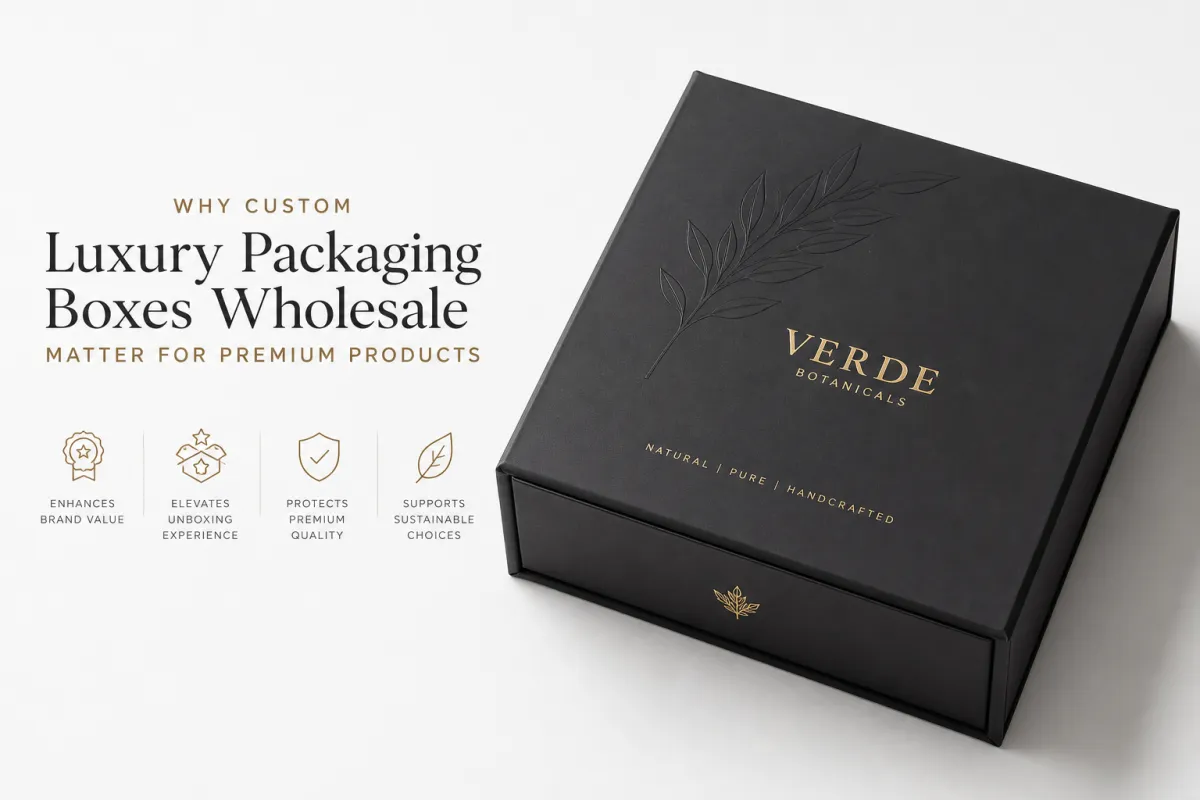
A premium product usually meets its first buyer through the box, not the item itself. That is why custom luxury packaging boxes wholesale can shape perceived value in the first few seconds, before anyone lifts the lid, checks the label, or feels the surface finish. In categories like cosmetics, candles, jewelry, apparel accessories, and gift sets, the outer package is often the first physical proof that the brand understands detail and consistency. If the box feels thin, scuffed, or loosely built, the product starts from behind no matter how strong the formula, fabric, or hardware may be.
Good luxury packaging does more than look refined. It protects fragile edges, keeps inserts from shifting, supports shelf display, and gives every order the same opening experience. In practice, custom luxury packaging boxes wholesale work best when presentation and protection are planned together, not treated as separate decisions. A beautiful box that crushes in transit is not luxury; it is a liability, and it can turn a premium purchase into a customer service problem. The right structure should survive handling, stacking, storage, and shipping while still looking composed when it reaches the customer.
Wholesale buying is a business decision as much as a branding one. Larger runs usually lower unit cost, stabilize replenishment, and give buyers more control over paper stock, print method, and finishing quality. That matters for custom luxury packaging boxes wholesale because the goal is not just a prettier package, but a repeatable packaging system that can hold up across every shipment, retail display, and seasonal launch. Brands that plan ahead often save more money by standardizing one or two box families than by constantly ordering small, mismatched runs.
From a packaging buyer's point of view, the right box should match the product's weight, fragility, and retail price. A thick fragrance bottle needs different support than a silk accessory set, and a display-ready gift kit needs different structure than a shipped ecommerce order. Strong package branding starts with that fit. The box should make the product feel intentional, not oversized or underbuilt. For example, a 30 ml serum in a tall paperboard carton can usually use a simpler insert than a 100 ml glass bottle, while a hinged jewelry set may need a rigid box with a deeper cavity and cleaner edge tolerance.
One useful rule: choose the box around the product and the shipping path, then add the premium details. That order of operations keeps custom printed boxes from becoming overdesigned and underperforming. If the item is sold as a gift, the package must earn its place on the shelf and in the unboxing moment. If the item is fragile, the structure must protect corners, closures, and inserts before the art direction even enters the conversation. A good packaging brief starts with measurements, weight, and handling needs, then moves into the surface story, not the other way around.
Branded packaging works best when it is consistent. Buyers notice when the color, Fit, and Finish are steady across a full order, and they notice even faster when they are not. That is why custom luxury packaging boxes wholesale should be treated as a production specification, not just a design exercise. If one batch arrives with a slightly different white point, or if lid tension varies from box to box, the premium impression weakens quickly. Consistency is what makes the packaging feel trustworthy, and trust is a major part of luxury buying behavior.
It also helps to think about the box as part of the product's operating environment. A candle box may sit on a boutique shelf for months before sale. A jewelry box may be opened and closed many times by retail staff. A gift set may be stacked inside cartons for cross-country shipping. Each use case puts different pressure on the board, wrap, glue, and closure. That is why custom luxury packaging boxes wholesale should be specified with the real journey in mind, not just a studio mockup. I have seen more than one pretty sample fall apart once it met actual warehouse handling, and that is the kind of mistake that is gonna cost more than the box itself.
Custom luxury packaging boxes wholesale options, from rigid to magnetic
There are several structures that show up again and again in premium packaging design, and each one serves a different job. Custom luxury packaging boxes wholesale usually begin with the structure, because the box style affects cost, perceived value, assembly time, and how the product sits inside the package. A strong structure can also reduce damage claims and make packing lines easier to run, which matters more than many brands expect once orders begin to scale.
Rigid setup boxes are a common choice for premium cosmetics, jewelry, and corporate gifts. They are built from thick chipboard, often around 1.5 mm to 3 mm depending on the size and load, then wrapped with printed or specialty paper. The result is a sturdy, polished box that feels substantial in the hand. Many buyers like rigid boxes because they hold shape well, which helps both retail packaging and shipping presentation. For a small luxury candle, a rigid box can do a lot of brand work without needing a heavy insert system, while for fine jewelry it can provide the controlled, protective feel customers expect.
Magnetic closure boxes add a more ceremonial feel. The lid closes with hidden magnets, which gives the opening moment a neat, deliberate finish. For custom luxury packaging boxes wholesale, magnetic styles are popular for launch kits, watches, fragrance sets, and premium corporate gifting. They cost more than simpler lid-and-base formats, but the closure can add real value if the product price point supports it. Buyers should check magnet strength, lid alignment, and fold direction, because a box that opens too easily or snaps shut awkwardly can feel less premium than a well-made non-magnetic rigid box.
Drawer boxes create a different experience. The sleeve stays in place while the tray slides out, which can work beautifully for small accessories, samples, or collectible sets. They also give designers room for a ribbon pull, a printed reveal message, or a layered insert. For some brands, drawer boxes are the best middle ground between elegance and efficiency. They are especially useful when the product needs to be accessed often, because the sliding action can feel deliberate without requiring a full lid removal.
Two-piece lid-and-base boxes remain one of the most practical luxury choices. They are easier to assemble than many specialty structures, and they still offer a premium feel with the right wrap stock, foil stamping, or embossing. A two-piece box is often a smart starting point for custom luxury packaging boxes wholesale when the buyer wants a classic look without unnecessary complexity. They also stack well for warehousing and tend to be easier to train on when teams are packing orders quickly.
Book-style presentation boxes feel more editorial. They open from the side, often with a magnetic flap, and they can include interior printing, pockets, or structured inserts. This style is well suited to product launches, PR kits, and gift sets that need a more dramatic reveal. It can be an excellent choice, but the artwork and insert plan need to be precise or the box starts to feel heavy rather than refined. The best book-style packaging uses the opening sequence to guide the customer's eye instead of overwhelming it with too many visual elements.
Choosing the right structure for the job
Structure choice should start with how the product will actually be handled. If the item is brittle, a rigid box with a fitted tray is usually the safer path. If the brand wants a more elevated gifting moment, a magnetic closure can justify the extra spend. If shipping efficiency matters most, a simpler two-piece or drawer format may be smarter than a high-complexity presentation style. Custom luxury packaging boxes wholesale perform best when the structure is chosen for the product's real use, not just for a mood board.
It is also wise to think about labor. A box that looks excellent but takes too long to assemble can slow the packing line and raise the true cost per order. A format that ships flat and folds quickly may save more than it costs in appearance. In other words, the best box is not always the most ornate one. The best box is the one that balances appearance, protection, labor, and freight in a way that makes sense for the business.
In my own packaging reviews, the most successful programs usually have one thing in common: the structure is boring in the right way. It closes cleanly, holds shape, and fits the product without drama. That might sound plain, but it is exactly what lets the brand finish the box with nicer paper, sharper print, or a better reveal moment.
| Box style | Best fit | Typical build | Typical wholesale price band | Relative cost |
|---|---|---|---|---|
| Rigid setup box | Jewelry, cosmetics, premium gifts | Thick chipboard, wrapped paper, optional foam or paper insert | $1.20-$3.80 per unit | Mid to high |
| Magnetic closure box | Launch kits, watches, fragrance, corporate gifting | Rigid board, hidden magnets, soft-touch or specialty wrap | $1.50-$4.50 per unit | High |
| Drawer box | Accessories, sets, samples, collectible items | Sleeve and pull-out tray, ribbon tab, die-cut insert | $1.30-$3.60 per unit | Mid |
| Two-piece lid-and-base box | Apparel accessories, gift sets, retail packaging | Chipboard body, printed wrap, foil or embossing options | $0.90-$2.70 per unit | Lower to mid |
| Book-style box | PR kits, luxury samples, presentation sets | Rigid board, magnetic flap, interior print, insert tray | $1.80-$5.00 per unit | High |
Those price bands are only starting points, because size, print coverage, and finish selection can move the number quickly. A small rigid box with simple one-color print is not the same job as a large magnetic presentation box with foil, embossing, and multiple insert pieces. That is why custom luxury packaging boxes wholesale should always be quoted against the exact structure, not a rough visual reference. Even a modest change in lid height or tray depth can affect board usage, wrap yield, and packing time.
Finish choices matter just as much as structure. Soft-touch lamination creates a matte, velvet-like feel, while gloss lamination gives a brighter surface. Foil stamping adds metallic emphasis, embossing raises logos or patterns, and debossing pushes details inward for a quieter effect. Spot UV can highlight a mark or pattern without covering the full box. On smoother wrap papers, these details stay crisp; on highly textured papers, the result can be more tactile but slightly softer around fine lines. For brands that want a calm luxury look, a restrained finish set often performs better than a long list of effects.
Insert selection should match both the product and the shipping path. EVA foam offers strong form fit for fragile items. Molded pulp is a good option when sustainability and protection need to work together. Paperboard inserts are often the most cost-efficient for lighter items and can be die-cut to hold bottles, compacts, or accessory sets. Satin-lined trays can add drama, but they are best used where the brand story justifies the extra cost and handling time. In many projects, the smartest insert is not the fanciest one; it is the one that holds the item securely and keeps the unboxing clean.
Internal dimensions deserve more attention than many buyers give them. A rigid box with a 2 mm board thickness and paper wrap can lose several millimeters of opening space once the walls, lining, and insert are built in. For that reason, custom luxury packaging boxes wholesale should always be measured from the product outward, with enough clearance for easy placement but not so much that the item rattles. In many cases, a 1-2 mm fit allowance is reasonable for snug presentation, while fragile products may need a little more room around the insert. Packaging engineers often call this the difference between a pleasant hand fit and a package that fights the user.
Specifications that keep custom luxury packaging boxes wholesale consistent
The difference between a good sample and a dependable production run usually comes down to specification discipline. Custom luxury packaging boxes wholesale need exact decisions on board thickness, wrap paper, print method, finishing, tolerances, and insert fit. If those points are left vague, the run may still look attractive at first glance, but it will be harder to repeat, harder to quote accurately, and harder to scale without surprises. A clear spec sheet saves time for the buyer and for the production team.
Board, wrap, and print specs
For rigid boxes, the most common base is grayboard or chipboard in the 1.5 mm to 3 mm range. Smaller jewelry boxes can often use thinner board, while large presentation sets may need the heavier end of that range to hold square edges and resist crush. The wrap layer can be coated art paper, specialty textured stock, linen-look paper, or printed paper with matte or soft-touch lamination. Each option changes the feel and the cost. If the brand wants a smooth, photographic look, coated wrap paper usually behaves well. If the goal is a richer tactile story, textured stock can help, though fine details may print less sharply.
Print choice also affects how the box reads in hand. CMYK process print supports full-color artwork, gradients, and product imagery. PMS spot colors help keep logos and brand colors consistent across multiple runs. Foil stamping, embossing, debossing, and spot UV should be placed with enough margin so they do not land too close to an edge or hinge. On custom luxury packaging boxes wholesale projects, I usually recommend testing one or two brand colors on the actual wrap stock before approving the entire run, because color on paper is rarely identical to color on a monitor.
Texture, finish, and ink coverage need to work together. A heavy black wrap with a full soft-touch coat can feel elegant, but it can also show scuffs more easily if the surface gets rubbed during packing. White or light wraps can feel cleaner, but they may show fingerprints or handling marks if the finish is too glossy. For this reason, the final spec should reflect both how the box will look in photos and how it will behave on a warehouse line. That balance matters more than a polished mockup sitting on a screen.
Insert and shipping specs
Insert design is where many luxury boxes succeed or fail in practice. A cutout that is too loose lets the product shift. A cutout that is too tight makes packing slow and can scuff the item or damage the finish. For glass bottles, a slightly chamfered paperboard or EVA opening often helps the item seat cleanly. For cosmetics sets, a layered insert can separate components and prevent lid pressure. For jewelry, a smaller cavity with a tight lid clearance keeps the presentation neat and prevents movement during transit.
Shipping tests matter as much as appearance tests. Industry buyers often reference ISTA and ASTM methods to judge whether the package can survive vibration, compression, and drop handling. You do not need a lab report for every order, but you do need a realistic expectation of what the box must endure. If the box will travel through fulfillment centers, mail streams, or retail distribution, then corner strength and closure retention deserve real attention. In some cases, adding a simple outer shipper or protective mailer is smarter than overbuilding the presentation box itself.
For sustainability, FSC-certified paper and board are common requests, and they are a practical place to start if the brand wants to reduce friction with retailers or end customers. Recyclable paper wraps, Molded Pulp Inserts, and water-based adhesives can all support a better environmental story, but they should be chosen with the product's protection needs in mind. A fragile item that breaks in transit is not sustainable. The best option is the one that balances material responsibility, performance, and cost.
Artwork files should also be specified properly. Die lines, safe zones, bleed, and fold allowances must be clear before proofing begins. If the artwork has a border, the border should be checked carefully because even a 1 mm shift can be visible on a premium box. On custom luxury packaging boxes wholesale jobs, clean file setup reduces waste and prevents delays that can push the project back by a week or more. A good supplier should review the artwork against the structure, not just print it as received.
Finally, ask for tolerance ranges. A rigid box can usually tolerate small changes in wrap thickness and board cut, but the limits should still be stated. If the lid is too loose, the box feels cheap. If it is too tight, customers struggle to open it. Either way, the experience suffers. Clear tolerances are one of the easiest ways to keep custom luxury packaging boxes wholesale consistent from sample to shipment.
Pricing and MOQ for custom luxury packaging boxes wholesale
Pricing is rarely a single number, because custom luxury packaging boxes wholesale are built from several cost layers: board, wrap stock, printing, finishing, labor, insert work, packing, and freight. The final unit price depends on how much of each layer the design requires. A buyer who understands those drivers can control the budget without stripping away the premium feel. That is the part many people miss. Luxury packaging is not expensive because it is luxury. It is expensive because it asks more from materials and labor.
What moves the price
Size is the first lever. A larger box uses more board, more wrap, and often more labor. Then comes print coverage. A simple logo on a solid wrap is far cheaper than full-color printing with multiple foils and interior graphics. Finish selection has a strong effect as well, because foil stamping, embossing, and specialty laminations require extra setup. Inserts can also swing the price significantly. A plain paperboard insert is economical, while molded pulp, EVA, or satin-trimmed tray work raises the number. For custom luxury packaging boxes wholesale, even small changes to the opening style or tray depth can alter the quote more than a buyer expects.
Typical wholesale pricing often lands in these broad bands: simpler rigid boxes may sit around $0.90-$1.50 per unit at larger quantities, premium rigid formats may run $1.20-$3.80, and magnetic presentation boxes can move into the $1.50-$4.50 range or higher depending on size and finish. Very elaborate book-style packages with multiple insert layers can exceed that. These numbers are not promises. They are realistic planning ranges, useful for budgeting before a formal quote is prepared. For smaller runs, the per-unit cost rises because setup and labor are spread across fewer pieces.
Freight also matters. A box that looks inexpensive at the unit level can become costly if it ships bulky and fills a lot of carton space. Rigid packaging is especially sensitive to volume. This is why some brands choose a structure that is slightly simpler but easier to palletize. In custom luxury packaging boxes wholesale, the freight line can be the difference between a profitable program and a surprisingly expensive one.
How to think about MOQ
Minimum order quantity usually depends on the structure, print method, and finish combination. A straightforward rigid box may start around 500 to 1,000 pieces, while a more complex style with specialty paper or multi-step decoration can require 1,000 to 3,000 pieces or more. The reason is simple: machine setup, hand assembly, and material waste all become more efficient at higher counts. Buyers should ask not only what the MOQ is, but why it is set there. That answer often reveals where the cost sits in the process.
When a brand is testing a new product, it can be smart to start with a lower MOQ if the supplier allows it, even if the unit price is slightly higher. That approach reduces risk while the market response is still unknown. Once the product proves itself, a larger order can bring the unit cost down. Custom luxury packaging boxes wholesale work best when the purchasing plan matches the sales plan, not when the packaging run is guessed in isolation.
One practical way to budget is to separate the box into three tiers. Tier one is the structural base, tier two is the decoration, and tier three is the insert and packing. If the budget is tight, reduce tier two first before compromising on the structural base. In most cases, the product needs solid structure more than it needs multiple decorative layers. A box that protects and presents well will outperform a box that looks fancy but performs poorly.
Buyers should also ask for price breaks at several quantities, not just one MOQ. A quote at 500, 1,000, and 3,000 units often makes the order decision clearer because it shows where the setup cost begins to flatten. That data is especially useful for seasonal packaging or launch programs where a brand may need to balance risk against volume. For custom luxury packaging boxes wholesale, price transparency is one of the strongest signs that a supplier understands real production economics.
Process and timeline for custom luxury packaging boxes wholesale
A smooth project usually follows a disciplined sequence. Custom luxury packaging boxes wholesale should move from measurements and structure, to dieline, to proofing, to sample approval, and then to production. Skipping a step rarely saves time; it usually creates rework. The best timeline is the one that leaves room for sample review, color correction, and shipping coordination before the boxes are needed for live orders.
From brief to proof
The first step is a proper brief. The supplier needs product dimensions, product weight, closure style, insert needs, finish preferences, and target order quantity. If the brand is replacing an existing box, send a sample or a precise spec sheet so the new box can match or improve the old one. A packaging brief that includes pantone targets, logo usage, and storage conditions will usually produce a better result than one that simply says "make it premium."
Once the structure is selected, the supplier prepares or checks the dieline. This is where fold lines, glue areas, board thickness, and print zones are mapped out. The proof should be reviewed carefully, because the layout determines whether the box assembles correctly and whether key artwork sits in the right place. On custom luxury packaging boxes wholesale jobs, a small dieline error can become a big production problem if it is missed too late. It is wise to check the proof at actual size, not just on a screen.
Samples or prototypes usually follow. A plain white sample may be enough to confirm the structure, while a printed sample is better for color, finish, and branding review. Depending on the complexity, sample turnaround can be around 5 to 10 business days. If specialized materials or multiple inserts are involved, allow more time. Buyers should use the sample to test fit, closing tension, edge alignment, and visual balance, not just to admire the artwork.
Production, packing, and delivery
After approval, production often takes 12 to 15 business days for many standard custom orders, though larger or more complex custom luxury packaging boxes wholesale projects can take longer. The exact timeline depends on board availability, print queue, finish work, and whether hand assembly is required. Once production finishes, the packaging is usually counted, packed into master cartons, and prepared for shipping. Freight scheduling should be planned early, especially if the boxes need to arrive by a product launch date or seasonal retail window.
Quality control is not a single checkpoint. It should happen at multiple points: material check at the start, alignment check during printing or wrapping, and final inspection before packing. For premium programs, that final inspection matters a lot. Scuffs, glue marks, uneven magnets, or poor insert fit can ruin the impression even if the box is technically usable. A good supplier will reject bad samples early and catch visible defects before cartons are sealed.
Some buyers also benefit from a pilot run. If the packaging will be packed by a warehouse team or a third-party fulfillment center, a small test batch can reveal whether the box is easy to assemble and whether the insert actually speeds up packing. That real-world test often exposes details that the studio proof does not show. It is a sensible step for custom luxury packaging boxes wholesale programs that will be used at scale.
Documentation should not be overlooked. Keep the approved artwork, dieline, finish notes, and signed sample on file so future reorders match the original standard. This sounds basic, but it prevents a lot of drift over time. Many packaging problems start not with bad production, but with incomplete records. A tidy spec archive makes reordering much easier and protects the brand's look from subtle changes.
Why choose Custom Logo Things for custom luxury packaging boxes wholesale
For buyers comparing suppliers, the right partner should make the packaging process clearer, not harder. Custom Logo Things is a fit if you need a supplier that can handle custom sizing, printed branding, and wholesale runs with a premium presentation focus. In practice, that means more than just putting a logo on a box. It means helping the buyer think through structure, insert fit, finish choices, and order quantity so the final package matches the product and the budget.
A strong reason to work with a supplier like this is flexibility. Premium packaging is rarely one-size-fits-all. A fragrance brand may need a rigid presentation box with a molded insert. A cosmetics brand may want a cleaner two-piece format with soft-touch lamination. A jewelry buyer may need a compact box with foil stamping and a velvet-style tray. Custom luxury packaging boxes wholesale only make sense when the supplier can translate those different use cases into specific builds, not generic packaging claims.
Another advantage is production clarity. Buyers should look for a team that can confirm board thickness, print method, finish options, and sample timing before the order is locked. That is especially useful when a product line has to stay on schedule. If Custom Logo Things provides straightforward communication on dielines, proofs, and reorders, that reduces a lot of friction. The best packaging vendors save time by making the technical side easier to understand.
Finally, a supplier should respect the details that make a premium box feel finished. Clean edges, even wrap, proper magnet placement, and accurate color matching matter more than dramatic sales language. Custom luxury packaging boxes wholesale should look dependable from the first sample through the last carton. If a supplier can support that consistency while staying practical on price and quantity, it is usually a strong fit for brands that want luxury packaging without unnecessary complication.
Buyers should still ask direct questions: What is the MOQ? What are the available paper stocks? Can the supplier provide a printed prototype? How are damages handled during transit? Those answers reveal more than a brochure ever will. A vendor that answers cleanly is usually easier to work with through the life of the program.
Next steps for ordering custom luxury packaging boxes wholesale
The fastest way to get a reliable quote is to send a complete packaging brief. Include product dimensions, product weight, target quantity, preferred box style, insert type, finish ideas, and any branding files you already have. If the request is for custom luxury packaging boxes wholesale, it also helps to say whether the box is mainly for retail display, ecommerce shipping, gifting, or subscription use, because the structure should reflect the end use. A box for store shelves does not need to behave exactly like one that ships directly to consumers.
Next, decide which features are essential and which are optional. Most projects have a must-have list and a nice-to-have list. The must-have list might include rigid board, logo print, and a secure insert. The nice-to-have list might include foil, embossing, ribbon pull, or a specialty inner print. That separation makes the quote easier to control. It also helps the buyer protect the budget if the first estimate comes in above target. In many custom luxury packaging boxes wholesale programs, keeping the structure strong and trimming one decorative layer produces a better result than cutting corners on the board.
Then ask for a sample or mockup before production approval. Even a plain structural prototype can catch issues with fit, closure, and wall height. A printed sample is better if the final order depends heavily on color or finish. Check how the product sits, how the lid closes, whether the insert resists shifting, and whether the branding reads cleanly from a normal viewing distance. Small issues are easier to fix at sample stage than after a full run.
Last, build in enough schedule time. If the boxes are needed for a launch, work backward from the ship date and allow room for proof revisions and freight. Rushed packaging often costs more and creates more risk. A careful plan gives the supplier time to produce a cleaner result and gives the buyer more confidence when the order lands. That is the practical value of custom luxury packaging boxes wholesale: not just a nicer box, but a repeatable packaging program that supports sales, presentation, and fulfillment without chaos.
If you want a simple rule to follow, use this one: start with the product measurements, choose the structure that fits the real handling path, approve a sample under actual use conditions, and only then lock the decorative finishes. That order keeps custom luxury packaging boxes wholesale grounded in performance first, which is usually what makes the box feel truly premium once it reaches the customer.
Frequently asked questions
What is the best box style for a premium product?
The best style depends on the product and the channel. Rigid setup boxes are a strong default for jewelry, cosmetics, and gifts because they feel sturdy and display well. Magnetic boxes add a more ceremonial reveal, while drawer boxes work well for small accessories and sets. For custom luxury packaging boxes wholesale, the best choice is the one that fits the product securely and matches the brand's price point.
How much should I budget per unit?
For many premium box programs, planning ranges from about $0.90 to $5.00 per unit depending on structure, size, and decoration. Simpler two-piece boxes sit lower, while magnetic or heavily finished presentation boxes sit higher. If you are comparing custom luxury packaging boxes wholesale quotes, make sure the specs are identical before comparing price, because a small change in insert type or finish can change the value a lot.
What affects the MOQ the most?
Complexity is the main driver. Specialty papers, multiple print passes, foil, magnets, and hand assembly usually raise the minimum. A straightforward rigid box often starts around 500 to 1,000 units, while more elaborate formats may need 1,000 to 3,000 units or more. With custom luxury packaging boxes wholesale, MOQ is usually tied to setup cost and labor efficiency rather than arbitrary policy.
Can luxury boxes still be sustainable?
Yes, if the material choices are made carefully. FSC-certified board, recyclable paper wraps, Molded Pulp Inserts, and water-based adhesives can all support a stronger sustainability story. The key is to keep protection intact. A broken product is never a good outcome, so custom luxury packaging boxes wholesale should balance environmental goals with real transit performance.
How long does production usually take?
Many standard orders take about 12 to 15 business days after proof approval, but complex builds or large runs can take longer. Sampling may add 5 to 10 business days depending on the structure. For custom luxury packaging boxes wholesale, the safest plan is to allow extra time for sample review and freight, especially if the boxes are tied to a launch date.
For brands planning custom luxury packaging boxes wholesale, the practical takeaway is simple: write a clear brief, choose the box structure around the product's handling needs, verify fit with a sample, and confirm the tolerance, finish, and insert details before production begins. Do that, and the packaging is far more likely to protect the product, hold its shape, and support the brand without surprises.

