Buyer Fit Snapshot
| Best fit | Custom Mailer Bag with Logo projects where brand print, material claims, artwork control, MOQ, and repeat-order consistency need to be specified before quoting. |
|---|---|
| Quote inputs | Share finished size, material target, print colors, finish, packing count, annual reorder estimate, ship-to region, and any compliance wording. |
| Proofing check | Approve dieline scale, logo placement, barcode or warning zones, color tolerance, closure strength, and carton packing before bulk production. |
| Main risk | Vague material claims, crowded artwork, missing packing details, or unclear freight terms can make a low unit price expensive after revisions. |
Fast answer: Custom Mailer Bag with Logo: Film, Print, MOQ, and Carton Packing should be specified like a repeatable production item. The safest quote records material, print method, finish, artwork proof, packing count, and reorder notes in one written spec.
Production checks before approval
Compare the actual filled-product size with the drawing, then confirm tolerance on folds, seals, hang holes, label areas, and retail display edges. Reserve space for logos, QR codes, warning copy, and material claims before decorative graphics fill the panel.
Quote comparison points
Review material grade, print process, finish, sampling route, tooling charges, carton quantity, and freight assumptions side by side. A quote is only useful when the supplier can repeat the same color, closure quality, and packing count on the next order.
A custom mailer bag with logo is often the first full-size brand surface a customer sees. That makes it more than a shipping pouch; it becomes the opening note in the unboxing experience. A plain mailer moves a parcel from dock to doorstep. A branded one can suggest quality, care, and consistency before anyone even touches the product inside.
Packaging buyers keep asking the same thing for a reason: how do you make the look, the strength, and the price work together without slowing fulfillment? The best custom mailer bag with logo does not merely look polished in a mockup. It holds up in transit, prints cleanly, packs quickly, and fits the product better than guesswork ever will. That last part sounds obvious, but in practice it is kinda where many projects wobble.
For direct-to-consumer apparel, subscription kits, promotional drops, gift shipments, and even some retail packaging programs, the mailer bag is a practical branding surface with a real job to do. It is a form of branded packaging that can sit beside Custom Packaging Products or pair with Custom Poly Mailers when a brand needs multiple shipping formats. Used well, it supports package branding without slowing the line.
I have watched brands spend their budget like they were decorating a showroom, then send the actual orders out in a generic courier pouch. The disconnect is immediate. Customers may not say it out loud, but they feel it. Packaging is one of the few brand assets that travels all the way to a doorstep, and it has a memory longer than most ads.
Why a custom mailer bag with logo changes the first impression
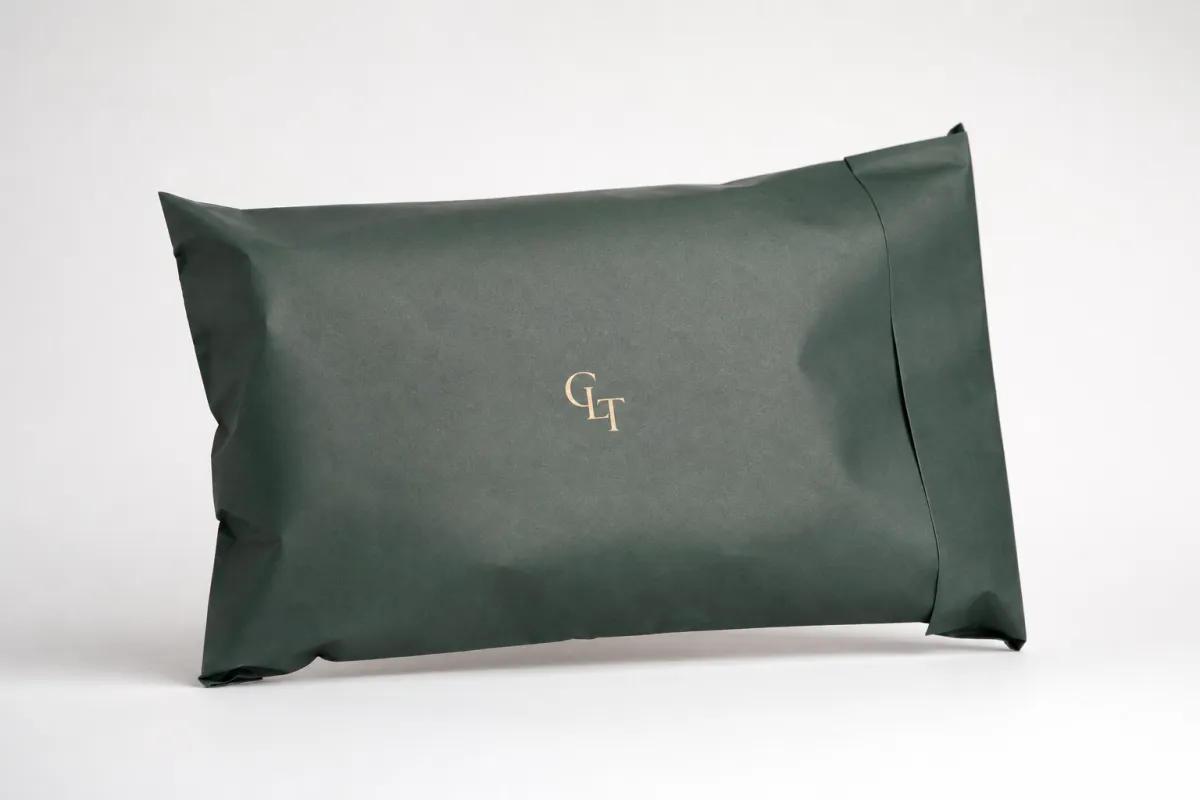
In many shipments, the custom mailer bag with logo is the first complete brand panel a customer sees. That detail carries more weight than it first appears. A product insert is smaller, tucked inside, and often noticed later. A mailer arrives at eye level on the porch, in the mailbox, or at a front desk. It behaves like a moving billboard, yet it still has to protect the contents.
That shift changes how buyers think about product packaging. A plain shipping pouch says the order is on its way. A branded bag says the shipment was planned. The difference is subtle, then suddenly it is not. It shapes how the brand feels in the hand, how it photographs on social media, and how the customer judges the contents before opening.
There is also a comparison worth making: a well-designed mailer can do a surprising amount of work for a fraction of the cost of a rigid carton. A box may offer stronger structure and a more dramatic unboxing, but a mailer often wins on freight, storage, and speed. For lightweight goods, that tradeoff is hard to ignore. If the product does not need a box, forcing it into one can be branding theater.
I see brands miss this all the time. They invest heavily in Custom Printed Boxes for one channel, then ship apparel or soft goods in a bland pouch and wonder why the presentation feels disconnected. A custom mailer bag with logo is not a rigid carton, and it should not pretend to be one. It can still look deliberate when the size, print area, and finish are chosen with care.
There are a few situations where the effect is especially strong:
- Direct-to-consumer apparel, where the package itself often makes the first introduction.
- Subscription shipments, where repeated exposure turns the mailer into part of the product ritual.
- Gift and influencer drops, where the outer package has to look good on camera and in person.
- Promotional mailings, where the delivery surface carries part of the campaign message.
"A mailer that arrives flat, clean, and correctly sized does half the branding work before anyone touches the product."
That is the practical promise of a custom mailer bag with logo: it should help a brand look intentional without making fulfillment slower or freight more expensive. If it cannot do both, the design needs another round. Good packaging design respects the line speed, the carton count, and the reality of transit.
How a custom mailer bag with logo works in real production
A custom mailer bag with logo is built from a few core parts: the film or paper structure, the printable outer surface, the adhesive closure, and any extra features such as tear strips or gussets. On a straightforward polyethylene mailer, the film may be a mono-layer or a co-extruded structure. On more specialized builds, the layers are chosen to balance puncture resistance, opacity, and print performance.
The logo does not appear by magic. Artwork usually moves through file prep, proofing, and then either digital output or a plated print process depending on the method, the quantity, and the graphics. Simple one- or two-color artwork may fit better with a limited-color print setup. Richer art with gradients or tonal backgrounds may need a process that handles more detail. Either way, the print surface of a custom mailer bag with logo is less forgiving than paperboard, so artwork has to be clean.
Manufacturing usually follows a predictable path: film is extruded or sourced, converted to the right width, printed, cut, folded, sealed, and packed. If the design includes a tear notch, that feature has to be positioned accurately so the customer can open the bag without damaging the product. If the bag uses a high-tack adhesive strip, the seal must hold through a normal distribution cycle, not just during a hand test in the office. A good custom mailer bag with logo is designed for the shipment lane it will actually travel.
Barrier properties matter more than many buyers realize. Thin film may be fine for a lightweight garment, but a heavier item, a multi-piece kit, or a product with sharp edges may need a thicker gauge or better puncture resistance. A mailer that tears at the corner during sortation is no bargain, even if the print looked great on the sample. I have seen a gorgeous package fail on a conveyor because the corner rubbed just enough to open a weak seam. Pretty does not count if the parcel leaks by the time it reaches zone 5.
One useful way to think about it is this: the logo is the visible promise, while the structure is the unseen proof. A custom mailer bag with logo has to satisfy both. The visual surface should make the parcel feel branded, and the hidden engineering should make sure the package survives handling, compression, and the occasional rough belt or tote.
Proof approval matters here. A custom mailer bag with logo can look perfect in a digital mockup and still need tweaks once the physical bag structure is considered. Print placement, seal zone, fold lines, and handle cutouts all affect the final read. In practical retail packaging, those details separate a mailer that merely exists from one that feels finished.
Key factors: materials, print quality, size, and sustainability
The material choice behind a custom mailer bag with logo shapes everything else. Polyethylene remains common because it is light, durable, and economical at scale. Recycled-content films can reduce virgin plastic use, though the exact makeup matters. Paper-based and compostable alternatives may fit some brand stories better, but they do not automatically outperform film in wet conditions, puncture resistance, or shelf life. A buyer should ask what the bag must survive, not just how it sounds in a sales pitch.
Print quality is the next major decision. On a smooth film, high-contrast artwork usually prints more cleanly than tiny text or soft gradients. Dark backgrounds can make light logos stand out, but they also expose ink opacity issues if the white underlay is weak. A glossy surface may look vivid, while a matte finish can feel more subdued and premium. The right choice for a custom mailer bag with logo depends on the brand palette, the lighting at delivery, and whether the design needs to read from a distance or in a hand photo.
Size is where many projects quietly go wrong. If the bag is too tight, the seal can strain and the graphics can distort around the filled shape. If it is too large, the product slides around and the package looks underfilled. For folded apparel, a little extra room helps, especially if there is tissue, a thank-you card, or a return insert. For boxed goods, add clearance for corners and closure overlap. A custom mailer bag with logo should be sized to the packed item, not the marketing render. That sounds simple, but the render is often what tricks people into making a bad choice.
Sustainability claims deserve careful handling. A recyclable or recycled-content custom mailer bag with logo may be a strong choice, but the claim should match the actual structure and the local recovery system. Mono-material designs are often easier to sort than mixed laminates, yet access still varies by region. For paper options, sourcing can matter as much as end-of-life. If fiber content is part of the story, look for a responsible sourcing standard such as FSC and confirm what percentage of the bag, if any, actually qualifies.
The less glamorous features deserve attention too. Closure strength. Opacity. Tear resistance. Moisture behavior. Static build-up in dry environments. These do not sound glamorous, but they decide whether the bag works in the hands of warehouse staff and in the back of a courier truck. A polished custom mailer bag with logo that fails in transit is not good branding. It is just expensive disappointment.
| Mailer option | Typical use | Approx. MOQ | Common unit price at 5,000 pcs | Notes |
|---|---|---|---|---|
| Standard printed PE mailer | Apparel, soft goods, light accessories | 3,000-5,000 | $0.14-$0.26 | Best value for simple branding and reliable shipping performance. |
| Recycled-content film mailer | Brands with recycled-content goals | 5,000-10,000 | $0.18-$0.32 | Check the recycled-content claim and confirm print adhesion on the chosen film. |
| Premium matte custom mailer bag with logo | Beauty, premium apparel, gift mailings | 5,000-10,000 | $0.22-$0.40 | Matte surfaces can improve perceived value, but artwork needs strong contrast. |
| Specialty paper or compostable-style mailer | Brands prioritizing paper feel or compostability messaging | 10,000+ | $0.30-$0.55 | Evaluate durability, moisture resistance, and actual disposal path before committing. |
Those ranges are not universal, and they should not be treated as a quote. Still, they give buyers a sane starting point. If you are comparing a custom mailer bag with logo against Custom Printed Boxes or rigid cartons, remember that the mailer often wins on freight, stackability, and speed, while the box wins on structure and shelf presence. The right answer depends on the product, the channel, and the feel you want the customer to have on arrival.
For brands building out a larger packaging design system, a mailer can sit alongside secondary formats rather than replace them. Some programs use poly mailers for soft goods, cartons for delicate items, and branded inserts to tie the experience together. That is where package branding becomes useful: one consistent visual language across different package types.
Process and timeline: from artwork to shipment
A well-run custom mailer bag with logo order usually follows a straightforward sequence: request specs, submit artwork, review the proof, approve it, schedule production, and then ship to the warehouse or directly to fulfillment. Simple enough. The part that matters is the handoff between each step, because delays usually come from one of three places: the artwork file, the dimensional spec, or the proof approval.
Artwork issues are common. A logo exported at the wrong resolution can look fuzzy on a flexible film surface. A Pantone target may not translate cleanly if the substrate changes the way color sits. Tiny text can disappear altogether once the bag is filled and moving. If the design for a custom mailer bag with logo has fine lines, small legal copy, or subtle gradients, it is wiser to ask for a physical proof rather than trusting a screen render alone.
Timeline also depends on the print method and the size of the run. Standard builds with clear specs can move fairly quickly, while custom sizes, specialty finishes, and high-coverage graphics may add setup time. Seasonal demand matters too. A launch that lands near a busy retail window can wait behind other jobs unless the order is booked early. In practice, many projects land somewhere around 12-15 business days after proof approval for straightforward runs, but that is only a working estimate, not a promise.
A sample can save a lot of money later. Not every custom mailer bag with logo needs a full pre-production sample, but if the bag will carry a premium launch, a sharp color standard, or a tight mechanical fit, the sample is cheap insurance. It reveals whether the adhesive strip is placed correctly, whether the bag closes without strain, and whether the brand mark reads cleanly once the film is folded and packed.
That same discipline helps with transit testing. If your order has to survive parcel handling, you can reference the general spirit of ISTA testing methods and distribution checks through the International Safe Transit Association. The point is not to turn a mailer into lab equipment. The point is to make sure the bag is fit for the lane it will travel. A custom mailer bag with logo should pass the real-world test of corners, conveyor belts, tote compression, and last-mile handling.
Good planning also means working backward from the launch date. If the bags must be on hand by a campaign drop, build in time for file revisions, proof approval, production, freight, and a little buffer for the unexpected. A custom mailer bag with logo is not something to rush at the last minute unless the schedule has room for risk. That buffer is boring, but it is cheaper than a rescue shipment.
Cost, pricing, MOQ, and quote drivers
Price on a custom mailer bag with logo is driven by a handful of variables that buyers can actually control: material type, bag size, thickness, print coverage, number of colors, finish, closure style, and whether the build uses a stock format or a fully custom configuration. A simple one-color logo on a standard-size mailer will usually cost far less than a full-coverage matte design with a custom tear feature.
MOQ matters because the setup cost has to be spread across the run. A higher minimum often lowers the unit cost, but it can also leave a smaller brand holding more inventory than it can use quickly. That is not always a good trade. If you are testing a new channel, launching a seasonal line, or piloting a new custom mailer bag with logo, ask about stock sizes, lighter print coverage, or phased ordering before assuming the biggest run is the smartest one.
To get a meaningful quote, provide finished dimensions, product weight, artwork count, color targets, closure needs, and delivery destination. If you know the bag will hold folded knits, an insert card, and a return label, say so. If the bag must be opaque enough for privacy or sturdy enough for a sharp-edged item, say that too. A good supplier can price a custom mailer bag with logo more accurately when the requirements are specific.
Here is a practical way to think about common quote drivers:
- Setup charges: can apply for new print tooling or custom dimensions.
- Artwork revisions: extra rounds can add time and cost if files need correction.
- Rush production: compressed schedules usually carry a premium.
- Split shipments: sending inventory to multiple locations raises freight complexity.
- Freight mode: air, expedited ground, and standard ocean or truck each affect total landed cost.
That is why the cheapest quote on paper is not always the best value. A low unit price can hide expensive freight, weak film, or a high defect rate. I would rather see a buyer compare total landed cost and usable yield than chase the lowest sticker number. A custom mailer bag with logo that arrives on time, prints correctly, and packs cleanly is usually the stronger investment, even if the line item is a few cents higher.
The comparison below is the kind of framework that helps brands evaluate options before they commit:
| Factor | Lower-cost option | Higher-value option | What to watch |
|---|---|---|---|
| Material | Standard PE film | Recycled-content or premium finish film | Check puncture resistance and print adhesion. |
| One-color logo | Multiple colors or full-coverage art | More colors mean more setup and tighter registration control. | |
| Size | Stock dimension | Custom fit to packed product | A better fit can reduce damage and improve presentation. |
| Lead time | Standard schedule | Rush schedule | Rush jobs are useful, but they should not replace planning. |
For brands comparing a custom mailer bag with logo to other product packaging formats, the real question is not simply cost per unit. It is cost per successful shipment, cost per brand impression, and cost per mistake avoided. That is a better lens for branded packaging decisions, especially when a launch depends on timing and consistency.
Common mistakes when ordering branded mailer bags
The first mistake is size. A custom mailer bag with logo that is too small creates stress points, slower packing, and a higher chance of seam failure. One that is too large wastes film and makes the shipment look loose or underfilled. I see this often with apparel brands that estimate from garment dimensions alone and forget the insert card, tissue wrap, and the natural bulk of folded fabric.
The second mistake is artwork that looks fine on screen but fails in print. Tiny logos, thin strokes, and low-contrast colors can disappear on film, especially if the outer surface is glossy or dark. A custom mailer bag with logo should be treated like a moving surface, not a static poster. Motion and handling change the way the eye reads the design.
The third mistake is material mismatch. A thin film can feel economical, yet it may not hold up to heavy items or sharp corners. A premium-looking finish can also hide poor structural performance if the wrong gauge is used. A smart buyer asks how the bag behaves when filled, stacked, and thrown into the normal handling stream. The pretty sample is only part of the story.
The fourth mistake is skipping sample approval. That can be expensive. Once a full custom mailer bag with logo run is in production, a small file issue becomes a lot of wasted inventory. A wrong seal line, a shifted logo, or a color that is slightly off-brand is much easier to correct on a sample than on 20,000 finished bags.
The fifth mistake is planning inventory like the bags will store themselves. Finished mailers still need space, and cartons of flat-packed bags can occupy more room than people expect. If the campaign is seasonal, or if the brand sells through several channels, the fulfillment team needs a real storage plan. A custom mailer bag with logo that arrives too late or in too large a quantity can create the opposite of convenience.
Other errors show up less often, but they are worth calling out:
- Using a logo size that disappears once the bag is folded or sealed.
- Choosing a finish that photographs badly under warehouse lighting.
- Ignoring privacy needs for items that should not be visible through the film.
- Forgetting that a custom bag has to work with labels, barcodes, and carrier marks.
From a packaging buyer’s point of view, the cleanest projects are the ones where the custom mailer bag with logo supports the operation instead of fighting it. That usually means fewer surprises, fewer revisions, and a better result for the customer opening the parcel.
Expert tips and next steps for your custom mailer bag with logo
Start with the product itself, not the mockup. Measure the folded or boxed item, include any tissue, inserts, or return cards, and then build the custom mailer bag with logo around that real packed size. That simple step prevents a lot of late-stage problems. It also makes the quote more honest, because the supplier is pricing a bag that actually fits the shipment.
If you are uncertain about the finish or material, test two or three options side by side. A matte bag, a gloss bag, and a recycled-content film can all carry the same art, but they will not feel the same in hand or under print. A custom mailer bag with logo is not just a carrier; it is a tactile cue. The material tells the customer something before the product does.
Keep the logo placement simple and deliberate. A crowded surface often reads less premium than a calm, well-spaced one. One clean mark, a balanced return address panel, and a clear close zone usually outperform a busy layout. That is one reason a custom mailer bag with logo can feel more upscale than expected when the design is restrained rather than overworked.
If your brand program includes several shipping formats, think system-wide. You may need mailers for soft goods, cartons for fragile items, and branded inserts for all orders. That is where a broader packaging design plan helps. A mailer can work alongside custom printed boxes and other formats without losing consistency, especially if your colors, typography, and logo placement stay disciplined across the line.
Here is a practical launch checklist that keeps the project moving:
- Confirm the packed product dimensions and target bag size.
- Finalize artwork in the correct file format and color mode.
- Request a detailed quote with MOQ, lead time, and freight assumptions.
- Review the proof carefully for logo placement, color, and seal zone clearance.
- Approve a sample if the design is premium, tight-fitting, or highly color-sensitive.
- Reserve production time early enough to absorb revisions and shipping transit.
If sustainability is part of the brief, check the exact film structure, the print system, and the end-of-life pathway before making a claim on the bag. A custom mailer bag with logo can support a better materials story, but only if the claim matches the actual build. For general recycling guidance, the EPA recycling resources are a solid starting point for understanding how disposal systems vary.
For brands that want to move quickly without sacrificing consistency, the next step is usually a structured spec review with a packaging partner. That is the stage where size, film, finish, and print method can be aligned before the first sample is made. A well-planned custom mailer bag with logo should support branding, protection, and fulfillment speed at the same time. If it cannot do those three things, it is usually the spec, not the concept, that needs another look.
One last practical takeaway: choose the bag around the packed product, not the other way around. That single decision saves time, lowers waste, and gives the logo a surface it can actually do justice to.
Frequently Asked Questions
What size custom mailer bag with logo should I choose for apparel?
Measure the folded garment with any tissue, insert card, or return note included, then add enough room so the bag seals without strain. A custom mailer bag with logo that is slightly too roomy is usually better than one that forces the closure to work too hard, but too much empty space can make the shipment look loose. If you are between sizes, ask for a flat spec comparison or a sample before placing the full order.
Is a custom mailer bag with logo recyclable or eco-friendly?
It depends on the material structure, print system, and closure style. A custom mailer bag with logo made from a mono-material film may be easier to recover than a mixed-material laminate, but local recycling access still matters. If eco-friendly claims are important to your brand, ask for the full spec sheet and confirm how the bag should be disposed of after use.
How many colors can I print on a custom mailer bag with logo?
The answer depends on the print method and the artwork. Some processes are best for simple spot colors, while others can handle more complex graphics. A custom mailer bag with logo usually prints most reliably when the logo has strong contrast, clean shapes, and reasonable line weights. If your brand color is critical, request a proof on the actual material.
What is a typical MOQ for branded mailer bags?
MOQ varies by size, construction, and print setup. A standard custom mailer bag with logo may start at a few thousand pieces, while more specialized builds can require higher quantities because the setup cost is spread across the run. If you need a smaller amount, ask about stock sizes, simplified print, or phased ordering.
How long does a custom mailer bag with logo order take?
Lead time usually includes artwork review, proof approval, production, and freight. A custom mailer bag with logo order can move fairly quickly if the files are clean and the material is standard, but special finishes, rush schedules, or seasonal demand can extend the timeline. The safest approach is to build in extra time for revisions and shipping so the bags arrive before the launch date.

