Buyer Fit Snapshot
Use this page when an ecommerce brand needs branded recycled mailer bags that balance durability, print coverage, and sustainability claims.
| Decision point | What to specify before quoting |
|---|---|
| Material and construction | Substrate, thickness, coating, print coverage, finish, and tolerance requirements. |
| Order economics | MOQ, unit tiers, sample run, lead time, packing method, and freight assumptions. |
| Production control | Dieline, artwork proof, barcode or warning copy, QC checks, carton marks, and reorder plan. |
Custom Mailer Bags with logo deserve attention because packaging decisions rarely live in just one column of a spreadsheet. A mailer influences freight, labor, storage, damage rates, and the first physical impression a customer gets from the brand. For soft goods, that combination can be more powerful than a box that looks premium but adds weight, void fill, and assembly time.
The appeal is practical. Apparel, accessories, printed materials, textile samples, and other low-fragility items often ship more efficiently in a mailer than in corrugated board. A smaller package profile can reduce dimensional weight charges, and a lighter package can trim postage in a way that shows up on every order. The logo then turns the shipper into a brand asset instead of a plain transit shell.
That matters most for businesses that send repeat orders. A package that arrives cleanly, with a visible mark and a tidy seal, communicates control. It also says something about the operation behind the scenes: the brand has thought through fit, protection, and presentation rather than treating packaging as an afterthought.
Packaging buyer rule of thumb: if the product can survive normal parcel handling without a rigid shell, a well-specified mailer may outperform a custom printed box on total landed cost.
Why custom mailer bags with logo are worth a closer look
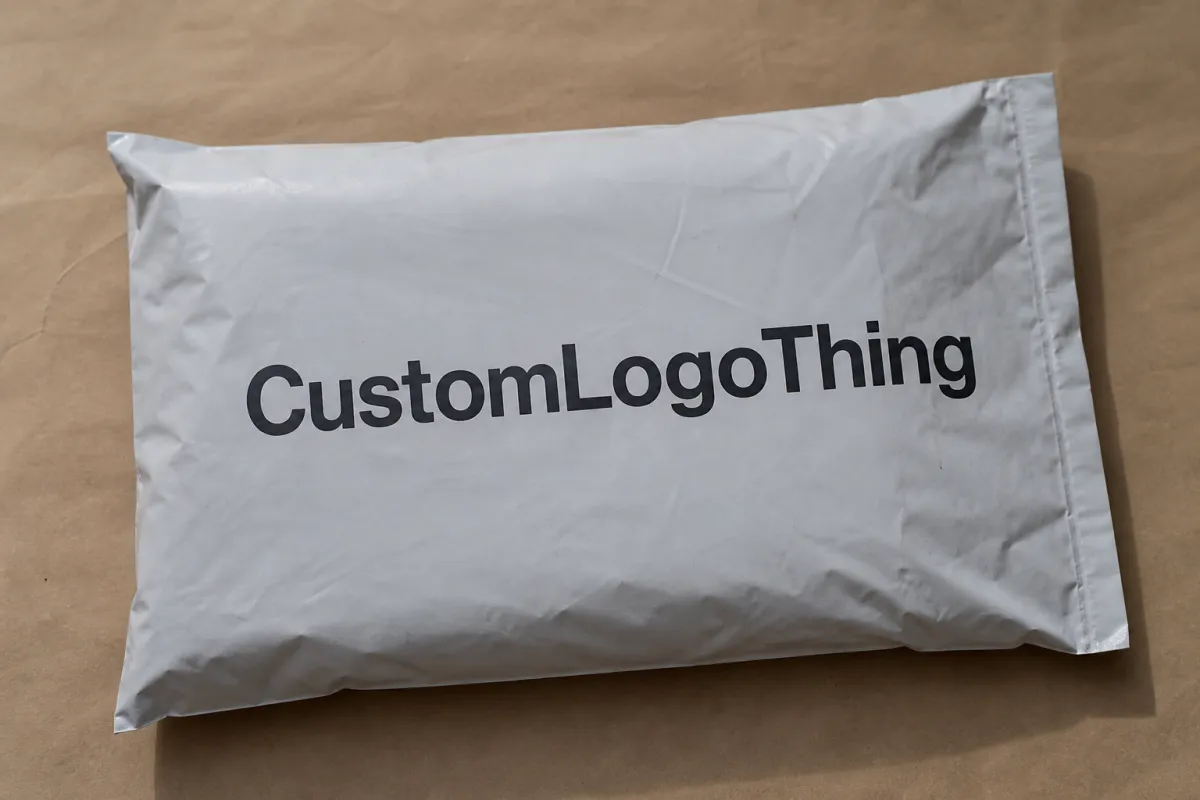
Boxes still dominate because they are familiar. They stack neatly, they feel safe, and they photograph well in marketing decks. Familiarity, though, is not the same as efficiency. Corrugated board, tape, inserts, and void fill can quietly add both material and labor to each order. In a high-volume environment, those small additions become a measurable expense.
Mailers reduce some of that friction. A worker can usually pack a soft garment into a mailer faster than into a box that requires assembly, cushioning, and sealing. Multiply that by hundreds or thousands of orders and the time savings become visible in throughput. For fulfillment teams, that is not a theory. It is a line item.
The branding advantage is just as real. A clean logo on the outside of the bag carries through the whole transit journey: warehouse, truck, porch, front desk, return counter. The package becomes part of the brand system rather than a disposable shell that disappears the moment it leaves the facility.
There is also a useful contrast between effort and effect. A box can feel more substantial, but a well-designed mailer often delivers a sharper visual result with less material. That is one reason many apparel brands, subscription programs, and direct-to-consumer retailers begin with custom mailer Bags with Logo before moving into more complex presentation packaging.
Comparing mailers and boxes only on appearance misses most of the picture. The more useful comparison is operational:
- Material use: mailers often require less substrate than a box plus inserts and fill.
- Shipping profile: lower thickness can reduce dimensional weight on many parcel networks.
- Pack-out speed: fewer components usually mean faster fulfillment.
- Brand presence: the logo sits on the transit surface instead of being hidden inside the box.
For teams already evaluating a broader packaging system, it helps to compare options across the full workflow. Many buyers start with Custom Packaging Products and then narrow into Custom Poly Mailers once the shipping profile and pack-out labor become clearer.
What custom mailer bags with logo actually are
A mailer bag is a lightweight shipping enclosure designed to protect a product during parcel transit. The most common version in e-commerce is the poly mailer: thin, strong, water-resistant, and simple to seal. Other versions use paper, recycled-content film, or a hybrid structure built to balance appearance and performance.
Customization starts with the size. A mailer that is too small stretches at the seal and can split at the corners. One that is too large wastes material and makes the package look underspecified. Thickness follows next, usually described in mils or microns depending on the supplier. Then come closure type, opacity, color, finish, tear strip, return strip, and whether the bag needs a gusset for extra depth.
Printing methods also matter. Flexographic printing is common for larger runs because it scales efficiently and handles solid brand colors well. Digital printing is often better for shorter runs, versioning, or faster turnarounds. A simple one- or two-color logo can be highly effective if the art is disciplined. Full-bleed artwork creates a stronger visual field, but it also raises cost and can complicate recyclability instructions or reuse.
At a technical level, the right spec should match the product and the carrier network, not just the brand mood board. A folded cotton tee does not need the same wall strength as a hoodie with zippers, hardware, or a rigid insert. The packaging choice should follow the item, the route, and the expected handling conditions. That is the difference between decoration and fit.
Logo placement changes the visual read more than many teams expect. Centered artwork is obvious and easy to spot on a conveyor. A corner mark feels quieter and can suit premium brands that prefer understatement. Interior flap printing can add a small reveal moment, though only if it does not complicate production or crowd the bag with unnecessary messages.
Mailers are not just blank envelopes with graphics. They are a controlled system of material, seal, print, and product fit. If one piece is off, the whole experience feels cheaper. If all the pieces align, even a simple bag can look intentional.
Material choices, sustainability claims, and branding impact
Material selection shapes the entire program. Virgin poly remains common because it is light, consistent, and durable under typical transit conditions. Recycled-content poly is often the first sustainability upgrade because it keeps the same general performance profile while reducing dependence on new resin. Paper mailers fit certain brand stories well, but they are not automatically better. Compostable films can be a valid choice in specific programs, yet they only make sense if the end-of-life path is realistic where the parcel will actually be opened.
That distinction matters. A bag marketed as recyclable or compostable can still be a poor environmental fit if the local recovery system does not accept that material. Brands should verify disposal claims against current public guidance, local MRF acceptance, and supplier documentation. For broad consumer-facing guidance, the EPA recycling guidance is a sensible starting point. For fiber-based mailers, FSC certification can support responsible sourcing claims, though it does not guarantee transit performance on its own.
Here is a straightforward way to compare common material paths:
| Material | Typical strengths | Tradeoffs | Typical unit cost at 5,000 units |
|---|---|---|---|
| Virgin poly | Strong seal, water resistance, low weight, broad print compatibility | Less attractive for brands trying to reduce use of new plastic | $0.11-$0.19 each |
| Recycled-content poly | Similar durability to virgin poly, useful sustainability story, good for apparel | May cost more; claims need documentation | $0.13-$0.24 each |
| Paper mailer | Natural look, strong print surface, good for paper-forward programs | Less water resistance; can tear sooner under rough handling | $0.22-$0.42 each |
| Compostable film | Useful for defined brand commitments and limited use cases | End-of-life depends on infrastructure and certification | $0.25-$0.48 each |
| Hybrid paper/poly | Balanced feel, often better strength than plain paper, more design flexibility | Can be harder to recycle depending on construction | $0.20-$0.38 each |
Those ranges are directional, not universal. Size, print coverage, adhesive style, freight, and market conditions can move the final number. A larger mailer with a reseal strip and full-bleed artwork will usually cost more than a plain two-color bag made from the same substrate. Specialty claims and decorative finishes tend to raise the unit price, which is one reason procurement teams ask for exact specs rather than broad product names.
Finish changes the feel too. Matte surfaces usually read as more subdued and premium, while gloss can make colors pop harder under store lighting or in product photography. Translucent film can create a different effect entirely by revealing just enough of the packed item to signal what is inside. That can work well for some categories and look careless for others.
Print clarity depends on contrast, ink choice, and how much the substrate shifts during handling. A bold black mark on pale recycled film is easy to read. A light logo on a speckled material can feel tasteful, but it may lose impact once the package moves through a busy delivery chain. If the logo is doing real branding work, the print spec deserves as much attention as the material spec.
Performance still decides the final choice. Water resistance matters for porch delivery and damp docks. Puncture resistance matters for rough parcel networks and bulky contents with hard edges. Seal strength matters more than many first-time buyers expect; a weak adhesive can turn a lower unit price into an avoidable return rate. Flexibility matters too, because a bag that cannot conform to the product may fail at the corners even if the film thickness looks adequate on paper.
Cost, pricing, MOQ, and unit cost
Mailers usually cost less than boxes on a per-unit basis, but that comparison only holds if the spec is matched properly. Size, thickness, material, print coverage, and quantity drive most of the price. A simple one-color logo on a standard poly mailer rarely costs the same as a custom-color recycled-content bag with a reseal strip and full exterior print.
MOQ, or minimum order quantity, is where many teams feel the price curve most sharply. Smaller runs cost more per unit because setup work is spread across fewer pieces. That setup often includes plate creation for flexographic printing, prepress review, ink matching, proofing, and sample production. A buyer ordering 2,000 bags may pay a materially higher unit price than one ordering 10,000, even if the artwork barely changes.
There are also expenses that do not always show up cleanly in the first quote. Those are easy to miss, and they matter.
- Tooling or plate charges: often $75-$250 depending on the print method and number of colors.
- Proofing and samples: commonly $20-$60 plus shipping, sometimes more if multiple revisions are needed.
- Freight: modest for samples, but significant for palletized production runs.
- Warehousing: if bulk inventory sits for months, storage becomes part of the real unit cost.
- Damage and returns: a cheaper bag that fails in transit can erase the savings quickly.
That is why landed cost matters more than sticker price. If one supplier offers a bag for $0.12 and another offers a higher-spec version for $0.17, the second option may still cost less once you factor in lower damage, fewer replacements, and less labor rework. Packaging buyers know this math. The lowest quote is not always the best business decision.
Exact spec comparison is the only fair way to evaluate quotes. Same dimensions. Same thickness. Same material. Same closure. Same print coverage. Same freight terms. Without that discipline, two suppliers can both say “custom mailers” and still be quoting very different products.
For a practical buyer, the useful question is not just whether the bag looks good. The better question is how much protection the product needs and how much branding the parcel should carry. A plain mailer can keep cost down, but a custom one may do double duty as both shipping packaging and brand media. That extra visibility can justify a few additional cents per unit, especially for businesses that depend on repeat recognition.
A simple framework keeps the decision grounded:
- Choose the smallest bag that fits the packed product with room for closure.
- Set a material floor that protects against transit damage.
- Decide how much of the bag should carry artwork.
- Request quotes from at least two suppliers using the same spec.
- Compare unit price, freight, and damage risk together.
That is one reason custom mailer bags with logo often look efficient in a budget review. The printed brand message is built into a necessary shipping item instead of being added as a sticker, insert, or separate sleeve. For a growing brand, that is a clean way to make packaging earn its keep.
Process and timeline: from artwork to production
The fastest projects begin with specific input. A supplier needs product dimensions, shipping method, sustainability goals, target budget, and brand requirements before pricing can be trusted. If the product pack-out is uncertain, the quote will be uncertain too. A mailer for a flat tee is not the same as a mailer for a hoodie with folded sleeves, tissue, and a hangtag.
Artwork prep is where small mistakes become expensive. The dieline must match the actual bag size. The logo file should be vector-based whenever possible. Color expectations should be set early, especially if the brand relies on a precise match. If a Pantone target matters, say so before proofing begins. If text appears on the back flap, tear strip, or inner panel, it needs the same review discipline as the logo itself.
The usual path from concept to shipment looks like this:
- Briefing: define product size, volume, substrate preference, and performance goals.
- Spec selection: confirm dimensions, thickness, closure, and print method.
- Artwork setup: place logos, colors, copy, and any regulatory or recycling language.
- Sample or proof: review print layout, adhesion, and fit before production.
- Revision: correct sizing or color issues that appear in the sample.
- Production: print, convert, fold, pack, and inspect the finished bags.
- Shipment: send bulk inventory to the warehouse or fulfillment partner.
Timelines vary, but a clean project often moves through proofs and production in about 12-20 business days after artwork approval. Sampling can add 3-7 business days depending on supplier workload and complexity. Freight adds more time, and import programs can add still more. If the order requires recycled-content documentation, custom colors, or a first-time dieline, expect additional back-and-forth.
Delays usually come from three places. First, incomplete files. A low-resolution logo or missing dieline can stop prepress work immediately. Second, vague expectations. If nobody confirms the exact shade, finish, or print position, approvals bounce around. Third, rushed sample approval. Teams sometimes sign off before checking the actual product inside the bag, then discover the closure is too short or the fit is too tight.
The safest way to protect the schedule is to test the real pack-out early. Put the product in the sample bag with any insert, label, or return card. Seal it. Ship it to yourself. Drop it. Stack it. See whether the bag scuffs, wrinkles, or opens under pressure. A fast test like that can save a full production run.
If a team is moving from custom printed boxes to mailers, there is usually a short learning curve. Mailers behave differently at the packing station. They often require less assembly, but they also demand tighter sizing discipline. The better the fit, the better the economics. The worse the fit, the more the mailer starts behaving like wasted material.
Common mistakes when ordering mailer bags
The most common mistake is sizing by product dimensions alone. A folded garment is not the same as the flat garment measured on a table. Inserts, tissue, barcodes, and return cards all change the final packed volume. If a bag fits the product on paper but not after pack-out, the closure can stretch or fail.
The second mistake is choosing a decorative bag that looks premium but cannot survive real transit. A thin film may photograph beautifully, then puncture when a zipper or hard corner presses against the wall. A paper mailer may feel more responsible, but if it tears in wet weather, the brand pays for that decision through replacements and customer service time.
Greenwashing is another trap. Buyers should be cautious when a supplier says a bag is “eco-friendly” without backing it with recycled-content percentages, certifications, or disposal guidance. Recyclable, compostable, and biodegradable do not mean the same thing. Compostable in industrial conditions does not mean it disappears in a backyard bin. Recyclable does not mean every municipality accepts it. Ask for documentation. Ask what the claim is based on. Ask what the end user is actually supposed to do.
A fourth mistake is skipping sample tests. That can be expensive. One seal failure or one bad drop test can wipe out the savings from a lower quote. This is especially true for brands shipping to hot climates, humid routes, or long parcel networks where packages get compressed and bounced multiple times before arrival.
Some brands also overdo the branding. A loud bag is not always a better bag. Heavy print coverage can raise cost, complicate recycling guidance, and make the package feel more like promotion than protection. Strong packaging branding usually looks controlled, not frantic. A clean logo, clear messaging, and good contrast often do more than a crowded artwork field.
A short checklist prevents most of the avoidable problems:
- Measure the packed product, not just the raw item.
- Confirm closure length and seal strength on a sample.
- Ask for sustainability documentation in writing.
- Test the bag under real transit conditions.
- Compare bids only after matching the exact spec.
That last step matters more than it looks. If one quote includes a return strip, recycled content, and full-color print while another is quoting a plain stock mailer, the lower price is not comparable. The mismatch hides the real cost of doing business.
From a packaging buyer’s point of view, a mailer is only a win if it lowers cost, protects the product, and fits the brand story at the same time. Miss one of those three and the program starts to wobble.
Expert tips and next steps for a cleaner launch
If you are launching or revising a mailer program, begin with one high-volume SKU. That gives enough volume to evaluate print clarity, fit, pack-out speed, and customer response without committing the full packaging line to a new format. A top-selling T-shirt or lightweight accessory is often the best test case because it appears often enough to show patterns quickly.
Ask suppliers for more than a price. Request material data, transit-test results, recycled-content documentation, and end-of-life guidance. If a supplier cannot explain how the material should be handled after use, the sustainability claim is probably thinner than it appears. Good vendors should be able to describe whether the substrate aligns with ASTM compostability standards, recycling guidance, or FSC paper sourcing where relevant.
Logo placement deserves strategy. A centered logo can read clearly during delivery and unboxing. A more restrained corner mark may suit a premium brand that wants the mailer to feel elegant rather than loud. Some teams add a short line inside the flap or on the tear strip so the package communicates twice: once on arrival, once on opening. That can be a strong detail, but only if it does not crowd the bag.
There is a broader brand lesson here. Mailers do not replace the entire packaging experience; they shape the first layer of it. If the product later moves into retail packaging or sits alongside custom printed boxes in a wider assortment, the mailer still needs to fit the same visual language. Good packaging design stays consistent without becoming repetitive.
For teams tightening the system, a practical rollout sequence works well:
- Measure your top product in its final packed form.
- Pick two material options, ideally one standard and one sustainability-forward.
- Request side-by-side quotes using the same dimensions and print coverage.
- Order samples and test seal strength, corner fit, and scuff resistance.
- Review freight, storage space, and fulfillment speed before approving volume.
- Launch with one SKU, then expand if the transit data looks clean.
That process may feel cautious, but caution is usually cheaper than rework. A bag that looks good on a screen and fails in a warehouse is not a branding asset. It is a liability with a logo on it.
For many growing brands, custom mailer bags with logo are the point where sustainability, economics, and presentation finally line up. The strongest results come from disciplined specs, realistic transit testing, and honest material claims. Get those pieces right, and custom mailer bags with logo can reduce waste, sharpen package branding, and support a more efficient shipping workflow at the same time.
FAQ
Are custom mailer bags with logo better than boxes for apparel?
Often yes, especially for soft goods that do not need rigid protection. Mailers usually weigh less than corrugated boxes and often need less fill, which can reduce both packaging material use and shipping cost. Shirts, leggings, swimwear, and lightweight accessories are strong candidates. Boxes still make more sense for fragile items, rigid gift sets, or products that need structure for presentation.
What material is best for custom mailer bags with logo if sustainability matters?
There is no single best answer. Recycled-content poly is often a strong option when durability and water resistance matter, especially if the local recycling stream accepts that material. Paper or hybrid mailers can fit brands that want a more natural look, but they may be less protective in wet or rough transit. Compostable films can work in specific programs, but only if the end-of-life path is real and documented.
How do I size custom mailer bags with logo correctly?
Measure the product in its packed state, not just flat on its own. Folds, inserts, tissue, and cards can change the final dimensions enough to affect the seal. Leave enough room for a secure closure without overstuffing the bag. The best practice is to request samples, pack the real product, and test the fit before ordering in volume.
What affects the price of custom mailer bags with logo the most?
Order quantity, size, material thickness, and print complexity usually have the biggest impact. A larger bag with more print coverage and special features like a reseal strip will cost more than a basic one-color mailer. Freight, samples, tooling, and storage can also change the total cost, so compare quotes using the same exact spec sheet.
How long does it take to produce custom mailer bags with logo?
Timeline depends on artwork approval, sample rounds, material availability, and shipping method. Simple jobs can move quickly if the logo files are ready and the spec is already set. More complex orders, especially those that need custom colors or sustainability documentation, should include extra buffer time. A realistic plan usually includes proofing, production, and freight, not just the print run itself.


