Buyer Fit Snapshot
| Best fit | Custom Mailer Bags for Boutiques projects where brand print, material claims, artwork control, MOQ, and repeat-order consistency need to be specified before quoting. |
|---|---|
| Quote inputs | Share finished size, material target, print colors, finish, packing count, annual reorder estimate, ship-to region, and any compliance wording. |
| Proofing check | Approve dieline scale, logo placement, barcode or warning zones, color tolerance, closure strength, and carton packing before bulk production. |
| Main risk | Vague material claims, crowded artwork, missing packing details, or unclear freight terms can make a low unit price expensive after revisions. |
Fast answer: Custom Mailer Bags for Boutiques: Design, Cost & Fit should be specified like a repeatable production item. The safest quote records material, print method, finish, artwork proof, packing count, and reorder notes in one written spec.
Production checks before approval
Compare the actual filled-product size with the drawing, then confirm tolerance on folds, seals, hang holes, label areas, and retail display edges. Reserve space for logos, QR codes, warning copy, and material claims before decorative graphics fill the panel.
Quote comparison points
Review material grade, print process, finish, sampling route, tooling charges, carton quantity, and freight assumptions side by side. A quote is only useful when the supplier can repeat the same color, closure quality, and packing count on the next order.
A $38 dress can look like an $18 item if it arrives in a flimsy, wrinkled mailer. That is the quiet power of Custom Mailer Bags for boutiques: they protect the product, and they shape the value of the brand before the customer even opens the parcel. A good bag does real work for a small spend. A poor one undercuts the sale before the item gets a chance.
For boutiques, packaging is not only shipping protection. It is branded packaging, retail packaging, and package branding folded into one move. A mailer bag can make a shirt feel considered, make a beauty kit feel giftable, and make a repeat customer remember your name without squinting at the label. Anyone who has watched a polished unboxing spread across social media already knows this: the bag becomes part of the product story. Nobody films a dented gray sack unless something has gone wrong.
Why custom mailer bags for boutiques matter more than you think
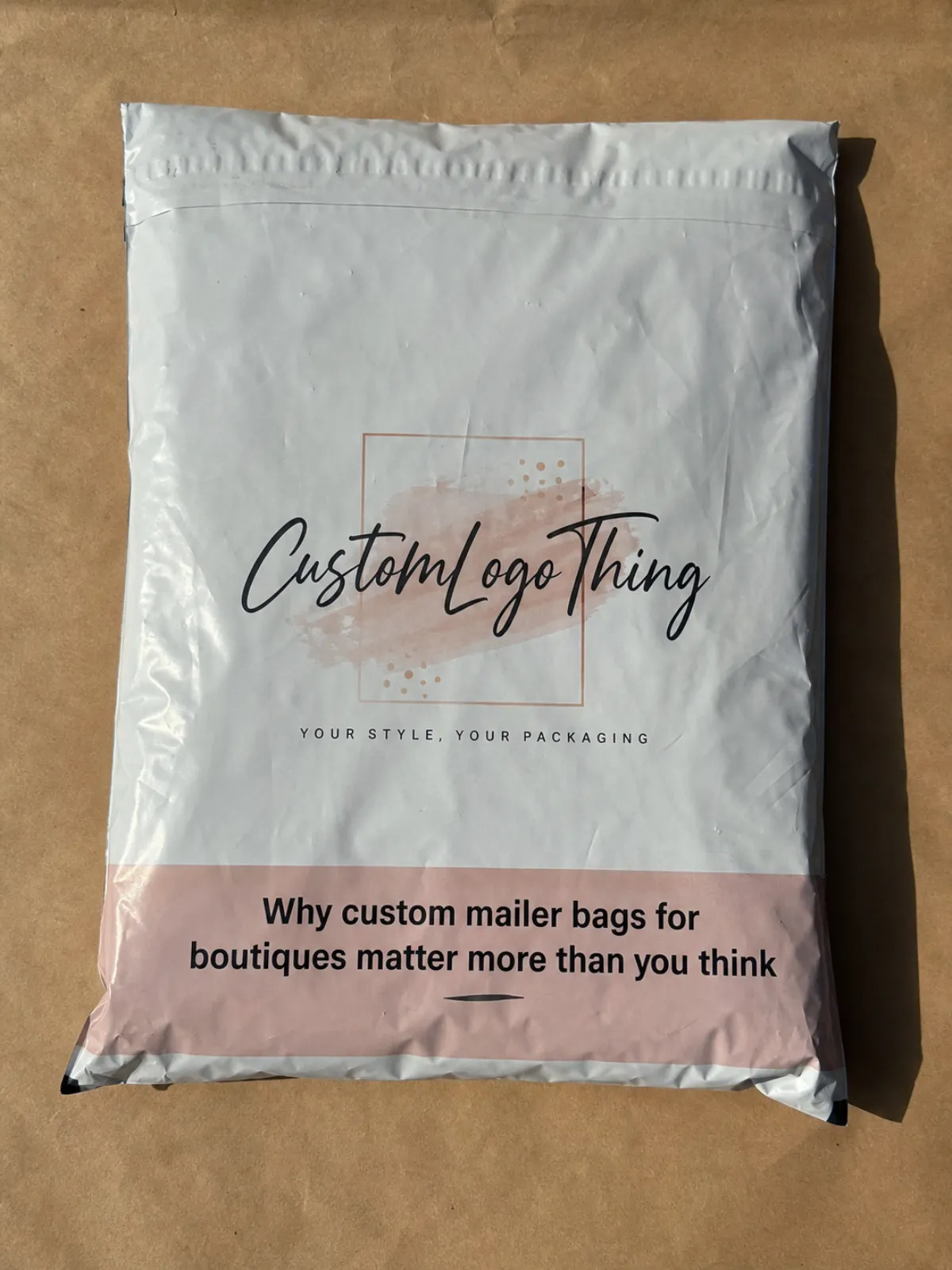
Custom mailer bags are branded shipping bags built to hold soft goods and lightweight boutique items while keeping them clean, presentable, and protected. Apparel, scarves, accessories, small home goods, and some beauty items all fit that description. In plain English, they are the outer shell that gets your product from shelf to customer without making the order look cheap. For boutique owners, that outer shell matters because customers judge the whole product packaging experience, not just the item inside.
The reaction can be immediate. A customer buys a $38 dress, waits a few days, and receives a bag that looks like it was pulled from a warehouse clearance bin. The dress may still be excellent, yet the perceived value drops before the garment ever comes out of the package. A cleaner, custom-printed mailer shifts that first impression quickly. It tells the customer the brand noticed the details, which is usually the difference between “nice little boutique” and “why does this store feel so polished?”
That is why these bags do more than ship. They act as a first impression, a damage buffer, a photo backdrop, and a repeat touchpoint if the customer reuses the bag for returns, storage, or local pickup. For some boutiques, the bag is also the first branded item a customer touches after checkout. That is a surprising amount of responsibility for something that still has to stay light enough to protect shipping margins.
Compared with plain poly mailers, custom mailer bags for boutiques can look premium without adding much weight. That is the sweet spot. You want the package to feel intentional, but you do not want to pay for a presentation box when the product is a folded blouse. Add heavy packaging to a light item and postage climbs for no useful reason. That is not branding. That is self-sabotage with a logo.
Control is the real advantage for a boutique. You can choose the size, the color, the print coverage, and the finish so the packaging matches the store instead of fighting it. A minimalist brand often looks sharp with a recycled mailer and a single-color logo. A fashion-forward shop with bolder merchandise may need a color-blocked bag or a repeated pattern. The bag should support the brand voice, not impersonate a random e-commerce warehouse.
There is also a budgeting angle that gets overlooked. For a boutique with a $48 average order value, a $0.20 to $0.40 mailer is a fraction of the sale, but it is a highly visible fraction. That makes packaging unusually efficient from a brand perspective. A small improvement in the parcel can change how the whole purchase feels, while a mistake can make the entire order feel less valuable before the customer even sees the garment.
Before placing an order, it helps to look at the packaging stack as a whole. A lot of boutiques use tissue, inserts, thank-you cards, or even custom printed boxes for higher-ticket items, then reserve mailer bags for faster-moving inventory. If you are building that stack from scratch, the broader selection at Custom Packaging Products is a useful starting point, and the Custom Poly Mailers category is a smart benchmark for comparing formats and price points.
How custom mailer bags work in boutique packaging
The packing process should stay simple. Fold the product, add tissue or an insert if needed, place it in the mailer bag, seal it, label it, and ship it out. That sounds obvious, and good boutique packaging usually is. The strongest packaging systems are the ones that do not slow down the fulfillment table. If staff have to wrestle with the bag every time they pack an order, the design is already failing.
There are several common styles of mailer bags, and each one serves a different job. Flat Poly Mailers are the simplest and often the lightest. They work well for soft garments and other items that do not need extra padding. Padded mailers are better for delicate add-ons or compact accessories that need more cushioning. Reusable zipper or adhesive mailers lean more premium and can help with returns or reuse. Compostable and recycled options suit brands that want their sustainability message visible in the package itself, not just in a caption.
Branding can appear in a few different ways. A logo can sit on one side, a repeat pattern can cover the full surface, a tone-on-tone design can keep things subtle, or a message can print on the flap or seal area. Bigger coverage usually creates more visual impact, and it also raises cost. That tradeoff is normal. Print area and ink coverage are not free, no matter how elegant the mockup looks.
The tricky part is balancing aesthetics with speed. A beautiful mailer that tears on insertion, sticks badly, or adds too much time to packing is not a good package. It is a pretty inconvenience. For a busy boutique, every extra step matters. If a bag slows fulfillment by even 20 or 30 seconds per order, that becomes a real labor cost across a week of shipping. Packaging design has to work in the hands of a stressed employee, not just in a rendering.
Different product types call for different bag choices:
- Clothing: Usually needs a lightweight but durable bag with enough room for folding and tissue.
- Scarves and accessories: Often fit smaller sizes, but the bag still needs clean sealing and a crisp presentation.
- Jewelry pouches: Often go inside a secondary insert or a rigid mailer if the item is fragile.
- Candles: Usually need extra protection and are often better served by a box, a rigid mailer, or a box-in-bag approach.
- Beauty items: Need a bag that resists leaks, crushing, and messy transit.
- Small home goods: May require stronger film and larger dimensions to avoid stress at the seams.
For shipping performance, packaging teams often test against recognized methods like ISTA protocols. If a bag passes basic drop, vibration, and handling checks, it is usually less likely to fail in the real world. Material specs matter too. Poly mailers are often judged by film thickness, usually measured in mils, while the seal strip, seam welds, and opacity all affect how the bag performs after it leaves the packing table. Sustainability claims deserve the same care. If recycled content or fiber sourcing matters to your brand, the FSC site is a useful reference point for responsible material choices and chain-of-custody thinking.
One more wrinkle: the same brand can use different mailer bags across collections. A casual basics line may use simple Recycled Poly Mailers, while a holiday drop or giftable capsule may justify a more polished finish. That is normal. Good packaging design adapts to product value, season, and order volume instead of forcing every SKU into the same box.
Cost, MOQ, and pricing factors for custom mailer bags
Cost depends on a handful of predictable variables: material, size, print colors, print coverage, finish, sealing style, and order quantity. The short version is blunt: the cheapest-looking bag is not always the cheapest bag once failures, reorders, and shipping mistakes enter the picture. That is where a lot of packaging budgets go sideways. The unit price looks attractive, then the adhesive fails, the bag tears, and suddenly you are ordering again. Brilliant.
MOQ matters too. Lower minimum order quantities help small boutiques test a new look or a new size without filling the back room with packaging. The tradeoff is usually a higher per-unit cost. Bigger runs lower the price per bag, but only if the boutique can actually use the inventory before a line changes or a rebrand lands. Packaging is not a trophy. It is inventory. Treat it that way.
Here is a practical way to think about pricing ranges for custom mailer bags at a moderate run size, such as around 5,000 units. These are planning ranges, not promises, because the real quote depends on print complexity, material choice, and freight. Still, ranges help you stop guessing.
| Mailer bag style | Typical use | Estimated unit range | Notes |
|---|---|---|---|
| Plain recycled or standard poly mailer | Basic shipping for soft goods | $0.10 - $0.22 | Lowest cost; no branding, simplest option |
| One-color custom printed mailer | Everyday boutique shipping | $0.18 - $0.35 | Good balance of brand presence and cost control |
| Full-surface printed mailer | Fashion, giftable drops, stronger brand identity | $0.28 - $0.55 | More ink coverage, stronger visual impact |
| Specialty recycled, compostable, or premium finish mailer | Sustainability-led or high-end product packaging | $0.35 - $0.70+ | Material and finish drive cost quickly |
Those numbers matter because they show how fast the bill changes as the design gets more ambitious. A one-color logo on a decent film can stay manageable. A full-wrap design on a premium substrate begins to move into serious branding territory. If that visual lift improves repeat purchases, the extra cost can be justified. If it is only there because the mockup looked cute, you are paying for ego. Packaging does not care about your feelings.
Hidden costs deserve attention too. Artwork setup, plates or tooling, proofing, customs, freight, and replacement orders can all hit the budget. A slightly wrong bag size can trigger another round of purchasing, and that is the kind of mistake that looks small until it shows up in the ledger. A boutique should ask for quotes at two or three quantities, then compare the unit price against storage space and likely sell-through speed. The cheapest bulk option is useless if the cartons sit for a year.
From a buyer’s point of view, the smartest move is usually to compare a test quantity against a planned replenishment order. If a seasonal capsule will sell through in three months, a smaller first order may make more sense than a huge run that lowers unit cost but ties up cash. That is especially true for brands with changing prints, promotions, or frequent collection updates. Packaging should not become the most static thing in the business.
The cheapest mailer is rarely the cheapest packaging decision. If it tears, slows down packing, or makes the brand look generic, the real cost shows up somewhere else.
If you are comparing different formats, also consider how mailer bags relate to other retail packaging pieces. Some brands keep one packaging family across boxes, bags, and inserts so the presentation feels consistent. Others separate them by product category to avoid overbuilding the budget. Both can work. The wrong choice is pretending every product deserves the same packaging spend.
Production steps and turnaround timeline
The production path is straightforward on paper. You confirm the bag style and dimensions, finalize the artwork, review the proof, approve samples if needed, move into production, and then ship the inventory. Simple steps. Not always simple people. The more design opinions involved, the more the timeline stretches.
Artwork revisions are one of the biggest causes of delay. Color matching is another. If your logo depends on a specific shade, the proofing stage matters a lot. A navy that looks clean on screen can print darker or flatter on film. A bright coral can shift under different lighting. That is why brands that care about consistency ask for samples or physical proofs before the full order. Screens are useful, but they are not truth.
Standard turnaround is usually the safer choice for better pricing and fewer mistakes. Rush orders can work for launches, pop-ups, or store openings, but they usually cost more and narrow the margin for error. In packaging, speed and flexibility pull against each other. The faster you want the job done, the fewer choices you usually get. That is not a moral judgment. It is production math.
For planning purposes, a reasonable timeline often looks like this:
- Day 1: Confirm product dimensions, bag style, and print intent.
- Days 2-4: Review digital proof and tighten artwork details.
- Days 5-10: Approve sample or final proof, if required.
- Production window: Move into manufacturing after approval.
- Freight time: Allow extra time for shipping and receiving.
That example is intentionally conservative because the most frustrating packaging order is the one that arrives exactly when the inventory has already launched. A boutique does not need a bag after the product is sold out. It needs the bag before the first order ships. If packaging arrives late, the visual system falls apart. A beautiful mailer sitting in a warehouse while customers get plain shipping supplies is just a missed opportunity with tracking numbers.
Build in room for proofing and sample approval if your brand cares about exact colors, finish, or logo placement. One rushed sign-off can create a full pallet of packaging that is close enough to annoy everyone. “Close enough” is not a quality standard. In custom packaging, close enough usually means reorder.
If the order is tied to a launch or seasonal collection, place the packaging order early enough that the bags can land before the product does. That sounds obvious, yet timing gets sloppy when teams are focused on inventory, photography, and marketing at the same time. Packaging deserves a schedule of its own. Otherwise it becomes the thing everyone remembers once the boxes are already stacked by the door.
How to choose the right size, material, and print style
Start with size. Measure the actual product, then add room for tissue, inserts, folding, and sealing. A bag that fits a blouse on paper may fail once the blouse is folded with tissue and a card. Boutique packaging breaks down most often at the fit stage. Too small and the product bulges. Too large and the mailer looks sloppy, uses unnecessary material, and can make shipping less stable.
Material choice should match the product and the brand story. Thicker poly offers better tear resistance and a more secure feel. Recycled content helps brands that want a cleaner sustainability message without changing the packaging format entirely. Compostable materials can fit specific brand positions, but they need careful checking for shipping strength, shelf life, and local waste handling realities. “Eco-friendly” is not a substitute for testing, and it is not a substitute for real transit conditions either.
Print style changes the whole mood of the package. A bold logo gives instant recognition. A subtle repeat pattern can feel fashion-forward and more editorial. A minimal mark or a small wordmark can keep the product front and center, which often works well for clean clothing brands. The choice should follow the brand, not the trend. If your store sells bright, expressive pieces, a whisper-soft mailer may feel wrong. If your brand is quiet and tailored, a busy print can look noisy fast.
Color selection deserves more attention than it usually gets. The color has to look good on the chosen substrate, hold up under photography, and still feel on-brand once it is printed in bulk. Some shades that look rich in a mockup turn muddy on plastic. Others look excellent under studio lights and disappointing in a front-door delivery photo. Packaging is visual, but it lives in messy light.
For that reason, real testing matters. Pack a sample. Shake it. Stack it. Seal it. Put it through a typical fulfillment table workflow. If staff need to fold awkwardly, press too hard, or stop to fix the seal every time, the design is too clever. Packaging should make the business easier to run, not more artistic for its own sake.
Good buyers also think about how the bag interacts with the rest of the order. If the boutique uses custom printed boxes for premium items and mailer bags for everyday orders, the color family and branding should still feel related. That does not mean identical. It means consistent enough that a customer knows the shipment belongs to the same store the second they touch it.
For some brands, the most effective system is a simple one: one mailer size for core apparel, one smaller size for accessories, and a separate premium option for giftable sets. That kind of setup keeps inventory manageable while still giving the brand room to look considered. You do not need twelve sizes and three materials to look professional. You need the right few choices.
Common mistakes boutiques make with mailer bags
The first mistake is ordering the wrong size. It sounds basic because it is basic. Yet it happens constantly. A bag that is a little too tight forces staff to overfold or overstuff the product. A bag that is too big wastes material and makes the order look loose or unfinished. The fix is not guesswork. Measure the packed product, not just the product itself.
The second mistake is choosing a beautiful design that slows packing speed or weakens the seal. A mailer can look gorgeous in a mockup and still be a headache on the floor. If the adhesive is annoying, if the opening is too narrow, or if the film is thin enough to snag, the packaging team will hate it. That attitude matters. Packaging that annoys the people using it gets handled badly, and then the customer sees the mess.
The third mistake is obsessing over unit price while ignoring the full cost of failure. Cheap packaging that breaks is not cheap. It creates damaged goods, returns, replacement shipments, and extra labor. Add those costs up and the “budget” bag starts looking ridiculous. A slightly better mailer that avoids even a small number of reorders can pay for itself fast. The arithmetic is not glamorous, but it is real.
The fourth mistake is approving artwork from a screen alone. Color shifts happen. Logo sizes that feel fine on a monitor can look tiny on a physical mailer. A finish that looked luxurious in a digital mockup might arrive flatter than expected. Sample approval exists for a reason. It keeps the boutique from discovering too late that the package looks almost right, which is another expensive kind of wrong.
The fifth mistake is using one mailer style for everything. Heavier items, sharp edges, and products that need more protection should not be shoved into the same soft mailer used for lightweight apparel. That is how seams split and customer service gets busy. The bag should fit the product category, not just the brand mood board.
- Wrong fit: causes bulging, wasted material, and slow packing.
- Weak adhesive: leads to resealing, leaks, or in-transit failures.
- Screen-only approval: invites color and scale surprises.
- Price-only buying: ignores damage, labor, and reorders.
- One-size-for-all thinking: usually breaks down as the assortment grows.
There is also a strategic mistake that shows up in growing boutiques: buying packaging before the assortment is stable. If product sizes are still changing, or if the brand is between seasons, it may be smarter to order a test run first. That keeps the learning cheap. Once the store understands which SKUs drive the most volume, it becomes easier to order packaging that serves actual demand instead of predicted demand.
Expert tips and next steps for ordering custom mailer bags for boutiques
Start with a packaging audit. List the top-selling items, measure their packed dimensions, and note how often each one ships. That tells you which bag sizes actually matter. A lot of boutique owners think they need broad size coverage. Often they need two or three well-chosen sizes and a cleaner fulfillment process. The business does not get points for collecting packaging like trading cards.
Then ask for quotes at two or three quantity tiers. Compare the unit cost against storage needs and cash flow. Sometimes the jump from a smaller run to a larger run is worth it. Sometimes it is not. If the bigger order cuts cost by only a few cents per bag but ties up too much capital, the math does not help you. Buy the run that matches your sell-through pace, not the run that flatters a spreadsheet.
Ask for a digital proof and, if the order is important enough, a production sample. That is especially useful for brands that rely on exact colors, sharp type, or a premium feel. Proofing may feel slow, but it is cheaper than discovering a flaw after the full order lands. Packaging is one of those categories where a little caution is cheap and a full correction is not.
Think about the wider packaging system too. If you use tissue, thank-you cards, inserts, or custom printed boxes for special products, the mailer bag should sit comfortably beside those pieces. The goal is consistency. Not sameness. Consistency. A customer should feel the same brand logic whether they are opening a garment bag, a box, or a small accessory shipment.
It also helps to order around real business events. Launches, seasonal drops, and store openings all create packaging deadlines whether the team plans for them or not. Get the mailers in before the product inventory lands. That way the packaging is ready to work from day one instead of becoming a bottleneck while orders pile up.
If you want a simple action list, use this:
- Choose the main product category and packed size.
- Pick the material that matches your brand and shipping needs.
- Compare print options and decide how much branding you really need.
- Request quotes at multiple quantities.
- Approve a proof or sample before full production.
- Place the test order, then scale only after you see the bags in use.
That approach keeps the risk low and the packaging smart. It also keeps you from overbuying mailers because the mockup looked handsome in a browser window. A custom mailer bag should be judged in the hand, on the packing table, and in the customer’s living room. If it works in all three places, you probably chose well.
The takeaway is simple: custom mailer bags for boutiques work best when they are sized to the packed product, tested in real fulfillment conditions, and ordered with the sales calendar in mind. Match the material to the item, keep the print intentional, and resist the urge to buy for the mockup instead of the warehouse shelf. That discipline is what turns packaging from an expense into part of the product itself.
How many custom mailer bags for boutiques should I order first?
Start with enough inventory for one normal sales cycle plus a small buffer. That usually gives you room to test the design without filling storage with packaging you may outgrow. If the bag is tied to a seasonal launch, a smaller first run is often smarter even if the unit cost is a little higher. Cheap per unit is not useful if you guessed wrong on size or design.
What is the best material for custom mailer bags for boutiques?
For apparel and soft goods, durable poly or recycled poly usually gives the best mix of cost, strength, and presentation. If sustainability is central to the brand, compare recycled and compostable options carefully and check whether they still hold up during shipping. The best choice is the one that protects the product, matches the brand story, and does not create packing headaches.
How much do custom mailer bags for boutiques usually cost?
Pricing changes with size, material, print coverage, and order quantity, so there is no single clean number. At moderate quantities, plain mailers are the least expensive, one-color custom bags sit in the middle, and premium or specialty-material bags cost more. Ask for quotes at multiple MOQs so you can compare the real unit cost before you commit.
How long does production usually take?
Lead time depends on proofing, artwork changes, sample approval, and shipping method. Simple orders usually move faster, while custom shapes, special finishes, or heavy print coverage need more time. The quickest way to slow a packaging order down is to change your mind late in the process. A clear brief up front saves days, sometimes weeks.
Can custom mailer bags for boutiques be used for more than clothing?
Yes. They work well for scarves, accessories, beauty items, and other lightweight boutique products. The key is matching the bag size and strength to the item so the packaging looks clean and ships safely. For heavier or more fragile items, you may need padding, a stronger film, or a box-based solution instead of a standard mailer.
What is the smartest first order size?
The smartest first order is the one that tests your real demand without creating storage problems. If you are unsure, start smaller, validate the size and print in actual use, then reorder with better data. That is how boutiques avoid expensive leftovers and keep custom mailer bags for boutiques working as part of a practical, profitable packaging system.

