Buyer Fit Snapshot
| Best fit | Custom Mailer Boxes Affordable projects where brand print, material claims, artwork control, MOQ, and repeat-order consistency need to be specified before quoting. |
|---|---|
| Quote inputs | Share finished size, material target, print colors, finish, packing count, annual reorder estimate, ship-to region, and any compliance wording. |
| Proofing check | Approve dieline scale, logo placement, barcode or warning zones, color tolerance, closure strength, and carton packing before bulk production. |
| Main risk | Vague material claims, crowded artwork, missing packing details, or unclear freight terms can make a low unit price expensive after revisions. |
Fast answer: Custom Mailer Boxes Affordable: Pricing, Specs & More should be specified like a repeatable production item. The safest quote records material, print method, finish, artwork proof, packing count, and reorder notes in one written spec.
Production checks before approval
Compare the actual filled-product size with the drawing, then confirm tolerance on folds, seals, hang holes, label areas, and retail display edges. Reserve space for logos, QR codes, warning copy, and material claims before decorative graphics fill the panel.
Quote comparison points
Review material grade, print process, finish, sampling route, tooling charges, carton quantity, and freight assumptions side by side. A quote is only useful when the supplier can repeat the same color, closure quality, and packing count on the next order.
Custom Mailer Boxes Affordable: Pricing, Specs & More
I have seen custom mailer boxes affordable pay for themselves in fewer returns, less freight damage, and fewer repacks than the carton cost ever suggested. The first time that really hit me was on a corrugated line in Dongguan, Guangdong, where a 2 mm change in the tuck flap trimmed board waste by nearly 8% on a 12,000-piece run of 350gsm C1S artboard mailers. I was standing there with a coffee that had gone cold twenty minutes earlier, watching the numbers move, and thinking, "So that's what boring packaging math looks like when it decides to save real money." A box that costs $0.18 and protects a $14 hoodie is not trivia. On a 5,000-piece order, a change from $0.21 to $0.15 per unit can save $300 before freight, which is exactly what turns custom mailer boxes affordable from a purchasing line item into a shipping decision with teeth.
Cheap-looking packaging and cheap packaging are not the same thing. A mailer can look plain, even modest, and still protect product, move quickly through fulfillment, and present cleanly at the doorstep. Honestly, that is the sweet spot most brands should be chasing, not the loudest design mockup in the room. The trick sits in the structure, the board grade, and the print method. Miss one of those and the savings evaporate in crushed corners, relabeling, or complaints about damaged product packaging, which in my experience arrive with more urgency than the original quote request from a buyer in Chicago, Atlanta, or Manchester.
How Can Custom Mailer Boxes Affordable Still Feel Premium?
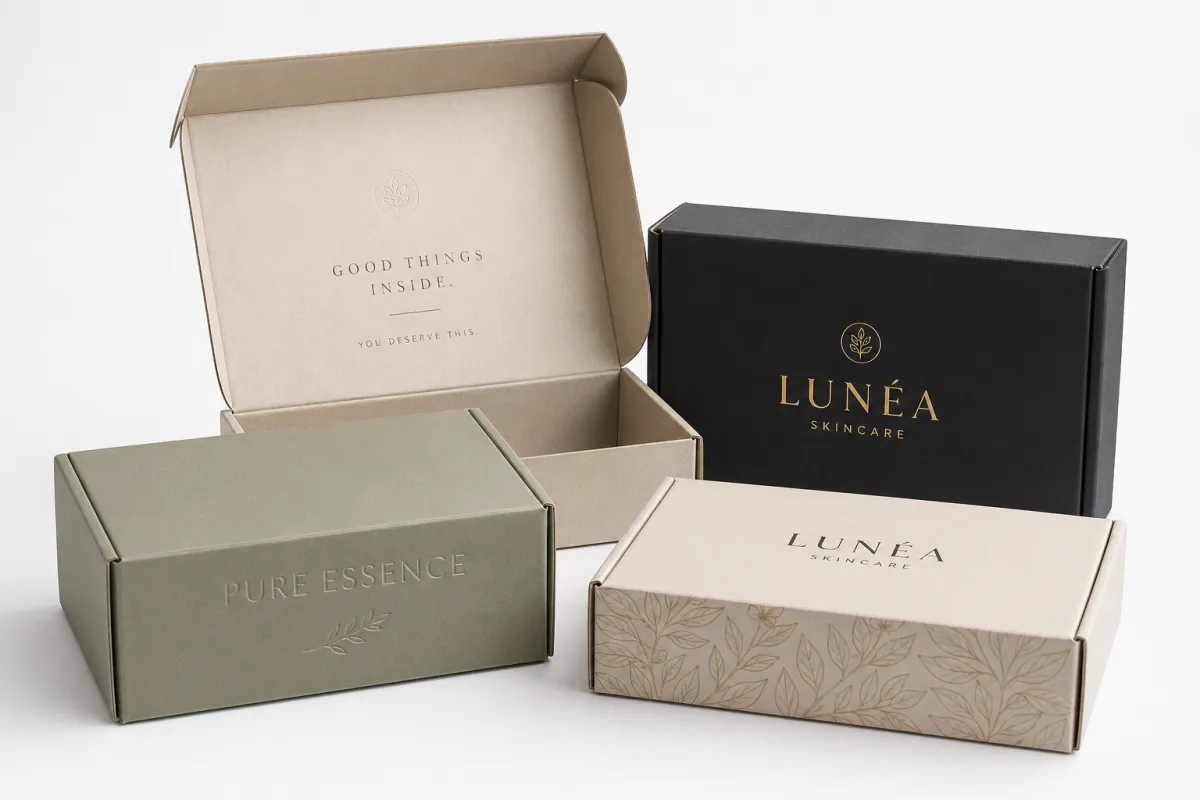
Custom mailer boxes affordable do not have to look utilitarian or feel flimsy. I have stood beside packout tables in Suzhou and Shenzhen where a roll-end tuck top mailer beat a more elaborate setup because it held shape better in transit, opened cleanly, and eliminated the need for extra tissue or void fill. That kind of thing matters more than a glossy render. In ecommerce, subscription kits, and influencer mailers, the first unboxing moment does real branding work. Packaging is not just the container. It is part of the product story, and sometimes it is the only part the customer touches before deciding whether they trust you.
One factory-floor lesson has stayed with me for years. In a corrugated plant near Dongguan, an operator swapped a wide flap for a narrower one on a self-locking design, and the board savings across the run were enough to pull the carton cost down without touching the artwork. The brand still got a sharp-looking box, the packing crew still got a fast fold, and the freight team still got a carton that handled drops better than the earlier version. I love those moments because they prove packaging is not magic; it is engineering with a nicer personality. Custom mailer boxes affordable usually comes down to structure first and decoration second, especially on runs between 2,500 and 10,000 pieces.
"If the carton fails at the dock, the brand pays twice." A plant manager in Foshan told me that while we were reviewing a run of 8,000 mailers made from 32 E-flute board, and the line has proven true more times than I like. I wish I could say he was being dramatic. He was not.
Too many buyers spend on surface treatment before they solve the real cost drivers. For custom mailer boxes affordable, the money tends to go further when it is directed toward crush performance, board efficiency, and pack speed. If the box reduces damage, saves even 20 seconds of repacking per order, and keeps the presentation neat enough that a second shipper is unnecessary, the budget starts working harder than expected. That is the part people miss when they compare only the price per carton and ignore the cost per shipped order, especially on 1,000-unit launch programs and 5,000-unit repeat orders.
That matters most in parcel shipping. A mailer that arrives scuffed, collapsed, or difficult to open damages the experience before the product is even seen. I remember one apparel brand in New York that spent more time apologizing for bent corners than talking about its actual clothing line, which was a ridiculous way to spend customer service hours on a $22 tee and a $19 sweatshirt. A clean self-locking carton can make apparel, cosmetics, and kits feel deliberate and premium in the hand. The strongest custom mailer boxes affordable programs treat the box like part of the item, not an expendable wrapper.
For teams comparing formats across a broader range of packaging, I often point them toward Custom Packaging Products so they can line up mailers with cartons, inserts, and display pieces before locking a spec. That comparison has exposed an expensive pattern more than once: a brand had been paying for decorative extras that did nothing for transit protection. I have had to say, more than once, "That foil looks lovely, but the product is still rattling around like a loose bolt." Nobody enjoys that conversation, but it saves money later, whether the order is shipping from Ningbo, Guangzhou, or a 3PL in Dallas.
Custom Mailer Boxes Affordable: Product Details That Matter
Custom mailer boxes affordable begins with box style, and the two structures I see most often are the roll-end tuck top and the self-locking mailer. A roll-end tuck top gives a tidy face and a predictable closing sequence, which suits ecommerce brands that want a polished opening and steady packout. A self-locking design usually trims a few seconds from assembly because the side walls and tabs do more of the work, which is why high-volume fulfillment teams in Shenzhen and Ningbo reach for it so often. I am biased toward whichever option reduces hand motion at the pack table; after watching 3,000 cartons go through a line, you learn to respect every saved second.
Dimensions matter more than many buyers expect. If a product measures 9.5 x 7 x 2.25 inches, a box designed around the actual item with 1/8 inch clearance is usually better than a generic size that forces filler or lets the product shift. Proper sizing cuts excess board, keeps custom mailer boxes affordable, and makes storage easier because the flat blanks stack more efficiently on pallets. On a recent client project in Los Angeles, a 0.3 inch reduction in height trimmed master carton layers by two per pallet and saved both freight space and warehouse handling time. Tiny changes like that do not sound exciting, but they quietly move the budget in the right direction.
The interior deserves the same attention. Product separation, a pocket for collateral, or a presentation panel can be built in without blowing up the unit price. Brands sometimes overbuild this section with foam or heavy paperboard inserts when a scored corrugated divider would have done the job for less. I have seen teams insist on a fancy insert because the mockup looked impressive in a slide deck, then regret it once the packing crew had to assemble the thing at scale. For custom mailer boxes affordable, the smartest interior is the one that protects the item and keeps the line moving, especially on orders that need to ship in 12 to 15 business days after proof approval.
Finish changes the feel fast. White liners create a crisp branded packaging look for cosmetics or apparel. Kraft gives a warmer tone that fits natural, recycled, and minimalist positioning. Printed interiors can create a sharp reveal, yet they are not always the best use of budget. If the box is opened once and discarded, stronger board often beats a fully printed inside surface. That is how custom mailer boxes affordable stays useful rather than ornamental. I know the temptation to add "just one more nice touch" is real, but the package does not need to audition for a luxury magazine spread unless that is actually the job.
Here is the short version of how I compare those choices:
- Roll-end tuck top - best for a polished opening and moderate pack speed.
- Self-locking mailer - best for fast assembly and repeatable closure.
- White finish - best for crisp printed graphics and retail packaging presentation.
- Kraft finish - best for lower-cost branding and a natural look.
- Printed interior - best only when the unboxing moment justifies the extra spend.
For lighter shipments, I sometimes compare the box plan against Custom Poly Mailers because paperboard is not the right answer for every flat or compressible item. That comparison can cut total shipping cost more than a packaging redesign alone. I have had apparel brands save themselves a small headache, and a larger budget headache, by admitting a garment did not need a rigid box at all. On a 2,000-unit order, the difference between a $0.16 mailer and a $0.42 corrugated box is not academic.
Materials, Printing, and Structural Specs
For custom mailer boxes affordable, board choice is usually the biggest technical decision. I work with E-flute, B-flute, and kraft corrugated most often, and each one solves a different problem. E-flute, at roughly 1/16 inch thick, gives a smoother print surface and a slimmer profile that suits apparel, cosmetics, and subscription kits. B-flute, closer to 1/8 inch, brings more wall strength and holds up better for heavier products or longer parcel routes. Kraft corrugated often becomes the right answer when a brand wants lower-cost Custom Printed Boxes with a natural finish and solid shipping performance. I have a soft spot for kraft, mostly because it looks honest and does not try too hard.
Print method changes both the look and the economics. Digital printing works well for short runs because setup time stays low and artwork changes are easier to manage, which makes it a common choice for launches, seasonal drops, and test orders. Flexographic printing starts to make sense on repeat programs with one- or two-color art because the unit cost can drop on larger quantities. Litho-lamination sits at the premium end; it delivers detailed graphics and a clean retail-ready face, but it adds setup and finishing costs that do not fit every custom mailer boxes affordable brief. For 500 pieces, digital is often the practical route. For 10,000 pieces with simple art, flexo can be the better value. For a box that must behave like a display piece as well as a shipper, litho-lam becomes a serious contender.
Spec details need to be locked before quoting. I ask for finished dimensions, wall thickness, product weight, insert compatibility, and the shipping method because a carton that works for ground parcel may not be enough for dense or brittle goods. If the box must survive real parcel abuse, I also want to know whether the brand expects ISTA-style testing, because the print file matters less when the structure fails a drop or vibration sequence. I have watched a gorgeous prototype get humbled by a drop test in a Guangzhou lab, and the silence in the room afterward was almost funny in a terrible way. The standards published by ISTA are a strong starting point for shipping validation, while the FSC system matters when a client wants certified fiber sourcing for branded packaging.
Scuff resistance gets learned the hard way. Matte coating hides fingerprints and glare, but a soft matte can mark during packing or conveyor friction. Gloss gives a brighter visual pop, though it can show handling marks more easily. Soft-touch creates a premium feel for high-end retail packaging, yet it adds cost and can be too much for a pure shipping carton. Uncoated kraft keeps the box tactile and honest, and it often suits custom mailer boxes affordable better than a more elaborate finish. I have argued for uncoated kraft in meetings where everyone wanted something flashier, and I do not regret it one bit, especially when the box is leaving a plant in Dongguan for final assembly in Singapore.
These are the structural and print choices I review most often with buyers:
- E-flute for light to medium products, cleaner print, and a slimmer profile.
- B-flute for heavier kits, more compression resistance, and better stacking.
- Digital print for short runs, fast proofing, and artwork flexibility.
- Flexographic print for repeat volume with simple graphics and lower per-unit cost.
- Litho-lamination for premium custom printed boxes with more visual detail.
- Matte, gloss, soft-touch, or uncoated kraft depending on budget and presentation goals.
One supplier negotiation still comes to mind. A skincare client in Toronto wanted a soft-touch exterior, white interior, and a two-panel insert on a 3,000-piece order, and the quote came in higher than planned. We changed the interior to uncoated kraft, simplified the insert to a scored corrugated divider, and kept the visual impact on the outside where the customer would actually see it. That adjustment made custom mailer boxes affordable without making the box look stripped down. Honestly, the carton looked better after the change because it had less clutter pretending to be value.
Custom Mailer Boxes Affordable Pricing, MOQ, and Volume Breaks
Custom mailer boxes affordable pricing comes from a few visible pieces and a few hidden ones. Board usage is the first line item, then print setup, then finishing, then tooling, then freight. If the dieline wastes board or the artwork forces extra setup passes, the unit price climbs quickly. I always ask buyers to see where the dollars are going, because a clear quote usually reveals the easiest savings without weakening the box. There is nothing mysterious about a price that looks higher than it should; usually, it just has too many extras hiding inside it, and those extras are often the difference between a $0.15 and a $0.32 unit cost on a 5,000-piece run.
MOQ depends on print method and structure. I usually see digital programs start around 250 to 500 pieces, flexographic jobs land around 1,000 to 2,500 pieces, and litho-laminated work begin at 2,500 pieces or more. That is not a hard rule. A simple one-color kraft mailer can sometimes run lower, while a highly detailed retail package may need a larger minimum just to justify tooling. Even so, those ranges are a sensible starting point for anyone trying to keep custom mailer boxes affordable while protecting cash flow and warehouse space, whether the boxes are shipping from Tianjin, Malaysia, or a contract packer in Illinois.
Volume breaks are where the math becomes interesting. A buyer may look at 2,500 pieces and assume the quantity is too high, then discover that moving from 1,000 to 2,500 drops the per-box cost enough to justify the extra inventory. On the floor, I have seen a difference of $0.11 per unit disappear simply because the press and converting line ran more efficiently at the larger count. If the box sells through in 60 days, that savings matters more than the extra pallet or two in storage. If it sits around for 14 months, well, now you have bought yourself a storage hobby you probably did not want.
To make the tradeoffs easier to compare, here is a planning table I would actually use in a quoting conversation. These figures are examples, not promises, and freight is excluded because shipping lanes, carton count, and destination zip code can move that number a lot.
| Run Size | Spec | Estimated Unit Price | Typical MOQ | Best Fit |
|---|---|---|---|---|
| 500 pieces | E-flute kraft, digital print, no insert | $0.74/unit | 250 pieces | Launch kits, samples, small influencer drops |
| 2,500 pieces | E-flute white, one-color flexo, simple lock style | $0.31/unit | 1,000 pieces | Growing ecommerce lines with steady orders |
| 5,000 pieces | E-flute white, digital print, white interior | $0.15/unit | 500 pieces | Common sweet spot for custom mailer boxes affordable |
| 10,000 pieces | B-flute kraft, flexo print, standard dieline | $0.14/unit | 2,500 pieces | Repeat programs with heavy shipping use |
| 10,000 pieces | Litho-lam premium face, matte coat, insert | $0.41/unit | 2,500 pieces | Retail-ready presentation and premium unboxing |
The fastest way to keep custom mailer boxes affordable is to choose standard or near-standard dimensions, reduce printed colors, and skip inserts that solve only a cosmetic issue. A one-color print on kraft can look intentional and upscale. A custom diecut insert can be worth it for glass bottles or electronics, but not every apparel box needs one. The same caution applies to special coatings: if the carton mostly serves as a shipping vehicle, an extra few cents for soft-touch can be difficult to defend. I have watched budgets get nibbled to death by "small upgrades" that sounded harmless in the meeting and added up like a bad dinner tab at a restaurant in Melbourne or Chicago.
Freight matters more than many teams expect. A box that is 1/2 inch too wide might look harmless on paper, but if it forces more master carton volume or lowers pallet density, landed cost goes up. I have seen brands save less on print than they lost in air freight because the carton dimensions pushed them into a poor pallet pattern. For custom mailer boxes affordable, the box has to fit the product, fit the ship method, and fit the warehouse. A warehouse in Rotterdam or Long Beach will charge you for every inch you waste.
How the Ordering Process and Timeline Work
The ordering path for custom mailer boxes affordable usually starts with a spec review, then moves to a quote, then a dieline, then proofing, then sample approval, then production release. If the buyer already knows the product dimensions and target ship weight, the quote comes back faster and with fewer revisions. The cleanest jobs are the ones where the artwork team and the operations team agree on what the box needs to do before anyone asks for print files. That may sound obvious, but I have seen enough late-stage "oh, we forgot the insert" moments to know it is not obvious to everyone, particularly on 1,500-piece and 4,000-piece programs.
I like to ask for six pieces of information up front: finished dimensions, product weight, quantity, artwork files, finish preference, and shipping destination. That sounds basic, but it saves a surprising amount of time. During a recent supplier call, a client forgot to mention that the box needed to fit a paper insert and a folded garment, which changed the usable inside height by almost 3/8 inch. We corrected the spec before the proof stage, and that one detail saved two weeks of back-and-forth. Custom mailer boxes affordable gets easier to deliver when the brief is complete, and a complete brief is far cheaper than a "quick revision" that turns into three more emails and a fresh headache.
Sampling usually takes 5 to 7 business days for a simple structural sample, and production can run 10 to 12 business days after proof approval for digital work or 12 to 15 business days for more involved flexo or converted jobs. Litho-lamination often needs a longer window, especially if the print face or coating requires extra prep. Rush options may exist, but I always tell buyers not to plan around a rush unless the artwork is final and the freight lane is already known. That difference separates a realistic schedule from a stressful one, and it matters even more when the boxes are scheduled to leave a plant in Guangdong on a Friday and arrive at a U.S. warehouse the following week.
On the floor, the checkpoints matter. Prepress verification catches dieline mistakes before plates or print files move forward. Proof review catches color surprises before the run starts. Final quality control checks folding, glue, scuffing, and pallet stacking before the shipment leaves the plant. I have seen a 500-piece order saved by a good prepress review because the fold line had been placed 1/8 inch too far inside the logo area. That would have been an expensive mistake for custom mailer boxes affordable and for the brand's timeline. Nobody wants to explain to leadership that the box is lovely, except for the part where the logo got chopped in half.
"The proof is where money gets saved, not where it gets spent." I heard that from a senior converter in Hangzhou during a supplier meeting, and it still holds up. I repeat it to brands more often than I probably should, but only because it keeps being true on 2,000-piece test runs and 20,000-piece annual programs alike.
If you are comparing ship-ready formats, it helps to compare the mailer plan against other packaging options before you commit. Some programs fit better with Custom Packaging Products, while soft goods and flat apparel can sometimes perform better in Custom Poly Mailers. Choosing the right format early is one of the cleanest ways to keep custom mailer boxes affordable.
Typical planning timelines I give buyers are simple:
- 1 to 2 business days for quote review if the spec is complete.
- 2 to 4 business days for a dieline or structural confirmation.
- 5 to 7 business days for a physical sample, if needed.
- 10 to 15 business days for production after proof approval on standard runs.
- 3 to 7 business days for domestic freight, depending on the lane.
Why Choose Custom Logo Things for Mailer Boxes
Custom Logo Things makes sense for brands that want a packaging partner who understands corrugated manufacturing, not just where to place a logo. I have worked with teams that needed more than artwork placement; they needed a carton that could hold a bottle set, survive parcel handling, and still look strong enough for social unboxing. That is exactly where custom mailer boxes affordable has to be paired with real manufacturing judgment. I am skeptical of suppliers who talk only about "making it pretty" and never ask how the box will actually be packed, stacked, and loaded into a trailer in 2,400-unit batches.
In one client meeting, a subscription snack brand brought us a mailer concept that looked polished but used a board grade too heavy for the product and a closure style that slowed packout by several seconds per carton. By changing to a cleaner self-locking build and reducing insert complexity, we kept the presentation sharp and lowered the total package cost across the run. That is the kind of practical packaging design that protects margin and brand experience at the same time. It also protects the packing crew from mutiny, which is a real factor even if nobody writes it into a spreadsheet.
Communication matters too. Buyers do not want mystery quotes, vague lead times, or surprises after approval. They want accurate specs, clear revision notes, and a production plan that respects the sales calendar. I have seen a good quote turn into a bad project simply because the team did not confirm pallet counts, carton counts, or the final ship address before release. With custom mailer boxes affordable, clear planning is part of the product, and a plant in Dongguan or Ningbo can only move as fast as the information it receives.
Custom Logo Things also fits use cases with very different demands: Subscription Kits That need repeatable packout, ecommerce Shipping Boxes That need crush performance, influencer mailers that need a strong visual hit, and retail-ready promotional packs that should feel intentional the moment they are opened. That range is why I trust a supplier who can talk about flute direction, print limits, and packing sequence in the same conversation. Good branded packaging is not only about the logo; it is about the whole job from print to pallet.
Here is the value picture I keep coming back to:
- Structural fit reduces damage, void fill, and repacking.
- Material fit keeps the carton strong without overspending.
- Print fit keeps the artwork within the budget that the run can support.
- Process fit keeps the project on schedule and the quote believable.
That balance is why I keep coming back to custom mailer boxes affordable as a strategic packaging choice rather than a bargain search. If the box fits the product, fits the line, and fits the ship method, the brand gets a better outcome than a cheap carton that needs constant workarounds. And frankly, constant workarounds are where good budgets go to die.
What to Finalize Before You Request a Quote
Before you request pricing for custom mailer boxes affordable, lock the finished dimensions, product weight, ship method, quantity, and artwork readiness. If one of those pieces is missing, the quote will be loose, and loose quotes do not help much when you are trying to budget freight, sales campaigns, and warehouse storage. I have seen project delays begin with something as small as a missing height measurement on a sample carton. Tiny omissions can cause surprisingly large amounts of irritation, which is a very polite way of saying they waste everybody's afternoon in Los Angeles, Toronto, and Birmingham alike.
It also helps to decide the primary use case first. Do you need shipping protection, a premium reveal, or a little of both? That answer shapes the board grade, closure style, and finish. A box meant mainly for protection can stay simple and durable, while a box built for presentation might justify a higher-end coating or a printed interior. If you define the goal early, custom mailer boxes affordable becomes much easier to engineer, and the first sampling round is more likely to match the final run.
From there, compare two or three board and print combinations rather than trying to design the perfect carton on the first pass. A white E-flute mailer with one-color print may be the best value for one brand, while a kraft B-flute with a clean flexo logo may be the better answer for another. The right choice is not always the flashiest one. In my experience, the best packaging wins because it fits the shipping lane and the budget at the same time, whether the lane is regional ground in Texas or international air into Frankfurt.
My practical next-step list is simple:
- Gather finished dimensions, product weight, and quantity.
- Request a dieline or confirm the existing carton size.
- Choose one print direction and one finish to start.
- Approve a sample before production if the product is fragile or premium.
- Lock the production window once the freight date is known.
If you do those five things, custom mailer boxes affordable stops being guesswork and becomes a controlled purchase. That is the difference between a box that simply ships and a box that supports the brand, the warehouse, and the customer experience from the first carton to the last. I wish more packaging decisions started there instead of at the mockup stage, but I suppose my opinion is only slightly biased by years of cleaning up expensive surprises.
Frequently Asked Questions
How can I make custom mailer boxes affordable without losing strength?
Choose the lightest board grade that still protects the product during shipping, and start with E-flute or a well-designed kraft corrugated option before moving up to heavier board. Use a standard size or close-to-standard dimensions to reduce tooling and waste, because odd sizes can push up board usage fast. Limit expensive finishes and add inserts only where they solve a real packing problem, not just because the mockup looks fuller on screen. That is the fastest route to custom mailer boxes affordable that still performs on the parcel line, especially on 1,000 to 5,000 piece orders.
What is the typical MOQ for custom mailer boxes affordable orders?
MOQ depends on print method, board type, and whether a custom dieline is needed. Digital and short-run programs usually support lower quantities than litho or flexo setups, and I often see them start at 250 to 500 pieces for a smaller launch. Flexo and litho-lam jobs often need larger commitments, especially if a plate or tooling step is involved. The best MOQ is the one that balances unit price with storage space and forecasted demand for custom mailer boxes affordable, whether the boxes are being stocked in Atlanta, Rotterdam, or Dubai.
Which printing method is best for custom mailer boxes affordable runs?
Digital printing is often best for lower quantities and faster turnaround because setup is lighter and artwork changes are easier to manage. Flexographic printing can be cost-effective for repeat runs with simple artwork, especially when the brand only needs one or two colors. Litho-lamination is usually chosen when premium graphics matter more than the lowest unit cost. For many first-time buyers, digital is the cleanest path into custom mailer boxes affordable without committing to a large run, particularly when the first order is 300 to 750 pieces.
How long does production usually take for custom mailer boxes affordable?
Timeline depends on proof approval, sample needs, print method, and order size. Simple projects move faster when artwork is ready and the box spec is already confirmed, and that can put production in the 10 to 15 business day range after approval for standard jobs. Sample requests add time, but they also reduce mistakes, which is worth it on fragile or premium product packaging. Freight planning should be built into the schedule so the boxes arrive when the packing team needs them, not after the launch window closes, especially if the shipment is leaving Guangdong for a warehouse in the Midwest.
What details should I send for an accurate quote on custom mailer boxes affordable?
Send finished dimensions, product weight, quantity, artwork files, and the delivery zip code. Include whether the box needs inserts, special finishes, or a white interior, because each of those can change board usage and labor. If you already have a sample or reference carton, share that too, because it speeds up spec review and helps avoid guesswork. The more complete the brief, the faster it is to build a real quote for custom mailer boxes affordable, and the less likely you are to get a revision cycle that eats three extra days.
If you want a tighter budget and fewer surprises, start with the product dimensions, the board grade, and the print method, then work outward from there. That is how I have helped brands keep custom mailer boxes affordable while still delivering strong crush performance, clean branding, and a box that feels right the moment the customer opens it. A well-quoted box from Dongguan, Ningbo, or Suzhou can be more useful than a flashy design from a deck, because it actually ships.

