Buyer Fit Snapshot
| Best fit | custom mailer boxes practices for real world brands for packaging buyers comparing material specs, print proof, MOQ, unit cost, freight, and repeat-order risk where brand print, material, artwork control, and repeat-order consistency matter. |
|---|---|
| Quote inputs | Share finished size, material target, print colors, finish, packing count, annual reorder estimate, and delivery region. |
| Proofing check | Approve dieline scale, logo placement, barcode or warning zones, color tolerance, and any recyclable or compostable wording before bulk production. |
| Main risk | Vague material claims, crowded artwork, or missing packing details can create delays even when the unit price looks attractive. |
Fast answer: Custom Mailer Boxes Practices for Real World Brands: Film, Closure, Print, and Fulfillment should be specified like a repeatable production item. The safest quote includes material, print method, finish, artwork proof, carton packing, and reorder notes in one written spec.
What to confirm before approving the packaging proof
Check the product dimensions against the actual filled item, not only the sales mockup. Ask for tolerance on folds, seals, hang holes, label areas, and retail display edges. If the package carries a logo, QR code, warning copy, or legal claim, reserve that space before decorative graphics fill the panel.
How to compare quotes without losing quality
Compare board or film grade, print process, finish, sampling route, tooling charges, carton quantity, and freight assumptions side by side. A lower quote is only useful if the supplier can repeat the same color, closure quality, and packing count on the next order.
What are custom mailer boxes best practices that stop damage?
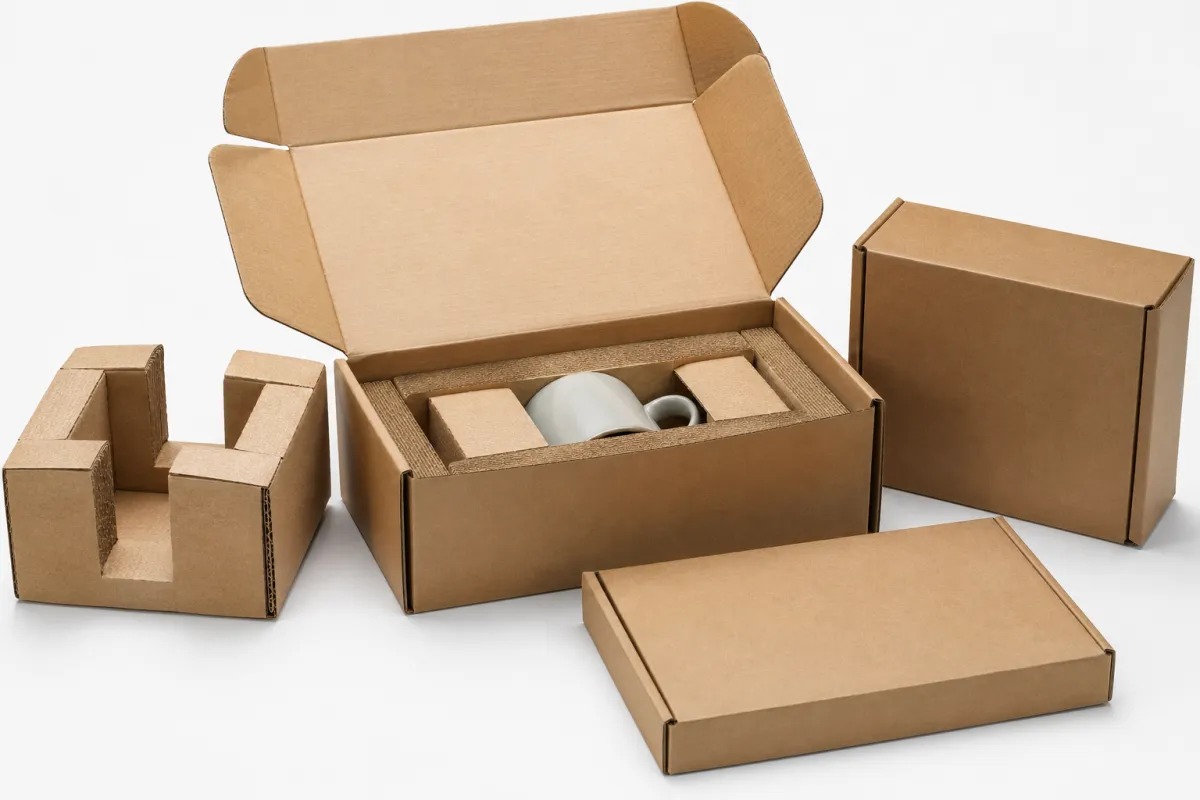
custom mailer Boxes Best Practices start with the ugly truth: most avoidable damage happens after the purchase, not at design approval. If the fit is off, no finish or finish line will save it. In my experience managing multiple fulfillment programs, a box can look premium on the screen and still fail in less than twenty minutes on a carrier conveyor. The problem is always a tiny gap, not usually a huge structural flaw.
If I had to turn this into one rule, it is this: define cavity dimensions first, then optimize presentation. A box that is 3 mm loose around a rigid item can create corner stress the moment the package is stacked, and stacked stress is where cracks begin. A tighter fit does two jobs at once: protects the product and speeds quality control because packers can tell quickly if a build is right. That is why Custom Mailer Boxes best practices begin with the part before the print.
Board choice is not a decorative preference; it is an engineering choice. You can print all the gradients you want, but if the board flexes wrong under vibration you still get returns. For lighter apparel or paper products, paperboard is often efficient and clean, and you can keep costs tight. For hard corners, glass, ceramic inserts, and products with dense weight, I usually move to corrugated because it handles compression better. That mismatch between feel and force is the number one gap in mailer decisions.
Different products need different structures even when the shipping lane is the same. A subscription kit that ships weekly needs repeatable geometry, not a one-off wow box. A skincare launch might need tighter insert control and a cleaner first pull for brand trust. Fragile accessories with loose parts are the worst offenders because a small shift can mean a failed interior bounce. These are not theoretical problems, and they are exactly where Custom Mailer Boxes best practices proves itself.
- Snug interior fit: minimal movement and no force-fit stress at the corners.
- Correct board structure: E-flute or B-flute strategy should match expected handling.
- Reliable closure: flaps and locks must stay closed after repeated handling cycles.
- Simple packing sequence: packers should place the item without improvisation.
- End-to-end brand signal: the package should still feel intentional once it arrives.
Most teams do not need a statement box on day one. They need a box that ships cleanly, tolerates rough handling, and still feels considered when it lands on the porch. That is the practical side of Custom Mailer Boxes best practices, and it is the baseline I rely on when evaluating any packaging design, whether the use case is ecommerce, retail replenishment, or direct-to-consumer fulfillment.
Top Options Compared: materials, styles, and print methods
Once fit is pinned down, the next move is selecting the structure family. The right materials decision is not just cost optimization; it is risk management. You either choose based on shipping danger, or you discover how quickly fragility can get expensive. The three main families stay the same: paperboard mailers, corrugated mailers, and reinforced builds with inserts.
Paperboard mailers remain the cleanest option for low-weight kits, flat retail packs, and branded programs where visual speed matters and impact load is modest. They print fast and feel sharp. Corrugated gives better crush resistance and is usually the safer move for heavier or mixed-item shipments, especially when they ride with other parcels in a dense tote. Reinforced systems with inserts become necessary whenever you have brittle edges, glass, or multiple small components that can move in separate directions.
Style determines how usable the box is in real fulfillment. A classic tuck-top is familiar and low-risk, while a roll-end front tuck usually gives stronger sidewall stability and a cleaner lock. Self-locking patterns reduce variation between operators, which matters when you scale pack volume quickly. If your team has high order throughput, that consistency can remove half a dozen manual corrections each day.
Print is the part most people overspend on or underspecify. Flexo is still the workhorse for medium-to-large, stable runs with simple color goals. Digital is better when you need short runs, campaign-specific SKUs, or frequent version changes. Litho-laminated options can deliver much cleaner image depth, but only when run economics support the additional set-up and lamination cost. If you are uncertain, tie print method to production volume and schedule risk, not mood board trends.
| Option | Best For | Strength | Brand Impact | Typical Cost Position |
|---|---|---|---|---|
| Paperboard mailer | Apparel, flat kits, light retail packaging | Low to moderate | Clean, minimal, easy to print | Lowest on lighter programs |
| Corrugated mailer | Subscription kits, cosmetics, mixed product packaging | Moderate to high | Good print area, strong presence | Mid-range |
| Reinforced mailer with insert | Fragile accessories, glass, premium sets | High | Premium opening sequence | Higher, but often worth it |
| Litho-laminated mailer | High-visibility branding, luxury launches | Moderate to high | Best image quality and color depth | Higher setup cost |
For broader packaging programs, it is usually better to compare these options against the entire family of Custom Packaging Products rather than treating a mailer as a solo decision. If your final pack has a second containment layer, cushion, or seal, the outer and inner packages should be designed in the same review. If lightweight shipping formats are already part of operations, Custom Poly Mailers are a practical contrast, but they are generally not your best answer for rigid, fragile parts.
custom mailer boxes best practices also include print durability. A flood coat or metallic accent might look strong in Photoshop and then rub flat in a sorter scan tunnel or show scuff marks at score lines. Flexo ink, digital toner, and litho coating each age differently under handling, so print method must match the transport reality. A beautiful box that degrades in one week of warehouse contact is not a premium solution.
For teams that care about compliance and sourcing, board certification can reinforce claims. FSC-certified stock can support sustainability goals, but you still need to validate the claim and confirm whether it aligns with your region and carrier rules. EPA guidance on waste reduction and material efficiency at epa.gov helps frame best practices, though it does not replace your own structural testing plan.
Detailed Reviews: what actually matters in daily shipping
Fit still carries the most weight, and it is still ignored in many design meetings. A mailer must hold the product with almost no visible shift while closing without forcing a flex at the seams. If closure requires force, the panel stress concentrates at the score lines and corners. This is how minor quality issues become repeatable failures.
In daily operations, finish behavior shows up fast. Soft-touch coats can look rich, then scuff in a high-volume zone. High-gloss laminates can hold up better, but they may reveal fingerprints and crease marks on dark backgrounds. Uncoated board can feel honest, and honestly, for some brands that texture works better, but it is less stable in humid storage. Good custom mailer boxes best practices mean checking what survives, not what wins a close-up gallery image.
Opening sequence is a part teams forget until complaints arrive. Too-tight lids can make people cut into seals, and any tear strip that tears too early turns into another handling point of failure. Inserts help only if they actively locate the product, not just fill space. A proper insert should position, support, and release the item cleanly. The best unboxing path is fast and calm, not theatrical and fussy.
A mailer box is tested after stacking, vibration, and a hurried opening with one hand, not after a render review.
That sentence is not meant to be dramatic; it is logistics reality. Customers evaluate the package through carriers, warehouse staff, porch drops, and then real life. Branding still matters, but branding dies fast if the structure is sloppy. The sweet spot is the box that stays stable in transit, opens without frustration, and still feels like the brand.
One method I still use when reviewing new structures is simple: three internal clearances with the real product. I make a tight fit, a nominal fit, and a slightly generous fit. Then I shake, rotate, and edge-tip each sample the way a sorter would. The biggest lesson is that a 1-2 mm variation can mean the difference between premium and careless.
Fragile lines need extra scrutiny. Corner crush often starts where people think flat strength should carry everything, and then they are wrong. Corrugated absorbs side load better than paperboard, but only when the flute, edge design, and insert geometry support that expectation. Loose paper partitions are cheap, and they are often not enough. If you are shipping brittle pieces, ask for repeated handling simulation before signing off on any production run.
Process and timeline: from dieline to delivery
The process should be boringly disciplined, because rushed packaging decisions usually cost more later. Start with specification capture: exact dimensions, all product components, weight ranges, required inserts, intended shipping lanes, and target order size. That information lets the supplier check dielines for closure geometry, crush profile, and panel behavior before you approve artwork.
After the dieline, proofing is where teams either get control or confusion. Digital proofs catch typography, logo placement, and basic layout errors fast. But structure decisions still need a physical sample for any project with custom closures, insert geometry, or sensitive items. That final physical check is where most hidden cost issues appear. It is not overkill; it is standard engineering hygiene.
For timing, a straightforward digital-to-production flow can be quick, but special structures always extend lead time. I usually bracket simple programs at about 12-15 business days after final proof approval, with extra lead when you add lamination, custom inserts, unusual board grades, or strict color matching. If you are using FSC sourcing or strict color verification, add a buffer. If you need distribution simulation like ISTA-style checking, schedule that before you lock print quantities.
Use ISTA references as an external benchmark for what real logistics stress can look like. Keep in mind, ISTA method availability varies by region, and not every test class matches your exact lane. That is why timeline planning should include a defined level of test and a contingency for one round of structural correction. If your launch is tied to inventory, this extra step protects your calendar more than any backup discount.
My rule of thumb is simple: if the release date is fixed, treat packaging as a technical project, not a design afterthought. One revision after final artwork is normal and often unavoidable. The revision can affect cavity depth, closure design, insert stack-up, and shipping density. You are not doing it wrong; you are doing it right.
Price comparison: what custom mailer boxes really cost
Price clarity starts with decomposition. Board grade, blank size, print method, finish, insert design, and volume affect cost more than the logo artwork itself. Comparing offers without matching these inputs is like comparing fuel prices by showing only sticker labels. That mistake happens constantly, and it hurts every reorder cycle.
Short runs generally carry higher unit pricing because setup and handling are spread across fewer units. Larger runs lower unit cost, but they can increase storage and markdown risk if demand cools. I have seen brands buy too much because the unit looked cheap, then spend months liquidating legacy cartons. Sometimes a slightly smaller initial run is the smarter finance move.
Look at landed cost, not just the unit quote. Freight, packaging efficiency, overages, shrinkage, and rework can erase “cheap unit” advantages quickly. The best way to evaluate is cost per shipped order, not cost per printed blank. Once you include returns, one weak design can double your real spend before the quarter ends.
| Order Size | Typical Structure | Approximate Unit Range | Best Use Case |
|---|---|---|---|
| 100-250 | Digital printed corrugated or paperboard mailer | $1.80-$5.00 | Launch tests, seasonal drops, pilot programs |
| 500-1,000 | Simple corrugated mailer with limited print | $0.95-$2.50 | Small recurring programs, limited color branding |
| 2,500-5,000 | Corrugated or litho-laminated mailer | $0.45-$1.40 | Stable e-commerce and subscription volumes |
| 10,000+ | Optimized corrugated program with standard finish | $0.22-$0.85 | High-volume fulfillment with predictable demand |
Those ranges are intentionally broad because product and carrier context matter. A light beauty kit and a reinforced glass kit are separate pricing animals, even if they share a style name. Ask for an itemized quote whenever a number looks suspiciously low, especially around board, print, and extra handling line items. If something is missing, assume you have not got the full cost picture yet.
In a lot of programs, a better- performing structure can be cheaper over six months than an inexpensive one with poor durability. Returns and customer service costs are part of your margin, not an afterthought. I have watched teams underestimate this repeatedly, and the shipping spend usually catches up fast. A practical quote review should include warranty terms, sample costs, and any rework policy.
For sustainability commitments, verify chain-of-custody and document traceability before marketing claims are finalized. FSC claims should be auditable, not only a logo in a spec sheet. Sometimes this does not add direct material cost; sometimes it does. Either way, it changes the acceptable spec set, and that is an operational decision, not a final-day checkbox.
How to choose custom mailer boxes best practices for your product
The strongest decision starts with physics, not aesthetics. Weight, stiffness needs, shape complexity, fragility, and accessory count determine the structure. A lipstick set, a hardback book, and a ceramic accessory each need different wall behavior even if dimensions look similar on paper. If you pick one solution for all three, you are gonna create defects somewhere.
Next, map the channel. Retail-facing packaging needs shelf confidence and cleaner front branding, while subscription fulfillment needs repeatable speed and reliable closure. Influencer campaigns usually prioritize reveal sequencing because unboxing videos become part of distribution. Direct-to-consumer programs often optimize for damage reduction, freight efficiency, and unit cost consistency. One SKU, one channel? still choose accordingly.
Your business objective should set the structure. If return rate is your pressure point, choose low void volume and high corner support first. If speed is the KPI, prioritize self-locking and intuitive insert geometry. If premium perception is your goal, tune the opening touch and print quality, but only after structural validation. That sequence keeps quality control grounded and avoids expensive design pivots.
Here is a decision path that has worked repeatedly in real-world operations:
- Measure the exact shipment: item dimensions, wrappers, inserts, and all ancillary materials.
- Choose board structure: paperboard for light visual packs, corrugated for protective shipping.
- Define closure behavior: tuck-top, roll-end front tuck, self-locking, or insert-based for your handling pattern.
- Pick print technique: digital for speed and flexibility, flexo for reliable color in volume, litho-lam for high-end image quality.
- Validate by motion: pack, shake, tip, and inspect for seam wear and corner crushing.
For fragile or high-value items, ask for handling validation that resembles your actual shipping route and not a showroom-level inspection. ISTA 3A-style distribution checks are a common reference, because they expose the weak points you do not see in static review. If you treat custom mailer boxes best practices as a checklist and not a slogan, problems are cheaper to fix in sample stage.
The winning setups in my experience are plain: right fit, reliable closure, stable print durability, fast pack-out, comfortable opening. If any one fails, no amount of texture treatment fixes it. If all five are in place, your packaging program usually performs, and your team can focus on growth instead of reorders from damage complaints.
Our recommendation and next steps
If you want to reduce risk, test more than one structure before committing. Pull two or three versions, then compare fit, closure behavior, protection, and pack speed using the same product and staff. That simple move catches issues most teams only find after launch. It keeps decisions tied to handling realities, not studio render confidence.
Before approval, confirm seven basics: internal dimensions, board specification, print method, closure details, insert strategy, MOQ, and freight assumptions. If anything is left vague, your quote is not truly comparable. A lower headline price is only real when it holds after considering packed density, overage policy, and expected rework. Keep these points in one sheet and you reduce expensive surprises.
For most brands, the working pattern is predictable. Measure accurately. Select structure by use case. Request physical samples. Run fit and motion checks. Confirm quote logic against exact specs. That process may sound mundane, but it is exactly why fulfillment teams avoid sleepless nights a month after launch.
My final takeaway is straightforward: choose the mailer that protects, opens, and delivers your brand in one package, then price and scale from there. Chasing the flashiest art before proving performance is the quickest way to regret your reorder forecast. A solid custom mailer boxes best practices program is not flashy; it is consistent, and that consistency compounds with every shipment.
What are the most important custom mailer boxes best practices for fragile items?
Prioritize stable interior geometry first. Use a snug cavity so parts cannot shift, then add an insert that locks position instead of only filling air. Ask for a sample and run a quick drop and vibration check before approving final quantities, because fragile profiles fail faster than sturdy cartons and they expose print or seam issues early.
How do I choose the right size for a custom mailer box?
Measure the product as shipped, not just the raw item size. Include sleeves, gift wraps, protective foam, and inserts in your dimension stack. Leave enough room for quick packing, but control voids so movement stays minimal. Also confirm both internal and external dimensions against carrier dimensional limits and your shelving workflow.
What affects custom mailer box pricing the most?
Size, board type, print process, closure design, insert complexity, and finish coverage drive most of the variation. Quantity shifts unit economics sharply, especially if the job needs setup work or tooling. Freight, pallet density, and rework rates are often the hidden line items, so compare landed cost before selecting the lowest number in a quote.
How long does a custom mailer box order usually take?
Simple structures can move quickly once dimensions and artwork are approved, but sampling always extends timeline planning. Custom inserts, special printing, and stronger board combos add production steps and proof cycles. If your launch date is fixed, add revision time explicitly so one structural adjustment does not delay fulfillment.
Are custom mailer boxes good for branding as well as protection?
Yes, when structure and finish are aligned. A mailer is both a logistics container and the first branded touchpoint, so it must survive handling and still feel intentional when opened. If the brand impact is built on weak structure, the message is compromised by the first bump. Keep protection first, then design the visuals around that floor plan.