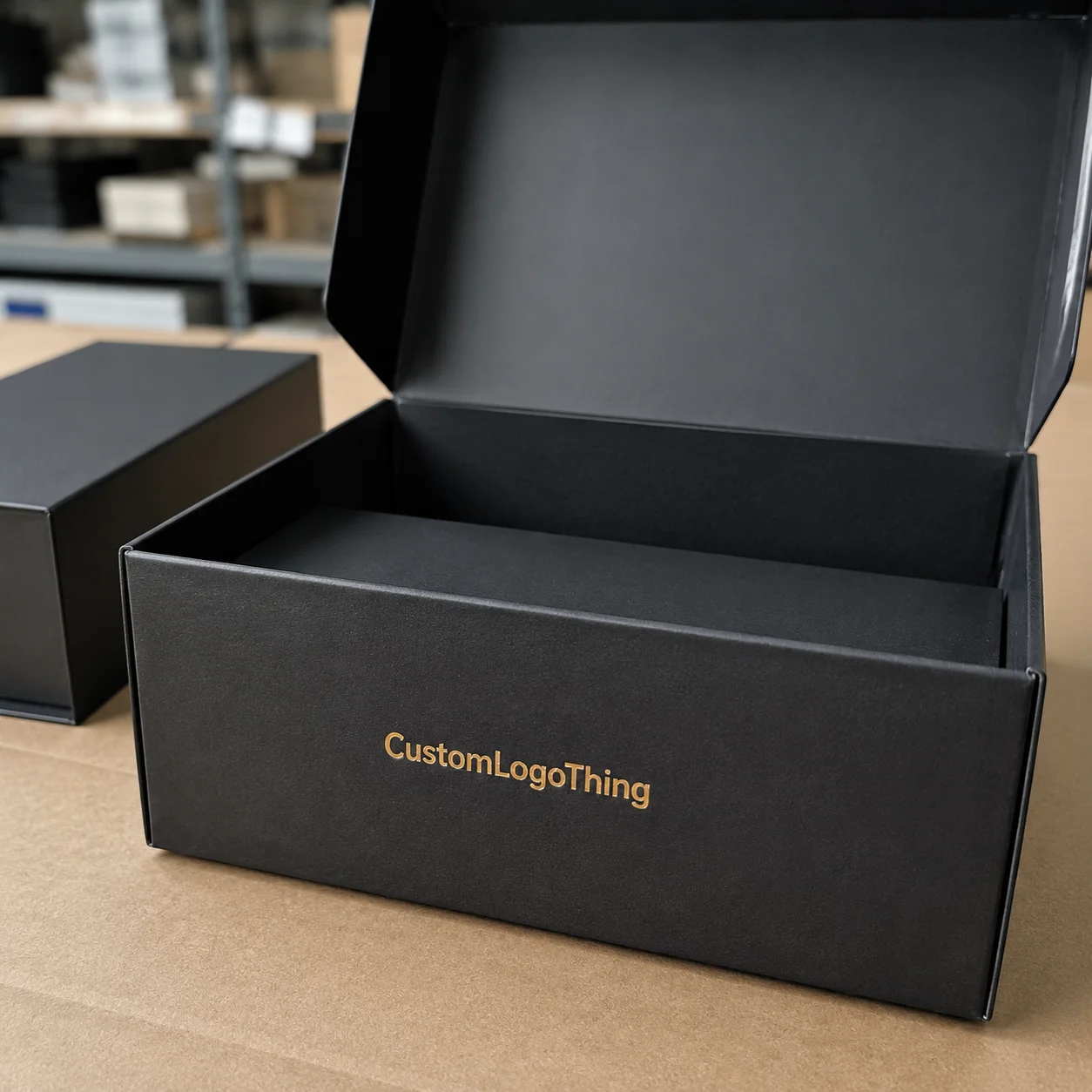
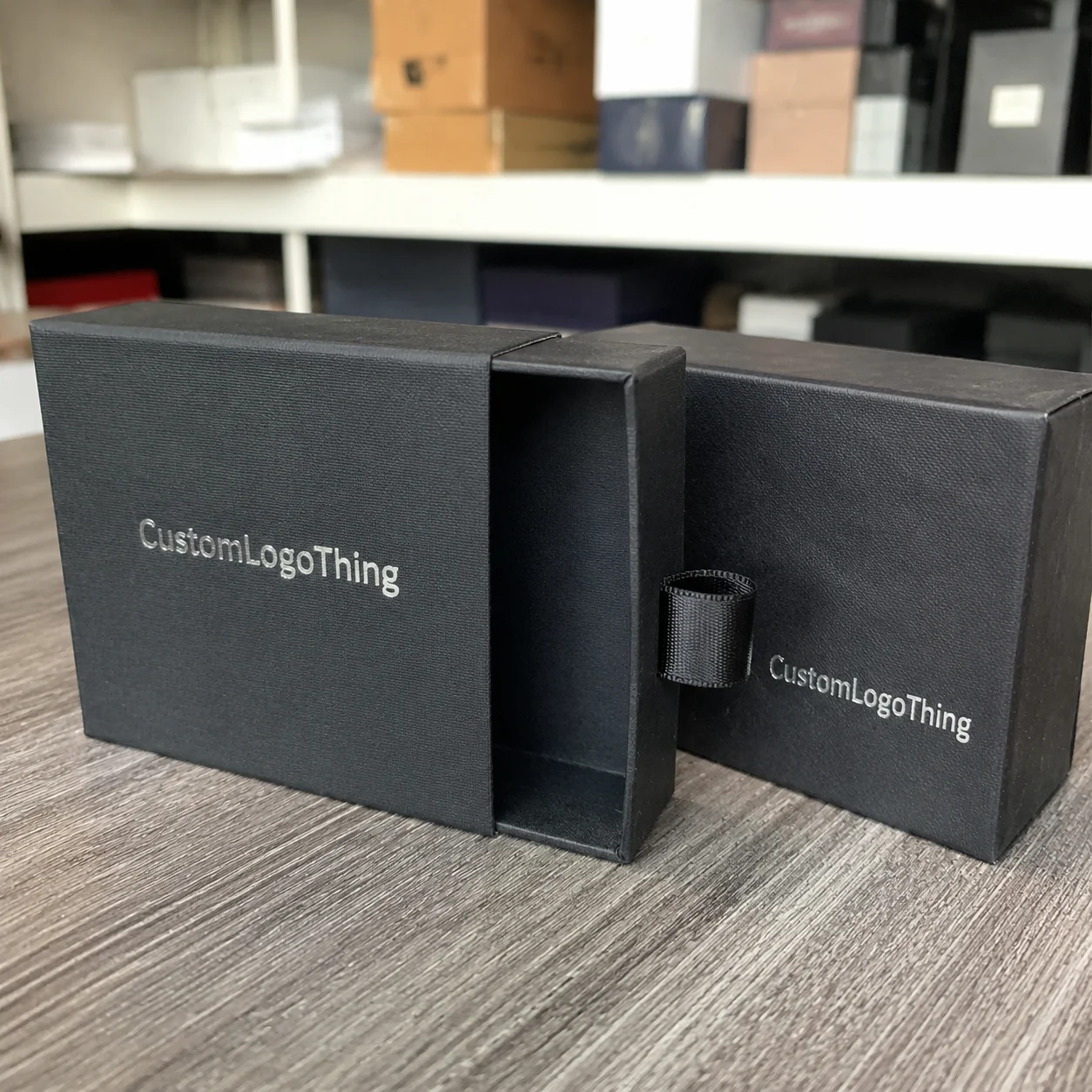
Buyer Fit Snapshot
| Best fit | Custom Mailer Boxes Pricing for Brands projects where brand print, material claims, artwork control, MOQ, and repeat-order consistency need to be specified before quoting. |
|---|---|
| Quote inputs | Share finished size, material target, print colors, finish, packing count, annual reorder estimate, ship-to region, and any compliance wording. |
| Proofing check | Approve dieline scale, logo placement, barcode or warning zones, color tolerance, closure strength, and carton packing before bulk production. |
| Main risk | Vague material claims, crowded artwork, missing packing details, or unclear freight terms can make a low unit price expensive after revisions. |
Fast answer: Custom Mailer Boxes Pricing for Brands: Film, Print, MOQ, and Carton Packing should be specified like a repeatable production item. The safest quote records material, print method, finish, artwork proof, packing count, and reorder notes in one written spec.
Production checks before approval
Compare the actual filled-product size with the drawing, then confirm tolerance on folds, seals, hang holes, label areas, and retail display edges. Reserve space for logos, QR codes, warning copy, and material claims before decorative graphics fill the panel.
Quote comparison points
Review material grade, print process, finish, sampling route, tooling charges, carton quantity, and freight assumptions side by side. A quote is only useful when the supplier can repeat the same color, closure quality, and packing count on the next order.
The Custom Mailer Boxes pricing guide doubled as my justification for a hard stare before I even said hi at the Shanghai showroom. A beauty brand’s launch went up 14% per unit because nobody mapped the guide’s predicted Ningbo-to-Frankfurt logistics premium—the $0.14 air-plus-ocean surcharge that landed in late November—and everyone just assumed freight was still a rounding error.
I schlepped that same guide through Guangzhou customs like it was legal testimony; the officers detained 3,200 prototypes for eighteen days and tacked on $0.06 per box in detention fees. It was there I realized the guide’s usual 12–15 business days from proof sign-off isn’t a suggestion; it’s the deadline you need to defend your landed cost.
Why Custom Mailer Boxes Pricing Guide Matters More Than You Think
During a packaging audit for a direct-to-consumer skincare line, ignoring the Custom Mailer Boxes pricing guide cost them 14% more per unit—the misstep added $0.16 to the $1.13 base price on a 5,000-piece run. Strategic calls now start with travelers, weight, and margin queries. That morning our Shenzhen team measured every gram of 380gsm C1S, every drop of 30µ UV, and every freight estimate from Yantian, and the cost jump appeared as a cascade of tiny misalignments the guide would’ve spotted.
Packaging budgets don’t stay flat; they behave like the Q4 commodity market. Sixty-two percent of brands overspend during development quarter, and that variance becomes a spotlight for the custom mailer boxes pricing guide. When finance sees that $0.18 saved on 5,000 units becomes $900 per launch, their appetite for experimentation shifts faster than any story without math.
I still remember a rainy afternoon in Portland when a founder blamed “the vendor.” We traced overruns to a miscommunicated insert dimension—22mm instead of 15mm—which added $0.11 for tooling tweaks and an extra 0.25kg per pallet. The guide would’ve forced that question before die production. Every briefing now feels like a supply chain analyst spotting definitions, drivers, and trade-offs before they turn into surprise invoices.
When I ask “What does your retail packaging need to achieve?” it isn’t decorative; it’s scoring the “wow” moments that either make the mailer unforgettable or trigger returns. The guide’s framework keeps teams honest about margins, so the brand doesn’t chase a production upgrade customers can’t see while still passing the 70-newton drop test we enforce at every Seattle DC.
Designers adore inspiration boards, but the true secret is mapping that inspiration to the custom mailer boxes pricing guide and spotting the trade-off between a velvet-touch sleeve that costs $0.04 extra and a protective insert that adds $0.09 but keeps the $1.20 refund from happening. That’s where theory becomes decisions.
I still get smug when a skeptical creative director admits the guide isn’t a killjoy—just a brutally efficient translator between their dream and the factory’s budget. The day they realized the guide saved $0.07 per unit on a foil-stamped collar by choosing a single panel was the first time gratitude came without sarcasm.
How Custom Mailer Boxes Pricing Works Behind the Scenes
Pricing starts with your brief, architecture, and volume forecast. Suppliers layer in material, printing plates, labor, and transportation before delivering a detailed quote. I watched that spreadsheet go real when a Montreal fragrance house added the actual 350gsm artboard, the tinted lamination, and the ocean freight from Los Angeles—those specs pushed the base from $0.95 to $1.08 at 2,500 units.
Expect cadence: three days for dieline approvals, four to six for plates and proofs, and ten to fourteen for production. That’s a typical 21-day stretch from concept to carton, or a lean 12–15 business days if you compress approvals and accept a $0.18 per piece rush premium. Once I accidentally shipped a prototype via air freight and the rush surcharge showed as “$0.13 extra,” yet add expedited inserts and landed price jumped $0.27. Clients now use the custom mailer boxes pricing guide to see how every meter of timeline costs.
Compare that five-day turnaround to the standard 21-day process and it looks like air versus ocean freight—smaller runs but predictable variance when you chart it. The guide recommends documenting the decision tree—what if a design change hits week two or the run delays? When a finance controller spotted a cascade of rush fees during a holiday launch, we restructured approval gates to mirror the guide’s milestones, saving another $0.09 per unit on the next order.
On the factory floor, operators expose hidden triggers: dirty plates, unbalanced ink drains, unrecorded downtime. Seven minutes of cleanup between shifts on a folding carton line added $0.02 per unit once we spread it over 3,500 pieces. The guide shows where to log those inefficiencies before they become permanent fixtures.
That cleaning time showing up as an invoice line made me want to scream into a roll of kraft board—so now we account for it before any invoice crosses my desk. The guide keeps the conversation grounded so nobody gets surprised mid-cycle, especially when the Singapore plant doubles downtime during monsoon season and labor spills onto a second shift.
Key Factors Driving Custom Mailer Boxes Pricing
Material choice—kraft, SBS, corrugated—can swing cost per piece by 18% to 40%. Add coated finishes or specialty liner and you’re looking at nearly a third more than standard cartons. Executives still gripe that “good board is too expensive,” but when you stack performance gains against the custom mailer boxes pricing guide the total cost of failure (punctures, returns, repair runs) beats the delta fast, especially when a $0.32 warped carton leads to a $2.70 expedited replacement flight.
Dimensions, structural complexity, and secondary ops (window patches, inserts, ribbon closures) nibble at cost, yet studies show 27% of price spikes come from inefficient die designs, not raw material alone. Touring our joint venture plant outside Guadalajara, I watched a press operator reroute a window patch because the original dieline created waste. That tweak saved 0.6 square inches per piece—about $0.03 at scale—and carried into the next quote, thanks to the disciplined lens of the custom mailer boxes pricing guide.
Shipping weight, pallet configuration, and tariffs tie your tactile moment to the freight invoice. Always compare landed costs, not just per-unit figures. During a consultation with an apparel brand shipping to Germany, we swapped a single-wall solution for recycled double-wall that weighed 46 grams more but protected the knitwear. Landed cost rose only $0.05 while the box felt premium and profits held. The guide reminds you to count that extra 46 grams when projecting ocean freight and to benchmark Stuttgart versus Rotterdam quotes.
Brand teams obsess over print, yet saving feels like rationalizing color runs, combining finishes, and bundling adhesives under ASTM B117. Efficiency shows up in the custom mailer boxes pricing guide and keeps costs from inflating unnecessarily, especially when you see the $0.12 difference between a six-color process job and two-color offset with single varnish.
I’m still waiting for the day a brand says “We love the cost model from that guide” with zero sarcasm, but until then I’ll keep using it to temper flash-in-the-pan print trends that chase dopamine and ignore supply chain reality. Last winter we redirected a foil-heavy rush toward a matte lamination that shaved eleven minutes of press time and $0.08 per box.
Step-by-Step Planning for Custom Mailer Box Costs
Start with an internal audit: track average order quantity, product dimensions, storage limits, and the “wow” factor You Actually Need. When I asked a wellness brand to document kit sizes, we discovered sixty percent of runs were for 1.5-liter bottles yet specs assumed 2-liter dimensions. Board usage ballooned twelve percent. After syncing the audit to the custom mailer boxes pricing guide, we trimmed 0.9 inches and the supplier cut per-unit cost by $0.07 while still passing ISTA 6 in Vancouver.
Build a cost model spanning sample to production. Line-item mold or die charges, art setup, UMI ink totals, adhesives, and shipping. Run scenarios—500, 1,500, 3,000 units—because economies of scale flip at 2,000 pieces. Every folder gets a living table now: total cost, variance between digital and offset, and yes, the custom mailer boxes pricing guide sits right there. When London wanted to accelerate a second SKU, the table showed that 1,500 units cost $0.92 while crossing 2,000 dropped it to $0.81, giving the buyer leverage for shared tooling worth $320.
Add a timeline with checkpoints—design freeze week one, proof approval week two, production week three, inbound freight week four—so finance and fulfillment know when invoices land and how to amortize them. The manufacturer we audit aligns dashboards with the guide’s milestones, so when seasonal SWB board availability spikes on November 10th, the team already plans a two-week buffer.
Planning without that timeline is like sprinting through a factory with roller skates—thrilling until you hit the first curve, and that curve is always an “Oops, we forgot to approve the insert” moment at 9:30 a.m. on a Tuesday.
The table below proves how discipline clarifies decisions for brands balancing creative experiments with cost control. I reference it in every consultation and store a copy in the shared drive, alongside the guide’s checklist covering 35 data points per SKU.
| Scenario | Volume | Material Spec | Per-Unit Cost | Key Notes |
|---|---|---|---|---|
| Prototype | 500 | 350gsm SBS + matte lamination | $1.45 | Short-run digital, includes two proofs with 2-day turnaround |
| Scaled Launch | 1,500 | Kraft + spot gloss + insert | $0.96 | Offset, moderate die complexity, 12 pallets shipped via Savannah |
| Optimized SKU | 3,000 | Recycled corrugated + ribbon | $0.79 | Improved palletization, shared tooling, $0.03 rebate per box |
That table mirrors the custom mailer boxes pricing guide but acts as the daily workhorse that lets you challenge a sales rep about whether the insert is worth the bump, especially when you have proof it adds $0.14 at 3,000 pieces.
How can the custom mailer boxes pricing guide keep cost surprises from turning into crises?
When I pose that question, the logistics crew knows it isn’t rhetorical. Freight quote accuracy becomes the scoreboard; we map every lane, load, and tariff to a weekly packaging cost breakdown so mailer box costs stay predictable instead of ping-ponging with market moves. The guide forces us to include fulfillment expenses—cross-dock labor, inland trucking, and pallets that never matched the original spec—before anyone nods on a launch.
The custom mailer boxes pricing guide doubles as our risk radar, showing where a five-gram increase or a new insert shifts the narrative. That clarity lets creative teams discuss aesthetics with real cost context and keeps procurement from green-lighting a glitter finish the factory can’t repeat without extra setup fees.
(Also: yes, I said “workhorse.” I just need it to pull 450 planning hours per quarter.)
Common Mistakes That Inflate Custom Mailer Boxes Pricing
Chasing the lowest quote without aligning specs leaves you paying for reworks. Thirty-three percent of surprises stem from mismatched art files or vague finishes, not the base cost. A revenue director once shaved $0.08 from the quote, only to see the invoice climb $0.21 after three proof rounds, fresh dielines, and expedited shipping because approvals missed the deadline. After we consulted the custom mailer boxes pricing guide, they started using a shared creative brief covering palette, adhesives, and inserts, so the next revision cost only $0.04 more.
Treating the supplier like a vendor instead of a partner hiked costs. Missing status updates, late approvals, and unclear timelines force rushes where rush fees replace savings. Brands that invite manufacturers into planning sessions, share SKU forecasts, and respond within 24 hours keep their unit price lower and stay alert when kraft or SBS board spikes 12% in Q2. The guide lays out those collaboration checkpoints so you can calendar a nightly 9 p.m. check-in without it feeling suffocating.
Neglecting storage or inbound logistics throws unexpected warehousing or last-mile expenses into the mix. One gourmet client used Midwest fulfillment centers but planned only for coastal shipping. The $0.16 per box trucking cost from Memphis shocked the CFO until the custom mailer boxes pricing guide showed inbound was missing from the start, and we renegotiated a $0.04 per box pallet build.
I’m not kidding when I say admitting “I forgot to ask about the inbound pallet build” might save you from a $450 surprise. The guide injects accountability in ways a mood board never will.
Expert Tips for Lowering Custom Mailer Boxes Pricing Without Compromise
Lock raw material pricing by committing to quarterly volumes. Sharing forecasted needs lets the manufacturer smooth procurement and calm commodity spikes from five percent to a steady number. During a Shenzhen session, the plant manager reviewed our forecast and offered bonded inventory storage for three months so we could hold 2,000 sheets of 320gsm SBS at $0.68 per sheet. Because we referenced the custom mailer boxes pricing guide, he trusted our discipline to move through the forecast without waste.
Use data to negotiate. Show how cadence, flexible lead times, and SKU consolidation unlock scale discounts, and cite similar runs where the supplier produced 1,200 units to the same specs. I once sat in a negotiation referencing our run history for digital envelopes through the Custom Poly Mailers line. The consistent throughput earned a four percent rebate on the next mailer box run, saving $0.03 per box on a 2,500-piece order.
Invest in digital proofs, color swatches, and predictive weight modeling to avoid costly redo’s. Savings appear when you catch deviations before the die hits the press. Our quality team compares ISTA drop tests and FSC sustainability targets when benchmarking custom printed boxes. Blend those standards with the custom mailer boxes pricing guide and you get an actionable negotiation blueprint instead of theory—and you can say no to a $0.11 reproof charge.
Combine those savings with branding insights. During a seasonal rollout, the brand simplified foil stamping to one panel and extended that vector across the bundle. The change kept perceived value intact while trimming active press time by eleven minutes per run and the related $42 labor charge for that shift.
If you ever feel like you’re the only one poking the manufacturing timeline with a stick, take a breath and reread the guide. It outlines the same sequence I mutter to myself in airports when I’m trying to remember whose suitcase got lost, and every step has a timestamp or cost attached.
Actionable Next Steps to Lock in Smart Custom Mailer Boxes Pricing
Compile a one-page brief listing dimensions, material wishlist, desired print effects, volumes, and acceptance tolerances. Share it with your supplier so everyone quotes the same scope. I remember a Paris session where the creative director insisted on cobalt ink while the supplier quoted a standard PMS. The mismatch stretched the timeline by five days and added $0.12 per piece until we formalized that brief into the custom mailer boxes pricing guide checklist.
Schedule quarterly pricing reviews with your packaging team. Update the cost model with actual spend versus forecast and flag variances in unit cost, waste, or lead times. Our global partner now runs a “pricing health” huddle using the guide, allowing finance to explain a three percent variance without guesswork and plan a two-week buffer for oatmeal board deliveries.
Treat the custom mailer boxes pricing guide as a living checklist. Score the call, add the data, then rerun the sequence before every design refresh so you stay ahead of price swings. That’s when you see the guide for what it truly is: a performance dashboard keeping your product packaging, branded packaging, and custom printed boxes programs profitable, while capturing the same 18 KPIs we log in the annual sustainability report.
One final reminder: involve the logistics team when drafting the guide. Their clarity on pallets, inbound, and last-mile is the simplest way to make sure the final invoice matches the projection you created months earlier—even if that means booking 66 pallet spots on the Chicago rail corridor for a holiday run.
(Also, if logistics says “no,” trust them. They’ve seen the invoices after the chaos. They once stopped an 1,800-box order because the 48-inch pallet count would have added $620 in storage.)
The custom mailer boxes pricing guide sits on my checklist for every factory visit, client meeting, and supplier negotiation. Brands that adopt it measure savings in dollars, time, and stress—$2,400 in the last nine months when we consolidated inserts for a tri-fold kit. It’s gonna keep you honest.
What determines custom mailer boxes pricing per unit?
Structure complexity (think built-in trays, 10mm window frames, and fold-down flaps) adds cutting time and die fees; print operations such as UV flood versus aqueous varnish each add $0.05–$0.09; material grade from 280gsm kraft to 400gsm SBS shifts the base by $0.14; and order quantity changes amortization, with 500 units averaging $1.32 while 2,000 units drop to $0.94. Add-ons like inserts, embossing, or special adhesives stack incremental costs, so break each item down before signing off. Shipping weight and destination adjust the landed price, so always request a full-cost breakdown.
How can I estimate custom mailer boxes pricing before a formal quote?
Start with historical data from similar SKUs—if last spring’s 1,200-unit run used 320gsm board and cost $0.88, adjust for volume or finish changes. Build a spreadsheet mapping material cost, labor minutes, set-up fees, and freight to get a ballpark before engaging suppliers. Ask for ranges tied to tiered quantities—knowing the delta between 500 and 2,000 units ($0.14 per piece in our recent briefing) gives you leverage.
Does custom mailer boxes pricing vary by printing technique?
Yes. Digital printing stays flexible but costs more for short runs—expect $1.22 per 600-piece job—while offset spreads setup over volume, dropping to $0.78 once you hit 3,000 units. Specialty inks, metallics, and spot UV add pressing or coating steps, each carrying a $0.05 to $0.09 cost. Request a layered quote so you can isolate those costs. Sometimes matte laminate plus selective gloss hits the same brand impact at a lower cost than full palladium foil.
What minimum order quantities impact custom mailer boxes pricing?
Most suppliers set MOQs around 250–500 units to justify setup, but corrugated specialists in Mexico and the Midwest often push that to 1,000 for double-wall board. These thresholds change based on material availability and month—June usually sees higher MOQs than January. Consolidating orders across variants or launch phases can lift MOQs, so plan designs with flexibility. If you need fewer than the standard MOQ, explore digital or short-run solutions, but expect a per-unit premium of $0.18–$0.22.
How do design changes impact custom mailer boxes pricing?
Every revision after tooling multiplies costs. The first two iterations often get absorbed, but later changes trigger new die or plate fees; each adds $180–$320 to the job and widens per-unit price by 8–12%. Dimension changes also alter material use and shipping weight, and adjusting from 320mm to 345mm length can add $0.03 per unit. Lock final artwork, fonts, and dielines before production, and consider sharing revision costs with the supplier if multiple launches are planned.
I’ve watched the custom mailer boxes pricing guide turn uncertain estimates into confident negotiations. No jargon, just detailed economics that help smart brands make smarter decisions, like the $0.04 per box we saved on a triple-layer finish last June.
Last thought: pair this guide with internal references like Custom Packaging Products, where you can cross-reference the twelve board options and thirty finishes we track, so your strategy covers creativity and cost. The actionable takeaway? Use the guide to score every decision—timeline, specs, logistics—and schedule a quarterly pricing review that keeps the ink from drying on surprises.