Buyer Fit Snapshot
| Best fit | Custom Mailer Cartons with Logo projects where brand print, material claims, artwork control, MOQ, and repeat-order consistency need to be specified before quoting. |
|---|---|
| Quote inputs | Share finished size, material target, print colors, finish, packing count, annual reorder estimate, ship-to region, and any compliance wording. |
| Proofing check | Approve dieline scale, logo placement, barcode or warning zones, color tolerance, closure strength, and carton packing before bulk production. |
| Main risk | Vague material claims, crowded artwork, missing packing details, or unclear freight terms can make a low unit price expensive after revisions. |
Fast answer: Custom Mailer Cartons with Logo: Film, Print, MOQ, and Carton Packing should be specified like a repeatable production item. The safest quote records material, print method, finish, artwork proof, packing count, and reorder notes in one written spec.
Production checks before approval
Compare the actual filled-product size with the drawing, then confirm tolerance on folds, seals, hang holes, label areas, and retail display edges. Reserve space for logos, QR codes, warning copy, and material claims before decorative graphics fill the panel.
Quote comparison points
Review material grade, print process, finish, sampling route, tooling charges, carton quantity, and freight assumptions side by side. A quote is only useful when the supplier can repeat the same color, closure quality, and packing count on the next order.
What custom mailer cartons with logo are and why they matter
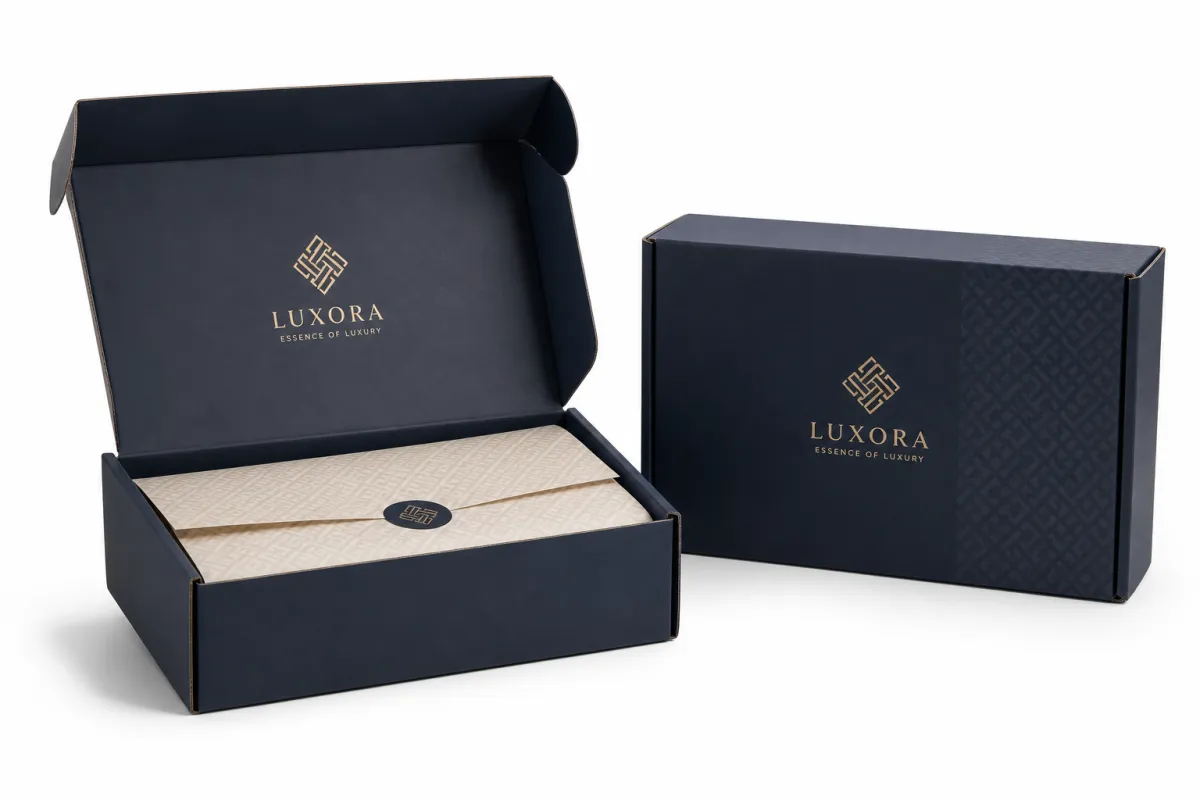
The first touchpoint a customer has with custom mailer Cartons with Logo starts before the product is even visible. The lid lifts, the branding appears, and the carton has already said something about the brand's standards. That moment carries more weight than a lot of teams expect. A sturdy, well-printed mailer can make a modest order feel considered and intentional, while a weak carton can make a genuinely good product look underfunded before the customer even touches it.
At the core, Custom Mailer Cartons with logo are corrugated self-locking cartons built to protect product, support presentation, and move through shipping with less drama. They show up everywhere in ecommerce, subscription packaging, and direct-to-consumer fulfillment because they combine structure and brand visibility in one piece. The carton closes cleanly, the contents stay put, and the logo is present from the start instead of being added later with tape and stickers.
Many brands choose custom mailer cartons with logo over plain shipping boxes because they want tighter control over the unboxing sequence, fewer loose inserts, and a more polished branded package. That does not mean every order needs a printed carton. It means the carton should match the product and the fulfillment flow. A premium skincare line, a small apparel label, and a subscription kit all have different requirements, yet they share the same basic challenge: protect the item and communicate value without wasting material or labor.
The real decision reaches past visual branding. It includes protection, pack-out speed, freight efficiency, and unit economics. A good-looking box that slows the packing line or collapses in transit is not clever. It becomes expensive very quickly. From a packaging buyer's perspective, custom mailer cartons with logo should earn their place in three ways: reduce damage, support the brand, and move through fulfillment faster. If the carton fails any of those, the cost shows up somewhere else.
In packaging reviews I have sat through, the best cartons usually are not the flashiest ones. They are the ones that fit the product snugly, stack neatly in the warehouse, and survive a carrier network without turning into a claim. That kind of practical performance is what keeps the project from becoming just another pretty sample on a desk.
A mailer box is more than print on corrugated board. It is product protection, labor efficiency, and package branding working in the same structure.
That is why buyers should look beyond the logo treatment alone. Custom mailer cartons with logo affect perceived quality, but they also influence stack height, warehouse handling, tape usage, and how much void fill the team needs. For a growing DTC brand, those details matter every day, not just in the mockup stage.
How they work in shipping and fulfillment
Most custom mailer cartons with logo use a tuck-in front flap, locking side tabs, and a corrugated body that keeps its shape without extra reinforcement. That self-locking construction helps speed assembly and keeps the carton steady while it moves through picking, packing, and carrier handling. A strong design closes without fighting the packer, stacks flat in storage, and opens cleanly without tearing up the branded surfaces.
Board grade and flute type matter more than many buyers realize. A lighter carton can work well for apparel, paper goods, and soft products. A thicker wall or more aggressive flute is a better fit for fragile kits, bottles, or heavier sets. E flute often gives a cleaner print surface and a compact profile, B flute brings more crush resistance, and double-wall construction belongs on shipments that need real protection. Custom mailer cartons with logo do not need to be overbuilt, but they do need to match the contents honestly.
Print method has a real impact too. Flexographic printing often fits larger repeat runs with simpler graphics and more predictable economics. Digital printing tends to suit shorter runs, quicker revisions, and multiple SKUs where artwork shifts often. Premium finishes such as internal print, foil, or specialty coatings can move a carton closer to retail presentation than standard shipping packaging, though they also raise the unit price and extend the schedule. Custom mailer cartons with logo work best when the print choice fits the use case instead of chasing a glossy presentation sample.
Inside the warehouse, the carton has a practical job. Pickers need to recognize the right size fast. Packers need the lid to close without force. Label placement needs a reliable flat panel. A carton that is too tight slows the team down. A carton that is too loose creates dead space and extra filler. Good custom mailer cartons with logo reduce touches, support consistency, and remove friction from the workflow, which is one of the few packaging gains that shows up on a P&L instead of just a mood board.
The customer experience is the final measure. Lid fit, opening sequence, interior print, and how well the carton holds the product all shape the premium feel. A logo on the outside helps, but a box that opens cleanly, holds the contents properly, and reveals the product with some care is what makes custom mailer cartons with logo feel deliberate rather than generic.
If a brand also needs lighter weight shipping options for certain lines, it can make sense to compare mailers against Custom Poly Mailers or other Custom Packaging Products. Apparel and flat goods often behave differently from fragile accessories or boxed sets, and package branding should follow that reality instead of forcing one format to do everything.
Cost, pricing, and MOQ for custom mailer cartons with logo
Quote pricing for custom mailer cartons with logo usually comes down to quantity, board thickness, box dimensions, print coverage, number of colors, coatings, and whether the order needs new tooling or a fresh dieline. The logo itself is rarely the expensive part. The real cost sits in the structure around it: setup, size, materials, and how much of the carton the artwork covers.
MOQ, or minimum order quantity, deserves a clear answer. Lower MOQs help with testing, product launches, and SKU changes, but the unit price stays higher because setup gets spread across fewer cartons. Larger runs usually reduce the price quickly once press setup, die cutting, and finishing costs are shared across the volume. For many buyers, a test order lands somewhere between 500 and 2,500 pieces, then 5,000 pieces or more becomes easier to justify once demand is steady. Custom mailer cartons with logo make more financial sense once the run stops being tiny.
The tradeoff is straightforward: plain kraft mailers usually sit at the low end, one-color branding lands in the middle, and full-coverage printed cartons with coatings or interior decoration move into the higher range. A buyer might save a few cents on a bare box, then spend those cents again on filler, labor, and damage claims. That is how inexpensive packaging becomes oddly expensive. Custom mailer cartons with logo should be judged on total landed cost, not just the quoted unit price.
Hidden costs matter too, especially because they are easy to miss while reviewing a clean spreadsheet. Freight can move the total noticeably if the cartons are bulky or traveling long distances. Storage becomes a real factor when an order lands all at once and takes up pallet space. Sample rounds cost time and sometimes money. Setup fees, plate fees for flexo work, and waste from oversized cartons all add up. If the carton is too large, you pay for air. If it is too small, you pay for damage. Neither outcome is good business.
For buyers comparing custom mailer cartons with logo, a landed-cost lens is more useful than fake precision. A carton that costs a little more but packs faster and needs less filler may beat a cheaper box in total cost. That is especially true for subscription packaging, branded packaging, and custom printed boxes that ship week after week. The right box is not the cheapest quote. It is the one that performs without creating extra work.
The table below gives a practical way to compare common options. These are broad working ranges, not promises. Final pricing depends on exact size, artwork coverage, and supplier capacity.
| Option | Typical MOQ | Typical Unit Cost Range | Best Fit | Tradeoff |
|---|---|---|---|---|
| Plain kraft self-locking mailer | 500-1,000 | $0.32-$0.78 | Testing, low-branding needs, internal shipments | Lowest presentation value |
| One-color printed mailer | 1,000-2,500 | $0.45-$1.05 | Core ecommerce orders, steady SKUs | Moderate setup and print limits |
| Full-coverage printed mailer with coating | 2,500-5,000 | $0.85-$1.85 | Premium product packaging, retail-ready unboxing | Higher artwork and finishing cost |
| Heavy-duty or specialty-finish mailer | 5,000+ | $1.10-$2.60 | Fragile goods, luxury kits, high-impact package branding | Best look, highest landed cost |
The table is useful because it forces a real conversation about tradeoffs. A buyer who wants custom mailer cartons with logo for 1,000 units cannot expect the same economics as someone ordering 10,000. That is not a supplier trick. That is setup math.
Process and timeline: from dieline to delivery for custom mailer cartons with logo
The usual workflow for custom mailer cartons with logo starts with discovery: product dimensions, shipping method, expected handling, and the visual goal. From there the work moves into sizing, dieline creation, artwork placement, proofing, sample review, production, quality checks, and shipment. Projects move well when the buyer answers the basic questions early. They stall when the dimensions are guessed, the artwork files are weak, or someone decides to change the logo after proof approval. That last move tends to create avoidable chaos.
Time slips away in the same places over and over. Waiting on final product dimensions is common. Chasing high-resolution art files is common too. Translating a design meant for retail packaging into a layout That Actually Works on corrugated mailers takes more care than people expect. Revision loops add more delay because each new comment creates more prepress work. Custom mailer cartons with logo can move quickly, but only when the brand has made the key decisions before production starts.
Simple runs can turn around fairly quickly once artwork is locked. More complex jobs take longer, especially when the carton uses specialty coatings, heavy coverage, foil, or a unique structure. A straightforward digital print order may be ready in roughly 10-15 business days after approval, while more involved flexo or specialty-finish work often needs 15-25 business days, sometimes more if the production line is busy. Freight time is separate from production time. A carton is not useful until it is in the building, and that little detail gets overlooked more than it should.
Sampling stops a lot of bad decisions before they get expensive. A physical sample shows whether the product fits, whether the lid closes properly, whether the print looks sharp, and whether the carton opens the way the brand imagined. For custom mailer cartons with logo, the sample is not a luxury item. It is a low-cost check against much more expensive corrections later. If the carton will support a recurring line, one sample can prevent a long list of future problems.
Transit validation should be tied to realistic shipping stress. The ISTA testing framework is a useful reference because it focuses on distribution hazards rather than just visual approval. If sustainability claims matter, verify them against sources like FSC instead of assuming every kraft-looking carton is responsibly sourced. That kind of diligence belongs in any serious packaging decision, especially when custom mailer cartons with logo are part of a public-facing brand promise.
When you request quotes, ask for the details that people usually leave vague: estimated turnaround, shipping window, approval deadlines, and whether the timeline includes freight or just production. A clear schedule protects launch dates. It also shows whether the supplier can support the volume you need. If they cannot give a direct answer, that answer matters.
How to choose the right size, board, and print finish
Size the carton from the product outward, not from the box inward. That sounds simple, yet this is where many custom mailer cartons with logo go off track. Measure the actual packed item, not just the bare product. Include inserts, pouches, tissue, bubble wrap, or any other material that will live inside the carton. Leave only enough room for a clean pack-out and a modest amount of protection. Too much dead space costs money. Too little space creates packing frustration and damage.
Board choice should follow the product weight and the shipping environment. A single-wall corrugated structure works well for many apparel pieces, cosmetics, and light accessories. A sturdier board makes more sense when the carton will be stacked, handled roughly, or loaded with heavier contents. If the box is going through carrier networks that are hard on packaging, use the strength the shipment actually needs. Custom mailer cartons with logo are not about showing off a heavy spec; they are about surviving the trip.
Print finish changes the feel of the carton, and that feel changes how the product is perceived. Matte finishes often read as clean and modern. Gloss can make colors pop, though it also shows fingerprints and scuffs more easily. Kraft looks suit brands that want a natural or restrained tone. Spot branding can be a smart choice when the business wants a quieter look instead of full coverage. Interior print can be a strong move for custom mailer cartons with logo because the inside reveal turns opening the box into part of the experience instead of a purely functional step.
Sustainability should stay practical. Buyers often ask for recycled content, recyclable structures, or lower-ink designs. Good. That is a sensible request. Still, those claims need verification. Recycled fiber, FSC-style sourcing, and recyclable construction all depend on the exact board and the supply chain behind it. A carton that looks natural is not automatically responsible. The smarter approach is to ask how the board is sourced, what coatings are used, and how the carton behaves after use. If the box carries heavy lamination or mixed materials, recyclability can be weaker than the spec sheet suggests.
Different product types call for different carton logic. Fragile goods may need more headspace control and stronger board. Apparel may need quick pack-out and a clean front panel for package branding. Kits and bundles often benefit from inserts so the contents do not rattle. Subscription boxes usually lean hard on the opening sequence. Custom mailer cartons with logo should reflect the product, the labor flow, and the customer's expectations, not just the brand's mood board.
- Fragile items: prioritize crush resistance, fit, and internal stabilization.
- Apparel: prioritize flat storage, quick packing, and a polished opening.
- Kits and bundles: prioritize inserts, compartment control, and clean presentation.
- High-volume orders: prioritize assembly speed and predictable print consistency.
Common mistakes that waste money or damage products
The classic mistake is ordering a box that is too large because it feels safer on paper. It is not safer. It is just bigger. Oversized custom mailer cartons with logo cost more to ship, often need more filler, and can increase the chance that items move around during transit. That empty space gets paid for twice: once in freight, once in damage risk. If you can remove an inch or two without hurting pack-out, the savings can be real.
Weak artwork files create another costly mess. Low-resolution logos, mismatched color expectations, or vague print instructions trigger rework and proof delays. The packaging team cannot guess what the brand meant by "make it pop." That phrase should be retired across the whole operation. Give exact Pantone references when needed, identify safe zones, and confirm whether the artwork wraps across panels or stays on one face. Custom mailer cartons with logo are easier to produce cleanly when the art files are treated like production files instead of social media assets.
Cheapest board is not always cheapest in practice. If the carton bows, crushes, or splits at the tabs, the savings disappear into returns and replacement shipments. That is especially true for products that ship in volume or pass through multiple handling points. A slightly better board, or a stronger flute, can reduce claims and protect the brand image at the same time. Cheap packaging that causes damage is not a bargain. It is a delayed expense with interest.
Another easy way to waste money is choosing a box that is annoying to assemble. If the carton needs too many steps, too much tape, or too much force to close, it slows every packer in the building. Multiply that by hundreds or thousands of orders, and the labor cost shows up fast. Custom mailer cartons with logo should work with the team, not against it. If the assembly feels fiddly during sampling, it will feel worse when the packing line is busy.
A box that saves two cents but adds ten seconds to every pack-out is usually a poor trade.
Skipping a drop test or transit check is the last mistake worth calling out. Small packaging failures have a way of becoming expensive claims once real carriers are involved. A buyer does not need a laboratory for every project, but the carton should be checked in a realistic way. If the product is brittle, expensive, or likely to travel long distances, test it before a full rollout. That is not caution for its own sake. That is basic packaging discipline.
It also helps to think about the return journey. If the same box needs to support reverse logistics, it may need a different closure style or a more durable structure. Some custom mailer cartons with logo are built for the first trip only. Others need to survive a second use. The carton spec should match the actual customer journey, not just the outbound shipment.
Expert tips and next steps for smarter ordering of custom mailer cartons with logo
Start with the product, not the artwork. Measure the item with any insert, sleeve, or protective wrap already included. Then define the shipping environment: local delivery, parcel carrier, retail pickup, or subscription flow. Once those facts are clear, custom mailer cartons with logo become much easier to spec. The box is a tool. Treat it that way.
Next, compare two or three quote scenarios side by side. Ask for one version that is low-cost, one that balances cost and presentation, and one that pushes toward a premium finish. That kind of comparison usually reveals where the real money goes. Board thickness may add more value than fancy print. A tighter size may matter more than coating. Buyers learn quickly when the numbers sit next to one another. Custom mailer cartons with logo are easier to approve when the tradeoffs are visible instead of hidden inside a single quote.
Request a sample or a short test run before committing to a larger order, especially for a new launch. A sample helps verify fit, closure, print legibility, and how the carton behaves in the hands of the fulfillment team. It also shows whether the finish looks premium in real light rather than only on a render. If the product is expensive or fragile, do not skip this step. The shortcut usually costs more later, and honestly, it is a headache nobody needs.
Think about warehouse handling and carrier behavior before final approval. Will the box sit on a conveyor, get stacked in bins, or travel in mixed freight? Does the carton need a label panel that stays flat? Is there room for a return label without covering the logo? These are the practical questions that separate strong custom mailer cartons with logo from boxes that only look good in a mockup. A solid spec sheet answers them before production starts.
Here is a simple ordering checklist that keeps projects under control:
- Measure the product and all inserts together.
- Choose the shipping environment and target durability.
- Lock the artwork files and confirm print colors.
- Request a sample or proof before the full run.
- Compare landed cost, not just unit price.
- Check how the box packs, stacks, and closes in real use.
One more practical point: ask whether the carton is being built for one SKU or a family of sizes. If several products can share a single box size, inventory gets simpler. If each product truly needs its own fit, do not force it. Custom mailer cartons with logo should support the operation, not create a warehouse full of awkward leftovers.
For brands with broader packaging needs, it can help to review other Custom Packaging Products alongside the mailer spec. In some cases the best setup is a mix of printed mailers, inserts, and lighter shipping formats rather than one box trying to solve every problem at once.
From a buyer's point of view, the goal stays simple: get a carton that protects the item, fits the workflow, and supports the brand without inflating the budget. That is the real job of custom mailer cartons with logo. If the box does that, it earns its place. If it does not, it is just corrugated decoration.
FAQ
How do I choose the right size for custom mailer cartons with logo?
Measure the packed product, not just the item by itself. Include inserts, wrap, and anything else that goes inside. Leave enough room for a clean fit and a little protection. If there is any doubt, ask for a sample check before placing a bulk order for custom mailer cartons with logo.
What affects the price of custom mailer cartons with logo the most?
Quantity, board grade, box size, print coverage, and setup complexity usually matter more than the logo itself. Freight and storage can also shift the total. A simple one-color run often costs less than a full-coverage premium finish, which is why custom mailer cartons with logo need a landed-cost review rather than a quick glance at unit price.
What is the usual turnaround for custom mailer cartons with logo?
Simple jobs can move quickly once artwork is approved, but sampling, revisions, and freight add time. More complex structures or specialty finishes usually need a longer production window. The fastest way to delay custom mailer cartons with logo is to change the artwork after approval.
Can custom mailer cartons with logo be made from recycled materials?
Yes, many suppliers can offer recycled or FSC-style board options depending on the spec. The key is to verify the material claim instead of assuming every kraft-looking carton is recycled. If sustainability matters, ask how the board is sourced, printed, and recycled after use. That question is worth asking for custom mailer cartons with logo.
Do I need a sample before ordering custom mailer cartons with logo in bulk?
Yes, especially if the product is fragile, premium, or packed at high volume every day. A sample reveals fit, print quality, closure strength, and whether the box slows down fulfillment. Skipping the sample can turn custom mailer cartons with logo into an expensive correction instead of a clean launch.
Done well, custom mailer cartons with logo give you protection, better pack-out, and a cleaner brand moment without wasting material or labor. That is the point. Not only to look good on a screen. If you are planning a new launch or tightening up an existing line, start with the size, the board, and the shipping reality, then build the artwork around that. It is much easier to get custom mailer cartons with logo right on paper than to explain why a box full of air cost more than the product inside.

