Buyer Fit Snapshot
| Best fit | Custom Mailer Inserts with Logo projects where brand print, material claims, artwork control, MOQ, and repeat-order consistency need to be specified before quoting. |
|---|---|
| Quote inputs | Share finished size, material target, print colors, finish, packing count, annual reorder estimate, ship-to region, and any compliance wording. |
| Proofing check | Approve dieline scale, logo placement, barcode or warning zones, color tolerance, closure strength, and carton packing before bulk production. |
| Main risk | Vague material claims, crowded artwork, missing packing details, or unclear freight terms can make a low unit price expensive after revisions. |
Fast answer: Custom Mailer Inserts with Logo: Film, Print, MOQ, and Carton Packing should be specified like a repeatable production item. The safest quote records material, print method, finish, artwork proof, packing count, and reorder notes in one written spec.
Production checks before approval
Compare the actual filled-product size with the drawing, then confirm tolerance on folds, seals, hang holes, label areas, and retail display edges. Reserve space for logos, QR codes, warning copy, and material claims before decorative graphics fill the panel.
Quote comparison points
Review material grade, print process, finish, sampling route, tooling charges, carton quantity, and freight assumptions side by side. A quote is only useful when the supplier can repeat the same color, closure quality, and packing count on the next order.
A plain mailer can arrive with all the charm of a utility bill, but the moment the customer opens it, the inside can change the whole impression. That is the job of Custom Mailer Inserts with logo: they turn the first few seconds of unboxing into a branded moment that feels considered, not improvised. The exterior may carry the parcel, yet the insert usually carries the personality, and that first reveal matters more than a lot of teams expect.
For a packaging buyer, that inside layer matters because it does more than decorate the shipment. Good custom mailer inserts with logo steady the product, protect weak edges, hold items in the right position, and make a package look more expensive than the actual material cost might suggest. Poorly made inserts rattle, crush, bow under weight, or look like a last-minute print job nobody had time to check. That is not brand presentation. That is a packaging problem wearing a logo.
Compared with tissue paper, loose fill, or a simple divider, custom mailer inserts with logo bring structure into the box. They can cradle one item or several, keep products from sliding, and still leave room for the brand mark, care copy, or a clean reveal. For branded packaging in direct-to-consumer brands, subscription kits, and gift sets, that combination of fit and identity is hard to beat. I have seen plenty of packages where the outside looked fine but the inside felt improvised, and the customer notice always lands there first.
What custom mailer inserts with logo really do
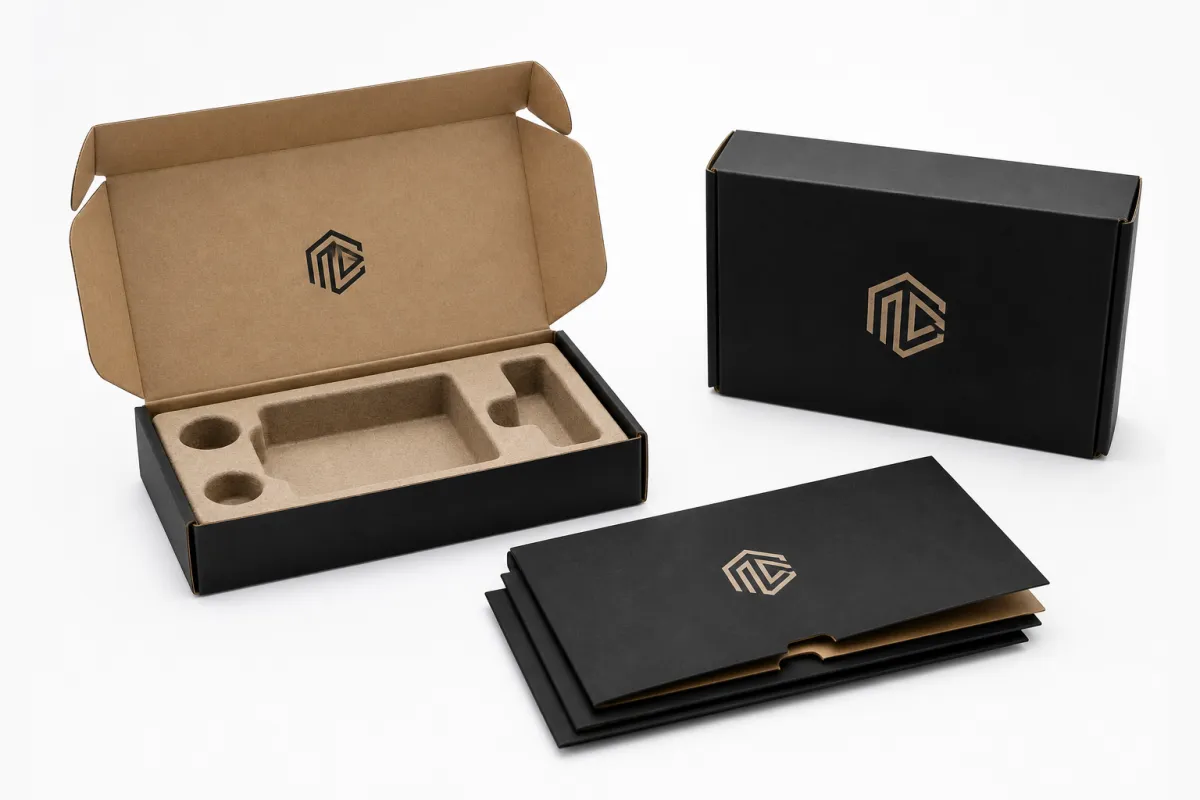
At their core, custom mailer inserts with logo sit inside the mailer or shipper and keep the contents from shifting during transit. The build may be a die-cut paperboard tray, a folded corrugated insert, a printed card with tabs, or a hybrid structure that combines retention with messaging. The practical job comes first. The logo follows the structure, and that order usually explains why the better versions work so well. If the insert cannot hold the product, a pretty print treatment will not save it.
People sometimes lump custom mailer inserts with logo in with tissue, shredded filler, or standard dividers. Those materials serve different purposes. Tissue is light and decorative, but it does very little to control movement. Loose fill can cushion unusual shapes, though it often looks untidy and slows packing. A divider can separate compartments, but it does not always improve presentation. Custom mailer inserts with logo do both jobs more cleanly when you need fit and appearance in one piece.
That is especially useful in product packaging for small, premium, or fragile items. Cosmetics, supplements, apparel accessories, electronics accessories, candles, and gift kits all benefit from a package interior that looks organized from the first glance. A customer opens the mailer and sees a product that has its place instead of a product bouncing around like it missed its stop.
There is also a clear perception effect. A modest shipment with a smart insert can feel better finished than a more expensive outer box with no interior design at all. The first branded surface a customer often touches is the insert itself, which means custom mailer inserts with logo can shape the brand feeling faster than a glossy shipper ever will. That effect is not magic; it is just packaging doing a better job of setting expectations.
“A tidy insert makes the brand feel deliberate. A loose one makes the whole package feel rushed.”
From a package branding point of view, the insert also lets the outer mailer stay simple. That is helpful in fulfillment, because not every shipment needs a fully printed box to feel complete. Some brands get better results from a plain outer shipper, a branded insert, and a clean label system. If you want to compare packaging formats before settling on one direction, the Custom Packaging Products page is a practical place to start.
For brands shipping in volume, custom mailer inserts with logo are one of the rare packaging elements that can improve protection, presentation, and repeat-purchase perception at the same time. Most packaging choices help one part of the job and complicate another. These inserts can do more without adding visual clutter, which is why I keep seeing them show up in better-run DTC programs.
How custom mailer inserts with logo change the unboxing experience
A good unboxing sequence has order to it. The customer opens the mailer, sees where everything belongs, and reaches the product without having to sort through packing material or wonder what comes next. Custom mailer inserts with logo shape that sequence by defining product placement, controlling the first visual hit, and reducing movement in transit. In practice, they turn a loose shipment into a guided reveal.
Three insert styles come up often. The first is a printed insert that focuses mainly on visual presentation. The second is a structural insert built to hold and support the product. The third is a hybrid that does both. Printed versions are useful for logo panels, care notes, or brand messaging. Structural versions earn their keep when the product needs support. Hybrid builds are where many brands land because custom mailer inserts with logo usually need to justify every inch of space they take.
Logo placement matters more than many teams expect. Put the mark where it appears at the opening moment, not buried under copy or tucked into a corner nobody sees until the pack-out is over. Color matters as well. A bold logo on uncoated kraft stock reads differently from the same logo on white coated board. That is not an abstract design theory. It changes the tone of the package in a way customers notice immediately, even if they do not have words for it.
The emotional part of the experience is real. The insert is often the first branded surface a customer touches with both hands, so custom mailer inserts with logo can carry the whole mood of the shipment: premium, playful, technical, minimal, eco-conscious, or gift-ready. A small surface can do a lot of work when it is designed with intent, and that is kind of the point.
The categories that benefit most have one thing in common: they need order. Cosmetics need neat compartments. Apparel accessories need a clean fold or card. Electronics accessories need stable positioning. Supplements often need a clear information panel. Gift sets need visual hierarchy. In each case, custom mailer inserts with logo help the package interior feel planned instead of patched together.
Repeat purchase behavior can improve too. Not because a logo alone changes buying habits, but because the experience feels thoughtful. Customers remember the parcels that open cleanly and feel complete. That memory sits under the brand name long after the tape is gone. In my experience, that is the sort of detail that sticks when everything else in the order was basically expected.
Custom mailer inserts with logo: cost, pricing, and MOQ
Cost is where most buyers slow down and start comparing line by line. Fair enough. Custom mailer inserts with logo can be very cost-effective at scale, but pricing changes a lot based on material, print coverage, and how much cutting or folding the insert needs. A low quote can look appealing and still carry little real value if the insert arrives flimsy or awkward to pack.
The main pricing drivers are straightforward: board thickness, insert dimensions, panel count, print sides, finishing, die-cut complexity, and quantity. Add foil, embossing, soft-touch coating, or specialty ink and the price rises. Choose a standard stock, a simple die line, and one-color print and the number drops. Quantity matters because setup and tooling spread across more units as the run grows, which is why small batches of custom mailer inserts with logo usually carry a higher unit cost. That part is not glamorous, but it is the reality of print and converting.
Here is a working pricing framework for common runs. These figures are only directional, since every supplier has different equipment, waste rates, and labor assumptions, but they help you judge whether a quote belongs in the right neighborhood.
| Insert Type | Typical Use | Approx. Unit Cost at 5,000 pcs | Notes |
|---|---|---|---|
| Printed paperboard insert | Light products, cosmetics, small kits | $0.12-$0.28 | Best for flat items, moderate print coverage, simple die cutting |
| Die-cut folded insert | Products that need restraint and presentation | $0.20-$0.45 | More structure, better fit control, slightly more labor |
| Corrugated insert | Heavier products, shipping protection | $0.35-$0.90 | Stronger protection, less elegant if overbuilt |
| Premium printed insert with finishing | Gift sets, premium kits, retail packaging | $0.30-$0.75 | Can include matte, gloss, or specialty effects |
MOQs vary by supplier and by whether the tooling already exists. Many custom mailer inserts with logo projects fall somewhere between 500 and 2,000 units, though simple formats may come in lower. A smaller MOQ usually means higher unit cost, so compare the full spend rather than focusing only on the minimum. A tiny order can appear economical and still cost more per piece than a better-sized run.
Freight can quietly distort a good quote. The insert might be inexpensive, then carton weight, shipping zone, and palletization push the landed price higher than expected. Ask for landed pricing if possible, especially with bulky items. Compare custom mailer inserts with logo on the same dimensions, same board, same print sides, and same delivery terms. Loose quote comparisons are how buyers end up chasing the wrong number.
If outer packaging is also in play, compare the insert strategy against options such as Custom Poly Mailers or printed shippers. Some brands do better with a simpler outer package and a stronger insert rather than moving straight into fully printed custom boxes.
For sourcing context, standards and sustainability claims deserve attention too. Resources from Packaging.org and performance guidance from ISTA are useful when you are comparing protective packaging and transit testing. If a supplier mentions FSC-certified board, ask for documentation rather than taking the mark at face value. The same applies to any ASTM or ISTA claim.
One more buying reality: a quote without artwork assumptions is incomplete. If the supplier prices custom mailer inserts with logo for flat one-color print and you plan on full-coverage CMYK with coated stock, the final invoice will not stay where you expected it to stay. That is one of those unhelpful surprises you can avoid with a five-minute spec check.
Custom mailer inserts with logo: process, timeline, and production steps
The production path is simple on paper and unforgiving in real life. A typical custom mailer inserts with logo project starts with measurements: product length, width, height, weight, and any fragile areas that need extra support. Then the carton or mailer size gets fixed. Then the insert dieline gets built around those numbers. If you skip measuring and guess, the rest of the process turns into expensive improvisation.
After that, artwork prep begins. The supplier should provide a dieline, and your designer should place the logo, copy, and any marks against that template. Proofing follows. For simple runs, a production proof may be enough. For more complex custom mailer inserts with logo, a physical sample is the safer route because paper can look forgiving on screen and much less forgiving once it is cut, folded, and packed. I am usually cautious here because the package can look perfect in a PDF and still fail in the hand.
Realistic lead times usually look like this:
- Simple printed insert with standard stock: 7-12 business days after proof approval
- Die-cut or folded insert with moderate complexity: 12-18 business days after proof approval
- More elaborate structure, special finishing, or multiple samples: 20-30 business days or more
That is production time, not the whole calendar. Add artwork revision time, sample shipping, and final freight. If the insert supports a launch, trade show, or influencer drop, build in a buffer. A late package is still late, even if the artwork looks great. Custom mailer inserts with logo that land three days after the send date do not help the schedule, no matter how polished they are.
Delays tend to show up in three places. The first is unclear product dimensions. The second is artwork changes after proofing. The third is a sample approval loop that keeps changing the spec. If the product is still under development, lock the version before you place the order. A few millimeters can matter a great deal when the insert has to fit bottles, jars, tubes, or electronic accessories.
For seasonal programs, ordering early and holding finished stock can save a lot of stress if storage space is available. That matters most for custom mailer inserts with logo tied to promotions. A two-week delay in November is not the same as a two-week delay in February. One is irritating. The other can break a launch. I have seen teams learn that the hard way, and it is not a lesson anyone wants to repeat.
Design rules for custom mailer inserts with logo that actually print well
Good design starts with the dieline, not with a polished mockup. Custom mailer inserts with logo need bleed, safe area, fold awareness, and cut-line discipline so the artwork survives converting. A common setup uses 1/8 inch bleed, or about 3 mm, along with a safe area that keeps key copy away from trims and folds. If the logo sits too close to the edge, the press will not save it with careful intentions.
Logo placement should feel deliberate. Put the mark where the eye lands first, but do not crowd every panel with branding. A small panel with one strong logo often feels more premium than a full-sheet print that tries to fill every inch. Copy should follow the same rule. Short, clear brand language works better than a wall of marketing text. Custom mailer inserts with logo should support the product, not compete with it for attention.
File prep matters. Vector files such as AI, EPS, or PDF are best for logos and line art. Raster images should be high resolution, usually 300 dpi at final size. CMYK is the usual setup unless the supplier asks for Pantone references. If your brand color needs to stay exact, provide Pantone values and plan for proofing conversations. Packaging is not the place for vague color choices if the shade carries brand meaning.
Here is a short checklist that prevents a lot of headaches:
- Confirm the final product dimensions before layout starts
- Use the supplier dieline exactly, not a redrawn version from memory
- Keep logos and text inside the safe area
- Check the insert under lighting similar to what customers will see
- Review folds, tabs, and hidden surfaces before approving print
Finish choice changes how the logo reads. Gloss adds punch, matte softens contrast, and uncoated stock feels more natural but can absorb ink and mute color slightly. Soft-touch can elevate premium custom mailer inserts with logo, although it should earn its place through the product and price point, not because it sounds luxurious in a quote. A finish should fit the brand, not just the mood board.
For sustainability-minded brands, FSC-certified board is worth considering, especially if your packaging story already leans toward recycled or responsibly sourced materials. Certification should be real and documented. A logo printed on a carton is not proof of sourcing. If the supplier cannot explain the chain of custody, keep pressing for details.
One final design point: the insert should be readable without fighting the product. If the item itself is colorful, give the insert room to breathe. If the product is minimal, the insert can carry more contrast. That balance is where custom mailer inserts with logo begin to feel like part of the full product packaging system instead of a loose add-on.
Common mistakes with custom mailer inserts with logo
The biggest mistake is designing before measuring the real item. Not the concept. The actual product. Brands order custom mailer inserts with logo based on draft dimensions, then the final bottles, jars, or boxes arrive slightly different, and the insert ends up too tight, too loose, or both at once. Fit is the whole point. If the fit is wrong, everything else becomes decoration.
Another common miss is overbranding. Too many logos, too much copy, too many icons, and the insert starts to feel like a sales sheet nobody asked for. A clean branded surface usually performs better than a crowded one. Customers are opening a package, not reading a pitch deck. Custom mailer inserts with logo should feel thoughtful, not loud.
Shipping stress gets overlooked more often than it should. Inserts that look perfect on a flat proof can show crushed corners, scuffed ink, or warped edges after transit. Transit testing matters because the package has to survive more than the art review. If the item is fragile, ask whether the supplier can align the build with ISTA-style test logic or at least run a basic drop and vibration check. Real packaging performance counts more than a beautiful proof.
Chasing the lowest price is another classic mistake. A cheap quote may hide lighter board, looser tolerances, or weaker print control. On paper, it can look smart. In the warehouse, it turns into returns, rework, and cartons that do not pack cleanly. With custom mailer inserts with logo, the savings rarely justify the damage if the insert fails the basic job.
Skipping a sample is the final mistake that keeps showing up. A plain structural sample catches fit issues. A printed proof catches color and layout problems. If you skip both, you are placing the launch on a guess. That can feel efficient right up until the cartons reach the dock.
One practical rule helps here: if the product costs enough that a damage claim would hurt, sample it. If the insert has multiple panels or folds, sample it. If the logo color needs to match closely, sample it. Custom mailer inserts with logo are far less expensive to test than to replace after a bad run.
Expert tips for better custom mailer inserts with logo
Start by giving the insert one main job. Protect, present, educate, or upsell. Pick the primary purpose and let the other functions support it. The strongest custom mailer inserts with logo are focused. If the insert tries to do all four jobs equally, it usually ends up cluttered and weaker at each one.
Test fit with real products, not just draft dimensions in a spreadsheet. Fulfillment teams pack differently than designers imagine. A bottle with a slight taper, a box with a glossy wrap, or a pouch with fill variation can change the whole fit. Place the product in the insert, shake it gently, and listen for movement. That small test can save a great deal of embarrassment later.
Coordinate the insert with the outer package. The mailer, tape, sticker, tissue, and insert should feel like one system, not separate purchases with different moods. If you are evaluating the outer shipper, compare it against other options in Custom Packaging Products and decide whether a printed outer package or a calmer interior balance serves the brand better. In some cases, a plain shipper with strong custom mailer inserts with logo creates a cleaner experience than overbuilding the outside.
Use a plain structural sample first, then a printed proof. Those catch different problems. The unprinted sample tells you if the product fits, folds, and holds. The printed proof tells you if the logo placement, colors, and copy are right. The checks stay separate because the failures are different. One is mechanical. One is visual. Custom mailer inserts with logo need both to land well.
Pay attention to pack-out speed too. If the insert takes too long to load, fulfillment costs rise. A beautiful insert that adds thirty seconds per order can become expensive very quickly at scale. The best custom mailer inserts with logo usually balance appearance with assembly efficiency, so the warehouse can pack without turning every order into a small ceremony.
Keep a real schedule buffer. Not a theoretical one. If the launch date is fixed, count backward from that date and subtract time for proofing, samples, and freight. Then add cushion because things change. That advice sounds plain because it is plain, which is usually a sign that it is useful.
One more practical point: if the product line may change, design the insert with some tolerance or modularity. That can mean an adjustable fold, a generic compartment width, or a card slot that works across multiple SKUs. Flexible custom mailer inserts with logo can save you from retooling every time a container shape shifts a little.
Used well, custom mailer inserts with logo do more than fill dead space. They protect the item, organize the reveal, and make the package feel like a proper piece of retail packaging instead of shipping material doing a poor impression of design. Measure carefully, sample early, Choose the Right stock, and order with enough buffer. If you need one practical starting point, lock the final product dimensions first, decide what the insert must do before you think about graphics, and request both a structural sample and a printed proof before sign-off. That is the simplest way to keep the packaging honest and the final result worth opening.
FAQ
How much do custom mailer inserts with logo usually cost?
Pricing depends on size, stock, print colors, finishing, and quantity. Small runs cost more per unit because setup is spread over fewer pieces. For rough planning, simple printed inserts may land around $0.12-$0.28 each at 5,000 pieces, while more structural or finished versions can run higher. Always request quotes using the same dimensions and specs so the comparison stays fair.
What file format works best for custom mailer inserts with logo?
Vector files like AI, EPS, or PDF are usually safest for logos and line art. Keep any images high resolution and follow the supplier's dieline exactly. If you are unsure about setup, ask for proofing guidance before you send final artwork. That single question can save a lot of rework.
How long does production take for custom mailer inserts with logo?
Simple jobs can move quickly, but complex inserts need more proofing and production time. A basic run may take about 7-12 business days after approval, while more involved builds can take 12-18 business days or longer. Add time for samples, revisions, and shipping. Confirm lead time before you lock the launch date.
Can custom mailer inserts with logo protect fragile products?
Yes, if the insert is designed around the product's exact dimensions and movement points. Use structure, not just print, when the item needs real stabilization. Test drop and transit performance before ordering at scale. A fragile product needs fit and restraint, not decoration pretending to be protection.
What MOQ should I expect for custom mailer inserts with logo?
MOQ varies by supplier, material, and whether cutting tools are already available. Lower MOQs usually mean higher unit cost, so compare total cost, not just the minimum quantity. If you are unsure, ask for quotes at two or three quantities to see the pricing curve. That usually shows where the real value sits.

