Custom Mailing Bags Supplier Wholesale: The Bulk-Buy Advantage
A hoodie that ships in an oversized carton can cost more to move than the product itself. That is why buyers searching for a Custom Mailing Bags Supplier wholesale are usually solving an operations problem, not decorating a parcel. They want less air, less waste, fewer touches, and a cleaner brand presentation without giving up protection.
Mailing bags work best for soft goods and low-crush-risk products. Apparel, textiles, accessories, printed inserts, sample kits, and many ecommerce orders fit the format well. A properly sized mailer can reduce dimensional weight, remove void fill, and shave packing time. Those gains sound small until they run through thousands of orders a week. Then they start showing up in freight invoices, labor reports, and fewer damaged shipments.
That does not make mailers the answer for everything. Cartons still win for rigid items, fragile goods, or products that need stacked compression resistance. Padded envelopes help with small accessories. Courier bags are fine for low-brand-risk shipping. Custom printed mailing bags sit in the middle: lighter than boxes, more brand-controlled than plain satchels, and faster to close than taped cartons.
Wholesale changes the math in a few predictable ways. Unit cost drops as quantity rises. Reordering becomes less chaotic. Color matching is easier to hold from run to run. Inventory planning is cleaner because the packaging spec is fixed before production starts. That matters for procurement teams, fulfillment centers, apparel brands, subscription boxes, and promotional programs that need packaging to behave the same way every time.
The useful part is not the word “custom.” It is the part that fits the product. Size, thickness, material structure, adhesive style, print coverage, and packing configuration all affect the final cost and how the bag performs on the line. A good supplier should talk in specifications, not slogans.
For buyers who already manage branded packaging across multiple SKUs, Custom Mailing Bags often become the outer layer of a broader shipping system. They can sit alongside branded boxes, tissue, inserts, or labels without forcing every order into the same packaging format. The goal is practical consistency, not packaging theater.
What Wholesale Custom Mailing Bags Actually Include
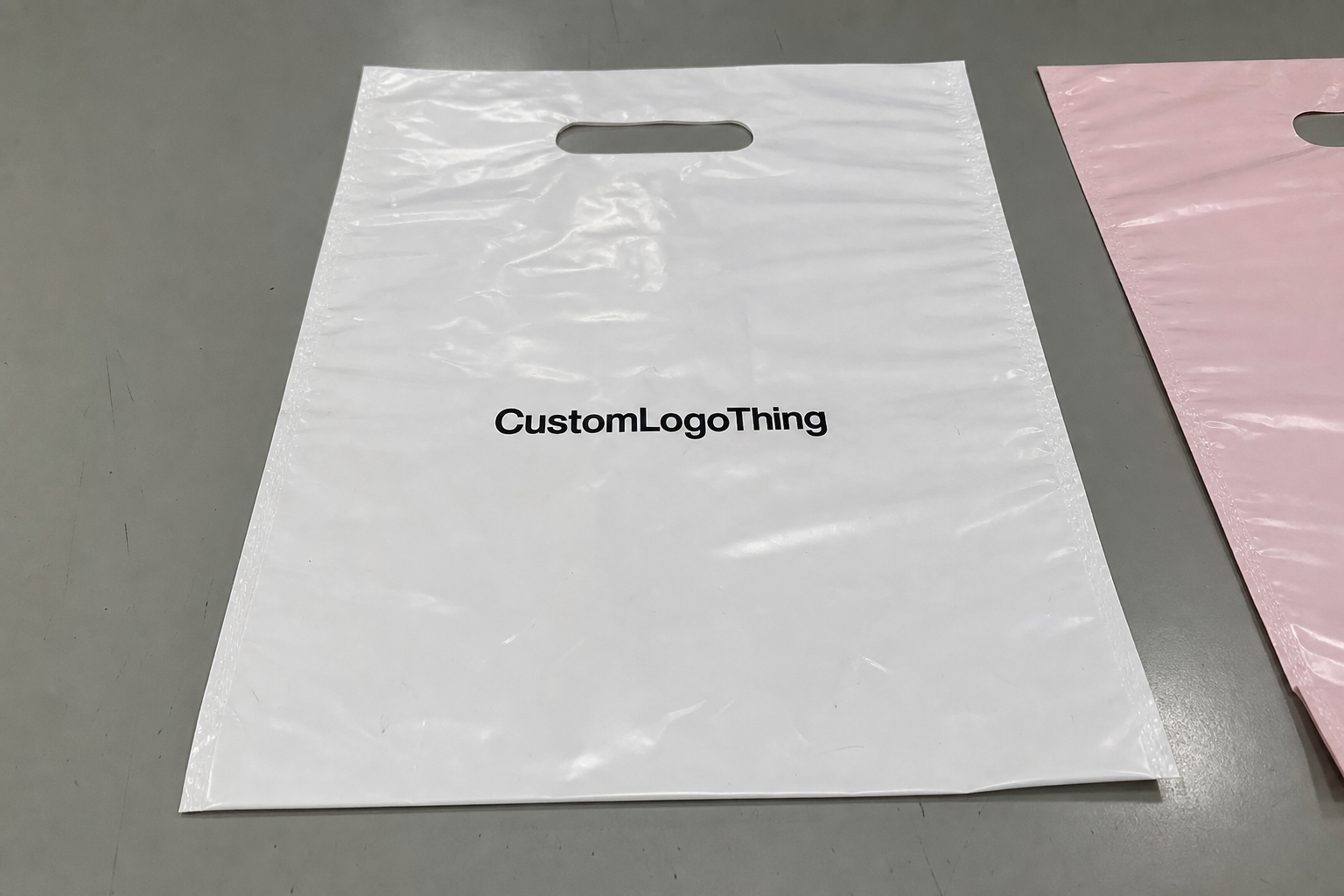
Custom mailing bags are flexible shipping bags made for parcel delivery. Most are produced from LDPE, HDPE, recycled PE blends, co-extruded films, or compostable materials. The right substrate depends on what is being shipped, how it is packed, and what the buyer needs to claim on the label. There is no universal “best” option. There is only the option that matches the product and the route.
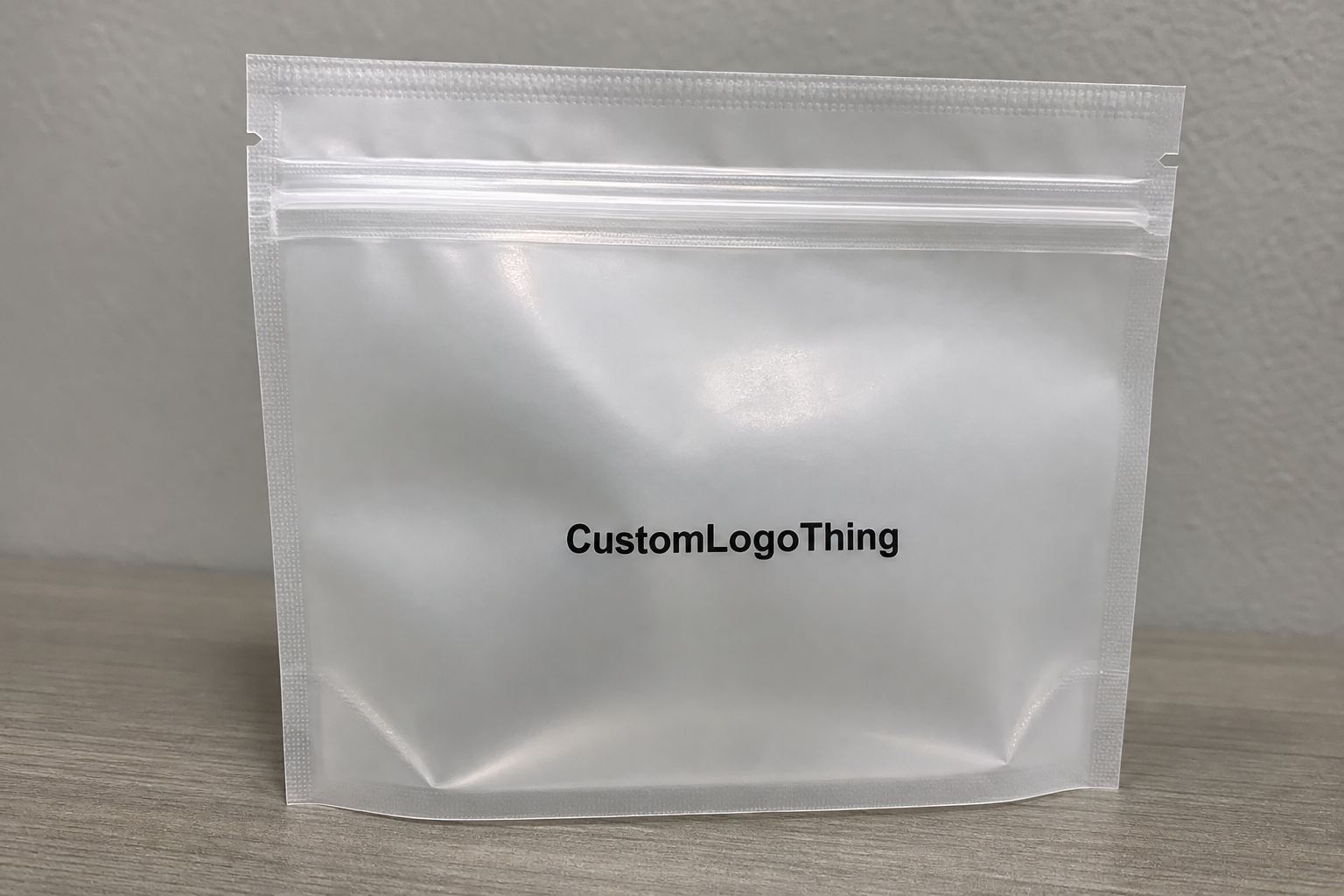
The product family is broader than many buyers expect. Standard poly mailers are the baseline. Then there are frosted mailers, courier bags, returnable mailers with a second adhesive strip, tamper-evident bags, heavy-duty shipping sacks, and apparel mailers built for folded garments. A beauty sample kit may need opacity and a strong permanent seal. A fashion brand with high exchange volume may need dual-strip closures. A document program may care more about flatness and clean edges than heavy film.
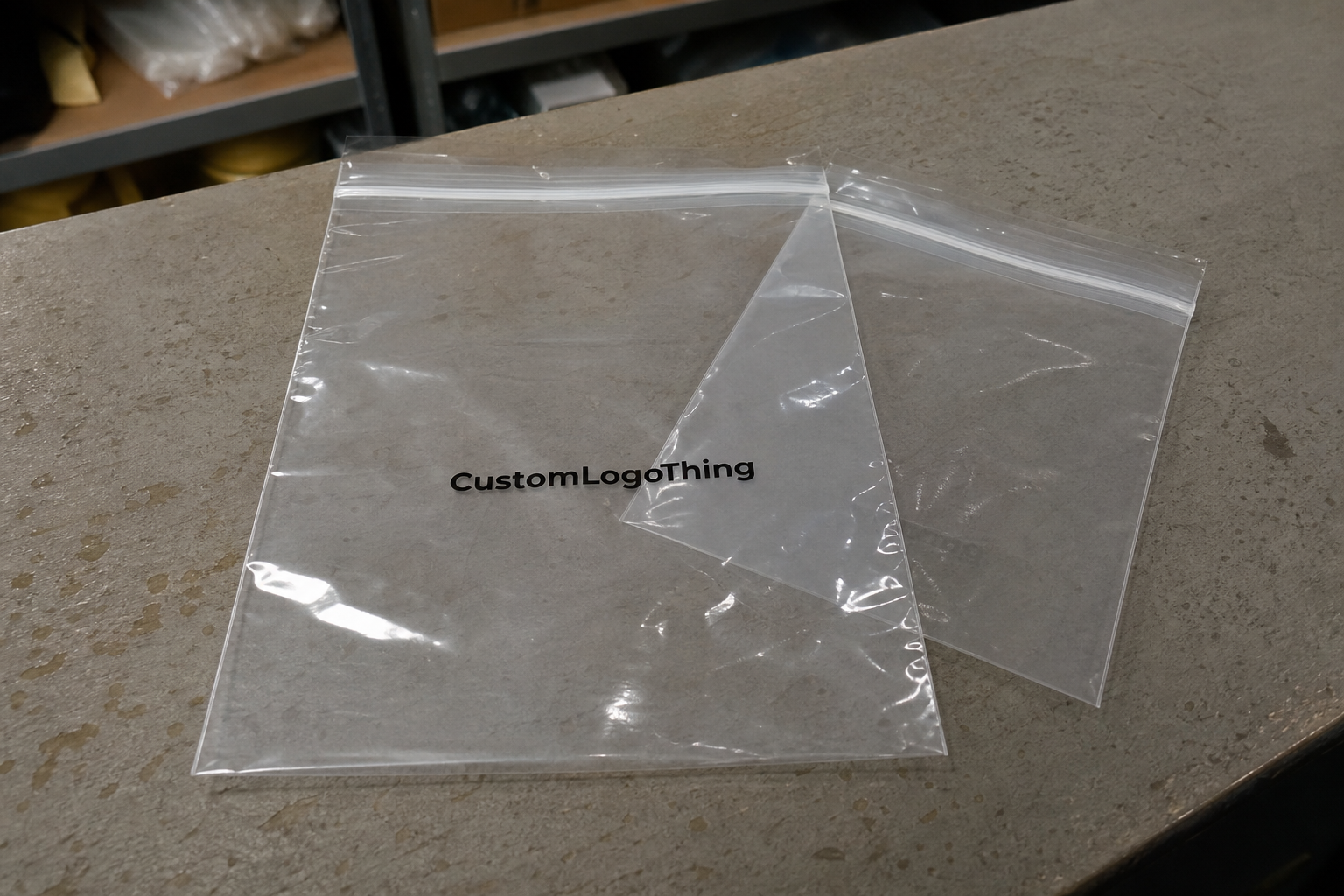
Stock bags with labels and fully custom printed bags are not the same purchase. Stock bags move faster when the artwork is simple or the launch window is tight. Fully custom mailers carry logo placement, brand colors, handling marks, QR codes, recycling information, and promotional artwork. If the package is part of the customer experience, print quality matters. If the package disappears the moment it reaches the customer, speed and cost may matter more.
Printing can be basic or complex. A one-color logo is usually the cheapest route. Two or three spot colors are still manageable if the artwork is clean. Full-surface patterns look better on some brands, but they increase setup discipline and can push up the price. Matte and gloss effects are possible depending on the film and print method. Metallic inks, heavy coverage, and edge-to-edge art need early confirmation, not last-minute hope.
There are real constraints. Very fine type can fill in. Dark film can reduce contrast. Transparent windows affect privacy. Exact color matching is harder on colored film than on white film. A supplier that understands flexible packaging should flag those issues before the order is approved, not after 30,000 bags are already on the machine.
Practical rule: do not spec a mailer to look expensive if the shipment does not need the extra construction. The right bag is the one that protects the product, closes fast, and stays within the freight budget.
For the most reliable results, start with the highest-volume use case: apparel, textiles, soft accessories, catalogs, sample kits, or non-fragile ecommerce goods. Build the bag around the product. Catalog-driven sizing often looks neat on paper and fails in packing bays.
Material, Size, Thickness, and Print Specifications That Matter
Before asking for a quote, get the basics in order. A supplier needs bag width, bag height, lip or flap length, usable internal space, film thickness, color, print area, closure type, and packing quantity. If the bags are going into semi-automated or automated packing, carton dimensions and tolerance matter too. Missing one of those details can make two quotes look comparable when they are not.
Thickness is one of the most misunderstood variables. A lighter film may work fine for T-shirts, swimwear, scarves, and single-item orders with no sharp edges. Heavier gauges are better for dense textiles, multi-item orders, shoes packed inside another bag, or long delivery routes that involve more handling. The difference between a lighter and heavier film may only be a few microns, but that difference can decide whether the bag tears at the seam or survives rough sorting.
| Material Option | Typical Strength | Best Fit | Cost and Buyer Notes |
|---|---|---|---|
| LDPE film | Flexible, soft hand-feel, good puncture resistance | Apparel, textiles, general ecommerce orders | Often cost-efficient for branded packaging; prints well on white or colored film |
| HDPE film | Crinklier feel, strong for its weight | Courier-style bags and lightweight shipping | Can reduce material weight, though the finish feels less retail-oriented |
| Recycled PE blend | Varies by recycled content and blend | Brands prioritizing recycled-content claims | May affect opacity, color consistency, and film smoothness; samples are useful |
| Compostable film | Specification-dependent; shelf life needs review | Programs with clear compostability goals | Usually higher cost; confirm storage conditions and certification claims |
Closure choice affects both cost and workflow. Permanent self-seal strips are common for one-way shipments. Dual adhesive strips are better for returns-heavy categories, especially apparel. Peel-and-seal formats speed fulfillment because staff do not need tape or extra labels. Tamper-evident closures suit higher-risk items, but they add cost and can be overkill for low-risk goods.
Opacity is another detail that gets ignored until complaints start. Customers do not always want contents visible through the bag, especially for clothing, documents, cosmetics samples, or gift orders. Opacity can be created through film color, thickness, pigment load, or layered construction. Each route changes price and print behavior. There is no free version of privacy.
Print specifications deserve the same discipline as size. Give Pantone references where possible, but do not expect a perfect paper-to-film match. CMYK on flexible film behaves differently than on a rigid carton. Barcodes and QR codes need enough contrast and quiet space to scan reliably. Repeat patterns need registration tolerance near edges and seals. If a design has tiny text, test it before approval. Fine type that looks sharp on screen can blur after ink gain or stretching on film.
Request samples or production proofs whenever the material, thickness, ink coverage, or bag size changes. A bag that looks right in a flat digital render may be awkward once a folded sweatshirt expands inside it. That one detail causes more packaging mistakes than suppliers like to admit.
Pricing, MOQ, and Unit Cost Drivers for Bulk Mailing Bags
Wholesale pricing depends on a small set of variables that keep repeating: material, dimensions, thickness, print complexity, order quantity, number of SKUs, closure style, and freight method. Buyers often compare two quotes for what they think is the same bag, then discover the film gauge, print area, and packing count are different. The price was never really the same product.
MOQ exists because the setup has real cost. Film must be sourced or extruded. Printing plates or cylinders may be needed. Machines need time to run efficiently. Then the bags have to be cut, sealed, counted, packed, labeled, and inspected. A 500-piece custom run and a 10,000-piece wholesale run do not follow the same economics, even if the artwork is identical.
For planning purposes, a simple one-color custom poly mailer at around 5,000 pieces may land in a broad range of roughly $0.18 to $0.35 per unit, depending on size, material, thickness, and freight. Heavier or larger mailers can go above that. Repeat orders at higher volume can move lower. Those numbers are not a promise; they are a realistic planning band, not a substitute for a quote tied to the actual spec.
The major cost drivers are not mysterious. Larger bag area uses more film. Thicker material consumes more resin. More colors increase setup time and print control. Dual adhesive strips add material and labor. Multiple sizes fragment volume and weaken buying power. Recycled-content and compostable options often carry a premium because the raw material and processing path are less straightforward.
The lowest unit price is not always the lowest cost. A cheap bag that tears adds tape, labor, and complaints. A bag that is too small slows packing. A bag that is too large raises freight bulk and makes the shipment look sloppy. A bad print finish can trigger rework or reorders. Procurement teams usually focus on unit price because it is easy to compare. Operations teams see the rest because they handle the failures.
Where possible, quote multiple sizes together. A consolidated order can improve planning and reduce fragmented inventory. A common mix might include a smaller mailer for single garments, a mid-size option for hoodies, and a larger bag for bundled orders. The point is to choose sizes that match real picking behavior, not every possible edge case.
Useful quote inputs include target quantity, annual forecast, artwork files, preferred material, size range, destination, carton packing preference, and whether sea or air freight is acceptable. Reorder cadence matters too. If a packaging program turns every month, the first order should support repeat production without redesigning the spec every quarter.
Process and Timeline From Artwork to Delivered Mailers
A good custom mailer order follows a clear sequence: specification review, artwork check, quotation, sample or digital proof, approval, material preparation, printing, bag conversion, inspection, packing, and delivery. Skip one step and the schedule slips. Most delays come from missing information, not machine drama.
Incomplete artwork causes more trouble than anything else. So do vague dimensions, delayed color changes, or approval chains that keep adding people after the proof is already in motion. A supplier can move quickly only when the decision set is stable. The production line is not the place to solve brand governance.
Artwork review is more than checking whether the logo looks clean. A supplier should verify vector files, resolution, color references, bleed, safe areas, barcode readability, and whether the design suits the selected film. QR codes are a good example. They may scan perfectly in a PDF and fail once ink gain, low contrast, or film texture enters the picture.
Proofing comes in two forms. Digital proofs are faster and usually enough for layout confirmation on a repeat order. Physical samples are better when the material feel, opacity, seal strength, or print finish matters. On a first run, especially with a larger volume or multi-color branding, a sample can save real money. Cheap mistakes are rare. Expensive ones usually start small.
Lead time depends on quantity, number of sizes, print colors, material availability, finishing requirements, inspection level, and freight method. A straightforward repeat run may move in two to four weeks. A first-time order with recycled content, several sizes, and a more complex print can stretch to four to six weeks or longer. Sea freight lowers landed cost but adds planning time. Air freight can rescue a deadline, but the freight bill will remind you why it was necessary.
Good reorder planning matters more than people expect. If a fulfillment center uses 800 mailers per day and the full replenishment cycle is 30 to 45 days, waiting until 5,000 bags remain is not careful planning. It is a stockout waiting to happen. Seasonal launches need even more buffer because artwork approval, production, and freight all compete with peak demand.
A reliable supplier reduces delays by locking the spec early, confirming carton packing, and flagging production risks before the order reaches the machine. That kind of discipline is dull. It also keeps the schedule intact.
Quality Checks That Separate Reliable Bags From Cheap Failures
One weak side seam can turn a low-cost mailer into a refund, a replacement shipment, and a bad review. That is the ugly part of packaging economics. The bag fails once; the brand pays twice.
Useful quality checks are specific. Test seal strength, adhesive tack, film thickness consistency, print adhesion, tear resistance, opacity, cut accuracy, and carton count. Cosmetic inspection matters, but function matters more. A nice-looking logo does nothing if the bag splits under normal parcel handling.
Adhesive performance should be checked in real packing conditions. The strip needs to close fast, hold through transit, and match the return policy if the bag includes a second seal. Returnable mailers with weak secondary adhesive create friction for customers and service teams. That problem shows up fast, and usually in complaints that mention “cheap packaging” even when the product inside was fine.
Print inspection needs equal attention. Check logo sharpness, ink scuffing, registration accuracy, repeat pattern consistency, and placement tolerance. On flexible film, some movement is normal. A centered logo that drifts several millimeters starts to look careless. A scanning code that is technically printed but hard to read is worse than no code at all.
Buyers can ask for batch-level documentation such as pre-production samples, inspection photos, carton labels, packing lists, and material confirmation. Larger programs sometimes reference transit-testing expectations from groups such as the International Safe Transit Association, especially if the package must survive a more demanding distribution chain. For sustainability claims, separate recycled content, recyclability, and compostability. Those are different claims, with different proof requirements and different failure points. The U.S. Environmental Protection Agency is a useful baseline reference for general recycling guidance, but it does not replace material-specific verification.
Quality control connects directly to total landed cost. A mailer that costs slightly more per unit may still be the better buy if it reduces claims, repacking labor, customer complaints, and emergency replenishment. The cheapest quote is often the one with the most expensive follow-up.
Next Steps Before You Request a Wholesale Quote
Start with the product, not the bag. Measure the packed item after folding, wrapping, or bundling. Decide how many bag sizes are actually needed. Estimate monthly use by SKU or order type. Choose one-way or returnable closure. Confirm whether the bag needs a logo only, a full pattern, handling instructions, or compliance marks.
Test with real products. Theoretical dimensions can mislead buyers because folded apparel expands, bundled accessories shift, and inserts add thickness. A mailer that fits one cotton T-shirt may fail on a fleece hoodie, even if both are listed as apparel in the catalog. The bag should be chosen around the packed form, not the idealized one.
Prepare artwork in editable vector format. Include Pantone references or approved brand-color values where available. If the design includes QR codes, small type, or dense patterns, call that out early. Those details affect print method, proofing, and risk. A supplier can only quote accurately when the artwork is already close to production-ready.
Compare two or three specification scenarios. Standard film versus recycled content. One-color print versus multi-color print. Single-strip closure versus dual-strip returnable closure. The best quote is not always the lowest number on the page. The best quote shows the cost of each decision clearly enough that procurement and marketing can read it the same way.
Share delivery deadlines and reorder expectations up front. If the first shipment has to arrive before launch, the production and freight plan should reflect that. If the bag will be reordered quarterly, the first purchase should establish a repeatable spec that does not need to be renegotiated every cycle.
Ask for unit price, MOQ, sample options, lead time, carton packing, freight estimate, and setup costs in the same quote. That makes supplier comparison much cleaner. It also prevents the usual trap: a low unit price that turns into a higher landed cost once freight, packing assumptions, or revision charges show up.
If the goal is to work with a Custom Mailing Bags Supplier wholesale, the fastest path is to send product dimensions, artwork, quantity targets, and delivery location in one spec sheet. That gives the supplier enough information to quote the right film, the right size, and the right print method without guessing.
FAQ
What is the usual MOQ for wholesale custom mailing bags?
MOQ depends on size, material, print method, and color count. Custom runs need minimum quantities because film sourcing, printing setup, machine time, conversion, and packing all carry fixed cost. A 500-piece order and a 10,000-piece order do not follow the same pricing logic. Buyers often improve pricing by consolidating several bag sizes or ordering the highest-volume size first.
How do I choose the right size for custom poly mailing bags?
Measure the packed product, not the flat product. Leave room for insertion, closure, and any product expansion during handling. Avoid oversized bags unless the item really needs the space, because extra size increases film cost, shipping bulk, and wrinkling. For apparel and soft goods, test a sample with the actual folded item before approving bulk production.
Can a wholesale mailing bag supplier print full-color branding?
Yes, full-color branding is possible, but the right method depends on artwork complexity, film color, ink coverage, and quantity. Simple one- or two-color logos are usually more cost-efficient. Full-surface artwork and dense graphics require tighter setup control. Vector artwork and color references help the supplier confirm feasibility and avoid avoidable revisions.
What affects the lead time for custom shipping mailers?
Lead time is shaped by proof approval, material availability, order quantity, number of SKUs, print complexity, inspection requirements, and freight method. Late artwork changes and unclear sizing are common causes of delays. If the deadline is fixed, share it before quoting so the supplier can recommend a realistic production and shipping path.
Are recycled or compostable custom mailing bags available wholesale?
Yes, recycled-content PE and compostable options are available wholesale. Performance, shelf life, print behavior, and cost can differ from standard poly mailers. Buyers should confirm whether the priority is recycled content, recyclability, compostability, or lower material weight, because those are different targets. Request material details and samples before switching a high-volume shipping program to a new substrate.