Buyer Fit Snapshot
| Best fit | custom matte finish pouches for packaging buyers comparing material specs, print proof, MOQ, unit cost, freight, and repeat-order risk where brand print, material, artwork control, and repeat-order consistency matter. |
|---|---|
| Quote inputs | Share finished size, material target, print colors, finish, packing count, annual reorder estimate, and delivery region. |
| Proofing check | Approve dieline scale, logo placement, barcode or warning zones, color tolerance, and any recyclable or compostable wording before bulk production. |
| Main risk | Vague material claims, crowded artwork, or missing packing details can create delays even when the unit price looks attractive. |
Fast answer: Custom Matte Finish Pouches: Benefits, Costs, and Fit should be specified like a repeatable production item. The safest quote includes material, print method, finish, artwork proof, carton packing, and reorder notes in one written spec.
What to confirm before approving the packaging proof
Check the product dimensions against the actual filled item, not only the sales mockup. Ask for tolerance on folds, seals, hang holes, label areas, and retail display edges. If the package carries a logo, QR code, warning copy, or legal claim, reserve that space before decorative graphics fill the panel.
How to compare quotes without losing quality
Compare board or film grade, print process, finish, sampling route, tooling charges, carton quantity, and freight assumptions side by side. A lower quote is only useful if the supplier can repeat the same color, closure quality, and packing count on the next order.
Custom matte finish pouches solve a problem that packaging teams run into all the time: too much shine can make a product look louder, not better. Under warehouse fluorescents, boutique spotlights, and supermarket LEDs, high gloss can throw reflections across the panel and blur the message. Matte does the opposite. It calms the surface, sharpens the read, and gives the design room to breathe.
That matters because shoppers do not study a pouch in ideal conditions. They glance at it beside three competing brands, often from a slight angle, while making a decision in seconds. In that short window, a matte pouch can make a coffee blend feel more considered, a supplement line look more disciplined, and a skincare product seem less promotional. The finish is not just a visual preference. It affects print legibility, tactile feel, protection, and cost.
Brands that treat finish as part of the structure, not a last-minute cosmetic choice, usually end up with better packaging. A pouch can look premium and still fail if the seal strength is weak, the barrier is wrong, or the surface scuffs too easily. That is why experienced buyers look at the product, the fill line, the shelf environment, and the shipping path together. For related format ideas, our Custom Packaging Products page shows where flexible packaging fits alongside other branded packaging options.
Why Custom Matte Finish Pouches Stand Out on Shelf
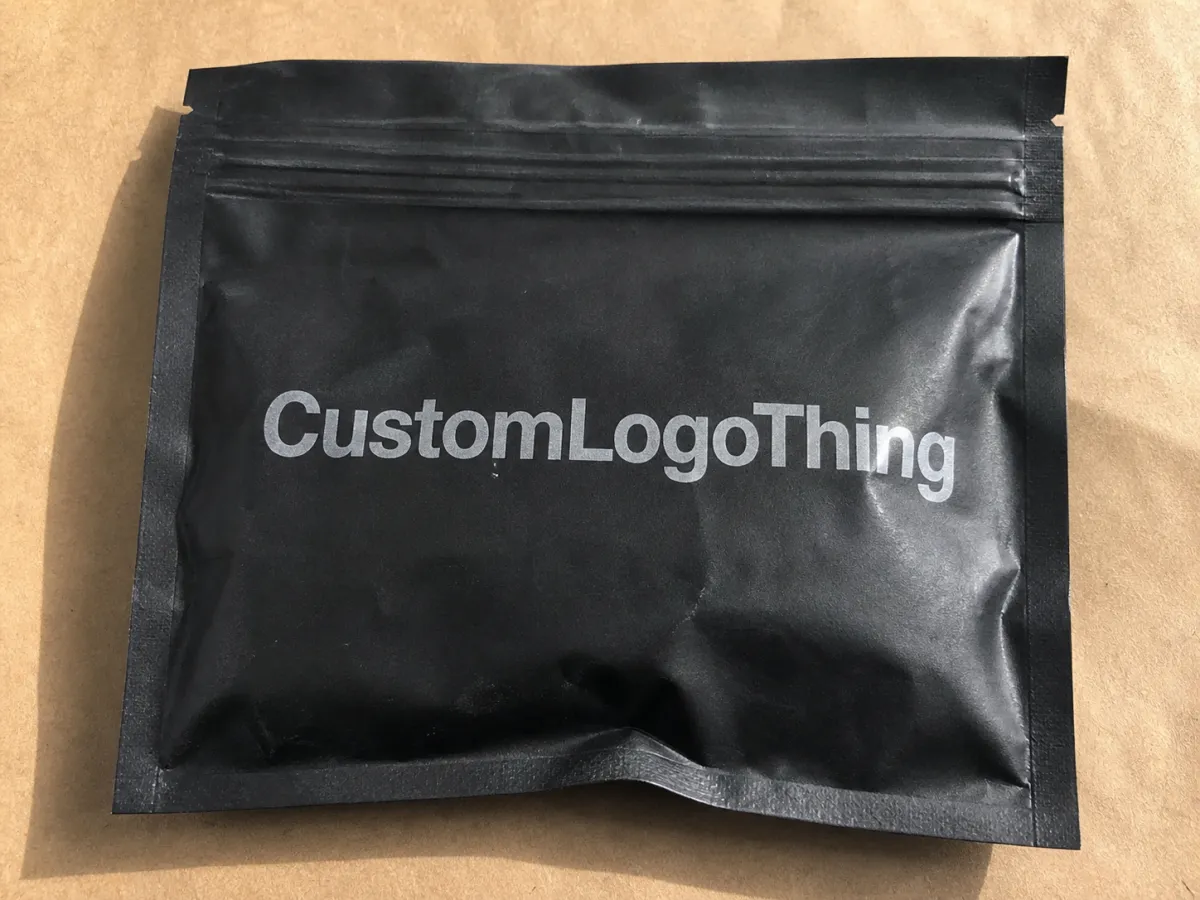
Gloss reflects light sharply. Matte diffuses it. That difference sounds small, but in retail it changes how a package reads from several feet away. Typography stays calmer, color fields look less frantic, and the panel often feels more refined. Coffee, tea, supplements, skincare, bath salts, pet treats, and wellness products use this effect for a reason: the package signals control before a shopper even touches it.
There is also a practical side. On a crowded shelf, glare can hide the details buyers use to compare products: flavor, dosage, ingredients, net weight, or a single benefit statement. Matte reduces that visual noise. A shopper can scan the pouch more easily at an angle or under uneven lighting, which is useful for brands that depend on clean hierarchy rather than oversized graphics.
The emotional read changes too. A matte surface tends to suggest restraint, care, and a quieter kind of confidence. Gloss can still work well for some brands, especially those that want bold color and high energy. But custom matte finish pouches often suit products that want to feel specialty, natural, or ingredient-led. The finish supports the story instead of competing with it.
There is a useful comparison here with photography. A lens hood blocks flare so the image stays readable. Matte packaging does something similar for print: it cuts glare so the message stays intact. That is one reason the format performs well in categories where buyers inspect copy closely, such as clean-label foods and premium supplements.
A matte pouch does not shout for attention. It earns it by reducing glare and letting the printed message carry the weight.
Channel matters as well. A pouch that looks elegant in a studio shot still has to survive a warehouse aisle, a cart, and a resale shelf. If the same package must work for retail and e-commerce, the finish needs to hold up in real light, not only on camera.
What Custom Matte Finish Pouches Are and How They Work
A matte pouch is a flexible package with a low-gloss exterior. That matte effect usually comes from the outer film, laminate, coating, or varnish, not from the pouch shape itself. The distinction matters. Finish changes appearance and feel, but it does not automatically improve barrier performance. Two pouches can both look matte and still behave very differently in moisture resistance, oxygen control, or puncture strength.
Most custom pouches use layered structures, and the visible surface is only one part of the system. A common build might pair PET, BOPP, or a paper-look outer layer with an inner sealant layer such as PE or CPP. Higher-barrier constructions can add aluminum foil or metallized film. The matte effect can come from a matte laminate, a matte overprint varnish, or a specialty film designed to soften reflection across the panel. Each route brings tradeoffs in cost, print sharpness, scuff resistance, and tactile feel.
That is why finish and function should be evaluated separately. A buyer may love the soft look of a matte pouch, but if the product is oxygen sensitive, aromatic, moisture prone, or light sensitive, the barrier build has to be chosen first. Coffee often needs freshness retention and, in some cases, a degassing valve. Powdered nutrition products may need a stronger moisture barrier and a dependable seal zone. Beauty formulas may care more about leak resistance and presentation than oxygen transmission, depending on the contents.
Matte finishes work across several pouch styles. Stand-up pouches are the most common because they display well on shelf. Flat pouches and pillow pouches fit samples, single-serve packs, and travel sizes. Side-gusset bags remain a strong choice for coffee and dry goods. Resealable packs with zippers can use matte outer surfaces, and the same is true for pouches with windows or tear notches. The structure should be built around the product first, then matched with the surface that fits the brand.
For food and personal-care brands, one more point deserves attention: surface treatment is not the same as regulatory suitability. If the pouch will contact food, the supplier should confirm food-contact compliance and, where relevant, migration data for the exact materials being used. Matte does not guarantee suitability on its own. The full material stack does the work.
Key Factors That Shape Look, Protection, and Feel
Material structure comes first. The outer finish can only do so much if the film stack beneath it is too thin, too soft, or poorly matched to the product. Puncture resistance, seal strength, stiffness, and barrier protection all come from the full build. A matte surface on a weak structure still behaves like a weak pouch. A well-chosen laminate, by contrast, can keep its low-gloss appearance while handling fill-line stress, freight compression, and shelf rotation.
Product sensitivity sits right behind it. Coffee needs aroma retention and, often, a barrier that protects flavor during storage. Dry foods may need moisture control. Supplements can be sensitive to odor and humidity. Beauty and wellness products may need leak resistance, chemical compatibility, or a premium tactile feel. A matte pouch in each category may share the same visual language, yet the internal structure can differ quite a bit. The discussion should center on shelf life, transit stress, and filling conditions rather than artwork alone.
Print behavior changes on matte film as well. Colors often read a little softer than they do on gloss, which can be beautiful for earthy palettes, muted brand systems, and minimalist layouts. The tradeoff is that dark inks, fine rules, and small legal copy need more care. Strong contrast helps. So does disciplined hierarchy. If the design depends on delicate type, the matte surface gives less margin for error under weak retail lighting.
Tactile feel matters more than many buying teams expect. Some matte pouches feel dry and velvety, while others feel closer to a standard laminate with reduced sheen. That texture can shape perceived value, but it also affects scuff visibility. A soft-touch style may feel upscale, yet it may show rub marks differently than a standard matte finish. If the pouch will travel through long distribution lanes, stack on pallets, or get handled frequently by store staff, ask for abrasion samples or test data before approving the build.
Operational details deserve the same attention. Zippers need to open and close cleanly. Tear notches need to cut predictably. Valves need to function without creating weak spots. Fill speed on the line can shift with film stiffness and sealing behavior. Packaging design and production planning meet real factory conditions here. The pouch should look good, yes, but it also has to run well and survive the route from sealing jaws to pantry shelf or vanity counter.
End-of-life questions matter too. Some matte finishes are compatible with recycling streams only in specific structures, and some are not. If sustainability claims are part of the sales story, ask for the exact substrate, coating method, and local recovery guidance rather than relying on a broad “eco-friendly” label. Packaging teams lose credibility quickly when the material story is vague.
For shipping and distribution testing, the ISTA testing standards are a useful benchmark for simulating transit stress. ASTM seal-strength methods are often used to check whether the package will hold under normal use. Those references do not choose the pouch for you, but they help define whether the structure is fit for purpose.
Custom Matte Finish Pouches: Cost, Pricing, and MOQ
Pricing for custom matte finish pouches usually comes down to a few familiar variables: pouch size, material structure, print complexity, quantity, matte treatment, and added features such as zippers, valves, hang holes, or windows. The more custom the build, the more likely the cost rises. That is not because matte is automatically expensive. It is because the finish may require specialty films, extra coating steps, tighter visual control, or lower production efficiency on some lines.
MOQ, or minimum order quantity, matters because setup costs have to be spread across the run. Plate or cylinder creation, color matching, material sourcing, proofing, and machine setup all create fixed costs. On a small order, those costs are divided among fewer pouches, which pushes unit pricing up. On a larger run, the same setup gets spread across more units, which usually lowers the per-piece price.
For a practical frame of reference, many buyers see simple matte flexible packaging land in a broad range such as $0.18 to $0.35 per pouch at around 5,000 units, depending on size and structure. A stand-up pouch with a zipper, stronger barrier layers, and more print coverage can move closer to $0.22 to $0.48 per unit or higher. Add a valve, a window, a specialty film, or unusually heavy decoration coverage, and the number can climb further. Those are directional ranges, not quotes, but they are more useful than vague “budget-friendly” language.
The fairest way to compare quotes is line by line. If one supplier quotes a 5x8 flat pouch with a standard matte laminate and another quotes a 6x9 stand-up pouch with zipper, valve, and barrier film, the unit prices are not comparable. Match the dimensions, film structure, matte finish method, closure style, artwork coverage, and shipping terms before deciding which number is actually better. Small changes in build can create large changes in both price and performance.
| Finish / Build | Visual Effect | Typical Cost Impact | Best Fit |
|---|---|---|---|
| Standard gloss laminate | Bright, reflective, high contrast | Usually lowest | Bold graphics, vibrant colors, mass retail impact |
| Matte laminate | Soft, low reflection, calmer shelf presence | Low to moderate increase | Coffee, supplements, wellness, clean branding |
| Soft-touch matte | Velvety feel, premium tactile finish | Moderate to higher increase | Beauty, premium food, gift-oriented retail packaging |
| Matte with window | Quiet exterior with product visibility | Moderate increase | Snacks, tea, specialty food, visual trust cues |
| Matte high-barrier structure | Same matte look with stronger protection | Higher increase | Coffee, sensitive powders, aroma or moisture control |
One pricing point deserves a blunt answer: finish alone should never be used to judge value. A cheaper matte pouch that scuffs easily, prints poorly, or fails seal checks is not actually cheaper. From a packaging buyer’s point of view, the better value is the pouch that protects the product, presents the brand well, and runs reliably on the line without costly rework.
If you are comparing matte pouches to other formats, it can help to review how the same spend could work in Custom Printed Boxes or rigid packaging, especially if the brand needs secondary packaging for retail display. The right answer is not always the lowest line item. It is the format that fits the product, the route to market, and the target shelf image.
Production Process, Timeline, and Lead Time
Most custom pouch jobs follow a familiar sequence. It starts with a spec review, where the supplier confirms product type, fill weight, target dimensions, barrier needs, closure style, and artwork coverage. Then comes artwork prep, which may include dieline alignment, color management, and regulatory copy placement. After that, the supplier issues a proof for approval. Only once the proof is confirmed do plate or cylinder creation, printing, lamination, pouch forming, inspection, and shipment move forward.
Lead time depends on how cleanly each step moves. If the artwork is ready, the structure is standard, and the material is already available, the project can move at a steady pace. If the job needs custom films, special matte treatment, a new valve layout, or copy revisions, the schedule stretches. A realistic planning window often looks like 12 to 18 business days after proof approval for simpler runs, with more complex jobs taking longer. Very large quantities, specialty materials, or busy production seasons can extend that further.
Sampling belongs in the schedule, not on the margins of it. Material swatches help the buyer understand texture and sheen level. Printed samples or pre-production proofs let the team check color, contrast, legibility, and how the matte finish reads under actual light. That step can prevent a lot of trouble later, especially if the brand is particular about black ink, metallic accents, or tiny regulatory text. A pouch can look right on a monitor and still feel too flat or too dark in hand.
Delays tend to come from predictable places. Late copy changes are common, especially when legal text is still under review. Dieline errors can cause misalignment. Missing claims, missing barcodes, or last-minute ingredient changes can stop production until the artwork is corrected. On the operations side, extra testing for seals, zippers, or valves can add time, particularly if the buyer wants proof that the package will handle shipping or repeated opening. These are normal issues, but they need to be planned for rather than discovered after the order is already underway.
Good suppliers usually ask precise questions because they are trying to avoid expensive assumptions. They want to know the pouch dimensions, the exact product fill, whether nitrogen flushing is involved, whether the pouch will be heat sealed, and whether the finish must stay matte after handling. If the supplier is not asking those questions, the buyer should ask them instead. A controlled production process is one of the clearest signs that the packaging partner understands manufacturing constraints, not only the artwork side of the job.
For brands that also need fiber-based secondary packaging, FSC-certified material may matter. The Forest Stewardship Council is a useful reference when the project includes paperboard cartons, inserts, or display components that sit alongside the pouch.
Common Mistakes When Ordering Matte Finish Pouches
The first mistake is choosing matte only because it looks premium on a screen. Screen renderings rarely show scuffs, handling marks, or the way a surface behaves under warehouse lighting. Real packages live in cartons, on pallets, in shipping lanes, and on shelves where fingerprints, rub marks, and pressure points can show up. If the matte surface is not suited to the expected handling environment, the package can start looking tired before it ever reaches the customer.
Another common miss is ignoring barrier needs. A matte finish does not make a pouch better at blocking oxygen, moisture, light, or aroma. Those properties come from the film structure. A product that is sensitive to humidity or oxidation needs the right laminate, not just the right look. Buyers often focus on visual appeal and then discover later that the seal area, zipper, or film barrier does not match the product’s shelf-life requirements. That creates avoidable waste and often a second round of packaging spend.
Quote comparisons get messy when the specs are not aligned. One quote might include a matte laminate and zipper, while another includes gloss with no closure and a thinner film. Those numbers are not apples-to-apples, and they can steer a team toward the wrong supplier or the wrong build. If the goal is true value comparison, require matching dimensions, material stack, finish method, print colors, closures, and testing expectations. That is the only way to compare real unit cost instead of rough estimates.
Artwork errors are another place where matte can expose weak design choices. Thin fonts, low-contrast logos, and overly subtle gradients may look acceptable on a glossy render but can soften too much on matte film. That matters when the pouch has to communicate ingredients, benefits, or regulatory copy at a glance. A low-gloss surface rewards clear hierarchy. Stronger typography, cleaner spacing, and bolder contrast usually outperform delicate graphics when the goal is quick shelf reading.
It is also easy to forget that a package is a system. If the pouch is well printed but the zipper is hard to use, the value drops. If the barrier is correct but the seal area is inconsistent, shelf life can suffer. If the pouch size is awkward for the fill weight, the product can look underfilled or unstable on shelf. The finish alone cannot fix poor fit. Good product packaging works because the structure, decoration, and user experience all support one another.
That is why many experienced buyers ask for a sample evaluation checklist before approving an order. They want to check surface feel, seal quality, opening force, closure performance, legibility, and shelf presentation in the same review. That one step can prevent a lot of expensive surprises later.
Expert Tips and Next Steps for Custom Matte Finish Pouches
The best matte pouch decisions begin with the brand story. If the brand should feel natural, premium, understated, or tactile, matte is often a strong fit. If the brand depends on sparkle, hard contrast, or high-energy visual impact, gloss may be the better choice. Neither finish wins by default. The right answer depends on the product, the audience, and the shelf environment.
Ask for samples or proofs under the same lighting conditions the package will face in the real world. That means warehouse fluorescents, retail LEDs, or the lighting used for e-commerce photography. A pouch can change character more than people expect. Matte may look elegant in one setting and a little flat in another, so it is worth checking the finish where the product will actually live. That habit saves costly surprises and usually improves package branding decisions.
Typography matters more on low-gloss surfaces than many teams expect. Slightly heavier type weights, higher contrast, and a cleaner layout often help the design stay readable. If the pouch has a lot of information to carry, the hierarchy should stay disciplined. Put the most important statement where the eye lands first, and do not rely on delicate text or low-contrast color combinations to carry key selling points.
From a production standpoint, a good checklist keeps the project grounded. Confirm the pouch dimensions, the target quantity, the closure style, the barrier goals, whether a window is needed, whether a valve is needed, and how quickly the job has to ship. If the product is sensitive, decide whether the structure needs extra protection against oxygen, moisture, aroma loss, or light. That may sound basic, but it is exactly where many projects either stay clean or drift into rework.
Here is a practical approval sequence that usually helps:
- Confirm fill weight, product sensitivity, and shelf-life target.
- Select the pouch style and closure that fit the product.
- Choose the matte method and the needed barrier structure.
- Review artwork on the correct dieline with final copy.
- Inspect a sample for color, feel, legibility, and closure performance.
- Approve production only after those points are clear.
For brands building a wider packaging system, it helps to think beyond the pouch itself. A matte flexible pouch may pair well with Custom Printed Boxes, display cartons, or shipping-ready packaging that extends the same look across channels. That is often where the brand story gets stronger, because the customer sees one consistent visual language from shipping case to shelf.
If you are narrowing down options, the smartest next move is to ask for a spec sheet that spells out the material stack, finish method, quantity, closure, lead time, and testing plan in plain language. Compare that against the product’s real needs rather than the lowest number on the page. For many brands, custom matte finish pouches are the point where appearance, protection, and manufacturability meet, which is exactly why they continue to work across food, beauty, wellness, and specialty retail.
FAQ
What are custom matte finish pouches, and how are they different from gloss pouches?
They are flexible pouches with a low-gloss exterior that diffuses light instead of reflecting it sharply. The main difference is visual and tactile; barrier performance depends on the film structure, not the matte look alone. Matte usually feels calmer and more premium, while gloss often looks brighter and more reflective under retail lighting.
Do custom matte finish pouches usually cost more than standard pouches?
Often yes, because specialty films, coatings, or extra finishing steps can raise material and production costs. The final price also depends on size, quantity, print colors, and add-ons like zippers, valves, or windows. Ask for quotes with identical specs so you can compare true unit cost instead of estimates.
How long does it take to produce custom matte finish pouches?
Lead time depends on artwork approval, tooling needs, material availability, and the complexity of the structure. Simple projects with ready artwork and stocked materials move faster than jobs that need custom films or extra proofing. Build in time for sample review, especially if you want to check color, legibility, and the feel of the matte surface.
Which products work best in custom matte finish pouches?
Coffee, tea, snacks, supplements, pet treats, and beauty products often benefit from the softer premium look. Products that need glare reduction, stronger shelf presence, or a more natural brand feel are good candidates. If your brand relies on high-shine visual impact, a matte finish may not be the strongest fit.
Can custom matte finish pouches include zippers, windows, or degassing valves?
Yes, many matte pouches can include these features if the structure is designed for them from the start. Windows can create a strong contrast against the matte surface, but they must be planned carefully to protect product visibility and barrier needs. Degassing valves are common for coffee and require a pouch structure that supports freshness and controlled release.

