Buyer Fit Snapshot
| Best fit | Custom Mushroom Packaging Inserts for Sustainable Brands projects where brand print, material claims, artwork control, MOQ, and repeat-order consistency need to be specified before quoting. |
|---|---|
| Quote inputs | Share finished size, material target, print colors, finish, packing count, annual reorder estimate, ship-to region, and any compliance wording. |
| Proofing check | Approve dieline scale, logo placement, barcode or warning zones, color tolerance, closure strength, and carton packing before bulk production. |
| Main risk | Vague material claims, crowded artwork, missing packing details, or unclear freight terms can make a low unit price expensive after revisions. |
Fast answer: Custom Mushroom Packaging Inserts for Sustainable Brands should be specified like a repeatable production item. The safest quote records material, print method, finish, artwork proof, packing count, and reorder notes in one written spec.
Production checks before approval
Compare the actual filled-product size with the drawing, then confirm tolerance on folds, seals, hang holes, label areas, and retail display edges. Reserve space for logos, QR codes, warning copy, and material claims before decorative graphics fill the panel.
Quote comparison points
Review material grade, print process, finish, sampling route, tooling charges, carton quantity, and freight assumptions side by side. A quote is only useful when the supplier can repeat the same color, closure quality, and packing count on the next order.
Custom mushroom packaging inserts are getting attention for a simple reason: they can replace a lot of the foam brands have relied on for years while still giving fragile products the corner support, shock absorption, and clean presentation they need in transit. Cosmetics, candles, glass bottles, ceramics, and small electronics all benefit from that combination. The insert has to protect the product and support the brand story. If it looks like an afterthought, the box already lost part of the battle.
For branded product teams, the real question is not whether mushroom-based packaging sounds sustainable. The question is whether custom mushroom packaging inserts can be sized, priced, and produced in a way that survives actual shipping conditions. In many cases, yes. The better fit depends on product weight, moisture exposure, shipping distance, and how tightly the item needs to sit inside the carton. Packaging work lives or dies on those details, not on slogans.
If the insert protects the wrong area, the whole package is still vulnerable. The right design starts with the product's real impact points, not the outer box size.
Why Custom Mushroom Packaging Inserts Can Replace Foam
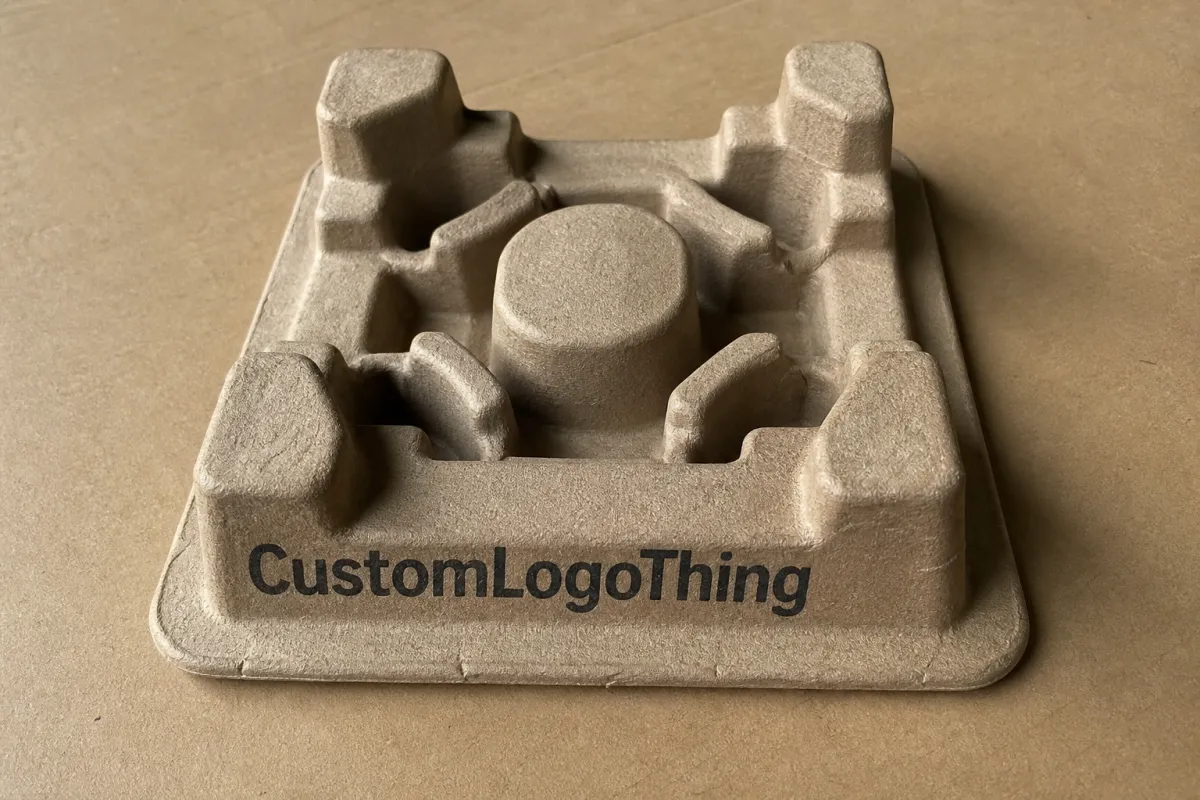
Picture a heavy glass serum bottle or a ceramic mug set that would normally ship in EPS foam. Foam has been the easy answer for a long time. It is light, it cushions well, and it is simple to spec. Brands still look at custom mushroom packaging inserts because they want a formed structure that supports sustainability goals and still protects vulnerable edges, shoulders, and corners during handling.
The part that surprises buyers is this: mushroom-based inserts are not loose filler or soft padding. They are rigid, engineered components grown into a shape that cradles the product at specific points. That makes them useful for premium products where presentation matters as much as shipping performance. Open a box and see a formed insert instead of loose void fill or crumbling foam, and the package suddenly feels deliberate.
Still, mushroom inserts are not a drop-in replacement for every foam application. Dense products, awkward shapes, and moisture-sensitive items may need something else, especially in long-haul shipping or humid warehousing. Brands usually choose this material when they want cleaner package branding, fewer plastic-based components, and a better end-of-life story without giving up protection for glass, candles, skincare jars, small parts, or gift kits.
The Best Use Cases usually share the same trait: stable geometry. A bottle with a flat base, a candle jar with a defined shoulder, or a molded cosmetic container can sit securely inside a formed cavity. An item with protruding parts or unstable balance is a harder fit. If the product can lock into place without rattling, the insert can do a lot of the work foam used to handle, while fitting more naturally into branded packaging programs and higher-end retail packaging.
For brands comparing options, it helps to think in terms of risk zones. If the product is most likely to fail at the base, neck, or corner, the insert should support those areas directly. That is why many teams pair the insert with Custom Packaging Products built around the item instead of forcing the item into a standard carton and hoping the padding saves it.
A practical example: a candle brand shipping in winter may care more about neck support and lid retention than about side cushioning. A skincare brand with a pump bottle may care about the nozzle staying clear of pressure points. A ceramic gift set may need separation between items as much as outside protection. Good insert design starts with those failure points, not with a catalog shape someone already has on a shelf.
How Custom Mushroom Packaging Inserts Are Made to Fit
Mycelium is the root-like structure of fungi, and in packaging it acts like a natural binder. It grows through agricultural byproducts such as hemp hurd, corn stalks, or other plant fibers, locking the material into a lightweight but surprisingly sturdy composite. Once formed, it can be shaped into an insert that supports the product in specific ways. That is exactly why custom mushroom packaging inserts have become such a useful option.
The process starts with a mold. The prepared blend is packed into the mold cavity, and the mycelium grows through the substrate until the shape is filled. After that, the part is heat-dried or cured to stop growth and stabilize the final piece. The result is a rigid insert with the form locked in place, ready for a shipping carton or a presentation box.
Fit depends on more than outside dimensions. Designers look at clearances, draft angles, support points, and how much retention is needed to keep the item from rattling. If a bottle needs 1.5 to 3 mm of clearance around the body, that tolerance has to be planned early so the product loads easily without drifting during transit. If a lid or pump protrudes above the top line, the cavity usually needs relief or a different support strategy.
Compared with molded pulp, mushroom material has a different feel and a different visual language. Molded pulp is more familiar and can cost less at scale. Mushroom inserts bring a natural, premium texture that fits a sustainability narrative well. EPS foam still wins on very low cost in some cases, and corrugated supports can be faster for simple blocking and bracing, but mushroom structures often work better when shape, presentation, and end-of-life handling need to line up.
For teams that care about brand experience inside the box, that molded form can do a lot. It can make the interior feel as considered as the exterior, which matters when the outer carton is a custom printed box solution and the insert needs to match that same level of care.
For sustainability language and shipping performance, use sources that stay close to standards rather than marketing copy. The ISTA testing framework helps teams check whether a package can survive handling, vibration, and drops. For disposal claims, supplier documentation and local waste rules matter more than a broad promise on a spec sheet.
Key Design Factors for Protection, Fit, and Sustainability
The product should drive the design, not the carton. Measure the item with its closures, caps, handles, nozzles, accessories, and any other protrusions that could be damaged in a drop. A bottle that measures 5.9 inches tall on paper may need a different insert than one that measures 6.1 inches if the cap profile changes the load path. That tiny difference can decide whether the load lands on the neck, the shoulder, or a safer support ring.
Shipping behavior matters just as much. A direct-to-consumer parcel shipped across the country will see different handling than a palletized retail replenishment order. Temperature swings, warehouse stacking, humidity, and conveyor vibration all affect wall thickness and surface contact. A design that works for a local delivery zone may still need more material or a deeper cavity for a longer transit lane.
The outer box shapes the insert too. A mailer, a folding carton, and a rigid set-up box all behave differently. In a mailer, the insert may need to do more structural work because the outer carton is thinner and more flexible. In a rigid box, the insert can focus more on presentation and snug retention. In a folding carton, assembly speed matters because the best insert in the world becomes a problem if pack-out takes too long.
On the sustainability side, buyers should ask what the material spec actually supports. Does the design reduce plastic content? Can it fit into a compostability claim only under industrial conditions, or is home compost more honest? Is the supporting carton FSC-certified, and does the overall system reduce total packaging weight or just move material around? Good sustainability work stays specific. It should reduce waste without turning into decorative guilt.
The strongest specs usually balance protection and material use. A thicker wall is not automatically better. If the insert is too dense, the product can be harder to load, and the extra material may not add meaningful protection. If it is too light, the item may shift under vibration. The right zone protects the risk points while keeping assembly practical for production.
Moisture deserves special attention. Mushroom-based structures are naturally derived, which is part of the appeal, but that also means they should not be treated like sealed plastic. A humid warehouse, an overnight shipment in a wet climate, or a retail back room with poor airflow can all change how the insert behaves. If the product will live in that environment, ask for real performance data instead of assuming the insert will act the same in every setting.
| Option | Typical Strength | Presentation | Common Cost Range | Best Use Case |
|---|---|---|---|---|
| Custom mushroom insert | Good corner and cavity support, rigid form, shaped retention | Premium, natural, highly branded | $0.95-$3.50 per unit depending on volume and geometry | Fragile branded packaging, gift sets, DTC shipping |
| EPS foam | Very strong cushioning and low weight | Functional, less premium | $0.40-$1.20 per unit at scale | Cost-sensitive protection where appearance is secondary |
| Molded pulp | Solid support with decent compression resistance | Natural and familiar | $0.55-$1.80 per unit | Retail packaging, shipping trays, general protective use |
| Corrugated insert | Good for blocking, bracing, and separation | Plain but printable | $0.20-$0.90 per unit | Light to medium products, fast assembly, lower budgets |
The table is a guide, not a verdict. Part geometry, density, and order size can move numbers a lot. Even so, it gives buyers a clean way to compare packaging design choices before they commit to tooling or prototype work.
Process and Timeline for Custom Mushroom Packaging Inserts
A custom project usually starts with discovery. The supplier needs product dimensions, weight, packaging format, shipping method, and target annual volume. Good teams also share product photos, close-ups of fragile areas, and whether the item is packed manually or on a line. That early handoff saves time because the engineer can see what the drawing misses.
From there, the structural concept gets built. The first version is rarely the final version, and that is normal. The first sample tells you whether the cavity depth is right, whether the product loads cleanly, whether the item shifts, and whether the insert is too tight around any protrusion. Fixing those issues before production is a lot cheaper than fixing them after a full run has been scheduled.
Timeline depends on complexity. A simple geometry with a clear cavity may move from brief to prototype in roughly 2 to 4 weeks. A more involved shape with multiple fit revisions may take longer. Production after approval can often land in a 3 to 6 week window, but that depends on mold complexity, plant capacity, and order volume. If the design needs testing to meet internal or third-party requirements, that time has to be added too.
Approval cycles hide delays. If the team waits to measure the final production bottle until after the first sample arrives, another revision round may follow. If the product has a pump, cap, or label variation that changes the fit, the design may need a second adjustment before sign-off. The sooner the buyer locks the actual product spec, the faster the project moves.
Think in windows rather than in one hard date. A good supplier should explain what happens at each stage: sampling, fit review, revision, final cure, packing, and freight. That makes lead time feel less like a guess and more like a controlled process.
For teams building a broader packaging system, this is the point where the insert should be checked against the outer carton and any Custom Printed Boxes in the line. A beautiful insert can still fail the project if the box closes poorly or if the pack-out sequence slows the warehouse team to a crawl.
Drop and transit validation are worth the effort. Many buyers use ISTA 3A for parcel simulation or ASTM D4169 for distribution cycle thinking, then confirm the result with their own pack-out conditions. That kind of test discipline turns a nice sample into a dependable shipping system.
Cost, Pricing, and Quote Variables for Mushroom Inserts
Pricing for custom mushroom inserts comes from several factors at once. Size is obvious, but shape matters just as much. A simple tray with a single cavity is easier to make than an insert with multiple steps, cutouts, and retention lips. Wall thickness, density, and the amount of product-specific contouring all affect the quote.
Volume has a major effect on unit cost. Small runs tend to carry more overhead because setup, mold preparation, and sampling work have to be recovered across fewer pieces. Larger runs spread those costs out, so the per-unit price often drops once the order reaches a few thousand units. A buyer comparing 500 units to 5,000 units should expect a very different price profile.
To make the economics clearer, here is a practical way to think about it. A low-volume custom project might sit in the $1.50-$3.50 per unit range depending on complexity, while a larger production run can move closer to the lower end of that range or below it if the design is straightforward. Prototype or tooling changes can add a few hundred dollars or several thousand dollars depending on whether the supplier needs a simple adjustment or a fresh mold configuration. Those costs matter because they affect the first order more than the repeat order.
Here are the most common pricing variables buyers should ask about:
- Insert dimensions - larger parts use more material and more mold space.
- Geometry - deep cavities, raised lips, and multiple levels add complexity.
- Density - firmer structures usually need more material or tighter processing control.
- Tooling - custom molds, revisions, and setup time can affect startup cost.
- Volume - larger orders usually lower the per-unit price.
- Freight and storage - bulky inserts can be expensive to move and hold.
It also helps to compare the insert price against the cost of doing nothing. If a product has a meaningful breakage rate, even a slightly higher insert price can pay back quickly through lower returns, fewer replacements, and less customer service time. That matters most with high-margin candles, fragrance sets, ceramics, and giftable products where one cracked unit can erase the savings from a cheaper insert.
Quote review should include sample charges, freight, and any testing costs. A low line-item price can look great until the buyer adds prototype iterations, rush freight, or storage because the boxes arrived before the launch was ready. The right comparison is total packaging cost, not just the piece price.
If a supplier can explain how the quote changes with order volume, density, and cavity count, that tells you more than the number alone. Clear pricing language is a good sign that the project will stay organized after the order is placed.
Common Mistakes When Specifying Mushroom Packaging Inserts
The biggest mistake is designing around the outer carton first. That sounds efficient. It is not. The product, the closures, and the shock zones matter more. A box can be the correct size and still fail in transit if the item can move inside the insert or if the load lands on a fragile cap or edge.
Another common problem is treating one insert as if it can serve every SKU in a product family. A line of bottles may look similar on a shelf, yet a 10 mm change in neck height or shoulder angle can force a different cavity depth. If the shape is too generic, the package may fit none of the products well. That defeats the point of custom mushroom packaging inserts in the first place.
Teams also get into trouble when they skip real-world testing. A sample that looks perfect on a desk can still fail under vibration or humidity. Drop testing, compression checks, and transit simulation reveal problems that photos do not show. For heavier items, even the way the insert interacts with the box wall can matter because impact energy does not always go where people expect it to.
Another trap is vague sustainability language. If the insert is compostable under certain conditions, say so clearly. If it requires industrial composting, say that too. Brands should verify whether the material mix matches the claim they want to make before it reaches the website, the carton, or the sales sheet. The EPA has useful guidance on waste and materials handling at epa.gov, and that source is worth checking before marketing teams write copy that goes further than the certification does.
Finally, some teams over-spec the insert. They add thickness, extra walls, or large contact surfaces because they want to be safe, but the result is harder packing, more material use, and sometimes no meaningful protection gain. A better design protects the right points with the least amount of material needed to do the job.
That balance matters for both cost and brand experience. An insert that feels overbuilt can make a premium retail package look bulky, while an underbuilt insert can make the whole shipment feel careless. The sweet spot usually sits in the middle, where fit, protection, and presentation all work together.
Expert Tips for Better Performance and Faster Approvals
Start with the actual product in hand. Photos and drawings help, but a physical sample reveals little things that get missed all the time: label overhang, mold lines, uneven glass thickness, pump height, or the slight taper that changes how the item sits inside the cavity. In packaging design, those details are not minor. They are usually the difference between a fast approval and another revision.
Define acceptance criteria early. How much movement is acceptable? Is a light rattle a fail, or only visible shifting? Is a scuff on an inner label acceptable, or must the item arrive untouched? If the team agrees on those points before sampling starts, judging whether the insert is ready for production gets much easier.
Leave room for loading and unloading. A fit that is too tight can slow the pack line and create stress at insertion. That matters on manual and semi-automated operations because the packer should not have to wrestle the product into place. A cavity that is only a few millimeters larger, with the right support under the load-bearing points, is often better than a very tight fit that becomes a production headache.
Cross-functional review saves time too. Operations sees the assembly burden. Sustainability checks material goals and end-of-life claims. Marketing cares about package branding and unboxing feel. If those teams review the concept together, the final insert is more likely to work as a complete system instead of solving only one problem.
Here is a practical checklist that often speeds approval:
- Measure product, closures, and accessories from the finished sample.
- Share target shipping method and expected transit zone.
- Identify fragile points and no-load areas clearly.
- Set a drop-test or ship-test standard before sampling.
- Confirm how the insert will pair with the outer carton and closure style.
For teams building a larger packaging program, it can also help to view the insert as part of the selling system, not just the shipping system. A well-formed insert can support retail packaging displays, gift sets, and e-commerce presentation at the same time. That is one reason buyers often review mushroom inserts alongside Custom Packaging Products and other structural options instead of treating them as a one-off decision.
One more practical point: confirm the documentation. Material data sheets, compostability claims, and transit guidance should be easy to review. A supplier who can explain the structure in plain language usually makes the approval process smoother because the buyer does not have to guess what the insert is doing.
And if the supplier cannot explain the failure modes, keep moving. A good packaging partner should be able to tell you where the insert is strong, where it needs support, and where the design is asking too much of the material. That kind of honesty saves money. More importantly, it saves launches.
Next Steps to Order the Right Custom Mushroom Packaging Inserts
If you are ready to source custom mushroom packaging inserts, gather the information that helps a supplier quote the job accurately. Product dimensions, weight, clear photos, annual volume, shipping method, and any breakage history will make the first round of pricing more useful. If the product has multiple versions, list them clearly so the team can see whether one platform can support more than one SKU.
Ask for a prototype or sample run and test it the way the product will actually ship. Use the same box, the same packing team, the same sealing method, and the same transit assumptions you plan to use in production. A sample can look excellent on a workbench and still behave differently once it is packed at line speed or shipped through a real carrier network.
Compare the insert against at least one other option. That comparison should include protection, cost, packing speed, and sustainability claims, not just appearance. Some brands choose mushroom-based packaging because they want a stronger natural story. Others stay with molded pulp or corrugated because the shape is simpler and the economics are better. The right answer depends on the product, the market, and the shipment profile.
If you are building a wider packaging program, this is also a good time to review the box structure, inserts, and print treatment together. A strong package branding system works best when the inside and outside match in tone and function. That can mean a cleaner unboxing moment, fewer damages, and a better customer impression without unnecessary material use.
The shortest path to a good result is not complicated. Define the product, validate the fit, test the package, confirm the claims, and then place the order. Skip any of those steps and the project usually pays for it later.
For teams that need one practical takeaway, use this: send the supplier the finished product, not just the CAD file. Include the cap, label, pump, or accessory. Those details are what change fit, shock behavior, and pack-out speed. That one habit eliminates a lot of avoidable revisions.
Frequently Asked Questions
What are custom mushroom packaging inserts made from?
They are typically made from mycelium combined with agricultural waste such as hemp hurd or similar plant fibers. The material grows inside a mold, forming a rigid protective shape, and then it is heat-dried to stop growth and stabilize the structure. The finished part can be tailored to product cavities, edges, corners, and other shock points.
How long do custom mushroom packaging inserts take to produce?
Timeline depends on the complexity of the design, how many sample rounds are needed, and whether the project needs testing before approval. Simple shapes can move faster, while inserts with tight tolerances or multiple cavities usually take longer. Approval timing matters a lot because fit changes are easier to make before production starts.
Are custom mushroom packaging inserts compostable?
Many are designed to be compostable, but the correct disposal route depends on the exact material blend and local rules. Some products may be suitable for home compost, while others are better aligned with industrial composting or another disposal path. Brands should verify supplier documentation before making compostable claims in marketing or on-pack language.
Do custom mushroom packaging inserts cost more than foam?
At low volumes, the unit cost can be higher than standard foam inserts because the process is more specialized and the setup work is spread across fewer pieces. The better comparison is total packaging cost, including breakage reduction, customer perception, labor, and return risk. For premium or fragile products, the overall economics can compare favorably even if the upfront piece price is higher.
Which products work best with custom mushroom packaging inserts?
They are a strong fit for fragile, premium, and visually branded products where protection and presentation both matter. Common uses include glass bottles, candles, ceramics, cosmetics, gifting kits, and some small electronics. They work especially well when the product shape is stable enough to support a well-defined molded cavity.
Can they handle humid or cold shipping environments?
Sometimes, but not automatically. Mushroom-based inserts should be tested in the same conditions the product will face, especially if shipments move through damp warehouses, cold trucks, or long parcel routes. If moisture exposure is part of the profile, ask for test data and confirm whether the package needs additional protection from the outer carton or wrap.
For brands that want protection, cleaner presentation, and a more thoughtful sustainability story in one package, custom mushroom packaging inserts are worth serious consideration. The real work is in the details: the fit, the testing, the material claim, and the pack-out process. Get those right, and the insert does its job without drama. Get them wrong, and the packaging looks nice right up until the first damaged shipment.

