Custom Name Badge Stickers: Materials, Pricing, Turnaround, and Ordering Details That Actually Matter
Custom name badge stickers solve a boring problem with a useful tool: they identify people quickly without pins, clips, plastic sleeves, or a registration desk meltdown. For conferences, retail onboarding, school events, volunteer check-ins, pop-ups, and training sessions, sticker badges keep the process moving.
The value is not decoration. It is speed, readability, and fewer loose components to manage. Anyone who has watched a check-in line stall because badge inserts were sorted wrong already knows the appeal.
A good badge sticker should do three things well. It should stay on for the intended wear time. It should come off without drama. And it should let another person read the name at normal conversation distance. Miss any of those, and the badge becomes background noise with adhesive.
What custom name badge stickers are, and why they outperform pins
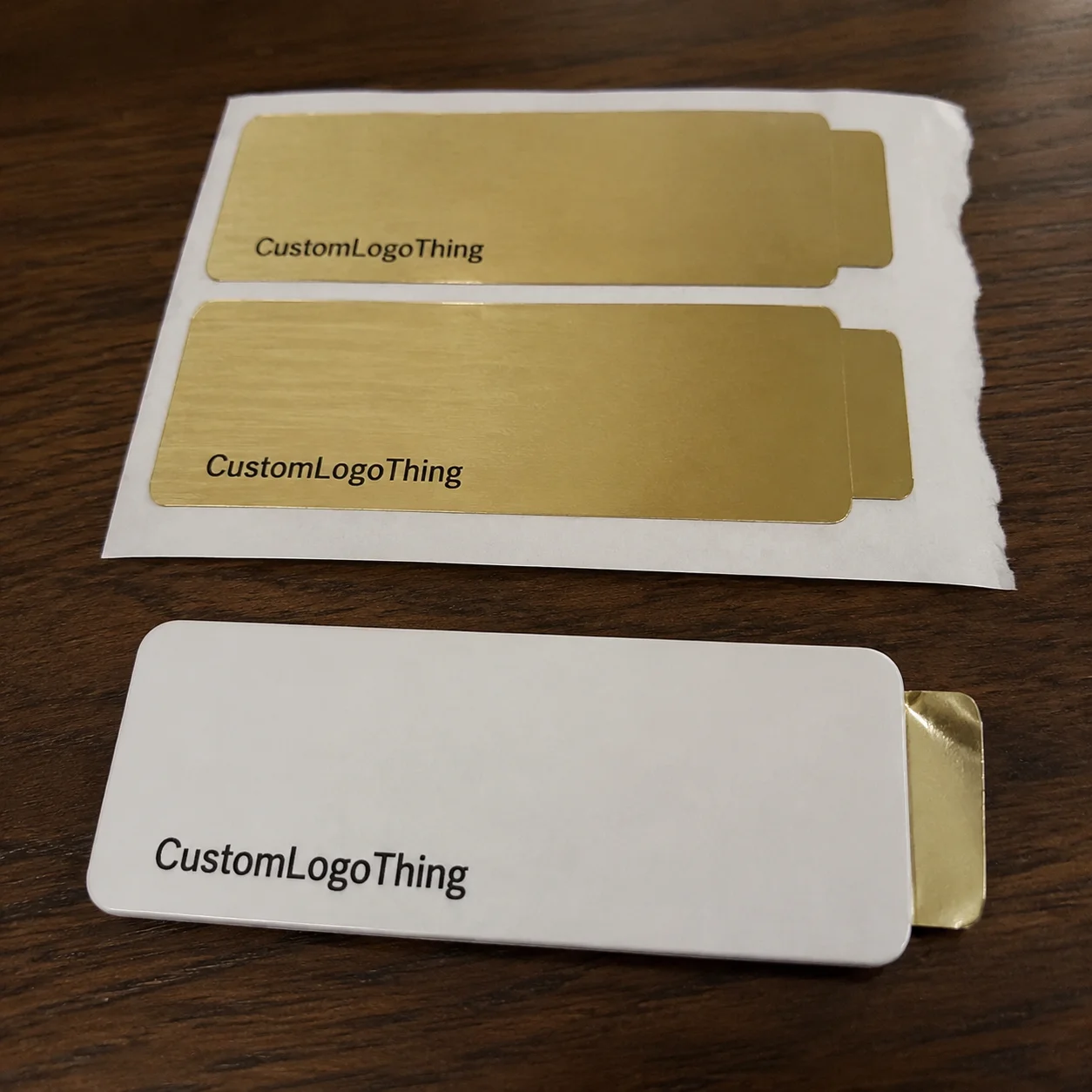
Custom name badge stickers are adhesive labels printed with a person’s name, title, company, department, event name, logo, QR code, or other short identification copy. Some are made for one-time use. Others use removable adhesive that can hold for a workday and lift cleanly from most fabrics later.
That flexibility is the main advantage. Traditional badges need hardware. Hardware gets lost, bent, cracked, forgotten, or packed into the wrong box. Stickers remove the accessory pile. No clips. No badge reels. No insert sleeves. No frantic search for the box marked “lanyards” five minutes before doors open.
They work best where identification is temporary but still needs to look organized: trade shows, front-desk visitor programs, product demos, school orientations, tours, internal meetings, seasonal retail staffing, hiring events, and volunteer shifts. If people only need the badge for a few hours or a few days, stickers are usually enough.
If the same person wears the same badge for months, a reusable badge system may be the better choice. That is not a failure of stickers. It is just the wrong use case. Disposable adhesive badges are built for speed and short-term clarity, not long-term credential management.
From a packaging buyer’s point of view, the logic is familiar. Good branded packaging reduces unnecessary parts, keeps the message clear, and makes distribution easier at scale. A name badge sticker is tiny, but it still needs the same discipline used in packaging design or package branding: clear hierarchy, readable type, and fast recognition.
“The best badge is the one people can read in a glance and wear without thinking about it.”
That sounds obvious because it is. Obvious still gets ignored. A clean sticker badge often improves the guest experience more than a fancier system that slows down registration.
Badge stickers also pair well with related event and packaging materials. A badge, a printed check-in card, a product sample label, and a branded handout bag can all follow the same visual system. If consistency matters, connect the badge layout with items such as Custom Labels & Tags and other Custom Packaging Products early instead of treating it as an afterthought.
How the production process and turnaround work
The standard workflow is straightforward: artwork upload, file review, proof setup, proof approval, printing, cutting, finishing, packing, and shipping. For variable-data orders, the name list is usually merged after the design proof is approved. That order matters. Approving the layout first prevents the same mistake from repeating across 800 names. Fun, right?
The proof stage is where buyers should slow down. Confirm spelling rules, title formatting, logo placement, text alignment, safe margins, color contrast, and whether long names should shrink, wrap, or be manually adjusted. A strong proof catches problems while they are cheap. A weak proof turns into a reprint conversation nobody enjoys.
File quality affects speed. A vector logo is easier to print cleanly than a low-resolution screenshot pulled from a slide deck. Spreadsheets should have one record per row, with columns clearly labeled for first name, last name, title, company, department, language, or any other variable field. Merged cells, hidden columns, and mystery abbreviations slow production down.
Material and adhesive choices also influence turnaround. A simple paper label with standard pressure-sensitive adhesive is usually faster to source and print than a polyester badge with a removable adhesive and matte laminate. Digital printing is common for short runs and personalized names. Flexographic or other high-volume methods can make sense for larger static designs, but setup requirements are different.
Typical production for simple orders often runs 5 to 10 business days from proof approval. More customized work can take 10 to 15 business days or longer depending on quantity, stock availability, finishing, variable data, sorting requirements, and shipping distance. Rush options exist, but they are not magic. They work best when artwork is final, the name list is clean, and the order uses available materials.
The fastest orders are usually not the fanciest. They are the best organized. A clean logo file, a tidy spreadsheet, a clear size, and a firm event date save more time than a rush fee slapped onto a messy order.
If your event also uses packaging at registration or point of sale, think about the whole system together. A printed insert, handout bag, sample label, and badge sticker can share type, color, and logo placement. Small consistency reads as professional. Random design scraps read like everyone ordered their own thing. Because they probably did.
Cost, pricing, and MOQ factors that change the quote
Pricing depends on more than quantity. Size, shape, stock, adhesive, print coverage, finish, variable data, sorting, proofing, and shipping all affect the final quote. As a broad market pattern, simple paper name badge stickers at moderate quantities may land around $0.08 to $0.20 per unit. Waterproof, removable, or premium film builds often fall closer to $0.18 to $0.45 per unit, depending on the run size and print requirements.
Those ranges are not universal. They are planning numbers, not a supplier promise. A small rush order with personalized names and alphabetized packing can cost far more per piece than a large static order printed on sheets.
The minimum order quantity, or MOQ, exists because setup, materials, press time, and finishing labor have to be covered. Smaller batches often cost more per unit because fixed work is spread over fewer stickers. A 250-piece run may look expensive next to a 5,000-piece run even when the design itself is simple.
Here is how common options compare:
| Option | Typical Use | Relative Cost | Notes |
|---|---|---|---|
| Paper adhesive badge stickers | Short events, internal meetings, simple check-ins | Lowest | Good for short wear time; weaker around moisture, sweat, and rough handling |
| Removable vinyl or polyester | Longer events, retail teams, mixed indoor/outdoor use | Medium | Better durability and cleaner removal from many apparel surfaces |
| Water-resistant premium stickers | Humidity, heat, transport, repeated handling | Higher | Useful for demanding use; unnecessary for many short indoor events |
| Variable-data personalized runs | Events with many unique names, titles, departments, or languages | Medium to higher | Spreadsheet accuracy matters more than design complexity |
Look past the headline unit price. Ask whether proofing is included, whether shipping is separate, whether variable-data setup has a fee, and how reprints are handled if the print does not match the approved proof. Reprint policy matters. So does packing.
Sorted packing can be worth paying for. Alphabetized sheets, department bundles, or separate packs for staff and guests save real labor at check-in. A cheap badge order that arrives as one unsorted brick of names is not cheap anymore once three people spend the morning untangling it.
One practical cost strategy: if names change often, compare a fully personalized sticker against a reusable base design with blank fields or printed inserts. A fully printed personalized badge looks cleaner, but it may not be the lowest total cost for teams with frequent turnover or late registrations.
Also confirm whether the job will be printed on sheets or rolls. Sheets are usually easier for front-desk distribution. Rolls can be better for automated application, high-volume packing, or warehouse workflows. That detail sounds minor until the registration line starts moving and someone is trying to peel individual labels from a format nobody planned for.
Choosing the right size, material, and adhesive
Start with the use case. Indoor conference registration does not need the same construction as a retail floor team moving between stockroom, sales floor, and outdoor pickup. Food service, outdoor staffing, healthcare-adjacent visitor programs, and school events each bring different wear conditions.
Size should solve readability first. A badge sticker must be large enough for a name and role to read at normal conversation distance, but not so large that it feels awkward on clothing. A common range is around 3" x 2" for standard use. Larger formats can help with long names, logos, pronouns, department labels, multi-language layouts, or QR codes.
If the sticker is going on packaging instead of apparel, the design can be denser because the viewing distance changes. A box label can carry more detail than a chest-worn badge. Different surface, different job.
Material choice affects cost, appearance, and wear. Paper stock is usually best for low-cost, short-term indoor use. Vinyl handles more moisture and handling. Polyester offers better tear resistance and print stability in more demanding environments. Removable stocks are valuable when badges need to lift cleanly at the end of the day.
Permanent adhesive should be used carefully. It can make sense for boxes, folders, hard goods, or non-sensitive surfaces. It is usually a poor choice for clothing unless the wearer experience has been tested. Nobody wants to leave an event with adhesive residue on a jacket.
Finish matters more than buyers expect. Matte reduces glare under event lighting and keeps type easier to read. Gloss can make color look brighter, but reflective surfaces can fight readability under bright ceiling lights or camera flash. For name badges, legibility usually beats shine.
Adhesive performance depends on fabric, temperature, humidity, movement, and wear time. Cotton, polyester, fleece, nylon, wool blends, and textured uniforms do not behave the same way. Removable adhesive that works beautifully on a smooth shirt may struggle on a fuzzy sweater or coated jacket.
If the badge needs to last through a two-day event, survive humidity, and still Peel Off Cleanly, request samples before approving the full run. If the sticker is for a quick internal meeting, skip the premium build unless there is a real reason for it. Over-specifying is a quiet way to waste budget.
Good packaging teams already think this way with retail packaging and custom printed boxes: the right material is the one that fits the real environment, not the prettiest spec sheet. Badge stickers deserve the same treatment.
For buyers who care about documentation and responsible sourcing, quality references such as ISTA for transport-related performance and FSC for paper sourcing can help frame supplier conversations. They do not choose the badge construction for you, but they do encourage better questions about materials, testing, and traceability.
Step-by-step ordering checklist for custom name badge stickers
The cleanest orders start with boring details. Boring details prevent expensive surprises.
- Define the use case. Decide whether the badges are for staff, guests, volunteers, students, retail associates, visitors, or event attendees.
- Set the format. Choose size, shape, quantity, and whether the design is static or personalized by name, department, company, title, language, or access level.
- Prepare the artwork. Send logos in vector format when possible, usually AI, EPS, or print-ready PDF. Avoid screenshots unless you enjoy blurry logos.
- Clean the data file. Use a spreadsheet with one record per row and clear column headers. Remove duplicates, extra spaces, old titles, and placeholder text.
- Specify the surface. State whether the sticker will go on clothing, badges, lanyard cards, boxes, folders, sample packaging, or other materials.
- Choose the construction. Confirm paper or film stock, matte or gloss finish, removable or permanent adhesive, and any water-resistant requirements.
- Review the proof. Check spelling, hierarchy, contrast, margins, trim lines, barcode size, QR code placement, and long-name handling.
- Confirm packing. Ask whether finished stickers will be packed alphabetically, by department, by session, by location, or as a single bulk pack.
Most problems happen before production starts. A missing spreadsheet column. A title field too long for the layout. A logo sent as a compressed image. A late name change added after proof approval. None of this is exotic. It is just the usual pile of preventable delays.
A useful quote request includes quantity, size, intended wear time, surface, material preference, adhesive preference, finish, deadline, and whether the order needs one design or many. If the badges will be distributed alphabetically at a registration table, say that. If staff badges need to be packed separately from guest badges, say that too.
If the same art system will appear on packaging or internal branded packaging materials, mention it during setup. Color, type, logo scale, and icon style can be aligned before files are built. Fixing brand inconsistency after everything is printed is a charming little nightmare.
For process-heavy environments, check functional details early. If the badge includes a barcode, job number, department code, QR code, or access indicator, test the readable size before approval. Tiny data often looks neat on screen. Printed at real size, under fluorescent light, it can disappear.
One practical rule: urgent orders should be simple. One logo. One name field. One role line. One clean font family. Strong contrast. Generous margins. That usually produces a better badge than a crowded design trying to carry six messages and a motivational tagline. Please spare everyone the tagline.
Common mistakes that make name badge stickers fail in use
The most common failure is visual, not technical. A badge can look polished in a proof and still fail in real use because the name is too small, the contrast is weak, or the background is too busy. If someone has to squint, the badge is not doing its job.
Adhesive mismatch is the second big problem. Too aggressive, and the sticker can damage delicate fabrics or leave residue. Too weak, and it curls or falls off during the shift. The right tack depends on fabric type, movement, temperature, and wear time.
Different wearers also create different conditions. A conference attendee sitting in sessions all day is not the same as a field staff member moving between indoor and outdoor zones. A retail associate wearing a badge for eight hours needs a different performance standard than a guest wearing one for a 45-minute tour.
Variable-data errors can be brutal. One misspelled name is awkward. Twenty misspelled names means the file was not checked carefully enough before print. If the list is exported from HR, registration software, or a CRM, review the spreadsheet before sending it. Automated exports are helpful. They are not proofreaders.
Ordering too late creates another avoidable mess. Buyers often remember print time but forget proof time, revision time, packing time, shipping time, and the chance that a stock may not be immediately available. Custom shapes, specialty finishes, and large personalized runs add more risk.
Overdesign causes plenty of trouble. Too many logos. Too many colors. Too many lines of copy. Suddenly the name is the least visible part of the name badge. That is not a production defect. That is a design decision with consequences.
The same lesson applies across packaging. Whether the item is a badge sticker, carton panel, retail sign, or product label, the message should be obvious in one glance. If the reader has to work for it, the design is asking too much.
Expert tips for smoother ordering and better wearer experience
Use high contrast. Black type on white, navy on white, or another dark-on-light combination is still the safest choice for fast readability. If brand colors are required, protect the name field with enough empty space so the text can breathe.
Keep templates consistent across teams. If check-in, HR, marketing, operations, and retail teams all use slightly different badge layouts, the final system looks messy and slows sorting. A shared template also makes reorders easier, especially for recurring events or onboarding cycles.
Test long names before approving the layout. A template that looks perfect with “Alex Lee” may fall apart with a longer hyphenated name and a department title. Build the proof around realistic data, not the shortest sample name in the file.
Ask for material samples if the badges must perform in difficult conditions. Heat, sweat, refrigeration, textured fabric, and repeated handling all affect adhesive behavior. A small test can prevent a full order of badges that curl by lunch.
Build in a contingency window. Names change. Attendees register late. Departments update. Someone will ask whether a title can be revised after approval. If the timeline has no slack, one ordinary correction becomes a crisis. A two- or three-day buffer on the front end often absorbs the usual chaos.
For teams that also manage product packaging, the same habits apply across every printed surface: keep typography simple, choose materials for the environment, check the proof at actual size, and confirm how the finished pieces will be packed. Badge stickers are small, but the production thinking is not that different.
The shortest path to a good order is simple: define the use case, collect clean names, confirm the surface, Choose the Right adhesive, approve a careful proof, and verify packing before production starts. Do that, and custom name badge stickers become a low-friction part of the event instead of a last-minute headache.
FAQ
How do custom name badge stickers compare with reusable badges?
Sticker badges are faster to distribute and simpler for one-time or short-term use. Reusable badges make more sense when the same people wear the same badge repeatedly over a long period. The better choice depends on event length, staffing turnover, storage, cleanup, and how much hardware you want to manage.
What size works best for custom name badge stickers?
A common size is around 3" x 2", but the best size depends on the amount of information and viewing distance. The name should be readable during a normal conversation. If the badge includes a logo, title, department, pronouns, or QR code, allow more space instead of shrinking everything until it looks tidy and unreadable.
What affects the cost most?
Quantity, size, material, adhesive, finish, print coverage, and variable data are the biggest cost drivers. Rush production, special sorting, premium films, removable adhesive, and shipping can also change the total. A low unit price is not very helpful if the order arrives unsorted or uses the wrong adhesive.
How fast can name badge stickers be produced?
Simple jobs often take 5 to 10 business days from proof approval. More customized orders may take 10 to 15 business days or longer. Timing depends on file quality, stock availability, proof revisions, finishing, sorting, and shipping. If the event date is fixed, build in a buffer.
What should I send when requesting a quote?
Send quantity, size, material preference, finish, adhesive type, deadline, intended surface, and whether each badge needs unique information. Include print-ready logo files and a clean spreadsheet for variable names. Clear specs produce faster, more accurate quotes than vague requests.
Will removable badge stickers damage clothing?
Good removable adhesives are designed to lift cleanly from many fabrics, but no adhesive behaves perfectly on every material. Delicate fabrics, fuzzy textures, coated outerwear, and heat-sensitive surfaces need caution. If apparel damage would be a serious issue, request samples and test before the full order.