Buyer Fit Snapshot
| Best fit | custom natural soy wax boxes packaging buyer review for packaging buyers comparing material specs, print proof, MOQ, unit cost, freight, and repeat-order risk where brand print, material, artwork control, and repeat-order consistency matter. |
|---|---|
| Quote inputs | Share finished size, material target, print colors, finish, packing count, annual reorder estimate, and delivery region. |
| Proofing check | Approve dieline scale, logo placement, barcode or warning zones, color tolerance, and any recyclable or compostable wording before bulk production. |
| Main risk | Vague material claims, crowded artwork, or missing packing details can create delays even when the unit price looks attractive. |
Fast answer: Custom Natural Soy Wax Boxes Packaging Buyer Review: Dieline, Finish, Proof, and Buyer Review should be specified like a repeatable production item. The safest quote includes material, print method, finish, artwork proof, carton packing, and reorder notes in one written spec.
What to confirm before approving the packaging proof
Check the product dimensions against the actual filled item, not only the sales mockup. Ask for tolerance on folds, seals, hang holes, label areas, and retail display edges. If the package carries a logo, QR code, warning copy, or legal claim, reserve that space before decorative graphics fill the panel.
How to compare quotes without losing quality
Compare board or film grade, print process, finish, sampling route, tooling charges, carton quantity, and freight assumptions side by side. A lower quote is only useful if the supplier can repeat the same color, closure quality, and packing count on the next order.
Custom natural soy wax boxes do a lot more than sit neatly on a shelf. After years of reviewing candle samples, I have seen the wax formula get blamed for problems that really started with the carton around it. Corners crush. Sleeves scuff. Glass jars shift. Lids dent. Heat in a delivery van can soften a product enough to expose every weak point in the pack, and that is why custom natural soy wax boxes deserve real packaging work instead of a stock carton with a logo and a hope.
From a packaging buyer's point of view, the job is straightforward, at least on paper: protect the candle, keep the product looking considered, and make the brand feel intentional from first touch to final unboxing. The best custom natural soy wax boxes balance retail packaging presence with ship-ready structure, which sounds simpler than it is. A box can look clean, earthy, and minimal without feeling flimsy. It can also stay recyclable without looking like it came out of a warehouse scrap pile.
If you are building a candle line, the box affects pricing, returns, display impact, and the way customers think about gifting the product. That part gets overlooked often. Good custom natural soy wax boxes support product packaging that stacks well, stores well, and opens with a clean motion instead of a bent flap and a crushed edge.
For brands comparing options, the best starting point is the basics, then the details: structure, board grade, print method, finish, inserts, and cost breakpoints. If you want a wider view of packaging formats, take a look at our Custom Packaging Products. The right choice is rarely the flashiest one. It is the one that protects the candle and still leaves room for margin.
What Custom Natural Soy Wax Boxes Are and Why They Matter
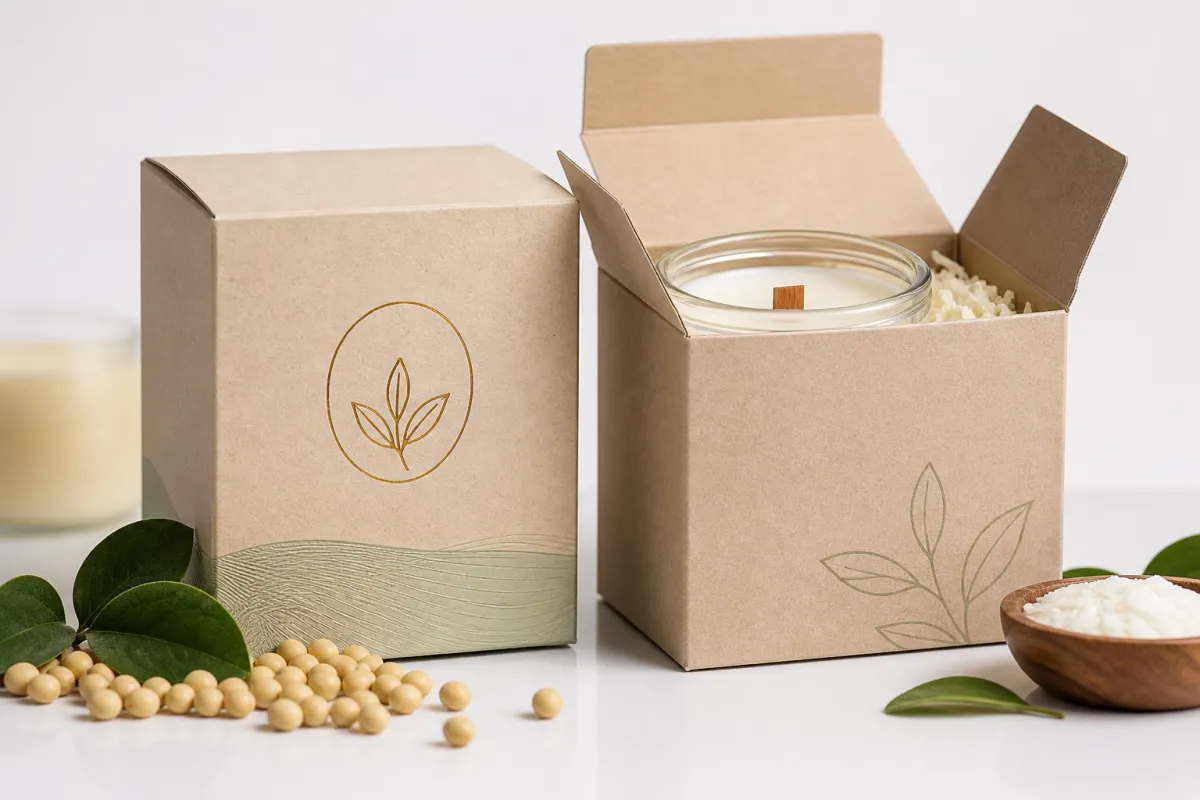
Custom natural soy wax boxes are packaging built around the candle's actual dimensions, weight, and brand presentation instead of a stock carton that only nearly fits. That should be obvious, but it still gets missed because plenty of candle damage starts with a box sized from label art instead of the finished jar, lid, and insert.
These boxes matter because soy wax candles sit in an awkward middle ground. They are not heavy industrial goods, yet they are not soft goods either. Glass jars chip. Tin lids dent. Labels wrinkle. Wax can soften if the product spends too long in a hot truck or under bright retail lighting. The box is the first barrier against all of that, and the visual front line as well.
Natural packaging expectations are different from standard consumer goods. Buyers usually want recycled board, lower-gloss or uncoated surfaces, less plastic, and a calmer visual tone. Earthy branding often works better with kraft paperboard, soft white cartons, or muted coatings than with loud foil and hard contrast. That does not mean the box has to look plain. It means the design should feel deliberate.
There is a commercial reason to care too. Custom natural soy wax boxes can cut return rates, protect the label finish, and keep shelf presentation more consistent. A candle that arrives with a dented carton or a scuffed sleeve instantly feels cheaper, even when the wax formula is excellent. Buyers notice. Retailers notice even faster.
In practice, custom natural soy wax boxes also make operations smoother. A properly dimensioned box stacks cleaner in shipping cartons, nests better on shelves, and gives fulfillment teams fewer surprises. That matters whether you ship 200 units or 20,000. Bad packaging scales beautifully. So do the problems that come with it.
So the real question is not whether custom natural soy wax boxes are worth the effort. The question is which structure, material, and finish make sense for your candle size, sales channel, and budget. The rest of this piece follows that path.
One more practical point: if the product needs a cleaner brand story, package branding should stay readable and restrained. The best custom natural soy wax boxes usually do not shout. They communicate quality through structure, spacing, and material choice.
How Custom Natural Soy Wax Boxes Protect the Product
The protection job reaches farther than most brands assume. Custom natural soy wax boxes guard against friction, pressure, light exposure, and temperature swings during storage and transit. A box is not just a wrapper. It is a buffer, and that buffer has to survive warehouse stacking, parcel handling, and the occasional delivery driver who seems to believe every package owes them a favor.
Structure comes first. Tuck-end cartons work well for lighter candles and retail-ready displays. Rigid setup boxes hold shape better and feel premium, but they cost more and ship less efficiently. Sleeves help when the primary jar or inner tray already has enough strength. Mailer-style boxes make sense for direct-to-consumer orders because they combine presentation and shipping performance in one structure. Insert-based packaging is the practical choice for fragile glass jars, especially if the candle can move inside the carton.
Size is where damage often begins. Too much clearance lets the jar rattle and chip edges. Too little clearance can crush a label, bow the carton, or stress the vessel when temperature changes. For custom natural soy wax boxes, the fit should account for the outer jar diameter, lid height, label thickness, and insert tolerance. Even a 2-3 mm mistake can show up later as scuffed print or a cracked corner after transit.
Protection add-ons are worth using when the product justifies them. Molded Pulp Inserts fit a natural brand well because they support the story and absorb shock without looking out of place. Paperboard dividers work for multi-pack candle sets. Corrugated shippers help when the retail box itself is not strong enough for parcel handling. Inside print can also help by reminding users to store the candle upright or keep it away from heat. Small detail. Real effect.
There is another layer here: perception. A damaged box makes a natural candle feel careless. That is a brand issue, not just a shipping issue. Good custom natural soy wax boxes keep the product looking calm and premium from the first touch to the last. Bad ones make customers wonder what else was rushed.
A pretty box that collapses in transit is just expensive confetti.
For e-commerce brands, it helps to think in testing terms. Ask whether the packaging would survive an ISTA-style drop sequence, a warehouse stack test, and a short heat exposure window. The ISTA testing standards exist for a reason. So do ordinary stress checks that reveal weak corners before a customer does. For shelf-facing brands, ask whether the carton still looks crisp after being handled by three different people who do not care about your brand story.
That is the practical value of custom natural soy wax boxes: they turn a delicate product into a manageable one. Not indestructible. Manageable. That is the difference between packaging that merely looks good and packaging that earns its keep.
Custom Natural Soy Wax Boxes: Materials, Finishes, and Branding Choices
Material choice changes everything. Custom natural soy wax boxes usually start with one of three directions: paperboard, kraft board, or corrugated stock. Paperboard is the most common for retail cartons because it prints cleanly and keeps crisp edges. Kraft board signals a more natural, recycled feel and suits brands that want an earthy, apothecary look. Corrugated stock is better for shipping strength, especially for direct-to-consumer orders or heavier glass jars.
For a retail shelf, 300-400 gsm paperboard or 14-18 pt board is common. For a premium feel, rigid board around 1.5-2 mm thick creates a sturdier presentation, though it adds weight and cost. E-flute corrugate is a practical middle ground for mailer-style custom natural soy wax boxes because it balances printability with crush resistance. That tradeoff matters if damage claims are eating margin.
Finishes tell customers what kind of brand you are. Matte lamination reads calm and modern. Aqueous coating gives some moisture resistance without the heavy plastic feel. Soft-touch feels premium, but it can clash with a natural brand if used too freely. Embossing adds subtle texture. Foil can work, though too much of it on a soy wax candle line can feel like the brief got lost somewhere. Uncoated kraft is the most honest-looking option, but it needs tighter print planning because dark inks and fine details can disappear fast if the artwork is weak.
Branding should match the product story. Earthy, wellness-led, apothecary, minimal, and giftable are all reasonable directions for custom natural soy wax boxes. What usually fails is trying to pack all of them into one carton. A box with too many textures, too many type sizes, and too many messages starts to feel like a mood board that escaped into production.
Good package branding is disciplined. Use enough white space to let the product breathe. Keep hierarchy clear: brand, scent, size, key benefit, and required compliance copy. Place the barcode where a retailer or warehouse scanner can reach it without gymnastics. If you are using kraft, test the ink coverage early because some browns absorb detail and flatten contrast quickly.
For print, spot colors are a smart way to keep brand colors consistent on paperboard. Full CMYK can still work, but natural brands often look stronger with a restrained palette: one dark neutral, one accent tone, and maybe one secondary color for scent variants. That makes the line easier to shop and easier to extend into custom printed boxes across multiple SKUs.
Sustainability claims should stay grounded. Recyclable material is easier to explain when the glue, coatings, and print choices are also simple. If you use FSC-certified board, say so clearly and only if the supply chain supports it. The Forest Stewardship Council certification matters to buyers who care about fiber sourcing, not just the people collecting buzzwords. A clean material story makes custom natural soy wax boxes easier to sell without sounding preachy.
| Box Style | Best Use | Typical Unit Cost at 1,000 Units | Strength | Main Tradeoff |
|---|---|---|---|---|
| Tuck-End Paperboard Carton | Retail candles, lighter jars | $0.22-$0.55 | Low cost, good print quality | Less crush resistance |
| Mailer-Style Corrugated Box | E-commerce orders, subscription boxes | $0.65-$1.60 | Better shipping performance | Bulkier, higher freight cost |
| Rigid Setup Box | Gift sets, premium retail | $1.50-$3.80 | Strong presentation and structure | Higher material and assembly cost |
| Sleeve + Inner Tray | Brand-forward retail packaging | $0.30-$0.85 | Flexible visual design | Depends on inner tray strength |
The right structure depends on channel and risk. Retail stores usually favor crisp paperboard or sleeve systems. E-commerce usually needs stronger mailer-style custom natural soy wax boxes. Gift sets can justify rigid packaging if the margin supports it. There is no magic answer. There is only the structure that matches the product's actual job.
If you need help narrowing the options, start with the box family first and the finish second. That order keeps the project sane. It also keeps custom natural soy wax boxes from turning into expensive art projects that fail the warehouse test.
Production Steps, Process, and Lead Time for Custom Natural Soy Wax Boxes
The process stays manageable if you give the supplier the right information up front. For custom natural soy wax boxes, the workflow usually runs like this: brief, dieline development, sample or prototype, artwork setup, proofing, production, finishing, packing, and freight. Each step matters because one early mistake tends to echo through the rest of the job, usually after someone has already approved the wrong thing.
Before asking for a quote, buyers should have the candle's outer dimensions, jar weight, closure style, insert needs, artwork files, target quantity, and the sales channel. A candle sold in a gift box behaves differently from one sold in an e-commerce mailer. That sounds plain enough, yet it gets missed constantly. If you cannot describe the pack-out, the supplier is guessing. Guessing is how teams end up with expensive samples and another round of revisions.
Simple printed cartons can move faster, often in the 12-18 business day range after proof approval, depending on the shop and order size. Add die-cut inserts, rigid construction, foil, embossing, or specialty coatings, and the timeline can stretch to 20-30 business days or more. Sampling and shipping time sit outside that number, so honest planning matters. Custom natural soy wax boxes are not slow because packaging is mysterious. They are slow because people change artwork three times after the die line is already approved.
The common delay points are easy to spot. Missing dieline measurements. Late logo changes. Color corrections after proof review. Waiting on physical samples while launch dates keep moving. If you want custom natural soy wax boxes to stay on schedule, lock the structure first, then approve the artwork, then confirm the finish, then release the run. Reordering those steps invites avoidable pain.
For brands that need a more formal process, build a signoff sheet with these checkpoints:
- Structure approval: final dimensions, insert type, and closure style
- Artwork approval: copy, barcode, warning text, logo placement, and color targets
- Finish approval: coating, embossing, foil, or uncoated surface
- Pack-out approval: how the candle sits, moves, and exits the box
That kind of discipline reduces rework. It also makes custom natural soy wax boxes easier to compare across suppliers because everyone is quoting the same thing. No mystery. No moving target. Just a packaging spec that behaves like a spec.
Quality control should not stop at the sample. Ask for die-line checks, print comparison against approved artwork, and random carton checks during production. If the line includes multiple scents or seasonal SKUs, review at least one unit from each variant. A packaging mistake on one scent often shows up on all of them.
If the candle ships direct, ask for a drop-test mindset. If it sells retail, ask for display strength and stackability. If it is a gift item, ask whether the unboxing sequence feels intentional. Custom natural soy wax boxes are easier to manage when the production plan reflects the real channel instead of a generic assumption.
Custom Natural Soy Wax Boxes Cost and Pricing Factors
Pricing is where the conversation usually gets real. Custom natural soy wax boxes are driven by a handful of predictable cost factors: box style, board grade, print coverage, finishing, insert complexity, and quantity. The unit price can move a lot based on those choices, so it helps to stop thinking in vague terms like "affordable" and start looking at actual breakpoints.
For small runs, setup costs are spread across fewer units, so the per-box price climbs quickly. A simple tuck-end carton in a low quantity may land around $0.60-$1.20 per unit, while the same style in a larger run can drop much lower. Add foil, embossing, or specialty coatings and the number rises. Rigid custom natural soy wax boxes often sit in the $1.50-$4.00 range depending on complexity and order size. Inserts can add another $0.10-$0.60 per unit, sometimes more if they are highly custom.
The trick is to quote at several quantities. Ask for pricing at 250, 500, 1,000, and 3,000 units if the supplier supports it. That will show you the real break point where unit cost drops enough to justify a slightly larger order. Buying only one quote size is how people miss the difference between "cheap per box" and "cheap enough to matter." They are not the same thing.
Here is the part people hate hearing: small extras are not free just because they are small. Window cutouts, rigid construction, custom molded inserts, and heavy ink coverage can all inflate cost faster than expected. If your line has multiple scent variants, a smarter move is often to standardize the structure and change only the outer print or sleeve. That keeps custom natural soy wax boxes consistent while avoiding a separate tool or sample for every SKU.
A few ways to save without making the box look cheap:
- Keep the structure standard and adjust graphics by scent
- Use one or two print colors instead of full coverage when the brand allows it
- Choose aqueous coating instead of expensive special finishes where possible
- Use paperboard inserts before moving to more costly custom molded solutions
- Standardize dimensions across several candle sizes if the vessel family allows it
Custom natural soy wax boxes also need margin awareness. If the candle retails at $28 and the packaging costs $2.40 before freight, that is one thing. If the candle retails at $18 and the packaging costs the same, that is another. The box should support the price tier, not swallow it.
Good buyers compare not just unit cost, but total landed cost. That includes packaging, freight, damage rate, storage footprint, and labor to assemble or pack. A cheaper box that doubles packing time or raises breakage is not really cheaper. It is just sneakier.
If you want to keep the economics clean, request quotes for multiple structure options at the same specification. That gives you a fair read on which version of custom natural soy wax boxes actually earns the space in your budget.
Common Mistakes When Ordering Custom Natural Soy Wax Boxes
The first mistake is bad sizing. Too many brands design custom natural soy wax boxes around label art instead of the finished product. That is backwards. The box should be built from the jar's real outer dimensions, including closure height and any insert thickness. A label can be adjusted. A cracked jar cannot.
The second mistake is mixing up retail packaging with shipping packaging. A beautiful carton can still fail if it cannot survive parcel handling or warehouse stacking. The box might look gorgeous in a mockup and still collapse under pressure from a freight pallet. That is not a design win. That is a costly illusion. If the candle ships directly, test custom natural soy wax boxes under actual transit conditions before calling them done.
The third mistake is overdesign. A natural soy wax candle does not need seven finishes, three textures, and a paragraph of poetic copy on every panel. Too many materials and too much visual noise can make the brand feel uncertain. For natural products, restraint usually signals more confidence than decoration. Good branding is not louder. It is clearer.
The fourth mistake is skipping compliance planning. Candle packaging often needs warning copy, ingredient or contents details, barcode space, and country-of-origin information. Exact requirements vary by market, but ignoring them creates delays and reprints. That is the sort of problem that shows up after everything else is approved, which is a fine moment to learn the barcode area was never included. If your custom natural soy wax boxes are meant for retail, compliance space should be treated like a design element, not an afterthought.
The fifth mistake is avoiding samples because they cost time. Samples do cost time. Reprints cost more. A prototype catches issues with fit, ink density, friction at the insert, and how the lid behaves inside the carton. A single sample run can save an entire production batch. That math is not subtle.
There is also a softer mistake: assuming all suppliers interpret "natural" the same way. Some mean kraft appearance. Some mean recycled fiber. Some mean minimal finishing. Some mean all of the above. Spell it out. Otherwise, your custom natural soy wax boxes may arrive with a material story that does not Match Your Brand promise.
Finally, do not ignore the packaging-versus-branding split. The box needs to look aligned with the candle, but it also needs to work physically. Pretty and practical are not enemies. They just require actual planning. That is the difference between custom natural soy wax boxes that sell and boxes that merely exist.
Expert Tips for Better Custom Natural Soy Wax Boxes and Next Steps
Test the box in the real world. Not in a perfectly lit mockup. Real tests. Heat exposure. Shelf stacking. Parcel drops. Short transit simulations. If you sell online, ask for an ISTA-style review or a comparable distribution test. If the package fails a basic drop sequence, the prettiest print in the world will not save it. The packaging only matters if it survives contact with the mail system.
Build a simple packaging spec sheet before quoting. Include exact outer dimensions, jar weight, closure type, insert requirements, print coverage, finish preferences, and any compliance text. That one document can prevent half the misunderstandings that slow down custom natural soy wax boxes. If multiple team members are involved, this matters even more. Otherwise, everybody remembers a different version of the brief.
Think in SKU families, not just single boxes. One flexible structure can often cover multiple candle sizes with a different insert or a minor internal adjustment. That saves tooling, lowers complexity, and keeps package branding consistent across your line. It also helps when you need to launch new scents without starting from zero every time.
Request samples from at least two material tiers if the budget allows it. Compare a standard paperboard version with a premium option or a shipping-focused version. The difference in feel, durability, and print clarity can be surprisingly large. Buyers are often good at imagining color. They are much worse at predicting how a lid feels after the box has been opened and closed six times. That is why physical samples matter.
If the sample looks expensive but ships badly, it is not premium. It is just expensive.
For sustainability claims, keep the story honest and specific. Recycled content, FSC certification, water-based coatings, and reduced plastic all help, but only if the production system supports them. A clean material statement is stronger than a vague one. If the box is recyclable, say why. If it uses FSC-certified board, document it. If the finish is designed to reduce packaging waste, explain how. That is the sort of detail buyers trust.
For brands expanding into retail, use custom natural soy wax boxes that can scale with the line. A clean master structure with flexible artwork makes the product family easier to manage. For DTC brands, prioritize shipping durability first. For gift-driven brands, visual presentation can carry more weight, but it still should not ignore structure. The channel decides the hierarchy.
Next steps should stay simple: gather product specs, compare two or three structures, request quotes at several quantities, and review samples before launch. That sequence keeps custom natural soy wax boxes grounded in actual needs instead of wishful thinking. Honestly, packaging works best when it is boring in the right ways: consistent, durable, and easy to ship.
Custom natural soy wax boxes are not just a finishing touch. They are part of the product. If they are built well, the candle looks better, ships safer, and sells with fewer apologies. If you want your brand to feel considered from the first glance to the final unboxing, start with the real jar measurements, choose the box style based on the sales channel, and sample the build before you place the full run. That is the practical path to custom natural soy wax boxes that actually hold up in the market.
Frequently Asked Questions
How much do custom natural soy wax boxes usually cost per unit?
Small runs usually cost more per box because setup, die-cutting, and print preparation are spread across fewer units. Simple paperboard cartons can be relatively low-cost at higher quantities, while rigid boxes, inserts, foil, embossing, and window cutouts push the price up fast. For custom natural soy wax boxes, ask for pricing at several quantities so you can see the real break point instead of guessing.
What materials work best for custom natural soy wax boxes?
Kraft board is a strong fit for earthy branding because it signals a more natural, recycled look. Coated paperboard works better when you need sharper color or a polished retail finish. Corrugated stock makes sense for shipping-heavy orders or heavier jars. The best material for custom natural soy wax boxes depends on whether the candle is mainly for retail display, gift sets, or direct shipping.
How long does production take for custom natural soy wax boxes?
Simple box styles usually move faster than rigid packaging or designs with specialty finishes. Sampling, artwork approval, and dieline revisions are the usual places where timelines slip. In many cases, production after proof approval may take roughly 12-18 business days for straightforward cartons, while more complex custom natural soy wax boxes can take longer.
What size should custom natural soy wax boxes be?
Use the finished candle's actual outer dimensions, not just the jar diameter or label size. Leave enough room for safe insertion, but not so much that the candle rattles in transit. If you sell several sizes, standardize the structure where possible and adjust only the internal fit. That keeps custom natural soy wax boxes easier to quote and easier to scale.
Do custom natural soy wax boxes need special inserts?
Yes, if the candle is glass, heavy, or likely to shift during shipping. Paperboard, molded pulp, or corrugated inserts help stabilize the product and reduce breakage. Use inserts when protection matters more than saving a few cents on material. For fragile custom natural soy wax boxes, the insert is often the cheapest insurance in the build.

