Buyer Fit Snapshot
| Best fit | Custom Offset Printed Mailers projects where brand print, material claims, artwork control, MOQ, and repeat-order consistency need to be specified before quoting. |
|---|---|
| Quote inputs | Share finished size, material target, print colors, finish, packing count, annual reorder estimate, ship-to region, and any compliance wording. |
| Proofing check | Approve dieline scale, logo placement, barcode or warning zones, color tolerance, closure strength, and carton packing before bulk production. |
| Main risk | Vague material claims, crowded artwork, missing packing details, or unclear freight terms can make a low unit price expensive after revisions. |
Fast answer: Custom Offset Printed Mailers: Design, Cost, and Use should be specified like a repeatable production item. The safest quote records material, print method, finish, artwork proof, packing count, and reorder notes in one written spec.
Production checks before approval
Compare the actual filled-product size with the drawing, then confirm tolerance on folds, seals, hang holes, label areas, and retail display edges. Reserve space for logos, QR codes, warning copy, and material claims before decorative graphics fill the panel.
Quote comparison points
Review material grade, print process, finish, sampling route, tooling charges, carton quantity, and freight assumptions side by side. A quote is only useful when the supplier can repeat the same color, closure quality, and packing count on the next order.
Custom Offset Printed Mailers: Design, Cost, and Use
Custom offset printed mailers do more than move a product from one address to another. They set the tone before the customer opens the seal, and they shape the first physical impression in a way that screen images never quite can. A mailer is a small surface, sure, but it carries a lot of weight for a brand that cares about presentation, consistency, and how the package feels the moment it leaves the carrier's hands.
From a packaging buyer's point of view, custom offset printed mailers start making real sense once the brand needs crisp graphics, stable color, and repeatable presentation across a meaningful run. They fit ecommerce shipping, subscription programs, influencer kits, retail presentation, and premium direct mail, especially when the outer package is part of the brand story rather than just a shell around it. A plain brown mailer with a sticker can do the job for some orders, but it rarely feels like a deliberate choice.
There is a point where packaging stops being a convenience item and starts becoming part of the brand system. Custom offset printed mailers sit right there. The setup takes planning, the print process rewards clean files, and the economics get better as quantity rises because the fixed costs spread out. That front-end effort usually pays back through better presentation, smoother pack-out, and fewer visual corrections after the fact.
Custom Offset Printed Mailers: What They Are and Why They Stand Out
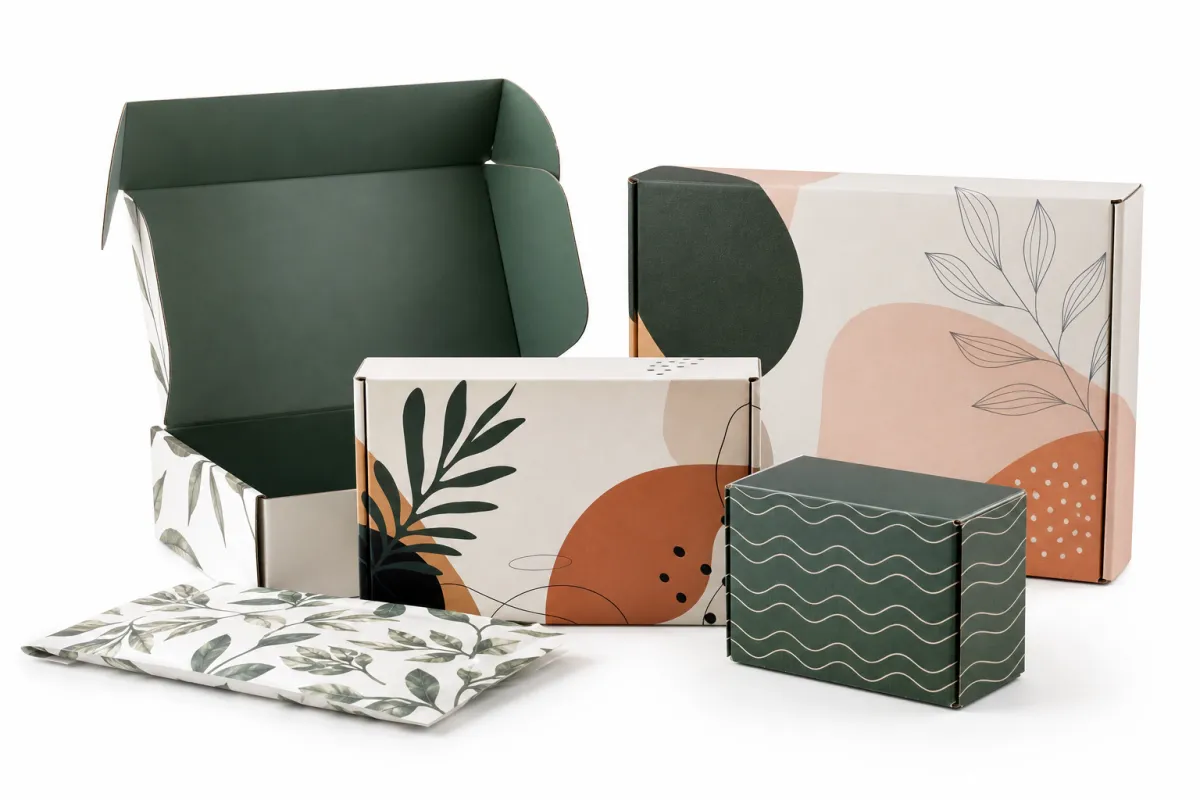
Custom offset printed mailers are shipping or presentation mailers printed with offset lithography instead of labels, decals, or direct-to-substrate digital methods. The blank can be corrugated, folding carton board, or another paperboard construction with an exterior built for print. The goal is not merely to add a logo to a panel. The goal is to control the full visual surface so the mailer feels like part of the brand and not an accessory applied at the end.
A mailer can carry more brand weight than the product inside if the structure and print quality are doing their jobs. Tight corners, even ink coverage, and clean typography make the piece feel planned. Crooked labels, weak adhesion, and flimsy construction make the same shipment feel improvised. Customers may not talk about the difference in production terms, but they notice it immediately. That is usually enough.
Custom offset printed mailers work best when the outer package is meant to be seen and remembered. Ecommerce shipping for beauty, apparel, specialty food, supplements, and gifts often benefits from that treatment. Subscription boxes rely on repeated visual consistency, so every shipment reinforces the same identity. Retail-ready mailers can sit on a desk or shelf and still hold the brand message after the carrier is gone. Direct mail kits need that same polish if they are going to survive the first glance and avoid the trash bin.
The difference from stock mailers plus labels is not subtle. Offset printing gives a cleaner face, fewer weak points, and a more unified result. It also removes the manual work of lining up labels, correcting crooked placement, and trying to hide the fact that branding was added late. The package feels designed because it was designed that way from the start, the same reason custom printed boxes usually outclass plain cartons with decorative add-ons.
Custom offset printed mailers also hold up well when consistency across a larger run matters. Offset is built for repeatability, and once plates, ink balance, and press settings are dialed in, the run can keep detail and color steady from the first unit to the last. That matters in high-volume ecommerce shipping, retail launches, and any program where the package should look like it came from one source instead of a stack of mismatched batches assembled under pressure.
If the outer mailer looks cheap, customers often assume the rest of the order was built with the same shortcuts. Packaging can be unfair that way.
Brands comparing formats need to think about the whole system, not just the mailer by itself. A mailer sits beside inserts, cushioning, and other layers of product packaging. For a broader view of available formats, our Custom Packaging Products page is a useful starting point, and the Custom Poly Mailers page gives a practical contrast if you are deciding between paperboard and film-based options.
Offset mailers tend to be the better choice when the project needs a premium front face, precise typography, or rich brand color that must hold across volume. They are not automatically the cheapest route. They are the stronger route when presentation has measurable value and the quantity is large enough to justify setup. Buyers usually understand that trade even when they have to explain it to finance in softer language. I've had plenty of those conversations, and the best ones always start with the package's job, not with the decoration.
How Custom Offset Printed Mailers Are Made
The production flow for custom offset printed mailers is straightforward, but it works best when each step happens in order. Artwork gets prepared first. Plates are made next. The press run follows. Coating, die-cutting, creasing, folding, and packing come after that. Some jobs need gluing or specialty finishing in the middle. If the artwork is not prepared cleanly, every later step gets slower, more expensive, and more frustrating than it needs to be.
Offset printing transfers ink from a plate to a blanket, then from the blanket to the substrate. That extra transfer stage is one reason the process delivers sharp detail and dependable solids. The image does not have to be forced directly into a rough board surface in a single heavy pass. Instead, the press controls the movement of ink more carefully, which is useful on mailers where small type, strong logos, barcode clarity, and broad color fields all have to hold together visually.
Substrate choice changes the job in a very real way. Corrugated mailers are common when the package has to survive shipping on its own. Folding carton and paperboard mailers often make more sense for lighter goods, presentation kits, and retail-ready pack formats. Common choices include E-flute corrugated, SBS, and C1S artboard, often in the 16pt to 24pt range depending on how the mailer will be used. A 350gsm board may work for lightweight inserts, but that is not the same as a mailer expected to take carrier abuse and still look composed.
Finishing choices determine whether the package feels intentional or just expensive in a random way. Matte coating gives the mailer a quieter, more restrained look. Gloss sharpens contrast and can make colors feel brighter. Aqueous coating adds scuff resistance without turning the surface into a reflective distraction. Spot UV can emphasize a logo or pattern, yet it can also create clutter if the artwork is already busy. Specialty inks add character, but only when they support the design rather than trying to rescue a weak layout.
Prepress work is where many projects are won or lost before ink ever reaches the sheet. Bleed must be correct. Dielines need to be accurate. Safe zones matter because text too close to a fold or trim line will look sloppy once the piece is folded and shipped. Color profiles have to be handled with discipline, not optimism. A beautiful mockup on a monitor means very little if the file is not built for the actual board, press, and finishing route.
That is why early supplier conversations matter so much. If you want to compare print, coating, and finishing options, our Manufacturing Capabilities page is a practical reference point. The best custom offset printed mailers come from teams that treat structure and artwork as one decision instead of two separate problems that happen to share a deadline.
Packaging teams that test performance often use ISTA methods to simulate drop, vibration, and transit conditions before approving a format. The International Safe Transit Association explains the testing framework on its site, and it is a useful benchmark whenever a mailer needs to be attractive and durable at the same time. See ISTA for the testing context and FSC if fiber sourcing or certification needs to be part of the discussion.
Offset printing also fits neatly into broader retail packaging systems. The same visual discipline that works on custom offset printed mailers often carries over to secondary cartons, sleeves, and custom printed boxes. Once the brand system is built around the mailer, the whole family of packaging starts to feel connected. That kind of consistency does real work because it makes the brand easier to trust.
Key Factors That Affect Quality, Brand Impact, and Cost
The main drivers are quantity, color count, ink coverage, substrate choice, finishing, and structure. The list looks tidy until the project starts moving, and then every small decision nudges price, lead time, or appearance in a different direction. Custom offset printed mailers are a good reminder that packaging is rarely one decision; it is a stack of decisions that all have to agree with one another.
Quantity affects economics more than almost anything else. Offset setup costs exist whether the run is 1,000 units or 20,000 units. That means a smaller run looks expensive on a per-unit basis, while a larger run spreads the setup across more pieces. If launch volume is uncertain, that uncertainty should shape the brief from the beginning instead of being ignored until pricing arrives.
Artwork complexity matters just as much. Heavy solids, gradients, photographic imagery, and tiny reversed type all increase the chance of visual problems if the file is not prepared correctly. Large ink coverage can also raise coating and ink demands. A simple one-color mark on kraft board is a very different production job from a full-coverage panel with interior print and spot gloss.
Durability creates another fork in the road. A mailer used for direct shipping needs better crush resistance, stronger corners, and a structure that can tolerate handling. A presentation-first mailer that travels inside a larger outer shipper can often use lighter board because the secondary carton is doing the heavy work. Overspecifying the structure is a fast way to spend money where the product does not need it.
Brand impact comes from a small set of visible choices. Full-coverage print creates a stronger first impression than a plain board with a tiny logo. Interior printing can add a reveal when the mailer opens. Custom messaging on the inside panel can reinforce package branding without making the outside feel crowded. Selective finishes can direct attention to the logo or hero graphic. These details tend to stick better than a pile of decorative effects.
Overspending usually starts when teams add premium finishes because premium finishes sound premium. Then they layer effect on top of effect until the mailer feels busy instead of elevated. The same thing happens when the board construction is stronger and more expensive than the shipment actually requires. That mistake shows up often in product packaging because people assume heavier means better. Sometimes heavier just means heavier.
The broader system matters too. Inserts, printed notes, tissue, and the outer box all shape the final impression. Packaging design works best as a system, not a shopping list. The mailer is one part of the message, not the only message, and brands get better results when every part is pulling in the same direction.
| Option | Typical Quantity Sweet Spot | Rough Unit Cost | Best For | Main Tradeoff |
|---|---|---|---|---|
| Stock mailer + label | Low volume, test orders | $0.35-$1.10 | Fast sourcing, simple branding | Looks improvised if the label work is sloppy |
| Digitally printed mailer | Short runs, frequent artwork changes | $0.75-$2.20 | Personalization, small campaigns | Higher unit cost at scale |
| Custom offset printed mailers | Medium to high volume runs | $0.18-$0.55 | Consistent branding, sharper detail, lower unit cost at scale | Setup time and plate costs |
| Custom printed boxes | Broader retail and shipper use | $0.30-$1.25 | Product packaging with stronger structural options | Can be overbuilt for light shipments |
The table is not a universal price sheet. Board grade, print coverage, box size, quantity, and finish all move the numbers. Even so, the pattern stays fairly consistent. Custom offset printed mailers become more attractive as volume rises, while labels and digitally printed options usually stay useful for smaller or more changeable runs. The decision is less about pride than about math, which packaging people usually appreciate.
Custom Offset Printed Mailers Cost: What Drives Pricing
Custom offset printed mailers cost what they cost because several fixed steps sit ahead of the run. Plate creation is one. Setup is another. Make-ready on the press adds more. Die-cutting and finishing bring their own expense. Looking only at the raw material misses most of the bill, which is why low-volume orders can feel unexpectedly high. The unit is carrying a big share of the fixed work.
The clearest way to think about pricing is simple: as unit count rises, each fixed expense gets diluted. A run of 500 can feel painful while a run of 10,000 starts to look reasonable. For many buyers, the sweet spot for custom offset printed mailers appears once the order is large enough that plate and setup costs stop dominating the total. That kind of boring math is good math.
Finishing choices can shift the total more than people expect. Aqueous coating is usually a sensible durability upgrade. Matte or gloss lamination can create a stronger feel, but it may add cost and raise recyclability questions. Spot UV, foil, and specialty ink effects can make the package stand out, yet they also add handling, setup, and quality-control work. If the effect does not support the story, it is usually better left out.
Board grade matters in practical terms. Better boards cost more. Recycled content can change the surface and feel. Heavier boards improve structural performance but can also increase freight and sometimes complicate finishing. If the package is going into secondary shipping anyway, the board should be strong enough for the actual use, not just strong enough to look impressive in a sample room.
Order structure changes the economics as well. A simple mailer with one print side is cheaper than a fully printed exterior with interior panels. A plain tuck style is usually less expensive than a custom locking design with extra folds and tabs. Once the format needs multiple tools or gluing steps, the cost rises. That is why custom offset printed mailers can be an ideal buy for some brands and too much for others.
A useful planning comparison looks like this:
- Low volume: Digital print or stock mailers with labels often win on convenience, even if the per-unit price is higher than you would like.
- Mid volume: Custom offset printed mailers start to make sense once the package carries enough brand value to justify the setup.
- High volume: Offset usually wins on unit economics, especially for repeatable ecommerce shipping and retail packaging programs.
The best quote request breaks the job into parts. Ask for the board spec, print coverage, plate or setup charges, coating, die-cutting, and freight. A single number without context is how people end up comparing the wrong things. If you want to know whether custom offset printed mailers are the right buy, itemized pricing beats a vague total every time.
Projects that sit between formats deserve a real comparison before anyone commits. Sometimes the right answer is a mailer. Sometimes it is a box. Sometimes a simpler custom poly mailer does the job better for lighter goods and lower freight cost. A strong packaging decision usually comes from comparing honest options instead of chasing the prettiest sample on the table.
Process and Timeline for Custom Offset Printed Mailers
The timeline starts with the brief, not the artwork. If package dimensions, product weight, print coverage, finish, and launch date are vague, the project starts drifting immediately. Good custom offset printed mailers begin with a clear list of what the mailer needs to do and what it cannot fail at. Protect the product. Present the brand. Fit the budget. Those three lines define the job better than a mood board ever will.
A realistic path usually moves through concept, dieline selection, artwork development, proofing, production approval, print run, finishing, and shipping. The shortest step is often the press run itself. The slow parts are approvals, revisions, and any late changes that were described as small but behave like major redesigns. A shifted logo position can trigger a new proof. A changed finish can add days. A changed structure can add even more.
For many standard projects, once artwork is approved and specifications are locked, production often takes around 12-15 business days. That is a common range, not a guarantee. Specialty coatings, multiple print sides, unusual board, or custom tooling will stretch the schedule. Freight introduces another variable. If launch timing depends on delivery timing, build slack into the schedule from the beginning instead of pretending the calendar will cooperate on its own.
Sampling and physical approval can extend the process too, especially if the brand wants to see the package in hand before the run starts. That time is rarely wasted. A proof or sample reveals tone, trim, corner strength, and fold behavior in a way a PDF cannot. Custom offset printed mailers are too visible to approve blindly, particularly when the customer will touch the package within seconds of delivery.
Lead time gets stretched most often by five things:
- Artwork revisions that keep changing after the file is supposedly finished.
- Color matching that needs extra proofing.
- Tooling or die-cut changes.
- Special finishes or coatings that need extra scheduling.
- Production slots already occupied by larger runs ahead of yours.
Projects move faster when the decisions are clear. That sounds plain, but packaging timelines still get eaten up by teams that keep revisiting the same panel after the file should already be locked. From a production standpoint, custom offset printed mailers reward discipline. They do not reward indecision, and the press certainly has no interest in anyone's mood board.
Campaigns and product drops work best when the shipping date is the anchor and every upstream task moves backward from that point. Many brands think about lead time only after the launch window gets tight. That is how a mailer becomes the reason a strong campaign ships late. Pretty packaging is not worth much if the inventory misses the moment.
Step-by-Step Guide to Ordering Custom Offset Printed Mailers
Begin with the use case. Is the mailer carrying a lightweight item, a fragile item, or a product that needs both presentation and protection? What is the weight? What are the dimensions? Does the outer package need to survive carrier handling on its own, or will it ride inside another shipper? Those answers shape the structure long before anyone starts talking about color.
Choose the construction and board spec next. Lightweight premium goods may do well in a paperboard mailer. Harder shipping conditions usually call for corrugated. If the box has to do more than look good, it should not be underspecified just to save a few cents. A package that looks polished and collapses in transit is not branding. It is a refund with sharper graphics.
After that, decide what the print has to accomplish. Full coverage? A restrained logo? Interior printing for a reveal moment? One color or four? Matte or gloss? Spot finish or clean and simple? The answer should come from the customer experience, not from a desire to use every decorative option available. Custom offset printed mailers work best when every printed surface has a reason to exist.
Artwork setup is where many first-time buyers run into trouble. Use the dieline. Respect bleed. Keep essential copy inside safe zones. Make sure the resolution is print-ready, not just passable on a laptop. Set color files properly and communicate Pantone expectations early if color match matters. Do not assume the press team can rescue a messy file at the end. That is not how production works, and it is not a fair expectation.
Proof review should be treated like a real review, not a checkbox. Check logo placement. Check panel alignment. Check spelling. Check barcode readability. Check whether fold lines interrupt important artwork. Check whether the finish matches the brand's intended feel. If the proof is wrong, pause. Reprints are more expensive than honest corrections.
A good ordering sequence looks like this:
- Define the product, shipment, and brand goal.
- Choose the structure and board thickness.
- Request a quote with itemized specs.
- Prepare artwork using the correct dieline.
- Review the proof and ask for a sample if needed.
- Approve the run only after design and operations agree.
- Build the launch schedule around real lead time, not the hopeful version.
It helps to compare the packaging family, not just the mailer. If the brand needs a heavier outer shipper, printed inserts, or a different retail-ready format, that should shape the final decision. A good packaging partner should be able to compare custom offset printed mailers with related solutions instead of pushing one format for every job. Honest fit matters more than any favorite product category.
A simple spec sheet saves a lot of back-and-forth. Include dimensions, board type, print coverage, quantity, finish, product weight, and launch date before asking for quotes. That one page makes comparison easier and keeps the conversation grounded in the actual job instead of vague ambition. It is boring. It works.
Common Mistakes With Custom Offset Printed Mailers
The first mistake is designing for the screen instead of the substrate. A bright mockup on a monitor can hide all kinds of problems. Tiny type may look fine digitally and turn muddy on board. Soft gradients can shift. Dark solids may reveal imperfections. Custom offset printed mailers need artwork built for print reality, not for a presentation deck.
The second mistake is underestimating shipping abuse. Some brands focus so hard on the unboxing moment that they forget the package still has to survive transit. A mailer that crushes easily or splits at the edges is a bad trade. If the structure is weak, the brand experience ends in damage claims instead of delight, and that is an ugly line item in any budget.
The third mistake is assuming offset is always the right choice. It is not. Small runs, frequent artwork changes, and highly personalized campaigns often fit digital better. Some brands need a simpler option altogether. A stock mailer with a clean label can be a smart step before moving into custom offset printed mailers. No one gets extra points for choosing a print method that fights the schedule or the volume.
The fourth mistake is visual clutter. Too many finishes, too many typefaces, too many messages, too many decorative shapes. The mailer ends up shouting instead of communicating. Good packaging design leaves breathing room. It lets the logo land. It lets the structure be seen. It does not cram every square inch with a nervous sales pitch.
The fifth mistake is skipping proof checks because the deadline feels urgent. That is usually where things begin to unravel. A missed spelling error, a shifted barcode, or a wrong panel direction can turn a clean run into a reprint. With custom offset printed mailers, one overlooked detail can erase the savings from several smart decisions made earlier.
There is a blunt version of that lesson: if you rush the file, rush the proof, and rush the approval, you are choosing the failure path yourself. Packaging is not magic. It is a sequence. Break the sequence and the job reminds everyone who is in charge.
Brands also get into trouble when they treat the mailer as an isolated object rather than part of the larger product packaging system. The outer shipper, inserts, and retail packaging all need to support each other. If the mailer promises luxury and the inside feels generic, the mismatch becomes obvious fast. Customers notice that sort of disconnect sooner than teams usually expect.
Expert Tips and Next Steps for Better Results
Start with the customer journey. What should the mailer communicate before it is opened? What should it communicate after it is opened? If the outer surface needs to say quality, keep the print restrained and sharp. If the inside should deliver a reveal, reserve some of the budget for that moment. Custom offset printed mailers work best when the experience is mapped before the artwork begins to multiply.
Test one premium finish at a time. If matte coating, spot UV, foil, and embossing all show up together, it becomes hard to tell which element actually improved perception. Start with the smallest upgrade that genuinely changes how the piece feels. Then measure response, handling, and cost. Fancy for the sake of fancy is just margin loss with a nicer surface.
Build a small comparison set before choosing a supplier. Ask for two or three quote structures rather than one. Compare the numbers, the board grades, the lead times, and the finishing options. A quote for custom offset printed mailers should be judged against the alternatives, not against wishful thinking. Sometimes offset is still the best answer. Sometimes it is not, and that is exactly why comparison matters.
Use a physical sample whenever color accuracy, tactile feel, or corner strength matters. A sample tells the truth faster than a spec sheet. It shows how the coating feels in hand. It shows how the folds behave. It shows whether the print choice supports the brand or just looks expensive on paper. One sample can prevent a lot of regret later.
If you are building a larger packaging program, think in systems. The mailer should match the rest of the brand language across printed cartons, inserts, and outbound shipping materials. Consistency builds confidence, and it makes future launches easier because the rules are already set. Good package branding is repeatable, not random.
For brands that want a cleaner path to ordering, keep the request simple: size, quantity, board type, finish, artwork, and timing. Then let the production team tell you what is realistic. That keeps the conversation centered on the actual job instead of vague ambition, and it usually saves time. Honestly, that one habit removes a lot of chaos.
If you want a practical next move, tighten the brief, compare at least two production options, and plan the launch around the real lead time for custom offset printed mailers. That is the shortest route to packaging that looks intentional, ships well, and supports the margin instead of quietly attacking it. Make the package do its job, and do not let the prettier sample win by default.
Are custom offset printed mailers worth it for small brands?
They can be, but only if the outer package carries real brand value. Small runs usually cost more per unit than labels or stock mailers, so the payoff has to come from presentation, not hope. If the package drives repeat orders or creates a premium unboxing moment, custom offset printed mailers can justify the setup. If not, a simpler format may be the better buy.
What is the difference between custom offset printed mailers and digitally printed mailers?
Offset printing is usually stronger for higher-volume runs with tighter color consistency and sharper detail. Digital printing is often better for shorter runs, faster turnaround, and frequent artwork changes. That is the basic split. If the artwork changes often or the quantity is small, digital can be more practical. If the design is locked and the order is larger, custom offset printed mailers usually start winning on unit economics.
How long does it take to produce custom offset printed mailers?
Timing depends on artwork approval, proofing, tooling, finishing, and freight. Simple jobs may move through production in around 12-15 business days after approval, but specialty coatings, structural changes, or large runs can stretch the schedule. Custom offset printed mailers are not a last-minute purchase. Teams that plan early usually get the best result and the least drama.
What affects the price of custom offset printed mailers most?
Quantity, number of print colors, substrate choice, finishing, and structure have the biggest impact. Setup costs matter most on small runs, while material and finishing choices shape the final unit price. If the quote looks high, ask for the breakdown. Custom offset printed mailers are easier to judge when the cost drivers are visible instead of hidden inside one vague number.
Can custom offset printed mailers be used for heavy products?
Yes, if the board grade and structure are specified correctly for the product weight and shipping conditions. A mailer that looks premium but lacks strength is a poor trade, so durability should be part of the spec from the start. For heavier items, corrugated constructions and stronger fluting often make more sense than light paperboard. Good design should protect the product, not just flatter it.
Custom offset printed mailers work best when the brand, structure, and economics line up cleanly. That is the whole point. Get the size right, Choose the Right board, keep the artwork disciplined, and buy at a quantity that makes sense, and the packaging starts doing real work for the brand instead of just taking up space on a freight bill. The clearest takeaway is simple: specify for the shipment you actually have, approve the artwork with real print conditions in mind, and choose offset only when the run size and presentation goals support it.

