Buyer Fit Snapshot
| Best fit | custom packaging mockup generator what it does for packaging buyers comparing material specs, print proof, MOQ, unit cost, freight, and repeat-order risk where brand print, material, artwork control, and repeat-order consistency matter. |
|---|---|
| Quote inputs | Share finished size, material target, print colors, finish, packing count, annual reorder estimate, and delivery region. |
| Proofing check | Approve dieline scale, logo placement, barcode or warning zones, color tolerance, and any recyclable or compostable wording before bulk production. |
| Main risk | Vague material claims, crowded artwork, or missing packing details can create delays even when the unit price looks attractive. |
Fast answer: Custom Packaging Mockup Generator What It Does: Dieline, Finish, Proof, and Buyer Review should be specified like a repeatable production item. The safest quote includes material, print method, finish, artwork proof, carton packing, and reorder notes in one written spec.
What to confirm before approving the packaging proof
Check the product dimensions against the actual filled item, not only the sales mockup. Ask for tolerance on folds, seals, hang holes, label areas, and retail display edges. If the package carries a logo, QR code, warning copy, or legal claim, reserve that space before decorative graphics fill the panel.
How to compare quotes without losing quality
Compare board or film grade, print process, finish, sampling route, tooling charges, carton quantity, and freight assumptions side by side. A lower quote is only useful if the supplier can repeat the same color, closure quality, and packing count on the next order.
I learned early that a custom packaging mockup generator is not some decorative extra sitting on the sidelines with the marketing deck. It is the difference between a clean approval and a stack of expensive cartons that have to be reworked because one flap was drawn wrong, one panel was too tight, or one logo landed too close to a score line to survive the folding stage. On a 24,000-piece run using 350gsm C1S artboard, one small miss can snowball into replates, wasted board, and a schedule that slips before the first sheet even reaches the cutter in Dongguan. That is the kind of mistake that makes everyone suddenly very interested in the phrase, "Who approved this?" A good custom packaging mockup generator also gives teams a usable packaging proof before the first sheet is printed, which is exactly where the expensive surprises should stop.
That lesson landed hard on a humid morning inside a Shenzhen facility, standing beside a pallet of Custom Printed Boxes that looked flawless on a monitor and awkward in the hand. The artwork held up, but the structure did not: a tuck flap ran 4 mm too deep, and the side panel left only 2 mm of breathing room for the product insert. A custom packaging mockup generator exposed the problem before anyone committed to plates or matte lamination, which spared the client a costly round of corrections and a reprint that would have burned through a 7-to-10 day production window. The production manager looked at the render, then at the sample, and gave me the kind of shrug that only comes from years on a factory floor: "Better to catch it on a laptop than on 20 pallets." I still think about that line whenever someone tells me mockups are only for show.
Brands, agencies, and e-commerce teams all want the same thing from packaging work: fewer surprises, quicker approvals, and less money wasted on mistakes that could have been caught earlier. A custom packaging mockup generator helps you see how the box reads in retail packaging, how the logo sits on each face, and whether the structure supports the product instead of fighting it. That matters whether you are building branded packaging for a 5,000-unit launch, a subscription mailer in E-flute corrugate, or a premium folding carton that needs to feel right the moment someone lifts it from a shelf in Chicago, Dallas, or Amsterdam. I have watched a buyer pick up a box, squint at one side panel, and decide in three seconds whether the brand felt expensive or sloppy. That is a brutal little moment, but packaging lives and dies there.
What a custom packaging mockup generator actually does
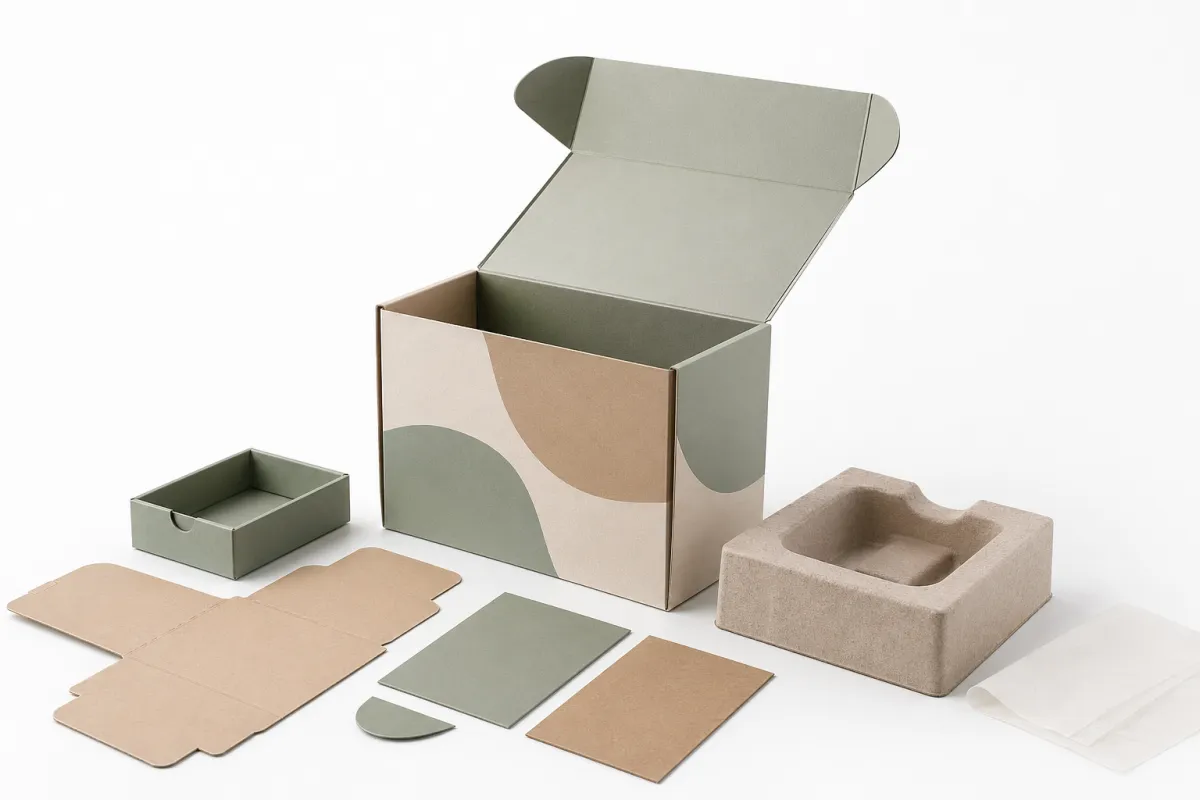
A custom packaging mockup generator turns dielines, artwork, and product dimensions into a realistic preview of the finished package. Put plainly, you upload the structure, place the art, and the tool shows how the box, pouch, sleeve, or rigid set-up will appear before anyone prints a single sheet or cuts a single board. That saves a lot of guesswork, especially for teams used to flat PDFs that hide folds, flaps, glue zones, and all the places where packaging behaves differently from a clean screen layout. I remember staring at my first carton proof years ago and thinking, "This looks simple enough." Then the fold lines showed up in production and that cheerful confidence evaporated in about 90 seconds.
The best way to think about a custom packaging mockup generator is as a bridge between packaging design and production. It is not just a polished image for a pitch deck or a sales email. It is a practical preview that helps teams judge scale, placement, hierarchy, and structure before a factory in Shenzhen, Suzhou, or Ho Chi Minh City runs the job. If the logo is drifting too close to a score line, the mockup shows it. If a claim looks cramped on a side panel, the mockup makes that plain. I use it before supplier handoff because it keeps the conversation grounded in what the package will actually do, not what someone hopes it will do after a long lunch and a bad guess.
There are three things people often mix together:
- Mockup generator: a visual tool that maps artwork onto a 2D or 3D package preview for quick review and approval.
- Flat proof: a technical layout view that checks bleed, trim, fold lines, and art placement, but does not show the finished shape very well.
- Production sample: a physical item made on real board, film, or paper so you can judge fit, finish, and print behavior with your hands.
That distinction matters more than most teams expect. A custom packaging mockup generator can save a lot of time in the first two rounds, but it does not replace a production sample for tricky materials like 15-micron foil, soft-touch laminate, or deep embossing on 24pt SBS. I learned that in a Chicago meeting where everyone admired a rendered rigid box, then went quiet when the sample arrived and the magnetic closure clicked too softly to feel premium. The screen had been polite. The sample was honest. Packaging has a way of saying, "Nice try," in the most expensive possible voice.
For agencies, the tool shortens sign-off by trimming revision loops from four rounds to two when the dieline is final and the logo files are vector-clean. For brands, it lowers the odds of a 5,000-unit mistake that can cost $1,200 to $3,500 in remake fees alone. For e-commerce teams, it keeps the package branding aligned with the product page and the unboxing video. For anyone buying Custom Packaging Products, it keeps the discussion tied to dimensions, materials, and print behavior instead of wishful thinking and loose assumptions. That alone is worth a lot, because wishful thinking has a habit of showing up as freight charges and rework later on.
"If the mockup cannot catch the fold issue, it is not doing its job. I have seen one bad crease turn a premium carton into a dented apology."
That line came from a supplier rep who had spent 18 years on folding carton lines in Guangdong. He was not exaggerating. He was describing the sort of mistake that shows up once the job is already moving and gets expensive fast. I have met enough plant managers to know they do not get dramatic unless something has gone very wrong, especially when the job is already on press and the board lot is labeled for 12,000 pieces.
How a custom packaging mockup generator works
A custom packaging mockup generator usually starts with five inputs: the dieline, the artwork, the logo files, the product measurements, and finish notes. If foil, embossing, spot UV, or a special coating is part of the job, that needs to be declared up front, along with the board spec, such as 350gsm C1S artboard or 18pt SBS. Clean inputs save time. Sloppy inputs create revision loops that feel endless because the same basic errors keep surfacing in different forms. I have watched a project get delayed three days because the team sent an "almost final" dieline that turned out to be an old 2023 revision with the wrong glue flap.
Here is the practical flow I use on real jobs:
- Upload the dieline. Use the final version only. If the box size is still moving, wait.
- Add artwork. Vector files are safer for logos and text-heavy areas than compressed images.
- Set dimensions. Length, width, height, panel depth, and insert clearance need to match the product down to the millimeter.
- Apply materials and finishes. Kraft, SBS, corrugate, matte laminate, and soft-touch each change the look and the way the box catches light.
- Render and review. Check front, back, sides, top flaps, and the retail-facing angles that actually matter in a buyer meeting.
The rendering stage is where the custom packaging mockup generator maps the 2D artwork onto a 3D form. That gives you a real sense of whether the logo is too large, whether the tagline is getting buried on the side panel, and whether the structure still feels right from the shelf. A front panel that looks crowded at 35 percent zoom will look even busier in a retail pitch or a wholesale presentation at a show in Las Vegas or Frankfurt. I have seen polished brand teams walk into a meeting confident, then quietly start shifting their mockup after noticing the hero claim was fighting the product photo like two people trying to talk over each other.
Then comes the review loop. I always inspect the front, the back, both sides, the tuck flaps, and any opening panel a customer will touch. Mailers and sleeves deserve the same treatment. One side may hold legal copy, another may carry a small icon, and the top panel may be the only area that matters in a display. A good custom packaging mockup generator gives you those angles before the art is locked, which is the difference between noticing a problem on a screen and hearing about it from a printer at 7:30 a.m. after 8,000 sheets have already been scheduled.
Timing depends on complexity. A simple carton mockup can be turned around the same day if the dieline and art are clean, and I have seen a clean folding carton proof reviewed in under 45 minutes. A multi-part setup with inserts, magnetic closures, or several SKUs can take one to three business days because someone has to test alignment, shadows, and camera angles. Realistic foil edges and embossed depth add more time. The fastest jobs I have seen were simple, flat, and prepared by teams that knew exactly what they were sending. That kind of preparation is not glamorous, but neither is scrambling because a sleeve width was guessed instead of measured.
For a quick sanity check, ask three questions before approving the first render: Is the dieline final? Is the artwork print-ready? Does the structure match the product? A custom packaging mockup generator is quick, but it cannot rescue bad source files. Garbage files still produce garbage previews, just with better lighting. I say that with affection, but only a little.
What drives cost and pricing for mockups
Pricing for a custom packaging mockup generator depends on who is doing the work and how polished the final image needs to be. Free browser tools exist. Monthly software subscriptions exist. Freelancers build renders. Suppliers offer mockup services tied to production. They do not serve the same purpose, and the quality range between them is wider than most teams expect on their first packaging project. I have seen a free tool do a decent job on a simple mailer and then completely fall apart on a rigid setup box with a foil stamp. That is not a failure of the tool; it is the tool being honest about its limits.
Here is the quick breakdown I give clients who want a realistic budget instead of an optimistic guess:
| Option | Typical price | Best for | Watch-outs |
|---|---|---|---|
| Free browser tool | $0 | Simple internal checks | Limited realism, limited export control |
| Subscription software | $29-$149 per month | Agencies and in-house packaging teams | Still needs clean dielines and skilled setup |
| Freelance mockup support | $150-$600 per SKU | Sales decks and client approvals | Revision rounds can add cost quickly |
| Supplier-managed mockup | $250-$1,500+ | Production-ready review and accuracy | Rush jobs and special finishes cost more |
What pushes the price up? Unusual structures. Realistic lighting. Foil. Spot UV. Embossing. Multiple SKUs. Extra revisions. Tight deadlines. If a custom packaging mockup generator request includes a rigid box, a sleeve, an insert tray, and a metallic finish, somebody has to spend real time making the image believable. That work does not happen for free unless the supplier is trying to win a larger production run later. I have no problem with that, by the way. I just like it when the math is clear, such as $0.15 per unit for 5,000 pieces on a simple mailer run versus $0.42 per unit when a full-color insert, matte coating, and FSC-certified board are included.
Rush fees are not invented out of nowhere. They exist because a designer or production artist has to stop other work and handle your files now. If a supplier in Dongguan shifts your job to the front of the queue, that affects the rest of the production board. I have sat through enough pricing discussions to know that a $75 rush premium can still feel dramatic to a client, even though the same client would hate paying for a reprint of 8,000 bad boxes far more. Nobody enjoys that conversation. It always starts with a sigh and ends with somebody staring at a spreadsheet like it personally offended them.
My rule of thumb stays simple. If the pack is a low-risk mailer for a small campaign, a lower-cost custom packaging mockup generator output is enough to confirm layout and scale. If the pack is premium retail packaging, includes multiple folds, or carries a high-value product, spend more on realism and finish accuracy. A $300 mockup can prevent a $9,000 mistake, and a well-built render can save a brand from approving a 12,000-piece run with a side panel that sits 6 mm too narrow for the product insert. That is not theory. That is factory-floor math.
For larger packaging programs, I keep the mockup budget tied to the run value. A 2,000-unit test release does not need the same investment as a 50,000-unit launch. Protect the line item that hurts the most: printed inventory sitting in a warehouse because the first version was approved too quickly. Warehouses in Los Angeles, Rotterdam, and Shenzhen are full of expensive lessons that were approved by committee.
For more production-oriented options, I usually point teams toward Custom Packaging Products once the structure is fixed and the art is ready to move. That is the point where mockup decisions stop being cosmetic and start affecting the actual box or mailer.
For standards and testing references, I often send teams to ISTA test methods and FSC certification guidance. If the package needs distribution testing or certified paper sourcing, those references keep the conversation tied to the actual supply chain. I have found that a link to a real standard does more to calm a room than three slides full of adjectives ever will.
Step-by-step using a custom packaging mockup generator
Using a custom packaging mockup generator goes better when you treat it like production prep instead of a design toy. The strongest results start before anything is uploaded. I always begin by confirming the dieline, because every other step becomes shaky if the fold map is wrong. People skip that and then act surprised when the artwork does not land where the carton folds. It is a little like building a door and forgetting which way it opens.
1. Prep the files
Make sure the dieline is final, the copy is proofread, and the vector art is clean. If the logo lives inside a low-resolution JPG, fix that first. If the product measures 182 mm by 116 mm by 41 mm, do not round it off because it is close enough. Packaging tolerances are real, and a 3 mm error can affect fit, grip, and closure in ways that only show up after production starts. I have seen a beautifully designed carton turn into a wrestling match because someone treated "roughly the right size" as a technical specification. It was not.
I had a cosmetics client send an old mailer dieline and then wonder why the bottle rattled around inside the sample. The mockup caught the problem, but only because we checked the dimensions against the actual bottle before rendering. A custom packaging mockup generator is only as accurate as the numbers behind it. If the bottle is 58 mm wide and the inside cavity was built for 54 mm, no amount of good lighting will save the situation.
2. Choose the correct pack type
Select the right format: folding carton, mailer, sleeve, rigid box, pouch, or insert. Each structure behaves differently. A folding carton with a tuck-end closure does not act like a rigid set-up box with a shoulder. A pouch handles graphics differently than a paperboard sleeve. The mockup has to match the real structure or the approval means very little. I still remember a meeting where someone treated a rigid box and a folding carton as if they were basically the same thing. They are not. The factory in Guangzhou certainly knows the difference, even if the spreadsheet does not.
If the job is retail packaging, pay attention to the shelf-facing side. If it is e-commerce, pay attention to the unboxing side. If it is a subscription box, pay attention to the first open and the message inside the lid. The custom packaging mockup generator should reflect the customer moment, not just the outside of the carton. People remember the moment the product lands in their hands, not the file name it came from.
3. Upload, render, and inspect
Upload the artwork and let the first render load. Then inspect the crop marks, fold alignment, copy hierarchy, and brand consistency. I look for three things on every first pass: whether the logo is centered correctly, whether text respects safe zones, and whether the graphic rhythm still works on the side panels. These are small issues on paper and expensive issues once a job is in motion. A tiny drift in placement can make a premium box feel strangely tired, which is not exactly the message anyone wants to send at retail price points of $12.99, $24.99, or $48.00.
On one supplier negotiation, I had a foil-heavy sleeve rendered with a shadow so convincing it looked ready for a catalog. The catch was that the foil panel sat 2 mm too close to a fold, which would have cracked on press. The custom packaging mockup generator showed the issue before plates were ordered, and the art was shifted in time to spare the client about $1,100 in remake costs. That is the kind of moment that makes everybody nod a little harder in the next meeting.
4. Export two versions
Keep one clean version for approvals and one annotated version for feedback. The clean file goes to executives, clients, and investors. The annotated file goes to the designer, prepress team, or supplier. If both audiences share the same file, the next day becomes a tangle of red marks, sticky notes, and comments that were never meant for the same room. A custom packaging mockup generator works better when the review path is clear from the start. I have seen one file become six versions in a single afternoon because nobody decided who was actually signing off. That sort of chaos ages everyone involved.
Most simple mockups can be ready the same day if the files are complete. More complex jobs usually need one to three business days, especially if there are multiple artwork versions, inserts, or premium finishes. My advice is plain: finish the file prep before you ask for speed. That is how you get speed. The printer, the designer, and the factory all appreciate it, even if they do not always say so out loud.
Key factors that change mockup quality and accuracy
The first factor is dieline accuracy. A beautiful custom packaging mockup generator render is useless if the fold lines, glue areas, or cut lines are wrong. I have seen teams approve a gorgeous render only to discover the top flap collided with the logo because the dieline had been copied from an older 2022 size. Nice image. Wrong carton. I do not care how pretty the shadow is if the panel is off by enough to break the design.
The second factor is material realism. Kraft, SBS, corrugate, soft-touch laminate, foil, embossing, matte varnish, and uncoated board all behave differently under light. A kraft mailer looks warmer and rougher than a coated carton. A soft-touch finish kills glare and makes color appear deeper. Spot UV catches light in isolated areas and can make a logo stand out or look cheap if the angle is off. A custom packaging mockup generator that skips those details is guessing with better graphics. That is fine for a thumbnail. It is not fine for approval.
The third factor is lighting and camera angle. Bad lighting can flatten a premium box or make a clean design look distorted. I once reviewed a rigid box mockup with harsh overhead light that made the corners look crushed, even though the sample was perfectly square with 1.5 mm board wrap and a clean magnetic closure. The box itself was fine. The render was the problem. Small detail. Big impact. That is why I prefer mockups that show a true shelf angle, a straight-on front view, and one open view for premium packaging. If the lighting is lying, the whole conversation gets weird.
The fourth factor is supplier specification. Every factory has tolerances, press setups, and finishing limits. Some hold tighter foil registration. Some struggle with deep embossing on heavier board. Some handle short-run custom printed boxes beautifully and then stumble on delicate inside-print details. If the supplier says a 0.75 mm emboss depth is safe and 1.5 mm is risky, believe them. They are the ones who have to clean up the mess if it goes wrong. I have stood in more than one workshop in Ningbo and Vietnam where the engineer said, very calmly, "We can do that, but not that way," and that calmness usually meant the lesson had been learned the hard way already.
For Product Packaging That must survive shipping, I also look at distribution testing. ISTA 3A, for example, is a common reference point for parcel-related performance, and it helps teams think beyond the visual render. If the package has to survive drops from 30 inches, vibration on a 48-hour truck route, and compression on a pallet stack, the custom packaging mockup generator should sit beside real engineering judgment, not wishful thinking. A pretty box that collapses in transit is just expensive confetti.
For sustainable packaging decisions, FSC-certified board and paper can matter as much as the final visual. If a client wants a greener message, the mockup has to reflect the actual stock, not a fantasy material that only exists in a presentation. The outer look and the sourcing story need to match. Otherwise the packaging branding feels thin the moment anyone asks a sourcing question. And believe me, somebody will ask. Usually the one person in the room who actually read the brief and checked the recycled-content percentage.
Here is a blunt truth from the factory floor: the mockup is not the final judge. It is the first smart filter. Use it to remove obvious errors, then confirm the rest with supplier specs, print samples, and, if needed, a physical prototype. That is how I keep a custom packaging mockup generator useful instead of decorative. It has to earn its place by catching problems early, not by looking impressive in a slide deck.
Common mistakes with custom packaging mockup generator tools
The biggest mistake is using an outdated dieline and assuming the custom packaging mockup generator will fix it. It will not. If the panel size changed from 120 mm to 126 mm, your artwork placement has to change too. The tool is a map, not a magic trick, and maps do not correct the terrain for you. I wish they did, because that would save a lot of coffee and a lot of 9 p.m. file revisions.
Another common problem is ignoring bleed, safe zones, and spine allowances. People love to place tiny legal copy right next to a fold and then act surprised when the text disappears into the crease. I have seen that happen on a run of custom printed boxes where the ingredient panel sat 4 mm too far left and the compliance line landed exactly where the tuck flap folded. The mockup showed it. The team missed it. The printer would have charged for the fix. That is a painful triangle. Nobody wants to pay a factory to discover what the screen already told them for free.
Overtrusting the render is another classic error. A mockup can look fantastic and still miss the real-world behavior of the board, coating, or glue. A gloss laminate may reflect differently than the render suggests. A matte finish may dull the color more than expected. A premium box may need a sample because the visual preview cannot tell you how it feels in hand. If the pack is high-value, do not skip the sample. The hand-test is not fancy, but it is honest, especially when the box is built on 1200gsm chipboard with wrapped paper.
Too many vague revision rounds slow everything down. "Make it pop" is not a production instruction. Neither is "move the logo somewhere better." I had a client send eight revision notes that all meant the same thing: they wanted the logo 6 percent larger and the tagline 2 mm higher. A better brief would have saved two days and at least one frustrated prepress call. A strong custom packaging mockup generator workflow needs one decision-maker, clear comments, and a deadline. If everybody is giving feedback and nobody is deciding, the project drifts like a shopping cart with one bad wheel.
Teams also forget to match the mockup style to the audience. A sales deck for investors can tolerate a polished render with dramatic shadows and a warm 3-point light setup. A supplier handoff needs clear, technical views with no visual fluff. If the same file is used for both, someone will be confused, and confusion always eats time. Usually $75 to $250 worth, sometimes more. I have watched a tiny misunderstanding spawn three email threads, two calls, and one very tired designer in Brooklyn trying to reconcile feedback from three different people.
One more mistake: approving packaging design before checking the product. A 250 mL bottle, a 60 g jar, and a 90 g pouch do not behave the same inside a carton. The mockup should prove fit, not just appearance. The custom packaging mockup generator is there to catch that mismatch before you print 5,000 sleeves that never should have been approved. It is cheaper to be picky now than to be apologetic later.
Expert tips to get approvals faster and avoid rework
Start with a preflight checklist. I want exact dimensions, final copy, finish notes, product weight, and one decision-maker who can answer yes or no within 24 hours. That sounds basic because it is basic, and basic discipline saves real money. A custom packaging mockup generator moves quickly only when the people around it move quickly too. Fancy software cannot compensate for a team that keeps changing its mind over lunch or adding "just one more" version at 5:40 p.m.
My checklist usually includes these items:
- Final dieline: one version only, no "latest_final_v7_reallyfinal" nonsense.
- Artwork files: vector logo, linked images, and font outlines if needed.
- Material notes: 18pt SBS, 24pt kraft, E-flute corrugate, or whatever the job truly requires.
- Finish notes: foil, emboss, spot UV, matte varnish, or soft-touch lamination.
- Approval rules: who signs off, who reviews, and who stays silent.
Compare the mockup against the factory requirements before you send it to the client. I cannot say that enough. Buying approval now and pain later is a bad trade. If the supplier needs 3 mm bleed, do not approve a mockup built on 2 mm. If the carton has a lock bottom, make sure the mockup reflects the lock bottom and not a regular tuck. Details like that decide whether the file is production-ready or just visually pleasing. And yes, I have seen teams approve the wrong closure because the render looked tidy. Tidy is not a specification.
Ask for one physical sample if the packaging includes tricky finishes, structural folds, or premium retail expectations. I have paid $180 for a sample that saved a $6,800 mistake. That is a smart expense. A custom packaging mockup generator is excellent for speed, but some finishes still need your hands, not only your eyes. Foil, embossing, and heavy board all benefit from a real sample. The material tells the truth in a way no screen can quite manage, especially on a 350gsm C1S artboard carton with a gloss foil logo.
If you are managing a brand launch, pair the mockup with a short review window. Give the client 24 to 48 hours, not a drifting "whenever." Tight windows force better decisions. The feedback gets cleaner. The approval arrives faster. The file moves to production instead of dying in an inbox for three days. I have seen that inbox drift kill momentum more times than I care to admit, especially when three stakeholders were copying each other on every note.
For teams buying Custom Packaging Products, I also recommend sending the mockup and the production spec together. That keeps the discussion centered on the actual box, mailer, or sleeve instead of a polished render with no manufacturing context. It is the same reason I keep a print spec sheet next to every approval sheet on my desk. One pretty image is useful; the image plus the factory instructions is what gets the job built correctly.
Here is the part most people miss: a good custom packaging mockup generator does not replace judgment, it speeds up judgment. Use it to narrow the field, not to avoid thinking. If you do that, approvals move faster, rework drops, and your branded packaging starts looking like someone planned it on purpose. That is a small sentence with a big payoff.
And yes, that is still the job. Not making a pretty picture. Making sure the actual package sells the product, protects it in transit, and survives the press without turning into an expensive apology. That is what a custom packaging mockup generator does best when the files are clean and the team is awake. It is not glamorous, but neither is an avoidable reprint.
I have seen teams waste two weeks arguing over color on a screen when the real issue was a bad structural cut. I have also seen a custom packaging mockup generator save a launch because it showed a flap interference problem before the order left the factory in Guangdong. Both things are true. The tool is only as good as the people using it, the dieline behind it, and the supplier who has to build the final carton. That is packaging in a nutshell: a mix of design, process, and just enough chaos to keep everybody humble.
What is a custom packaging mockup generator used for?
It previews the finished package before production so teams can judge shape, layout, and branding placement. A custom packaging mockup generator helps catch dieline mistakes, awkward text placement, and structural issues before money gets spent on a run. It is especially useful for client approvals, sales presentations, and supplier communication. I have used it to settle arguments in under five minutes that would have dragged on for a week without a visual, including one carton review where the problem turned out to be a 5 mm logo shift on the top panel.
How accurate is a packaging mockup generator compared with a print proof?
It is usually very good for structure, proportions, and artwork placement, especially on folding cartons and mailers. It is less exact for paper texture, coating feel, foil shine, and subtle color shifts. For final approval, compare the mockup with supplier specs and a physical sample when the project is complex. A custom packaging mockup generator should help you make smarter decisions, not trick you into skipping the real proof, particularly on premium packs built with 24pt board or soft-touch lamination.
How much does a custom packaging mockup generator cost?
Basic browser tools can be free, but they usually have limited realism and fewer export options. Paid software, freelance support, or supplier-managed mockups can range from a few hundred dollars to several thousand depending on scope. Price depends on structure complexity, revision rounds, finish effects, and how fast you need it turned around. In my experience, the cheapest option is not always the least expensive if it causes a remake later, especially on a 10,000-piece run where even a $0.08 per unit waste adds up quickly.
How long does it take to make a custom packaging mockup generator file?
Simple carton mockups can be built the same day if the dieline and artwork are ready. More complex packs with inserts, sleeves, or premium finishes often take one to three business days or longer. Turnaround gets faster when dimensions, artwork, and approval rules are final before the mockup starts. A custom packaging mockup generator is quick only when nobody keeps changing the brief halfway through, and a clean proof can often move from render to client review in under 24 hours.
What files should I prepare before using a packaging mockup generator?
Prepare the final dieline, vector logo files, final copy, and exact product dimensions. Include brand colors, finish instructions, and reference photos if you want the mockup to match your intent. Add supplier requirements for bleed, safe zones, folds, and any print limitations before you export or approve. The better your files, the less time everyone spends untangling avoidable mistakes, whether the job is running in Shenzhen, Dongguan, or a local converter in your own region.
If you are moving a package toward print this week, the practical move is simple: lock the dieline, confirm the product dimensions, and review the render against the factory spec sheet before anyone signs off. Then, if the structure, finish, or fit could still shift the outcome, make one physical sample and compare it in hand. That is the cleanest way to use a custom packaging mockup generator without getting fooled by a pretty screen.

