Buyer Fit Snapshot
| Best fit | Custom Packaging Sleeves for Jars That Boost Branding projects where brand print, material claims, artwork control, MOQ, and repeat-order consistency need to be specified before quoting. |
|---|---|
| Quote inputs | Share finished size, material target, print colors, finish, packing count, annual reorder estimate, ship-to region, and any compliance wording. |
| Proofing check | Approve dieline scale, logo placement, barcode or warning zones, color tolerance, closure strength, and carton packing before bulk production. |
| Main risk | Vague material claims, crowded artwork, missing packing details, or unclear freight terms can make a low unit price expensive after revisions. |
Fast answer: Custom Packaging Sleeves for Jars That Boost Branding should be specified like a repeatable production item. The safest quote records material, print method, finish, artwork proof, packing count, and reorder notes in one written spec.
Production checks before approval
Compare the actual filled-product size with the drawing, then confirm tolerance on folds, seals, hang holes, label areas, and retail display edges. Reserve space for logos, QR codes, warning copy, and material claims before decorative graphics fill the panel.
Quote comparison points
Review material grade, print process, finish, sampling route, tooling charges, carton quantity, and freight assumptions side by side. A quote is only useful when the supplier can repeat the same color, closure quality, and packing count on the next order.
Custom packaging sleeves for jars change how a product reads on shelf, and they do it fast. A plain glass jar can go from forgettable to polished with one well-made sleeve. The package looks more deliberate. It looks more finished. It looks like somebody paid attention, which is refreshing in a category full of tired labels and last-minute artwork.
Brands use sleeves because they solve a real problem without forcing a full packaging rebuild. They add room for storytelling, product details, regulatory copy, and shelf presence. They also let packaging teams improve the look of a line without commissioning a new jar shape or rebuilding the whole structure from scratch. That matters when the budget is real and the launch date has teeth.
Buyers usually care about three things: cost, speed, and whether the sleeve helps sell the product. Custom packaging sleeves for jars can support all three if the fit, material, and production plan are handled properly. Miss those details, and the sleeve becomes a decorative error with a purchase order attached. Nobody needs that kind of surprise.
That is the point. Visual appeal matters, sure. The mechanics matter more. Fit, materials, print quality, turnaround, and shelf performance decide whether the sleeve earns its place or just sits there looking expensive.
Why custom packaging sleeves for jars stand out on shelf
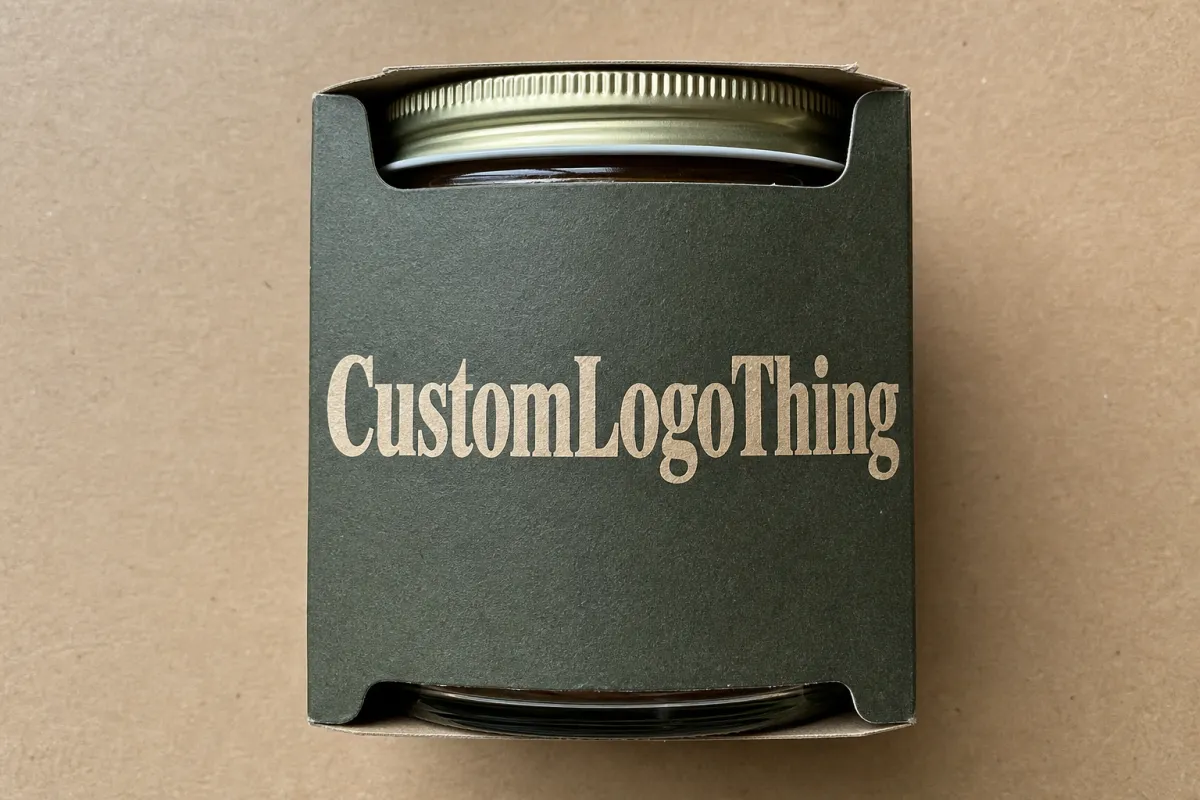
Put three similar jars on a shelf. One has a basic label. One has a printed wrap. One has a sleeve with stronger color blocking, cleaner hierarchy, and more presence. The third one usually gets noticed first. Not because shoppers are emotionally attached to sleeves. Because the package breaks the visual pattern their eyes already tuned out.
A jar sleeve is a printed band or wrap built to sit around the container instead of replacing it. Depending on the format, it may be shrink film, paperboard, or a pressure-sensitive wrap label. Each version changes the personality of the package. Some feel modern and sharp. Some feel natural and crafted. Some just do the job and stay out of the way, which is underrated.
The big advantage is surface area. A sleeve gives more room for flavor cues, scent notes, directions, ingredient details, batch codes, and whatever else the product needs to say. That extra space also helps hide the awkwardness of a generic jar. A standard vessel can look custom once the sleeve does its work.
That flexibility shows up across a lot of categories:
- Food, including jams, sauces, spreads, dry goods, and specialty condiments
- Candles and home fragrance, where color and scent need to register quickly
- Beauty and wellness, from scrubs and balms to powders and bath products
- Seasonal or giftable retail items that need frequent artwork updates
- Small-batch lines that want a premium look without custom glass tooling
Sleeves also help brands move faster. A holiday edition, a test-market SKU, or a refresh for a retail pitch can happen without touching the jar itself. The lid stays. The fill line stays. The packaging story changes anyway. That kind of flexibility is useful, and it saves a lot of pointless retooling.
Packaging buyer reality: a sleeve does not need to reinvent the jar. It just needs to make the existing package look intentional.
If you are comparing formats beyond jars, the range of Custom Packaging Products can help you sort out what belongs on the vessel, what belongs around it, and what should stay in the shipping carton where nobody has to admire it under store lighting.
How custom packaging sleeves for jars work
The process starts with measurements, because guesswork is a terrible design tool. Body diameter, overall height, shoulder shape, lid height, and any taper all affect how the sleeve sits. Once those numbers are clear, the dieline gets built, artwork gets mapped, and the production method gets matched to the jar.
Three common formats show up again and again. Shrink sleeves are printed on film and heat-applied so they conform to the container. They work well for strong coverage and odd shapes. Paperboard wraps bring a tactile, premium feel and lean toward a more natural brand look. Pressure-sensitive wrap labels use adhesive and are often friendlier for smaller runs or simpler lines, but they do not create the same full-package transformation as a true sleeve.
Each option solves a different problem. Shrink sleeves can cover nearly the whole jar, but they need the right application setup and can complicate recyclability decisions depending on the film and adhesive. Paperboard creates a more crafted feel, but it does not love moisture or rough handling. Pressure-sensitive formats are flexible and familiar, though they usually stop short of the dramatic shelf impact brands want from custom packaging sleeves for jars.
Fit decides whether the sleeve looks professional or cheap. Too loose, and it can shift in transit. Too tight, and it may buckle at the shoulder or lift at the seam. If the printable area is off, important copy can disappear into the curve of the jar. A few millimeters do not sound dramatic. On shelf, they are. Packaging is cruel like that.
The typical workflow looks like this:
- Confirm jar dimensions and application method
- Build or review the dieline
- Place artwork and required product information
- Create a proof or sample
- Approve color, fit, and print registration
- Run production and apply the sleeves
The handoff between design and production is where most delay lives. If the brand finalizes artwork before the jar spec is locked, the project may need to back up and redo work. If the jar shape keeps changing, the sleeve will probably need another round too. Packaging teams that move design and production together from the start usually avoid the worst of that mess.
For brands that care about sourcing and testing, a sleeve also sits inside a larger packaging system. If paper-based components matter to your buyers, a forestry certification such as FSC can be part of the conversation. If shipping performance matters, ISTA test methods help define what the package should survive before it reaches a customer.
Key factors that shape sleeve design and performance
Jar sleeves are not plug-and-play. The container shape, material, print process, and product environment all affect how the sleeve looks and holds up. Ignore one of those variables and the result usually shows it.
Jar geometry
Shape comes first. Straight-sided jars are the easiest to sleeve because the printable area stays predictable from top to bottom. Tapered jars, shoulder-heavy jars, and jars with embossed panels are more demanding. Diameter controls wrap length. Shoulder profile controls readable space. Lid height matters too, especially when the artwork sits close to the top edge and starts crowding the opening.
A 4-ounce candle jar and a 16-ounce pantry jar may look similar at a glance. Their sleeve layouts are usually very different. The usable space changes, and so does the balance between graphics and required copy. One-size-fits-all thinking tends to fail here, and it fails loudly.
Material choice
Material affects look, feel, and function at the same time. Paper stocks create warmth and texture, which suits handmade or artisanal branding. Films, including shrinkable films, hold graphics with precision and allow more complete coverage. Specialty stocks can add texture, metallic effects, or matte surfaces that push the package toward a premium lane. None of these is automatically right. The right one depends on the product, the environment, and the target price.
Durability matters just as much. A sleeve on a refrigerated food jar faces moisture. A candle sleeve may sit near heat or pick up wax residue. A cosmetic jar in retail often gets handled a lot, so scuff resistance becomes part of the spec. If the finish cannot survive actual use, the branding promise falls apart quickly.
Print and information layout
Color accuracy matters more on custom packaging sleeves for jars than many teams expect. The sleeve often carries the main brand story, so a color shift can throw off the entire visual system. Fine text needs contrast and room to breathe. Barcodes need to scan cleanly. Curved surfaces make every alignment issue more obvious than it would be on a flat carton.
Claims, ingredients, directions, warnings, and net weight all need to sit inside a clear hierarchy. The shopper should understand the product in seconds. If they have to rotate the jar three times under fluorescent lighting, the layout failed. Nobody wants to play detective in the condiment aisle.
Brand position
The sleeve should tell the truth about the product. A premium line usually wants restraint: a clean palette, softer finish, and less copy. A value line may need bolder callouts and more direct claims. A seasonal item can go louder and shorter-term without breaking the system. If the sleeve says luxury and the price says discount bin, shoppers feel the mismatch immediately.
| Option | Best for | Typical strengths | Typical tradeoffs | Indicative unit cost at 5,000 pcs |
|---|---|---|---|---|
| Paperboard wrap | Craft, premium, eco-forward branding | Tactile feel, strong storytelling, good print surface | Less moisture resistance, limited wrap complexity | $0.14-$0.30 |
| Shrink sleeve | High coverage, unusual jar shapes, strong shelf impact | Near-full coverage, strong visual transformation | Needs application equipment and careful fit planning | $0.18-$0.42 |
| Pressure-sensitive wrap label | Small to mid-size runs, flexible line extensions | Simple application, familiar supply chain | Less dramatic coverage than shrink formats | $0.12-$0.28 |
Those numbers are directional. Coverage, finish, print complexity, and quantity all move the price. Still, a comparison table like this helps buyers narrow the field before asking for quotes, especially if the product may later expand into Custom Printed Boxes or other retail packaging components.
Custom packaging sleeves for jars: process and timeline
The quickest sleeve projects usually start with the least glamorous step: measuring the jar properly. After that, the timeline depends on artwork readiness, revision count, sampling needs, and whether the sleeve requires a fit check before approval. Most delays come from a handful of predictable places, and almost all of them were avoidable.
A typical process includes a brief, a dieline, proofing, and approval. For a new SKU, the brand should hand over jar dimensions, lid specs, product copy, regulatory language, and the intended use case. Shelf retail is not the same thing as ecommerce fulfillment. A gift set is not the same thing as a refrigerated food jar. Storage and handling change the brief, whether teams like that or not.
Turnaround times vary, but a standard production window often lands around 12 to 20 business days after proof approval for common runs. Sampling, specialty finishes, and complicated application setups add time. Multi-SKU programs usually take longer too, since each jar size may need its own dieline and sign-off even when the brand system stays consistent.
These items should be ready early:
- Exact jar dimensions, including body diameter and shoulder height
- Material preference, such as paperboard, film, or specialty stock
- Final product copy, including claims and warnings
- Quantity range and likely reorder plan
- Application method and packaging line constraints
- Storage and shipping conditions
One thing experienced buyers learn fast: structure and messaging need approval before the artwork gets too polished. If the copy is still changing near the end, the sleeve usually needs another proof cycle. More cycles mean more time. Packaging does not care that the calendar is crowded.
Good suppliers usually ask practical questions instead of jumping straight into design. That is a good sign. They want to know whether the sleeve must survive refrigeration, whether a barcode belongs on the back panel, whether the jar has a lip that interrupts the wrap, and whether the finish should lean matte or gloss. Those sound like small details until they break the run.
Cost and pricing for custom packaging sleeves for jars
Pricing for sleeves depends on more than most buyers expect. Material matters, of course. So do print process, quantity, finish, and how the sleeve gets applied. A design that looks simple on screen can become expensive once the team adds metallic effects, multiple inks, specialty coating, or a tricky fit on a tapered jar.
MOQ, or minimum order quantity, affects unit cost directly. Smaller runs cost more per piece because setup gets spread across fewer units. Larger runs reduce the per-unit number, but they also increase inventory risk if the product is seasonal or still being tested. The right quantity depends on velocity, shelf life, and how often the artwork will change.
Here is a cleaner way to think about the tradeoffs:
- Simpler sleeve, lower spend: one- or two-color design, standard stock, minimal finish, easier application
- Premium sleeve, higher shelf impact: more coverage, matte or soft-touch feel, special ink or foil, tighter registration
- Complex sleeve, higher operational load: multiple SKUs, variable data, unusual jar geometry, or shrink application
The right question is rarely “what is the cheapest sleeve?” It is usually “which sleeve gives me the best shelf response without creating a production headache?” That distinction saves money later. A low-cost sleeve that scuffs, peels, or slows down hand application can end up being the expensive one.
Request quotes with as much structure as possible. Suppliers price more accurately when they see exact jar dimensions, artwork status, quantity tiers, finish requirements, and whether the sleeve is for a launch, seasonal refresh, or permanent line. If you are still comparing formats, include that context too. It gives the supplier room to recommend whether a sleeve is the right choice or whether another format from a broader Custom Packaging Products range fits better.
For a simple run, pricing may land somewhere around $0.12-$0.42 per unit depending on material and quantity. That is a starting point, not a promise carved into glass. Premium finish, specialty stock, and low MOQ can push the number up fast. Larger orders with standard print coverage may bring it down. Tiered quotes are the only honest way to see where the break actually lives.
Budget planning works best when the sleeve cost gets measured against the shelf space it earns. A slightly higher package cost can make sense if the product is moving into a tougher retail setting and needs stronger package branding to stand out. For lines where appearance drives margin, that trade is often worth it.
Common mistakes when ordering jar sleeves
The most expensive sleeve mistakes are usually small. No fireworks. No dramatic disaster. Just one or two missed details that become painfully obvious after the first production run. The mockup looked fine. The jar did not care.
1. Sizing from a photo instead of a measurement. A jar can look taller, wider, or more cylindrical in a product image than it really is. Without exact measurements, the sleeve may leave gaps, wrap awkwardly, or land on a curve that distorts text.
2. Crowding too much information into too little space. Brands often try to fit claims, ingredients, icons, QR codes, and promotional text all at once. The result is a front panel with no real hierarchy. On a small jar, restraint usually sells better than clutter.
3. Choosing a finish without testing it. A matte coat can look elegant in a render and scuff in shipping. A glossy surface can bounce store lighting into unreadability. Testing matters because retail packaging lives in actual stores, not presentation decks.
4. Forgetting the application method. A sleeve can be easy to design and annoying to apply at speed. If the pack line uses hand application, the sleeve needs to be forgiving. If a machine handles it, the dimensions need to match the equipment tolerance. Skip that step and the line slows down.
5. Using inconsistent dielines across SKUs. When one jar size is slightly different but the files are treated like clones, production confusion follows. That gets messy fast in multi-SKU programs.
6. Overlooking storage and shipping conditions. Condensation, heat, rubbing, and cold-chain handling all affect performance. A sleeve that looks perfect in a dry sample room can fail in a refrigerated distribution environment.
Most of these problems are preventable with a physical sample jar and a review checklist that someone actually reads. Not glamorous. Extremely effective.
Expert tips and next steps for better sleeve results
Start with a sample jar instead of a drawing. That one move catches a surprising number of issues because the real curvature, shoulder height, and lid overlap show up immediately. Flat mockups hide problems. The real vessel does not.
Build the hierarchy from the shelf outward. Product name first. Variant or scent second. Brand mark third. Supporting claims and compliance details still need to be readable, but they should not steamroll the front panel. A strong sleeve lets the shopper understand the offer at arm’s length, which is how most retail decisions happen.
Test the sleeve in the environment where the jar will actually live. Bright LEDs can flatten color. Refrigeration can expose adhesion issues. Humid bathrooms and kitchens can expose the finish. Frequent handling can scuff the surface. None of that shows up in a PDF, which is why PDFs are not a strategy.
When comparing suppliers, ask for specifics instead of polite fog. A solid conversation usually covers:
- Material gauge or stock type
- Print process and finish options
- Expected turn time after proof approval
- Quantity tiers and price breaks
- Application method and compatibility
- Sampling policy and revision limits
It also helps to compare the sleeve against other packaging components before making a final call. Some products need custom packaging sleeves for jars plus custom printed boxes or shipping cartons. Others need the sleeve to carry the whole story because the jar goes straight from shelf to home with no extra packaging to help. The right answer depends on the channel, the margin, and how much the vessel can already say on its own.
If you want a practical way to move forward, use this checklist:
- Measure the jar and lid carefully.
- Define the purpose of the sleeve: launch, refresh, seasonal, or permanent.
- Set a quantity range before requesting quotes.
- Collect final copy, claims, and barcode data.
- Request a sample or proof on the actual jar size.
- Compare cost, fit, finish, and turnaround side by side.
That process is simple, and that is exactly why it works. It prevents rework. It keeps the team from guessing. It usually leads to a better package because the decisions are based on the jar in hand instead of a nice-looking screen.
For brands that want speed, control, and a stronger shelf signal, custom packaging sleeves for jars can be a very efficient tool. They add visual weight without changing the vessel, they support retail packaging goals without forcing a full structural redesign, and they give product teams room to test new ideas without betting the whole launch on one format. If Design, Cost, and Production planning line up early, the sleeve does more than wrap the jar. It helps sell the product.
Here is the practical takeaway: start with the actual jar, lock the measurements, decide whether you need shrink, paperboard, or a pressure-sensitive wrap label, and get a physical proof before you approve anything. That one sequence saves time, money, and the usual round of preventable packaging regret.
FAQ
How do custom packaging sleeves for jars differ from wrap labels?
Sleeves usually cover more of the jar and create a stronger visual transformation than a standard wrap label. Wrap labels are often simpler and less expensive, while sleeves give brands more room for storytelling, seasonal graphics, and premium package branding. If the goal is to make a jar feel like a finished retail item instead of a plain vessel with a sticker on it, sleeves usually do more work.
What information should go on custom packaging sleeves for jars?
Include the brand name, product name, variant, net weight or volume, ingredients or claims, and any required warnings. The most important content should stay visible from a normal shelf viewing distance, because shoppers usually read the front panel first. If compliance text is required, keep it legible, but do not let it swallow the design. That is how good packaging turns into visual noise.
What is the usual minimum order quantity for jar sleeves?
MOQ depends on the material, print method, and supplier setup. Smaller runs tend to cost more per unit, while larger runs usually reduce the price. Ask for tiered quotes so you can see where the best cost break appears for your product line. If a supplier gives one flat number without asking about jar size, finish, or application method, they are not really quoting yet.
How long does it take to produce custom packaging sleeves for jars?
Timeline depends on artwork readiness, proof approval, print method, and whether the sleeve needs a sample fit check. Many standard projects move through production in about 12 to 20 business days after approval, but sampling and revisions can extend that window. Tighter timelines are possible on some programs, but only if the dimensions, copy, and application method are already settled.
Can custom packaging sleeves for jars work for seasonal or limited-edition launches?
Yes. Sleeves are often a strong fit for short-run launches because they let a brand refresh the look without changing the jar itself. They are especially useful for holidays, promotions, test-market products, and limited edition product packaging updates. They are also practical for brands that want to trial a new visual direction before committing to a larger packaging change.

