Buyer Fit Snapshot
| Best fit | Custom Packaging with Die Cutting projects where brand print, material claims, artwork control, MOQ, and repeat-order consistency need to be specified before quoting. |
|---|---|
| Quote inputs | Share finished size, material target, print colors, finish, packing count, annual reorder estimate, ship-to region, and any compliance wording. |
| Proofing check | Approve dieline scale, logo placement, barcode or warning zones, color tolerance, closure strength, and carton packing before bulk production. |
| Main risk | Vague material claims, crowded artwork, missing packing details, or unclear freight terms can make a low unit price expensive after revisions. |
Fast answer: Custom Packaging with Die Cutting: Design, Cost, Fit should be specified like a repeatable production item. The safest quote records material, print method, finish, artwork proof, packing count, and reorder notes in one written spec.
Production checks before approval
Compare the actual filled-product size with the drawing, then confirm tolerance on folds, seals, hang holes, label areas, and retail display edges. Reserve space for logos, QR codes, warning copy, and material claims before decorative graphics fill the panel.
Quote comparison points
Review material grade, print process, finish, sampling route, tooling charges, carton quantity, and freight assumptions side by side. A quote is only useful when the supplier can repeat the same color, closure quality, and packing count on the next order.
A product can look immaculate on a screen and still arrive with scuffed corners, a loosened lid, or an insert that has drifted half a centimeter out of place by the time the carton reaches the customer. Freight is unforgiving. So are warehouse stacks, conveyor belts, and the drop from a delivery van to concrete. Custom packaging with die cutting matters because it gives the product a structure that controls movement instead of merely enclosing it. Fit stops being a decorative idea and becomes a measurable advantage.
At one packaging plant I visited, a small change in fold geometry reduced the amount of hand-adjustment on the line by several seconds per unit. That does not sound dramatic until the run reaches tens of thousands of cartons. A difference of 3 seconds per pack becomes more than 4 hours over 5,000 units. Multiply that by labor, scrap, and rework, and the structural detail starts to look less like a design choice and more like a financial one. That is the real value of custom packaging with die cutting: the shape changes how the pack behaves under pressure.
For branded consumer goods, the value of custom packaging with die cutting is not limited to a clever outline or a memorable silhouette. A die-cut structure can hold a bottle upright, cradle a device, frame a product window, or remove dead board weight that adds cost without adding protection. A carton that wastes 10 grams of board per unit sounds minor until the run reaches 50,000 units. That becomes 500 kilograms of material moving through production, shipping, storage, and disposal. The shape is only half the story. The other half is how the shape behaves once it leaves the mockup stage.
Custom Packaging with Die Cutting: Why Fit Changes Everything
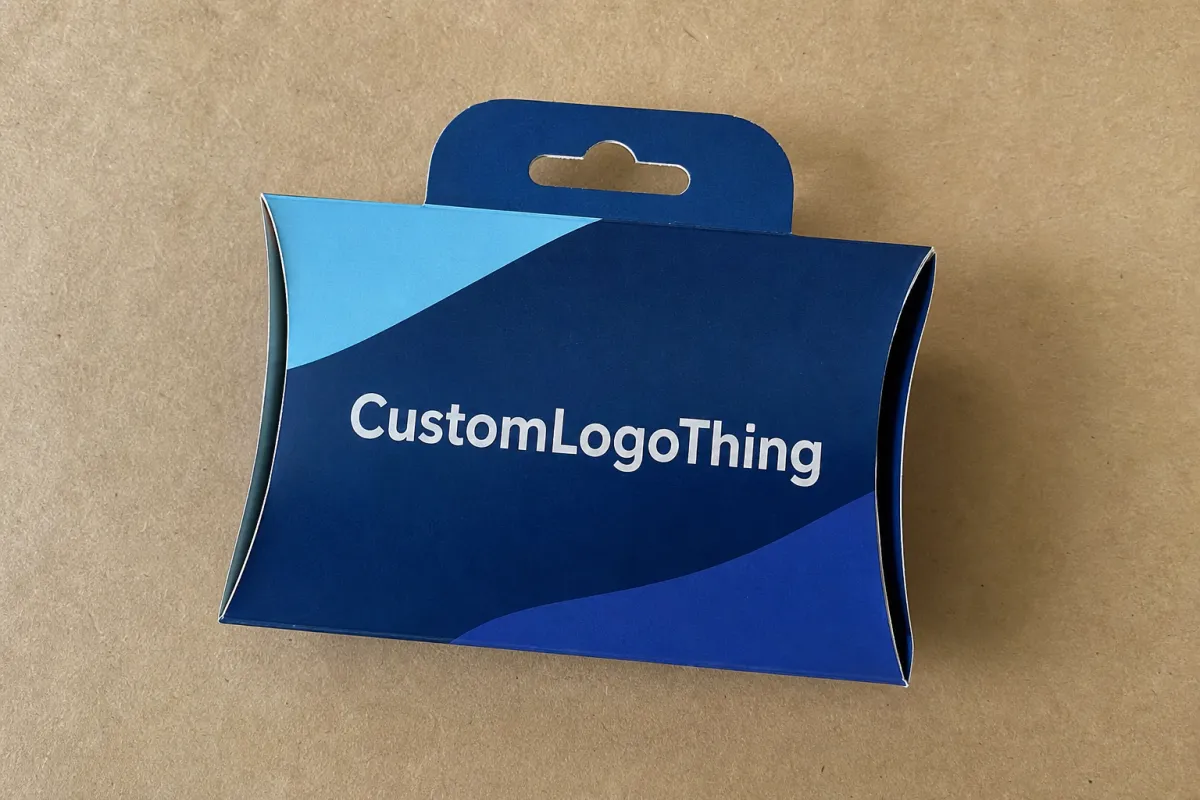
Packaging failures usually begin with a mismatch. The product is measured, the box is ordered, and the gap between the two is treated as harmless. It is rarely harmless. Empty space turns into movement. Movement becomes abrasion. Abrasion becomes returns, rework, and the complaint that never mentions the box directly but still points straight at it. Custom packaging with die cutting avoids that chain by matching the carton, tray, insert, or sleeve to the product’s actual behavior, not just its outer dimensions.
Die cutting is a precision process that converts flat board into a structure with cut lines, score lines, perforations, tabs, windows, locking flaps, and custom inserts. The die line is the map. Every crease has a purpose, and every cut changes how the finished package opens, folds, ships, and displays. With custom packaging with die cutting, the box does not ask the product to fit a generic shape. The box is shaped around the product instead, which changes assembly speed, movement control, and the way the finished piece feels in the hand.
The most useful die-cut features are often the least dramatic. A small insert can stop a glass jar from shifting by 2 mm, and that tiny difference can be the line between a clean delivery and a broken unit. A carefully placed score can make a fold cleaner on the line, which matters when operators are packing hundreds or thousands of units an hour. A window cut can expose the product without robbing the panel of too much strength. These are small decisions. They do not behave like small decisions once production starts.
Fit is not decoration. Fit keeps the product still, presents it clearly, and keeps the package from wasting board where it does no useful work.
A beautiful set of Custom Printed Boxes can still underperform if the structure is wrong. Artwork gets attention first because it is visible. Structure earns trust later because it has to survive reality. The stronger sequence is simple: establish fit, then refine branding. Once the board size, insert geometry, and closure style are correct, the printed package becomes easier to trust, easier to ship, and easier to repeat at scale.
Retail also rewards precision. A tight fit makes the product sit centered rather than drifting to one side, and the shelf face looks more intentional because the branding and product form align instead of fighting each other. Direct-to-consumer packaging benefits in a different way. Less void space means less filler. Less filler means faster pack-out and fewer materials moving through the supply chain. A clean unboxing is not the result of excess. It usually comes from restraint and from a package that was measured against reality rather than against a mood board.
There is a trust issue here as well. Consumers rarely inspect board caliper or flute direction, but they notice when a product rattles, when a flap tears on first opening, or when a premium item arrives in a structure that feels improvised. The package may never get credit for preventing damage, yet it will be blamed if it fails. That imbalance is exactly why structural design deserves the same attention as print finish.
How Custom Packaging with Die Cutting Works
The process starts with a dieline, the flat pattern that marks where board will be cut, scored, folded, glued, perforated, or slotted. Good structural design begins in two dimensions because the flat sheet has to become a functional object after it leaves the press. A pack that closes awkwardly or resists folding on the line is not a design success, no matter how good the mockup looked. In custom packaging with die cutting, the dieline is the blueprint and the blueprint has to survive production.
Cut lines define the final shape. Score lines create controlled bends. Perforations support tear-away features and easy-open sections. Glue areas tell the structure where to lock. A package that uses all of those elements well folds more predictably, runs faster, and feels more coherent in the hand. When the design is careless, the same elements start competing with one another, and the result is an opening that resists, a closure that slips, or a corner that cracks too soon.
Different package formats solve different problems. Folding cartons are efficient for lightweight retail goods. Sleeves add surface area for branding and can wrap around a tray or product insert. Trays and collars help hold kits in place. Inserts prevent movement. Windowed faces show the item without opening the pack. A single structure can combine several of these, and that is one reason custom packaging with die cutting stays relevant across cosmetics, electronics, food, accessories, and premium consumer goods. It is not one format. It is a system.
Prototyping exposes the truth quickly. A sample reveals whether the product loads without forcing, whether the closure requires too much pressure, whether the insert grips firmly enough, and whether the package still feels premium after the first few open-and-close cycles. A CAD file can hide a slow fold or a loose fit. The physical sample cannot. If a carton adds even 2 seconds to pack-out, the effect compounds immediately across a full run. At 10,000 units, that is more than 5 and a half hours of labor time. Production hides nothing for long.
Material choice changes the outcome again. Paperboard behaves differently from corrugated board. A 16 pt or 18 pt carton may score cleanly but still need careful grain-direction planning so the folds do not crack. Corrugated brings more strength, yet flute direction affects crease quality and insert tolerances. Coated stocks and laminated boards bring their own trade-offs, especially when a crisp fold or a sharp edge matters. Custom packaging with die cutting works best when the board is chosen for the product, the route to market, and the handling it will actually face.
There is no single “best” board. A lightweight serum carton and a ship-ready electronics mailer should not be treated as if they belong in the same structural family. Even if the printed face looks similar, the load path, crush resistance, and opening behavior are different. That is one reason experienced packaging teams test structure before they get attached to a visual concept.
For brands that need a wider range of formats, reviewing Custom Packaging Products early helps narrow the structural options before artwork becomes fixed. The closer the package is to the product, the shipping method, and the display goal, the less rework shows up later in the schedule.
Custom Packaging with Die Cutting Cost, Pricing, and MOQ
Price is where theory meets a spreadsheet. Custom packaging with die cutting has more cost variables than a standard stock carton, and quote comparisons are often misleading because the assumptions differ. Tooling or setup, board grade, print coverage, coatings, structural complexity, insert count, and finishing steps such as foil, embossing, or lamination all move the number. Two quotes can land far apart even when the boxes look similar at first glance, because one includes a die-cut insert and the other does not.
Unit cost usually drops as quantity rises because setup is spread across more pieces. That pattern is familiar in print and packaging alike. It does not turn a complex carton into a cheap one, though. A deep tuck, a multi-panel closure, or a nested insert still requires more time and precision than a plain folding carton. The difference is that larger runs make custom packaging with die cutting easier to justify because tooling costs are diluted and the press setup becomes more efficient per unit.
Minimum order quantity, or MOQ, depends on the supplier, the print method, and how much preparation the job requires. Small runs are possible, especially for sampling or launch quantities, but the per-unit price tends to stay higher because make-ready time rarely shrinks in the same proportion. A 250-unit test run may cost nearly as much in setup effort as a 5,000-unit run. That is why custom packaging with die cutting is often quoted as a range rather than a single fixed number, especially when windows, inserts, or specialty finishes are involved.
If you want a fair comparison, ask every supplier to price the same product dimensions, board grade, print method, insert count, finish, and shipping assumption. One quote may look lower because it assumes a lighter board or fewer colors. Another may cost more because it includes tighter quality checks or a more durable adhesive. With custom packaging with die cutting, the real price hides in the details, and the details are usually where a project succeeds or fails.
| Option | Best For | Typical Material | Ballpark Cost at 5,000 Units | Notes |
|---|---|---|---|---|
| Simple folding carton | Light retail goods, cosmetics, accessories | 14-18 pt paperboard | $0.22-$0.48 per unit | Lowest complexity; good starting point for branded packaging |
| Carton with die-cut insert | Glass, electronics, kits, fragile items | 16-24 pt board or corrugated insert | $0.38-$0.92 per unit | Better control of movement; higher setup and assembly time |
| Window carton with finish | Retail display, premium product packaging | Paperboard with clear film window | $0.55-$1.20 per unit | Window shape and finish choices affect waste and labor |
| Mailer with locking tabs | Direct-to-consumer shipping | E-flute corrugated | $0.70-$1.60 per unit | Stronger for parcel handling; usually more board and larger footprint |
The table above is directional, not a price sheet. Geography, freight terms, supplier capacity, and finishing choices can move those numbers up or down quickly. A metallic foil run in one market may cost less than a matte soft-touch laminate in another simply because the local finishing line is set up for it. Honest quoting depends on exact specs, and experienced suppliers usually say so instead of pretending the quote is fixed before the file is complete.
Savings usually appear in a few predictable places. Simplifying the structure is one. Reducing the number of unique tools is another. Limiting special finishes can also cut cost if those finishes do not materially improve the sale. Dimension planning matters more than many buyers expect. A carton that nests efficiently on the sheet improves yield, and better yield can save real money across a full run of custom packaging with die cutting.
For projects with a sustainability angle, ask whether the board can come from FSC-certified material and whether the finish choices still support recyclability where that matters. The FSC site is a good reference for certification language, while local recycling rules should be checked separately. A useful supplier will explain trade-offs plainly instead of pretending every option is equally green.
Cost control also depends on whether the packaging will be assembled by hand or by machine. A box that saves three cents in board but adds eight seconds of labor is not a bargain. That mismatch is common, and it is one reason structural design should be reviewed alongside pack-out method instead of after it.
Production Steps and Timeline for Custom Packaging with Die Cutting
A clean project usually moves through a familiar sequence: product measurements, structural design, artwork setup, proofing, sample approval, production, finishing, packing, and delivery. The order looks neat in a workflow chart. Real schedules are less polite. A missing measurement can stall the entire job. A late artwork change can force a reproof. Uncertainty about how the product will be packed can send the structure back to the drawing stage. For custom packaging with die cutting, the weak link is often a decision that should have been locked earlier.
Structural design can move quickly when the brief is complete. A straightforward folding carton may be outlined in a day or two. A multi-part insert system or a display-ready pack needs more back-and-forth because the load path has to be tested. Sample approval is the turning point. A package can look perfect on screen and still need adjustment because the closure is too tight, the insert opening is too loose, or the board thickness changes the way the folds sit when real hands use them.
Timeline also depends on tooling. Digital cutting can shorten early-stage work on short runs. Steel-rule tooling often suits longer runs that need repeatable edges and dependable throughput. In both cases, custom packaging with die cutting benefits from a clear approval chain. Once the product, artwork, and structure are fixed, the job moves faster and with fewer mistakes.
A sensible planning rule is simple: if the packaging supports a launch, shipment date, or retail reset, leave room for one prototype round and a small correction window. A typical project may spend 2-5 business days on structural work, 3-7 business days on sampling, and 8-15 business days on production after approval. Quantity, finish selection, and plant capacity can stretch or compress that range. It is a useful planning frame, not a promise. Custom packaging with die cutting depends on the exact spec every time.
Testing belongs in the schedule too. If the package will travel through parcel networks, many teams use the logic of ISTA procedures and compare the design against distribution standards such as ASTM D4169. Those frameworks sharpen thinking around vibration, compression, impact, and rough handling. They do not replace a real product test, but they give the project a better technical footing than guesswork ever will.
When the structure sits inside a larger manufacturing plan, reviewing Manufacturing Capabilities before approval helps avoid surprises later. That matters most for Custom Printed Boxes that must be packed, folded, or kitted at a specific line speed. The best production format is often the one that saves 10 seconds per carton and still protects the product, not the one that looks the most dramatic in a mockup.
Common Mistakes in Custom Packaging with Die Cutting
The first mistake is measuring only the product body and forgetting everything that travels with it. Chargers, cables, closures, desiccants, instruction cards, and protective wrap all change the finished pack size. A product can fit neatly in a cutout and still fail once the accessory kit gets added. Custom packaging with die cutting has to account for the full packing scenario, not a single isolated dimension.
The second mistake is making the structure too clever. Unusual cutouts, dramatic angles, and oversized windows can look impressive in a concept image. They can also add weak points, slow assembly, and increase scrap. In the factory, the better custom packaging with die cutting solutions often look calm and deliberate. A pack that loads quickly and keeps its shape is usually more valuable than one that wins attention for the wrong reasons.
Board choice causes problems more often than buyers expect. A board that is too light may warp or crush. A board that is too heavy can crack on the folds, add bulk, and raise freight costs without improving protection in any meaningful way. The same caution applies to lamination and coating decisions. A package can feel expensive because the materials are overbuilt, not because the design is doing more work. Product packaging should match the job, not the mood board.
Artwork approval before dieline approval creates another familiar mess. Logos, barcodes, legal copy, tear strips, windows, and fold areas have to align with the actual structure. When graphics are finalized too early, important information often has to move at the last minute. That adds risk and usually means another round of proofs. In custom packaging with die cutting, the flat layout and the artwork need to develop together so the finished box feels planned instead of patched.
Tolerance is the hidden variable that catches teams off guard. Real products vary slightly from unit to unit, and board variation is real as well. A snug fit that looks ideal in CAD may be too tight on the line. Some clearance is usually necessary, often around 1-2 mm for well-controlled paperboard inserts and a little more where coatings, wraps, or machine-packed components are involved. Good custom packaging with die cutting makes room for that variation without turning the package sloppy.
Finishes change structure too. Embossing adds texture and can deepen the premium feel, yet it also affects how the board behaves around the stamped area. Foil can sharpen the visual impact and still crack on a poor crease if the setup is careless. Even a simple window can weaken a panel if the cut sits too close to the edge. These details do not look dramatic on a spec sheet. They matter a great deal on the packing line.
One mistake I see repeatedly is treating the prototype as a formality. It is not. The sample is where structure, stock, adhesive, and real-world handling meet. If a team skips that step to save a few days, the schedule usually pays for it later in scrap, replacement stock, or a quiet but expensive delay.
Expert Tips for Better Results with Die-Cut Packaging
Design for production speed first. That sounds less glamorous than chasing a complicated silhouette, but it usually produces a better result. If a carton loads in one motion, folds logically, and stacks neatly on the packing table, the whole program becomes easier to run. Strong custom packaging with die cutting should feel like it was built for the hands that touch it every day, not just for the people who approve the render.
Match the structure to the product journey. Retail packaging has different priorities from e-commerce packaging, and both differ from a kit that ships in bulk to a distributor. A shelf-facing carton needs visibility and clean proportions. A ship-ready mailer needs compression resistance and a dependable closure. A display tray needs a stable front edge and a clear view of the product. The best custom packaging with die cutting acknowledges that route before the artwork gets polished.
Test more than fit. Opening force matters. Tear behavior matters. Insert retention matters. So does the way the package feels after being opened and closed several times. A structure that looks elegant on first contact can become frustrating in the hands of a store associate or customer. That is especially true for branded packaging with tear strips, lock tabs, or nested components, because tiny points of friction become labor issues once they repeat thousands of times.
Bring the structural layout and print layout together early. Artwork needs bleed, safety zones, fold awareness, and a sense of how the eye will move across the pack. If the print file is created before the die line is stable, someone has to patch it later. That is how expensive mistakes enter the schedule. With custom printed boxes, the structure and graphics should behave like one design system rather than two separate chores.
One more rule from the production floor: the best custom packaging with die cutting usually comes from balance, not excess. Durable enough to protect the product, simple enough to run efficiently, and polished enough to support package branding. If foil, embossing, or a window enters the design, those features should earn their place by improving the sale or reducing risk. Decorative clutter is easy. A package that performs is harder, and far more useful.
If you need a practical benchmark, ask whether a person unfamiliar with the pack can open it, load it, and close it without explanation. That single test often exposes more than a polished presentation ever will. It also helps reveal whether the structure is friendly to assembly-line work or only to a designer’s eye.
Next Steps for Custom Packaging with Die Cutting
Start with a short spec sheet. Include product dimensions, weight, fragility, shipping method, target quantity, expected packing speed, and any insert or window requirement. If accessories travel with the product, list those too. One clean page saves time in every later step, because custom packaging with die cutting becomes much easier to quote once the supplier knows exactly what the pack has to do.
Ask for a dieline or structural mockup before approving the artwork. A flat drawing can reveal whether the product fits, how the panels proportion out, and whether the closure logic is practical. It is also the right moment to check barcode placement, fold interference, and any panel that may disappear in the final assembled shape. Once the dieline is right, custom packaging with die cutting becomes far more predictable.
Compare suppliers on more than price. Ask about material options, sample timing, production capacity, quality controls, and whether they can support the exact structure you need. A lower quote is not useful if the supplier cannot hold tolerance or if the sample cycle pushes the launch date off track. The right partner should be able to explain where the money goes, where the risk sits, and how the pack will behave in real use.
Then test the actual sample. Put the actual product in the actual pack, load it the way the line will load it, and move it the way the customer or retailer will move it. That step gets skipped far too often when deadlines tighten. Yet it is the only test that matters in the end. Custom packaging with die cutting earns trust when the sample protects, presents, and assembles correctly outside the computer.
Keep the process disciplined and the result usually improves in every direction: cleaner shelf impact, lower damage risk, less wasted board, and a package that feels built around the product instead of forced to hold it. That is the practical value of custom packaging with die cutting, and it is why a careful approval path pays off again and again.
The simplest workable takeaway is this: lock the product measurements, approve the dieline before artwork, and validate the sample with the real item and the real pack-out method. If those three steps are handled early, the rest of the project becomes much easier to predict.
How is custom packaging with die cutting different from a standard box?
A standard box usually begins with a fixed size and asks the product to adapt to it, while custom packaging with die cutting is built around the product’s measurements, movement, and handling needs. That approach makes room for inserts, windows, tabs, and scores that improve fit and presentation instead of simply filling empty space.
What affects the price of custom packaging with die cutting most?
The main drivers are tooling or setup, board material, print coverage, finishing, and the number of unique shapes or inserts. Quantity matters a great deal because setup is spread across more units, and custom packaging with die cutting usually becomes more economical as the run gets larger and the structure becomes easier to repeat.
How long does a custom packaging with die cutting project usually take?
Timeline depends on structural design, sample approval, artwork readiness, and whether new tooling is needed. Simple cartons move faster than multi-part inserts or display packaging, so the safest approach is to leave room for at least one prototype round and any corrections before release.
What information should I have ready before requesting a quote?
Share product dimensions, weight, quantity, shipping method, finish preferences, and any insert or window requirements. The more exact the spec, the more accurate the price and lead time estimate for custom packaging with die cutting, especially if the quote needs to cover both prototype and production.
Can custom packaging with die cutting include inserts and product windows?
Yes, and that is one of its biggest strengths. Custom packaging with die cutting is commonly used to create inserts, display windows, handle openings, and tear-away features, as long as the board thickness and cut pattern are balanced so the package stays strong after those openings are added.

