Buyer Fit Snapshot
| Best fit | Custom Padded Mailers for Candle Brands Cost Breakdown projects where brand print, material claims, artwork control, MOQ, and repeat-order consistency need to be specified before quoting. |
|---|---|
| Quote inputs | Share finished size, material target, print colors, finish, packing count, annual reorder estimate, ship-to region, and any compliance wording. |
| Proofing check | Approve dieline scale, logo placement, barcode or warning zones, color tolerance, closure strength, and carton packing before bulk production. |
| Main risk | Vague material claims, crowded artwork, missing packing details, or unclear freight terms can make a low unit price expensive after revisions. |
Fast answer: Custom Padded Mailers for Candle Brands Cost Breakdown should be specified like a repeatable production item. The safest quote records material, print method, finish, artwork proof, packing count, and reorder notes in one written spec.
Production checks before approval
Compare the actual filled-product size with the drawing, then confirm tolerance on folds, seals, hang holes, label areas, and retail display edges. Reserve space for logos, QR codes, warning copy, and material claims before decorative graphics fill the panel.
Quote comparison points
Review material grade, print process, finish, sampling route, tooling charges, carton quantity, and freight assumptions side by side. A quote is only useful when the supplier can repeat the same color, closure quality, and packing count on the next order.
A candle brand can save $0.08 on a mailer and lose $2.80 on the shipment. That math gets ugly fast. This Custom Padded Mailers for Candle brands unit cost breakdown is for buyers who need real numbers on materials, print, MOQ, freight, and damage-risk tradeoffs, not the usual packaging filler.
I see the same pattern over and over. Teams will spend weeks debating wax blend, vessel finish, fragrance load, and label texture, then treat the shipping mailer like some interchangeable commodity. Bad call. Candles are dense, fragile, and annoyingly easy to damage in ways that do not always show up as obvious breakage. Glass jars chip. Lids dent. Labels scuff. Wax can soften or mark the inner pack in transit. A cheap padded mailer can look perfectly fine in a mockup and still arrive looking like it lost an argument with a conveyor belt.
For direct-to-consumer candle orders, the useful question is not just, “What does the bag cost?” It is, “What is my landed unit cost per successfully delivered order?” That number includes the mailer, inbound freight, any extra void fill, packing labor, replacement costs if something fails, and the branding hit when a customer opens a beat-up parcel instead of clean branded packaging.
Stock bubble mailers have a place. Custom Branded Padded Mailers do too. The right answer depends on candle size, vessel weight, monthly order volume, fulfillment method, and how polished the unboxing needs to feel. A 4 oz travel tin follows completely different packaging logic than a 14 oz glass jar with a rigid lid and a soft-touch label. One-size-fits-all advice is how buyers burn cash and then blame freight.
The good news is straightforward: padded mailers can absolutely help candle brands control cost if the spec matches the product. They can reduce light scuffing, speed up pack-out, sharpen package branding, and cut wasted cube compared with oversized boxes in the right use case.
They can also create fake savings if the construction is too thin, the size is sloppy, or the print quote quietly shifts to a cheaper build. Yes, suppliers do that. Charming.
Practical rule: judge the mailer by total shipped performance, not factory piece price alone. A mailer that costs $0.05 more and cuts breakage by 1% can be the cheaper option overall.
If you are comparing mailers against cartons, inserts, or other Custom Packaging Products, base the decision on packed product dimensions, actual drop performance, and your real shipping profile. Not guesses. Not catalog photos. Not “our last vendor said it was fine.”
Why Candle Brands Overspend on Shipping Before They Notice
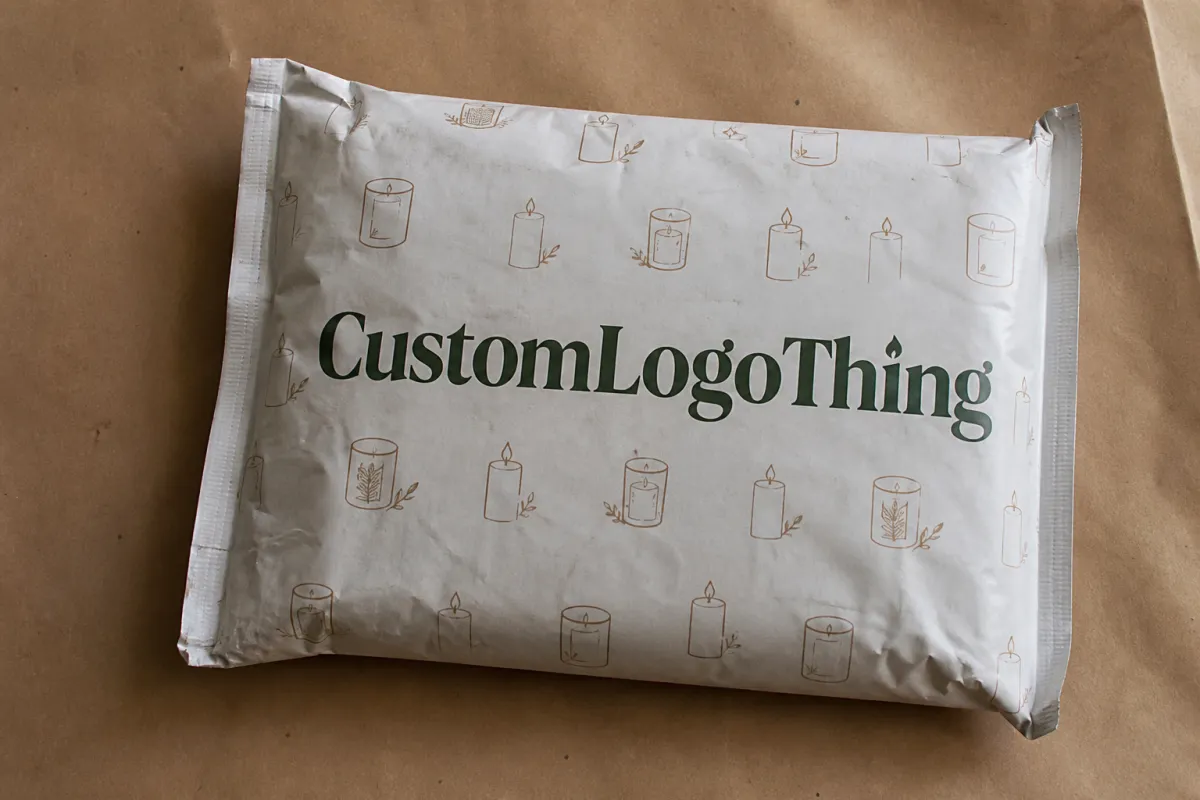
The overspend usually starts with something that looks reasonable. A brand grabs a generic mailer because it is available quickly and the piece price looks low. Then the packed candle needs extra tissue, extra bubble, maybe a sleeve carton, and sometimes a second label because the outer surface does not take print or shipping labels cleanly. Suddenly the “cheap” mailer has turned into a layered pack-out with more labor, more material, and worse presentation.
Dimensional weight makes the problem worse. Many candle brands default to corrugated boxes that are larger than necessary because they are trying to protect glass. Fair concern. Still, if the candle can safely ship in a properly sized padded mailer with wrap or a compact insert, you may trim cubic volume enough to matter. On light-to-mid weight ecommerce orders, even half an inch off width or thickness can improve shipping efficiency, especially on multi-zone parcel programs.
Breakage is the cost buyers underestimate most. They track vessel cost closely but never connect packaging spec to claim rate or reorder burden. A $3.50 vessel, $1.20 wax fill, $0.60 label and carton, plus pick-pack labor and outbound postage, can turn a replacement shipment into an $8 to $18 problem before customer service time gets counted. Arguing over a few cents on the outer mailer starts to sound ridiculous.
Then there is presentation damage. It does not always show up as a formal breakage claim, which is exactly why it gets missed. Think scratched labels, dented lids, rubbed corners, or wax dust and residue if the closure area shifts during transit. Those issues still trigger refunds, partial credits, and bad reviews. The shipping package is part of the product experience whether finance likes that sentence or not.
From a packaging buyer’s point of view, the useful comparison between stock bubble mailers and Custom Padded Mailers comes down to total cost of use:
- Protection cost: damage rate, scuff rate, and whether secondary wrap is still required
- Shipping cost: parcel dimensions, packed weight, and carrier zone profile
- Labor cost: how many steps the packer needs to complete one shipment
- Brand cost: whether the package supports your positioning or looks disposable
- Inventory cost: how many SKUs and how much storage the packaging program needs
That is why buyers shopping for Custom Poly Mailers should think past logo placement. The decision is operational. The best result is not “lowest quoted unit.” The best result is fewer damages, cleaner presentation, faster packing, and a stable reorder program that does not get reinvented every month because the last batch underperformed.
Custom Padded Mailers for Candle Brands: What You Are Actually Buying
A custom padded mailer is not just a bag with a logo slapped on the front. You are buying a specific protective format built around a product profile, a fulfillment workflow, and a branding requirement. For candle brands, that usually means a printed mailer sized for one or two candles, built to survive parcel handling while still arriving in decent shape on a customer’s doorstep.
The most common constructions are:
- Poly bubble mailers: plastic exterior with bubble lining; lightweight, moisture-resistant, and common for ecommerce
- Kraft bubble mailers: paper exterior with bubble interior; more natural-looking and often chosen for rustic or eco-leaning packaging design
- Co-extruded film mailers: multi-layer plastic film with a better exterior print surface and stronger puncture resistance
- Padded paper mailers: paper-based formats using paper cushioning instead of plastic bubble; useful for specific sustainability goals, though usually bulkier and less forgiving on tight parcel dimensions
Closure style matters too. Most candle brands use a pressure-sensitive peel-and-seal strip because it is fast in fulfillment and familiar to warehouse teams. Tear-strip openings can improve the customer experience, but they increase conversion cost and add one more spec to approve. Reclose features exist, though for candles they rarely justify the extra spend unless returns are a major part of the program.
Padded mailers work best for lighter shipments: travel candles, tin candles, wax melts, tealight sets, sample kits, and some single glass candles if the vessel is not too heavy and the packed fit is tight. A 6 oz or 8 oz candle in a secondary wrap is a different case from a 14 oz thick-wall glass jar. Heavy luxury candles push the limits of what a padded mailer should handle on its own, and pretending otherwise is how brands buy replacement orders.
Here is the blunt version. If you are shipping a heavy glass candle with a wide vessel and decorative lid, a padded mailer alone is not magic. It can reduce surface damage and save space, but it may still need an inner carton, a molded insert, or a protective wrap. If your product sits in a premium retail tier, you may be comparing padded mailers against custom printed boxes or hybrid pack-outs, not replacing them outright.
Branding Features That Affect Cost
Custom branding can stay simple or get expensive in a hurry. A one-color flexographic print on a white or colored mailer is usually the most budget-friendly custom route. Add multiple ink colors, all-over flood coverage, inside print, or photo-style graphics, and the cost climbs because print complexity, registration control, and setup all increase.
Typical branding choices include:
- Single-color logo and repeat pattern
- Two- or three-color exterior print
- Full-surface branded packaging with heavy ink coverage
- Interior print for a more polished unboxing moment
- Handling icons, warning text, barcode zones, and QR codes
A mailer that looks elegant on screen can still perform badly if the gauge is too light, the seams are weak, or the usable inside size is off by a quarter inch. Candle buyers need a spec that balances presentation with abuse resistance. Carriers are not gentle. Nobody at the sorting hub cares about your beautiful matte logo.
If you want a better sense of how different industries handle branded shipping formats, the examples in our Case Studies show what works in production, not just what looks good in renderings.
Specifications That Change Performance and Cost
If you request pricing without specs, you are not comparing quotes. You are collecting fiction. One supplier prices 70 micron exterior film, another prices 60 micron. One quotes a 10 x 13 inch mailer, another quietly sizes it at 9.5 x 12.5. One assumes one-color print, another assumes heavy flood coverage. Congratulations, now you have four numbers and no usable answer.
The core specifications you should define before asking for pricing are:
- Finished size: overall mailer width and height
- Usable inner dimensions: the actual product-fit space after seams and flap are considered
- Exterior material: poly, kraft, co-ex film, or paper-padded structure
- Material thickness: film micron, paper basis weight, or equivalent construction strength
- Padding type: bubble size, bubble layer, or paper-based cushion structure
- Seal type: peel-and-seal, tamper evident, tear strip, or dual seal
- Print coverage: one color, multi-color, all-over print, inside print
- Pack-out configuration: candle only, candle plus tissue, candle plus insert, candle in inner carton
Candle dimensions by themselves are not enough. A 3.25 inch diameter jar with a 3.5 inch height may fit very differently once you add tissue, a warning card, a corrugated wrap, or a fold-over insert. Lid height matters. Label edge thickness matters. The jar shoulder matters if the fit is close. Dense products punish lazy assumptions.
Thickness and Gauge Tradeoffs
Thinner materials lower piece cost, but they also reduce puncture resistance and make the mailer feel cheap in hand. For poly exteriors, buyers often compare constructions in the rough range of 2.5 mil to 3.5 mil equivalent total structure, depending on layering and film blend. For kraft exteriors, basis weight, bond quality, and lamination consistency matter. Go too light and seam stress becomes a real problem with dense products like candles.
The sweet spot is not always the thickest mailer. Overbuilding adds cost and may not solve the actual failure mode. If your issue is surface abrasion, a slightly heavier bubble layer or smoother interior wrap may help more than increasing the outer film gauge. If your issue is corner impact from a heavy glass base, you may need an insert or carton, not a thicker mailer that still allows the candle to shift.
Padding Performance Limits
Bubble lining protects against light impact, vibration, and rubbing. It does not turn a heavy glass candle into a drop-proof parcel. Paper padding appeals to brands with sustainability targets, but it usually adds bulk and compresses differently under load. That changes dimensional weight, crush behavior, and sometimes how consistently the mailer feeds through automated packing lines.
Brands that take validation seriously should use transport testing. ISTA publishes recognized packaging test protocols, and the broader industry also references ASTM handling methods. Even a basic internal drop test using your exact vessel, lid, and pack-out can save you from buying 10,000 mailers that looked fine on paper and fail in the field. That is not theoretical. It happens all the time on first custom runs.
Print and Compliance Details
Printing has its own cost levers. Flexo printing is common for larger runs and simpler graphics. Digital print may work for shorter runs and more detailed art, depending on the supplier and substrate. Gravure or other higher-control routes can make sense for large-volume programs that need stronger consistency. Plate or cylinder charges, ink count, color matching expectations, and acceptable registration tolerance all influence price.
Large flood areas use more ink and make scuffing more visible, especially on dark solids. White underprint layers or reverse printing add complexity. If your brand relies on precise color match, say that early. If “close enough” is genuinely acceptable, you may save time and money by avoiding unrealistic tolerances.
Do not ignore practical details like barcode readability, required suffocation warnings where relevant, recycled-content claims, or how thermal shipping labels adhere to the surface. Adhesion varies between matte films, slick co-exteriors, and kraft faces. If you are making sustainability claims, align them with recognized standards from organizations like FSC where applicable or follow current guidance from the EPA on recyclable material communication. Sloppy claims are a liability, not a marketing asset.
A spec-first approach keeps suppliers honest. More useful than that, it gives you apples-to-apples pricing and a mailer that actually fits your candle program instead of some vague “standard option” that leaves the warehouse team improvising with extra wrap.
Unit Cost, Pricing, and MOQ: Custom Padded Mailers for Candle Brands Unit Cost Breakdown
This is the section most buyers actually care about. Fair enough. A realistic Custom Padded Mailers for candle brands unit cost breakdown usually comes down to seven cost buckets: exterior material, interior padding, print setup, print run cost, bag conversion, inspection and packing, and freight. Move any one of those and the quoted unit cost moves with it.
Here are the main cost buckets in plain English:
- Raw material: film, paper, adhesives, and bubble or padded lining
- Printing: ink, plates or cylinders, press setup, registration control
- Conversion: cutting, sealing, flap forming, tear strip, and bag making
- Labor and inspection: quality checks, count packing, and carton packing
- Sampling: plain sample, digital mockup, or fully printed preproduction sample
- Freight: factory to warehouse, domestic freight, or import ocean/air cost
- Duties and handling: sometimes shown separately, sometimes buried in landed pricing
For common candle ecommerce sizes, rough price logic often looks like this:
| Mailer Type | Typical Packed Use | Quantity Band | Estimated Unit Range | Common Notes |
|---|---|---|---|---|
| Plain stock bubble mailer | Travel tin, wax melts, samples | 500-2,000 | $0.18-$0.38 | No custom print; fastest route but weak brand presentation |
| 1-color custom poly bubble mailer | Single light candle or kit | 3,000-5,000 | $0.32-$0.58 | Usually the most practical entry point for branded mailers |
| 2-3 color custom poly bubble mailer | Single candle DTC order | 5,000-10,000 | $0.42-$0.72 | Depends heavily on size, gauge, and print coverage |
| All-over printed co-ex padded mailer | Premium branded packaging | 10,000-25,000 | $0.55-$0.95 | Better finish, better print control, higher setup expectations |
| Kraft bubble mailer with custom print | Natural-look product packaging | 5,000-10,000 | $0.45-$0.82 | Can run bulkier; print style and paper weight affect cost quickly |
Those ranges are not promises. They are buying guidance based on common market behavior, and actual quotes move with resin pricing, paper costs, order timing, print method, country of manufacture, and freight conditions. A 6 x 10 inch one-color mailer is a different animal from a 10 x 13 inch heavy-coverage custom run with a tear strip and a thicker bubble layer. Freight volatility alone can move landed cost enough to matter.
How MOQ Changes the Math
MOQ is where smaller brands get blindsided. Setup costs do not disappear because your volume is low. They just get divided by fewer pieces. That is why a 1,000-piece custom run can feel painfully expensive per unit, while a 5,000-piece run may suddenly look reasonable.
A simple example:
- Plate/setup cost: $180
- Material and conversion base: $0.29 per unit
- At 1,000 units, setup adds $0.18 each, making rough cost $0.47 before freight
- At 5,000 units, setup adds $0.036 each, making rough cost about $0.326 before freight
That is why low-MOQ “custom” pricing often feels like a trap. The total run may look manageable in dollar terms, but the piece price hits hard. If you have stable usage, a larger run usually gives the best value. If your candle line changes constantly or your forecast is shaky, tying up cash in too much inventory may be the worse decision. There is no heroic answer there. It is just a tradeoff between unit economics and inventory risk.
Common Quote Traps
Some quotes look cheap because the spec changed quietly. Watch for these:
- Freight excluded from the quoted unit price
- Material downgraded to a thinner gauge
- Print coverage reduced without saying so clearly
- Quoted size based on flat dimensions, not usable inner size
- No allowance for your insert, tissue, or inner carton
- Sampling or plate charges omitted from the headline number
Packing labor gets ignored far too often. A custom mailer that is properly sized may let the fulfillment team pack an order 20 to 30 seconds faster than a loose stock mailer that needs extra wrap and more fiddling. Multiply that by a few thousand orders and the labor delta stops being theoretical. If your 3PL charges per touch, that labor penalty becomes even more obvious.
A slightly higher mailer cost can reduce total spend if it cuts replacement shipments, reduces void fill, lowers DIM exposure, or lets you eliminate a second packaging component. That is the argument serious buyers should make internally. Not “this one is prettier.” Pretty is fine. Lower total cost with fewer service issues is better.
What to Submit for Accurate Pricing
To get a quote worth reading, send:
- Packed product dimensions, not bare jar dimensions
- Actual ship weight per order
- Target quantity and at least one higher volume tier
- Artwork or, at minimum, desired print coverage
- Destination warehouse or delivery country
- Need-by date and whether you need samples first
If a supplier gives you a suspiciously low number without asking those questions, be careful. They may be guessing. Guessing is not a sourcing strategy.
Production Process and Lead Time From Artwork to Delivery
Custom mailers are not stock items with your logo magically dropped on top. The production flow usually looks like this: specification review, quote approval, artwork check, proofing, material allocation, printing, lamination or conversion, bag making, inspection, case packing, and shipment booking.
First-time orders almost always take longer than reorders because there is more back-and-forth on sizing, print layout, approval language, and performance expectations. If a custom size needs tooling or a nonstandard setup, add time. If a standard footprint works, lead time usually improves and repeatability gets easier.
Sample timing and production timing are not the same thing. A plain fit sample may take a few days. A printed preproduction sample may take 7 to 12 business days depending on method and routing. Mass production often lands in the 12 to 20 business day range after proof approval for common specs, and longer for more complex print programs or imported orders. Then freight transit gets added on top. Factory completion is not the same as arrival date. Buyers mix that up constantly, then wonder why the launch calendar falls apart.
What Actually Causes Delays
Production itself is not always the main problem. Delays more often come from:
- Artwork files that are not press-ready
- Slow Pantone or color approval
- Late size changes after sampling
- Missing ship-to details
- Material substitutions requested midstream
- Freight booking delays or customs timing on import orders
If you are planning a launch, subscription drop, or seasonal candle push, build in a buffer. At least one. Preferably two. Carriers do not care about your campaign calendar, and neither does port congestion.
A useful planning framework is simple:
- First order: allow time for quoting, sample review, proofing, and production
- Second order: reorder from approved specs with a narrower lead-time band
- Ongoing program: forecast 6 to 10 weeks ahead so you can choose better freight and avoid panic buys
Forecasting is where buyers start saving real money. Once your mailer spec is stable and your order cadence is visible, you can order smarter volume tiers, reduce emergency air freight, and keep packaging inventory from becoming a recurring fire drill.
Why Our Padded Mailers Work Better for Candle Shipping
The difference is not hype. It is specification discipline. Candle products are fragile, dense for their size, and often brand-sensitive. That combination punishes lazy quoting. We focus on fit, print, and performance together so the mailer matches the shipment instead of getting pulled from a generic catalog and dressed up with a logo.
That matters because weight-sensitive products do not need the thickest mailer by default. They need the right construction. Sometimes that means a tighter size, a stronger seam, and controlled print coverage. Sometimes it means telling a buyer that a padded mailer alone is not enough and an inner wrap or carton is the smarter move. Selling the most expensive option every time is not expertise. It is just expensive.
We also help buyers compare quotes against the real use case. If one option uses a thinner film, we say so. If one size creates slack that forces extra void fill, that gets flagged. If a premium finish adds cost but does nothing for shipping performance, buyers should know that before they approve anything. Transparency is not glamorous, but it prevents bad purchasing decisions.
Artwork review matters more than people think. Large dark flood areas, tiny reverse text, edge-to-edge print near seal zones, and poorly planned label placement can all create avoidable problems. A clean print file and a realistic coverage plan usually produce a better result than trying to cram every branding idea into one mailer.
Consistency matters too. Once the spec is approved, repeat runs should be easier, faster, and less chaotic for purchasing and fulfillment teams. Stable reorders are how you get predictable product packaging costs. If every order becomes a fresh negotiation, the process is broken.
Buyers should expect clear answers on three things:
- What is included in the price
- What spec details can change the price
- What lead time assumptions the quote is based on
That is the level of control candle brands need if they want packaging that protects the product, supports clean retail packaging standards on arrival, and keeps reorder planning sane.
Next Steps to Get an Accurate Quote and Lower Your Real Cost
If you want a quote that is actually useful, gather the right information first. Not just the jar size. Not just the logo. A good packaging program starts with the packed shipment, not the bare product.
Use this checklist before requesting pricing:
- Packed candle dimensions: include tissue, insert, inner box, or wrap if used
- Ship weight: actual packed weight per order
- Monthly or quarterly volume: enough to compare realistic quantity tiers
- Branding style: one-color logo, multi-color print, all-over graphics, inside print
- Destination market: domestic warehouse, direct import, or mixed fulfillment
- Desired delivery window: in-hand date, not just production start date
If your candle has not shipped successfully in a similar format before, request samples first. Especially for glass. A plain fit sample can catch size errors quickly. A filled sample using your actual vessel can reveal movement, seam stress, lid friction, or closure rub that a flat drawing will never show. If you already have a validated pack-out and just need better branding or pricing, you can move more directly to quote and proof.
Compare at least two size options and two quantity tiers. That is often where the best savings show up. A slightly tighter mailer may reduce dunnage and freight. A slightly larger order may cut the per-unit cost enough to offset the extra inventory. Or it may not. That depends on usage rate, storage cost, and cash flow. Packaging is full of those irritatingly practical answers.
Ask suppliers to think in landed cost, not just factory numbers. That means mailer price, freight assumption, sample cost, setup charges, expected lead time, and any known protection limits. If the mailer still needs wrap or an inner carton, price that too. Otherwise you are comparing fantasy packaging to real packaging, and fantasy always wins on paper.
The smartest buying decisions come from a clear custom padded mailers for candle brands unit cost breakdown tied to actual shipment performance. Submit packed specs, request quote tiers, confirm what is included, review lead time, and test a filled sample before final approval. That is the actionable takeaway. Do not approve a mailer because the piece price looks good in a spreadsheet. Approve it because the numbers still make sense after freight, labor, protection, and customer experience are counted.
FAQ
How much do custom padded mailers for candle brands usually cost per unit?
Unit cost usually depends on four main variables: size, material thickness, print coverage, and order quantity. Smaller custom runs land in a higher range because setup gets spread across fewer pieces, while repeat orders at 5,000 units or more often show the sharpest per-piece drop. A proper quote should also make clear whether freight, plate charges, sample costs, and duties are included or shown separately. If those items are missing, the “cheap” quote may not stay cheap for long.
What MOQ should I expect for custom padded mailers for candle brands?
MOQ varies by supplier, size, and print method, but many custom printed mailer programs start around 3,000 to 5,000 pieces for workable pricing. Lower volumes are possible, though the cost per unit usually jumps because setup is being spread across too few bags. If your monthly usage is light, ask for multiple quantity tiers so you can compare cash flow against savings. Sometimes a modestly larger first order gives you a meaningfully better cost and smoother reordering. Sometimes it just gives you extra inventory to trip over. Run the math.
Are padded mailers safe enough for shipping glass candle jars?
They can be, but not in every case. Lighter glass candles or compact formats may ship well in a padded mailer with the right wrap or insert, while heavier jars often need an inner carton or more structured protection. Padding helps with abrasion and light impact. It is not a miracle cure for rough parcel handling. The safest approach is a packed drop test using your actual vessel, lid, label, and presentation materials, ideally before committing to a full production run.
What affects lead time on custom printed padded mailers the most?
Artwork approval, material availability, print complexity, production queue, and freight method usually have the biggest impact. First-time custom orders move slower than repeat jobs because fit, print layout, and proofs need more review. A clear spec sheet and fast approval process are the easiest ways to avoid delays you caused yourself. That sounds obvious, yet it still trips up a lot of teams.
What do I need to send to get an accurate quote for custom padded mailers for candle brands?
Send packed product dimensions, target quantity, artwork files or print requirements, shipping destination, and your desired in-hand date. Also include whether the candle ships alone or with tissue, an insert, an inner box, or promotional materials inside. Ask for quote options by quantity tier and material spec so you can compare total cost, protection level, and fulfillment efficiency instead of grabbing the cheapest number and hoping for the best.

