Buyer Fit Snapshot
| Best fit | Branded Padded Mailers for Cosmetics Reorder projects where brand print, material claims, artwork control, MOQ, and repeat-order consistency need to be specified before quoting. |
|---|---|
| Quote inputs | Share finished size, material target, print colors, finish, packing count, annual reorder estimate, ship-to region, and any compliance wording. |
| Proofing check | Approve dieline scale, logo placement, barcode or warning zones, color tolerance, closure strength, and carton packing before bulk production. |
| Main risk | Vague material claims, crowded artwork, missing packing details, or unclear freight terms can make a low unit price expensive after revisions. |
Fast answer: Branded Padded Mailers for Cosmetics Reorder: Film, Print, MOQ, and Carton Packing should be specified like a repeatable production item. The safest quote records material, print method, finish, artwork proof, packing count, and reorder notes in one written spec.
Production checks before approval
Compare the actual filled-product size with the drawing, then confirm tolerance on folds, seals, hang holes, label areas, and retail display edges. Reserve space for logos, QR codes, warning copy, and material claims before decorative graphics fill the panel.
Quote comparison points
Review material grade, print process, finish, sampling route, tooling charges, carton quantity, and freight assumptions side by side. A quote is only useful when the supplier can repeat the same color, closure quality, and packing count on the next order.
A cosmetics brand can have finished serum units on the shelf, paid media finally working, and influencer traffic converting exactly the way the team hoped, then lose momentum because the mailers run out first. That is why a Branded Padded Mailers for cosmetics brands reorder planning guide matters more than many teams think. Packaging shortages often stop shipments before product shortages do. The result is messy: plain substitute mailers, more support tickets, and a brand presentation that suddenly falls apart right when repeat purchase behavior is forming.
The math is not subtle. Beauty brands usually carry more SKU combinations than their outer-packaging plans can support comfortably, especially after limited drops, sample bundles, travel sizes, and gift-with-purchase offers stack on top of core replenishment orders. One fast-moving launch can burn through a single mailer size in days, not weeks. Then the expensive improvisation starts: split shipments, rush buys, dimensional-weight creep from oversized packs, and customers getting a generic arrival after the ad promised something more considered.
For cosmetics, mailers are not just shipping supplies. They sit inside the same operating equation as protection, fulfillment speed, freight spend, and perceived quality. If you are buying custom shipping formats through Custom Packaging Products or comparing flexible options like Custom Poly Mailers, the useful question is not which mailer looks nicest in a mockup. The useful question is when to reorder, how much to hold, which specifications slow replenishment, and where the real cash-versus-risk line sits.
This Branded Padded Mailers for Cosmetics brands reorder planning guide is built around that decision. You should leave with a workable structure for reorder points, MOQ choices, lead-time planning, and supplier conversations that still hold up once real fulfillment pressure shows up.
Why branded padded mailers for cosmetics brands affect reorder risk
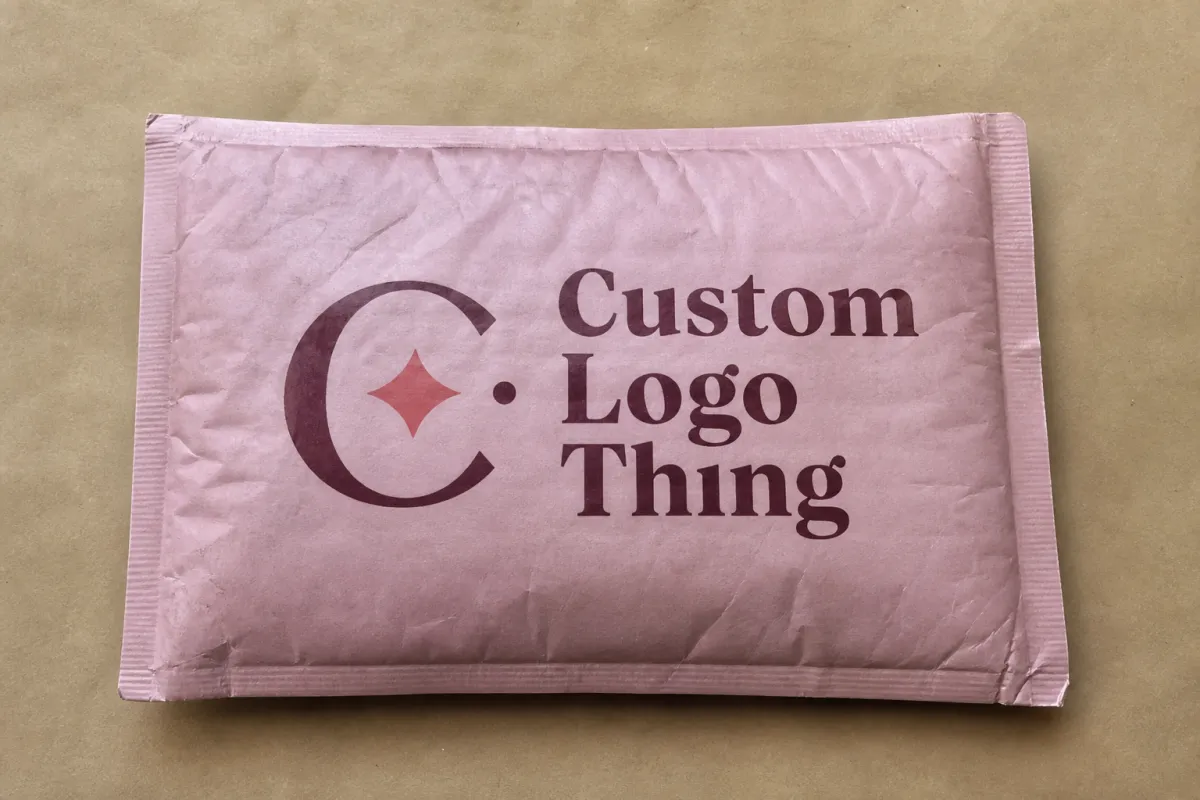
Take a familiar scenario. A new lip oil launch beats forecast by 38% in week two after a creator mention. Product inventory is there. Labels are printed. Pick tickets keep coming. Then the branded padded mailer assigned to that order profile drops below a usable level, and fulfillment shifts to plain stock from the shelf. Orders still go out, but the damage starts quietly: customers ask whether the product is authentic, social posts lose the branded reveal, and internal teams waste time explaining why a campaign built around presentation shipped in generic packaging.
From a packaging buyer's seat, this is revenue leakage hiding in plain sight. Product stockouts get attention because everyone can see them. Packaging stockouts are trickier. The goods exist, but the order cannot ship the way it was planned. In direct-to-consumer beauty, that gap matters because customer acquisition costs are already spent before the first parcel lands. If the first shipment arrives looking inconsistent or underprotected, the brand absorbs the downside after paying to acquire the customer.
Cosmetics brands get hit harder for five practical reasons:
- Fragile components: pumps, caps, compacts, palettes, droppers, and closures fail in transit more easily than many apparel or accessory products.
- Premium presentation pressure: buyers expect tactile quality, opacity, clean print, and a parcel that feels intentional rather than improvised.
- Small-batch SKU variety: launch kits, trial sizes, refill pouches, and gift bundles can each require different mailer footprints.
- Demand spikes: influencer mentions, paid campaign bursts, and retailer mentions can compress reorder windows with almost no warning.
- Seasonal gifting: holiday and promotional periods increase both volume and size-mix complexity at the same time.
That makes Branded Padded Mailers both a protective asset and a forecasting problem. A thinner film may shave a few cents off unit cost but raise transit failures. Full-bleed print may sharpen recognition while stretching proof approvals. A wider size range may improve fit, yet every extra SKU fragments inventory. None of those decisions are neutral, and pretending they are is how teams end up paying twice.
Packaging planning is not only about buying enough units. It is about buying the right spec, in the right quantity, on a lead time that can survive demand volatility.
The problem to solve is concrete: when to reorder, how much safety stock to carry, and how to avoid parking too much cash in packaging that might become obsolete after a design update, formula shift, compliance change, or assortment reset. That matters whether you are shipping 2,000 orders per month or 80,000.
Well-run reorder planning gives buyers a cleaner way to balance cost and resilience. It turns Custom Padded Mailers from a recurring scramble into a controlled purchasing category. That is the real point of a branded padded mailers for cosmetics brands reorder planning guide: fewer surprises, fewer rush premiums, and fewer avoidable compromises.
What cosmetics brands need from padded mailers in real-world shipping
Padded mailers perform best when the product is fairly light, not especially breakable, and sold in shapes that do not need a rigid presentation box. In beauty fulfillment, that often includes lip products, sheet masks, refill pouches, brow pencils, compact sample kits, travel sets, and smaller curated bundles. They also work well for replenishment orders where the customer already knows the brand and cares more about speed and convenience than a dramatic reveal.
The appeal goes beyond printing a logo. A well-sized mailer can cut dimensional weight compared with cartons, simplify pick-and-pack steps, and provide a tamper-evident closure that helps during last-mile handling. Teams shipping hundreds of daily orders feel even small packing-time reductions. Save 8 to 15 seconds at the station and the labor effect adds up quickly. Over 1,000 orders, that translates to roughly 2.2 to 4.1 hours back.
There are limits, and good buyers respect them. Padded mailers are a weak choice for glass-heavy skin care sets, premium gift presentations with strong structural expectations, or products with a real leakage risk unless internal containment is added. A 30ml glass dropper bottle with a heavy collar and minimal cushioning may survive one internal test, then crack once carrier handling, vibration, and temperature swings get involved. A rigid carton or corrugated shipper can be the smarter call even if unit cost goes up.
Where padded mailers earn their keep
The best use cases usually share three traits: low cube, moderate impact resistance, and a straightforward fulfillment flow. A refill pouch for cleanser, for example, can often ship safely in a padded mailer that weighs 20 to 60 grams less than a box. That difference looks tiny per unit. Across 10,000 shipments, it becomes meaningful money in parcel spend and inbound storage density.
Mailers also cut warehouse cube. Compared with set-up cartons, they sit flatter and waste far less air space while waiting to be used. That helps operators dealing with tight storage limits or third-party logistics fees tied to pallet positions, shelving, or bin locations.
Another benefit is version control. If the outer packaging program is simple, teams can move faster during receiving, replenishment, and count checks. That sounds boring because it is boring. It still saves real time.
Where they do not
Products with sharp edges, heavy glass, metal compacts, or luxury display intent tend to expose the limits of flexible packaging. If the brand promise depends on a rigid reveal, magnetic closure, molded insert, or high-structure gift look, a padded mailer should usually act as outer transit protection for a box, not as the primary branded vessel.
That distinction feeds straight into repeat purchase economics. A damaged first order can crush margin fast. Replace the order, pay freight again, issue service credits, and the financial hit usually exceeds the few cents saved on the original pack format. The flip side is just as real. A right-sized custom mailer can tighten freight efficiency while improving brand recall on the doorstep.
Supplier evaluation should stay tied to measurable outcomes: lower damage rates, reliable repeat runs, consistent print registration, and easy fulfillment handling. Vague claims about “premium packaging” are not enough. Ask for evidence. Request samples. Inspect the construction closely. Brands that want proof of execution quality can compare with completed Case Studies and use that information to judge whether a supplier understands the shipping environment instead of just the artwork file.
One honest disclaimer: no mailer format is universally “best” for cosmetics. The right answer depends on the product mix, parcel network, return rate, and how much presentation value the brand is trying to preserve at the doorstep.
Specifications that change reorder planning, storage, and damage rates
The specs buyers lock in early have an outsized effect on reorder stability. Dimensions, film thickness, padding type, seal construction, print coverage, finish, and add-on features all influence unit price, lead time, and the odds of getting pushed into an emergency reorder.
Start with dimensions. Standardizing around two or three core sizes can simplify forecasting and storage, especially for brands with predictable order profiles. A cosmetics operator may find that a 6 x 10 inch size covers single-item replenishment, an 8.5 x 12 inch size covers compact multi-item orders, and a 10 x 13 inch size handles larger kits or promotional bundles. That reduces SKU complexity.
Go too far, though, and the savings disappear. If the chosen sizes leave too much void space, products shift more in transit, postage can increase, and the unboxing experience gets sloppy. Buyers know this already, but plenty of teams still force product mixes into the wrong mailer because the spreadsheet looked clean.
Film thickness matters too. A mailer in the 2.5 to 3.0 mil range may work for lighter refill or sample formats, while heavier beauty assortments often need a stronger outer film or upgraded interior cushioning. Bubble-lined and padded constructions are not interchangeable by default. One may compress better in storage. Another may protect awkward components more effectively. Buyers need to know the difference before signing off on quantity.
Spec choices that affect planning speed
Most buyers look at appearance first. Fair enough. Production planning is usually affected more by the details hiding behind the artwork than the artwork itself. Full-bleed printing, custom PMS color matching, interior print, matte coatings, soft-touch finishes, and high-coverage dark backgrounds can all stretch proof cycles or reduce flexibility for rush reruns. If a brand launches quickly and revises often, a simpler exterior print program may improve reorder stability more than an extra finish layer improves delight.
The same goes for optional features such as tear strips or dual adhesive closures. They can add convenience for returns or sampling programs. They can also raise conversion complexity and shrink the supplier pool for repeat runs. Not automatically a bad trade. It just needs to be a deliberate one.
Storage and lot control
Padded mailers store more efficiently than boxes, but custom runs still need discipline. Cartons should be labeled by size, artwork version, and receipt date. Pallet counts should be checked at receiving. Brands moving through packaging refreshes need strict lot separation so older artwork does not slip into current shipments by accident. That mismatch creates pointless support friction and can complicate promotional claims or ingredient messaging on enclosed inserts.
If the brand operates through a 3PL, ask how packaging locations are counted and billed. Some providers charge by pallet position, some by bin, some by cubic footprint. A spec that looks efficient on paper can become a storage nuisance if the site cannot slot it cleanly.
A practical simplification framework looks like this:
- Keep features that clearly reduce damage, support fulfillment speed, or strengthen brand recognition.
- Question features that add visual complexity but slow approvals.
- Standardize sizes where product fit remains tight enough to control movement.
- Avoid overengineering for low-risk SKUs that do not need luxury structure.
The strongest spec package is not the fanciest one. It is the one that protects margin, supports repeatability, and can be reordered without a weekly headache.
Pricing, MOQ, and unit cost: how to buy without overcommitting
Packaging buyers know the trap well: the lowest unit price often comes attached to the highest inventory risk. With custom cosmetic mailers, cost is shaped by several moving parts at once—size, material gauge, padding format, number of print colors, print coverage, setup or plate charges, order quantity, and freight to the fulfillment site.
For many custom runs, a small branded padded mailer may land somewhere around $0.18 to $0.42 per unit at moderate quantities, while larger or more heavily printed versions can move into the $0.35 to $0.65+ range. Those numbers are not universal. Material structure, order volume, freight lane, and shipping distance all move them around. They are realistic enough to frame the decision without pretending every quote should look the same.
The MOQ question is usually where brands either preserve flexibility or trap cash. Lower minimum order quantities reduce up-front exposure and obsolete-stock risk. That matters for younger brands, evolving artwork systems, and assortments still finding their shape. Higher volumes usually bring a better piece price, sometimes cutting unit cost by 10% to 25% across quantity breaks, but they can leave a brand sitting on dead inventory if a rebrand, formula launch, regulatory text change, or bundle-strategy shift arrives sooner than planned.
Compare landed cost, not just quote price
A cheaper mailer can be more expensive in practice. If a lower-grade spec raises damage claims by even 1% to 2%, or forces the use of larger parcel tiers because the fit is poor, the apparent savings disappear fast. The better comparison is landed cost per usable shipped order. That means unit price plus inbound freight, adjusted for expected damage performance, storage carrying cost, and parcel efficiency.
| Option | Typical Use Case | Estimated Unit Cost at Mid Volume | Key Benefit | Main Risk |
|---|---|---|---|---|
| Small run, simple print | Emerging brand, 1-2 core sizes | $0.28-$0.42 | Lower cash commitment | Higher per-unit price |
| Mid run, moderate coverage | Stable monthly replenishment | $0.22-$0.34 | Balanced cost and flexibility | Needs better forecasting discipline |
| Large run, high coverage custom print | Established demand, strong brand consistency needs | $0.18-$0.29 | Best piece price | Greater obsolete inventory exposure |
Cosmetics operators miss hidden costs more often than they admit. Rebrands are a major one. Even a minor logo update can strand thousands of perfectly usable but unwanted mailers. Other common misses include repeat-order quantity floors, rush production premiums, inbound freight assumptions, receiving labor, and storage fees at a 3PL. Carrying cost is not a theory problem. If packaging sits for six or nine months, that lower unit price starts looking a lot less clever.
Buying by velocity band
A pricing framework tied to actual usage works better than the usual “buy more to save more” speech.
- Emerging brands: prioritize modest MOQs, one or two sizes, and artwork that is unlikely to change within a quarter.
- Growth-stage brands: move into quantity breaks only after confirming 60 to 90 days of stable usage by size.
- Established operators: negotiate repeat-order pricing, artwork hold policies, and freight assumptions before scaling volume.
Quote requests should be detailed enough to make price comparisons fair. Ask for quantity tiers, repeat pricing, estimated lead times, overrun or underrun policy, color consistency expectations, freight assumptions, and whether sample charges can be credited into production. If you are evaluating a larger program, a discussion around Wholesale Programs can also clarify whether better pricing depends on a fixed repeat cadence or more flexible release schedules.
One point deserves repeating. The right MOQ depends on how stable the mailer will stay over time. If the brand identity and order profile are still moving, flexibility usually wins. If both are settled, a higher-volume buy may finally make financial sense. A good branded padded mailers for cosmetics brands reorder planning guide should say that plainly instead of pretending the lowest piece price always wins.
Process and lead time: artwork approval to replenishment arrival
Most packaging delays do not come from one dramatic mistake. They come from stacked minor delays. Internal review takes three days instead of one. Proof revisions add four more. Production scheduling slips by a week because materials were not reserved. Freight takes longer than expected. By the time the mailers arrive, the reorder window has already closed.
Planning needs to start before inventory feels tight. A custom run usually moves through a chain that includes quote request, dieline confirmation, artwork prep, proof review, sample approval if needed, production scheduling, printing, conversion, packing, and freight delivery. Each step has its own clock. Ignore one and the whole schedule starts lying to you.
First orders versus repeat orders
First orders almost always take longer. Files need validation. Colors need approval. Construction details need confirmation. Depending on complexity, a first run may require 3 to 6 weeks or more from approval to delivery, and sometimes longer if custom features, material shortages, or freight constraints get in the way. Repeat orders can move faster—often 2 to 4 weeks in favorable conditions—if artwork, materials, and sizing stay unchanged. “Repeat” only saves time when the repeat is truly identical.
Buyers should build a lead-time model with five parts:
- Internal review time: how long your team takes to approve artwork and proofs.
- Supplier production time: the manufacturing window after approval.
- Transit time: freight movement to the fulfillment center.
- Receiving time: warehouse intake, count verification, and put-away.
- Safety buffer: extra days for promotions, launch spikes, or carrier disruptions.
For many cosmetics brands, the safety buffer should not be symbolic. One week may be too thin during major gift periods, viral moments, or high-visibility product drops. Two weeks is often closer to reality if the campaign calendar is aggressive.
Use both inventory and calendar triggers
Reorder planning works best with two triggers running at the same time: an inventory threshold and a calendar checkpoint. Inventory count by itself can mislead during demand spikes. Calendar reviews by themselves can miss sudden sell-through acceleration.
A basic reorder point formula is straightforward:
Average weekly usage x total lead time in weeks + safety stock = reorder point
If a brand uses 2,500 units per week of a core mailer, has a total lead time of 4 weeks, and wants 3,000 units of safety stock, the reorder point is 13,000 units. A launch month can push that safety stock materially higher, and pretending otherwise is how buyers end up paying rush fees.
Brands should also segment by size. One of the most common errors is tracking total padded mailer inventory without breaking usage down by footprint. That hides the real problem until one specific size fails first.
Good reorder systems do not wait for “almost out.” They trigger while there is still enough time for proofing, production, transit, and receiving to go sideways.
Supplier transparency matters here. Ask which stage usually creates delays. Ask what approvals are required from your team. Ask whether split shipments or expedited repeat runs are possible. Standards and test expectations should be discussed early too. For transit performance, it helps to review parcel-test guidance from ISTA and sustainability or chain-of-custody considerations from FSC when those claims matter to material choices and sourcing.
Lead time is not one number. It is a chain. Brands that treat it like a chain get blindsided far less often. That single habit does more to stabilize packaging replenishment than another spreadsheet tab full of pretty assumptions.
Why choose a supplier that understands cosmetics fulfillment economics
Not every packaging supplier is built for beauty fulfillment. Some can print a pretty sample and then struggle with repeat consistency. Others advertise low headline pricing but stay vague on timing, version control, or quantity breaks. For cosmetics, the better supplier is usually the one that understands operational fit, not just decoration options.
The capabilities that matter most are specific: dependable repeatability, practical MOQ options, responsive proofing, clear lead-time communication, consistent print quality, and real familiarity with parcel protection for lightweight but presentation-sensitive products. Those traits reduce risk better than broad marketing language ever will.
Experience in custom packaging also helps prevent overengineering. A supplier who understands direct-to-consumer shipping can recommend size consolidation, catch design choices that slow approvals, and steer buyers away from features that add cost without improving shipment performance. That kind of guidance is valuable when teams are trying to grow without tying up working capital in packaging they may not use fast enough.
Reliable supply supports better brand outcomes. Packaging that arrives on time keeps launches on schedule, replenishment orders moving, and customer expectations intact. It also cuts down the scramble for plain substitute mailers, short-term local purchases, and inconsistent pack-out instructions at the warehouse.
For brands evaluating Custom Logo Things, the practical value is not hype. It sits in a process built around branding support, specification guidance, transparent quote discussions, and clearer repeat-order planning. Buyers should judge that with evidence: sample quality, detail in the quotation, communication speed, and consistency from first order to repeat order. If questions come up around specification fit, ordering cadence, or setup expectations, the company’s FAQ can help frame those conversations before production starts.
Strong suppliers do not erase uncertainty. They reduce it. For procurement teams and founders alike, that difference has a price tag. And yes, it usually shows up long before anyone notices it in a polished sample pack.
Next steps to build a branded padded mailers reorder plan that holds up
The cleanest reorder plans start with ordinary discipline, not fancy software. Confirm your top shipping SKUs. Map monthly mailer usage by size for at least the last 8 to 12 weeks. Separate average weeks from peak weeks. Then calculate a reorder point that includes full lead time plus safety stock. If demand is heavily promotional, use a peak-weighted assumption instead of a simple average.
Build a quote package that helps the supplier answer accurately the first time. Include target sizes, expected order volumes, artwork status, print requirements, destination ZIP code, and whether the request is for a first run or a repeat. Add notes on the product types inside the mailer and any protection concerns. That can save days. Sometimes more, depending on how much cleanup the supplier has to do.
Keep the decision set tight. Two or three spec options are enough for most evaluations. Asking for too many variations slows approvals, muddies price comparisons, and usually creates internal indecision. Newer brands are usually better off starting with one or two core sizes, testing shipping performance, tracking postage and damage impact, then expanding only after the data says the assortment deserves it.
A useful pilot structure looks like this:
- Choose the two highest-volume order profiles.
- Match each profile to a mailer size with minimal excess space.
- Run real pack-outs and transit tests before committing to a larger quantity.
- Track claim rate, freight cost, and customer feedback for 30 to 60 days.
- Set the first replenishment trigger before the initial run even arrives.
That last step gets missed all the time. Teams celebrate the first production order, receive the shipment, and only then start thinking about the repeat. By then, a fast launch may already be chewing through the buffer. Better practice is to define the repeat-order trigger in advance, assign ownership, and put a calendar review in place immediately.
The core lesson is simple. Branded padded mailers for cosmetics brands work best when reorder timing, MOQ, specifications, and supplier process are planned together. Treat them as a strategic operating input rather than a generic consumable, and the brand protects customer experience while keeping cost under control.
If you want this branded padded mailers for cosmetics brands reorder planning guide to become an actual operating tool, do three things next: lock your core sizes, calculate the reorder point by size rather than in aggregate, and confirm a supplier timeline that includes proofing, production, transit, and receiving. That is the difference between a packaging plan and a packaging scramble.
FAQ
How do cosmetics brands calculate reorder points for branded padded mailers?
Use average weekly mailer usage multiplied by total lead time, then add safety stock for promotions, launch spikes, and supplier or freight variability. Track usage by mailer size instead of total packaging volume alone, because one fast-moving size can run out while overall stock still looks acceptable. Revisit the formula after assortment shifts, artwork changes, or fulfillment model updates.
What MOQ is typical for custom branded padded mailers for cosmetics brands?
MOQ depends on dimensions, print complexity, and production method, so there is no universal number that fits every order. Smaller cosmetics brands often benefit from an MOQ that protects cash and limits obsolete inventory risk, especially if artwork or product mix may change soon. Ask whether repeat orders must follow the same MOQ as the initial run, since that policy can shape long-term flexibility.
How long is the lead time for branded padded mailers for cosmetics brands?
Lead time usually includes quoting, artwork approval, production scheduling, manufacturing, packing, freight, and warehouse receiving, so buyers should plan around the full chain rather than factory time alone. First orders often take longer because files, colors, and specifications still need validation. Build extra buffer for campaign launches, gift periods, and demand spikes.
Are padded mailers safe for shipping cosmetic products with fragile components?
They work well for many lightweight, low-breakage cosmetics, especially when the selected size controls movement and the interior structure matches the product. Glass items, leak-prone formats, and premium multi-item kits may need added containment or a rigid box instead. Real pack-out testing is still the safest way to confirm suitability before committing to volume.
What should be included in a quote request for custom cosmetic padded mailers?
Provide target dimensions, expected quantities, artwork status, print colors, shipping destination, and whether the request is for a new run or a repeat. Include product type and any protection concerns so the supplier can recommend an appropriate structure instead of pricing the wrong spec. Ask for quantity breaks, freight assumptions, repeat-order pricing, and overrun policy so quote comparisons stay accurate.