Buyer Fit Snapshot
| Best fit | Custom Padded Mailers for Coffee Roasters projects where brand print, material claims, artwork control, MOQ, and repeat-order consistency need to be specified before quoting. |
|---|---|
| Quote inputs | Share finished size, material target, print colors, finish, packing count, annual reorder estimate, ship-to region, and any compliance wording. |
| Proofing check | Approve dieline scale, logo placement, barcode or warning zones, color tolerance, closure strength, and carton packing before bulk production. |
| Main risk | Vague material claims, crowded artwork, missing packing details, or unclear freight terms can make a low unit price expensive after revisions. |
Fast answer: Custom Padded Mailers for Coffee Roasters: Cost Breakdown should be specified like a repeatable production item. The safest quote records material, print method, finish, artwork proof, packing count, and reorder notes in one written spec.
Production checks before approval
Compare the actual filled-product size with the drawing, then confirm tolerance on folds, seals, hang holes, label areas, and retail display edges. Reserve space for logos, QR codes, warning copy, and material claims before decorative graphics fill the panel.
Quote comparison points
Review material grade, print process, finish, sampling route, tooling charges, carton quantity, and freight assumptions side by side. A quote is only useful when the supplier can repeat the same color, closure quality, and packing count on the next order.
Custom Padded Mailers for Coffee Roasters Unit Cost Breakdown
Custom Padded Mailers for coffee roasters unit cost breakdown sounds like a pricing question. It is really a margin question. The cheapest-looking mailer can turn into the most expensive choice once you count packing labor, damage claims, re-ships, and the lovely little habit of replacing a crushed 12 oz bag that should have arrived fine in the first place. For roasters shipping samples, subscriptions, and repeat DTC orders, the right mailer protects the product, keeps packout simple, and gives you a predictable unit cost instead of surprise losses.
That is the standard I would use at Custom Logo Things. Not flashy. Just sane. If your coffee is moving through parcel networks, your packaging needs to hold shape, close cleanly, print well, and fit the actual bag size without wasting material. Otherwise, you are paying for branded packaging that looks good on a quote sheet and quietly drains margin on every shipment.
This page breaks down what custom padded mailers do for coffee roasters, which specs matter, how MOQ changes pricing, and how to ask for a quote that tells you something useful instead of hiding the real numbers.
The packaging mistake that quietly raises coffee shipping costs
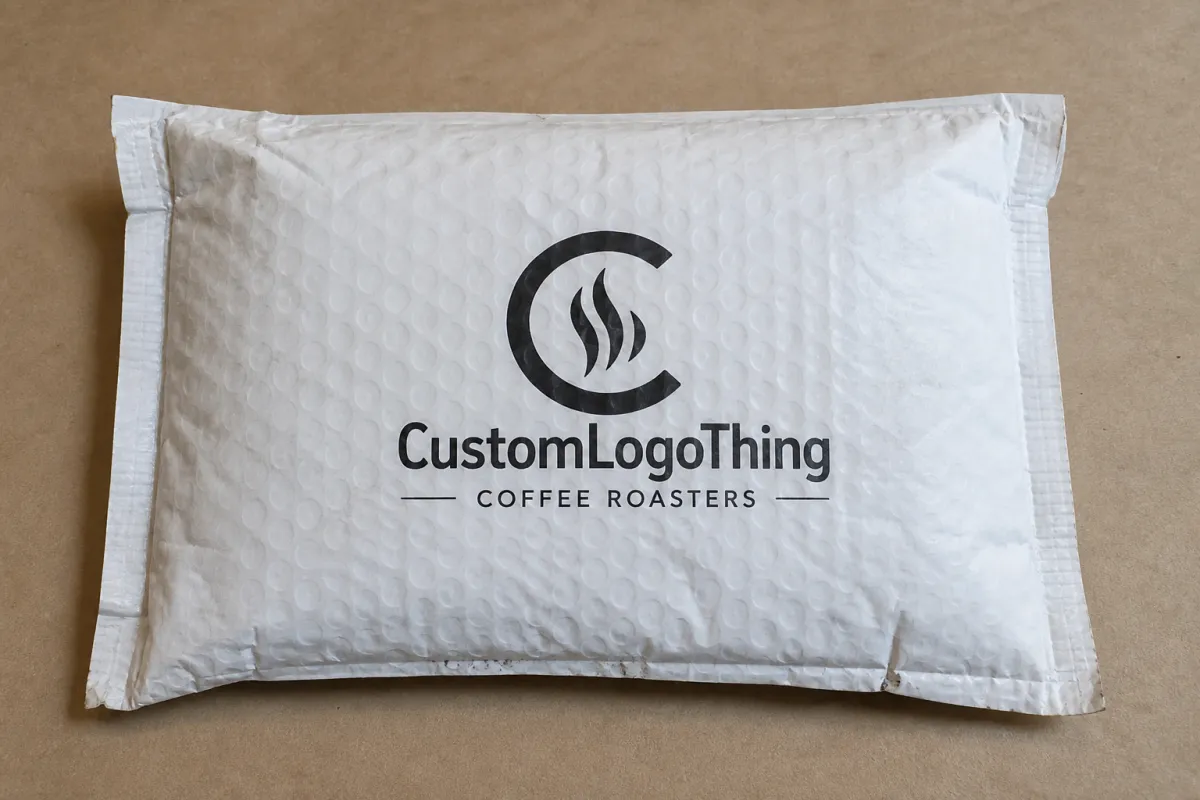
The mistake is simple: choosing a mailer by unit price alone. That usually creates one of two problems. The package is too flimsy and gets damaged in transit, or it is overbuilt and costs more than the order needs. Neither option is clever. Both eat margin.
Coffee is a tricky product to ship because the package is not always rigid, but the contents still need structure. A 4 oz sample bag, a 12 oz retail pouch, and a 1 lb bag do not behave the same way inside a carton or mailer. Add a flavor card, a sticker, or a branded insert, and the packout gets even messier. If your fulfillment team has to fight the packaging on every order, you are paying for that friction in labor. At $18 to $24 per hour, even 20 extra seconds per order becomes real money fast.
Here is the part many buyers miss: a plain mailer plus insert can look cheaper on paper and still cost more in practice. If the mailer takes longer to assemble, if the label does not stick cleanly, or if the coffee bag shifts and gets scuffed, you have created hidden waste. A 1% damage rate across 5,000 shipments is not a rounding error. It is 50 replacements, more postage, more customer support, and more brand damage than most roasters want to admit out loud.
That is why custom padded mailers matter. They reduce touchpoints. They protect the product. They give the shipment a cleaner finish without forcing your team to build a mini shipping department around every order. For small-format coffee shipments, subscription mailers, and limited-release drops, that is the practical win.
Practical rule: if the packaging adds a new failure point, the “cheap” option is not actually cheap. A better mailer is usually the one that disappears into the workflow and stops causing problems.
From a buyer’s point of view, the question is not whether packaging should be branded. It should. The question is whether the package branding helps the shipment move faster and arrive in better shape. That is a different standard, and a better one.
What custom padded mailers do for coffee roasters
Custom padded mailers do three things well for coffee roasters: they protect, they present, and they simplify. Those three jobs sound basic because they are. The packaging industry loves to turn basic things into a consulting deck. I do not see much value in that.
Protection is the first job. A padded mailer cushions the coffee bag against scuffing, puncture, and corner crush during parcel handling. Presentation is the second job. A clean printed mailer makes the shipment feel intentional instead of thrown together. Simplification is the third job. If the mailer fits the bag properly, you remove extra void fill, reduce the need for secondary packaging, and make packing faster.
For coffee roasters, that matters in several common shipment types:
- 4 oz sample bags sent to wholesale prospects or tasting clubs
- 8 oz and 12 oz retail bags shipped direct to consumers
- 1 lb subscription orders where brand consistency matters from month to month
- Limited-release drops where retail packaging has to look polished even before the customer opens it
There is also a labor argument. A branded padded mailer often replaces a plain outer shipper plus a separate insert or protection layer. That does not sound dramatic until you calculate the time. If one packing step disappears and the order volume is steady, the savings are real. A mailer that costs a little more per unit can still be the lower-cost option overall.
For roasters that sell both DTC and through retail packaging channels, this is where one well-sized mailer can do a lot of work. You are not trying to build the perfect luxury box for every order. You are trying to ship coffee cleanly, keep the brand visible, and avoid paying for unnecessary packaging complexity.
There is a limit, though. Padded mailers are a good fit for coffee bags, sample kits, and light add-on merch. They are not the answer for glass, ceramic, or anything that can shatter if a courier tosses the parcel like it owes them money. Match the mailer to the shipment, not to a mood board.
If you are comparing formats, it helps to look at the broader packaging line too. Some brands pair coffee mailers with other items from Custom Packaging Products for seasonal sets, merch bundles, or retailer programs. Others use Custom Poly Mailers for lighter, less fragile items and reserve padded mailers for coffee bags that need extra protection. That is the kind of decision that keeps packaging design tied to shipping reality instead of wishful thinking.
Product details and specifications that affect performance
The difference between a decent mailer and a useful one is usually in the spec sheet. Buyers tend to focus on print first. That is understandable, but it is not the first thing I would optimize. Structure comes first. Branding comes second.
Build choices that actually matter
A custom padded mailer usually has four main parts: the outer face, the padding layer, the closure, and any opening feature such as a tear strip or reseal strip. The outer face can be paper-based or film-based. Paper faces often appeal to brands that want a more natural look and are considering FSC-sourced material. Film faces can resist moisture and scuffing better, which matters if parcels sit in humid receiving areas or travel long routes. Both can work. It depends on your brand and your distribution pattern.
The padding is what protects the coffee bag. Thinner padding lowers cost, but it also lowers forgiveness if the mailer gets crushed. Thicker padding increases unit cost and bulk. That tradeoff is normal. Do not overbuild the mailer unless the route or product really needs it. A 4 oz or 8 oz sample usually does not need the same structure as a full 1 lb bag with a heavy insert.
Closures matter more than people think. A weak seal creates rework. A closure that peels up in transit is worse. If your fulfillment team has to double-check every seal, you have not saved anything. For that reason, I would rather see a clean adhesive closure and a sensible size than a fancy feature that looks good in a mockup and slows down packing.
Size selection by coffee format
Choosing the wrong size is one of the fastest ways to spend too much. Oversized mailers use more material, take up more storage space, and often look sloppy. Undersized mailers bulge, stress the seal, and create ugly shipments. Buyers should size around the actual bag and any insert, not the most optimistic version of the artwork.
General fit guidance looks like this:
- Sample packs and 4 oz bags: compact mailers around 6 x 9 or 7 x 10 inches often make sense, depending on insert size.
- 8 oz bags: mid-size options in the 7 x 11 to 7.5 x 11.5 inch range usually balance fit and cost.
- 12 oz bags: many roasters land near 8 x 12 inches, though the bag shape matters.
- 1 lb bags: more careful dimension planning is needed, especially if the pouch has a gusset or if you add a tasting note card.
One useful rule: do not leave more than about an inch of unnecessary play on any side if you can avoid it. Too much slack creates movement, and movement creates wear. The mailer should hold the bag snugly without forcing the seal to work harder than it should.
If your coffee line uses multiple bag styles, test the worst-case version first. A sleek flat-bottom pouch and a chunky gusseted bag do not behave the same way, even if the label says “12 oz” on both. This is one of those boring details that saves money later. Boring is fine. Boring usually ships better.
Print and finish choices
Print changes both branding and cost. A one-color logo on a stock-sized mailer is usually the cheapest branded route. Full-coverage graphics cost more because they use more ink, more setup, and often a more careful production process. Matte finishes often feel more premium to the hand. Gloss can pop visually, but it also shows scuffs differently. None of these choices is universally best.
If your coffee brand lives on shelf appeal, seasonal drops, or direct-to-consumer unboxing, a stronger visual treatment may be worth the added spend. If your order economics are tight and the mailer is mostly a shipping shell, a simpler print is often smarter. That is the honest answer. Pretty packaging is not free, and it does not need to be.
For brands that care about sustainability claims, do not guess. Ask whether the outer material is FSC-certified, and ask how the structure should be communicated to customers. Mixed-material packaging can be tricky to recycle. If you want a clean sustainability story, keep it accurate. The FSC standard is one of the more recognizable references for responsibly sourced fiber, and it is worth checking when paper-facing is part of the spec.
If your route or use case is more demanding, transport testing also matters. The ISTA testing framework is a useful benchmark when you want to talk about shipping performance in a way that is more serious than “it seems sturdy.” That is the level of conversation buyers should have for coffee product packaging moving through parcel networks.
Custom padded mailers for coffee roasters unit cost breakdown, pricing, and MOQ
Now to the part people actually want: the custom Padded Mailers for Coffee Roasters unit cost breakdown. The short version is that unit cost is driven by material, size, print coverage, and order quantity. The longer version is that every production choice nudges the number up or down, and those small changes matter once you ship thousands of orders.
The most common cost drivers are:
- Material type: paper face, film face, or hybrid structure
- Padding thickness: more protection usually means a higher unit cost
- Size: larger mailers use more material and often cost more to print and ship
- Print coverage: one-color logo versus full-bleed branded packaging
- Finishes: matte, gloss, soft-touch, foil accents, or special coatings
- MOQ: lower minimums usually carry a higher per-piece rate
- Freight: heavy or bulky mailers can make shipping a meaningful line item
For actual buying decisions, I would think in tiers. The ranges below are planning numbers, not a promise. Final pricing shifts with size, artwork, factory location, shipping method, and the level of customization.
| Order quantity | Typical unit cost | What drives the number | Best fit for |
|---|---|---|---|
| 1,000 to 2,000 pcs | $0.78 to $1.45 each | Setup is spread across fewer units, so the quote is usually the least friendly. | New roasters, seasonal runs, packaging tests |
| 3,000 to 5,000 pcs | $0.48 to $0.92 each | Better spread on setup, more material efficiency, better freight planning. | Growing DTC volume, recurring blends, moderate subscription programs |
| 8,000 to 10,000 pcs | $0.30 to $0.62 each | Higher efficiency on production and shipping, lower per-piece setup burden. | Stable reorder programs, larger roasters, bundled retail shipments |
| 15,000+ pcs | $0.22 to $0.48 each | Best production economics, but only if storage and sell-through support it. | High-volume brands with predictable monthly usage |
Those ranges assume a standard printed structure without extravagant finishes. Add a premium coating, specialty closure, or custom dimensions, and the price moves up. That is normal. It is also why quotes that sound too good to be true usually are. If one supplier is far below the market range, something is probably missing from the spec.
Freight deserves its own warning label. A low piece price can hide a bulky shipment charge, especially if the mailer is larger than necessary or the order travels far. A unit cost that looks excellent ex-works may look much less impressive once it lands in your warehouse. Buyers who compare only the piece price usually end up comparing the wrong number.
MOQ tradeoffs that matter in practice
MOQ is one of those terms that gets treated like a moral failing. It is not. It is just a production reality. Lower MOQ helps if you are testing packaging design, launching a seasonal blend, or changing your package branding and do not want to sit on dead stock. Higher MOQ gives you a better unit cost and usually a cleaner production schedule.
For coffee roasters, I usually see three smart MOQ strategies:
- Test run: a lower MOQ for a new package size or a limited drop, even if the unit cost is a little ugly.
- Core SKU run: a mid-level MOQ for your main blend or subscription mailer, where pricing starts to improve meaningfully.
- Scale run: a larger MOQ when the design is stable and storage space is under control.
If your monthly ship volume is steady, do not force yourself into the lowest MOQ just because it feels safe. Safe can be expensive. On the other hand, if you are still dialing in your 8 oz or 12 oz format, it is smarter to pay a bit more for flexibility than to buy a year’s worth of the wrong size.
A practical rule of thumb: if a packaging change would force you to discount or discard unused stock, the “best” MOQ on paper is not actually the best choice. Use the number that matches your sell-through, not the number that makes the spreadsheet feel tidy.
Hidden quote variables buyers overlook
There are a few line items that can move the quote more than people expect. Artwork prep is one. If the dieline is not final or the logo files are not clean, the supplier may need extra prepress work. Freight is another. Air shipping a bulky order can make a cheap unit look expensive very quickly. Special finishes, custom seals, or unusual closures can also add cost. None of these are wrong. They just need to be visible.
Here is a rough way to think about it:
- Artwork or setup: often $50 to $250 depending on complexity and revisions
- Samples or prototypes: often $25 to $150, sometimes more if the structure is custom
- Freight: can add a few cents per unit on larger orders or much more on rush shipping
- Finish upgrades: often add $0.03 to $0.18 per unit, depending on the feature
That is why a good quote asks for more than “Can you print our logo?” A real quote needs dimensions, quantity, print coverage, and destination. If you leave out the details, the pricing will be soft and the final invoice will be harder to defend.
Buyer lesson: a quote that hides freight or artwork work is not a complete quote. It is just a teaser with better manners.
Process and timeline: from artwork to delivery
Packaging projects go smoothly when the buyer prepares the right information before asking for a price. They stall when everyone is guessing. That part is predictable.
The usual production flow looks like this:
- Quote request: share bag size, quantity, print style, and shipping destination.
- Dieline confirmation: verify the exact mailer dimensions and structure.
- Artwork review: check file quality, print placement, and color count.
- Sampling: approve a physical or digital sample if the project needs validation.
- Production approval: lock the spec before moving into the run.
- Quality control: inspect print consistency, seal strength, sizing, and finish.
- Packing and freight: ship the order and track delivery timing.
Typical timeline ranges depend on the complexity of the order. A simple custom print on a known structure can move faster than a fully custom size with multiple proof rounds. In practice, many standard orders land somewhere around 12 to 18 business days after final proof approval, while more complex runs can take longer. Rush work is possible in some cases, but rush work is usually a tradeoff, not a miracle.
The biggest delays usually happen in proofing, not manufacturing. Buyers often wait to approve artwork because they want to compare colors, ask for internal opinions, or make last-minute edits. That is fine if you have the time. If you do not, lock the brand assets early. Final dimensions, logo files, color targets, and shipping address should be ready before the order moves forward.
Reorders are easier. Once the size and print spec are locked, repeat runs tend to move faster because the supplier already has the structure, artwork, and approval history. That is one of the quiet advantages of stable product packaging: less back-and-forth, fewer mistakes, and a lower management cost per order cycle.
For roasters comparing packaging design options, it is also smart to decide whether the mailer is serving a single SKU or multiple SKUs. A single-purpose mailer can be tighter and cheaper. A “works for everything” mailer usually gets larger than it needs to be. That extra size is not free.
Why coffee roasters choose our padded mailers
Most coffee roasters are not shopping for packaging because they want novelty. They are shopping because the current setup is annoying, expensive, or both. That is where good padded mailers earn their keep.
At Custom Logo Things, the value is straightforward: clean print, reliable sizing, and practical support that respects how coffee actually ships. No unnecessary drama. No inflated promises. Just packaging that fits the order and does its job.
The roasters who get the most value from custom padded mailers usually care about four things:
- Consistency: every shipment should look and feel the same
- Protection: the bag needs to arrive intact, not bruised
- Labor savings: the packout should be quick and repeatable
- Brand signal: the mailer should support the coffee brand without adding wasteful complexity
That last point matters more than people admit. Good package branding does not scream. It simply makes the order look deliberate. That is useful for subscription programs, limited releases, wholesale sample packs, and repeat consumer shipments where the customer is already evaluating whether the brand feels stable.
There is also a practical manufacturing benefit. When the quote is built around the coffee bag size instead of a generic outer mailer, the result is usually better. You avoid paying for unnecessary material. You reduce the odds of a sloppy fit. You also get a clearer answer on MOQ and reorders. That is the kind of clarity most teams want from supplier conversations.
If you are comparing custom printed boxes versus padded mailers, the right choice depends on the product and the route. Boxes can be right for bundled sets or premium retail packaging. Padded mailers are often better for single bags, samples, and repeat DTC shipments where weight and packing speed matter more than shelf presence. Different tools. Different jobs.
We see the same pattern over and over: brands start with one-size-fits-all packaging, then move to a mailer that fits the real order mix. The switch usually reduces waste and simplifies fulfillment. Not glamorous. Effective, though. Which is better.
Next steps: get the right quote and test the right size
If you want a quote that protects margin, start with the basics and be specific. The best quotes do not come from vague requests. They come from clean inputs and a clear target.
Send these three things first:
- Coffee bag size: sample, 8 oz, 12 oz, or 1 lb, plus actual dimensions if you have them
- Monthly volume: your expected order count and reorder rhythm
- Print style: one-color logo, multi-color print, or full-coverage branding
If the bag has not been tested in the mailer yet, ask for a sample or prototype before locking the order. Paper sizes on a spec sheet and real bag geometry in a filled pouch are not the same thing. That difference is where a lot of bad packaging decisions begin.
I would also ask for two quote options if possible: one at a lower MOQ and one at a better volume tier. That gives you a clean view of the tradeoff between flexibility and unit cost. If the monthly sell-through is stable, the larger run often wins. If the product is seasonal or still changing, lower MOQ is safer.
From there, compare the real total. Not just the piece price. Add the likely freight, sampling, and setup. Compare that number against the cost of your current method, including packing labor and damage risk. That is the real unit economics conversation.
For coffee brands serious about margin, the goal is simple: choose custom Padded Mailers for Coffee Roasters that match the bag size, keep packing fast, and hold the line on cost. Get the dimensions right. Compare the pricing tiers. Lock the spec before you scale. That is how the Custom Padded Mailers for Coffee roasters unit cost breakdown turns into a buying decision instead of a guessing game.
FAQ
What is the unit cost for custom padded mailers for coffee roasters?
The unit cost usually depends on size, padding type, print coverage, and order quantity, not just the logo on the front. Smaller runs cost more per piece because setup gets spread across fewer units, while larger runs bring the price down faster. For a useful quote, send the bag size, target quantity, and whether you want plain, one-color, or full-print mailers.
What MOQ works best for custom padded mailers for coffee roasters?
A lower MOQ is useful for new roasters, seasonal blends, and packaging tests, but the per-unit cost will be higher. If the design is stable and you ship steady volume, a larger MOQ usually gives better pricing and less reorder friction. The best MOQ is the one that matches your monthly ship volume without forcing dead stock into the warehouse.
Can custom padded mailers protect 12 oz and 1 lb coffee bags?
Yes, if the size is matched correctly and the padding is thick enough to prevent scuffs and corner crush. One-pound bags often need more careful dimension planning so the mailer closes cleanly without bulging or stressing the seal. Send an actual bag sample if possible, because dimensions on paper and dimensions in the carton are not the same thing.
How long does production usually take after artwork approval?
Standard production is usually counted after final artwork approval, not after the first quote, so proofing speed matters. Sampling, custom print complexity, and shipping method all affect the final schedule. If you need a tighter timeline, lock the size, print colors, and artwork early so the order can move without extra revisions.
What should I send to get an accurate quote for custom padded mailers?
Send the coffee bag dimensions, target quantity, logo file, and any print or finish preferences. Include your monthly reorder estimate if you expect volume changes, because that can affect pricing tiers. If you already know your budget target, say it upfront; it helps avoid wasting time on options that miss the mark.

