Buyer Fit Snapshot
| Best fit | Custom Padded Mailers for Candle Brands Quote Checklist projects where brand print, material claims, artwork control, MOQ, and repeat-order consistency need to be specified before quoting. |
|---|---|
| Quote inputs | Share finished size, material target, print colors, finish, packing count, annual reorder estimate, ship-to region, and any compliance wording. |
| Proofing check | Approve dieline scale, logo placement, barcode or warning zones, color tolerance, closure strength, and carton packing before bulk production. |
| Main risk | Vague material claims, crowded artwork, missing packing details, or unclear freight terms can make a low unit price expensive after revisions. |
Fast answer: Custom Padded Mailers for Candle Brands Quote Checklist should be specified like a repeatable production item. The safest quote records material, print method, finish, artwork proof, packing count, and reorder notes in one written spec.
Production checks before approval
Compare the actual filled-product size with the drawing, then confirm tolerance on folds, seals, hang holes, label areas, and retail display edges. Reserve space for logos, QR codes, warning copy, and material claims before decorative graphics fill the panel.
Quote comparison points
Review material grade, print process, finish, sampling route, tooling charges, carton quantity, and freight assumptions side by side. A quote is only useful when the supplier can repeat the same color, closure quality, and packing count on the next order.
Custom Padded Mailers for Candle Brands Quote Checklist
A candle can arrive intact and still disappoint. The box gets scuffed. The label on the gift sleeve rubs off. The insert bends. The customer opens the package and gets a clear message: somebody saved money in the wrong place. That is exactly why a Custom Padded Mailers for candle brands supplier quote checklist matters more than most buyers expect. Comparing piece price alone misses the details that decide whether the package protects margin, supports the brand, and survives actual shipping.
Candle brands tend to obsess over jar cost, wax load, fragrance throw, and label finish. Packaging gets treated like an afterthought because it looks simple from the outside. It is not. For ecommerce candle sales, the outer mailer affects damage rates, packing labor, storage cube, and the customer’s first impression before they even touch the product. A cheap mailer can quietly drain money through split seams, oversized freight, and avoidable returns. The invoice may look clean. The total cost usually does not.
Custom Padded Mailers are not a cure-all. They will not rescue a loose 14 oz glass jar rattling around without internal support. That is wishful thinking with a shipping label. They do make sense for lighter candle formats, wax melt subscriptions, travel tins, accessory bundles, match jars, wick trimmers, sample kits, and boxed candles that already have their own structure. In those cases, a padded mailer gives you a branded outer layer that reduces scuffs, absorbs minor impact, and keeps shipping bulk down versus a rigid shipper alone.
The buying problem is straightforward: most supplier quotes look similar until you read the fine print. One vendor may quote a 70 micron outer film with a small bubble lining. Another may quote 90 to 110 micron with a heavier bubble structure. One may include one-color flexo printing with loose color tolerance. Another may include better registration, deeper solids, and a stronger peel-and-seal flap. On paper they are both “custom padded mailers.” In practice, they are not the same product at all.
Buyers who want a real comparison need a tighter process. This guide covers where padded mailers fit in a candle line, which specs to request, how to judge MOQ and landed cost, what lead times usually look like, and how to spot supplier red flags before any deposit changes hands. If you are comparing mailers against other packaging formats, the broader range of Custom Packaging Products can help you map the right structure to the right SKU.
Why Candle Brands Lose Money on the Wrong Mailer
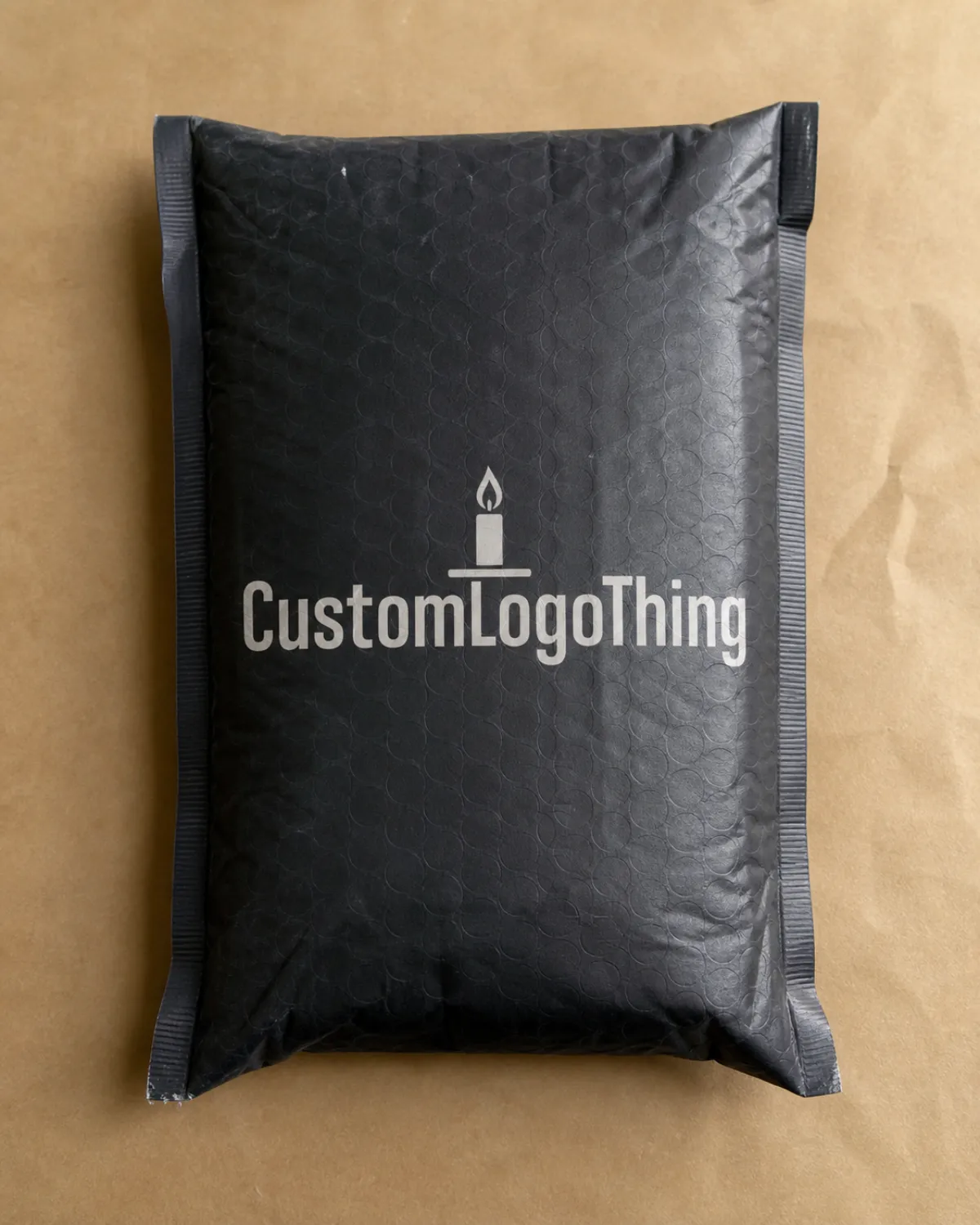
Damage is only part of the bill. Presentation damage counts too. A candle can be perfectly usable and still feel cheap if the outer pack is dented, greasy from adhesive bleed, or printed with muddy color that makes a premium product look like a clearance item. Customers do not split product and packaging into separate categories. They experience one brand, one shipment, one impression.
From a packaging buyer’s point of view, candle brands usually lose money in four predictable ways:
- Overpacking: choosing a rigid shipper that is far larger than needed, which raises dimensional weight and eats warehouse space.
- Under-specifying: approving film or seal strength that looks fine in a quote sheet but fails at the flap, seam, or corners.
- Ignoring fit: selecting a nominal size that technically fits the item but crushes tissue, bends inserts, or stresses boxed edges.
- Buying on visuals: signing off on a mockup before checking bubble structure, print method, packed carton dimensions, or freight assumptions.
For smaller candle formats, secondary gift packaging, and subscription kits, the right padded mailer can reduce those losses. A wax melt clamshell set, for example, can ship well in a custom printed padded mailer with a 10 mm to 12 mm bubble lining and enough wall strength for light-impact protection. A boxed 4 oz travel candle can also do well if the inner carton stabilizes the vessel. Put a loose 3-wick jar in a thin bubble mailer with minimal void fill, though, and you are buying returns. Not maybe. Buying.
The quote stage is where brands get tripped up. Supplier A shows a lower unit price, but the quote is based on smaller usable internal dimensions and a lighter material build. Supplier B looks more expensive until you see that it includes stronger flap adhesive, better print coverage, and export carton packing that reduces freight damage on arrival. Buyers who skip those details end up comparing fiction, not quotes.
Practical rule: if a mailer quote does not clearly state size, structure, print method, MOQ, carton packing, and freight basis, it is not a real quote yet. It is a teaser.
That is why this checklist matters. It helps candle brands compare like with like, protect margins, and decide whether padded mailers belong beside custom printed boxes, stock cartons, or a hybrid fulfillment setup. If you are refining ecommerce mailers alongside other formats, browsing Custom Poly Mailers can also help clarify which products should ship in a flexible pack and which need a rigid shipper.
Custom Padded Mailers for Candle Brands: Where They Fit Best
A padded mailer does two jobs at once: it gives you a printable outer surface and internal cushioning. Most often, that means a polyethylene-based outer film with bubble lining, though some builds use paper exteriors or co-extruded structures depending on print goals, recycling claims, and market expectations. For candle brands, the sweet spot is not “everything.” It is a narrower group of SKUs that can ship safely and still look intentional.
Best-fit candle applications
These are the use cases where padded mailers usually make the most sense:
- Wax melt subscriptions: low-profile products, repeat shipments, and strong demand for branded packaging without extra cube.
- Sampler sets: tea lights, mini tins, scent discovery kits, and trial bundles that need neat presentation more than heavy-duty walls.
- Accessories: wick trimmers, snuffers, branded matches, dust covers, care cards, and lighter add-ons.
- Boxed small candles: especially 4 oz to 8 oz formats where the candle already sits in a carton or insert.
- Gift-with-purchase kits: tissue, inserts, cards, and lightweight bundles that benefit from fast fulfillment.
In those applications, custom padded mailers can work as a primary ship-ready pack for lower-risk products or as a secondary outer pack for a boxed candle. That difference matters. If the candle box already provides compression resistance and stops the vessel from shifting, the mailer mainly needs to reduce scuffs, absorb minor drops, and keep the presentation tidy. If the item is fragile and structurally unsupported, the mailer is doing too much. Damage rates rise fast when buyers pretend otherwise.
Branding and freight advantages
Most buyers notice the branding upside first. A matte white or colored exterior with clean logo placement, readable typography, and consistent sizing across reorders creates a stronger path from shelf to doorstep than a generic stock mailer. It also keeps package branding aligned with the rest of the line, especially if the brand already uses custom printed boxes or coordinated inserts.
The freight side is often more valuable. Flexible packs can reduce dimensional weight compared with oversized corrugated shippers. For many accessory kits or wax melt sets, that can trim shipping cost per order by a meaningful amount, particularly in parcel networks where every inch matters. A mailer that saves even 0.2 to 0.4 lb of billed weight per parcel adds up fast at 2,000 to 10,000 monthly shipments.
There is a tradeoff. Padded mailers lower cost and bulk, but they do not replace transit testing. If you ship fragile glass, ask for actual fit samples and run drop tests on the packed product. ISTA provides recognized transit test protocols through ISTA, and premium candle brands should understand the gap between a format that looks elegant and one that survives parcel handling.
Material and finish choices
Most buyers will review a few surface and material options:
- Finish: matte for a softer premium look, gloss for higher contrast and punchier color.
- Exterior color: white for cleaner color reproduction, custom tinted exterior for stronger brand identity.
- Closure: tamper-evident peel-and-seal flap, usually permanent adhesive once pressed.
- Claims: recycled content or recyclable language, but only if the supplier can document the claim properly.
The right choice depends on SKU mix, shipping risk, order volume, and the brand standard you need to maintain. Not every candle SKU belongs in a padded mailer. The smart move is to build it into the packaging mix where it improves cost, speed, and delivered appearance without pretending one format solves every problem.
Specifications to Request Before You Compare Supplier Quotes
If you want real quote comparisons, ask for real specs. “Custom padded mailer, logo printed, premium quality” is not a specification. It is marketing filler. Every quote request should include the details below, and every supplier response should state them clearly.
Core specifications
- Nominal mailer dimensions: overall width x overall height, plus flap length.
- Usable internal size: the actual interior width and depth available after welds and bubble lining take space.
- Outer film thickness: often stated in microns or mil.
- Padding structure: bubble size, bubble diameter, bubble height, or other lining weight details.
- Seal type: peel-and-seal adhesive spec and tamper-evident construction.
- Print method: flexo, gravure, or digital.
- Color count and coverage: number of colors, full coverage versus spot print, and tolerances.
- Carton pack quantity: units per export carton and packed carton size/weight.
Usable internal size is the one buyers skip most often. That is a mistake. A nominal 10 x 13 inch mailer may not fit a boxed candle the way you expect once you account for side welds, bubble height, tissue bulk, insert cards, and flap closure space. A candle box that measures 9.2 x 6.8 x 2.4 inches on a spec sheet can behave more like 9.5 x 7.1 x 2.7 inches once it is wrapped and packed. Space disappears fast.
Thickness also needs practical interpretation. A thinner outer film can look fine in photos and still fail during fulfillment or last-mile handling. For light accessory packs, a lower gauge may be perfectly acceptable. For boxed candle kits with corners and denser contents, a stronger build often justifies the cost. Buyers commonly see a modest unit price increase for heavier structure, but that can be cheaper than repeated split-seam issues or crushed corners.
Print and construction questions
Ask every supplier these questions directly:
- What is the exact material structure and total thickness?
- What bubble diameter and bubble height are used?
- What print method is quoted, and how do solid brand colors perform on this surface?
- Are there plate, cylinder, or setup charges?
- What is the color tolerance between batches?
- How strong is the peel-and-seal adhesive, and is a second strip available if needed?
- What is the side weld or seam construction?
- What tear resistance or puncture references can be shared?
Print method matters more than people expect. Flexo can be cost-effective and perfectly adequate for simple graphics and repeat orders, but it may not reproduce complex gradients or dense solids as cleanly as gravure. Digital can help with smaller runs and lower setup cost, though unit pricing may be higher. If your packaging design depends on smooth tonal areas or exact retail color matching, ask for close-up production photos instead of trusting a flat PDF proof.
Construction details are where the hidden differences live. Flap length may be standard or custom. Adhesive strength can vary. Side weld integrity can be the difference between a clean delivery and a burst seam. Request preproduction images, dielines, and confirmation of packed carton dimensions because freight surprises usually show up right after the unit price starts looking attractive. Funny how that keeps happening.
If sustainability claims matter to your brand, ask for documentation. Recycled content percentages, recyclable claims language, and paper sourcing claims should be backed by something credible, not just a salesperson saying “eco-friendly.” For forest-based packaging components and broader sourcing standards, the FSC framework is worth understanding.
Pricing, MOQ, Quote Terms, and True Unit Cost
Unit price is the laziest metric in packaging buying. It is also the one that causes the most regret. Real comparison means total landed cost, tooling, freight, overrun policy, and reorder consistency. A mailer quoted at $0.19 each is not cheaper than one at $0.23 if the first quote uses thinner material, ships in inefficient carton counts, and creates more damage or slower packout.
What a proper quote should break out
- Setup fees: plate, cylinder, or digital preparation charges.
- Sample cost: stock sample, digital sample, or fully custom preproduction sample.
- Production unit price: at multiple quantity tiers.
- Export packaging: carton pack count, master carton size, and packing method.
- Freight: EXW, FOB, CIF, DDP, or another stated basis.
- Duties and taxes: if included or excluded.
- Payment terms: common structures include deposit plus balance before shipment.
- Overrun or underrun policy: what percentage is allowed and how billing works.
MOQ changes the decision more than buyers like to admit. A lower MOQ helps test a new SKU without tying up cash or warehouse space. A higher MOQ can cut piece cost enough to justify buying deeper, especially if the mailer size can work across multiple products. A first-run MOQ of 3,000 to 5,000 pieces may feel safer for a trial. At 10,000 to 20,000 pieces, the per-unit cost often improves, but only if your reorder cadence and storage situation can handle it.
Typical pricing varies widely by size, print method, and construction, so no honest buyer should pretend there is one magic number. In practice, a small to mid-size custom printed padded mailer for 5,000 pieces may land somewhere around $0.18 to $0.45 per unit before freight, depending on coverage, thickness, and setup. Full-coverage gravure on a custom size can push higher. Simpler flexo on a near-standard size can sit lower. Freight, naturally, gets its own vote.
| Quote Factor | Low Spec Example | Mid Spec Example | What It Changes |
|---|---|---|---|
| Outer Film | Thin gauge, basic finish | Heavier gauge, matte finish | Durability, puncture resistance, look and feel |
| Print Method | 1-2 color flexo | Fuller coverage gravure or digital | Color depth, detail, setup cost |
| MOQ | Smaller trial run | Larger reorder volume | Cash flow versus lower unit price |
| Carton Pack | Loose assumptions | Defined units and carton cube | Freight planning and storage efficiency |
| Freight Basis | Estimated only | Booked actual or named incoterm | Landed cost accuracy |
Common pricing traps are painfully predictable. The quote is based on a thin material that will not survive real use. Coverage assumptions are tiny even though your artwork uses large solids. The size is close, but not close enough to fit the boxed candle plus insert without stress. Or freight is just a soft estimate with no packed carton dimensions attached. None of that helps a buyer make a decision.
Ask for at least three quantity tiers: a pilot run, a mid-volume reorder, and a higher-volume tier if your growth plan supports it. Then compare the cost in a way operations teams actually care about:
- Cost per shipped order
- Potential damage reduction
- Storage cube per 1,000 units
- Packing speed at the fulfillment table
- Reorder consistency across batches
If you want a cleaner side-by-side evaluation, gather the same assumptions from each supplier, then compare total landed cost and operational impact. That is the difference between buying packaging and buying a problem with a lower invoice.
Process, Timeline, and Production Steps From Artwork to Delivery
Packaging timelines usually go off the rails for boring reasons. Missing dimensions. Unclear packed weight. Artwork built without bleed. Color expectations copied from coated paper when the actual print surface behaves differently. Then everyone acts surprised. Better process prevents most of it.
Standard workflow
- Inquiry: share SKU details, dimensions, packed weight, quantity tiers, destination, and branding requirements.
- Specification confirmation: size, material structure, print method, closure style, and carton packing.
- Dieline approval: supplier provides layout for artwork placement and bleed.
- Artwork prep: final files adjusted to process requirements.
- Sample stage: digital preview, stock sample, or custom physical sample.
- Quote signoff: final commercial terms confirmed.
- Deposit: production officially starts based on agreed milestone.
- Mass production: printing, conversion, inspection, and packing.
- QA and shipment: packed quantity, carton photos, and freight release.
Keep sample lead time separate from production lead time. Buyers mix those up constantly. A custom sample can take around 7 to 14 days depending on method, queue, and whether tooling is required. Bulk production may then take another 12 to 20 business days after approvals, and freight adds more time depending on air, ocean, or hybrid routing. First orders usually need more buffer than reorders.
Ask one very specific question: When does the lead time clock start? After deposit? After artwork approval? After sample approval? If a supplier cannot answer clearly, the timeline is soft. Soft timelines are fine right up until the launch date stops being flexible.
Shipping mode tradeoffs
Air freight is faster and more expensive. Ocean is cheaper and slower. Hybrid options can make sense if the order value is moderate and the deadline matters. For candle brands launching a seasonal scent, gift set, or limited promotional pack, paying more for the first shipment can be the smarter move if it keeps the product on the shelf during the selling window. That decision should come from margin, order volume, and timing pressure, not optimism.
For first orders, build in extra time for fit testing, revised artwork, and final approval loops. If you are launching multiple SKUs or trying a new matte finish, assume at least one detail will need adjustment. Request milestone updates, carton photos, and final packed quantity confirmation before the shipment leaves. Small controls prevent ugly surprises later.
How to Judge a Supplier Beyond the Pretty Mockup
A clean rendering proves almost nothing. It shows somebody knows how to place art on a template. Useful, yes. Enough, no. The real questions are whether the supplier can repeat color, hold seal quality, pack export cartons correctly, and communicate clearly when production hits a snag.
What to verify
- Category experience: fragrance, beauty, gift, or ecommerce product packaging with similar presentation standards.
- Transit understanding: awareness of parcel handling, corner scuffing, seam stress, and fit issues.
- Production control: in-house printing or outsourced, and who owns quality control.
- Export readiness: carton labeling, palletization if needed, and freight coordination.
- Quality systems: AQL inspection approach, incoming material checks, and defect handling policy.
Ask for recent production examples, close-up print photos, and sample packs that show actual surface finish and sealing. Catalog images are close to useless. You want evidence of real work, especially on dense solids, fine text, and matte surfaces where defects show fast.
Quality control questions matter. Does the supplier inspect incoming film? How is color approved before the full run? What tolerance is accepted for shade variation across batches? How is adhesive performance verified? If a percentage of mailers arrive with print defects or weak seals, what replacement policy applies? Buyers do not need perfect manufacturing. They need honest manufacturing and a workable correction process.
Service reality matters too. A transactional buyer should watch response speed, clarity on MOQ, and whether the team flags conflicts before production starts. If your requested usable size is too tight for the candle box, a good supplier says so. A weak supplier says “no problem” and bills you for the lesson later.
Red flag list: one-line quotes, vague answers on film gauge, no tolerance details, no packed carton specs, and promises that every feature is possible at the lowest price. Sure. And your heavy glass jar will float to the customer on positive thinking.
This is also where a partner can help standardize the buying process. If you need support reviewing specs, comparing assumptions, or narrowing options, Contact Us for a cleaner quote comparison process. Buyers often benefit from seeing how similar packaging projects were structured, and the available Case Studies can help frame what strong execution looks like without guessing your way through it.
The supplier decision is not just about cost. It is brand risk. The wrong vendor can create delayed launches, inconsistent product packaging, weak reorders, and customer photos that undercut a premium candle line. You cannot invoice away reputation damage.
Next Steps: Build Your Supplier Quote Checklist Before You Order
If you want fast, accurate pricing, send better inputs. That alone separates serious buyers from everyone emailing “need quote asap” with no dimensions and a blurry logo file.
Start with the non-negotiables
- Product dimensions and packed dimensions
- Packed weight per unit
- Breakage risk and whether the candle is loose, boxed, or inserted
- Target order volumes and reorder cadence
- Planned ship method and destination country
- Brand print requirements, including finish and color expectations
Then build a quote request packet. Include the mailer use case, quantity tiers, target delivery window, destination, current packaging pain points, and reference photos of the item packed as it will actually ship. If the mailer needs to hold a candle box plus insert card and tissue, say that. If it must pass a basic parcel drop test, say that too.
Ask every supplier the same questions so comparison stays clean:
- What is the material structure and usable internal size?
- What MOQ applies to this size and artwork?
- What sample options are available, and how long do they take?
- What is the production lead time, and when does it start?
- What freight basis is quoted?
- What defect, replacement, and overrun policies apply?
Order physical samples before committing to a full run. That matters even more if the mailer must fit a boxed candle snugly without crushing edges. A sample test can reveal flap stress, insertion difficulty, print rubbing, or awkward pack speed in about ten minutes. Better to learn that before 10,000 units show up at the warehouse.
Shortlist offers by total value, not just price. Protection level, print quality, lead time reliability, reorder consistency, and communication quality should all be on the scorecard. That matters even more if the mailer is part of broader retail packaging or a coordinated branded packaging system where appearance and consistency influence repeat sales.
The practical close: if you need a reliable Custom Padded Mailers for Candle brands supplier quote checklist, send your SKU dimensions, packed weights, quantity tiers, artwork status, destination country, and deadline. That gives a supplier enough information to quote like a professional instead of guessing. If you want cleaner comparisons for your next run of custom padded mailers for candle brands, include photos of your current packaging problems too. That usually tells the real story faster than a dozen vague emails.
FAQ
Are custom padded mailers for candle brands safe for shipping glass candles?
They can work for smaller or boxed glass candles, but not every jar should go into a padded mailer by itself. The safer use case is a boxed candle, tin, melt pack, or bundled accessory set where the inner structure already stabilizes the product. For loose heavy glass jars, request fit samples and transit testing before placing a bulk order.
What should be included in a custom padded mailers supplier quote checklist?
Ask for size, usable internal dimensions, outer film thickness, bubble structure, print method, color count, seal details, MOQ, sample cost, lead time, carton pack, freight basis, and payment terms. Make sure the quote also states whether tooling, plate, or cylinder fees are included, plus overrun policy and defect handling.
What is the typical MOQ for custom padded mailers for candle brands?
MOQ varies by size, print method, and supplier setup. Custom printed mailers often start higher than stock plain mailers, with trial quantities commonly lower for digital or simplified print options. Compare MOQ against storage space, reorder cadence, and cash flow instead of chasing the lowest entry point.
How long is the lead time for custom padded mailers with logo printing?
Lead time depends on artwork readiness, sampling requirements, production queue, and freight method. A clean reorder is usually faster than a first run because the size, color, and packing details are already locked. Always confirm whether the quoted timeline starts after artwork approval, sample approval, or deposit payment.
How do I compare unit cost between two custom padded mailer suppliers?
Compare total landed cost, not just piece price. Check whether the same thickness, same usable size, same print coverage, and same carton pack assumptions are being quoted. Then factor in damage reduction, packing speed, freight cube, and reorder consistency, because a cheaper mailer can still cost more per shipped order.

