A print finish comparison for Custom Padded Mailers for Candle brands sounds like a narrow production issue, but it decides whether the packaging feels considered or forgettable the moment it lands on a doorstep. Candle shoppers notice sheen, scuffs, and print clarity fast. They also notice when a mailer looks beautiful in a mockup and tired after two transfers, one delivery van, and a porch drop. That gap is where finish choice either earns its keep or wastes money.
For candle brands, the mailer is not just outer packaging. It is part of the brand language, especially for gifts, subscriptions, and seasonal launches where unboxing matters almost as much as the fragrance itself. The finish has to survive handling, support the artwork, and fit the margin. If it only solves one of those problems, it is the wrong choice.
That is why the decision should sit beside substrate, print method, and pack-out testing instead of being treated as a styling afterthought. A candle mailer can be matte, gloss, soft-touch, or accented with spot UV, but the best result depends on the product weight, storage environment, and the way your fulfillment team actually packs orders. A finish that works for a lightweight sampler set may fail once heavier glass jars, inserts, or tissue add friction inside the envelope.
Why finish choice changes candle mailers fast
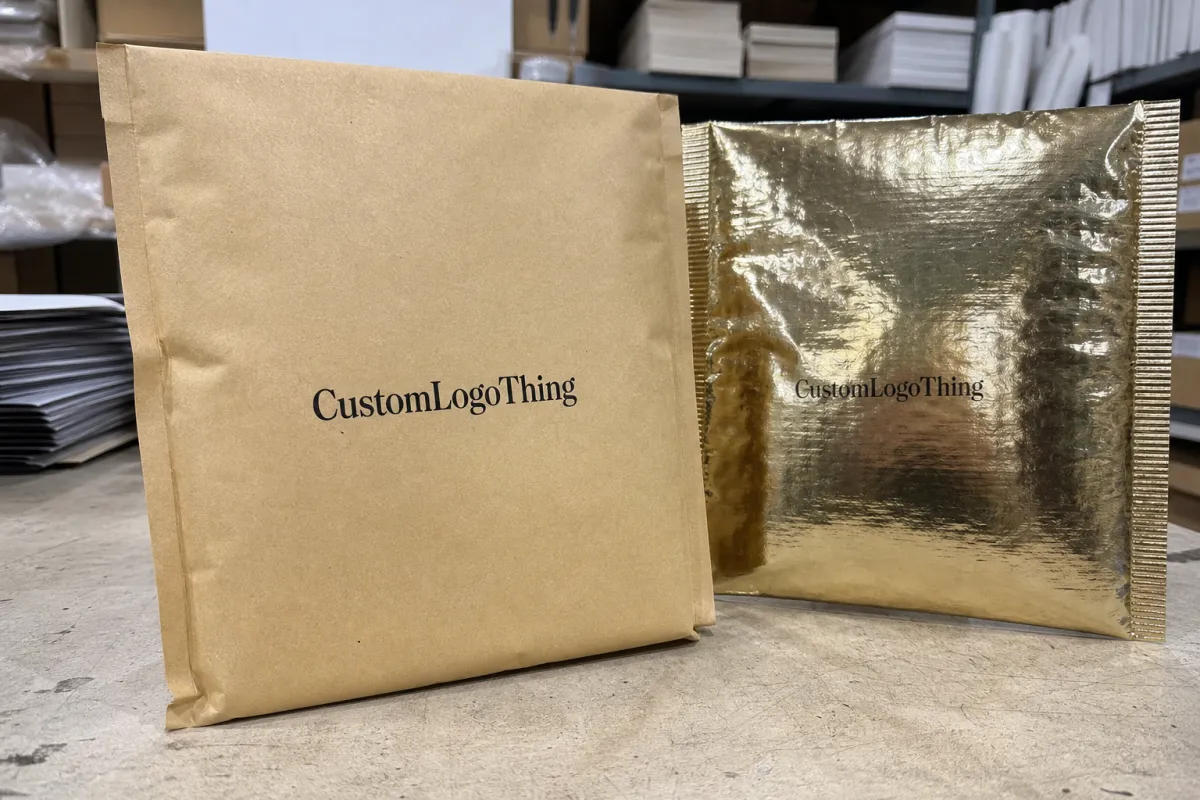
Candle brands sell atmosphere. Finish changes atmosphere before a customer touches the product. Matte reads quiet, grounded, and often more expensive than it is. Gloss pushes color and energy. Soft-touch creates a muted, tactile impression that signals luxury even before the seal is opened. Spot UV adds contrast and directs the eye to a logo or graphic detail. Those are different cues, and buyers react to them immediately.
The catch is that padded mailers are handled more than rigid cartons. They flex, rub against other parcels, and get stacked in ways that can wear down the surface. A finish that looks perfect under studio lighting can show edge rub, fingerprinting, or crease stress after transit. On candle shipments, that matters because a slightly damaged outer package can make the whole order feel less giftable, even if the candle inside is intact.
There is also a practical side that gets overlooked. Some finishes hide scuffs better, but they may also make surface defects harder to catch during inspection. Others look sharp but show every press mark from a packing line. In other words, finish is not only a branding choice. It is a quality-control variable.
A mailer that photographs well but ages badly in transit is not premium; it is just a fast way to buy reprints.
For candle launches tied to holidays, subscriptions, or influencer seeding, finish matters even more because the package is often photographed, unboxed on camera, or stacked next to other branded items. The surface has to hold up in person and still read cleanly on a screen. That is a narrow target, and it is why the decision deserves more than a quick approval on a digital render.
How coating, laminate, and print layers work
Finish is the visible top layer, but the behavior of the mailer comes from the whole structure underneath it. Most printed padded mailers use a printable outer layer, a cushioning core, and a seal or closure area that has to stay reliable after printing. If the outer surface is too thin or too textured, the finish may look uneven. If the substrate is too smooth without enough treatment, ink adhesion can become inconsistent.
Matte diffuses light and softens contrast. It is useful when the artwork uses warm neutrals, botanical illustrations, kraft-inspired visuals, or minimal typography. Matte also tends to mask small rub marks better than glossy surfaces. On the downside, deep blacks and saturated colors can look slightly flatter unless the print quality is strong.
Gloss reflects more light and makes color feel louder. Reds, dark greens, gold tones, and high-contrast graphics usually benefit from it. Gloss is a good fit if the brand wants a more retail-forward look or if the artwork depends on visual punch. The tradeoff is that fingerprints, fine scratches, and scuffs show more readily.
Soft-touch uses a specialty coating or laminate that creates a velvety surface. It feels expensive in hand and works well for premium candle sets or gift packaging. It also tends to add cost and can show burnishing if the mailers rub heavily during shipping or storage. On a rushed line, that surface can look tired faster than matte, especially along folds.
Spot UV is not a full finish; it is a selective layer of gloss applied to specific areas. It works best on clean, mostly flat designs where a logo, pattern, or border deserves emphasis. It is less forgiving on overly busy artwork. Spot UV also needs the underlying surface to be compatible with the coating process, so it is not a universal add-on.
The print method matters too. Digital printing is usually the better route for short runs, faster sampling, and artwork changes because setup is lighter. Offset printing tends to be more efficient at higher volumes and can produce strong solids and fine detail once the run is large enough to absorb setup costs. Neither is automatically better. The right choice depends on quantity, color coverage, and whether the finish needs to be integrated into the print pass or added afterward.
For brands checking sustainability claims, the substrate should be reviewed early. If the outer layer is paper-based, verify whether any recycled content or forest-sourcing claim is actually supported by the paperwork you need. For transit performance, it helps to ask for test references rather than vague reassurance. A finish that looks elegant but fails a handling test is not a usable finish.
Custom padded mailers for candle brands print finish comparison
If the question is which finish usually works best, the short answer is usually matte for balance, gloss for color impact, soft-touch for premium gifting, and spot UV for controlled emphasis. The longer answer is more interesting, because the right choice depends on what the candle line is trying to say and how hard the mailer will be handled.
| Finish | Typical unit cost at 3,000-5,000 pcs | Best for | Main tradeoff |
|---|---|---|---|
| Matte | $0.35-$0.70 | Minimal branding, warm neutrals, gift orders | Less visual punch than gloss |
| Gloss | $0.38-$0.78 | Bright color, retail displays, bold seasonal drops | Shows fingerprints and rub marks more easily |
| Soft-touch | $0.55-$1.05 | Luxury lines, premium sets, higher-ticket gifts | Higher cost and more visible wear under friction |
| Spot UV | $0.60-$1.20 | Logo accents, restrained layouts, selective shine | Extra setup and easy to overuse |
Matte is often the safest default for candle brands because it feels calm and hides transit wear better than gloss. It suits packaging with botanical artwork, muted palettes, earthy texture, or a clean typographic system. In real warehouse conditions, matte also tends to forgive the kind of light abrasion that happens when mailers are stacked tightly or slid across a packing bench.
Gloss is the bolder choice. It gives the artwork more snap and makes saturated color appear richer. That can work beautifully for holiday launches, scented gift sets, or candles positioned as lively rather than serene. The drawback is straightforward: gloss tends to reveal handling marks more quickly, especially on darker designs. If the goal is a polished retail look, that may be acceptable. If the brand is aiming for soft, organic, or understated, gloss can feel too sharp.
Soft-touch tends to impress people fastest at the sample stage. The surface feels expensive because it is deliberately restrained and tactile. That advantage matters for high-margin gifts, PR mailers, and limited editions where the package is part of the value proposition. The caveat is production reality. Soft-touch can add cost, and it is less forgiving if the finished mailers rub against each other in shipping cartons or sit under weight for long periods. A sample can look immaculate and still be a poor choice for a fulfillment line that is rough on packaging.
Spot UV is usually the most controlled way to create contrast. A logo, a border line, or a small pattern can catch the light without turning the whole mailer shiny. That makes it useful for brands that want a more refined look without committing to full gloss. It performs best when the artwork is simple enough that the sheen has room to matter. On busy designs, spot UV can read as clutter rather than emphasis.
One useful buyer rule: choose the finish that supports the fragrance story, not the one that sounds most expensive on paper. A woody, grounded candle line can look more believable in matte or matte-plus-spot-UV. A bright citrus launch may deserve gloss. A high-end winter set may justify soft-touch if the packaging budget can absorb it. The best finish is not the flashiest one; it is the one that makes the product seem coherent.
Cost, MOQ, and unit pricing: what changes the quote
Finish changes price quickly because it changes process. A plain printed mailer is one job. A printed mailer with laminate, specialty coating, or selective gloss is several jobs stacked together. Once you add those steps, the quote can move more than first-time buyers expect.
MOQ has a strong effect on unit cost. A run of 1,000 pieces carries more setup burden per unit than 5,000 or 10,000, so specialty finishes feel disproportionately expensive at smaller volumes. That is why a soft-touch sample line or a launch run can make sense for a premium candle debut, while the same finish becomes harder to justify for a broad scent range.
Several factors drive the number higher:
- Print coverage - full coverage costs more than a single logo or small panel.
- Color matching - tighter Pantone targets raise sampling and approval time.
- Finish complexity - spot UV and soft-touch both add process steps.
- Substrate choice - thicker or specially treated outer layers can change cost and performance.
- Pack-out requirements - heavier candles may need stronger seams or a different liner.
There are also hidden costs that often get ignored during comparison shopping. Freight cartons for the mailers themselves can add up. Sampling can take more than one round if the finish changes the color. If the design uses dark solids, the supplier may need to adjust the ink build or coating behavior so the surface does not show banding or uneven sheen. The cheapest quote on the page is not always the cheapest landed cost.
For planning purposes, many candle brands see standard printed padded mailers land around $0.35-$0.78 per unit at moderate volume, while specialty finishes can move closer to $1.00 or above depending on size, coverage, and process. That is a useful benchmark, not a promise. A clean quote should separate print, finish, packaging structure, and freight so the real cost is visible before approval.
One more practical note: if a supplier gives you a low price but cannot explain the finish build, ask what was removed. Sometimes the answer is a thinner laminate, a simpler coating, or a smaller printable area. That may be fine. It may also be where durability quietly disappears.
Production steps and turnaround: from proof to delivery
Good packaging timing starts with the brief. The supplier needs the dieline, artwork files, finish callouts, quantity, target ship date, and any structural notes before the schedule is believable. If the mailer is custom-sized or the candle pack-out is unusually heavy, structural checking should happen before proof approval, not after.
- Artwork and dieline review - confirm panel placement, bleed, safe zones, and the exact finish areas.
- Digital proof - check logo scale, color intent, copy placement, and any coating or UV notes.
- Sample or pilot run - useful when the finish is new or the pack-out is unusually tight.
- Production - often 10-18 business days after approval for standard work.
- Quality control - inspect color, seam strength, closure performance, and finish consistency.
- Freight and delivery - transit time depends on destination, cartons, and shipping method.
Special finishes add time. Soft-touch usually requires more handling. Spot UV can add setup, curing, or inspection steps. If the order is rushed, the finish menu often shrinks before the schedule does. That is normal. Complex finishes and speed do not cooperate well.
A realistic planning window for many candle brands is 2-4 business days for proofing, 5-8 business days for samples if needed, and roughly 10-18 business days for production once everything is approved. Simpler digital work can move faster. Larger offset runs are often more efficient at scale, but they still need setup, color control, and a final check before packing.
Quality control should not stop at visual inspection. The better checks are simple and practical: rub the surface lightly to see whether the ink or coating marks, fold the mailer to see whether the finish cracks at stress points, test the closure, and pack one with the actual candle plus any insert or tissue. A bare mailer can hide problems that show up once the product is inside. A proper sample reveals them early.
Common mistakes candle brands make when choosing a finish
The first mistake is choosing from a screen render alone. Screens exaggerate shine, hide texture, and make almost everything look cleaner than the printed version will look under warehouse light. Matte often appears flatter online than it does in hand. Gloss often appears richer online than it will after the first few fingerprints. Sampling is slower than approving mockups, but it prevents much more expensive surprises.
The second mistake is matching the finish to the wrong brand personality. A candle line built around quiet, natural, restorative scents does not always benefit from a loud glossy surface. A bright, modern seasonal launch can disappear if the finish is too restrained. The finish should support the scent story and price point, not compete with them.
The third mistake is ignoring the way packages actually move. Dark matte can show edge rub. Gloss shows touch marks. Soft-touch can burnish under pressure. If the mailers are packed tightly, stored for weeks, or shipped through several touchpoints, the finish needs to survive that route. That is where a drop test, rub test, and seam inspection are useful, even for relatively light candle shipments.
The fourth mistake is skipping a sample with the real product inside. A candle jar changes the way the mailer flexes. Inserts add pressure. Tape, tissue, and product weight all affect how the exterior looks after closure. One test pack can reveal whether the finish still looks premium once the mailer is full. Without that test, the first feedback may come from customers, and that is a very expensive place to learn.
The fifth mistake is letting the finish decision drift away from the rest of the packaging system. If the outer mailer feels luxury but the insert, label, and shipper feel generic, the line loses coherence. If you use multiple formats, the finish should sit comfortably beside your boxes, sleeves, and retail packaging so the whole set looks planned rather than assembled from unrelated parts.
What to order next: samples, specs, and launch checklist
If the design direction is close, order two or three finish samples and look at them under warm and cool light. That sounds basic because it is basic, and basic checks are usually what save a launch. Put the actual candle inside. Shake the sample gently. Stack it. Slide it. Close it. If the finish still looks clean after those tests, it is probably close to production-ready.
Before final approval, confirm these details:
- Finish type - matte, gloss, soft-touch, or spot UV.
- Print coverage - full wrap, partial panel, or logo-only.
- Color target - Pantone match, CMYK build, or approved visual range.
- Quantity - the actual order size, not the ideal future run.
- Target ship date - leave room for proofing and freight delays.
- Handling notes - inserts, stacking, storage conditions, and any line-specific concerns.
If you want a practical decision rule, use three filters: brand fit, transit durability, and quote comfort. If all three line up, move forward. If one fails badly, do not let a pretty sample overrule the numbers. A packaging choice can be attractive and still be wrong for margin, timing, or handling. That is especially true with premium finishes, where the visual gain is real but so is the cost.
For candle brands, the point of a finish comparison is not to make the package flashy. It is to make the package believable. The best Custom Padded Mailers for candle brands print finish comparison is the one that matches the scent profile, survives the route, and still feels worth keeping when the customer opens the order. Everything else is decoration without discipline.
Frequently asked questions
What is the best finish for custom padded mailers for candle brands?
Matte is usually the safest all-around choice because it looks polished and hides scuffs better than gloss. Soft-touch suits premium gifting, but it raises cost and can show wear if the mailers rub during transit. Gloss works best when the brand wants strong color and a more retail-forward look.
Do custom padded mailers for candle brands need spot UV?
No. Spot UV is useful when a logo, border, or pattern needs to stand out without turning the whole mailer shiny. It works best on simple artwork with enough open space for the contrast to matter. If the design is already busy, spot UV can add clutter instead of clarity.
How much does finish choice affect the unit cost?
It can move the price noticeably. Matte usually sits closest to the baseline premium option, while soft-touch and spot UV add more process and setup. The effect is sharper on smaller runs because the fixed costs are spread across fewer units. Always compare cost at the real order quantity.
What is the usual turnaround for printed padded mailers with a custom finish?
Simple jobs can move quickly once the artwork is approved, but specialty finishes take longer. A practical planning window is often 2-4 business days for proofing, several days for samples if needed, and about 10-18 business days for production after approval. Rush schedules usually reduce finish options rather than expand them.
What should I send for a quote on custom padded mailers for candle brands?
Send quantity, finish preference, print coverage, artwork files, target delivery date, and any structural notes such as insert weight or packing constraints. If you already know whether you want matte, gloss, soft-touch, or spot UV, say so early. That keeps pricing, sampling, and lead time closer to reality.

