Custom Padded Mailers for bakery packaging are a narrow solution, which is exactly why they work so well for the right products. Flat cookie assortments, pastry sleeves, biscotti, granola sets, and small gift packs do not always need a rigid carton and a pile of filler. They need a package that keeps the order clean, protects the surface, and arrives looking like someone planned the experience.
The buying decision is less about packaging theory than about what happens after the parcel enters the shipping network. Scuffing, seam splits, grease transfer, and flex damage tend to show up before a dramatic crush does. That detail matters because bakery packaging often fails in ways that are visible, not catastrophic. A customer may forgive a dented shipper less readily than a cookie box with a stained corner and a loose seal.
What custom padded mailers for bakery packaging protect in transit
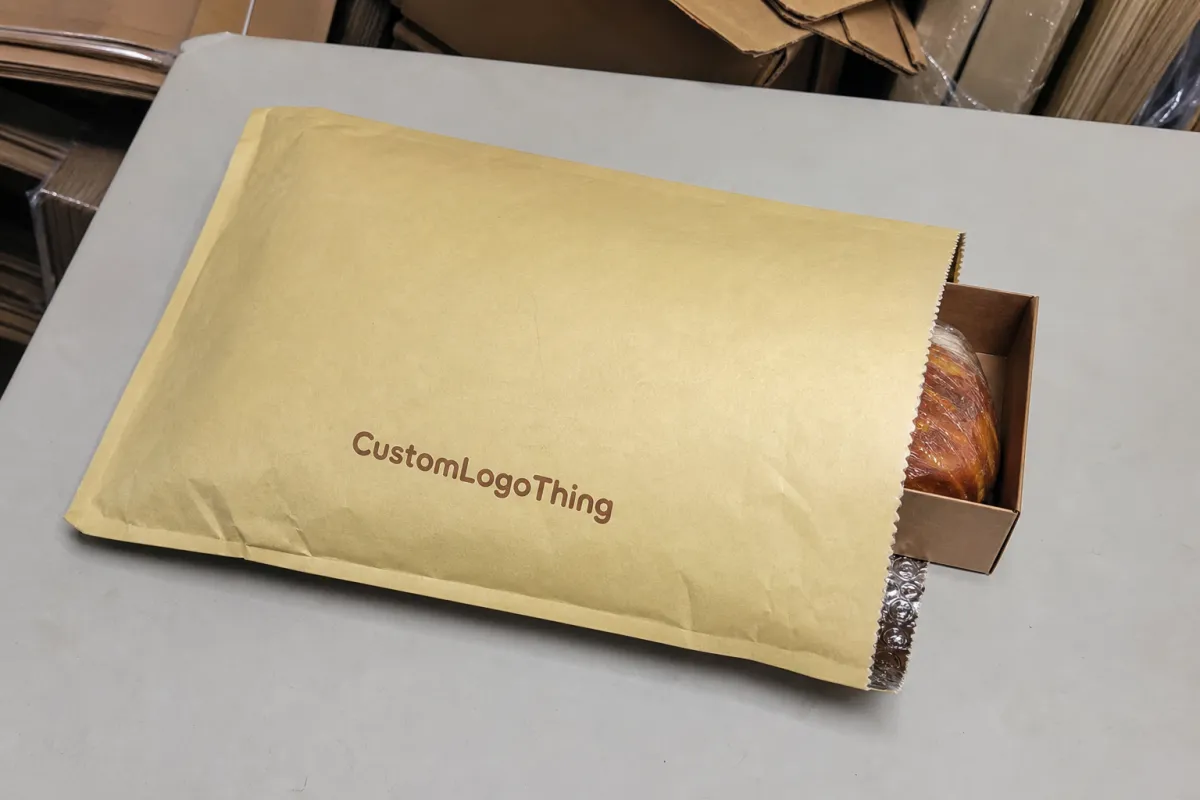
Most bakery shipments fail from abrasion, compression, or contamination, not from one hard impact. A padded mailer helps by limiting movement, cushioning flat edges, and shielding the exterior from rubbing against other parcels. For lighter bakery SKUs, that can be enough to outperform a small carton, especially when the product is already packed in a tray or sleeve.
There is also a cost angle. A mailer usually packs flatter than a box, uses less void fill, and can reduce dimensional weight charges. Those savings can be meaningful on direct-to-consumer orders, where every extra inch in the shipping profile can increase the parcel bill. The right format lowers more than material spend; it can reduce pack-out time and shipping waste at the same time.
For practical purposes, a bakery mailer has four jobs:
- Keep the product presentable after transit.
- Limit shifting inside the pack.
- Protect the printed surface from scuffs and pressure marks.
- Arrive with enough structure that it feels intentional, not improvised.
That last point gets overlooked. Customers compare the package to other retail packaging they see online or in stores, even if they never say so directly. If the exterior looks thin, wrinkled, or stained, the product inside starts at a disadvantage before it is even opened. Packaging does not need to be fancy to do this job well. It does need to look finished.
There are limits, though. Tall cakes, fragile decorations, or products that need a rigid stack can outgrow the mailer format quickly. In those cases, a carton is the better choice, even if it costs more. The mistake is not choosing a box. The mistake is trying to force a mailer onto a product that needs vertical support.
Mailer build choices that stop crush, scuff, and grease issues
Not every padded mailer is suited to bakery use. Buyers should look at the face stock, padding layer, closure, and edge strength as a system. If one part is weak, the rest of the build does not matter much. A premium print on a flimsy seam still fails like a flimsy seam.
Outer face
The outer face controls both appearance and durability. Paper-facing materials can suit a softer, more artisanal look, and they pair well with sustainability claims when the sourcing is documented. Film faces generally resist abrasion better and can hold up better in longer shipping lanes. Laminated paper sits between those two: more polished than plain paper, tougher than a basic sheet.
Finish matters more than many buyers expect. Matte surfaces hide small scuffs and handling marks better. Gloss can make artwork pop, but it also shows fingerprints and rub faster. For seasonal bakery runs, that difference may be enough to change the customer’s first impression of the order.
Padding and barrier
For products with butter, oil, frosting, or a lightly greasy surface, the mailer needs more than cushioning. It needs a barrier that resists staining. Without that layer, the package may arrive structurally intact and still look tired, which is a branding issue as much as a transit issue.
A secondary inner wrap, food-safe sleeve, or coated tray often solves more problems than upgrading the whole outer mailer. That kind of adjustment is practical, not theoretical. It lets the outer package stay clean while the inner component handles the messier part of the product. For many bakery SKUs, that is the cheapest route to better presentation.
Seal and edges
Closures deserve more attention than they usually get. A weak strip seal or sloppy flap can open under repeated handling, especially in parcels that move through several facilities. Edge construction matters for the same reason. Corners take the first hit in sorting, stacking, and delivery, so a strong seam is not cosmetic detail. It is the difference between a package that reaches the customer and one that arrives looking worn out.
Compared with stock mailers, a custom version can add the right dimensions, stronger seams, a better barrier, and print placement that stays legible after handling. Stock saves setup time. Custom improves fit and presentation. The right choice depends on whether the SKU needs a basic shipping shell or a package that carries brand value on its own.
For programs that need related formats, the same logic applies across Custom Packaging Products and film-based options such as Custom Poly Mailers. The better supplier will match the structure to the product instead of trying to sell one construction for everything.
Specs buyers should lock before sampling or reordering
Samples help only when the spec is clear enough to compare. Before approving anything, confirm the finished product dimensions, the outer mailer size, the flap allowance, and the internal clearance. The packed item should not float around, but it also should not be forced so tightly that the closure has to fight the contents. A small change in clearance can matter more than another round of artwork tweaks.
Ask for the material spec in writing. That should cover thickness, padding weight, closure style, and any grease-resistant or moisture-resistant feature the product needs. If the package is not intended for direct food contact, say so clearly. If it will sit against a sleeve, tray, or wrap that touches the food, define that boundary in the spec. Ambiguity is expensive later, especially when compliance questions come up during a reorder.
- Product size: exact finished dimensions of the bakery item, including tray or sleeve.
- Pack size: final dimensions after insertion, not just the item alone.
- Flap allowance: enough seal area to stay closed under parcel stress.
- Print limits: logo placement, color count, bleed area, and no-print zones.
- Barrier needs: grease resistance, moisture resistance, or odor control if needed.
One common mistake is approving artwork before testing real bakery items in the proposed mailer. That looks efficient on paper and causes trouble later. A tray may flex, frosting may rub, or the closure may compress the contents unevenly. Test the actual SKU, not a placeholder. If the product is fragile enough to need transit validation, ask for a protocol that follows ISTA methods or a similar parcel test plan.
For brands that already use gift boxes, sleeves, or inserts, it also helps to check whether the mailer matches the rest of the packaging line. Consistent dimensions and visual language reduce packing errors and make the unboxing feel more deliberate. A disconnected package system costs more than people expect, even when each individual item looks acceptable on its own.
Custom Padded Mailers for Bakery Packaging Wholesale Pricing Factors
Among Custom Padded Mailers for bakery packaging Wholesale Pricing Factors, size is usually the first cost lever and print complexity comes next. After that, material type, closure style, barrier requirements, and quantity take over. A larger mailer uses more face stock and more padding. A multi-color print adds setup and production time. A specialty liner for greasy bakery items raises the unit price, but it can also prevent a ruined presentation on arrival.
MOQ changes with material choice and supplier capacity. Lower minimums are useful for launches, seasonal collections, and market tests, but they usually carry a higher unit cost because setup gets spread across fewer pieces. Buyers often focus on the lowest per-piece price and miss the real number: landed cost after freight, setup, sampling, and reorders. That is where the quote can shift from affordable to awkward.
The cheapest quote is rarely the cheapest landed cost. If a better mailer avoids one damage claim, one repack, or one labor step, the math changes quickly.
| Option | Typical MOQ | Unit price range | Best use | Main trade-off |
|---|---|---|---|---|
| Stock padded mailer, no print | 250-1,000 | $0.18-$0.32 | Fast launch, testing, simple bakery SKUs | Limited brand control |
| Short-run custom print | 1,000-3,000 | $0.26-$0.48 | Seasonal promotions, DTC trials, branded packaging | Higher setup cost per unit |
| Full custom spec with barrier liner | 3,000-10,000+ | $0.32-$0.68 | Higher-volume bakery programs, greasy items, repeat fulfillment | Longer lead time and tighter planning |
Those ranges assume a mid-sized custom run, not a tiny prototype order, and they exclude freight. On smaller shipments, freight can add another 8% to 20%, depending on weight, density, and distance. Setup fees often land somewhere around $120 to $500, depending on the print method and whether proofing or tooling adjustments are needed. If a quote blends those charges into one line, ask for a breakdown. Reorders are easier to compare when the pricing is transparent.
Repeat volume changes the picture again. Two forecasted reorders usually produce better economics than one emergency buy because the supplier can plan materials and press time more efficiently. That matters for bakery brands that move through holiday peaks or product drops with a tight calendar. It can also make sense to align mailer planning with a broader Wholesale Programs review so the forecast and packaging specs move together.
Price should never be read in isolation. A slightly heavier face stock can reduce print rub. A stronger closure can lower repack labor. A better barrier can prevent stained exterior surfaces that would otherwise turn into waste. Packaging teams do not really buy a unit price. They buy the finished result that survives shipping and still looks worth opening.
Process and timeline from proof to production
The best projects follow a simple sequence: brief, size confirmation, artwork proof, sample approval, production, inspection, and shipment. None of those steps is complicated. Delays usually come from missing measurements, unfinished artwork, or revisions that arrive after the proof has already moved forward.
A realistic timeline for standard custom builds is often 12-15 business days from proof approval to production completion. Specialty barrier structures, heavy print coverage, or unusual closures can push that to 18-25 business days. Rush orders are possible, but they usually trade speed for flexibility. You get a tighter schedule, fewer revision cycles, or higher freight. There is no magic shortcut; only a different mix of compromises.
One common source of rework is a size change after the physical sample arrives. That can be handled, but it is not free. If the dimensional shift affects print placement or seam behavior, the supplier may need to reset the spec and reproof the file. Final sign-off should be treated as a real checkpoint, not a casual email thread.
If the program includes an inner tray, sleeve, or insert, test the full assembly. A bakery order is a system, not a single component. The mailer, inner pack, and finished presentation need to work together. If one part is off, the customer notices quickly.
How the mailer should fit your bakery workflow and retail presentation
The best mailer is the one your team can pack quickly and repeatably. If the order is hand-packed, the closure should be easy to manage and forgiving enough for busy shifts. If the line is semi-automated, the mailer needs a consistent opening, straight folds, and enough stiffness to move through the workflow without snagging. Pack-out time becomes a real cost once order volume rises.
Direct-to-consumer bakeries usually care about the opening experience and the first visual impression. Wholesale and retail fulfillment care more about stackability, tamper evidence, and predictable handling. A mailer can satisfy both, but only if the structure is chosen with the channel in mind. A package that looks polished in a mockup can still slow the table down in real use.
Consistency matters too. A custom exterior can make a small bakery feel more established when the colors and typography echo the website, menus, and shelf packaging. That kind of continuity turns a shipper into part of the brand system. It also keeps the packaging from feeling like an isolated shipping layer with no connection to the product inside.
Some SKU lines can share one mailer size across several products. Others cannot. If the assortment is tight, one size may work with minimal movement. If the assortment varies too much, that same standardization creates filler space and rougher handling. Single-SKU programs are easier to control; multi-SKU programs need better discipline and tighter dimensional planning.
Mailers also have a ceiling. They are not a replacement for a box when a product has height, loose decoration, or fragile garnish. In those cases, a box is the correct shipper even if the unit cost is higher. Good packaging follows the route the product needs, not the structure that looks cheapest in a spreadsheet.
What to compare in a supplier before placing volume orders
Supplier selection should be evidence-based. Ask for documented specs, material samples, tolerance ranges, and proof that the same result can be repeated on a reorder. A polished mockup does not prove color control. A fast reply does not prove manufacturing discipline. What matters is whether the supplier can deliver the same size, the same seal quality, and the same print placement again.
Continuity matters just as much. Can they support reorders without changing materials? Can they ship to one warehouse now and three later without altering the spec? Can they keep the file history clean enough that the next run matches the first one? Those questions matter more than broad claims about speed. If the supplier sells a mix of branded packaging, retail packaging, and fulfillment formats, ask how they keep specs from drifting across categories.
- Communication: proof turnaround, clarity, and responsiveness.
- Sample quality: whether samples reflect real production materials.
- Pricing transparency: visible setup, freight, and reprint terms.
- Consistency: color match, seal control, and repeat-run reliability.
- Breadth: ability to support related needs such as Custom Packaging Products without forcing separate vendor management.
For sustainability claims, ask whether the paper fiber is FSC-certified and whether that claim can be documented. For transit-performance claims, ask what test method the supplier used. Industry resources from Packaging School and industry organizations can help frame the right questions, while ISTA provides the testing logic. Vague promises are easy to sell. Measurable standards are harder, and that is the point.
Next steps for a cleaner wholesale buy
Start with measurable facts: exact product dimensions, expected monthly volume, shipping method, and the damage threshold you are willing to accept. Then request quotes that separate unit price, setup, sample cost, freight, and reorder terms. A disciplined review of Custom Padded Mailers for bakery packaging wholesale pricing factors keeps the conversation grounded and makes the true savings easier to see.
After that, test the sample with actual bakery products and give the people who pack orders a chance to handle it. Real product dimensions tell the truth faster than a mockup does. Watch for corner rub, seal pressure, grease staining, and any wasted motion on the packing table. If one SKU works and another does not, that is useful information, not a setback.
It also helps to compare at least two quote tiers. One should show the lower-cost path with a simpler spec or lower MOQ. The other should show the stronger long-run economics if the order will be repeated. That comparison usually reveals whether the savings come from the structure itself or from a temporary concession that disappears on the next buy. For broader planning, a conversation around Wholesale Programs can keep forecasting and packaging decisions aligned.
For bakery brands that need the outer pack to do more than hold product, the right mailer can lower damage, improve presentation, and reduce pack-out friction at the same time. That combination is hard to beat. The final decision should be driven by protection, labor, and brand fit together, not by price alone.
How do I choose the right size for custom padded mailers for bakery packaging?
Measure the finished bakery item, including any tray, sleeve, or wrap, then add enough room for the padding layer and seal flap. Test a packed sample for movement, corner crush, and closure pressure before approving the size for production.
What drives the wholesale price of bakery padded mailers the most?
Size, material thickness, print complexity, and MOQ usually move pricing more than small artwork changes. Freight, setup fees, and any custom liner or closure choice also affect the landed cost.
What MOQ should I expect for custom bakery mailers?
MOQ varies by material and print method, but custom runs usually become more efficient once volume is high enough to spread setup across the order. Tiered quotes make the gap between a test order and a replenishment run much easier to compare.
Can padded mailers handle greasy or frosted bakery products?
Yes, if the internal barrier, seal, and outer finish are chosen for that product type. For oily or soft items, use a sleeve, liner, or secondary wrap so the exterior stays clean and the package still looks premium on arrival.
What is a realistic production timeline for a custom order?
Most standard runs take about 12-15 business days after proof approval, while more complex builds can take 18-25 business days. Artwork changes, size revisions, and sample updates are the most common reasons timelines stretch.

