If you are comparing Custom Padded Mailers for candle brands wholesale pricing factors, the first number to challenge is not the unit price. It is the cost of one cracked jar, one refund, and one repack after the carrier has already moved the box through half the country.
Packaging buyers learn that lesson quickly. The mailer that looks cheapest on paper can become the most expensive line item after breakage, customer service time, and replacement freight are added back in. Candle brands feel that pressure early because the product is fragile, often glass-based, and usually sold in margin-sensitive bundles. A good mailer has to do three jobs at once: protect the product, present the brand cleanly, and stay light enough to preserve profit.
"The cheapest shipper is not cheap if it fails after the label is printed."
Padded mailers sit between plain envelopes and rigid boxes. They are not a substitute for a high-crush shipper, and they are not intended to be a miniature fortress. Used well, though, they are a practical option for tins, wax melts, sample sets, and some single-vessel candle orders. For brands that want branded packaging without moving every SKU into a full box program, this format often lands in the useful middle.
Why candle brands switch after one breakage-heavy launch
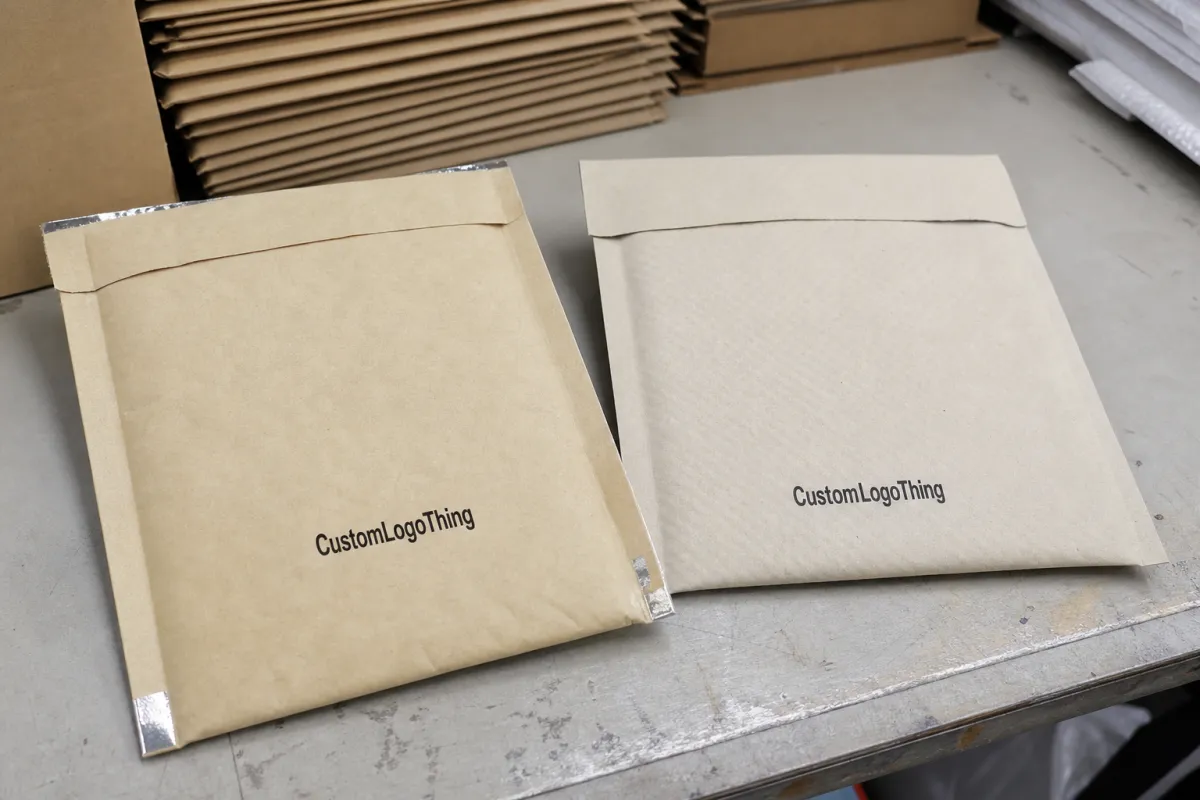
Most candle brands do not switch packaging because they are chasing a trend. They switch after one launch reveals where the weak points are. One return sounds minor until it is multiplied across a campaign, and then the real bill appears: reshipments, labor, replacements, support tickets, and the occasional negative review that outlives the product cycle.
That is why Custom Padded Mailers for candle brands wholesale pricing factors should be reviewed against total landed cost, not just the quote from the factory. A mailer that costs a few cents more but reduces transit damage can save money almost immediately. The numbers are dull. The consequence is not.
There is also a branding issue. Many candle companies sell a sensory product, but the shipping material is the first physical touchpoint. A flat mailer with a clean logo often looks more intentional than a generic carton filled with excess void. That does not mean every candle belongs in a mailer. It means the packaging should match the shipment profile instead of defaulting to the most familiar format.
Brands often move into padded mailers for:
- Single candle tins that need a flat, low-cost pack-out.
- Wax melt bags and lightweight accessory orders.
- Travel-size candles that do not justify a rigid box.
- Sample kits and launch mailers where presentation still matters.
- Subscription inserts that need to stay simple and light.
There is a useful split here. Higher-value gift sets usually still belong in boxes. Lower-risk SKUs can stay in mailers and save on both material and freight. That combination keeps packaging spend tied to the actual product mix instead of forcing every order through the same expensive format.
What padded mailers actually protect in candle shipping
A padded mailer protects against the kinds of damage that show up most often in parcel networks: abrasion, rubbing, corner wear, minor impact, and a bit of flex during sorting. It does not turn a fragile glass vessel into a brick. The material only moderates force. It does not erase it.
For candle shipping, the structure matters more than the marketing language. Bubble-lined mailers use air cells for cushion. Fiber-padded paper mailers rely on a compressible inner layer. Poly padded options add tear resistance and moisture protection, which can help in humid routes or long delivery windows. Each format solves a slightly different problem, and each has a different cost profile.
Buyers should look at the real hazards in the route:
- Outer shell - resists punctures, scuffs, and handling wear.
- Padding layer - reduces rubbing and absorbs light impact.
- Seal strength - keeps the mailer closed through sorting and delivery.
- Seam integrity - prevents splitting when the package flexes.
A low-profile tin usually travels well in a properly sized mailer. A short glass jar can also be a workable fit if the dimensions are tight and the seal holds. Tall candles, heavy vessels, and mixed gift sets need more caution. Once the product can move inside the shipper, the failure rate tends to rise fast.
Testing matters more than adjectives. Ask for evidence tied to transit handling, not vague durability claims. ISTA procedures are widely used for package testing, and ASTM methods are common in lab work. A supplier who can explain the difference between sample-level success and shipment-level performance is giving you useful information. A supplier who cannot usually is not.
Presentation still counts, even in a functional shipper. A branded surface tells the customer the order was considered, not assembled from leftover stock. That matters for samples, wax melts, and small candle orders that should feel deliberate from the moment they land on the doorstep.
Material and print specifications to lock before you request quotes
If the spec sheet is vague, the quote will be vague too. That is not a negotiating trick. It is simply what happens when a supplier has to price around missing information. For candle brands, the faster path to a usable quote is to settle the key construction details before asking for numbers.
The most important variables are usually these:
- Outer material - kraft paper, poly film, or reinforced paper stock.
- Padding type - bubble lining, fiber fill, or recycled cushioning.
- Thickness - thinner mailers cost less, but they often protect less too.
- Closure style - peel-and-seal, adhesive flap, or tamper-evident strip.
- Seam width - wider seams usually improve strength and add material cost.
- Finished size tolerance - critical for candle SKUs that are already tight on fit.
Print choices can move the quote as much as structure. A one-color logo placed on a single panel is a very different job from full-coverage artwork, back-panel copy, and multiple ink hits. More color means more setup and more chances for registration drift. More coverage means more production time. Even font size matters if small text needs to stay sharp on a textured surface.
If recycled content or paper sourcing is part of the brand story, ask for documentation instead of assuming the material qualifies. FSC claims should be traceable and consistent across the order, not added as decorative language in a sales deck. The same discipline applies to moisture resistance, tamper evidence, and warehouse-friendly flat packing. Those are not cosmetic features. They affect how the packaging performs once the warehouse starts moving volume.
Size clarity is another place where quotes get distorted. If a candle jar is "about 3 inches wide" and the height is "roughly 4 to 4.5 inches," the manufacturer has to build in extra tolerance. That usually pushes the estimate upward because no one wants to gamble with a production run.
One practical rule helps a lot: the more variability in the product, the more variability in the packaging quote. A tight spec sheet narrows the risk and usually narrows the price range too.
Custom padded mailers for candle brands wholesale pricing factors
The main price drivers are straightforward: material grade, padding type, print coverage, finished size, closure style, quantity, and freight. Those are the levers that move the quote. The rest is usually detail around the edges.
| Option | Typical MOQ | Unit Price Range | Best For | Main Tradeoff |
|---|---|---|---|---|
| Stock-size padded mailer with simple print | 1,000-3,000 | $0.16-$0.28 | Wax melts, sample kits, lighter tins | Less size flexibility |
| Custom size with one-color branding | 3,000-5,000 | $0.18-$0.32 | Single candles, repeat DTC orders | Setup cost is spread across fewer units on low runs |
| Full-coverage print with specialty finish | 5,000+ | $0.30-$0.55 | Premium branded packaging and launch kits | Longer lead time and higher freight sensitivity |
Minimum Order Quantity is where many buyers first feel the gap between idea and budget. Lower runs cost more per piece because setup, artwork prep, and machine time are spread across fewer units. Standard sizes usually price better than custom dimensions. Repeat orders often improve again because the tooling and production settings are already known.
Hidden costs deserve as much attention as the line-item price. Sample charges, artwork revisions, plate or tooling fees, reproofing, and pallet freight can all change the true cost of a run. Ex-works pricing can look attractive right up until the buyer adds ocean freight, duty, domestic delivery, and receiving fees. A quote that looks clean in isolation can be expensive once it lands.
There is also a tradeoff between structure and shipping weight. A more protective mailer may cost slightly more to buy, but if it lowers breakage and still ships under a favorable weight threshold, it can improve the whole order economics. That is often the better choice for a candle brand than chasing the lowest factory price.
This is true for other packaging formats too, including Custom Packaging Products and rigid boxes. Price the packaging by failure risk, fulfillment speed, and customer experience, not by unit cost alone. A ten-cent difference can be irrelevant if the lower-cost option triggers a return.
One more point that buyers sometimes miss: freight sensitivity rises quickly with larger custom runs and bulkier packaging. A flat mailer usually ships more efficiently than a box with inserts, but once the design becomes oversized or heavily printed, the freight advantage narrows. That is why the best quote is often the one that balances protection, size discipline, and print simplicity rather than trying to maximize every feature at once.
Production steps, timeline, and lead time from approval to ship date
Most delays are unglamorous. Missing dimensions, late artwork changes, and unclear approval notes create more trouble than the actual production run. A clean order usually moves through the same sequence: inquiry, quote, artwork check, proof approval, production, quality control, packing, and shipment. The process is ordinary. The frustration usually comes from skipping one step.
Typical lead times vary by order type:
- Stock-style mailer with light customization - often 10-15 business days after proof approval.
- Fully custom size and print - often 15-25 business days after final approval.
- Imported freight movement - add transit time if the order moves by ocean or consolidates with other cargo.
Seasonality matters. Candle launches cluster around holidays, gifting periods, and subscription resets. That pushes production queues out. If a launch depends on a specific delivery window, final dimensions, quantity, print file, and closure style need to be locked early. Once the line starts, changes are expensive. A revised logo placement or a new carton count can create a new proof cycle and shift the ship date.
The approval list is usually smaller than buyers expect, but every item matters. Size, artwork, color count, and pack configuration are the usual checkpoints. If those are settled cleanly, production tends to move. If design is still changing after the quote has been accepted, the schedule starts slipping almost immediately.
For multi-channel brands, that timeline should also match warehouse labor and reorder planning. A mailer that arrives ten days late can force the team to overpack in another format or hold orders in queue. That is not just a packaging problem. It becomes an operations problem very quickly. Pairing the order with existing Wholesale Programs can help keep those timelines aligned across packaging categories.
How to compare suppliers on consistency and support
Pretty samples are easy. Consistent production is harder. A supplier can send one impressive prototype and still struggle with repeatability across a real run. That is why buyers should inspect the parts that fail in volume: registration, seams, adhesion, and fit.
These checks usually tell the story fastest:
- Print registration - the logo and copy should stay aligned across the run.
- Seam alignment - weak or crooked seams usually show up first in transit.
- Closure hold - the adhesive should stay locked, not peel under handling.
- Pack-out consistency - the candle should fit the same way every time.
- Simple handling test - the mailer should survive normal movement, not just a desk sample.
Support matters just as much as the structure. Good vendors help with dielines, file cleanup, proofing, reorder records, and consistency across repeat runs. That becomes valuable fast for candle brands, because the packaging rarely stays frozen. Jar sizes shift, labels change, and seasonal graphics appear. A supplier that keeps the spec history organized saves time on every future order.
There is also a practical difference between suppliers that sell packaging and suppliers that understand fulfillment. The latter are more likely to ask about weight, finish, warehouse handling, and the route the package will travel. Those questions can feel tedious, but they usually lead to a better result. The buyer gets fewer surprises. The warehouse gets fewer damaged cartons.
If you are weighing mailers against other branded packaging, compare them by task rather than by aesthetic preference. Mailers generally pack faster and cost less to ship. Boxes offer better crush resistance and a more premium unboxing surface. Neither is universally better. The right choice depends on candle weight, vessel type, and how much risk the shipment can absorb.
For brands building out a wider packaging line, the references in Case Studies and Custom Packaging Products are helpful for seeing how different formats sit alongside one another. The point is not to imitate a sample order. The point is to understand where the mailer belongs in the larger system.
Common ordering mistakes that inflate breakage and reprint costs
Oversizing is one of the easiest mistakes to make. A larger mailer can feel safer, so buyers add filler until the candle stops shifting. That can raise cost without fixing the underlying problem. If the product is loose inside the shipper, it still has room to move, and movement is what creates wear.
Another frequent error is treating all candle SKUs as if they share the same shipping risk. A 4 oz tin and a 9 oz glass jar may both be candles, but they are very different parcel conditions. Glass weight, vessel shape, and label finish all affect the way the packaging should be built. A test on the lightest item is not enough.
Late artwork changes cause their own damage. Extra colors, reworked layouts, and edits after proof approval often mean another round of setup and another delay. If the run is already scheduled, the reprint cost can be painful. Buyers usually notice the design change first and the margin loss second.
Short runs can also backfire. Ordering too little may force a second setup fee later, or leave the brand with mismatched mailers across batches. That inconsistency shows up in fulfillment and in customer perception. People notice when one order looks slightly different from the next, especially in packaging that is supposed to signal a polished brand.
The better approach is simpler: size the mailer to the heaviest candle variant, test the actual pack-out, and order enough units to avoid re-running the line too soon. That keeps the price honest and the shipping performance steady.
Next steps for a clean quote and a faster launch
A useful quote starts with a complete spec sheet. A paragraph is not enough. Include candle dimensions, unit weight, preferred closure, print colors, target quantity, delivery date, and destination. If the candle uses glass, foil labels, or a premium finish, add that too. The more precise the input, the less guesswork in the quote.
It helps to compare two build options side by side:
- Lowest unit cost - standard materials, simpler print, and fewer special finishes.
- Best protection - tighter fit, stronger material, and a closure chosen for transit reliability.
That comparison reveals the cost of safety in plain terms. It also exposes where the supplier is cutting back. Sometimes the cheaper option is perfectly adequate. Sometimes it is only cheaper because it offloads risk onto the brand.
Before approval, request a sample or production proof. That matters most for glass candles, metallic labels, and any launch packaging that has to look right the first time. One proof can surface seam issues, print shifts, or fit problems long before they become claims. The cost of checking early is small compared with the cost of reworking an entire order.
For candle brands, the strongest pricing decision is usually the one that balances protection, transit weight, and presentation rather than chasing the lowest quote. Compare Custom Padded Mailers for Candle brands wholesale pricing factors against the product you actually ship, the route it travels, and the failure rate your business can tolerate.
What drives the price of custom padded mailers for candle brands the most?
Material grade, padding type, finished size, print coverage, and quantity usually move the price the most. Freight, sample requests, and setup charges can also change the landed cost, especially on lower-volume runs.
Are padded mailers safe for glass candle jars?
They can work for lighter single jars if the size is correct and the mailer has been tested under real handling conditions. Heavy glass, tall vessels, and premium gift sets usually need a more rigid shipper than a mailer alone.
What MOQ should I expect for wholesale candle mailers?
Standard sizes often support lower MOQs than fully custom dimensions or full-coverage printed runs. Mixed-SKU purchasing can sometimes help, but it depends on how the supplier counts production minimums.
How long does production usually take?
Lead time depends on proof approval speed, material availability, and whether the order needs custom tooling or print setup. Orders move fastest when dimensions, artwork, and quantity are finalized before production begins.
What should I send to get an accurate quote?
Send the candle dimensions, weight, print colors, estimated quantity, target delivery date, and shipping destination. Include any special finish or sustainability requirement, because those details change the quote and help price Custom Padded Mailers for candle brands wholesale pricing factors more accurately.

