For a Custom Padded Mailers for cosmetics brands reorder planning guide, the real risk is not the mailer price. It is the delay that starts when inventory is low, artwork is waiting, and the next shipment still has to move through proofing and transit. Beauty brands feel that lag quickly because demand often spikes around launches, creator mentions, holiday bundles, and subscription cycles.
Padded mailers are a practical middle ground for lightweight cosmetics packaging. They protect more than a plain poly mailer, take less space than a carton, and usually present better for minis, sample kits, refill pouches, and influencer drops. The goal on a reorder is simple: keep the same spec working, keep the branding consistent, and order early enough that you do not have to compromise on size or finish.
The hard part is that repeat orders can drift in small ways. A kit grows by one insert card. A closure changes. A finish gets swapped. Those little changes are where reorders go sideways. This guide focuses on the decisions that matter most: format, dimensions, price, minimums, lead time, decoration, and inspection.
custom padded mailers for cosmetics brands reorder planning guide
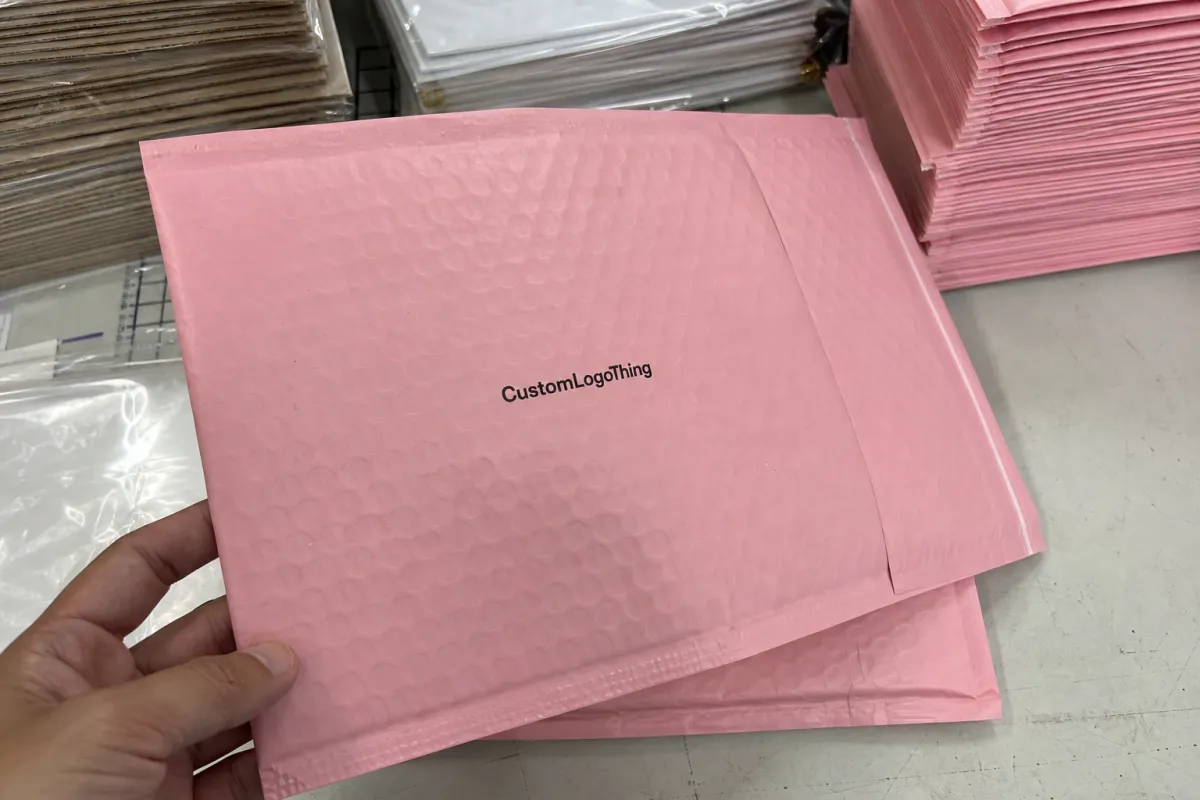
The reason reorder planning matters is that cosmetics packaging rarely stays static. One month you are shipping a sample set, and the next the same offer includes a brochure, a carded gift, or a second SKU. If the outer package is not planned for that variation, the brand ends up reacting to shortages instead of scheduling the next run deliberately.
First orders are about choosing a format. Reorders are about keeping the proven spec in place and placing the next run before safety stock gets too low. That is how brands avoid rush fees, emergency substitutions, and awkward packaging changes right before a launch.
"A mailer program usually fails at replenishment timing, not at the factory."
That timing matters because inventory can look healthier than it is. The last cartons move faster than expected, approval cycles take longer than planned, and freight rarely lines up perfectly with the date you need product on hand. A clean reorder process protects the launch calendar as much as it protects the mailer itself.
Picking the right padded mailer format for beauty SKUs
Padded mailers work best for light, compact, non-fragile items: lip products, minis, sachet sets, refill pouches, and small promotional bundles. Once the SKU becomes glass-heavy, tall, or likely to crush under side pressure, a carton is usually safer even if it costs more and takes more storage space.
The main format choices are outer stock, padding type, closure style, and finish. Kraft with fiber padding feels different from a film mailer with bubble lining. Kraft often reads more restrained and premium; film can be lighter and more moisture resistant. Neither is automatically better. The right spec depends on transit risk, product shape, and how much the brand values appearance versus structure.
Internal space is easy to underestimate. A mailer that looks fine in a mockup can become too tight once a sample card, insert, or tray is added. That is how corners get crushed and seals fail. The packed dimensions need to match the real kit, not just the primary SKU.
Standardizing around one or two sizes usually makes reorder planning easier. It keeps inventory simpler, lowers the chance of a spec mismatch, and reduces the odds that a small product change forces a new packaging run. For lower-risk shipments, some brands also pair padded mailers with Custom Poly Mailers so they can reserve the padded format for kits that actually need it.
| Option | Best for | Typical MOQ | Unit cost at 5,000 | Notes |
|---|---|---|---|---|
| Custom padded mailers | Minis, sample kits, refill pouches, starter sets | 1,000-3,000 | $0.32-$0.62 | Good balance of protection, structure, and presentation |
| Custom Poly Mailers | Very light items, low-risk shipments | 1,000-5,000 | $0.18-$0.34 | Lower cost, but less cushioning and shape retention |
| Rigid cartons | Glass-heavy kits, premium sets, fragile retail packaging | 2,000-5,000 | $0.55-$1.10 | Better crush resistance, more storage space, slower packing |
| Mailer-plus-insert kit | Influencer drops, premium bundles, multi-item sets | 3,000+ | $0.75-$1.40 | Strong presentation, but more parts to manage |
For most beauty brands, the expensive mistake is choosing a mailer that is oversized for the product. If the SKU does not need the extra rigidity, the budget is often better spent on better print accuracy, cleaner finishing, or a stronger insert card. Those details usually shape customer perception faster than a thicker wall.
Dimensions, print specs, and protection details that matter
Start with the packed dimensions, not the product dimensions alone. Measure the SKU after it is filled, bundled, and paired with any insert cards or promos. Then add enough clearance for the closure and enough slack so the contents do not scrape the edges when the parcel bends or gets compressed in transit.
Thickness matters more than many buyers expect. A heavier paper-based mailer can add stiffness and reduce scuffing, but it can also raise cost and make folding less forgiving. Film-based mailers may handle moisture and weight better, while the tactile feel may be less premium. The right spec depends on whether the brand wants natural, glossy, soft-touch, or simply durable.
Print specs should be locked before production begins. Bleed, trim, safe area, and color targets all need to be approved against the dieline. Small type, barcode placement, and seal proximity are the usual failure points. If artwork is only checked visually, the next reorder can drift just enough to cause a production issue.
Material choice should also reflect transit stress. General recycling guidance from the EPA and parcel testing references from ISTA are useful benchmarks when comparing options. The point is not to overengineer the package. It is to avoid paying for packaging that looks good but does not survive normal handling.
Finish is another decision that affects real-world use. High gloss can show scuffs. Soft-touch can look refined, but fingerprints and abrasion may be more visible in the warehouse. Matte kraft is often more forgiving for Brands That Ship in volume and want the mailer to look consistent after packing and transit.
Cost, pricing, and MOQ for repeat cosmetic orders
Pricing usually moves with quantity, size, material, print coverage, and finishing. If the order includes special color work, heavier stock, or a more complex closure, the price rises. That is normal. A fully custom mailer will not price like a stock item.
Low minimums help with testing or seasonal launches, but the setup cost is spread across fewer pieces, so unit price is higher. Larger runs lower the per-piece cost, but only if the brand has demand and storage to support them. A lower unit price is not a win if the mailers sit for six months or become obsolete before they are used.
For repeat orders, the quote should be built from a clean set of inputs: exact size, quantity band, material, print colors, finish, delivery location, and ship date. Sending the prior approved spec sheet saves time and lowers the chance of quoting an older version by mistake.
Useful quantity bands are usually:
- 1,000-2,000 units: good for testing, but usually the highest unit cost.
- 3,000-5,000 units: often the best balance for recurring cosmetic orders.
- 10,000+ units: strongest pricing, but only sensible with stable demand and storage.
Buyers should also look at landed cost, not just the quote. Freight, duties, warehousing, and the cost of handling a larger order all matter. A run that looks cheaper on paper can become the more expensive option if the brand has to move pallets twice or rent overflow storage.
Production steps and lead time for reorder runs
Repeat production usually follows a familiar chain: inquiry, quote, artwork review, proof approval, production, quality inspection, and shipping. Reorders move faster than first orders because the spec already exists and the print geometry is already approved.
That still leaves room for delay. Artwork changes, a different finish, a new closure, or a revised size can all add time back into the schedule. So can slow approval cycles. If the launch date is fixed, proof review needs to be treated like a deadline, not a casual task.
For standard reorders, a practical lead-time range is often 12-18 business days after proof approval. More complex print or finishing can extend that. During peak seasons, capacity and freight timing can stretch it further. Buyers need ranges and assumptions, not optimistic guesses.
Plan backward from the date the next shipment must land, not from the date the current stack starts to look low. If the mailers must be on hand before a promo, creator drop, or subscription cycle, the reorder should start early enough to absorb proofing and transit delay.
Reorder triggers that keep beauty packaging from stalling
A reorder trigger should come from actual usage, not from how full the shelf looks on a Tuesday. Monthly consumption, current inventory, lead time, and a buffer for promos or retail wins should all feed the decision. If the business ships 1,500 mailers a month and lead time is three weeks, the reorder threshold should be set well before the last carton.
Seasonality makes this harder. Holiday bundles, limited launches, gift-with-purchase campaigns, and creator-driven demand can all spike usage. A reorder plan that ignores those peaks is not a plan. It is a hope.
A simple control system helps:
- One master spec sheet tied to each SKU or kit.
- One approved artwork file stored in a shared location.
- One person responsible for triggering the reorder.
- One monthly review of usage versus forecast.
Teams that coordinate the mailer with their broader packaging calendar usually get cleaner results. If the insert card, campaign artwork, and outer shipping piece change together, one controlled print cycle is easier than three separate ones. It also reduces the odds of mismatched colors or old copy getting packed by mistake.
Quality control checks that prevent repeat-run surprises
Repeat orders are where weak controls become visible. If the first run was approved quickly, the second run can reveal whether the spec was actually locked or merely assumed to be locked. A good reorder review should check size tolerances, print registration, closure alignment, adhesive performance, and finish consistency.
Common issues are predictable: the mailer is a few millimeters smaller than the approved sample, the seal line has drifted, the printed color is slightly off, or the finish changed because the stock changed. None of those problems is dramatic by itself, but together they can create a customer-facing inconsistency.
QC should also test the practical side of fulfillment. Does the mailer still close cleanly with the sample card included? Does the outer layer scuff under standard warehouse handling? Does the adhesive hold after temperature changes in transit? Those checks are more useful than abstract claims about premium presentation.
It helps to inspect at least one finished sample before the full run ships, especially when the order includes a new finish or a revised dieline. A short approval delay is cheaper than receiving a full pallet that is technically close but operationally wrong.
How to keep the mailer program sane as your catalog grows
Packaging programs get messy when every SKU develops its own one-off solution. That is common for fast-growing beauty brands. One kit gets a special sleeve. Another gets a different closure. A third gets a unique size because the holiday bundle is just a little taller than the spring set.
The cleaner approach is to define a small family of sizes and use them repeatedly. One size may cover minis and samples. Another may cover bundles and starter sets. A third may be reserved for fragile or premium items with a different protection profile. That reduces version drift and keeps reorder planning more predictable.
That does not mean forcing every SKU into one mailer. The point is to choose standards on purpose, not by accident. If the product mix changes, the packaging standards can change too. They just should not change every time someone launches a campaign.
For teams that want their branded packaging to stay consistent, the key questions are how often the spec changes, how many people touch the approval, and how much room the warehouse has to absorb variance. Those factors determine whether the system stays tidy or turns into near-matches.
Next steps to lock your reorder calendar
Start with four inputs: product dimensions, monthly usage, current inventory, and target reorder date. Those numbers are enough to build a basic calendar and identify the point where the next order must start moving.
Then confirm the exact mailer spec, print version, and quantity band before requesting pricing. Clear inputs produce clearer quotes. Vague requests usually produce vague answers, and vague answers are where reorders slip.
After two or three cycles, compare actual usage against the forecast. If demand is consistently running hot, raise the buffer. If the buffer is too generous, trim it. That kind of small adjustment is easier and cheaper than an emergency buy.
How far in advance should I reorder custom padded mailers for cosmetics brands?
Use the supplier's lead time plus a buffer of 2 to 4 weeks. Add more if you have seasonal launches, influencer spikes, or subscription volume that changes quickly. Reorders should start before inventory looks critically low.
What details do you need for a quote on custom padded mailers for cosmetics brands?
Send the mailer size, quantity, artwork files, print colors, material preference, delivery location, and target ship date. For a repeat order, include the last approved spec sheet and any changes from the prior run.
Does a higher MOQ always reduce the unit cost on cosmetic mailers?
Usually yes, because setup costs are spread across more pieces. The lowest unit price is not always the lowest total cost, though. Storage pressure, freight, and cash flow can make a larger run more expensive overall.
Can one padded mailer size work for multiple cosmetics products?
Yes, if the products fit safely and the closure still performs cleanly. Standardizing around one or two sizes can simplify inventory and reorder planning. Forcing one size across too many SKUs usually raises the damage risk.
What should be locked before a reorder goes into production?
Lock the dieline, artwork, color targets, size, closure style, and delivery schedule. Keep the approved version stored in one place so the next reorder does not start from scratch.

