Buyer Fit Snapshot
| Best fit | Custom Padded Mailers for Cosmetics projects where brand print, material claims, artwork control, MOQ, and repeat-order consistency need to be specified before quoting. |
|---|---|
| Quote inputs | Share finished size, material target, print colors, finish, packing count, annual reorder estimate, ship-to region, and any compliance wording. |
| Proofing check | Approve dieline scale, logo placement, barcode or warning zones, color tolerance, closure strength, and carton packing before bulk production. |
| Main risk | Vague material claims, crowded artwork, missing packing details, or unclear freight terms can make a low unit price expensive after revisions. |
Fast answer: Custom Padded Mailers for Cosmetics: Quote Checklist should be specified like a repeatable production item. The safest quote records material, print method, finish, artwork proof, packing count, and reorder notes in one written spec.
Production checks before approval
Compare the actual filled-product size with the drawing, then confirm tolerance on folds, seals, hang holes, label areas, and retail display edges. Reserve space for logos, QR codes, warning copy, and material claims before decorative graphics fill the panel.
Quote comparison points
Review material grade, print process, finish, sampling route, tooling charges, carton quantity, and freight assumptions side by side. A quote is only useful when the supplier can repeat the same color, closure quality, and packing count on the next order.
A dented serum box is not a packaging issue. It is a refund with a shipping label on it. That is why the custom padded mailers for cosmetics brands Supplier Quote Checklist matters. Cosmetics fail in transit in ugly, expensive ways, and the cheapest mailer is usually the one that costs you the most.
Cosmetics buyers do not forgive crushed corners, scuffed sleeves, or a sticky leak that shows up before the customer even opens the parcel. From a packaging buyer's point of view, the job is simple and annoying at the same time: protect the product, keep the unboxing clean, and stop paying for replacement shipments because the mailer was underbuilt. If you are still comparing formats, review our Custom Packaging Products alongside the lighter-duty Custom Poly Mailers so you do not force one format to do another format's job.
That is the real value of Custom Padded Mailers for beauty brands. They support product packaging, keep branded packaging consistent, and reduce the chance that a premium skincare launch lands looking cheap. Good package branding starts with the outside of the parcel, not just the carton or the product label inside.
Why cosmetics brands need better padded mailers than "good enough"
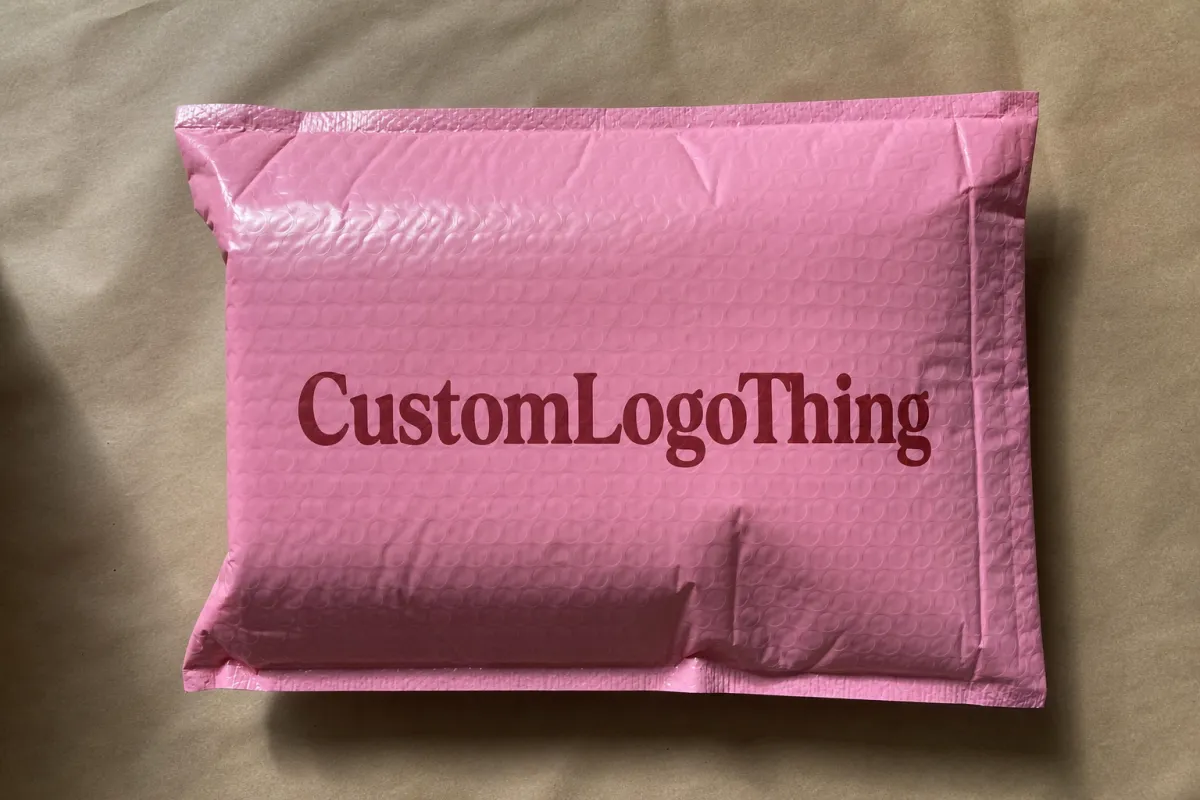
Cosmetics are fragile in more ways than one. A glass bottle can crack. A pressed powder can shatter. A folded carton can arrive with a crease that kills the retail presentation. Even a little moisture can flatten a luxury feel if the surface is matte paper and the outer shipper rubs hard during transport. The mailer is not just a shipping container; it is part of the customer experience and part of the cost structure.
The expensive failure is rarely the mailer itself. It is the chain reaction that follows. A scuffed serum box leads to a complaint. A cracked compact leads to a replacement. A broken seal leads to a customer service ticket. Add the freight, the labor, and the lost confidence, and suddenly the "cheap" option turns into a very expensive hobby.
- Skincare: glass bottles, dropper serums, airless pumps, jars.
- Makeup: palettes, compacts, lip kits, fragile applicators.
- Refills: pouches and cartridges that need snug fit and clean presentation.
- Sample kits: small units that shift around if the mailer is oversized.
- Subscription boxes: repeat shipments where consistency matters more than one flashy sample.
The smartest buyers do not ask, "What is the cheapest padded mailer?" They ask, "What does this shipment actually need to survive?" That means matching wall structure, seal strength, and interior fit to the product and the route. A short local shipment is not the same as a long-distance parcel that will get tossed down a conveyor, stacked in a trailer, and handled by people who do not care about your launch story.
A good quote tells you exactly what you are buying. A bad one is just a price with a smile.
If your packaging line also includes inserts, rigid cartons, or gift-ready sets, the mailer should support the overall presentation instead of fighting it. That is where packaging design matters. You can spend money on custom printed boxes and still lose the customer experience if the outer shipper arrives battered. For lower-risk shipments, mailers still earn their place. For high-value beauty items, you need a mailer that actually earns its keep.
Custom padded mailers for cosmetics brands supplier quote checklist
Start with the structure. Ask the supplier exactly what the outer face is, what the padding is, and how the seal is built. There is a real difference between a bubble-lined poly mailer, a paper-padded kraft mailer, and a premium printed mailer with a reinforced closure. They may look similar in a sales photo. They do not perform the same once they are loaded, sealed, and shipped.
For cosmetics, the finish matters too. A matte kraft surface reads differently from white glossy film or soft-touch stock. Matte can feel more natural and sustainable. White gives cleaner print contrast. Soft-touch feels premium but can show handling marks if the print and coating are not chosen carefully. The right finish depends on the brand promise, the print coverage, and how much scuff resistance you want during transit.
Ask how the logo will be printed and where it will sit on the mailer. Front-only print is often enough for simple package branding. Interior print can improve the unboxing moment, but it raises cost and setup complexity. PMS color matching matters if the brand has a strict palette. If the color is off, the mailer can look like a sample from a different company, which is not a great look for retail packaging.
- Outer face: paper, poly, kraft, or coated stock.
- Padding: bubble, air cushioning, or paper padding.
- Closure: peel-and-seal strip, tamper-evident adhesive, or reinforced flap.
- Print style: one-color logo, full-color print, inside print, or custom artwork.
- Size logic: single item, set bundle, or multi-piece kit.
Do not skip sustainability questions, because cosmetics shoppers ask them constantly. Recycled content is not the same as recyclable. Compostable claims are not the same as industrial compostable. FSC certification only applies where the paper chain can actually be traced. If a supplier makes a green claim, ask for proof. The FSC and local recycling guidance from the EPA are useful reference points, but the packaging still has to work in your market and on your shipping route.
One more trap deserves a loud warning: oversized mailers. Too much empty space invites movement, and movement creates damage. For a sample kit, the difference between a neat fit and a sloppy fit can be a few millimeters. That sounds minor until you see a palette shattered in one corner because the product had room to slide. A good supplier should size the mailer around the actual packed unit, not around a guess, a hunch, or a magic number someone liked in a meeting.
Specifications checklist: what suppliers must answer clearly
Sloppy quoting dies here. If a supplier cannot answer the basic specs in one pass, the quote is not ready. Size, structure, and performance data should be written down before anyone starts talking about pricing. Cosmetics packaging is too sensitive for vague language.
At minimum, the quote should state the outer dimensions, usable internal space, material thickness, padding type, seal width, and adhesive performance. "Large" is not a dimension. "Strong glue" is not a spec. If the supplier is serious, they will give numbers, tolerances, and the construction method.
- Dimensions: outer size and internal usable space, not just one of them.
- Thickness: film or paper gauge, plus padding thickness if relevant.
- Seal: adhesive type, flap width, and whether it is tamper evident.
- Protection: puncture resistance, drop protection, and moisture resistance.
- Print: file format, bleed, safe zone, and color tolerance.
- Compliance: recycling marks, origin labeling, and any marketplace rules.
If the shipment is moving through aggressive fulfillment networks, ask about sorting compatibility and transit testing. Many buyers use ISTA-style thinking even when they are not running a formal certification program. That means checking how the package behaves under drops, vibration, compression, and abrasion. The point is not to impress someone with jargon. The point is to know whether the mailer survives the same treatment your customer never sees. For test method references, the ISTA site is the right place to start.
Request sample photos, not just nice words. Better yet, ask for a pre-production sample or a close match to the final structure. A polished mockup can hide weak seals, sloppy edge finishing, or thin padding that collapses under weight. If a supplier shares test reports, look for the actual method and the actual sample size. A one-off demo tells you less than a repeatable result.
Artwork instructions belong in the quote too. Ask for accepted file formats, exact bleed, and whether plates, cylinders, or setup fees apply. If your brand uses delicate gradients or a deep black background, ask for print tolerance in plain language. Color drift on cosmetics mailers is common when the supplier leaves you guessing about substrate and ink coverage. A quote that ignores print setup is not a complete quote. It is a future argument with a tax attached.
One more detail: ask who approves what. Does the sales contact forward art to prepress? Does the factory send a proof? Does someone sign off on the sample before production begins? These steps matter. They protect you from the classic "we assumed" problem, which is always expensive and never charming.
Cost, pricing, MOQ, and quote comparison rules
The way quotes are presented matters almost as much as the numbers inside them. A low unit price can hide high setup fees, expensive freight, and surprise charges for proofs or color changes. If you are comparing suppliers, break the quote into pieces and compare each piece line by line.
For cosmetics mailers, the main cost drivers are material, print coverage, size, adhesive complexity, and order volume. MOQ changes the math quickly. Lower MOQ usually means a higher unit price. Larger runs reduce per-unit cost but tie up more cash and storage space. That tradeoff is normal. Pretending it does not exist is how brands end up with a warehouse full of the wrong color mailer.
| Mailer option | Typical use | Common MOQ | Typical unit range | Main advantage | Main tradeoff |
|---|---|---|---|---|---|
| Bubble-lined poly mailer | Light skincare, sample kits, low-fragility sets | 3,000-5,000 | $0.18-$0.36 | Low cost, moisture resistance, decent cushioning | Less premium feel, weaker sustainability story |
| Paper-padded kraft mailer | Small jars, creams, clean beauty launches | 2,000-5,000 | $0.28-$0.58 | Better shelf-to-shipping look, easier brand fit | Higher cost, bulkier carton footprint |
| Printed premium padded mailer with custom insert | Gift sets, palettes, influencer kits | 5,000-10,000 | $0.45-$0.95 | Stronger presentation, better internal fit | Higher setup, more planning, longer lead time |
These ranges are not fantasy numbers. They are the sort of bands a buyer often sees once the construction, print coverage, and freight terms are known. They shift with paper grade, film thickness, and how much of the surface is printed. If you want a quote that means something, insist on the same spec across all suppliers: same size, same material, same padding, same print coverage, same seal type, same shipping terms.
Now watch the small print. Sample costs may be credited back on the bulk order or they may not. Prototype fees can disappear if the order scales up, or they can stay separate. Freight may be quoted ex-factory, FOB, or delivered. Duties can be ignored in the first email and suddenly appear when the shipment lands. None of this is rare. It is normal. The mistake is not asking.
Here is the quick rule I use with buyers: if two quotes differ by more than 15-20% and the specs are supposedly the same, the specs are probably not the same. Someone is hiding thickness, print coverage, seal width, or packaging method. A suspiciously cheap quote is not automatically bad, but it deserves a harder look. Ask what changed. If the answer is vague, move on.
If you are still narrowing down format choices, compare the cost and handling of mailers against your other packaging options. Sometimes the best answer is a smaller, better-fitted mailer. Sometimes it is a box with a padded insert. There is no prize for forcing every product into the same packaging shape.
Process and timeline: from first quote to production steps
A clean process saves time and money. A messy process creates revisions, and revisions create delay. The strongest suppliers do not just quote a price. They guide the order from brief to shipment with enough structure that nobody has to guess what happens next.
The typical flow looks like this:
- Send the brief with dimensions, quantity, print coverage, and destination.
- Receive the first quote and clarify any missing specs.
- Review artwork, bleed, and color matching details.
- Approve a sample or proof.
- Move into production.
- Inspect, pack, and ship.
Timing depends on complexity. A simple stock-based customization can move quickly once the proof is approved, often around 7-12 business days for production. A fully custom structure with new print setup, special finishes, or tighter color control can run 15-25 business days, sometimes longer if the queue is busy. Shipping time is separate. A supplier who blurs production and transit into one fake "lead time" is doing you no favors.
Most delays come from the same four problems: missing dimensions, slow sample approval, artwork changes after proofing, and last-minute changes to material or quantity. These are avoidable. If your team sends a complete brief on day one, the process gets much smoother. Include the product weight, the exact packed dimensions, the shipping method, the brand colors, and the delivery deadline. Do not send half the data in email one and the rest in a different thread two days later.
Here is the kind of timeline a serious supplier should be able to explain in plain English:
- Day 1-2: quote review and clarification.
- Day 3-5: artwork proof and structural confirmation.
- Day 5-10: sample or pre-production approval if needed.
- Day 10-25: manufacturing, printing, finishing, and inspection.
- After production: freight booking, transit, and receiving.
A quote that cannot tell you where the time goes is a weak quote. I would rather see a slightly slower supplier with a realistic plan than a fast-talking one who promises impossible dates and then blames the factory. That kind of optimism costs money. It also burns launch schedules.
If you want a supplier who can answer fast, it helps to have one complete package brief ready. That means product photos, a target quantity, artwork files, brand colors, and a clear ship-to address. A few clean inputs shorten the conversation. A lot of scattered notes do the opposite.
Why choose us for cosmetics mailer projects
There are plenty of suppliers who can print a logo on a mailer. Fewer can help a cosmetics brand choose the right structure without inflating the order or overselling features that do not matter. That is where practical packaging guidance earns its keep.
For beauty products, the best supplier is usually the one that asks better questions. What is the actual packed weight? Is the bottle glass or plastic? Does the kit include sharp corners, a pump, or a jar that shifts? Is this going into retail packaging, a DTC subscription box, or a PR mailer with a luxury finish? If the supplier asks those things, you are probably talking to someone who understands the problem.
We also recommend checking how the supplier handles proofing and color control. Clear proofs reduce mistakes. Clear pricing reduces awkward surprises. Honest lead-time updates reduce panic. None of that is glamorous. It is just what a competent packaging partner should do.
For brands that need supporting materials beyond mailers, you may want a coordinated package across outer shippers, inserts, and product cartons. That is where packaging design and custom printed boxes come together. A mailer should not clash with the rest of the brand system. It should reinforce it.
There is also the consistency problem. A one-time sample can look fine. The real test is whether the 10th, 50th, and 500th unit still look and perform the same. Stable materials, repeatable print, and sealed edges that hold up in transit matter more than flashy sample photos. If you are buying for a growing cosmetics line, consistency protects margin. It also protects brand trust.
See our Case Studies for examples of branded packaging projects, or review Custom Packaging Products if you are mapping out a wider packaging system. The point is not to collect more options. The point is to choose the right outer shipper for the actual product, not the imagined one.
We are straightforward about tradeoffs. More print coverage raises cost. Better padding adds bulk. Lower MOQ usually means a higher unit price. None of that is surprising if you have bought packaging before. If you have not, it is better to hear it now than after the invoice lands.
How to finalize your quote request and move to production
By this point, the decision should be clear enough to act on. Finalize the mailer format, confirm the dimensions, choose the print coverage, and set the quantity. Do not keep adjusting the brief after the supplier has already quoted it. That is how a simple order turns into a long email chain with everyone pretending the added revisions were unavoidable.
Before you approve anything, ask for at least two sample options if the shipment is fragile or premium. One can show the print and finish. The other can show the structure and protection level. For cosmetics, the right sample often reveals more than the spec sheet does. A compact that fits neatly in the sample is worth more than a paragraph of marketing language.
Send one complete quote brief instead of five partial ones. Include the outer dimensions, packed product weight, artwork files, color references, destination, preferred shipping method, and any special requirements such as recyclable material claims or retailer labeling. The cleaner the brief, the cleaner the quote. It is not complicated.
When you shortlist suppliers, judge them on four things:
- Clarity: do they name the material, thickness, and seal?
- Responsiveness: do they answer without delay or confusion?
- Accuracy: do the specs match what you asked for?
- Judgment: do they point out problems before production starts?
If one supplier feels cheaper but refuses to spell out the build, that is not a win. It is a future correction fee. A solid quote should let you compare real product against real product, not hope against hope. That is the point of the checklist.
For cosmetics brands, the right outer shipper is part protection, part presentation, and part cost control. Use the checklist, ask the annoying questions, and verify the answers before you sign. Then keep the spec sheet as the source of truth for reorders, because memory is a terrible packaging system.
What information do I need for a custom padded mailers for cosmetics brands quote?
Give the supplier the exact outer dimensions, product weight, print area, quantity, and destination. Add artwork files, color references, and any recycling or compliance requirements. If the item is fragile or unusually shaped, send a sample or clear photos so the sizing is based on the real product, not a guess. That saves time and keeps the quote from drifting into fiction.
How do I compare two supplier quotes for padded mailers without getting fooled by price alone?
Match the specs first: size, material, padding, print coverage, seal type, and shipping terms. Then check whether setup fees, sample costs, freight, and duties are included or added later. Reject vague quotes that do not state thickness, construction, or the approval process. If one supplier is suspiciously low, the missing cost is usually hiding in the details.
What MOQ is normal for custom padded mailers for cosmetics brands?
MOQ depends on material and print method, but custom runs usually start higher than stock mailers. Lower MOQ raises unit cost; larger runs usually improve pricing. Ask whether the supplier offers staged ordering or repeat-run pricing if you want to reduce inventory risk. If you are testing a new launch, that question matters more than the headline unit price.
How long does production usually take after I approve the artwork?
Simple projects move faster; fully custom structures and printed runs take longer. The main time drivers are sample approval, color matching, and the production queue. Ask for a written timeline with each step, not just one vague delivery estimate. If the supplier cannot map the timeline, the date they promised is probably a guess with confidence.
Are padded mailers suitable for fragile cosmetics like glass bottles and palettes?
Yes, if the structure and size are matched to the product and the transit risk. For fragile items, use proper internal fit, enough padding, and tested adhesive strength. Always request samples and drop-test the package with the actual product before placing a bulk order. Use the Custom Padded Mailers for Cosmetics brands supplier quote checklist before you approve any order.
What should I do if a supplier gives me a quote without enough detail?
Send it back. Ask for the missing dimensions, material specs, padding details, seal method, print setup, and freight terms in writing. A quote that cannot be compared line by line is not useful, and it is usually not cheap in the ways that matter. If they still stay vague, the real answer is that they are not ready to supply the project.

