Buyer Fit Snapshot
| Best fit | Custom Padded Shipping Envelopes projects where brand print, material claims, artwork control, MOQ, and repeat-order consistency need to be specified before quoting. |
|---|---|
| Quote inputs | Share finished size, material target, print colors, finish, packing count, annual reorder estimate, ship-to region, and any compliance wording. |
| Proofing check | Approve dieline scale, logo placement, barcode or warning zones, color tolerance, closure strength, and carton packing before bulk production. |
| Main risk | Vague material claims, crowded artwork, missing packing details, or unclear freight terms can make a low unit price expensive after revisions. |
Fast answer: Custom Padded Shipping Envelopes: Fit, Cost, and Use should be specified like a repeatable production item. The safest quote records material, print method, finish, artwork proof, packing count, and reorder notes in one written spec.
Production checks before approval
Compare the actual filled-product size with the drawing, then confirm tolerance on folds, seals, hang holes, label areas, and retail display edges. Reserve space for logos, QR codes, warning copy, and material claims before decorative graphics fill the panel.
Quote comparison points
Review material grade, print process, finish, sampling route, tooling charges, carton quantity, and freight assumptions side by side. A quote is only useful when the supplier can repeat the same color, closure quality, and packing count on the next order.
Custom Padded Shipping Envelopes: Fit, Cost, and Use
Custom padded shipping envelopes look almost boring until you compare them with the cost of a damaged order. Then the math gets louder. A flat, delicate item forced into a box usually brings extra filler, extra weight, extra labor, and a much larger footprint than the product actually needs. That is why custom padded shipping envelopes deserve a real look instead of being treated like a secondary packaging option.
I have sat through more than one packaging review where the team defaulted to a carton because it felt safer. It was not safer. It was just familiar. Custom padded shipping envelopes are built for the cases where familiar is expensive. They combine a tailored footprint, built-in cushioning, and a printable outer layer so the product and the package stop fighting each other.
Brands shipping e-commerce accessories, cosmetics, books, stationery, supplements, and other compact goods often find that custom padded shipping envelopes outperform overboxing. The format shines when the main risk is bending, scuffing, or light impact rather than severe crush force. If the product is surface-sensitive, this is usually the cleaner answer. If it needs rigid protection, the answer changes. Packaging is supposed to fit the item, not the other way around.
The economics are less obvious than they first appear. A package that looks cheap on a purchase order can get expensive once dimensional weight, warehouse labor, storage space, and damage claims show up. Custom padded shipping envelopes can trim packing time and reduce dead space enough to matter across thousands of orders. That is not packaging folklore. It is operational cost control.
Branding alone never earns the format a pass. A logo on the front does not fix a weak seam or a poor fit. Custom padded shipping envelopes work because the structure matches the product and the route. Protection and operations come first; visual polish comes after. A pretty parcel that arrives dented still failed, no matter how nice the print looked on the render.
For most buyers, the decision should start with protection needs, then move to branding, then move to material reduction. That order matters. Light, flat, and surface-sensitive products are the natural home for custom padded shipping envelopes in both product packaging and retail packaging, and that is where the format tends to earn its keep.
Custom Padded Shipping Envelopes: Why They Beat Overboxing
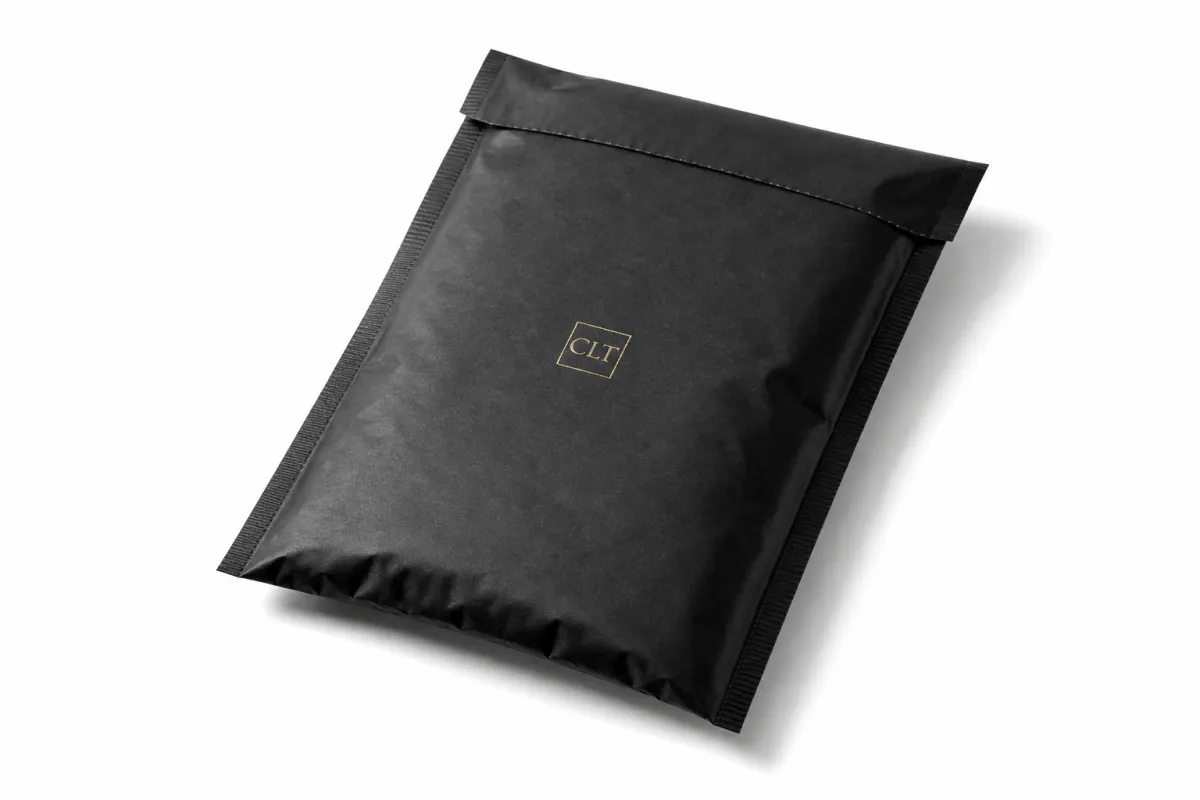
Picture a standard mistake. A customer orders a slim premium item, and the warehouse places it in a box because that feels like the cautious choice. The result is often a larger parcel, more filler, and a shipment that costs more than the item needed. Custom padded shipping envelopes prevent that kind of waste when the product does not need corrugated armor.
In day-to-day use, custom padded shipping envelopes are strongest when the item needs surface protection more than structural protection. A set of skincare samples, a compact leather accessory, a hardcover book, or a folded garment all fit that description. The mailer cushions minor bumps, limits movement, and keeps the item from wandering around inside the parcel. That last part matters more than people think.
Fit matters. A snug mailer usually performs better than a loose one because movement is where a lot of shipping damage starts. An item that rattles is more likely to scuff, crease, or chip at the edges. Custom padded shipping envelopes reduce that slack by matching the product footprint rather than forcing the product to adapt to a generic size.
That is why these envelopes beat overboxing in a few common situations:
- They reduce dimensional weight on many carrier networks.
- They cut or eliminate filler material.
- They speed up order fulfillment because packing is simpler.
- They make package branding cleaner and more consistent.
- They lower the odds of the product sliding into a corner and taking abuse.
Custom padded shipping envelopes are not the answer for every SKU. Heavy, brittle, odd-shaped, or crush-sensitive products can still require a box. Yet flat and compact items often land in the sweet spot where protection, cost, and presentation all line up. That is where a careful packaging buyer can save margin without gambling on product safety.
"If the product scratches before it crushes, start with a padded mailer spec, not a box spec. Boxes are not magic. They are just boxes."
The branding angle deserves more respect than it usually gets. Custom padded shipping envelopes create a retail-ready look without the bulk of Custom Printed Boxes. For e-commerce brands that care about the first physical touchpoint, a branded mailer can do a great deal of work at a lower material cost. If you want to compare packaging formats, look at Custom Packaging Products alongside Custom Poly Mailers and Custom Shipping Boxes before you settle the spec.
There is also a sustainability upside in many cases: fewer materials, less filler, and often less freight weight. That does not make every build environmentally sound by default. More on that later. Still, custom padded shipping envelopes can be a better material match than a box-and-filler setup when the product only needs light impact protection. The trick is being honest about the product, not romantic about the packaging.
How Custom Padded Shipping Envelopes Work
Break the format into the parts that actually carry the load. Custom padded shipping envelopes usually have an outer face stock, an internal cushioning layer, a closure strip, and seams that keep the mailer from splitting during handling. Weakness in any one of those pieces can drag down the whole package.
The outer layer is both a branding surface and the first line of defense. Paper face stocks often print cleanly and feel more premium, while film-based surfaces can handle moisture better. The cushioning layer does the real shock absorption. In custom padded shipping envelopes, that layer may be paper fiber, foam, recycled liner material, or a hybrid construction. Different builds solve different problems, which is why a single universal spec is a bad idea.
Cushioning should be thought of as control rather than softness for its own sake. It limits product movement and softens smaller impacts before they reach the item itself. That matters because most shipping damage is not a dramatic drop. It is repeated nudging, corner pressure, and friction as packages move through a network. Custom padded shipping envelopes are made to absorb those smaller forces before they become a customer complaint.
Closures matter just as much. A good adhesive strip should seal cleanly and stay shut through sorting, carrier handling, and last-mile delivery. Weak closures create returns, open parcels, and terrible first impressions. Many buyers obsess over print and barely think about adhesive performance. In custom padded shipping envelopes, the closure is part of the spec, not an afterthought. I would argue it is one of the first things to test, not the last.
Common build styles include:
- Paper-padded mailers for brands that want a cleaner recyclable feel and a polished retail look.
- Foam-lined mailers for lighter, scratch-sensitive goods that need extra surface protection.
- Recycled-fiber constructions for brands trying to balance sustainability claims with practical shipping needs.
- Hybrid builds that combine paper skins with cushioning layers for a more premium presentation.
The fit rule stays brutally simple: less dead space usually means better performance. A loose envelope lets the product shift, and shifting creates wear. That is why custom sizing is not cosmetic. Custom padded shipping envelopes can improve protection and packing speed at once because staff are not fighting a near-fit every single time.
Operationally, the format gets interesting fast. When a brand ships the same SKU repeatedly, custom padded shipping envelopes make standardization easier. Pack lines move faster, training gets simpler, and the warehouse can stock fewer packaging types. That reduction in complexity saves time every day, which is usually worth more than a one-time design flourish.
For fulfillment teams, consistency wins. A mailer that opens easily, loads predictably, and seals in one motion is more valuable than a fancy build that slows the line. Packaging should help the warehouse move, not turn every order into a small engineering exercise. That sounds obvious, but I still see teams miss it.
Material standards matter here. If a buyer wants fiber-based packaging, ask for paper weights, liner composition, adhesive details, and any certification claims. If a supplier mentions FSC, verify which part of the structure is certified and which part is not. For test expectations, ISTA publishes transit-test methods that many brands use to judge shipping performance, and the EPA packaging guidance is useful when you want a clearer view of material reduction and recovery.
Custom padded shipping envelopes should be tested as a system, not treated like a print order. A slim, branded shipper that protects against scuffing and minor shock can perform very well. A product that needs suspension, crush resistance, or serious corner protection still belongs in a box. Packaging is a fit question, not a moral contest, and the product usually tells you the answer if you are willing to listen.
Custom Padded Shipping Envelopes Cost, Pricing, MOQ, and Quote Basics
Buyers usually begin with the same question: what do custom padded shipping envelopes cost? Fair question, but not a complete one if size, print coverage, cushioning type, and volume are still unknown. Pricing follows the spec, and the spec does most of the heavy lifting.
Think of the quote in layers. Material, structure, printing, finishing, closure type, setup, and freight all show up in the final number. Custom padded shipping envelopes with simple one-color branding tend to cost less than a full-coverage print with specialty coating or a hybrid build with extra liner material. MOQ matters because setup costs get spread across the run. Fewer units mean a higher unit cost. That is packaging math, not a trick.
Anyone comparing options should separate unit price from total landed cost. The headline number is only one slice of the real expense. Freight, warehousing, reprint risk, and labor time saved at pack-out all belong in the same calculation. A slightly more expensive custom padded shipping envelope can still be cheaper overall if it reduces damage claims or cuts ten seconds from each shipment. Ten seconds sounds tiny until you multiply it by 50,000 orders.
| Build Type | Typical Use | Approx. 5,000-Unit Range | Notes |
|---|---|---|---|
| Paper-padded mailer | Books, apparel, stationery | $0.28-$0.48 each | Good print surface; strong choice for branded packaging |
| Foam-lined mailer | Cosmetics, accessories, small electronics | $0.32-$0.58 each | Better surface cushioning; usually less eco-forward than paper builds |
| Recycled-fiber hybrid | Retail packaging with sustainability goals | $0.35-$0.62 each | Balance of structure and lower material waste; verify actual composition |
| Premium printed build | High-touch product packaging and launches | $0.42-$0.75 each | More print coverage, nicer finish, and stronger package branding |
Those ranges are not a promise. They are useful as a starting point for a serious buyer. Increase the run to 10,000 or 20,000 units and the unit cost often drops, sometimes by 10% to 25%, depending on print coverage and material choice. Lower MOQs usually push the opposite direction because fixed setup costs hit harder.
Oversizing is one of the quiet cost traps. A mailer that is only a little too large can add material, freight, and wasted internal space. Another trap is over-specifying the build with premium finishes that do not improve protection. A soft-touch coating may feel nice, but if the product ships in a warehouse carton and never touches a consumer shelf, that money may be in the wrong place. Custom padded shipping envelopes should be costed against actual use, not a fantasy version of the packaging journey.
Another practical move: ask suppliers how pricing changes across volume tiers. A quote at 3,000 pieces may look very different from 10,000 or 25,000 pieces. If annual usage is predictable, request tiered pricing and reorder pricing. That gives a more accurate picture of what custom padded shipping envelopes will cost after the launch phase settles down.
Here is the quote checklist I would expect before anyone gives a serious number:
- Product dimensions and actual packaged dimensions.
- Weight and surface fragility.
- Shipping method and carrier mix.
- Print coverage, colors, and brand standards.
- Material preference, including paper or plastic reduction goals.
- Annual volume and expected reorder cadence.
- Any certification requirements, such as FSC or recycled-content targets.
If a vendor cannot price custom padded shipping envelopes without those basics, that is ordinary. If they can quote instantly without them, caution is sensible. Cheap answers often become expensive later, and they usually become annoying first.
Production Process and Turnaround for Custom Padded Shipping Envelopes
The production path is usually straightforward, provided the buyer is prepared. Custom padded shipping envelopes usually move through discovery, sizing, material selection, dieline or structural approval, artwork setup, sample review, and final production sign-off. Skip a step and the schedule starts wobbling.
Discovery is where a spec is either strengthened or ruined. Product dimensions, shipping method, annual volume, and protection concerns need to be clear before anyone starts drawing a structure. A mailer for a book is not the same as a mailer for a glass serum bottle. Custom padded shipping envelopes should be sized to the actual item plus closure space, not a fictional version that only exists in a spreadsheet.
Sampling usually comes next. That sample is not just for approving the print. It is for checking fit, closure strength, opening feel, and the way the product sits inside the structure. If the item slides around or catches on a seam, the mailer is not ready. Brands save themselves from a bad first shipment by testing custom padded shipping envelopes with the actual product inside. A desk sample is a nice object. It is not a shipping test.
Turnaround depends mostly on complexity. Simple builds with standard materials and limited print usually move faster. Fully custom constructions, specialty coatings, and sustainability documentation add time. In practical planning, one window covers sampling and proofing, another covers production, and another covers freight or inbound receiving. Freight gets forgotten all the time, even though the truck has no interest in a launch date.
Typical timing often looks something like this: sample development in a few business days to a couple of weeks, production in roughly 12 to 20 business days after approval for many standard builds, and freight on top of that depending on route and mode. If the spec is especially complex, custom padded shipping envelopes can take longer. That is not delay. That is manufacturing plus physics.
Three things blow up schedules more often than anything else:
- Late artwork edits after proof approval.
- Unclear product dimensions or a last-minute size change.
- Structural changes after sampling has already started.
Planning around lead time is mostly discipline. Forecast reorder points before stock gets thin. Keep safety stock for launches. Do not wait until the warehouse has only a pallet left and then act surprised that production cannot teleport. Custom padded shipping envelopes are easier to manage when the buyer treats them as inventory, not a fire drill.
For brands with recurring launches, a simple reorder calendar helps. If average monthly usage is 8,000 units and lead time is three to five weeks, the reorder trigger should not be "when we are nearly out." It should come earlier, with a buffer for proofing and freight delays. That habit keeps custom padded shipping envelopes from becoming an emergency purchase.
Testing deserves one direct note. Ask for transit-style checks that resemble real use. A vendor may use drop testing, vibration screening, or compression checks aligned with ISTA methods. You do not need a lab drama exercise. You need evidence that custom padded shipping envelopes survive the sort of handling your orders actually see.
Key Factors to Choose the Right Build
The right build starts with the product, not the packaging catalog. Measure the item, note the weight, and write down what can go wrong. Scratch? Bend? Leak? Need temperature protection? That list decides whether custom padded shipping envelopes fit the job or whether a box should take over.
Surface fragility is usually one of the first checkpoints. A soft-touch cosmetic box, a hardcover book jacket, and a metal accessory each react differently in transit. If the main threat is abrasion, a padded structure is often enough. If the item is fragile in the crush sense, the answer changes. Custom padded shipping envelopes are good at stopping rub damage and minor impact; they are not a substitute for rigid protection when the product needs it.
Fit should leave enough room for insertion and closure without leaving so much slack that the item rattles. Packaging specs live in the real world, not in a neat diagram, so it helps to think in ranges instead of absolutes. A comfortable interior tolerance might be a few millimeters on compact products, while larger flat items need more space for the closure fold and edge clearance. Custom padded shipping envelopes that are too tight make pack-out awkward. Too loose, and they undo their own protection.
Material choice is where branding and function meet. Paper-heavy builds can support cleaner recycled claims and a more tactile premium feel. Film-based or hybrid structures may perform better in damp conditions. Recycled-content liners can help with a sustainability story, but that story should be backed by material facts, not hopeful wording. If environmental claims are part of the plan, read the specs carefully. Custom padded shipping envelopes need to be honest on the label and honest in transit.
Branding matters more in some channels than others. For e-commerce shipping, a mailer may be the first physical touchpoint a customer receives. That means print color, logo placement, and messaging all matter. For wholesale or backroom distribution, the envelope can stay simpler. Either way, package branding should fit the channel. A launch mailer for premium skincare needs a different tone than a reorder pack for spare parts. The same package can feel expensive in one setting and irrelevant in another.
Channel requirements are another filter. Some carriers, marketplaces, and retailers have rules around dimensions, closures, or presentation. If a warehouse uses automation or high-speed packing, the envelope must feed and seal consistently. If the item moves through mixed freight and parcel channels, build for the rougher one. Custom padded shipping envelopes should be chosen for the route the package actually takes, not the nicest case study you found in a pitch deck.
A simple comparison helps many buyers make the call:
- Custom padded shipping envelopes for flat, lighter, scuff-prone products.
- Custom Poly Mailers for apparel and soft goods where cushioning is not the main need.
- Custom Shipping Boxes for crush-sensitive, odd-shaped, or heavier products.
That is not a hierarchy. It is a fit test. The best custom padded shipping envelopes spec depends on the product, the brand promise, and the shipping environment. Align those three pieces and the choice gets easier quickly.
Common Mistakes When Ordering Custom Padded Shipping Envelopes
The first mistake is measuring only the product and ignoring the envelope itself. Closure space, seam allowance, and room for the cushioning to do its job all matter. If custom padded shipping envelopes are sized only to the naked item, the result may look right on paper and fail in hand.
The second mistake is under-testing. One clean shipment proves very little. A short pilot run with real handling, real stack pressure, and a few rough transit conditions tells a much better story. Drop tests, shake tests, and compression checks reveal more than a pristine sample sitting untouched on a desk. Custom padded shipping envelopes deserve the same basic scrutiny as any other shipping structure.
The third mistake is chasing the lowest quote and ignoring structure quality. If seams split, adhesive fails, or cushioning is too thin to matter, the bargain was fake. A few cents saved per unit can turn into much larger costs in returns, replacements, and damage credits. Custom padded shipping envelopes that fail in transit are not low cost. They are future expense with a discount sticker on top.
The fourth mistake is forgetting warehouse realities. If the envelope is hard to stack, awkward to store, or slow to pack, the line pays for it every day. A technically sound mailer can still be a poor operational choice. Your fulfillment team notices that immediately, even if the procurement sheet does not. Custom padded shipping envelopes should help the line move, not make it wrestle the package.
The fifth mistake is making sustainability claims too casually. Mixed materials, adhesives, coatings, and padding types can complicate recyclability or compostability in ways the sales copy never mentions. Ask what the structure is made of. Ask how it is meant to be recovered. Custom padded shipping envelopes can support a responsible packaging story, but only when the material stack supports that story in the real world. Otherwise, the claim is just decoration.
Another trap is confusing nice branding with useful branding. A bold print scheme can improve retail packaging, but if the product ships inside a warehouse carton, the fancy finish may never be seen. In that case, money belongs in protection or packing speed first. A strong launch package needs structure and message to work together. Otherwise, you just bought a beautiful bag with a problem hidden inside.
Use this quick sanity check before approving any run of custom padded shipping envelopes:
- Does the product fit with closure space to spare?
- Does the cushioning actually stop movement?
- Does the closure hold after repeated handling?
- Does the cost make sense at reorder volume, not just at sample quantity?
- Does the material match your brand and compliance claims?
That list sounds basic because it is basic. Basic is good. Basic saves money. In packaging, "fancy" and "effective" are not synonyms, and custom padded shipping envelopes are no exception.
Custom Padded Shipping Envelopes: Next Steps That Actually Matter
If you are serious about custom padded shipping envelopes, start with a clean checklist. Measure the product. Define the protection goal. Decide how much branding you actually need. Note the shipping method. Those four items make supplier conversations faster and quotes more accurate.
Then ask for samples from at least two build options. Compare fit, feel, seal strength, and how the product sits inside each one. A good sample is not just about appearance. It is about whether custom padded shipping envelopes make the product easier to pack and safer to receive.
After that, run a small pilot. A short test plan is enough to catch obvious problems:
- Drop test from a realistic handling height.
- Shake test to check movement and abrasion.
- Compression check to see whether the seam or closure gives way.
- Short live shipment to see how the mailer performs in the actual carrier network.
Compare quotes apples-to-apples. MOQ, lead time, freight, setup fees, print changes, and any special tooling all need to sit in the same view. A low unit price without freight or setup is not a comparison. It is a headline. Custom padded shipping envelopes should be judged on landed cost and performance, not just the boldest figure.
It also helps to define reorder triggers now instead of later. If the product sells steadily, set a minimum stock threshold based on actual usage and lead time. That avoids emergency reorders, which are expensive and annoying in equal measure. Custom padded shipping envelopes are easier to manage when procurement treats them as a planning item rather than a last-minute fix.
For brands balancing product packaging, branded packaging, and ecommerce shipping, this format can be an effective middle ground. It is not the right answer for every SKU. It is often the right answer for the SKU that is flat, valuable, and frustratingly easy to damage. That is a common category, which is why this packaging type keeps showing up in serious catalogs and in the hands of teams that ship enough volume to notice the difference.
My blunt advice: do not approve custom padded shipping envelopes until the product passes a real shipment test. Once the spec is locked, the sample performs, and the numbers make sense, move forward. That is the clean path. Everything else is guessing with a purchase order attached, and that is a habit nobody needs.
If the item still needs more protection than a mailer can give, switch to a box and skip the performance. The best packaging choice is the one that arrives intact, fits the operation, and does not drain money in transit. Sometimes that answer is a mailer. Sometimes it is not. Honest spec work beats wishful thinking every time, and custom padded shipping envelopes are no exception.
Here is the practical takeaway: choose custom padded shipping envelopes only after you have matched the item, the route, and the pack-out process. If those three line up, the format can reduce waste, improve presentation, and cut labor. If they do not, you are better off hearing that now than after the first damage claim lands in your inbox.
FAQ
How are custom padded shipping envelopes different from bubble mailers?
Custom padded shipping envelopes are usually built around your product size and branding, while bubble mailers are often stock items with a fixed structure. The custom version gives you more control over fit, print coverage, and cushioning type. Bubble mailers can be fine for simple jobs, but custom builds usually look sharper and waste less space.
What products work best with custom padded shipping envelopes?
Flat or compact products are the easiest fit: books, stationery, cosmetics, small apparel, accessories, supplements, and media items. Custom padded shipping envelopes work best when the main risk is scratching, scuffing, bending, or light impact rather than heavy crush force. If the product is very fragile or oddly shaped, a box may still be the safer choice.
How much do custom padded shipping envelopes usually cost?
Price depends on size, cushioning type, print coverage, finish, and MOQ, so there is no useful one-size-fits-all number. Smaller runs cost more per unit because setup and tooling are spread over fewer envelopes. For custom padded shipping envelopes, always compare unit price, freight, and any hidden setup costs before choosing the lowest quote.
What is the typical turnaround for custom padded shipping envelopes?
Turnaround depends on sampling, artwork approval, production complexity, and shipping method. Simple builds move faster; fully custom structures, special materials, or multiple proof rounds add time. If you need a launch date, build in extra time for approvals and freight so custom padded shipping envelopes do not slip your schedule.
Can custom padded shipping envelopes be recyclable or compostable?
Yes, depending on the materials used, but the full structure matters more than the marketing claim on the front panel. Ask what the outer layer, padding, adhesive, and coatings are made from before assuming the envelope is recyclable or compostable. Custom padded shipping envelopes can support sustainability goals, but tradeoffs are real: the greener option may cost more, ship differently, or protect less aggressively than a conventional build.

