Buyer Fit Snapshot
| Best fit | printed corner boards with logo for packaging buyers comparing material specs, print proof, MOQ, unit cost, freight, and repeat-order risk where brand print, material, artwork control, and repeat-order consistency matter. |
|---|---|
| Quote inputs | Share finished size, material target, print colors, finish, packing count, annual reorder estimate, and delivery region. |
| Proofing check | Approve dieline scale, logo placement, barcode or warning zones, color tolerance, and any recyclable or compostable wording before bulk production. |
| Main risk | Vague material claims, crowded artwork, or missing packing details can create delays even when the unit price looks attractive. |
Fast answer: Printed Corner Boards With Logo: Benefits, Cost, and Use should be specified like a repeatable production item. The safest quote includes material, print method, finish, artwork proof, carton packing, and reorder notes in one written spec.
What to confirm before approving the packaging proof
Check the product dimensions against the actual filled item, not only the sales mockup. Ask for tolerance on folds, seals, hang holes, label areas, and retail display edges. If the package carries a logo, QR code, warning copy, or legal claim, reserve that space before decorative graphics fill the panel.
How to compare quotes without losing quality
Compare board or film grade, print process, finish, sampling route, tooling charges, carton quantity, and freight assumptions side by side. A lower quote is only useful if the supplier can repeat the same color, closure quality, and packing count on the next order.
Printed Corner Boards With Logo: Benefits, Cost, and Use
Printed Corner Boards with logo solve a packaging problem that usually appears after the pallet is already built. The cartons are stacked, the film is on, the straps are tight, and the load looks finished. Then the brand disappears under clear wrap unless the edge protection carries it back into view. Printed Corner Boards with Logo keep the shipment stable while giving the pallet a cleaner face at the dock, in a warehouse aisle, or on a retail backroom floor. The part looks ordinary right up until it has to do several jobs at once.
I have watched receiving teams identify a pallet in under three seconds, then spend two minutes tracing paperwork because the load itself gave them nothing to work with. That gap is exactly where printed corner boards with logo earn their keep. They are not decoration. They are a visible cue, a handling aid, and a structural component that already had to exist anyway. A good one does its protective work without asking for attention. A better one quietly carries the brand through wrap, staging, and handoff, which is kinda the whole point.
Packaging buyers notice that quickly. A corner board already has a job to do: resist strap cut-in, reduce edge crush, and keep film from distorting the pallet shape. Add a logo, and the same component becomes a visible brand marker instead of hidden paperboard. That matters on distributor pallets, contract manufacturing lanes, launch shipments, and any freight that gets judged before anyone opens a carton. Printed corner boards with logo are not ornamental extras. They help a pallet look intentional, traceable, and easier to identify without loose inserts or extra labels riding around under the film.
Printed Corner Boards With Logo: What They Are and Why They Stand Out
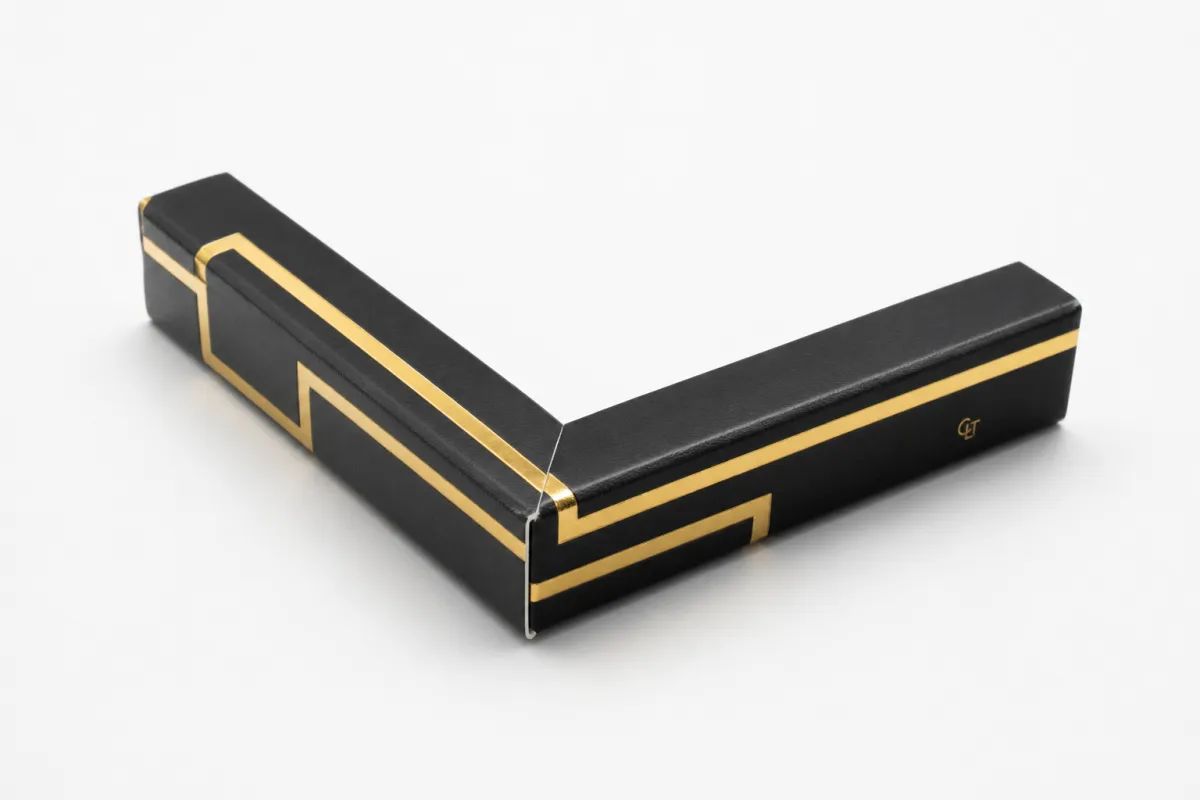
Corner boards are rigid paperboard or fiber-based angle protectors placed on the outside edges of a palletized load. Suppliers may call them edge protectors, angle boards, or pallet corner guards, but the function stays the same: defend corners from compression, strap damage, and rough handling. Printed corner boards with logo keep that structure and add a brand mark, a line of text, or a simple graphic panel that can still be seen after wrapping.
What makes them stand out is not only the visual effect. A good printed corner board has to preserve the angle, thickness, and stiffness that make it useful in the first place. Weak artwork placement can interfere with fold lines, blur the print, or push ink too close to the bend where scuffing happens fast. That is why printed corner boards with logo should be specified as a protective component first and a branded surface second. The print should improve recognition and presentation without changing the geometry of the board or weakening the edge that actually carries the load.
Buyers usually choose from a few common constructions: lighter boards for short hauls and display pallets, heavier recycled-fiber boards for stacked or tall freight, and reinforced options for loads that are banded tightly or handled more than once. Thickness often falls somewhere between 2 mm and 6 mm, while leg widths and lengths shift with pallet size and product height. Printed corner boards with logo can be built to match that range, which means branding does not need to be a separate accessory. It can live inside the same part that protects the shipment.
A pallet wrapped in printed corner boards with logo feels different from a pallet with a sticker slapped onto film. One looks planned. The other looks patched together. That difference is small on paper and obvious on the dock.
There is also a practical reason these boards stand out in busy facilities: visibility survives chaos better than assumptions do. Forklift operators miss labels. Film gets cloudy. Handwritten notes vanish. A bold logo on the corner board gives the load a repeatable visual identity, and repeatable is what warehouses like best.
How Printed Corner Boards With Logo Work on Real Pallets
On a real pallet, the boards are usually placed on the vertical corners before stretch wrap, strapping, or banding goes on. That location matters. Once the board is in place, it spreads strap pressure across a larger area, which lowers the chance that a narrow band cuts into a carton or crushes a product edge. It also gives the wrap something firm to brace against, which helps tall loads stay straighter instead of bowing inward under film tension. Printed corner boards with logo do all of that while keeping the shipping face readable.
The logo stays visible because the board sits on the outside of the pallet structure. In most warehouse operations, a shipment is seen several times before it reaches the final receiver: after wrapping, during staging, in a cross-dock, and again when the pallet is broken down at destination. Even through layered film, printed corner boards with logo can remain legible if the artwork uses strong contrast and clean placement. Dark ink on kraft board, or a bold single-color print on white face stock, usually outlasts fine type and delicate line art.
That visibility matters for more than branding. It helps with traceability, vendor identification, and load segregation. A receiving team does not always want to scan every carton before sorting pallets into zones. If the corner boards carry a recognizable logo or product family name, the shipment is easier to sort at a glance. For contract packers and distributors, printed corner boards with logo also help make freight from different plants look consistent, which reduces the visual noise that mixed networks create.
If the logo can still be read after wrapping, banding, stacking, and a few warehouse handoffs, the board has done more than protect an edge.
Printed corner boards with logo work best as part of the packaging system, not as a standalone fix. The pallet pattern needs to be stable, carton strength needs to match stack height, and wrap tension needs to hold the load without collapsing the corners. On heavy products, corner boards often perform better when straps sit against the board instead of directly against a carton. On lighter products, the board may do more to prevent rub, film bite, and scuffing than to resist pure compression. In both cases, the printed surface only helps if the board itself is sized correctly.
Teams that test freight should compare the pallet build against common packaging protocols such as ISTA transportation testing guidance and basic compression expectations under ASTM methods. The goal is not overengineering. The goal is to make sure the branding layer does not interfere with the load path. Printed corner boards with logo should support the shipment, not fight it.
One detail that gets missed more often than it should: the pallet looks strongest in a perfectly staged photo, but the real stress shows up when the load is pulled around a bend, parked against another pallet, or bounced across a trailer floor. That is where the board earns or loses trust. A printed board that survives that abuse is doing its job twice over.
Process and Timeline for Printed Corner Boards With Logo
The production path is usually straightforward, though it rewards careful setup. First comes the dimension check: board length, leg width, thickness, and whether the pallet needs coverage on all four corners or only on the visible faces. Then comes the artwork review, where the supplier checks logo file type, color references, and print placement. After that, the buyer approves a proof, production starts, and the boards are packed for shipment. Printed corner boards with logo are easy to order when the specification is clear and much slower when the details are vague.
Most delays happen before the machine ever runs. The usual trouble spots are fuzzy artwork, missing Pantone references, uncertain panel repeats, and late changes to board size after the proof is already out. Another common problem is failing to answer a simple but important question: should the logo appear on one side only, or repeat on multiple faces so it remains visible no matter how the pallet is rotated? Printed corner boards with logo need that decision early, because the print layout changes with every variation in placement.
A realistic timeline often looks like this:
- Spec gathering: 1 to 3 business days if the pallet dimensions and load details are ready.
- Artwork setup and proofing: 2 to 5 business days, longer if the logo needs cleanup or color matching.
- Sample review: 3 to 7 business days if a physical sample is requested.
- Production run: often 7 to 15 business days for mid-size orders, depending on quantity and print complexity.
- Freight and delivery: varies by lane, pallet count, and destination distance.
For a launch shipment, a seasonal peak, or a retailer-required presentation, I would build extra time into the schedule. A sample should count as part of the process, not a delay. Printed corner boards with logo can look perfect on a monitor and still land too close to a fold, too small to read through wrap, or too weak in contrast once the board is cut and bent. A physical sample exposes those issues quickly.
One practical rule saves time: ask for a proof, then check it under the same lighting and viewing distance your receiving dock actually uses. If the print can be understood from a few feet away, the odds are good that printed corner boards with logo will do their job in transit without needing extra explanation.
The safest approach is simple. Lock the dimensions first, confirm the artwork second, and approve the proof before anyone starts talking about speed. Printed corner boards with logo are fast to produce when the inputs are clean, but they do not forgive late changes. That is especially true if the boards need to match existing cartons, custom pallet footprints, or a narrow strap path where even half an inch changes the fit.
Cost and Pricing for Printed Corner Boards With Logo Orders
Pricing depends on more than print. The biggest drivers are board length, leg width, thickness, recycled fiber grade, print coverage, number of print colors, and order quantity. Once the quantity drops, setup costs get spread across fewer pieces and the unit price rises. That is why printed corner boards with logo often make the most financial sense at medium and larger runs, where the logo setup is diluted across enough pallets to justify the custom work.
For a rough buyer benchmark, a mid-size order of printed corner boards with logo can often sit in a range like $0.18-$0.35 per unit for 5,000 pieces, depending on board size and how much of the face is printed. Smaller runs may move higher, especially if there are multiple color stations, special board dimensions, or several artwork versions. Larger volumes can pull the unit price down, but freight, storage, and packaging for shipment still need to be counted. I would treat those numbers as directional, not as a quote.
| Option | Typical Run | Indicative Unit Range | Best Use | Notes |
|---|---|---|---|---|
| Plain kraft corner boards | 5,000 to 20,000 | $0.10-$0.18 | Internal moves, low-visibility freight | Lowest setup cost, no branding impact |
| Printed corner boards with logo, one color | 5,000 to 15,000 | $0.18-$0.30 | Distributor pallets, standard outbound freight | Good balance of cost and presentation |
| Printed corner boards with logo, multiple colors or repeat print | 10,000 and up | $0.28-$0.45 | Retail-ready pallets, launch programs, high-visibility lanes | Higher setup and tighter proof control |
The table only matters if you compare it to the value it creates. A brand may save a little by using plain edge protectors, but if the pallet arrives scuffed, difficult to identify, or less professional at the receiving dock, the cheaper part can become the more expensive decision. Printed corner boards with logo can reduce that kind of soft cost by improving presentation, simplifying sortation, and making the load easier to recognize.
Hidden pricing factors show up often enough to deserve attention. Freight can matter because corner boards are bulky relative to their weight, so shipping them efficiently is part of the real cost. Storage matters if the boards are produced ahead of a seasonal run and need floor space. Revision charges can appear if the logo changes after proof approval, and some suppliers charge more if the artwork requires multiple repeats, registration marks, or a special print orientation. Printed corner boards with logo work best when the specification is stable before the order is released.
The right question is rarely, "What is the cheapest board?" A better one is, "What does it cost to prevent one damaged pallet out of fifty?" That framing is cleaner. If printed corner boards with logo reduce rub damage, keep the load straighter under wrap, and make the shipment look more intentional, then the unit price should be judged against those outcomes, not against a blank board sitting alone on a spec sheet.
One more thing: if a supplier gives you a price that looks suspiciously low, ask what is missing. Is it the freight? The proof? The setup? The board grade? Cheap packaging quotes have a habit of growing teeth once the order is ready to ship.
Key Factors That Affect Strength, Fit, and Print Quality
Fit comes first. If the board does not match pallet height, product footprint, and strap path, it will buckle early or leave too much exposed edge. A good spec should answer where the board starts, where it ends, and how it sits against the outer cartons. Printed corner boards with logo need the same discipline. The logo should live in a panel that remains visible after trimming and folding, not in the area most likely to be crushed under a tight band.
Material choice comes next. Heavier paperboard and stronger recycled-fiber constructions can improve crush resistance, but more weight is not automatically better. A tall, light load can get by with a board that is kind of modest if the pallet pattern is tight and the wrap is controlled. A dense stacked load moving long distance may need a much firmer edge protector. Printed corner boards with logo should be selected based on product weight, number of pallet layers, moisture exposure, and whether the load will be handled once or several times.
Print quality depends more on contrast and placement than on fancy artwork. Fine text disappears quickly once a board is cut, bent, and handled. Bold shapes, thick lines, and a simple logo panel usually hold up better. If the board will be viewed through stretch film, the print should be tested under that condition. Printed corner boards with logo are only useful if people can read them from the distance that actually matters on a dock.
A few material and specification points are worth checking before the order is released:
- Board thickness: commonly selected around 2 mm to 6 mm, depending on load weight and stacking pressure.
- Leg width: often 1.5 to 4 inches, based on strap width and carton edge coverage.
- Board length: usually matched to pallet height, with allowance for compression and top clearance.
- Print placement: should avoid fold lines, scored corners, and strap contact zones.
- Fiber and finish: recycled fiber content, moisture resistance, and coatings can change both recyclability and appearance.
Sustainability expectations matter too. Many teams want paper-based angle protection that fits internal recycling goals, and that is reasonable as long as coatings and inks are compatible with the chosen recovery stream. If sustainability is part of the brief, ask for material details up front and compare them against local recycling rules. For broader guidance, both ISTA and the EPA recycling resources are useful starting points for package performance and end-of-life handling.
Printed corner boards with logo should also be checked for consistency across the run. Edge boards are often used in batches, so one bad carton of corners can show up across many pallets. Ask about print registration tolerance, board squareness, and moisture conditioning if the product will travel through humid warehouses or cold-chain spaces. A small amount of warping can make a logo look crooked, even when the board is still structurally usable.
The strongest specs are boring in the best way. They describe the load, the pallet, the strap path, the storage conditions, and the exact print expectation. Printed corner boards with logo become much easier to produce once those basics are in place.
And yes, the boring stuff is usually where the money gets saved. Anyone can approve a pretty mockup. Fewer people take the time to ask whether the corner board still fits after a 48-inch pallet is squared, wrapped, and strapped in a cold dock at 6 a.m.
Common Mistakes When Ordering Printed Corner Boards With Logo
The first mistake is choosing artwork before the board dimensions are locked. A logo can look sharp on a screen and then disappear when it lands too close to the score line, the cut edge, or the area covered by film overlap. Printed corner boards with logo should be designed around the actual board layout, not around a generic mockup. If the print panel is too small, simplify the artwork instead of forcing it to fit.
The second mistake is overprinting. Too much copy, too many colors, or unnecessary visual noise can make the board look cluttered and raise cost without adding real value. In packaging, clarity usually wins. A clean logo, a strong brand name, and maybe one short supporting line are often enough. Printed corner boards with logo should reinforce the load, not turn into a billboard that distracts from the shipment's protective purpose.
The third mistake is sending a thin spec sheet. If the supplier does not know pallet size, product weight, stack height, wrap type, storage environment, or whether the board must support straps, the recommendation can miss the mark. Good edge protection is specific. Printed corner boards with logo need the same level of specificity. A board that works for a light retail pallet may be wrong for a heavy industrial load, even if the logo looks fine.
The fourth mistake is skipping sample review. A digital proof cannot show how the board behaves in the hand, how the fold reads under pressure, or whether the logo still stands out after the board is wrapped. A physical sample exposes issues with spacing, contrast, board stiffness, and surface feel that no file can predict. Printed corner boards with logo are worth sampling whenever the pallet is high value, the launch is visible, or the customer has strict presentation standards.
Here is the short version of what I would avoid:
- Do not approve artwork before the board size is final.
- Do not overload the board with too much text.
- Do not leave out pallet and load details.
- Do not skip a physical sample if the shipment matters.
- Do not assume one board style fits every lane.
There is a hidden risk in assuming the logo alone carries the whole message. Printed corner boards with logo are not a replacement for good carton labeling, pallet tags, or receiving paperwork. They work best as one clean element inside a well-planned packaging system. If the load still needs a separate identifier, keep that in place and let the corner boards add support and consistency.
The best buyers treat the board as a working part, not a branding afterthought. That mindset keeps the order honest. Printed corner boards with logo should earn their place by helping the freight move better and look better at the same time.
Expert Tips and Next Steps for Your Next Shipment
Start with a simple checklist. Measure the pallet footprint, confirm the total load height, note the strap locations, and decide whether the boards need to be visible on all four corners or only on the display-facing sides. Then define what the logo needs to do. Does it just identify the brand, or does it need to support a launch, a retailer requirement, or a distributor presentation? Printed corner boards with logo are easier to spec once the visual goal is tied to the shipping use.
My second recommendation is to ask for quotes with enough detail to make them comparable. Include board dimensions, quantity, print colors, recycled content target, and delivery timing in the same request. If one supplier quotes a lighter board and another quotes a stronger one, the price comparison is not useful unless the specifications match. Printed corner boards with logo only make sense as a buying decision when the structure, print, and freight assumptions are aligned.
For high-value loads, request a prototype or sample before the full run. That extra step is cheap insurance when the pallet is going to a retailer, a key distributor, or a customer that notices presentation quality. One sample can answer questions about readability, wrap visibility, edge stiffness, and how the board behaves when a strap is pulled tight. Printed corner boards with logo are meant to reduce uncertainty, and sampling is the fastest way to prove the spec.
A practical next step is to review one current shipment lane and ask three questions: where are the corners getting damaged, where does the pallet look plain or unfinished, and where could a printed board improve both handling and presentation? If the answer points to the same lane more than once, that is usually a good candidate for a test order. Printed corner boards with logo do not need to be rolled out everywhere at once. A single lane can show the value quickly.
If you are building this into a sourcing plan, think in terms of process, not just product. A tight drawing, a clear print file, a sample board, and a realistic lead time will do more for the final result than a long list of extras. Printed corner boards with logo are at their strongest when the supply chain treats them like a standard part with a branded face, not like a last-minute embellishment.
In the end, the question is simple: does the pallet arrive protected, easy to identify, and consistent with the brand you want people to see? If the answer is yes, printed corner boards with logo are doing exactly what they should.
Frequently Asked Questions
What do printed corner boards with logo do that plain corner boards do not?
They still protect pallet edges, but they also add visible branding on a packaging component that is often seen during shipping, receiving, and warehousing. Printed corner boards with logo can make a shipment look more organized and professional without adding separate labels or extra print pieces.
How do I know which size of printed corner boards with logo I need?
Match the board to pallet height, product weight, and the distance between strap lines and corners. If the load is tall, heavy, or stacked, ask for a recommendation based on crush resistance and edge coverage rather than choosing by appearance alone.
What should I send when requesting a quote for printed corner boards with logo?
Provide pallet dimensions, board length and leg size if known, print colors, logo files, target quantity, and whether you need recycled material or special performance features. Include your desired delivery window so the supplier can confirm lead time and production schedule for printed corner boards with logo.
How long does it usually take to produce printed corner boards with logo?
Timing depends on artwork approval, order size, print complexity, and current material availability. The fastest way to avoid delays is to send clean artwork, confirm dimensions early, and approve proofs quickly. For many runs, printed corner boards with logo move from approval to shipment in roughly 12 to 15 business days, though that can stretch or shrink based on the spec.
Can printed corner boards with logo be recycled or reused?
Many paper-based corner boards are recyclable, but the final answer depends on the fiber grade, inks used, and any coatings applied. Reuse is possible when the boards stay dry and intact, but crush, moisture, or heavy strap marks usually reduce their second-life value. For a lot of shipping programs, printed corner boards with logo are the simplest way to combine protection, presentation, and accountability in one part.
The most practical way to proceed is to spec one lane properly, sample it under real dock conditions, and judge the result with your own handling team rather than a mockup. If the board protects the edge, stays readable through film, and still looks like it belongs on the pallet after a rough trip, you have a winner. If it misses any of those three tests, adjust the size, the print, or the board grade before the full run.


