Buyer Fit Snapshot
| Best fit | Custom Pallet Boxes for Bulk Freight projects where brand print, material claims, artwork control, MOQ, and repeat-order consistency need to be specified before quoting. |
|---|---|
| Quote inputs | Share finished size, material target, print colors, finish, packing count, annual reorder estimate, ship-to region, and any compliance wording. |
| Proofing check | Approve dieline scale, logo placement, barcode or warning zones, color tolerance, closure strength, and carton packing before bulk production. |
| Main risk | Vague material claims, crowded artwork, missing packing details, or unclear freight terms can make a low unit price expensive after revisions. |
Fast answer: Custom Pallet Boxes for Bulk Freight: Specs & Pricing should be specified like a repeatable production item. The safest quote records material, print method, finish, artwork proof, packing count, and reorder notes in one written spec.
Production checks before approval
Compare the actual filled-product size with the drawing, then confirm tolerance on folds, seals, hang holes, label areas, and retail display edges. Reserve space for logos, QR codes, warning copy, and material claims before decorative graphics fill the panel.
Quote comparison points
Review material grade, print process, finish, sampling route, tooling charges, carton quantity, and freight assumptions side by side. A quote is only useful when the supplier can repeat the same color, closure quality, and packing count on the next order.
Custom Pallet Boxes for bulk freight: specs & pricing
Custom Pallet Boxes for bulk freight usually do not fail because the board price was a little too high. They fail because the load was wrong for the route. I have watched well-meaning teams shave pennies off packaging only to pay for it later in claims, repacking, and overtime. One shipment that shifts in transit can turn a tidy freight plan into a messy, expensive afternoon. The box cost is visible. The disruption is where the real bill shows up.
That is why experienced buyers stop asking whether they need a bigger carton and start asking what the freight actually needs to survive. The load needs containment, stack strength, and handling that makes sense at dock level. Standard pallets wrapped in film can move product, sure, but they do a pretty mediocre job of holding awkward shapes, protecting corners, or keeping heavy units from settling unevenly. Custom Pallet Boxes for bulk freight solve a different problem: they turn a loose stack into a controlled shipping unit.
These boxes are not a cosmetic upgrade, and they are not just for companies with fancy packaging budgets. They are for operations that have finally learned that dead space, rework, and unstable loads are hidden costs wearing work boots. A good design can cut voids, reduce damage, and keep warehouse teams from babysitting pallets that should have stayed stable from the first lift. The savings live in the mistakes you avoid, not in the sheet of corrugated you delete.
Custom pallet boxes for bulk freight: where the real costs surface
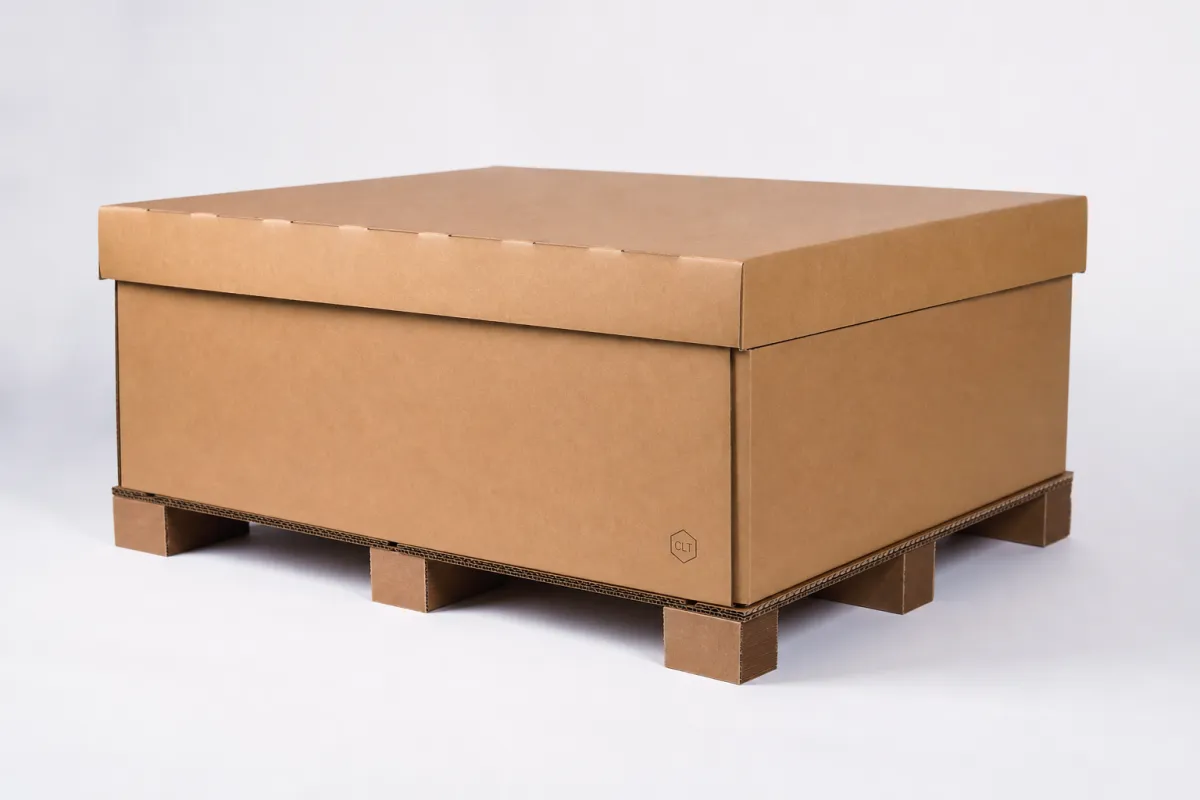
The same freight failure repeats with irritating consistency. A lane looks fine until one transfer point, one dock habit, or one rough turn on the linehaul exposes a weak spot. Custom pallet boxes for bulk freight exist because those weak spots are expensive, and the expense compounds fast. A pallet that tips, shifts, or crushes at one corner can cost more than several months of better packaging. Claims are only part of it. Delayed inventory and labor rework can sting harder.
Small mismatches usually start the trouble. A carton that is 15 mm too loose, a pallet footprint with too much overhang, or a stack height that ignores trailer compression can create movement nobody notices during loading. Then the freight hits a cross-dock, a curb, or a longer haul and the movement multiplies. I have seen loads that looked tidy on the dock arrive with broken corners and no obvious smoking gun, which is exactly why custom pallet boxes for bulk freight matter. They remove guesswork from the chain.
Standard pallets plus stretch wrap can work for rigid, uniform freight. Mixed-SKU replenishment, boxed components, awkward industrial parts, and shipments that need to stay square through multiple handoffs ask for something better. Purpose-built box structures hold edges, protect corners, and keep items aligned. Edges are usually the first failure point. Once one edge collapses, the rest of the load starts following it like a bad rumor.
The hidden costs are easy to miss until they stack up. Product damage is obvious. Labor rework hides in the background, which makes it worse. One recut, one repack, one extra pallet build, and the "cheap" option is suddenly not cheap at all. Custom pallet boxes for bulk freight reduce those losses by giving the load a defined boundary and a stronger path from warehouse floor to trailer wall. The box should protect margin, not just look tidy in a photo.
Industrial packaging buyers usually ask the practical question first: will this survive our route? Fair enough. The sharper question is whether the load survives the route and still makes life easier for the next team. If the answer is yes, custom pallet boxes for bulk freight tend to earn their keep quickly. If the answer is maybe, the design is not ready yet.
Product details for custom pallet boxes for bulk freight
At the simplest level, custom pallet boxes for bulk freight are boxes built around a pallet footprint, a load height, and a handling method so the freight moves as one controlled unit. That sounds plain, but the engineering underneath is not. A box built for a 48 x 40 footprint behaves differently from one built for a Euro pallet. A tall load under a low ceiling sees different stress than a shorter export shipment that may sit in storage longer than expected.
Common build types include heavy-duty corrugated pallet boxes, wood-reinforced hybrids, and fully enclosed crates with removable lids or panels. Corrugated versions are popular when buyers want a lighter structure and a cleaner recycle stream. Hybrids make sense when edge protection matters or forklift handling is rough. Crates often suit irregular or very heavy freight, especially where export handling, stacking, or long transit times raise the risk of compression damage. Product weight, handling frequency, and the amount of abuse in the lane usually decide the structure.
Functional features matter just as much as the shell. Buyers often ask for die-cut access points so teams can reach product without tearing apart the whole unit. Forklift openings keep the load accessible from multiple sides. Reinforced corners help the box resist crush and racking forces. Internal blocking, pads, or dividers stop items from drifting inside the packout. Straps and banding can add restraint, but only when the structure is designed to carry that force. Packaging design is not just a graphics decision. It is load management.
These boxes fit a wide range of categories: industrial components, bagged goods, boxed consumer products, replenishment loads, export shipments, and mixed-SKU freight that needs to stay organized through cross-dock handling. In some programs, the outer structure also supports branded packaging or even light-touch package branding so the shipment is easier to identify in transit. If the load later feeds retail packaging or store replenishment, a cleaner outer box can do more than protect the freight. It can speed up receiving and cut sorting mistakes.
A useful rule keeps the project honest: custom pallet boxes for bulk freight should simplify handling, not create a more complicated workflow. If the design slows palletizing, blocks dock access, or forces teams to handle the load in a fragile way, the structure is wrong. The best version usually lets the freight behave like a single, predictable unit from the first lift to the final unload. That is the whole point, really.
The cheapest pallet box is usually the most expensive once you count claims, labor, and the time spent fixing a shipment that should have stayed stable.
For buyers who want a deeper benchmark on distribution testing, ISTA is a useful reference point. Its package testing programs help frame how a load may perform under vibration, shock, and compression. For fiber sourcing questions, FSC is the standard many teams look to when they want certified materials that support documented responsible forestry.
Specifications that matter for custom pallet boxes for bulk freight
The most useful spec sheet answers how the load will actually ship. Start with internal dimensions. Then confirm the pallet footprint, maximum load weight, stack height, shipping mode, and the environment the box will see. Custom pallet boxes for bulk freight that travel by truck only are not engineered the same way as loads that may sit in a humid warehouse, transfer through a distribution center, or move overseas in a container. Route differences matter more than most buyers expect.
Material selection comes next. Single-wall corrugated can work for lighter or shorter-cycle freight, but most bulk shipping programs need more support. Double-wall is a common starting point for stronger containment and better compression resistance. Triple-wall or wood-reinforced structures enter the picture when the shipment is heavier, taller, or more likely to be rehandled several times. For some freight, edge crush values matter as much as the nominal board grade, because the corners are where the load usually fails first.
Moisture resistance deserves attention too. A box that performs well in dry storage may soften if it sits near a dock door or spends too long in a damp lane. Coatings, liners, or hybrid structures earn their place there. Puncture resistance matters in rough warehouse environments. Abrasion protection matters when loads slide against racks, adjacent pallets, or trailer walls. Compression strength matters when freight is stacked or when a second pallet lands on top during staging. Each variable points to a different failure mode, which is why spec work can get a little fussy.
Internal engineering is where many custom pallet boxes for bulk freight win or lose. Inserts keep multiple items from leaning into each other. Partitions create separation for mixed SKUs. Pads reduce point-load damage. Dunnage fills gaps that would otherwise let product roll, shift, or settle. If the shipment contains fragile parts, the internal layout may matter more than another layer of board on the outside. Damage often begins inside the box, not outside it.
There is a difference between "thicker" and "better." A thick box that is poorly sized can still crush, because the load path is wrong. A slightly lighter box that matches the product, the pallet, and the route can outperform a heavier one. Experienced buyers often compare against ASTM D642 compression testing or distribution profiles rather than relying on board thickness alone. The goal is not maximum material. The goal is the right structure for the shipment profile.
If you are sourcing custom pallet boxes for bulk freight for export or longer lanes, ask for test language upfront. Ask what compression target was used. Ask whether a sample was evaluated for fit under real product weight. Ask whether the design assumes one-time use or reuse. Those questions save time later, because they push the supplier to engineer to reality instead of to a guess. That part is kinda unglamorous, but it is where the real risk gets handled.
Cost, pricing, MOQ, and quote drivers for bulk freight packaging
Pricing for custom pallet boxes for bulk freight comes down to a handful of variables: material grade, finished size, print coverage, internal inserts, custom tooling, and order volume. The mistake many buyers make is asking for "the price" before the supplier knows the product weight, pallet pattern, or shipping environment. That produces vague numbers, and vague numbers do not help much when freight risk is the actual issue.
A realistic quote should separate unit cost from landed cost. A box that costs a little more can still save money if it cuts damage claims, reduces labor, or lets the trailer carry more usable cube. That matters especially in bulk freight, where one damaged pallet can erase the savings from a cheaper structure. Custom pallet boxes for bulk freight are one of those purchases where the invoice line is only part of the story.
MOQ expectations vary by build type. Standard corrugated programs often begin with short runs if the design is simple, while more specialized structures usually become economical at larger volume. In many cases, buyers can prototype at a low quantity, then move to a production run once dimensions and handling are confirmed. That sequence keeps risk down while still giving the engineering team room to refine the design. It also keeps the buyer from committing to a design that only works on paper.
Fair quote comparisons depend on shared information. Send every vendor the same details: finished dimensions, product weight, pallet footprint, desired stack height, destination, annual volume, print needs, and ship date. If any of that changes, the price can change too. Apples-to-oranges comparisons show up often in packaging procurement because one quote may include a stronger board, better corner support, or a different internal structure. The lower price is not always the better price.
| Build type | Typical best fit | Approximate unit cost range | Main tradeoff |
|---|---|---|---|
| Heavy-duty corrugated pallet box | Lighter bulk freight, warehouse distribution, cleaner recycle stream | $12-$35 at moderate volume | Lower weight, but less tolerance for severe handling |
| Double-wall or triple-wall reinforced box | Heavier shipments, taller stacks, longer transit lanes | $22-$55 depending on size and inserts | Stronger containment, with slightly higher material cost |
| Wood-reinforced hybrid crate | Irregular freight, export work, repeated handling | $45-$120+ | Very durable, but heavier and more expensive to ship |
| Fully enclosed export crate | High-risk freight, multi-touch shipments, long dwell time | $60-$180+ | Best protection, though weight and labor can rise fast |
These are working ranges, not promises. Box size, print coverage, moisture treatment, and freight lane can move the number up or down. For many buyers, custom pallet boxes for bulk freight deliver the best value when the structure matches the failure mode instead of being overbuilt "just in case." Overbuilding still costs money. It only feels safer.
If you also need support for larger programs, our Custom Packaging Products page can help you compare structures before you request pricing. For buyers consolidating recurring programs, Wholesale Programs can make scale planning easier when volume rises and repeat orders matter.
Process and timeline: from brief to production release
Good custom pallet boxes for bulk freight usually move through the same chain: discovery, engineering review, sample or prototype, approval, production, and dispatch. The sequence sounds simple. The execution depends on how complete the brief is. A buyer who sends only outside dimensions and a rough product photo will face more questions in the first round. A request that includes load weight, pallet pattern, handling method, and destination tends to move faster with less back-and-forth.
The fastest programs are the ones with usable data. Photos of the current packout help. Product dimensions help too, along with stack limits and any known failure points such as crushed corners, split seams, or shifting after cross-dock handling. If the load has already failed once, that evidence matters. It shows where the risk lives. Custom pallet boxes for bulk freight should be designed around actual failure, not around assumptions made in a meeting.
Timing usually breaks into four parts. Design and engineering review may take a few business days if the brief is complete. Sampling or prototype approval can add a few more days, depending on how many revisions are needed. Production typically takes longer than sampling, especially for heavy board, print, or hybrid construction. Freight transit then adds its own clock. That split matters because a buyer may think the project is "late" when the build is still on time and the lane is what added delay.
Predictable delay points include missing dimensions, slow approval cycles, print changes after sign-off, and special material sourcing. A custom printed box can add proofing time. The same is true if the structure needs moisture treatment, FSC-certified board, or specific cut tooling. None of those are deal breakers. They just need to be identified early. Otherwise everyone ends up scrambling, which is never fun.
Separating design time from production time on the order sheet helps keep the schedule honest. Nobody confuses a sample revision with a manufacturing delay, and the project stays easier to track. Buyers who do this usually make cleaner decisions because they can see where the process is moving and where it is waiting. In freight packaging, clarity is a very underrated asset.
"A good freight package is a piece of engineering with a purchase order attached." That is the mindset that keeps bulk shipping programs from drifting into avoidable claims.
For custom pallet boxes for bulk freight tied to plant schedules or replenishment cycles, time sensitivity is real. A late box can stop outbound freight. A weak box can stop it later, which is worse. Disciplined project management pays off here: fewer surprises, cleaner approvals, and a structure that is ready when the freight is.
Why choose us for custom pallet boxes for bulk freight
Custom Logo Things approaches custom pallet boxes for bulk freight as a technical packaging job, not a commodity order. That matters because bulk freight buyers are not looking for generic cartons. They need a structure that holds up under real handling, real compression, and real schedule pressure. The right supplier should be able to talk through material grades, internal blocking, pallet fit, and the tradeoff between protection and freight cost without turning the discussion into sales copy.
Testing and validation belong at the center of the process. Compression checks, fit reviews, palletizing logic, and practical feedback from shipping teams tell you more than a glossy sample ever will. A box can look good on a desk and still behave poorly on a dock. A packaging partner should ask about load weight, forklift access, rehandle frequency, and whether the shipment is one-way or reusable. Those details shape the structure more than appearance ever does.
Responsiveness matters too. Buyers often need two or three design paths before they settle on the right one. Sometimes the low-cost version works. Sometimes the export version is the safer choice. Sometimes the middle-ground design is enough. A supplier that can turn around clean revisions quickly keeps the project moving while the buyer compares cost, durability, and operational fit. That is especially useful if the load includes branded packaging, package branding, or a custom printed outer layer that has to line up with other product packaging on the line.
Consistency at scale is another reason people source custom pallet boxes for bulk freight from a focused packaging partner. When volume rises, even a small dimensional drift can create warehouse headaches. One eighth of an inch may not sound like much until you are palletizing dozens of loads a day. Repeatable sizing, dependable material supply, and production accuracy protect throughput. That is where a stronger packaging design process pays off.
For buyers who want one vendor relationship to cover multiple programs, it also helps that the same team can support Custom Packaging Products for other shipping formats and coordinate with Wholesale Programs when recurring volume makes a broader supply plan worthwhile. That matters if the pallet box sits inside a larger mix that includes retail packaging, inner packs, or promotional freight.
The value is not hype. It shows up as fewer damage reports, cleaner warehouse handling, and less time spent explaining why a shipment that looked fine on the pallet did not stay fine in transit.
Next steps for ordering custom pallet boxes for bulk freight
If you are ready to spec custom pallet boxes for bulk freight, start with a clean checklist. Gather product dimensions, unit weight, pallet footprint, stack height, shipping mode, and expected annual usage. Add any handling constraints, such as forklift access from one side only, restricted dock height, or a need for reusable construction. Those facts tell the supplier what the box has to survive, and they narrow the design choices quickly.
Photos help more than many buyers expect. Send pictures of the current packout, especially where you see crushed corners, voids, loose movement, or lift points that cause trouble. If the product has already shipped in another format, show that too. Custom pallet boxes for bulk freight are easier to engineer when the failure mode is visible. A good engineer can work from a spreadsheet, but a photo often reveals the problem faster.
Real logistics details belong in the request as well. Is the load going to a dry warehouse, a humid region, or an export lane? Will it sit in storage for a week or for several months? Does it need to survive multiple touches before final receipt? Those questions affect board grade, insert layout, moisture treatment, and overall structure. A freight package that sits in storage is not the same as one that goes straight to the customer.
When you compare options, ask for at least two or three design paths. One may be the lowest cost. One may be the highest protection. The best answer is often in the middle, especially if the product is stable but the route is rough. Confirm MOQ and lead time before you approve the final build. If timing is tight, make sure production and transit are both included in the schedule discussion, not just the engineering step.
The smartest orders for custom pallet boxes for bulk freight are spec-led, not guess-led. That means the buyer knows the load, the route, the handling method, and the cost target before the quote goes out. It also means final approval is based on how the box performs in the chain, not on how cheap it looks on paper. Start with the worst handling point, the heaviest lift, and the most likely failure mode; if the structure protects those three things, you are probably close to the right answer.
How do I choose the right size for custom pallet boxes for bulk freight?
Start with the product footprint, then add only the clearance needed for inserts, cushioning, or handling. Match the box to the pallet pattern so overhang does not create stability problems in transit. Check finished stack height against trailer space, warehouse racking, and any carrier or export limits before you approve the design.
Are custom pallet boxes for bulk freight better than standard crates?
They are usually better when the product needs a tighter fit, less void space, or more efficient pallet stacking. A crate can be stronger for very heavy or irregular freight, but it often adds weight and cost. The best choice depends on product fragility, route length, handling frequency, and moisture exposure.
What MOQ should I expect for custom pallet boxes for bulk freight?
MOQ depends on material type, print requirements, and whether any tooling or cutting dies are needed. Some suppliers can support short runs for prototypes, while production pricing improves at larger volumes. Ask for tiered quotes so you can compare pilot quantities against full-run economics.
How long do custom pallet boxes for bulk freight usually take?
Timeline usually includes design review, sample approval, production, and shipping transit. Complete specifications and fast approvals shorten lead time more than almost any other factor. Rush timelines are possible on some builds, but special materials or heavy customization can extend the schedule.
Can custom pallet boxes for bulk freight be reused?
Yes, if the build is reinforced enough and the handling route is controlled. Reusability depends on load weight, wear from forklifts, moisture exposure, and how often the box is opened. If reuse matters, specify it early so the structure can be designed for multiple trips instead of one-way shipment.
For buyers trying to reduce claims, stabilize handling, and make freight spend easier to justify, custom pallet boxes for bulk freight are one of the most practical packaging upgrades available. The right spec removes waste, the right pricing model protects margin, and the right partner keeps the process moving. If you are building the order, begin with the product weight, pallet footprint, and worst handling point; that is the shortest path to a box that actually earns its keep.

