Buyer Fit Snapshot
| Best fit | Custom Pallet Boxes Recycled for Sustainable Packaging projects where brand print, material claims, artwork control, MOQ, and repeat-order consistency need to be specified before quoting. |
|---|---|
| Quote inputs | Share finished size, material target, print colors, finish, packing count, annual reorder estimate, ship-to region, and any compliance wording. |
| Proofing check | Approve dieline scale, logo placement, barcode or warning zones, color tolerance, closure strength, and carton packing before bulk production. |
| Main risk | Vague material claims, crowded artwork, missing packing details, or unclear freight terms can make a low unit price expensive after revisions. |
Fast answer: Custom Pallet Boxes Recycled for Sustainable Packaging should be specified like a repeatable production item. The safest quote records material, print method, finish, artwork proof, packing count, and reorder notes in one written spec.
Production checks before approval
Compare the actual filled-product size with the drawing, then confirm tolerance on folds, seals, hang holes, label areas, and retail display edges. Reserve space for logos, QR codes, warning copy, and material claims before decorative graphics fill the panel.
Quote comparison points
Review material grade, print process, finish, sampling route, tooling charges, carton quantity, and freight assumptions side by side. A quote is only useful when the supplier can repeat the same color, closure quality, and packing count on the next order.
Custom Pallet Boxes recycled for sustainable packaging can look almost boring on a spec sheet. Then the freight bill lands, a corner crushes in transit, or a dock crew spends half an hour reworking a load because the lid flexed. Suddenly the cheapest-looking option is not cheap at all. A lighter carton can cost more if it needs extra wrap, more filler, or a second handling pass, and that is usually where the real money leaks out.
That is why the phrase Custom Pallet Boxes recycled needs to mean more than recycled content. A pallet box should be built around the product, the route, and the recovery plan. If it only scores well on sustainability language, it is missing the point. The best versions protect the load, fit the pallet cleanly, and keep the return path for paper fiber straightforward enough that recycling is realistic, not theoretical.
In one packaging review I sat through last year, the procurement team kept asking for a higher recycled percentage while the operations manager kept circling the same issue: the old box was forcing repacking on nearly every third shipment. That kind of disconnect is common. The box is not an abstract environmental object. It is a working tool, and if it makes labor harder, it will get blamed fast. The smarter approach treats Custom Pallet Boxes recycled as part of a shipping system, not a green badge.
Most buyers end up needing the same four answers. How are these boxes built? What drives the price? How long does it take to get them approved and produced? And how do you spec the right one without gambling on the first shipment? Those are the questions this piece tackles. If you are sourcing custom pallet boxes recycled for the first time, the aim is simple: avoid the expensive surprises that show up after the pallet leaves the dock.
Custom pallet boxes recycled: the packaging tradeoff most shippers miss
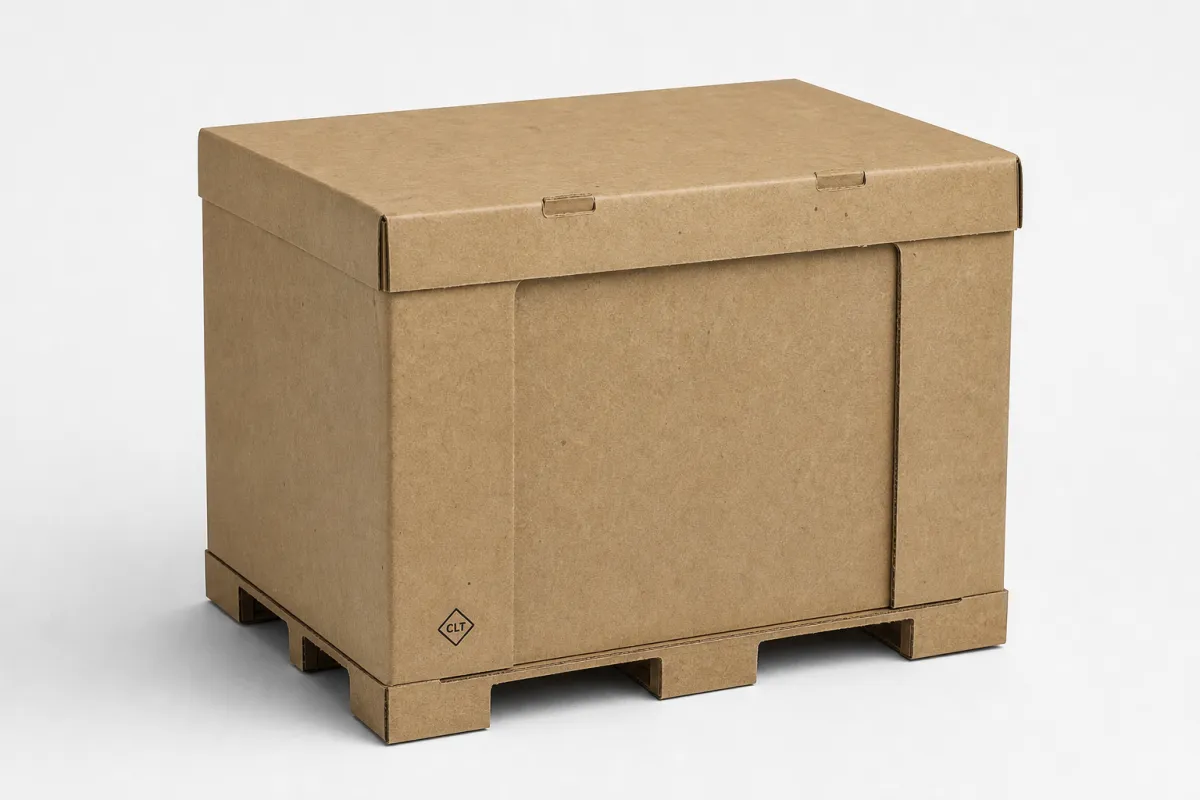
A pallet-sized box built from recycled fiber can look modest next to a heavily reinforced virgin-fiber alternative and still deliver the better result. Shipping performance does not come from the recycled percentage alone. It comes from how custom pallet boxes recycled handle compression, vibration, moisture, and the daily abuse of warehouse traffic. When the design is right, the box can also cut secondary materials, which means less stretch wrap, fewer corner protectors, and less repacking labor.
In practical terms, custom pallet boxes recycled are large-format corrugated or fiber-based containers built around a pallet footprint, a weight range, and a handling pattern. Some use single-wall board. Others need double-wall stock, pallet bases, lids, corner posts, trays, dividers, or internal inserts. Print can support product identification, lot tracking, or package branding, though most buyers look at protection and fit first. That order of priorities makes sense. A box that looks good and fails on the truck is not a win.
The timing matters too. Sustainability claims are easy to print and hard to verify. A box has to move through the building, survive transport, and still be recoverable at the other end. Recovered fiber and recyclable design mean very little if the structure triggers damage, claims, or a pile of rework. Custom pallet boxes recycled become compelling when they reduce waste and improve unit economics at the same time. That only happens when the spec is disciplined.
"A recycled spec is only sustainable if it survives the shipment."
That is the actual test. Not a brochure. Not a slogan. A shipping box earns its place by lowering total cost per shipped unit, not by looking tidy on a sustainability slide. If you already buy custom pallet boxes recycled, the smartest move is to treat the box as part of the packaging design system instead of a stand-alone commodity. That mindset sounds obvious. It is also where many programs go off the rails.
How custom pallet boxes recycled work from fiber to freight
The construction is simpler than most sales decks make it sound. At the base level, custom pallet boxes recycled usually begin with recycled linerboard and recycled corrugating medium. Depending on the load, the structure may be single-wall, double-wall, or reinforced with corner posts and a pallet base. Add lids, sleeves, internal partitions, or inserts when the product needs positional control, abrasion protection, or stronger stack stability.
- Recycled linerboard: The outer and inner faces that give the box printability and surface strength.
- Corrugated medium: The fluted layer that adds crush resistance and a degree of cushioning.
- Corner posts or pads: Support for tall or dense loads that need extra compression strength.
- Pallet base and lid: Helpful when forklift handling is frequent or the pack needs a more enclosed profile.
- Partitions and inserts: Useful for layered product, mixed SKUs, or fragile components.
The manufacturing flow is also easy to trace once the jargon gets out of the way. Recovered fiber is pulped, cleaned, and formed into paper sheets, then converted into corrugated board. From there, the board is printed if needed, die-cut or scored, folded, and shipped as flat blanks or assembled components. For custom pallet boxes recycled, the design stage matters more than the mill stage because geometry decides whether the box uses fiber efficiently or wastes it in the wrong places.
Two boxes can carry the same recycled content and perform very differently. One crushes early. The other ships cleanly. The split usually comes from flute selection, score placement, panel sizing, and the way the load transfers to the pallet. Good custom pallet boxes recycled are an exercise in packaging design, not just material selection. That is a more technical way to say the obvious: shape matters, and sometimes it matters more than thickness.
End of life depends on how the box was used. Clean corrugated can usually enter a normal paper recycling stream, and the EPA recycling guidance remains a solid baseline for recovery expectations. Moisture, tape, labels, coatings, and mixed materials can complicate that path. If you want truly recoverable custom pallet boxes recycled, think about flattening, collection, contamination control, and whether your local recycler accepts the structure as designed. A box that is technically recyclable but practically rejected by the local stream is only half a solution.
Key factors that decide strength, weight, and recyclability
The first variable is the load itself. Weight matters, but weight alone never tells the whole story. Center of gravity, product fragility, stack height, and whether the shipment will be palletized or hand-carried all shape the spec. A 300-pound load packed low and evenly can behave better than a 180-pound load with tall, off-center product. That is why custom pallet boxes recycled need to be engineered from the failure mode backward.
Transit environment comes next. Humidity softens corrugated faster than many buyers expect. Cold storage, export lanes, long dwell times, and multiple touch points can push a decent box into trouble. I once watched a team approve a box that performed beautifully in the plant, then fold like a cheap lawn chair after a week in a damp cross-dock. The design itself was not bad. The route was harsher than anyone had modeled. For palletized freight, standards such as ISTA test methods and compression testing like ASTM D642 are often more useful than a vague heavy-duty label. Real custom pallet boxes recycled should be evaluated under the conditions they will actually face.
Pallet compatibility sounds dull until it creates a warehouse problem. Footprint, fork access, overhang, and automation all matter. If the pallet base is wrong by even a small amount, handling slows down or stacks become unstable, and the advantages disappear. Buyers often focus on product packaging performance and forget the receiving dock, where the box has to behave in the hands of people moving quickly. That is the kind of operational detail that gets missed when everyone is staring at the drawing instead of the workflow.
End-of-life goals need attention too. If recyclability matters, watch adhesives, heavy inks, foils, moisture barriers, and mixed-material assemblies. Some features improve performance but make recovery harder. That does not mean they should be avoided. It means the spec should be intentional. If you are building custom pallet boxes recycled for closed-loop distribution, the reuse plan may justify a more complex build. If the box is single-use, the recovery path should stay as clean as possible.
A useful rule of thumb: choose the simplest structure that survives the worst credible shipment. Not the cheapest sheet. Not the thickest board. The simplest structure that still protects the load, supports the stack, and can be recovered without a headache. That is usually where custom pallet boxes recycled hit the best balance of weight, cost, and sustainability. It is not glamorous. It is just how good packaging behaves.
Cost and pricing: what custom pallet boxes recycled actually cost
Pricing is where the conversation gets concrete. For pallet-sized corrugated packaging, the biggest drivers are board grade, dimensions, print coverage, inserts, coatings, testing, and order quantity. In many programs, custom pallet boxes recycled for a run of 500 to 1,000 units may land around $10 to $22 per unit, while larger runs can fall into the $6 to $14 range depending on structure and complexity. Export-grade or heavily reinforced builds can move higher, often into the high teens or $30s when corner posts, lids, and special coatings are included.
The headline unit price tells only part of the story. A slightly pricier box can still save money if it reduces damage claims, stretch wrap consumption, or repacking labor. If the current package forces a second pass on the line, the real cost is not the board itself. It is the labor and delay wrapped around it. That is why custom pallet boxes recycled should be judged on total landed cost, not just unit price. Finance teams usually understand this once the damage data is laid out, though getting the data in one place can be a bit of a slog.
Quote traps show up often. Tooling fees, sample charges, freight, rush production, and artwork changes can all shift the final number. A quote that looks low might exclude corner inserts or a pallet base. Another might include board pricing but not assembly labor. The cleanest way to compare suppliers is to ask for the same scope in writing so the numbers can be judged fairly. If a vendor offers custom pallet boxes recycled at a very low price but will not specify the board grade or testing assumptions, the number is not as useful as it appears.
| Option | Typical build | Approx. unit price at 1,000 units | Best use case |
|---|---|---|---|
| Single-wall recycled pallet box | 48 ECT, basic lid, minimal reinforcement | $10-$16 | Moderate-weight loads with short domestic routes |
| Double-wall recycled pallet box | BC flute, stronger panels, optional corner pads | $14-$28 | Heavier loads, taller stacks, mixed transit environments |
| Reinforced export box | Double-wall plus inserts and moisture-resistant features | $18-$35 | Long dwell times, humidity, and export lanes |
| Reusable hybrid pallet shipper | Plastic base with recycled corrugated sleeve and lid | $22-$45 | Closed-loop systems and repeat-lane distribution |
Recycled material does not automatically mean cheaper. Supply conditions, board grade consistency, and supplier capacity can move pricing more than the recycled-content story. Some buyers assume custom pallet boxes recycled will cost less because the material comes from recovered fiber, but the market does not always work that way. The more accurate framing is simple: recycled content can support sustainability goals, while good engineering supports cost control.
"The cheapest box is rarely the cheapest shipment."
If you are comparing programs, it helps to think in layers. Material cost. Conversion cost. Assembly cost. Damage risk. Disposal or recycling cost. The larger picture makes sense only after those pieces are added together. A quote from Custom Packaging Products may look higher on paper and still return more value if it reduces breakage, simplifies handling, or trims packaging touches downstream. That is the kind of comparison that actually survives scrutiny.
Process and timeline: production steps, lead time, and approval
The cleanest projects usually follow the same path: discovery call, specification review, structural concept, sample, approval, production, and delivery. For custom pallet boxes recycled, the fastest route is often the one with the fewest surprises. A simple project with clear dimensions and no special print can move quickly. A more complex build with multiple components or testing requirements will take longer, and that is normal.
Typical timing varies by supplier and build complexity, but a practical planning window is often 5 to 10 business days for a sample or prototype, followed by roughly 12 to 20 business days after final approval for production. If the project needs testing against custom pallet boxes recycled requirements for compression or distribution, add time for lab scheduling and iteration. That extra week or two is usually cheaper than discovering a failure after launch.
Delays usually come from the same few places. Unclear dimensions force redesigns. Late artwork slows print approval. Scope changes trigger a new sample. Testing cycles reveal that the original spec was optimistic. None of that is unusual. It simply means the team should plan milestones clearly and lock the spec before ordering full volume of custom pallet boxes recycled.
A milestone-based approval flow works well in practice:
- Spec lock: Dimensions, pallet footprint, product weight, and route conditions are confirmed.
- Prototype approval: The sample is checked with actual product, not just by eye.
- Test sign-off: Compression or distribution results are reviewed if the lane is demanding.
- Production release: Only after the earlier steps are signed off does full production begin.
This is also where coordination with internal teams matters. Procurement wants price, operations wants usability, and sustainability wants a cleaner recovery story. If you are sourcing custom pallet boxes recycled for the first time, make sure all three groups see the same spec before anything is released. That avoids the classic problem where the box arrives "approved" by one function and rejected by another.
Step-by-step guide to ordering custom pallet boxes recycled
The ordering process should be practical, not theatrical. For custom pallet boxes recycled, the best projects begin with facts: what is being shipped, how much it weighs, how it is handled, and what failure would cost. Once that is clear, the box design becomes a problem to solve instead of a guess to defend. If you want a fast vendor response, give them enough detail to quote the same scope every time.
- Document the load. Record exact dimensions, pallet type, maximum weight, stack height, handling method, and any moisture or temperature risks. If the product has a fragile top layer or a slippery finish, say so. The more precise the data, the more accurate the custom pallet boxes recycled recommendation will be.
- Choose the structure and board grade. Match the failure mode you want to prevent. If compression is the concern, ask about stronger board, corner support, or a double-wall build. If product movement is the issue, ask for inserts or partitions. This is where a supplier's packaging design experience matters more than a simple price sheet. It is also a good time to compare options in Custom Packaging Products if you need related shipping or display formats.
- Request a quote with full scope. Include quantity, print needs, destination, pallet details, and timeline. Ask whether tooling, samples, freight, and setup are included. A complete quote makes it much easier to compare custom pallet boxes recycled suppliers without hidden differences.
- Review the sample with real product. Do not approve a sample by looking only at the empty box. Pack actual units, simulate handling, and check what happens under stack load. This is where you confirm whether the spec is ready for production or still needs a tweak.
After the sample passes, lock the specification and communicate it internally. Operations should know how the box is packed and stacked. Receiving should know how it is labeled. Sustainability should know how it will be recovered or reused. That is how custom pallet boxes recycled move from concept to rollout without chaos. If you need branded packaging or package branding, make sure the print panel, label area, and product identification requirements are approved before the press run begins. Otherwise, the pretty version arrives and the usable version does not.
Common mistakes when buying custom pallet boxes recycled
The first mistake is buying by dimensions alone. A box can fit the pallet footprint and still fail under vibration, compression, or humidity. I see this happen when teams focus on the drawing and ignore the route. If the lane is rough, custom pallet boxes recycled need to be evaluated like a shipping system, not a carton sketch.
The second mistake is assuming higher recycled content automatically means lower performance or lower cost. Neither assumption holds up every time. The real variables are board grade, flute structure, design efficiency, and supplier consistency. Some of the strongest custom pallet boxes recycled programs use highly recycled board and still outperform older virgin-fiber builds because the geometry is smarter. That is the part people miss when they get fixated on a single percentage.
The third mistake is forgetting how the warehouse actually works. Can a pallet jack get under the base? Will the stack pattern fit the racking? Does the labeling survive receiving? Are the corners easy to align during fast packing? These questions sound basic, yet they decide whether the packaging is helpful or annoying. A good spec should support the people using it, not just the shipment leaving the dock.
The fourth mistake is skipping pilot testing. A small test run can reveal whether the lid catches on the product, whether the insert shifts, or whether the stack needs a stronger panel. It is much cheaper to discover that in a pilot than after the first production shipment. If you are buying custom pallet boxes recycled for a new lane, one pilot is worth more than five polished presentations. Sometimes the ugly test result is the most valuable one.
"The box does not fail in the spec sheet; it fails on the dock."
There is another subtle issue: people sometimes treat the pallet box like a standalone decision when it is actually part of broader product packaging and retail packaging discipline. Labels, case packs, pallet patterns, and warehouse throughput all influence the outcome. Even for B2B shipping, custom pallet boxes recycled sit inside a larger packaging design system that affects cost and performance across the chain. If that system is ignored, the box becomes a scapegoat for a problem that started somewhere else.
Expert tips and next steps for custom pallet boxes recycled
Spec to the worst-case scenario first. If the lane includes hot docks, humid routes, or long storage, design for that before you optimize for a perfect day. That advice sounds conservative because it is. In practice, custom pallet boxes recycled usually fail when someone designed for the average shipment and ignored the worst one.
Ask suppliers for evidence, not adjectives. Compression data, sample photos, and test methodology tell you far more than heavy-duty ever will. If a vendor can explain how the box performed under a recognized distribution test or compression target, that is a better sign than a polished brochure. When recycled content is part of the conversation, ask how the supplier manages board consistency and whether they can support FSC Recycled or other chain-of-custody expectations where relevant. If they can explain that without hand-waving, you are probably talking to someone who knows the category.
Build a simple scorecard before you choose a partner. Rate the quote on unit cost, damage risk, lead time, recyclability, and operational ease. A supplier with the lowest price may still be the most expensive choice if the box creates labor or damage downstream. That is particularly true with custom pallet boxes recycled, where the right structure can reduce secondary packaging and the wrong one can multiply it. I have seen that tradeoff play out enough times to be wary of any proposal that looks too neat.
If you are tightening the business case, compare more than one option and ask how each fits your handling model. A box used in closed-loop distribution has different economics from a box shipped once and recycled. A pallet shipper used for branded packaging presentation has different needs from a plain industrial pack. That is where Custom Printed Boxes, package branding, and shipment protection intersect in a way finance teams can read clearly. The overlap is messy, but it is also where the real savings show up.
Next steps are straightforward: gather load specs, request two or three quotes, order a sample, and prepare an internal launch checklist. Once those pieces are in place, custom pallet boxes recycled stop being an abstract sustainability idea and become a workable packaging program. That is the point where recycled fiber, practical packaging design, and shipping economics finally line up.
For teams building a broader packaging lineup, the same discipline applies across Custom Packaging Products as well. Start with the route, not the trend. Start with the load, not the slogan. If you choose custom pallet boxes recycled with the actual shipment in mind, the result is usually better for the budget, better for operations, and easier to defend in a sustainability review. That is the kind of decision that holds up after the first truckload, which is what matters.
Are custom pallet boxes recycled strong enough for heavy loads?
Yes, if the board grade, flute structure, and reinforcement match the actual load and stacking conditions. Ask for compression targets and test results instead of relying on recycled-content percentages alone. For dense or fragile goods, add inserts, corner supports, or a stronger pallet base. Heavy does not have to mean fragile, but it does require a real spec.
What affects the price of custom pallet boxes recycled most?
Size, board grade, and order quantity usually have the biggest impact on the quote. Print coverage, inserts, coatings, and custom tooling can add meaningful cost. Freight, sample fees, and rush timelines often change the final landed cost more than buyers expect. The unit price is useful, but only if the scope is identical across quotes.
How long does the process take for custom pallet boxes recycled?
Simple projects may move quickly, but custom dimensions, artwork, or testing will extend the schedule. Lead time depends on material availability, current production load, and shipping distance. Build time for sample approval and a pilot run before you commit to full volume. Rushing the front end is how teams end up paying for the fix later.
Can custom pallet boxes recycled be reused after shipping?
Yes, if the structure stays dry, clean, and intact after unpacking. Reuse works best in closed-loop or repeat-lane distribution where boxes come back to the shipper. Once the box reaches end of life, it should still enter a normal paper recycling stream when possible. If reuse is part of the plan, spell that out before the box is designed.
What do I need before requesting a quote for custom pallet boxes recycled?
Share pallet dimensions, product weight, stack height, destination, and the handling environment. Include photos of your current packaging and note any damage, compression, or moisture issues. Add quantity, print requirements, and your target timeline so suppliers can quote accurately. A clear brief saves time on both sides and usually gets you a better recommendation.

