Buyer Fit Snapshot
| Best fit | custom pallet boxes for furniture for packaging buyers comparing material specs, print proof, MOQ, unit cost, freight, and repeat-order risk where brand print, material, artwork control, and repeat-order consistency matter. |
|---|---|
| Quote inputs | Share finished size, material target, print colors, finish, packing count, annual reorder estimate, and delivery region. |
| Proofing check | Approve dieline scale, logo placement, barcode or warning zones, color tolerance, and any recyclable or compostable wording before bulk production. |
| Main risk | Vague material claims, crowded artwork, or missing packing details can create delays even when the unit price looks attractive. |
Fast answer: Custom Pallet Boxes for Furniture: Fit, Cost, Protection should be specified like a repeatable production item. The safest quote includes material, print method, finish, artwork proof, carton packing, and reorder notes in one written spec.
What to confirm before approving the packaging proof
Check the product dimensions against the actual filled item, not only the sales mockup. Ask for tolerance on folds, seals, hang holes, label areas, and retail display edges. If the package carries a logo, QR code, warning copy, or legal claim, reserve that space before decorative graphics fill the panel.
How to compare quotes without losing quality
Compare board or film grade, print process, finish, sampling route, tooling charges, carton quantity, and freight assumptions side by side. A lower quote is only useful if the supplier can repeat the same color, closure quality, and packing count on the next order.
Custom Pallet Boxes for Furniture: Fit, Cost, Protection
Custom Pallet Boxes for furniture solve a problem that often hides in plain sight. A sofa can arrive on schedule and still become a loss if a base scuffs, a corner crushes, or the legs shift inside the pack. A dining table may survive the route and still be rejected because the top rubbed against the wall of the enclosure. That gap between “delivered” and “delivered in saleable condition” is where custom pallet boxes for furniture prove their value. They control movement, absorb handling stress, and protect finishes from the loading dock to the final receiving bay.
The business case is usually straightforward. Better fit tends to mean fewer claims. Better structure usually means less rework after receipt. Smarter cube use can increase pallet density on a truck or in a container, and freight savings often show up faster than procurement teams expect. Replace loose void fill with proper board grade, edge protection, and internal restraint, and the pack often becomes lighter in waste while stronger in service. For brands that care about presentation, the same structure can support cleaner labeling and more consistent packaging across a furniture line.
Start with the load, not the carton. Furniture rarely fails because the outer panel looked weak in a photo. It fails because the pack did not match the object inside, the route it traveled, or the way it was handled.
“The packaging budget always looks smaller than the claims budget until the first replacement shipment lands.”
Why Custom Pallet Boxes for Furniture Cut Damage
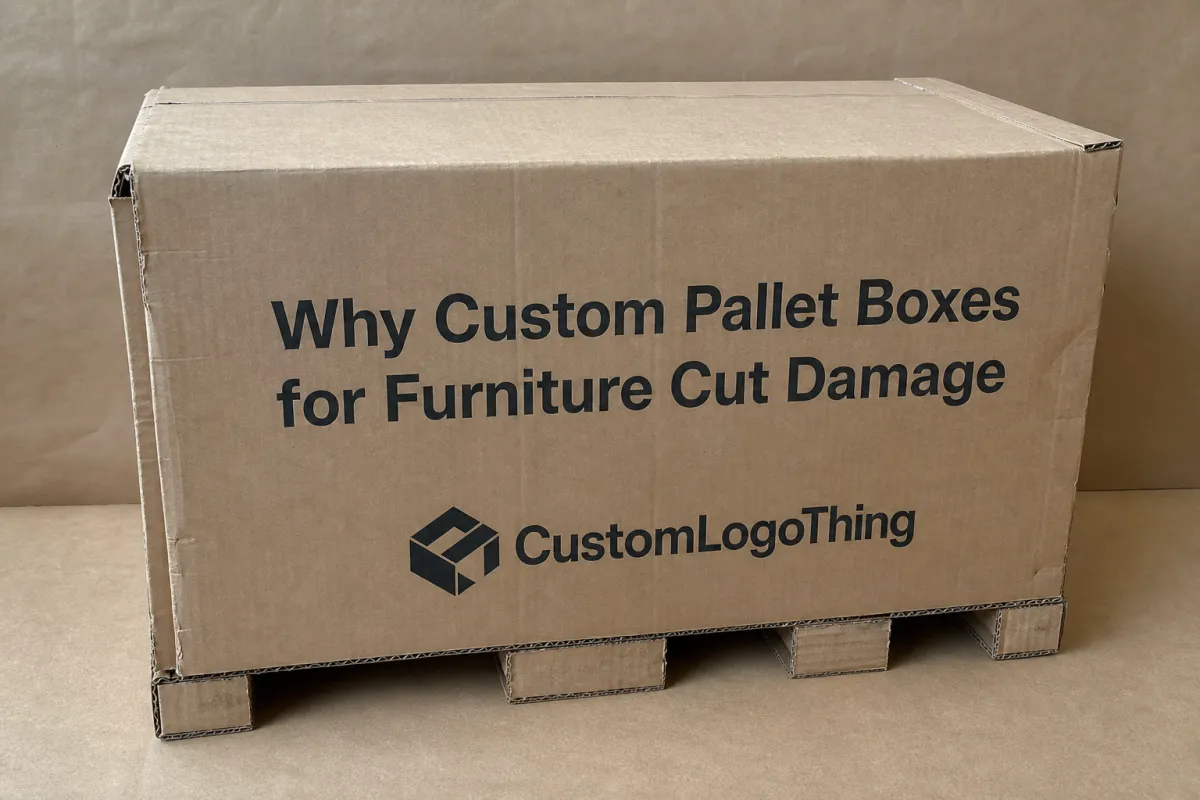
Think of custom pallet boxes for furniture as pallet-mounted shipping enclosures built around the real footprint, actual weight, and weak points of the product. Some are corrugated. Some are wood-based. Some combine a pallet base, fiberboard walls, lids, braces, and corner posts into one hybrid system. A generic carton leaves slack around the product. A custom build closes that gap so the furniture, the support structure, and the outer shell work together instead of fighting each other.
Furniture damage tends to concentrate in predictable places. Legs bend. Drawer fronts rub. Table corners take the hit when a fork enters too fast or a unit shifts from truck to dock. Upholstered arms and bases compress when vibration lets the load walk inside the package. A properly sized pallet box reduces those failure points by limiting internal travel and spreading force across stronger parts of the structure.
There is a quieter advantage that shows up after the first few shipments. Fewer claims usually mean fewer returns, less customer service time, less rework on the dock, and less inventory that can no longer be sold as new. Packaging becomes part of the operating system. A box that trims 2 inches off each side may look trivial until the truck is loaded. Across a full trailer, that can shift cube enough to matter. That is the unglamorous math behind effective custom pallet boxes for furniture: the savings often appear after the first damage report never gets written.
Sustainability fits naturally into that logic. Right-sizing reduces source material before anyone starts thinking about disposal. Matching board grade to the load avoids paying for fiber you do not need. Replacing loose fillers with formed supports cuts waste and simplifies recycling. The real environmental gain is not only in the carton count. It is in preventing the damaged product that would have needed to be remade, reshipped, and repackaged.
For fiber-based programs, sourcing still matters after the structural decision is made. If responsible fiber is part of your buying standard, look for FSC-certified board and components through FSC. Certification does not make a weak design strong, but it does support broader sustainability targets when the structure is already doing its job.
How Custom Pallet Boxes for Furniture Work in Transit
The full package matters more than any single layer. A furniture shipment usually starts with the pallet base, then gets interior blocking or supports, then receives wrap or surface protection, then closes with an outer box, sleeve, or crate-like shell, and finally gets locked down with straps, banding, staples, or reinforcements. Each layer has a job. When one layer tries to do three, the risk rises quickly.
The sequence usually looks like this:
- Pallet base: Carries the load and gives forklift access during the route.
- Interior supports: Hold legs, arms, rails, or panels off the walls so the product does not touch the shell.
- Surface protection: Film, foam, tissue, corrugated pads, or fabric covers keep finishes from rubbing.
- Outer enclosure: Corrugated walls or a wood-based frame contain the unit and resist stack pressure.
- Securing method: Straps, banding, and sometimes stretch wrap keep the load unitized.
That architecture helps in several different environments. Forklifts create sudden acceleration and impact. Linehaul vibration slowly loosens loose parts. Warehouse stacking adds compression, especially when shipments sit longer than planned. Last-mile delivery introduces another layer of risk because smaller crews and less specialized equipment often handle the final move. A strong pallet box is built for all of those stresses, not only the one test cycle a lab can reproduce in a few minutes.
Some designs function as a true enclosure. Others behave more like a heavy-duty pallet carton or crate hybrid. The distinction matters in practice more than it does in conversation. A full enclosure usually depends on corrugated walls and internal structure to form the shipping shell. A crate hybrid often uses a wood frame, corner posts, or a partial skin to create a stiffer perimeter for heavier or irregular pieces. Long items such as dining tables or headboards may need reinforcement along the length so the ends do not sag or twist during handling.
Geometry changes everything. Flat-pack furniture behaves differently from assembled furniture. A flat-pack cabinet may need less height but more control at the corners and more restraint across the panels. An upholstered chair may need breathable wrap and softer blocking to protect the finish. A mixed-material product with wood, glass, and metal trim often needs separate protection zones inside the same pack. Good packaging is not impressive because it looks complex. It is impressive because it fits the object closely enough that the route has less room to do damage.
Validation can help prove the fit. Many teams use ISTA-aligned protocols for palletized loads because the test has to reflect the trip, not just a generic drop from a fixed height. See the standards and test resources available through the International Safe Transit Association if you need to build a qualification plan around vibration, compression, and handling shock.
Key Factors That Shape the Design and Material Choice
Dimensions and weight distribution come first. A narrow cabinet with heavy drawers low in the frame behaves very differently from a long tabletop with weight spread evenly across its span. One has tipping risk and base stress. The other has deflection risk and corner damage. An upholstered piece may weigh less than its size suggests, yet its shape can make it harder to stabilize. That is why furniture logistics rarely benefits from one-size-fits-all retail packaging.
Board grade and wall construction are the next decisions that matter. Lighter furniture or lower-risk routes may do fine with a well-designed double-wall corrugated box. Heavier or more fragile items may need triple-wall board, reinforced edges, or a crate-style frame. Thickness alone does not decide performance. ECT rating, burst strength, flute profile, and panel span all shape how the package behaves under load. A 48 ECT double-wall board and a lower-rated single-wall structure with similar paper weight can perform in completely different ways.
Corner protection and internal blocking deserve more attention than they usually get. Corners take compression and impact at the same time. Edge protectors, molded inserts, corrugated posts, and shaped blocks keep the outer wall from absorbing all the force. Feet and legs also need isolation. If those contact points are allowed to punch through the base or rub against a wall, the shipment may arrive looking intact while the finish underneath tells another story.
Environmental conditions deserve a seat at the table, too. High humidity can weaken corrugated board during long storage or when a shipment sits at a cross-dock. Cold conditions can make some finishes brittle. Long routes increase vibration and handling transfers. If the furniture is built in one region and shipped through several distribution nodes, the pack should be designed for the roughest segment of the route, not the easiest one. That oversight is common, and the bill for it is rarely small.
Branding and sustainability often travel together, but they do not always move in the same direction. Clean outer print can reduce mix-ups and improve recognition. Consistent branding can also give direct-to-consumer furniture a more polished unboxing experience, which is now part of retail packaging strategy. Print coverage still needs to match the substrate. Heavy ink on the wrong board can hurt recyclability or make scuffs more visible. Premium presentation works best after the structure has already earned its place.
For buyers comparing options in the middle of the decision process, the table below gives a useful starting point. These figures are ballpark ranges, not fixed quotes. Region, volume, print, and insert complexity can move pricing noticeably.
| Option | Typical Use | Approx. Unit Cost | Protection Level | Main Tradeoff |
|---|---|---|---|---|
| Standard corrugated carton | Smaller furniture components, light flat-pack items | $2-$6 | Low to moderate | Lower price, but more void fill and higher movement risk |
| Custom pallet box | Mid-size to large furniture, palletized retail or DTC shipping | $8-$25 | Moderate to high | Better fit and handling, with higher setup and design effort |
| Wood crate | Heavy, oversized, or highly fragile furniture pieces | $25-$80+ | High to very high | Maximum rigidity, but more material, labor, and disposal burden |
That table leaves out a lot of nuance. A custom pallet box can move closer to crate-level protection if the structural pieces are chosen well. A crate can be overbuilt if the item is lighter than the spec assumes. Good product packaging is less about the label on the drawing and more about whether the structure matches the risk.
Process and Lead Time: From Spec Sheet to Production Steps
The development process should begin with a spec sheet, not a sketch. Gather packed dimensions, product weight, finish sensitivity, center of gravity, and handling requirements. Then add route details: domestic or export, truckload or parcel, warehouse stacking or direct-to-store, and whether humidity or long storage is part of the trip. If the furniture line includes multiple SKUs, note which dimensions vary and which stay fixed. That makes it easier to build a packaging family instead of a different design for every item.
After the brief comes the structural draft. A packaging engineer or converter will usually propose board grades, wall counts, pallet type, reinforcement points, and closing method. A small dimension change can alter the board size, die-line, or loading pattern. If branded packaging or printed markings are part of the plan, proofing adds another pass because the artwork has to fit the structure rather than fight it.
Sample approval is where lead time tends to stretch. A simple sample may be ready in a few days. A structural prototype with custom inserts or print can take longer, especially if fit testing leads to revisions. Many furniture programs should plan on 12-15 business days from approval to first production for straightforward builds, and longer if tooling, print, or specialized reinforcement is involved. Complex programs can run 3-5 weeks or more once sampling, revisions, and freight scheduling are factored in.
Production usually follows a familiar sequence:
- Material sourcing: Board, liners, adhesives, pallets, and any inserts are ordered or staged.
- Cutting and converting: Sheets are scored, die-cut, glued, or stitched to spec.
- Printing: Brand marks, handling icons, barcodes, and routing information are added if needed.
- Assembly: Panels, bases, and reinforcements are formed into ship-ready units.
- Packing and shipping: Finished packs are nested, palletized, and sent to the plant or fulfillment site.
Phased launches need planning as much as design. The first SKU may be simple, but the second or third may carry a different leg profile, a more delicate finish, or a different retail packaging requirement. Many teams start with one high-risk item, validate it, and then extend the same structure across a related product family. That approach tends to save time and keep quote churn under control.
If your team wants a broader starting point, review Custom Packaging Products to see how structural options can be matched to different furniture categories and handling needs.
Cost and Pricing: What Affects the Quote and Unit Cost
Price depends on more than board square footage. Dimensions are the obvious starting point because every added inch increases material use, cutting area, and freight volume. Board thickness, print coverage, inserts, reinforcement, and order volume can move the quote just as much. A larger unprinted pallet box can cost less than a smaller printed one if the printed version needs tighter tolerances, custom artwork, or more internal support.
MOQ, tooling, and prototype fees matter too. Some custom programs need a die-line setup or cutting tool, and that cost may land on the first order rather than hiding inside the unit price. Sampling can add expense if the design needs a revision after fit testing. Freight terms create another blind spot. A quote that looks lean can turn heavy once inbound freight, storage, or dock-side labor gets added in.
The more expensive mistake is choosing a cheaper box that pushes total landed cost higher. A weaker pack can raise freight class, slow packing speed, require extra labor, or trigger avoidable claims. If one damaged cabinet generates a replacement shipment, the packaging decision no longer looks minor. The right pack is not just a cost line. It is a way to control risk before risk has room to multiply.
Here is a practical way to compare common cost drivers:
| Cost Driver | What It Changes | Typical Effect on Quote |
|---|---|---|
| Box dimensions | Material usage, freight cube, tooling size | Often the largest direct cost factor |
| Board grade / wall count | Compression strength, puncture resistance, board cost | Moderate to high |
| Print coverage | Brand visibility, setup time, ink use | Low to moderate, higher with full-coverage graphics |
| Inserts and reinforcement | Movement control, assembly labor, protection level | Moderate |
| Order volume | Setup amortization, raw material buying power | Usually lowers unit cost as volume rises |
Teams under pressure to balance protection and budget need a better question than “What is the lowest unit price?” The useful question is “What is the lowest total cost per successful delivery?” Those are not the same number. A pack that costs $4 more per unit but prevents even a small number of claims can outperform the cheaper option by a wide margin.
This is also where sourcing strategy matters. A design built with recyclable fiber components and minimal excess material can support sustainability targets without sacrificing performance. If the board spec matches the route and the geometry is right, the box can be lighter, easier to flatten or recycle, and less wasteful overall. That is the practical argument for disciplined packaging design rather than decorative overbuild.
Common Mistakes When Ordering Furniture Pallet Packaging
The most common mistake is measuring the furniture instead of measuring the packed furniture. That sounds obvious, yet it still breaks a lot of programs. A cabinet that is 24 inches wide may need 27 or 28 inches once corner protection, wrap, clearance, and handling space are added. A table may fit on paper and still fail because the legs, not the top, define the actual shipping footprint. If the packaging brief ignores the protected dimensions, the pack ends up too tight or too loose.
Another mistake is over-specifying strength without checking the route. More board is not automatically better. If the item is moving a short domestic lane with controlled handling, oversized material can add cost without improving the outcome. If the item is going through multiple warehouse touches, underbuilt packaging can be far more expensive than the board savings. Route risk, storage time, and handling count should drive the spec.
Handling gets underestimated more often than it should. Furniture cartons are not always treated gently, and not every site has the same equipment. If the pack will be lifted by forklift, stacked, or stored in mixed warehouse conditions, the design needs compression resistance and clean entry points. A weak pallet base or poor wall bracing can make a good-looking package collapse at the dock. The failure may not show up until the first high-stack day.
Coordination failures can be just as costly. Procurement may chase price, operations may chase speed, and design may chase appearance. If those groups do not agree on packed dimensions and handling assumptions, approvals get rushed and the final structure can miss the product line entirely. That risk is especially high in retail packaging programs with frequent SKU changes or seasonal launches. The packaging calendar should move with the product calendar, not trail behind it.
Branding creates its own trap. Some teams add print before the structure is settled. That leads to rework if artwork has to move after a dimension change. Build the pack first. Then refine the branded packaging layer. Good package branding should sit on a structure that already performs.
The fastest way to overspend on furniture shipping is to design a package for the drawing, not the finished load.
Expert Tips and Next Steps for Custom Pallet Boxes for Furniture
Start with a short packaging brief. Include product dimensions, packed dimensions, weight, finish sensitivity, target order volume, shipping lanes, and any handling risks you already know. If the furniture line includes multiple SKUs, group them by geometry. A tight set of inputs helps the supplier recommend one structure for several items instead of building a separate spec for each one.
Test one high-risk SKU first. Real data on fit, movement, compression, and handling is more useful than another round of internal opinions. If the first build passes, the same logic can scale to similar pieces. If it fails, the correction is usually cheaper at prototype stage than after production starts. For furniture programs, a modest pilot order often teaches more than a stack of review meetings.
Ask for samples or a prototype and check them under realistic conditions. That means more than looking at the carton on a table. Stack it. Lift it. Tilt it. Measure clearances around the legs, corners, and base. If possible, simulate forklift access and dock handling. Compression and vibration issues usually show up there first. For higher-risk routes, structural testing aligned to relevant ISTA or ASTM methods is worth the time, especially when the item is expensive or fragile.
A few standards belong in the conversation. ASTM D642 is commonly used for compression testing, and ISTA protocols are often used for transit simulation. Those standards do not replace judgment, but they give buyers a repeatable way to compare candidate designs. For export programs that include wood bases or wood components, ISPM 15 treatment may also apply. That detail is easy to miss until customs paperwork or a receiving dock points it out. For sourcing and sustainability discussions, FSC certification can support responsible fiber selection, while source-reduction thinking helps cut excess material without weakening the load.
If you are planning a new furniture program, compare at least two material paths: one fiber-forward and one more rigid. In many cases, the fiber-based version wins on cost, recyclability, and speed. In other cases, a crate hybrid is the safer move because the product is too heavy, too irregular, or too valuable to risk. The goal is not to force one answer. The goal is to choose the simplest structure that survives the route.
A final checklist works well because it keeps the noise down:
- Measure the fully protected load, not just the furniture.
- Confirm weight distribution and center of gravity.
- Match board grade and reinforcement to the route risk.
- Check forklift access, stackability, and warehouse storage conditions.
- Review print, labeling, and recycling goals before production.
When those items are in place, custom pallet boxes for furniture usually pay for themselves through fewer claims, cleaner dock handling, and better truck utilization. That is the real buying case. Not a prettier pack. A better-moving one. For furniture teams trying to balance protection, cost, and sustainability, custom pallet boxes for furniture are often the packaging choice that makes the whole operation easier to run.
FAQ
What are custom pallet boxes for furniture used for?
They protect furniture during palletized shipping by controlling movement, impact, and stacking pressure. They are especially useful for large, awkward, or fragile pieces that do not fit standard cartons cleanly. They can also reduce dock labor because the load arrives in a format that is easier to handle and inspect.
How do I know if custom pallet boxes for furniture are better than a crate?
Choose a pallet box when you need enclosure, branding, or recyclable fiber-based packaging with less material than a full crate. Choose a crate when the product is exceptionally heavy, irregular, or needs maximum rigid protection. The best option usually depends on route risk, finish sensitivity, and whether the furniture will ship once or be reused.
What information do I need before requesting a quote?
Provide packed dimensions, product weight, SKU mix, finish sensitivity, and expected shipping method. Include volume targets, MOQ expectations, and whether you need printing, inserts, or reinforcement. Share any known handling issues, such as forklift loading, warehouse stacking, or long-distance transit.
How long does production usually take for custom pallet boxes for furniture?
Lead time depends on approval speed, material availability, and whether the design needs samples or structural testing. Simple builds move faster than complex, printed, or highly reinforced designs. If your launch is date-sensitive, build time for revisions and freight scheduling into the plan early.
Can custom pallet boxes for furniture support sustainable packaging goals?
Yes, if the design is right-sized and uses the minimum material needed to prevent damage. Fiber-based components, reusable elements, and reduced void fill can all improve sustainability results. The best box is usually the one that avoids product damage and keeps replacement shipments out of the supply chain.

