Buyer Fit Snapshot
| Best fit | packaging buyers who need clearer specs, stronger internal paths, and repeatable quote decisions where brand print, material, artwork control, and repeat-order consistency matter. |
|---|---|
| Quote inputs | Share finished size, material target, print colors, finish, packing count, annual reorder estimate, and delivery region. |
| Proofing check | Approve dieline scale, logo placement, barcode or warning zones, color tolerance, and any recyclable or compostable wording before bulk production. |
| Main risk | Vague material claims, crowded artwork, or missing packing details can create delays even when the unit price looks attractive. |
Fast answer: Recycled Pallet Corner Boards: Load Protection, Thickness, and Export Packing should be specified like a repeatable production item. The safest quote includes material, print method, finish, artwork proof, carton packing, and reorder notes in one written spec.
What to confirm before approving the packaging proof
Check the product dimensions against the actual filled item, not only the sales mockup. Ask for tolerance on folds, seals, hang holes, label areas, and retail display edges. If the package carries a logo, QR code, warning copy, or legal claim, reserve that space before decorative graphics fill the panel.
How to compare quotes without losing quality
Compare board or film grade, print process, finish, sampling route, tooling charges, carton quantity, and freight assumptions side by side. A lower quote is only useful if the supplier can repeat the same color, closure quality, and packing count on the next order.
Buyer Fit Snapshot
Use this page when warehouse teams need recycled pallet edge protection for strapped cartons, export shipments, or stacked retail displays.
| Decision point | What to specify before quoting |
|---|---|
| Material and construction | Substrate, thickness, coating, print coverage, finish, and tolerance requirements. |
| Order economics | MOQ, unit tiers, sample run, lead time, packing method, and freight assumptions. |
| Production control | Dieline, artwork proof, barcode or warning copy, QC checks, carton marks, and reorder plan. |
Custom Pallet Corner Boards: Sustainable Packaging Basics starts with a plain fact that gets missed in a lot of shipping audits: pallet damage usually begins at the edges. Not in the center. Not on the label panel. The corners take the hit, and that is why custom pallet corner boards keep showing up in shipping programs that are tired of crushed cartons, split edges, and damage claims traced back to a few inches of weak support. These are rigid edge protectors designed to reinforce corners, spread compression, and help loads stay square while they move through a warehouse, a cross-dock, or a trailer that shakes everything loose.
I have looked through enough claim photos to see the pattern repeat. A load leaves the plant looking fine, then comes back with one collapsed corner and a trail of secondary damage that looks far bigger than the original defect. That is not bad luck. It is structure. Or, more often, a lack of it.
The sustainability side is real, not decorative copy. Custom pallet corner boards can reduce rework, lower claims, and cut down on heavier packaging that creates more waste than protection. They also push back against the fantasy that one size fits every pallet. Load height, carton strength, stack pressure, wrap tension, and route conditions all change the answer. Spec them badly and they become expensive fiber. Spec them well and they disappear into the system, which is exactly what good packaging should do.
Buyers comparing custom pallet corner boards with other protection options usually ask the wrong question first. The better question is not whether the shipment needs more protection. It is where the load is failing and what the lightest fix is that actually stops the failure. That is a structural decision, not a guess. The sections below cover fit, price, process, and the mistakes that make teams buy too much protection for the wrong problem.
"A board is cheap until a crushed corner turns into a return, a repack, and a phone call nobody wanted."
Custom pallet corner boards: the cheap fix hiding in plain sight
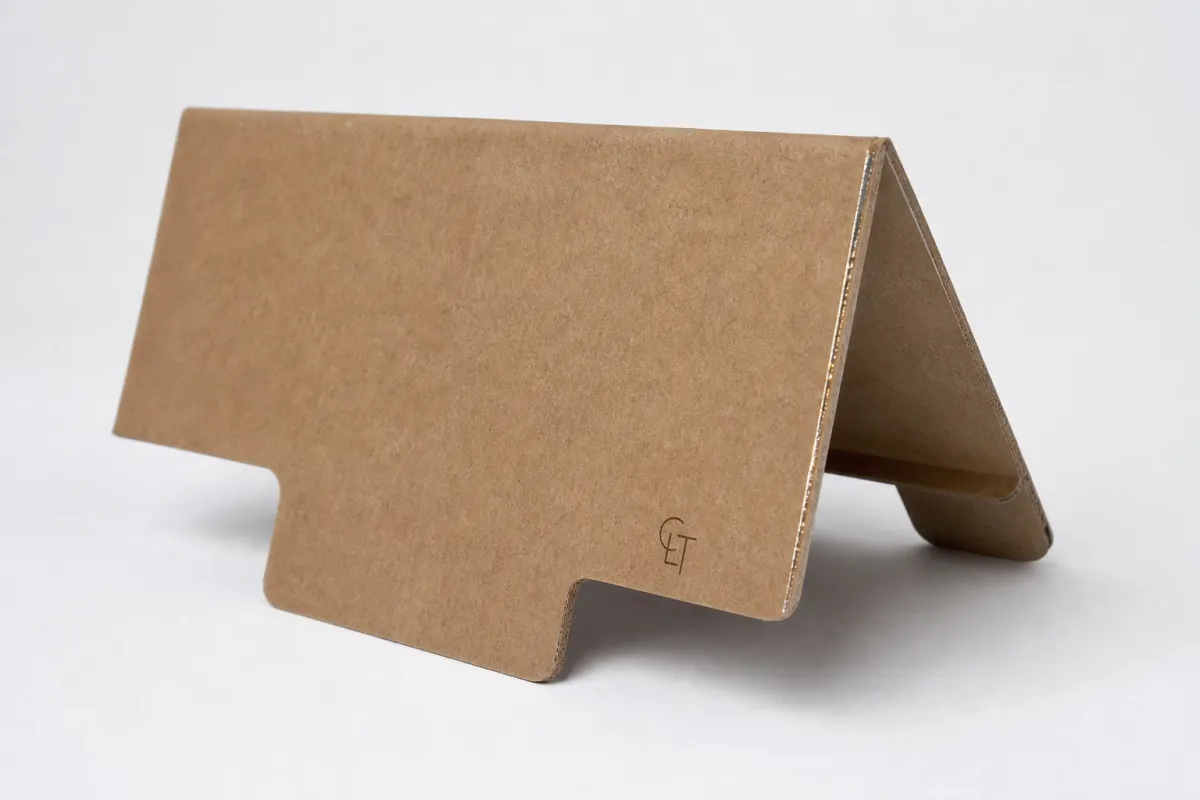
Custom pallet corner boards sound minor because they are small next to the pallet itself. That is exactly why they get underestimated. Loads rarely fail in the middle. Failure shows up where wrap tension, carton edges, and compression pressure meet at the corners. Once one corner folds, the rest of the stack starts to drift, and people begin blaming the stretch wrap when the real issue is missing structural support.
Put simply, these boards are rigid edge protectors that run along the vertical corners of a palletized load. Their job is to spread force over a wider area so one weak carton is not carrying all of the pressure. In a shipping lane, that means fewer crushed corners, less bulging, and fewer cartons that arrive looking like they were dropped off the dock instead of shipped.
Custom pallet corner boards belong in sustainable packaging because they can replace some of the blunt-force fixes people reach for first. Extra wrap is not always the answer. More foam is not always the answer. Heavier wood bracing is almost never the quiet, elegant answer people hope it is. A well-built board can reduce damage while keeping the packout easier to recycle and simpler to sort. No drama. Just smarter load control.
Packaging buyers get into trouble when they assume every lane needs the same spec. A short regional route with light stacking pressure behaves differently from export freight, long dwell times, or a lane where pallets sit under pressure for days. Custom pallet corner boards should follow the load, not the company instinct to overprotect everything. That instinct is common, and it is expensive.
Here is the blunt version: the lowest quote on paper is often the most expensive board after claims, labor, and replacements. The right board usually performs at the lowest usable thickness and weight. That is where value lives. Not in the cheapest line item.
- Compression control: helps keep top-to-bottom pressure from crushing edge cartons.
- Load stability: gives stretch wrap and straps a firm edge to hold against.
- Damage reduction: cuts scuffing, corner splits, and shifted layers in transit.
- Sustainability: can reduce rework and avoid heavier packaging materials.
If your team already uses branded packaging, retail packaging, or custom printed boxes elsewhere in the supply chain, the logic is the same. Packaging works best when each part solves one problem cleanly. Custom pallet corner boards solve edge failure. They are not there to decorate the load. They are there to keep the load from failing in the first place.
How custom pallet corner boards work on real pallet loads
The mechanics are simple. Custom pallet corner boards create a stiff vertical edge so the load does not collapse at a few weak points. Instead of letting cartons absorb all the pressure where the wrap pulls hardest, the board spreads that force across a taller section of the stack. That matters because carton corners are usually the first place compression damage shows up.
They also change how stretch wrap behaves. Wrap alone can cinch a load inward and create pressure where the carton is weakest. Add custom pallet corner boards, and the wrap has something solid to work against. The result is usually less bulging, less leaning, and fewer surprises after a rough road or a forklift nudge. Nothing flashy. Just physics doing less damage.
There are a few common formats:
- Short corner pieces: used where the load only needs edge reinforcement near the top or bottom.
- Full-height corners: run the full loaded height for tall or fragile stacks.
- L-shaped profiles: add rigidity on two faces of the load, not just one.
- Multi-layer boards: built for heavier compression or rougher handling.
Custom pallet corner boards can replace a protection part, or they can reinforce an existing system. On some lanes, they take the place of wood bracing, excess wrap, or awkward add-on protection that never really fixed the problem. On other lanes, they work beside those materials and make the whole packout hold together better. The answer depends on the product, carton strength, and shipping profile. Packaging rarely rewards guesswork.
Shipping reality matters more than spec sheets like to admit. Vibration can loosen a stack over time. Forklift handling can strike the lower corners. Humidity can soften paper cartons and weaken edge strength. Long transit times under load pressure can create creep, where a carton slowly deforms even when it looked fine at departure. Custom pallet corner boards are doing a structural job, so they need to be chosen with those conditions in mind.
Teams that want a technical check often use transit testing tied to ISTA methods and compression assumptions drawn from ASTM-style testing. That is not packaging jargon for its own sake. It is how you keep a nice-looking sample from fooling you. A board can look perfect on a bench and still fail after vibration, handling, heat, and dwell time. For a starting point on shipping and transit testing, ISTA publishes useful guidance at ISTA testing standards.
Key factors that decide strength, sustainability, and fit
Custom pallet corner boards are usually made from paper-based fiberboard, yet the build can vary a lot. Recycled fiber content, corrugated structure, board thickness, and layer count all change performance. A light retail load does not need the same edge protection as a tall industrial stack with high compression stress. That sounds obvious. Buyers still over-spec this part constantly, and then wonder why the lane costs more than it should.
The load itself is the real starting point. Total weight matters, but so do stack height, carton rigidity, pallet footprint, and whether the freight is hand handled or machine handled. A 40-pound box with weak top flaps may need more help than a sturdier 80-pound carton. Custom pallet corner boards should follow the load, not the product category label.
There is also an environmental tradeoff that gets flattened too often. More material can mean more protection, but more material also means more fiber use, more shipping weight, and more waste if the spec is oversized. Sustainable packaging is not only about recycled content. It is about using the right amount of material so the shipment survives without dragging extra bulk through the system. That is a pretty practical definition, and it holds up better than marketing language.
From an engineering point of view, it helps to separate stiffness from crush resistance. A board can feel firm in the hand and still buckle under a top-heavy stack. Conversely, a board with good edgewise compression strength may feel less dramatic but perform better where it matters. That difference is why a sample should be tested under load, not admired on a desk.
If you are comparing options against other packaging systems, think like a packaging design team. Custom printed boxes may add brand value at the unit level, while custom pallet corner boards protect the load in transit. Product packaging and package branding solve different problems. Mixing them up is how buyers end up paying for visual polish when they really needed structural control.
Compatibility matters too. If the board blocks stretch wrap, interferes with top caps, jams an automated line, or makes pallet jack entry awkward, the spec is wrong no matter how sustainable it sounds. The best custom pallet corner boards work with the rest of the packout, not against it. That may sound basic, but basic gets skipped all the time.
Here is a practical sustainability lens buyers can use:
- Use recycled fiber where the lane allows it.
- Choose the lightest board that passes real testing.
- Avoid overspecifying thickness "just in case."
- Check whether the board helps replace heavier materials.
- Confirm the design still recycles cleanly in your region.
The EPA has useful public guidance on recycling and source reduction if you want a broader context for material decisions. For teams balancing fiber use with waste reduction, the general direction is simple: use less material where it does not hurt performance. A good place to start is the EPA's recycling resources at EPA recycling guidance.
Custom pallet corner boards cost, pricing, MOQ, and quote basics
Custom pallet corner boards are priced by more than one variable, and that is where buyers get tripped up. Material grade, dimensions, board thickness, print, die cuts, quantity, freight, and finishing all affect the quote. A 48-inch unprinted board is not priced the same way as a 96-inch reinforced profile with branding and special cuts. Anyone who says otherwise is probably not looking at the actual build.
MOQ matters because setup costs get spread across the run. Small orders carry a higher per-unit price, while larger orders pull that number down fast. For planning, here are common volume-based ranges buyers often see for paper-based custom pallet corner boards:
| Option | Typical use | Indicative unit cost | Strength level | Best fit |
|---|---|---|---|---|
| Light-duty recycled fiber board | Short regional lanes, lighter cartons | $0.10-$0.18 each in volume | Low to moderate | Retail packaging programs, low-stack pressure |
| Mid-weight reinforced board | Mixed freight, taller pallet stacks | $0.18-$0.35 each in volume | Moderate to high | Most standard shipping lanes |
| Heavy-duty multi-layer board | Rough handling, export, or high compression | $0.30-$0.55+ each in volume | High | Fragile product packaging, long dwell times |
| Printed or branded version | Handling marks, package branding, SKU control | Adds $0.03-$0.12 depending on coverage | Varies by build | Programs that need identification or visual control |
Those figures are not a promise. They are a useful range so you can stop comparing unrelated quotes as if they were equivalent. A clean comparison means the same dimensions, the same material, the same print, and the same freight term. Without that, you are comparing apples to a fruit salad.
For one-off pilot runs, tooling and setup can dominate the first invoice. After that, the unit price settles into a more normal pattern. That is why a cheap sample can be misleading. It may not include the actual cost structure of a production order.
If you need a wider packaging system, our Custom Packaging Products page is a helpful place to see how corner boards fit beside wraps, dividers, and other load-control pieces. That matters because load protection is rarely one part. It is usually a system problem wearing a single damaged corner.
To get a useful quote, send these details up front:
- Pallet footprint: 40 x 48, 42 x 42, or whatever you actually ship.
- Loaded height: the real stacked height, not the pallet height alone.
- Load weight: total shipment weight and any heavy top layers.
- Board length target: full-height, partial-height, or mixed.
- Quantity: monthly usage or trial run volume.
- Destination: warehouse ZIP, regional lane, or export route.
- Requirements: recycled content, print, FSC sourcing, or handling marks.
Cheap is not always value. If underbuilt custom pallet corner boards fail once, the replacement cost can erase every penny saved on unit price. Add labor, damage claims, repacking, and missed delivery windows, and the "cheap" option gets expensive fast.
Custom pallet corner boards process and timeline: from sample to ship
The process is not complicated, but it works better when buyers arrive prepared. A typical custom pallet corner boards project starts with discovery, where you share dimensions, damage history, and the shipping conditions that matter. After that comes sampling or a prototype, then approval, then production, then quality check, then freight coordination. Boring? Yes. Useful? Absolutely. Boring is what good packaging looks like once it starts doing its job.
Lead time depends on how custom the job really is. Stock material runs move faster. Custom sizes, printed layouts, die cuts, and special finishing add time. A straightforward run might move in 7-12 business days after approval, while more specialized custom pallet corner boards often need 12-18 business days or longer if the schedule is tight. That is normal. Trouble starts when someone changes the spec three times and still wants a rush. At that point, the timeline is gonna slip no matter how hard anyone tries.
If you want the process to move faster, send useful information before asking for samples. Photos of the load are better than vague descriptions. Carton specs are better than "it's kind of fragile." Pallet dimensions matter, and so does the way the load behaves under wrap tension. If you have damage examples, send those too. They tell the story faster than a meeting does.
Sampling is where a lot of programs stall. One reason is that people think a sample proves the whole project. It does not. The sample proves a size range and a build concept. After that, you still need to check whether the board fits the actual load, the wrap process, the warehouse handling, and the receiver's rules. Custom pallet corner boards only matter if they survive the real environment.
I have seen teams approve a sample because it looked clean, then discover the board was a hair too short for the real compression zone. It is a small miss until the first trailer hits a rough patch and the cartons start leaning. That is why field validation matters more than a pretty prototype.
That is also why a pilot on one lane makes sense. If damage is concentrated on a single shipping lane, fix that lane first before rolling the spec across the whole company. Otherwise the team spends weeks on a broad rollout while the actual problem keeps producing returns in the background.
A clean pilot usually looks like this:
- Pick one SKU or shipping lane with clear damage history.
- Test two or three custom pallet corner boards sizes side by side.
- Measure damage rate, labor time, and material use.
- Review what happened in warehouse handling and transit.
- Lock the spec only after the results are boringly consistent.
That is the kind of process that supports real packaging design, not just a prettier supply sheet. It also keeps branded packaging decisions separate from structural decisions. A product can look excellent and still ship badly. Pretty is not a load-bearing feature.
Common mistakes that make corner boards underperform
The most common mistake is measuring the pallet footprint and forgetting the actual load height. Custom pallet corner boards need to fit the stacked product, not just the wood underneath it. A board that stops short of the compression zone will not do much. A board that is too tall can interfere with wrap and top caps. Simple mistake, expensive result.
Another problem is choosing a board that is too light for the compression load. That leads to crushed cartons and edge collapse. The reverse happens too: people overbuild the board because they are nervous, then pay for extra fiber and cost the lane never needed. In packaging, fear is a weak design principle.
Humidity and temperature swings deserve more attention than they usually get. Paper-based protection still has limits. If a load sits in a damp dock area or ships through a climate with large swings, the board spec may need more stiffness or a different construction. Custom pallet corner boards are not immune to the environment just because they are made from fiber. They get softer, or at least less predictable, when the lane gets ugly.
Wrap and strap compatibility is another easy miss. The board has to work with the rest of the packout. If the wrap slides off, the straps cut in too sharply, or the corners block machine application, the whole system becomes less effective. That is why packaging design matters. The board is only one piece of the shipment.
Skipping real-world testing is the most expensive mistake of all. A warehouse test and a short transit trial will tell you more than a polished spec sheet ever will. I would rather see three good sample loads and one ugly failure mode than a nice brochure and a guess. Custom pallet corner boards earn their keep in the real lane, not on paper.
Common underperformance signs include:
- Corner crush: cartons deform where wrap tension is highest.
- Load lean: the stack shifts after vibration or handling.
- Wrap bite: the board cuts too sharply into the carton edge.
- Moisture softening: the board loses stiffness before arrival.
- Mismatch with automation: the load jams or misfeeds on equipment.
If you see any of those, the answer is usually not to buy more board. The answer is to fix the spec. That is the step people skip because it feels slower than ordering a thicker version. It is slower. It is also cheaper.
Expert tips and next steps for custom pallet corner boards
Start with one problematic SKU or lane. Not the whole product line. Not the company's most famous item just because everyone recognizes it. Custom pallet corner boards should be validated where the pain is real and measurable. That gives you cleaner data and fewer internal arguments, which is a rare gift in packaging operations.
Ask for a few samples in the exact sizes you are considering, then compare edge performance, stack stability, and wrap behavior side by side. If one size survives compression but creates handling problems, that is still a bad fit. The best board is the one that protects the load without creating new issues. A low bar, yet somehow not always met.
Build a simple spec sheet that includes dimensions, load weight, carton material, sustainability goals, and whether the boards need print or handling marks. If you need branding or SKU identification, keep it practical. A small printed note can help with package branding and warehouse control, but heavy print coverage may not add real value. The board is there to protect product packaging, not to win a design award.
For teams already buying other packaging parts, this is the moment to align the system. Maybe the lane needs stronger stretch wrap, a top cap, or a different box style upstream. Maybe the load is too fragile and should move into better palletization before you ask custom pallet corner boards to carry all the work. Good packaging systems do not rely on one hero product. They use the right mix.
A useful next step is a warehouse trial with clear numbers attached. Track damage rates, labor time, and material use before and after the change. If the boards reduce rework and failures, the business case will write itself. If they do not, you learned something before committing to a full run, which is what a pilot is supposed to do.
If you are still deciding whether to start, do the practical thing: measure the load, photograph the problem, request a quote, and test custom pallet corner boards on the lane where the damage actually happens. That is the shortest path to a better spec, and it is usually cheaper than arguing about it for another month.
Custom pallet corner boards work best when they are sized to the real load, matched to the actual damage pattern, and priced against the cost of failure instead of a fantasy unit number. Get the fit right, and they become one of the simplest sustainable packaging upgrades you can make. Get them wrong, and they are just another box of fiber taking up space.
The practical takeaway is simple: measure the tallest loaded pallet, capture one or two photos of the failure point, and test two custom pallet corner boards profiles on the worst lane Before You Order volume. If the sample fixes corner crush without slowing wrap or handling, you have a spec worth scaling. If it does not, the problem is not the board price. It is the design.
Frequently asked questions
What are custom pallet corner boards used for?
They reinforce pallet edges so cartons resist compression, shifting, and scuffing during storage and transit. Custom pallet corner boards work best on tall, layered, or fragile loads where wrap tension and stacking pressure can crush the outer cartons. They are also useful when you want less product damage without moving to heavier packaging materials.
How do custom pallet corner boards compare with wood protectors?
Paper-based corner boards are usually lighter, easier to recycle, and better aligned with fiber-based packaging systems. Wood can handle abuse, but it adds weight, cost, and disposal headaches that many shipping teams do not need. The better choice depends on load weight, moisture exposure, handling abuse, and the customer's sustainability rules. In dry, controlled lanes, paper-based boards often make more sense; in wet or extremely rough lanes, wood may still win.
What size custom pallet corner boards do I need?
Use the real loaded pallet height, not the pallet footprint alone, when deciding length. Match board thickness and profile to carton strength, stack pressure, and whether the load will be wrapped or strapped. If you are unsure, start with two or three sample sizes and test them on the worst-case lane before placing a larger order. One thing that trips people up: a board that fits the pallet does not automatically fit the product stack.
What affects custom pallet corner boards pricing?
Pricing changes with board grade, size, thickness, print, quantity, and freight distance. MOQ matters because setup costs get spread across the run, so smaller orders usually have higher unit cost. The fastest way to get a clean quote is to share dimensions, quantity, shipping destination, and timeline up front. If you can include a photo of the load, even better.
How long does a custom pallet corner boards order take?
Stock material jobs can move quickly, while fully custom sizes, print, or special finishing add lead time. Sampling and approval usually take the longest when measurements are unclear or the load has not been tested yet. If timing matters, ask for a realistic timeline before approving the spec so production and freight do not get squeezed. A good supplier should give you a range, not a fantasy date.
Are custom pallet corner boards recyclable?
Most paper-based versions are recyclable if they are not heavily coated, laminated, or contaminated with tape, adhesive, or moisture. Local recycling rules still matter, so it is worth confirming how your region handles mixed paper grades. If recycling is a priority, ask for construction details before you approve the build. That keeps the sustainability claim honest instead of kinda optimistic.


