Custom Paper Bags for trade show merch look like a small line item on a budget sheet, then quietly do three jobs at once on the show floor. They carry the handout bundle. They protect the contents from scuffs, bent corners, and awkward spillover. And they keep the brand moving after the pitch is over, which is usually when the real memory starts to stick. A well-built bag can make a brochure stack feel intentional instead of thrown together. It can make a shirt, bottle, or sample kit feel like a package, not a handful of freebies. That is why custom paper bags for trade show merch tend to outlast the booth conversation.
Too many teams treat Custom Paper Bags for trade show merch like an afterthought, then wonder why the giveaway falls flat. The bag is not just another piece of branded packaging. It is a carrier, a shield, and a visible cue that says the company planned ahead. Sized correctly, it pushes the merch closer to product packaging than promo clutter. Sized badly, it makes a polished offer look rushed. The difference shows up fast in a crowded hall, where people are scanning, walking, and deciding whether you look worth their time.
The best Custom Paper Bags for trade show merch do three things at once: they speed up the handoff, keep the contents tidy, and keep the brand visible while the attendee walks away. They also fit inside a wider package branding system that may include Custom Packaging Products, custom printed boxes, and other pieces of retail packaging that should feel related. If the bag feels random, the merch feels random too. If the bag feels considered, the whole booth reads sharper.
For brands that use trade shows as a real lead channel, custom paper bags for trade show merch are not decoration. They are a small production choice with a big effect on perceived value, booth memory, and post-event reuse. That is the lens worth using before the order goes out.
What Custom Paper Bags for Trade Show Merch Actually Do
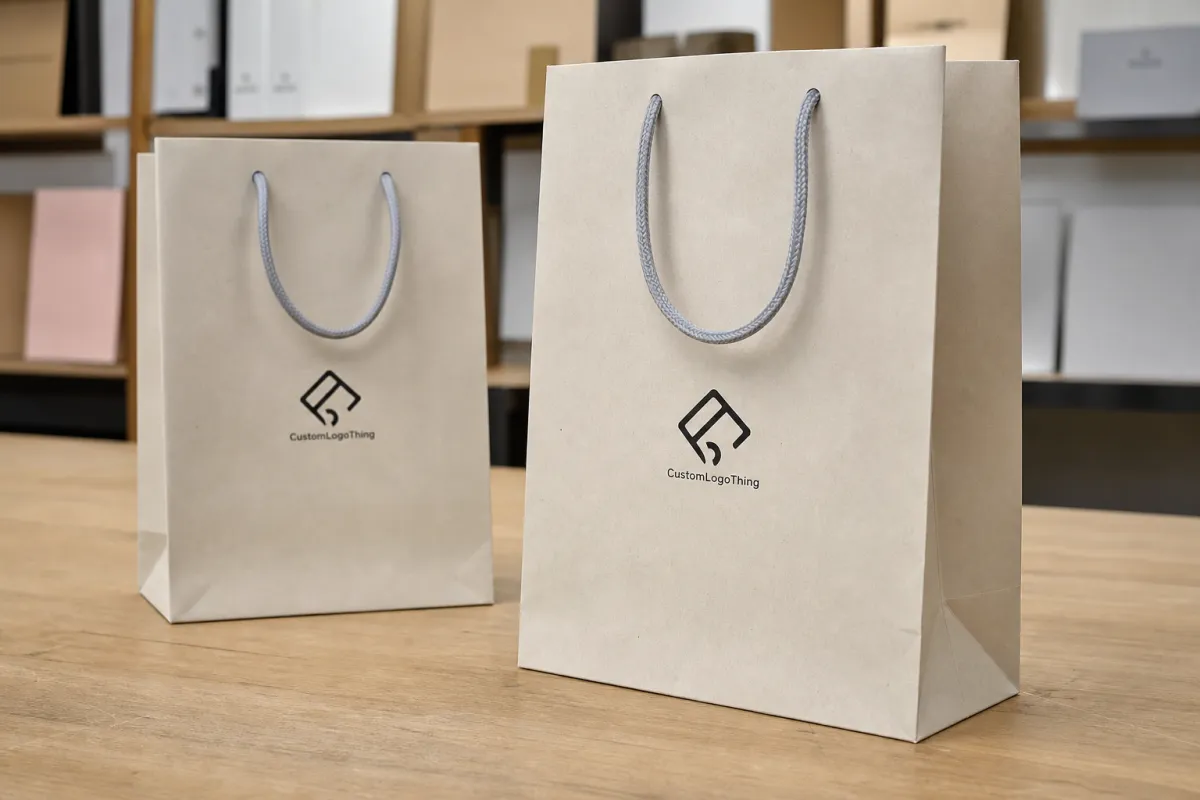
The simplest way to understand custom paper bags for trade show merch is to ask what the attendee carries once the conversation ends. Not the banner stand. Not the tabletop display. The bag. In a dense exhibit hall, that bag often becomes the only moving piece of the brand that stays visible after the handshake. That matters more than many teams want to admit.
Custom paper bags for trade show merch hold more than objects. They protect samples from getting crushed, keep brochures from curling, and turn apparel, bottles, notebooks, or flyers into one curated bundle. People read quality through the container. A sturdy bag can make a modest handout feel deliberate. A flimsy one can make a strong offer feel cheap. In packaging terms, the bag sets the first expectation and the last impression.
Before a supplier can quote the job, a few decisions need to be locked down:
- Paper stock - kraft, coated paper, or heavier art paper depending on load and finish.
- Size - based on the actual merch bundle, not a rough guess.
- Handle style - paper twist, rope, ribbon, or die-cut.
- Reinforcement - bottom board, top fold, or handle patch for heavier contents.
- Print coverage - one-color logo, full wrap, pattern, or message panel.
- Finish - matte, gloss, soft-touch, or natural uncoated look.
Those details look ordinary on a spec sheet. They stop looking ordinary once the bag is in a trade show aisle. Custom paper bags for trade show merch need to handle repeated carrying, heavier inserts, and far more brand exposure than a typical retail takeaway bag. Retail packaging is judged on a shelf. Trade show packaging is judged while people are moving, talking, and scanning the room under pretty unforgiving lighting. Different test, different result.
Think of the bag as one part of a larger product packaging system. Booth graphics, a display box, a folder, and a follow-up mailer all play a role. The bag is the piece that ties the handoff together on site. Too small, and the bundle looks cramped. Too large, and the contents slide around until the giveaway feels thin. With custom paper bags for trade show merch, fit is not a refinement. It is the difference between polished and awkward.
There is a tendency to over-focus on graphics and under-focus on structure. A bag can look beautiful and still fail at the handle. Once that happens, the memory shifts. The cleanest design in the hall will not compensate for a tear on the way to the elevator. A structurally honest bag, even a restrained one, usually performs better than a loud bag that cannot survive a full day on the floor. That is where custom paper bags for trade show merch earn their keep.
The bag also has a memory function. The attendee may set it on a desk, reuse it at the office, or carry it again at another event the next day. That reuse stretches the life of custom paper bags for trade show merch beyond the booth conversation. The bag keeps talking after the sales rep has moved on, which is a nice little marketing trick if the build quality is there.
How Custom Paper Bags for Trade Show Merch Work at a Booth
Picture the booth flow in real time. Someone stops, asks a question, gets a demo, then leaves with a bundle of materials. A staffer places those items into custom paper bags for trade show merch, and the attendee walks off with a visible brand in hand. That carry time is where the bag pays for itself. It is packaging, yes, but it is also a portable billboard that moves through the hall on someone else's route.
The handoff should support the conversation instead of interrupting it. When the bag is the right size and the handle feels comfortable, staff can move the line faster and spend less time folding or stuffing items by hand. Those seconds disappear quickly when the booth gets busy. A trade show line does not behave like a retail checkout. People drift. They ask one more question. They glance at the neighboring booth. Small conveniences matter more than teams expect.
Print design changes how the bag performs during that walk away from the booth. Minimal logo placement works well if the brand already has recognition or if the hall is visually crowded. A full-color wrap fits launches and seasonal campaigns. A subtle pattern can stay visible without turning the bag into noise. For custom paper bags for trade show merch, the strongest design is usually the one a person can identify from three to six feet away. That is the real viewing distance in a show hall.
Shape matters just as much. A tall, narrow bag suits apparel and catalogs. A wider bag helps with flat samples and boxed sets. Fragile items, bottles, or layered inserts need a bottom board and gusset depth that match the load. I have seen teams approve a stylish size in a mockup, then discover onsite that every brochure pack had to be forced into the opening. The print was not the problem. The geometry was. Custom paper bags for trade show merch live or die on geometry.
Handle style changes the experience more than many buyers expect. Paper twist handles are standard and usually fine for lighter contents. Rope handles feel sturdier and a bit more premium, which helps when the bag carries apparel or a dense sample bundle. Die-cut handles create a clean look, but they are not always the best answer for weight. If the bag has to survive a long walk back to a hotel or across a convention center, the handle choice should be driven by comfort and strength first. That is especially true for custom paper bags for trade show merch that may be reused after the event.
The bag also sends a signal about the merch itself. A strong bag says the contents are worth keeping. A generic bag says the order was rushed. That signal is louder than it looks on paper. For brands investing in custom paper bags for trade show merch, the bag often sits inside a wider system that includes package branding, printed inserts, and sometimes Custom Printed Boxes for VIP kits or mailed follow-ups.
A simple rule helps: the bag should make the merch easier to carry, easier to remember, and easier to reuse. If it only does one of those things, the design is incomplete. Custom paper bags for trade show merch work best when the physical job and the marketing job are solved together.
"A bag that survives the aisle gets remembered. A bag that tears in the first five minutes gets remembered for the wrong reason."
For teams comparing packaging formats, it helps to think of the bag as one choice in a broader set of branded packaging options. Some trade show kits want a bag. Some want a box with an insert. The right answer is the one that fits the job, not the one that is easiest to order. That is where custom paper bags for trade show merch tend to beat generic retail carry bags: they are made for a specific use case.
The message should line up with the rest of the booth. Graphics, handout cards, and custom paper bags for trade show merch should feel like they came from the same brand system. Mixed signals cost money. Clear signals stick.
Cost, MOQ, and Quote Factors for Custom Paper Bags for Trade Show Merch
Pricing for custom paper bags for trade show merch comes down to a handful of concrete variables, and the faster buyers name them, the fewer surprises they face. Size comes first. Paper weight follows. Then print colors, finish, handle type, and reinforcement. A larger bag with a heavier stock and a printed interior will cost more than a plain kraft bag with a one-color logo. The part that trips people up is not the formula. It is the number of small choices hiding inside the formula.
Quantity changes the unit cost sharply because setup, plates, dielines, and press time get spread across the run. Someone ordering 1,000 custom paper bags for trade show merch will usually pay far more per unit than someone ordering 5,000 with nearly identical specs. The press still needs to be set up. The machine does not care that the show is small. Teams that attend several events in a year often save money by bundling the forecast into one order instead of placing separate runs. That is not glamorous, but it works.
Minimum order quantity, or MOQ, is usually a production floor, not a sales trick. Small runs carry the same setup burden as larger ones. For custom paper bags for trade show merch, the better question is not, "What is the smallest run available?" It is, "What quantity makes sense across the event calendar and the budget?" If the same bag can cover three shows, the math often improves enough to justify the larger lot.
A good quote should show more than the bag price. It should separate artwork prep, proofing, production, packaging, freight, and any rush fees. If those numbers are missing, the estimate is incomplete. Freight can matter a lot for custom paper bags for trade show merch because the cartons are bulky even when the bags themselves are light. Shipping to one receiving dock is almost always cleaner than sending cartons to several event locations. Multi-stop freight gets messy fast, and nobody has time for that during show week.
| Option | Typical Specs | Typical Unit Cost at 5,000 | Best Fit | Tradeoffs |
|---|---|---|---|---|
| Simple kraft bag | Natural kraft, one-color print, paper twist handles, light reinforcement | $0.42-$0.78 | Brochures, flat handouts, low-weight merch | Lower perceived premium value, limited print impact |
| Mid-tier printed bag | 200-250 gsm paper, full-color outside print, rope handles, bottom board | $0.88-$1.65 | Mixed merch kits, apparel, standard show giveaways | Higher setup cost, more art precision required |
| Premium laminated bag | Heavier stock, soft-touch or gloss finish, reinforced handles, specialty trim | $1.75-$3.20 | VIP kits, executive giveaways, press moments | Higher budget, less forgiving on timeline and freight |
These numbers are ranges, not promises. They move with region, paper market conditions, print coverage, and shipping distance. Even so, they help anchor the conversation. For custom paper bags for trade show merch, a buyer can quickly see whether the goal sits near the low end or moves toward a premium presentation. That cuts through vague discussion fast.
Some cost traps show up over and over. Oversized bags waste paper and freight. Late artwork revisions create reproof charges. Shipping to multiple event sites turns a clean quote into a headache. Dense merch that needs extra reinforcement should be specified before the order is placed, not after a sample tears in the hall. The better the brief, the tighter the price. That is especially true for custom paper bags for trade show merch.
If you want a wider view of packaging terms, print methods, and materials, packaging.org is a useful reference point. Trade show buyers often compare bags with retail packaging, shipper cartons, and product packaging in the same campaign, so consistent language helps when bids are reviewed.
Three details should be on the table before anyone approves the quote: the exact paper spec, the final printed dimensions, and a freight estimate to the correct receiving point. Once those are clear, custom paper bags for trade show merch are much easier to budget and much less likely to surprise you later.
Production Process and Timeline for Trade Show Bags
The production path for custom paper bags for trade show merch is usually predictable: brief, specs, dieline selection, artwork, proof approval, manufacturing, packing, transit, and receiving. The sequence matters because a delay at the front end tends to become a shipping problem at the back end. A trade show date does not move. The schedule has to work backward from move-in day.
The brief should include the final dimensions, the merch weight, the print intent, the ship-to address, and the event date. That may feel like a lot, but it prevents the most common mistakes. If the supplier knows the actual load, they can recommend the right stock. If they know the event date, they can say whether the timeline is realistic. For custom paper bags for trade show merch, vague inputs almost always produce vague answers.
Proof approval is the checkpoint that matters most. That is where teams catch artwork cutoffs, handle placement issues, and sizing errors before anything is printed. After production begins, fixes become slower and more expensive. I would rather spend ten extra minutes on a proof than spend two days explaining why a logo sits too close to a fold. That is not perfectionism. It is risk control. The same logic applies to custom paper bags for trade show merch as it does to larger branded packaging projects.
Lead times depend on quantity and complexity, but a straightforward run often lands around 12-15 business days after proof approval, plus freight. Specialty finishes, unusual handles, or large quantities can stretch that window. Rush orders can happen, though they usually cost more because they compress proofing and production. A fixed event date only stays calm when the order is placed early. That matters even more for custom paper bags for trade show merch, where shipping can become the longest part of the timeline.
Transit deserves more attention than it usually gets. A bag may be light, but cartons of bags take space. If the shipment includes inserts or other items, the cartons need to be packed so they hold their shape. For larger programs, it can make sense to ask whether the cartons should follow ISTA practices for transit protection. That is not overkill if the event matters and the contents are fragile.
The receiving instructions can make or break the delivery. Trade show venues, general contractors, and hotel docks each have different rules. A perfect run of custom paper bags for trade show merch can still arrive in the wrong place if the labels are unclear or the delivery window is missed. The logistics plan should name the carrier, the receiving contact, the delivery window, and any dock restrictions. Good bags can still suffer from bad logistics.
One internal checkpoint helps before final approval: confirm that the merch kit, the bag size, and the carton count all match. If the bag is supposed to hold a shirt, a booklet, and a bottle, test that combination with a sample or on paper first. That single check can save a lot of money. Brands use the same logic when building product packaging solutions for launches. Physical fit is not a side issue. It is the design.
A clean production run should feel almost boring. That is a compliment. Boring means the proof matched the order, the bags matched the merch, and the freight matched the schedule. For custom paper bags for trade show merch, boring is success.
Design Choices That Affect Booth Performance
Size is the first design choice that changes how the bag performs on the floor. The bag should fit the merch without wasting space. Oversized bags look empty, swing awkwardly in the hand, and can make a modest giveaway feel light. Undersized bags are worse because they distort the contents, flatten brochures, and force staff to fight the opening. With custom paper bags for trade show merch, the right size is the one that lets the bundle sit naturally without squeezing, folding, or stuffing.
Paper weight matters more than most teams expect. A lighter stock may work for flat literature, but once the kit includes bottles, apparel, metal samples, or a dense stack of handouts, the bag needs more body. The wrong stock can fail at the handle or the bottom fold. That is a brand issue, not just a packaging issue. For custom paper bags for trade show merch, I think in terms of the actual load, not the theoretical load. If the kit is heavy, specify for the heavy kit.
Visual choices should match the environment. Trade show bags are seen in motion, from a short distance, and among a lot of competing logos. High-contrast colors, bold logo placement, and simple messages usually work better than dense copy. A bag is not a brochure. If the front panel is crowded, the message disappears into the noise of the hall. That is one reason custom paper bags for trade show merch often perform better with disciplined design than with a busy one.
Finish changes the perception immediately. Natural kraft tends to signal restraint and utility, and it can support a lower-carbon story if that story is real. Coated or laminated bags read as more polished and premium, which suits executive meetings or press-facing kits. If sustainability is part of the message, the claim should be specific and verifiable. FSC-certified paper is a good example because it is an actual sourcing standard, not a vague promise. When that path matters, it is worth checking the chain of custody and referencing FSC materials directly.
That leads to a broader point about packaging design. A trade show bag should not feel detached from the rest of the kit. It should fit the booth's visual language, the handout packet, and any follow-up mailer. If the company uses premium custom printed boxes for shipments, the show bag should not look like it came from another vendor. Consistency signals credibility. For custom paper bags for trade show merch, that consistency is often worth more than an extra color or a special finish.
The sustainability conversation deserves precision. Trade show buyers spot greenwashing quickly. If the bag uses recycled content, say the percentage and how it was verified. If it is FSC-certified, say that. If it is recyclable in some regions and not others, say that too. Honest language earns more trust than generic eco language ever will. The cleanest sustainability story for custom paper bags for trade show merch is usually simple: use the lightest structure that can safely carry the real load, source paper responsibly, and skip unnecessary decoration.
Copy length matters as well. The bag should be readable while someone is walking. A logo, a campaign line, and maybe a short URL are usually enough. The bag should reward a glance, not demand a pause. That is why custom paper bags for trade show merch work best when the design is disciplined instead of crowded.
For premium shows with valuable merch, it can make sense to push the bag closer to gift packaging than ordinary carry packaging. In that case, structure, finish, and print precision matter more. The goal is not luxury for its own sake. The goal is to make the attendee feel the contents were selected, not tossed together. That feeling is difficult to fake, and it is exactly what custom paper bags for trade show merch can deliver when the design is handled well.
Common Mistakes Brands Make with Trade Show Bags
The biggest mistake is choosing a bag because it looks good in isolation and forgetting the merch. I see this often with custom paper bags for trade show merch: a team signs off on a clean mockup, then realizes the bag is too shallow for the bottle they want to include or too narrow for the brochure stack. Once the contents are known, the bag should be built around them, not around a generic image of giveaway packaging.
Artwork approved before dimensions are locked is another recurring problem. That is how logos end up too close to a fold or a message panel gets lost in the gusset. A clean dieline avoids more headaches than any amount of post-production correction. For custom paper bags for trade show merch, the proof should be checked against the real bag size, not the mental picture of a standard tote.
Lead time gets underestimated all the time. The bag looks simple, so teams order late. Then proofing takes longer than expected, the production slot tightens, and freight gets expensive. The result is a rush order with less room for changes. That is not a rare scenario. It is the default failure mode for custom paper bags for trade show merch when the calendar is ignored.
Text overload causes trouble too. A trade show bag is seen in motion. If it carries too much copy, nobody reads it. The brand pays for a large printable surface and uses it like a flyer. That is usually a waste. With custom paper bags for trade show merch, the strongest designs often say less and mean more. A clear logo, a short line, and a clean visual system usually beat a paragraph of messaging.
Another mistake is planning for one item and forgetting the full bundle. A team designs the bag for a brochure, then adds a shirt, a pen set, and a sample bottle later. Now the bag is too small or the handle is underbuilt. That is why the kit should be inventoried before the order is placed. The bag should be specified against the real bundle, not the first draft. That one step protects the whole run of custom paper bags for trade show merch.
Logistics deserves a separate warning. Clear receiving instructions are not optional. I have seen excellent bags delayed because the shipment was addressed to the wrong dock, lacked the event name, or missed the hotel receiving window. The print was fine. The construction was fine. The delivery plan was not. For custom paper bags for trade show merch, logistics is part of the product.
One last error is underestimating how hard the bag has to work after the event. If the attendee is likely to reuse it, handles, paper weight, and bottom support need to be upgraded accordingly. If the bag fails on the walk back to the hotel, the brand loses a second chance to stay visible. That is an avoidable miss when ordering custom paper bags for trade show merch.
Expert Tips and Next Steps Before You Request a Quote
Start with a sample inventory list. Write down what goes inside the bag, how much each piece weighs, and whether anything has sharp edges, loose parts, or an awkward shape. A folded shirt and a notebook behave very differently from a metal sample kit or a bottle set. That list helps the supplier recommend the right paper weight and reinforcement for custom paper bags for trade show merch without guesswork.
If the merch is especially heavy, tall, or likely to be reused after the event, order a sample or mockup before the full run. A physical check is worth more than a digital rendering. I have seen many custom paper bags for trade show merch look perfect in art review and then fail in the real world because the gusset was too tight or the handles sat in the wrong place for the load. Mockups cost far less than reprints.
Build a buffer into the quantity. That reserve covers VIP walk-ups, speaker table requests, damaged cartons, and late additions. Plenty of teams order exactly to forecast, then scramble when the show opens and traffic beats the estimate. A modest overage keeps the booth calm. For custom paper bags for trade show merch, I would rather have a few extra than come up short.
Coordinate the bag design with the booth team, the merch owner, and the event logistics lead. Those people often work from different assumptions. One person thinks the bag is for flat literature, another expects apparel, and a third assumes the shipment is going to the venue while someone else booked hotel receiving. The supplier cannot untangle internal confusion. The brief has to do that work. Clear alignment makes custom paper bags for trade show merch much easier to produce and ship.
Ask for a proof, a delivery estimate, and a freight plan before approval. The proof should show the final size and print placement. The delivery estimate should point to the right receiving location. The freight plan should say who handles the cartons and when they are due. If you are comparing bags with other formats, such as a mailer, a carton, or a retail-style takeaway package, review the full set of Custom Packaging Products before deciding. Sometimes the best answer is still a bag. Sometimes it is a hybrid.
The cleanest quotes usually come from a one-page brief. Include the merch list, target quantity, bag dimensions if known, print goal, event date, and ship-to details. A photo of the merch next to a ruler helps more than most people think. For custom paper bags for trade show merch, good quoting usually starts with good information.
Keep one question in the room: what happens if this gets carried for six blocks? That question forces the team to think about handles, stock, and reinforcement in a real way. If the bag can survive that walk, it can probably survive a trade show floor. That is the test I would use for custom paper bags for trade show merch.
The next step is straightforward: write a one-page brief, confirm the merch dimensions, and Request a Quote for custom paper bags for trade show merch before the event calendar tightens. That usually buys better pricing, a cleaner proofing cycle, and a bag that actually works on the floor. In packaging terms, that is a small spend with an outsized return.
Frequently Asked Questions
How many custom paper bags for trade show merch should I order?
Match the order to expected booth traffic, then add a buffer for staff, VIPs, speakers, and unexpected walk-ins. If the same bag supports multiple events, combine the forecast so the unit cost can drop at a higher quantity. Keep extra stock for damaged bags, late changes, and reprints. For most teams, the right number covers the real crowd, not the optimistic one.
What paper weight works best for custom paper bags for trade show merch?
Lighter paper works for brochures and flat handouts, while heavier stock is better for bottles, apparel, or mixed merch bundles. Ask for reinforcement at the handle and bottom if the contents are dense or awkward. The right stock is the one that survives real carrying, not just the one that looks polished in a mockup.
How long do custom paper bags for trade show merch usually take to produce?
The timeline depends on proof approval, quantity, print complexity, and freight distance. Build the schedule backward from event move-in day so production and shipping both fit comfortably. Rush orders are possible, but they usually cost more and leave less room for artwork fixes. If the event date is fixed, the timeline should be fixed around it too.
Are custom paper bags for trade show merch worth the extra cost over plain bags?
Branded bags can extend booth visibility long after the first interaction, which plain bags do not do as well. A well-designed bag can also make the merch feel more premium and more intentional. If the bag is reused after the show, the branding keeps working for free. That is why many teams see the extra cost as part of the event marketing budget, not just packaging.
Can custom paper bags for trade show merch hold heavy samples and brochures?
Yes, if the bag size, stock, handle, and reinforcement are specified for the actual load. Heavy samples need stronger construction than a standard giveaway bag. Test the contents before production so the bag is not too small, too weak, or too shallow for the mix. The safest approach is to design around the heaviest realistic bundle, not the lightest one.
Done well, custom paper bags for trade show merch make the handoff smoother, the branding stronger, and the whole event feel more intentional. Done badly, they turn into expensive clutter. The gap between those outcomes usually comes down to a few specific choices: the right size, the right stock, a clear proof, and a schedule built around the show date. That is why custom paper bags for trade show merch deserve a real brief instead of a rushed guess.

