Buyer Fit Snapshot
| Best fit | Custom Paper Bags With Logo Cost projects where brand print, material claims, artwork control, MOQ, and repeat-order consistency need to be specified before quoting. |
|---|---|
| Quote inputs | Share finished size, material target, print colors, finish, packing count, annual reorder estimate, ship-to region, and any compliance wording. |
| Proofing check | Approve dieline scale, logo placement, barcode or warning zones, color tolerance, closure strength, and carton packing before bulk production. |
| Main risk | Vague material claims, crowded artwork, missing packing details, or unclear freight terms can make a low unit price expensive after revisions. |
Fast answer: Custom Paper Bags With Logo Cost: Pricing Explained should be specified like a repeatable production item. The safest quote records material, print method, finish, artwork proof, packing count, and reorder notes in one written spec.
Production checks before approval
Compare the actual filled-product size with the drawing, then confirm tolerance on folds, seals, hang holes, label areas, and retail display edges. Reserve space for logos, QR codes, warning copy, and material claims before decorative graphics fill the panel.
Quote comparison points
Review material grade, print process, finish, sampling route, tooling charges, carton quantity, and freight assumptions side by side. A quote is only useful when the supplier can repeat the same color, closure quality, and packing count on the next order.
Custom Paper Bags With Logo Cost: Pricing Explained
If you are trying to pin down Custom Paper Bags with logo cost, start with the detail most buyers overlook: the logo is rarely the expensive part. Quantity, paper stock, handle choice, print coverage, and finishing usually shape the number far more than the artwork itself. Two bags can look nearly identical on a shelf and still land in very different price bands. A cafe ordering takeaway bags, a boutique ordering retail shoppers, and a trade show team buying giveaway packaging are not buying the same product, even if each request includes a logo.
The first mistake is easy to spot. Buyers start with bag style and only later ask how the bag will be used. That order is backwards. If the bag needs to hold pastries, apparel, gift sets, or a heavier retail item, the specification has to match the load first. Only after that does custom paper bags with logo cost begin to make sense. A well-chosen paper bag can lift branded packaging without turning the order into a costly experiment.
I have watched more than one buying team spend extra on the wrong feature because it looked more impressive in a mockup. Usually, the result is a bag that feels polished but does not do the job. That is a kinda expensive way to learn a basic lesson.
Why Custom Paper Bags With Logo Cost Less Than Most Buyers Expect
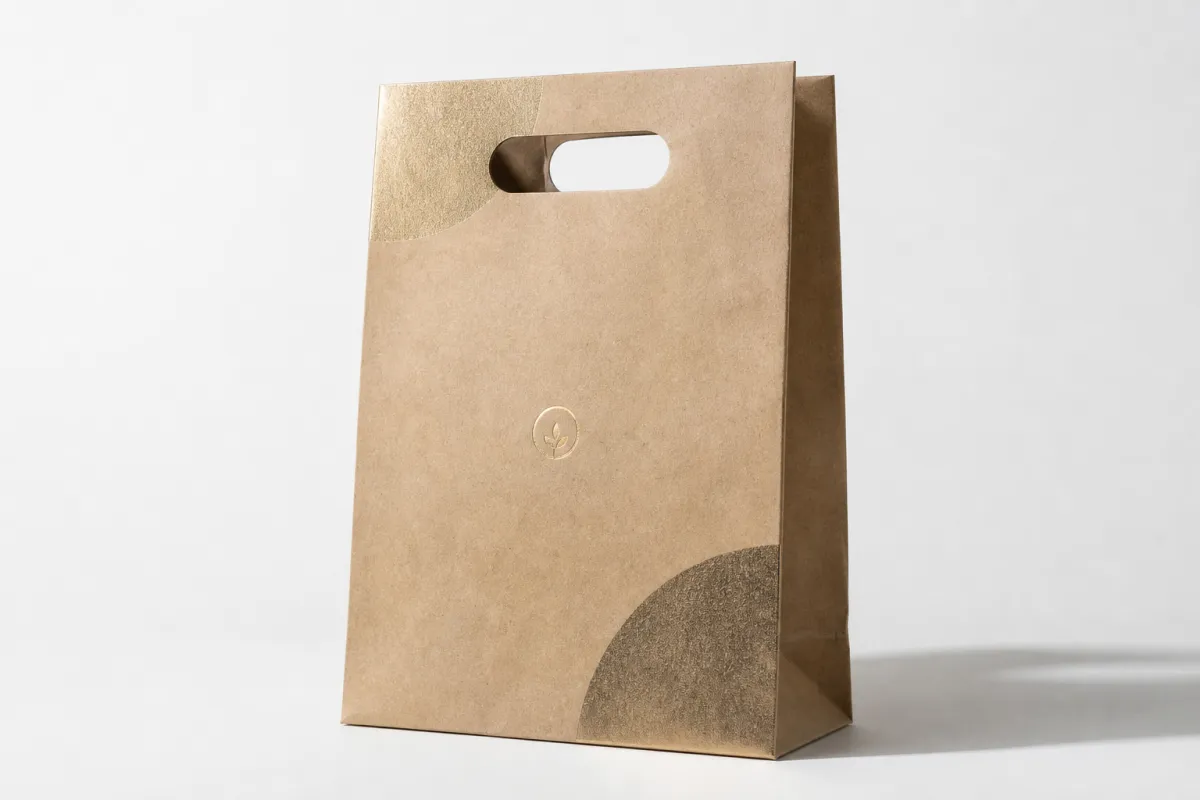
Most buyers brace for a higher number than the quote eventually shows. That reaction comes from treating custom work as premium work by default. Sometimes that assumption is right. More often, custom paper bags with logo cost stays reasonable because paper bags are one of the more efficient packaging categories to produce at scale. The machinery is common, the raw materials are widely available, and a simple one-color logo does not put much strain on production.
The pattern is predictable. A small cafe might need 2,000 medium kraft bags for lunch service, while a boutique might need 5,000 rope-handle shoppers for apparel. The cafe wants speed and function. The boutique wants presentation and a better carry experience. Both orders can be economical, but the final custom paper bags with logo cost will differ because the job itself is different.
The fastest way to waste money is not the logo. It is choosing a bag that looks nicer than the product requires. A heavy laminated shopper for a salad shop adds cost without adding value. A thin kraft bag for a gift store can undercut the brand before the customer even opens it. I see that mistake often in product packaging: buyers spend on appearance before they decide what the bag actually has to do.
A better question asks what the bag needs to support: the product, the customer experience, and the margin. That lens keeps custom paper bags with logo cost under control. It also makes quoting easier because the supplier can match materials to function instead of guessing at intent.
For retail teams, the savings often show up in unglamorous places. A plain kraft bag with a sharp logo can strengthen package branding without paying for foil, embossing, or a thick matte laminate that most shoppers barely register. For events, a lighter bag that folds flat can cut freight and storage. For food service, grease resistance or a wider gusset matters more than a decorative finish.
One of the cleanest comparisons is this: a bag that costs a little more but cuts complaints in half is often cheaper than the bargain option. That is not theory. That is what shows up in reorder data, and the math is hard to argue with.
Practical rule: spend on the feature that protects the product or improves the carry experience. Skip the rest. That is how custom paper bags with logo cost stays sensible instead of drifting into vanity spending.
“The cheapest bag on paper is not always the cheapest bag in practice. A stronger bag with the right handle can save reorders, complaints, and damaged product.”
If your team also uses Custom Packaging Products for boxes, inserts, or mailers, compare the full packaging mix together. A bag does not live alone. It sits beside shelves, shipping cartons, and custom printed boxes, so the budget should be planned as one system, not as scattered purchases.
Product Details That Shape the Final Bag You Buy
Bag type is where the decision turns from general to concrete. A kraft paper bag is often the starting point because it balances cost, strength, and print quality. White paper bags tend to look cleaner for premium retail packaging and gift packaging. Luxury boutique bags use heavier paper, better handles, and a more polished finish. Reinforced retail bags sit in the middle: sturdier than a basic takeaway bag, less expensive than a full luxury shopper.
Handle style changes the feel more than many buyers expect. Twisted paper handles are common, practical, and usually economical. Flat paper handles suit food service and lighter retail use. Rope handles feel more premium, carry more weight, and generally add cost because the materials and assembly are more involved. Die-cut handles work well on thicker bags when the design wants a cleaner silhouette, though they are not the right answer for every job. No one gets extra value from using the fanciest handle on a disposable lunch bag.
Print method matters as well. A one-color logo on one side is the simplest route and often the best route for disciplined budgets. Spot color adds flexibility. Full-color print opens up broader branding options, but it can raise custom paper bags with logo cost if the design covers large areas or needs tighter registration. Special finishes such as foil, embossing, soft-touch coating, and spot UV are useful tools, yet each one adds steps and money.
Different businesses should care about different details:
- Food service: width, gusset depth, handle strength, and grease resistance matter more than decorative finishes.
- Retail: paper feel, color accuracy, handle quality, and print sharpness matter more than maximum bag strength.
- Events: fold-flat storage, quick packing, and lower freight often matter more than premium finishes.
- Gift packaging: presentation, print alignment, and a refined surface finish usually justify a higher unit cost.
That is the part many buyers miss. Matching the bag to the item inside is what keeps custom paper bags with logo cost tied to real value. If the bag is too plain, the brand can look cheap. If the bag is too expensive, you end up paying for perception that may never convert into sales. Balanced specifications usually win.
In practical terms, kraft bags around 120-150gsm work for a lot of basic retail and takeaway needs. Boutique shoppers may move up to 170-200gsm or use laminated art paper when the presentation has to feel more upscale. Reinforced bottoms, thicker boards, and stitched or glued handle attachments all add durability, and they also add labor. That is not a problem. It is a line item buyers should see clearly before approving the order.
I have seen a 150gsm kraft bag handle a bakery order all week without issue, then watched a similar bag fail on a heavier gift set because the bottom board was too light. Same size, same logo, very different outcome. The spec sheet was doing the talking.
Specifications That Move Custom Paper Bags With Logo Cost
If you want the number to make sense, you need the core specs nailed down. Custom paper bags with logo cost is driven by five basic choices: size, paper thickness, handle style, print coverage, and finish. Leave any one of those vague and the quote will either come back padded or come back wrong. Neither outcome helps.
Size is the first lever. Larger bags use more paper, more adhesive, more handle material, and more shipping space. A small boutique bag might be sized for a folded shirt or a candle. A larger retail bag may need extra width and gusset depth for shoeboxes or bundled items. Even a modest change in dimensions can shift unit cost enough to matter on larger runs.
Paper thickness or GSM is the second lever. Higher GSM usually means stronger stock, but it also means more material and more weight. That increases both production cost and freight. A 120gsm kraft bag is usually easier on the budget than a 200gsm board-stock shopper. The stronger bag may be necessary for a heavy item, but paying for stiffness you do not need is how custom paper bags with logo cost starts climbing for no good reason.
Print coverage is the third lever. A small logo on one side is usually cheaper than full-wrap printing. The more ink coverage and color complexity you add, the more attention the production step needs. Full-color artwork can look excellent, but if the brand works well in one or two colors, the simpler route may also be the cleaner one. That is especially true for straightforward retail packaging where the logo itself does the heavy lifting.
Finish is where optional spend gathers fast. Lamination, soft-touch coating, foil stamping, embossing, and UV accents can all raise visual impact. They can also multiply the number of production steps. If the bag is for a short campaign, a trade show, or a seasonal promotion, a finish upgrade may earn its keep. If the bag is for daily takeout, probably not. That is a lot of extra money for something that may end up under a counter or in a car.
For sustainability-minded buyers, paper sourcing and transit durability matter too. FSC certification is a useful reference point if you need chain-of-custody confidence on fiber sourcing: FSC. If the bags need to survive shipping abuse or repeated handling, transit performance matters just as much; ISTA testing standards provide a practical framework for package performance: ISTA. Neither one magically lowers custom paper bags with logo cost, but both can keep you from buying the wrong bag and paying for that mistake later.
Simple rule: if a spec does not support the product, the customer experience, or the shipping plan, cut it. That is the fastest way to keep custom paper bags with logo cost honest.
There is also a quieter cost driver that gets missed a lot: layout efficiency. A bag that fits neatly on a production sheet wastes less paper than one with awkward proportions. Small changes in structure can make a surprisingly large difference once a factory scales the run.
Custom Paper Bags With Logo Cost, Pricing, MOQ, and Quote Rules
Now the part buyers actually need: how pricing tends to behave. Custom paper bags with logo cost is usually built from setup, printing, material, finishing, packing, and freight. The order may look simple from the outside, but the factory still has to prep plates or screens, cut paper, attach handles, fold, glue, inspect, pack, and ship. Every one of those steps has a cost attached.
MOQ matters because setup has to be spread across the order. A short run almost always has a higher unit cost. That is normal. It is not a penalty. It is arithmetic. If the factory spends nearly the same time setting up a 500-piece order as it does a 5,000-piece order, the smaller order will carry more overhead per bag. Buyers who understand that structure stop arguing with reality and start comparing options the right way.
Here is a simple pricing view for common paper bag jobs. These are practical ranges, not a promise for every spec. Finish, freight, and artwork complexity can move them quickly, and import markets can swing with pulp prices and shipping rates.
| Bag Option | Typical MOQ | Approx. Unit Price Range | Best Use | Cost Notes |
|---|---|---|---|---|
| Basic kraft bag, 1-color logo, twisted paper handle | 1,000-3,000 pcs | $0.18-$0.34 | Cafes, bakeries, casual retail | Usually the strongest value if the design stays simple |
| White retail bag, 1-2 color logo, flat or twisted handle | 2,000-5,000 pcs | $0.24-$0.45 | Gift shops, apparel, simple branded packaging | Higher paper and print expectations push cost up |
| Luxury boutique bag, rope handle, heavier stock | 1,000-3,000 pcs | $0.55-$1.20 | Premium retail packaging, gift sets | Handles and stock quality drive most of the price |
| Laminated or specialty finish bag, full-color or foil detail | 1,000-5,000 pcs | $0.70-$1.80 | High-end promotions, gift packaging, launch kits | Finish often adds more than the logo itself |
The table tells the story most buyers need to hear. If you want the best custom paper bags with logo cost, the cheapest path is usually a clean kraft or white bag with restrained printing. If you need premium shelf presence, you pay for it. Packaging is not a charity, and factories do not print mood boards for free.
One more pricing pattern matters. The jump from a very small run to a mid-size run often improves unit cost faster than the jump from mid-size to large. That means the sweet spot depends on storage, cash flow, and usage rate. Buying 10,000 bags because the unit price looks prettier only makes sense if you will actually use them before the design changes or the branding refreshes.
Comparison logic:
- If the bag is for daily food service, stay with a basic build and protect margin.
- If the bag is for customer-facing retail, pay enough for clean print and a durable handle.
- If the bag is for a launch, event, or luxury purchase, accept a higher unit cost for a stronger first impression.
That is the practical way to think about custom paper bags with logo cost. Not “cheap versus expensive.” More like “right spec versus wasted spec.”
“The best quote is not the lowest quote. It is the quote that matches the actual use, the actual quantity, and the actual delivery plan.”
In other words, the quote should answer a business question, not just a pricing question. If the unit cost is lower but the order sits in storage for six months, that is not a win.
Process, Timeline, and Turnaround From Art File to Delivery
Good pricing means little if the order misses the launch date. The process is straightforward, but the handoffs matter. For most projects, the workflow is quote, artwork review, proof approval, sampling if needed, production, packing, and shipping. Each step can be smooth or messy depending on how complete the buyer’s information is. Guess which one costs less.
A proper quote can often come back the same day or within 24 hours if the specs are complete. That includes size, quantity, paper stock, handle style, print colors, and delivery location. If the artwork file is missing, blurry, or not set up for print, the quote may still be possible, but the real custom paper bags with logo cost will not be reliable until the art gets cleaned up.
Proof approval is where a lot of time gets burned. Buyers change the logo size, move the copy, ask for a finish upgrade, then switch back to the original plan. That is how a quick job becomes a slow one. One revision is normal. Three rounds of “just one more tweak” usually means the brief was not finished before it was sent.
Typical timing looks like this:
- Quote: same day to 24 hours for complete requests.
- Artwork proof: usually 1-2 business days, faster if files are print-ready.
- Sampling: a few business days if a physical sample is required.
- Production: commonly 7-20 business days depending on quantity and finish.
- Freight: add time for domestic delivery or imported shipping, especially on larger orders.
Simple bags move faster than premium bags. That should surprise nobody. Rope handles, foil stamping, embossing, and laminated surfaces all add steps. Larger runs also add cycle time. If the order includes special packing or retail-ready sorting, expect more time again. The production schedule is not mysterious. It just reflects how much work the bag needs.
If the bags are going into a shipping or event workflow, some buyers ask about performance standards. That is where package testing and transit logic matter. ISTA methods are a useful reference if the bag has to survive distribution abuse, not just look good on a showroom shelf. For paper and recycled fiber sourcing, FSC is still a practical checkpoint. Good custom paper bags with logo cost decisions usually sit at the intersection of branding, transport, and material sourcing, not just appearance.
Want to shorten lead time without paying rush charges? Send complete specs up front, upload the logo file in vector format if possible, and decide early whether the budget belongs in basic kraft or premium retail packaging. The quote will be cleaner, the proof will move faster, and the final custom paper bags with logo cost will be less likely to surprise you.
That planning step matters more than most buyers think. A clean brief can shave days off the back-and-forth, and those days usually disappear right where deadlines are most painful.
What a Reliable Supplier Should Explain First
The best supplier is not the one that throws the fanciest words at you. It is the one that explains what matters, what does not, and where the budget should actually go. That is the point of working with a packaging partner that understands both branding and function. Custom paper bags with logo cost should come with clear spec guidance, not a fog machine.
We focus on practical packaging decisions. That means honest tradeoffs on stock weight, handle construction, print coverage, and finish. If a premium detail earns its keep, say so. If it does not, say that too. A buyer trying to protect margin does not need a sales speech. They need a bag that holds up, prints cleanly, and fits the order volume without inventory headaches.
We also care about consistency. Retail packaging has to look the same from the first bag to the last. Print color drift, weak handles, and sloppy packing are the fastest way to make a brand look careless. If a job calls for a simple solution, that is usually where the value is. If it calls for a premium feel, the spec should support it without waste.
For buyers comparing custom paper bags with logo cost against other packaging categories, it helps to look at the full spend. A higher-end bag may be justified if it replaces extra wrap, a separate insert, or an overbuilt box. Sometimes a bag is the final layer of package branding that pulls the order together. Sometimes it is just a bag. Knowing the difference saves money.
If you need a broader packaging mix, our Custom Packaging Products page is a good place to compare paper bags with related options and see where the budget goes farther.
A trustworthy supplier should also be comfortable saying no. If a finish looks great but will complicate lead time or raise reject risk, that deserves a straight answer, not a glossy pitch.
What to Send Next for an Accurate Order Quote
If you want a real number, do not ask for “a quote on paper bags with a logo.” That is too vague to help anyone. Send the specs that actually control custom paper bags with logo cost. The better the brief, the faster the price lands in a useful range.
Use this checklist:
- Bag size: width, gusset, and height.
- Quantity: target order volume and any backup volume you want quoted.
- Paper type: kraft, white paper, laminated stock, or premium board.
- GSM or thickness: if you know it, send it.
- Handle style: twisted paper, flat paper, rope, or die-cut.
- Print colors: one-color, two-color, spot color, or full-color artwork.
- Finish: matte, gloss, soft-touch, foil, embossing, or none.
- Delivery location: city, postal code, or full ship-to address if needed.
- Artwork: logo file, dieline notes, or current packaging mockup.
Ask for two options if you can. One should be the budget version. The other should be the premium version. That comparison shows what each upgrade actually buys. Maybe the rope handle is worth it. Maybe the soft-touch finish is not. A side-by-side quote makes that obvious quickly, which is a lot better than arguing about an abstract number.
If the bag is part of a larger packaging rollout, mention that too. Some buyers are comparing custom paper bags with logo cost against custom printed boxes, inserts, or shipping cartons. That context changes the recommendation. A supplier cannot give sane advice if they do not know whether the bag is carrying pastries, apparel, or a gift set that already has a box inside it.
Send the specs, upload the artwork, and ask for a clean estimate. That is the shortest route to a useful answer. The best custom paper bags with logo cost estimate comes from complete information, not guesswork, and nobody should pay extra just because the brief was incomplete.
One last practical point: if you are still deciding between a few sizes, ask for the smallest size that comfortably fits the product. Oversizing a bag is a quiet way to inflate paper use, freight, and storage without giving the customer anything they can feel.
How much do custom paper bags with logo cost per bag?
Simple kraft bags in larger runs can land in a lower per-bag range, while small orders cost more because setup gets spread across fewer pieces. Custom paper bags with logo cost changes fast with size, stock, handle type, and print coverage, so two bags that look similar can have very different prices. The fastest way to get a real number is to send quantity, dimensions, artwork, and shipping location together.
What MOQ gives the best custom paper bags with logo cost?
The best unit pricing usually appears once the order volume is high enough to absorb setup and printing costs. Under MOQ-friendly quantities, the price jump is normal; it is the tradeoff for not overbuying inventory. If you need lower risk, ask for two quotes: one at a small run and one at a volume that improves unit cost.
Does full-color printing increase custom paper bags with logo cost a lot?
One- or two-color printing is usually the cheapest route. Full-color can raise the price, but stock changes, special finishes, and heavy ink coverage often cost more than the extra color itself. A clean logo with limited coverage is usually the smart budget move unless the bag is a premium retail piece.
Are kraft paper bags cheaper than laminated bags?
Yes, plain kraft is usually the budget baseline for paper bags with a logo. Lamination, foil, embossing, and soft-touch finishes add cost because they add materials and extra production steps. If the bag is for takeout, events, or basic retail use, kraft often gives the best value.
How long does it take to get a quote and produce custom paper bags with logo?
A proper quote can often be turned around the same day or within 24 hours if the specs are complete. Sampling and proof approval add time, especially if artwork needs edits or the customer wants finish options. Production commonly takes about 7-20 business days depending on quantity, complexity, and freight needs.
If you are ready to move, gather the size, quantity, paper stock, handle style, print colors, finish, and delivery address, then ask for a quote with two spec options. That gives you a real comparison instead of a guess. If the number still feels high, trim the finish before you trim the structure; that usually protects the bag's usefulness while bringing custom paper bags with logo cost back into line. And if you want the simplest answer on custom paper bags with logo cost, send the artwork too, because the quote gets better when the details are complete.

