Buyer Fit Snapshot
| Best fit | Custom Paper Bags with Twisted Handles projects where brand print, material claims, artwork control, MOQ, and repeat-order consistency need to be specified before quoting. |
|---|---|
| Quote inputs | Share finished size, material target, print colors, finish, packing count, annual reorder estimate, ship-to region, and any compliance wording. |
| Proofing check | Approve dieline scale, logo placement, barcode or warning zones, color tolerance, closure strength, and carton packing before bulk production. |
| Main risk | Vague material claims, crowded artwork, missing packing details, or unclear freight terms can make a low unit price expensive after revisions. |
Fast answer: Custom Paper Bags with Twisted Handles: Film, Print, MOQ, and Carton Packing should be specified like a repeatable production item. The safest quote records material, print method, finish, artwork proof, packing count, and reorder notes in one written spec.
Production checks before approval
Compare the actual filled-product size with the drawing, then confirm tolerance on folds, seals, hang holes, label areas, and retail display edges. Reserve space for logos, QR codes, warning copy, and material claims before decorative graphics fill the panel.
Quote comparison points
Review material grade, print process, finish, sampling route, tooling charges, carton quantity, and freight assumptions side by side. A quote is only useful when the supplier can repeat the same color, closure quality, and packing count on the next order.
A bag is often the last physical thing a shopper keeps, and Custom Paper Bags with twisted handles have to do three jobs at once: carry the product, represent the brand, and survive the trip home without embarrassing anyone. That is a tall order for something most people barely register for more than a second. Yet in retail audits I have done, the bag is one of the few items customers actually touch twice, once at checkout and again when they reuse it later. Handle style changes comfort, perceived quality, and whether the bag gets saved, stuffed into a car, or tossed on the walk out. That is why custom paper bags with twisted handles show up so often in boutiques, food service, event kits, and premium takeaway programs.
For a packaging buyer, these bags sit in a useful middle ground. They look more finished than a plain sack, but they usually cost less than rigid formats and take up far less storage than Custom Printed Boxes. The broad print area gives room for a logo, a repeat pattern, or a short brand line, which makes them effective branded packaging and a practical tool for package branding. If retail packaging is on your shortlist, Custom Paper Bags with twisted handles deserve a serious look before you sign off on a different format. I have seen plenty of teams spend more money chasing “premium” and end up with something less useful in daily use. That happens a lot more than people want to admit.
Appearance only gets you so far. Structure decides whether the bag survives actual handling. Size, paper weight, print method, handle attachment, and order volume all affect the final result. The good news is that custom paper bags with twisted handles are easy to specify once the variables are clear. The rest of this guide breaks them down in practical terms, with pricing ranges, lead times, and ordering checks that can prevent expensive mistakes and a few facepalm moments at receiving.
Custom Paper Bags with Twisted Handles: Why They Stand Out
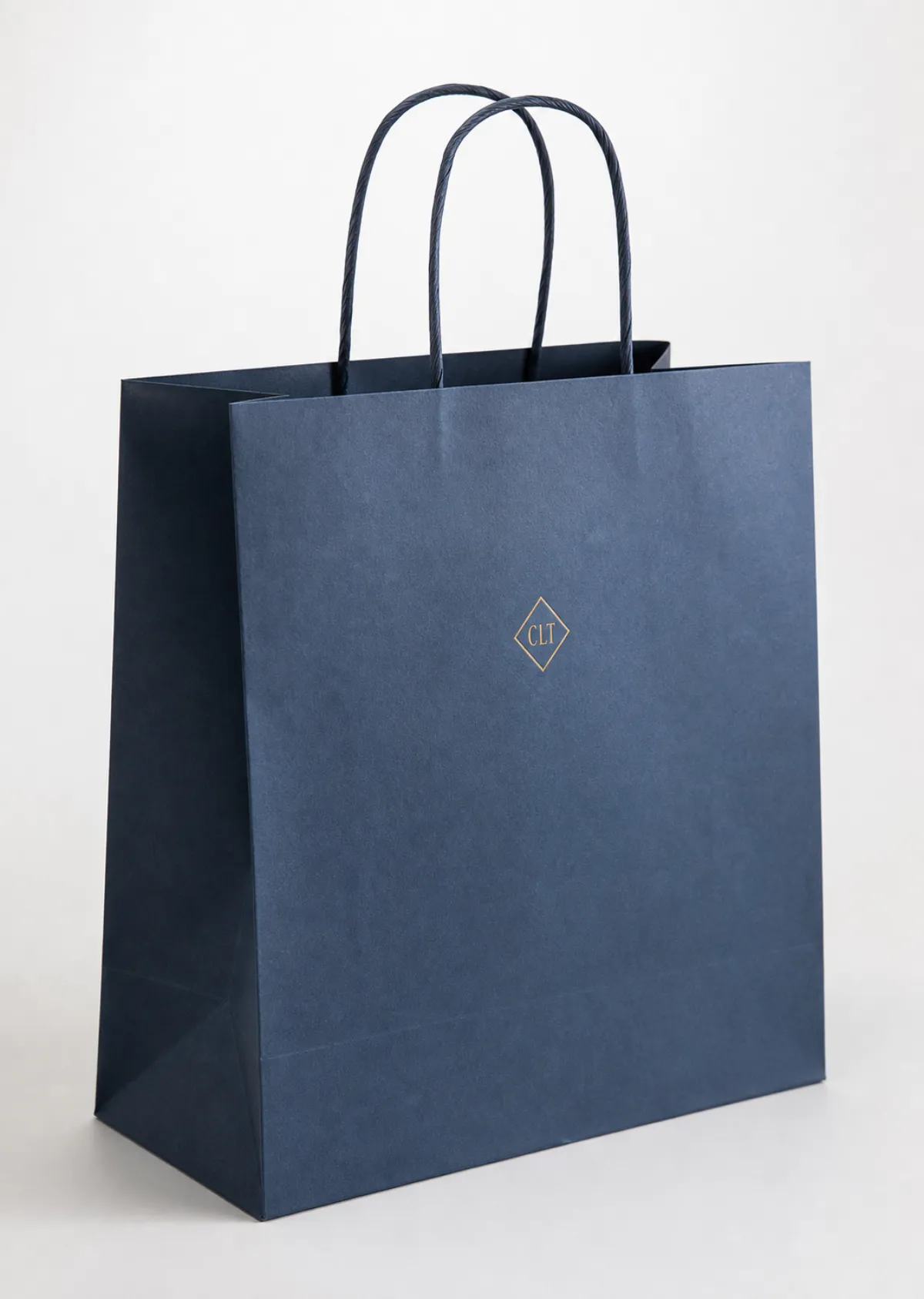
Custom paper bags with twisted handles stand out because they feel familiar without feeling flimsy. That distinction matters more than it sounds. A paper bag with a twisted-paper handle reads as sturdy and serviceable, which helps in retail packaging and food service where buyers want something that looks ready for repeated use. The twisted handle also creates a visual line that flat handles do not always deliver. It adds height, texture, and a more deliberate silhouette on the counter or in a customer’s hand.
The twisted handle is usually made from several paper plies rolled into a cord-like form, then glued inside the top fold of the bag. That construction matters. Flat handles spread across a wider surface and often feel softer or more casual. Twisted handles concentrate the grip into a narrower contact point, which many shoppers read as neat, efficient, and familiar. For custom paper bags with twisted handles, that familiarity is one reason they show up so often in cafes, gift shops, pharmacies, and event kits. A shopper may not name the handle style, but they absolutely feel the difference.
Buyers also return to custom paper bags with twisted handles because they do not fight the product. A small retail item, a boxed cosmetic set, a pastry box, or a folded garment fits cleanly without asking for a complicated structure. The bag acts as a carrier first, then a media surface second. That order matters. Good packaging design should support the item before it tries to tell the story. A bag that feels awkward in the hand or collapses at the seam works against the brand, no matter how attractive the print is.
There is a retail truth that surprises people: shoppers often keep the bag longer than the receipt, the tissue paper, or even the impulse-buy item inside it. That means custom paper bags with twisted handles can stay visible long enough to function as a small moving billboard. A logo on a bag is not decoration alone. It is product packaging that travels through sidewalks, offices, lobbies, elevators, and parking lots. That extra exposure is not guaranteed, of course, but it is real when the bag feels worth keeping.
A bag that feels good to carry gets reused. A bag that gets reused can earn more impressions than many low-cost ads ever do.
If you are building a broader packaging program, custom paper bags with twisted handles can sit alongside Custom Packaging Products in a way that feels consistent. That matters for package branding. A business that uses one visual language across bags, inserts, and custom printed boxes usually looks more settled and more deliberate, even when the materials are simple. Because the bags are familiar, they do not overwhelm the customer with novelty. They just do the job well.
One more practical advantage: they are easy to explain internally. Buyers, store managers, and finance teams can usually understand custom paper bags with twisted handles in a single conversation. That shortens approvals. In a category where small details can create real cost swings, clarity has value. It is not glamorous, but it saves real time.
How Custom Paper Bags with Twisted Handles Work
At a structural level, custom paper bags with twisted handles are straightforward. The bag body is formed from paper stock, typically with side gussets and a bottom panel that lets the bag open and hold volume. The top edge is folded and reinforced, then the twisted paper handle is glued into the fold or attached through internal patches, depending on the build. That reinforcement is not cosmetic. It spreads the load so the handle does not tear out under normal carrying weight.
Handle placement matters more than most buyers realize. If the handle sits too close to the edge, the pull force can stress the top seam. If it sits too low or lacks enough adhesive area, the carry feel becomes unstable. That is one reason custom paper bags with twisted handles often perform better than unreinforced paper alternatives. The handle and the bag body work together instead of asking one weak point to do everything. A clean print cannot make up for a weak bond. I learned that the hard way years ago on a bakery run where the artwork looked beautiful and the handles failed before the boxes were halfway to the car.
Paper choice changes both performance and appearance. Kraft paper is common because it has a natural look, a good strength-to-cost balance, and a surface that suits simple logos very well. Bleached or white paper gives a brighter canvas for sharper brand colors and more detailed graphics. Heavier paper stocks usually feel more premium, but they also affect cost and fold behavior. For many custom paper bags with twisted handles, the practical range sits around 80gsm to 150gsm depending on size, intended load, and whether the bag needs to look premium or work hard.
Printing can be handled in several ways. Flexographic printing is often a practical choice for large-volume runs and simpler artwork. Offset printing can support finer detail and cleaner color reproduction, especially on more refined retail packaging. Digital printing works well for shorter runs, variable graphics, or faster turnaround jobs. There is no single winner. The best method depends on quantity, coverage, and how exact the brand color needs to be. For custom paper bags with twisted handles, the goal is usually to choose the least complicated print route that still protects brand consistency and budget.
Common finish options include matte varnish, gloss varnish, spot color work, and, on higher-end jobs, specialty treatments such as soft-touch lamination or foil accents. Those extras should be used carefully. A finish that looks good on a sample can add cost, slow production, or raise recycling questions. Sometimes the strongest move is to keep the artwork restrained and let the bag structure carry the visual weight. That approach works especially well for custom paper bags with twisted handles used in food service or fast-moving retail environments, where the bag has to look good and move quickly.
There is also a sustainability angle worth handling with precision. Many buyers ask for FSC-certified paper, and that request is reasonable. The Forest Stewardship Council explains what certified material means and how chain-of-custody claims are handled. If sustainability language is part of your branded packaging, documentation matters. Do not accept generic supplier wording as proof. Ask for the actual certificate trail and check whether the claim applies to the paper, the full bag, or only part of the supply chain. Those are not the same thing.
For transport and distribution planning, it helps to think like a shipping manager, not just a designer. Bags may not go through the same test sequence as corrugated packs, but the mindset is similar: can the package survive handling, stacking, movement, and the occasional drop? Groups like the International Safe Transit Association publish standards and test logic that many packaging teams use as a reference point. That thinking is useful even for paper bags, because a handle failure is still a loss. It might look small on a spreadsheet, but it can sting in the store.
Custom Paper Bags with Twisted Handles: Cost, Pricing, and MOQ
Pricing for custom paper bags with twisted handles is shaped by a handful of variables, and the biggest one is not always the one buyers expect. Paper weight matters, yes. Size matters. Print coverage matters. The most expensive surprises often come from setup, color count, special finishing, proofing, and freight. A buyer can focus on the unit price and miss the extra steps that shift the true landed cost. That is the kind of thing that makes a “cheap” quote turn expensive pretty quickly.
Here is a practical benchmark for typical pricing structures. These are not fixed quotes; they are working ranges that help frame the conversation.
| Option | Typical Spec | Common MOQ | Typical Unit Price | Best Use |
|---|---|---|---|---|
| Economy kraft | 80-100gsm kraft, 1-color flexo print, standard twisted handle | 5,000+ | $0.18-$0.28 | Takeaway, events, light retail |
| Standard branded retail | 120gsm kraft or white kraft, 1-2 color print, reinforced top fold | 5,000+ | $0.24-$0.42 | Boutiques, gift shops, product packaging |
| Premium print package | 120-150gsm bleached stock, fuller coverage, special finish or tighter color control | 10,000+ | $0.38-$0.85 | Launches, upscale retail packaging, gifting |
The table gives a starting point, but a quote only helps if the specification is complete. Two bags that both carry the label “custom paper bags with twisted handles” can be very different on the factory floor. One may be a narrow kraft bag with a single logo on one side. Another may be a wide full-color shopper with heavier paper, a stronger handle patch, and tighter tolerances. Those are not interchangeable products, even if the marketing language sounds close enough.
MOQ, or minimum order quantity, is where many first-time buyers feel the pressure. Smaller runs usually cost more per unit because machine setup, plates, artwork prep, and labor are spread over fewer bags. Larger runs reduce the unit price, but they create storage needs and commit cash up front. If demand is uncertain, a mid-sized order can be safer than either extreme. That is especially true for seasonal retail packaging, pop-up events, and new store launches. The math gets a little annoying, but it is better to know that upfront.
Print complexity also affects price. A one-color logo on kraft paper is usually much easier to produce than a full-wrap design with gradients, fine type, and precise brand tones. Busy artwork can push costs up in several places at once: longer prepress, tighter color checks, more proof revisions, and sometimes slower production. Simple artwork is often the smarter use of custom paper bags with twisted handles. The bag already does a lot visually. It does not need to behave like a poster.
Some buyers also miss the hidden costs. Ask about:
- plate or screen charges
- artwork cleanup or file setup
- sample or preproduction proof fees
- freight, import duty, and delivery surcharges
- rush production or weekend handling
Those line items can change the final quote more than a small shift in bag price. That is why comparing like-for-like specifications is critical. If one vendor quotes custom paper bags with twisted handles on 120gsm stock with printing included and another quotes a lighter bag with print excluded, the numbers are not comparable. Ask for the same bag size, same paper weight, same handle style, same print method, and same delivery terms. Otherwise you are not comparing offers; you are comparing two different products and pretending they are one.
If you are building a packaging budget across several items, it can help to compare the bag program with other branded packaging investments. Sometimes a combined order with bags and retail packaging options gives better value because artwork and proofing work are shared. That is not always true, but it is worth asking. Smart buyers look at the packaging system, not only one SKU at a time.
One practical rule stands out: if the bag is meant to carry heavier products or premium merchandise, pay more attention to structure than to decoration. Spending a few extra cents on better paper or a stronger handle is easier to defend than replacing damaged bags or handling customer complaints later. For custom paper bags with twisted handles, durability often delivers a clearer return than elaborate finishing.
Production Process and Timeline for Custom Paper Bags with Twisted Handles
The production process for custom paper bags with twisted handles usually follows a predictable path, but time gets lost in the handoff between stages. The typical sequence is brief: artwork review, proof approval, material sourcing, printing, bag conversion, packing, and shipment. Every step can slow down if the information is incomplete or if the artwork team keeps changing direction.
The most common delay is not machine time. It is decision time. A buyer sends a logo file that is too small, the supplier asks for a vector version, the brand team revises a color, and proof approval slides back several days. That is why clear specs matter so much for custom paper bags with twisted handles. The faster the file is correct, the faster the order moves. Good suppliers can run quickly, but they cannot guess missing information. They are good, not psychic.
Sampling is worth the effort, especially if the bags will carry anything awkward, heavy, or high-value. A digital proof can catch layout errors, but it will not tell you how the bag feels in the hand or whether the handle reinforcement is strong enough for repeated use. A physical sample gives a better read on paper stiffness, print clarity, and bag balance. For custom paper bags with twisted handles, that early check can prevent a very expensive reprint and a few awkward conversations.
Timeline depends on complexity. A repeat order with no changes may move in roughly 7-12 business days after proof approval, depending on workload and shipping method. A new custom size, special ink, or more complex artwork can stretch that to 12-20 business days or more. Add international freight, customs clearance, or a rush request, and the calendar grows again. None of that is unusual. It is simply how packaging production works.
The real trap is timing the order to the launch instead of the need. If bags are tied to a store opening, a seasonal campaign, or a product release, build in margin. A one-week delay at proof stage can become a missed launch window. For custom paper bags with twisted handles, the safest approach is to plan backward from the delivery date and subtract sample approval, production, transit, and a buffer for corrections. That buffer is usually the part nobody wants to fund until they need it.
A useful way to think about the workflow is this:
- Confirm bag use, size, and load.
- Lock the artwork and dieline.
- Approve a proof or sample.
- Release production only after the spec sheet is final.
- Reserve warehouse or store space before shipment.
That last step gets overlooked more than it should. I have seen buyers order custom paper bags with twisted handles on a solid plan, only to realize the receiving site had no room for the cartons. Then the bags arrive, and the problem becomes storage rather than printing. Packaging does not end at the factory gate. It just changes buildings.
The quickest order is usually the one with the fewest open questions. Every revision costs time.
For buyers who want to keep their broader packaging program aligned, it is often helpful to keep artwork and sizing decisions consistent across bags and Custom Packaging Products. That reduces the number of approvals and can simplify reorders later. Consistency is not only a brand issue; it is a production efficiency issue too.
Step-by-Step Guide to Ordering the Right Bag
Start with the use case. That sounds obvious, yet many packaging mistakes begin when the buyer starts with color or logo placement instead of what the bag actually needs to carry. Custom paper bags with twisted handles for a bakery are not the same as custom paper bags with twisted handles for a luxury boutique or a trade-show giveaway. Food, retail, and event use each place different demands on strength, appearance, and count per carton.
Next, measure the product, not the wish list. Bag dimensions should be based on the footprint and height of the item inside, plus room for the gusset and handle clearance. If the product is boxed, measure the box. If it is loose or irregular, measure the largest practical shape. Too many buyers choose a size that looks elegant in a mockup but is too narrow at the bottom or too short at the top. That creates friction for staff and a poor experience for the customer. The mockup may look tidy; the counter team will not care if it is a pain to fill.
Then pair the paper stock with the handle specification. A heavier bag without a matching handle is a weak design. It can fail at the point where the customer feels the load most directly. For custom paper bags with twisted handles, paper weight, adhesive area, and top reinforcement should be discussed together. If the contents are heavy, ask for a sample load test. Even a basic in-house test can reveal whether the bag fits the job. A five-minute test in the store tells you more than a glossy render ever will.
Artwork is the next pressure point. Keep the print plan realistic. Does the logo need one side, two sides, or a full wrap? How many colors are truly necessary? Can the type be read from a normal carrying distance? Small text and thin lines can disappear on paper grain, especially on kraft stock. Full-bleed artwork can work, but it needs careful prepress. In many cases, the strongest packaging design is the one that stays legible and simple.
Ask your supplier to confirm these details before production starts:
- bag size and gusset depth
- paper grade and gsm
- handle style and reinforcement method
- print method and color count
- quantity, unit price, and setup costs
- delivery date and shipping terms
- any FSC or food-contact documentation needed
That list sounds dry, but it is what keeps custom paper bags with twisted handles from becoming a source of internal confusion. A buyer should be able to hand one final spec sheet to procurement, operations, and the supplier, and have everyone agree on the same thing. If the answers are scattered across emails, there is too much room for error. Clean approvals tend to make clean deliveries.
If your company wants the bag to support a larger identity system, keep the bag spec aligned with other brand materials. A shopper should not experience one tone on the bag and a different tone on the insert card or carton. That is why custom paper bags with twisted handles often work best as part of a coordinated set rather than a standalone purchase. They make the most sense inside a broader retail packaging plan.
One more point: ask for a comparison quote. A strong supplier can often give you one price for your exact spec and another for a slightly simplified version. That side-by-side view is useful because it shows the cost of upgrades in plain terms. Sometimes the difference between standard and premium is small. Sometimes it is not. Either way, seeing both numbers helps you make the call instead of guessing.
Common Mistakes When Ordering Custom Paper Bags with Twisted Handles
The first mistake is sizing from the logo mockup instead of the product. That happens more often than people admit. A design team wants a bag that looks elegant on screen, so they shrink the width and stretch the proportions. Then the real item will not fit cleanly, or the bag becomes awkward to fill at the counter. Custom paper bags with twisted handles need to fit the contents first. Brand presence comes second.
The second mistake is trusting the handle image without checking the build. A handle can look perfectly fine in a proof and still be under-specified for the load. If the paper weight is too light, or the glue area too narrow, the handle becomes the failure point. That is where sample testing pays off. A few minutes of practical testing is better than discovering a tear in front of a customer. Nobody wants that kind of scene, especially during a busy lunch rush or sale weekend.
The third mistake is overcomplicating the artwork. Gradients, fine lines, tight registration, and too many colors all raise risk. They may also make the bag look busier than the brand needs. On custom paper bags with twisted handles, simplicity often prints better and reads faster. A clean logo on a good bag can feel more premium than a crowded design on a weaker one. The bag is not a brochure, and it should not try to be one.
The fourth mistake is leaving changes too late. Revised artwork, revised quantities, revised dimensions, or revised delivery windows can reset proofing and production schedules. That may sound obvious, but seasonal buyers often learn it the hard way. Once the factory has started, every change has a cost. For custom paper bags with twisted handles, the cheapest revision is the one that happens before approval.
The fifth mistake is underestimating storage and distribution. A large MOQ can lower unit cost, but it also requires space, handling, and a realistic consumption rate. If the bags arrive before staff are trained or before demand picks up, the savings can disappear into carrying costs. Good buyers do not just compare unit price. They compare the full operational picture. That is the difference between a purchase that looks smart on paper and one that actually behaves well in the building.
There is also a subtler risk: inconsistent quality expectations. A buyer may say they want premium retail packaging, but then ask for a specification that belongs in a lighter-duty program. That gap shows up later as disappointment. If the goal is a premium brand impression, the structure, print, and finish need to match that goal. Otherwise the bag sends mixed signals and the customer feels it, even if they cannot quite explain why.
Finally, do not ignore compliance language. If you plan to mention recyclability, recycled content, or FSC sourcing, make sure the supplier can document those claims. If the bags will carry food, ask about inks and any relevant food-contact requirements. Custom paper bags with twisted handles can support many use cases, but only if the documentation matches the story you want to tell. Trust gets built in the paperwork as much as in the print.
Expert Tips and Next Steps for Better Results
If the bag will carry heavier products, high-value items, or a new brand launch, order a sample or short run first. That is the simplest way to validate feel, print, and load performance before committing to a larger quantity. Custom paper bags with twisted handles are forgiving compared with some formats, but they are not invulnerable. A small test run can reveal whether the chosen paper weight is truly right.
Request two quotes whenever possible. One should match the exact specification you want. The second should simplify one element, such as print coverage, paper weight, or finish. That comparison makes tradeoffs visible. If a slightly heavier stock only adds a small amount per unit, the upgrade may be worth it. If a full-wrap design adds a significant cost but little customer value, you can drop it with confidence. That kind of comparison keeps the decision grounded instead of emotional.
Test the bag in the real environment, not only at a desk. Have someone fill it with the actual product, carry it for a short distance, set it on a counter, and check whether the handle feels balanced. If the bag will be used at a register, make sure staff can load it quickly. If it will be used for takeaway, check whether it keeps its shape after multiple handoffs. This kind of practical review is where packaging design becomes operational, not just visual.
Before you release the order, lock a final specification sheet. It should include the size, paper grade, print method, finish, quantity, delivery date, and any documentation requirements. That sheet becomes the source of truth. If a later email says something different, the final spec still wins. For custom paper bags with twisted handles, that discipline reduces costly ambiguity and keeps everyone from talking past one another.
It also helps to think about the bag as part of a wider system. If your company already uses retail packaging options or Custom Packaging Products, keep the visual language aligned. That way the bag supports the shelf, the carton, and the in-store experience instead of competing with them. Strong package branding usually comes from repetition, not from one flashy piece. The bag should sound like the rest of the brand, just in a quieter register.
For teams that want a cleaner buying process, here is the short version:
- Define the product and its weight.
- Choose the bag size from actual dimensions.
- Match paper weight and handle strength to the load.
- Keep artwork legible and cost-aware.
- Approve a proof or sample before production.
- Confirm storage, delivery, and launch timing.
That sequence sounds simple because it is simple. The hard part is staying disciplined when the brand team wants more color, the sales team wants the bags sooner, and finance wants the lowest unit price. The best outcomes usually come from the buyer who can hold those pressures together and keep the spec grounded in use. That is not flashy work, but it saves money and avoids disappointment.
For most brands, custom paper bags with twisted handles are worth the spend when the size, paper weight, and print plan are matched to the real load. Get those three pieces right and custom paper bags with twisted handles do what good packaging should do: carry product safely, make the brand easier to remember, and reduce avoidable reorders. If you only remember one thing, make it this: spec the bag around the product, not the mockup.
Frequently Asked Questions
Are custom paper bags with twisted handles strong enough for retail items?
Yes, when the paper weight, handle attachment, and bag size are matched to the product load. They are a strong fit for light to medium retail items, takeaway packaging, and event giveaways. For heavier products, ask for reinforcement details and a sample test before placing a full order.
What affects the price of twisted-handle paper bags the most?
Paper grade, print complexity, bag size, and total quantity have the biggest impact on pricing. Setup fees, freight, and rush service can shift the final quote more than buyers expect. Larger runs usually lower unit cost, while small orders tend to be more expensive per bag.
How long does the production process take for custom paper bags with twisted handles?
Timeline depends on proof approval, artwork readiness, quantity, and whether the order is a repeat or fully custom build. Simple reorders are typically faster than new designs that need color checks or structural changes. Build in extra time if the bags are tied to a store opening, product launch, or seasonal campaign.
What size should I choose for custom paper bags with twisted handles?
Choose size based on the product footprint and height, not just the logo design or preferred look. Leave room for the gusset so items fit comfortably without stretching the seams. If you are unsure, ask for a size comparison using your actual product dimensions.
Can I print full-color artwork on twisted-handle paper bags?
Yes, but the best print method depends on quantity, color count, and how much of the bag needs coverage. Simple logos are usually more cost-effective than heavy full-bleed artwork. Ask the supplier to confirm color limits, file requirements, and proofing steps before production.

