Buyer Fit Snapshot
| Best fit | Custom Paper Bags with Handles projects where brand print, material claims, artwork control, MOQ, and repeat-order consistency need to be specified before quoting. |
|---|---|
| Quote inputs | Share finished size, material target, print colors, finish, packing count, annual reorder estimate, ship-to region, and any compliance wording. |
| Proofing check | Approve dieline scale, logo placement, barcode or warning zones, color tolerance, closure strength, and carton packing before bulk production. |
| Main risk | Vague material claims, crowded artwork, missing packing details, or unclear freight terms can make a low unit price expensive after revisions. |
Fast answer: Custom Paper Bags with Handles: Film, Print, MOQ, and Carton Packing should be specified like a repeatable production item. The safest quote records material, print method, finish, artwork proof, packing count, and reorder notes in one written spec.
Production checks before approval
Compare the actual filled-product size with the drawing, then confirm tolerance on folds, seals, hang holes, label areas, and retail display edges. Reserve space for logos, QR codes, warning copy, and material claims before decorative graphics fill the panel.
Quote comparison points
Review material grade, print process, finish, sampling route, tooling charges, carton quantity, and freight assumptions side by side. A quote is only useful when the supplier can repeat the same color, closure quality, and packing count on the next order.
Custom Paper Bags with handles do a lot more than move a purchase from the counter to the car. They shape the last physical impression a customer has of your brand, and that moment tends to stick. Paper grade, handle style, print quality, and construction all influence how the bag feels in use and how the customer remembers the purchase afterward. For boutiques, bakeries, gift shops, and companies that care about branded packaging, custom paper bags with handles often leave a stronger impression than people expect.
In practical terms, custom paper bags with handles are paper shopping bags made from kraft, white kraft, coated paper, or specialty stocks, then finished with twisted paper, flat tape, rope, or ribbon handles. The right version depends on load, presentation, budget, and the conditions the bag will face once it leaves the store. A lightweight apparel bag has different needs from a polished retail bag carrying boxed goods or a corporate gift set. That part is simple on paper, but the decision gets tricky fast once you start weighing durability against finish.
From a packaging buyer’s perspective, the best custom paper bags with handles are the ones that fit the product cleanly, carry comfortably, and look deliberate without pushing cost beyond the value of the order. That balance matters because a bag can support product packaging, retail packaging, and package branding at the same time, but only when the spec matches the job.
What Custom Paper Bags with Handles Really Are
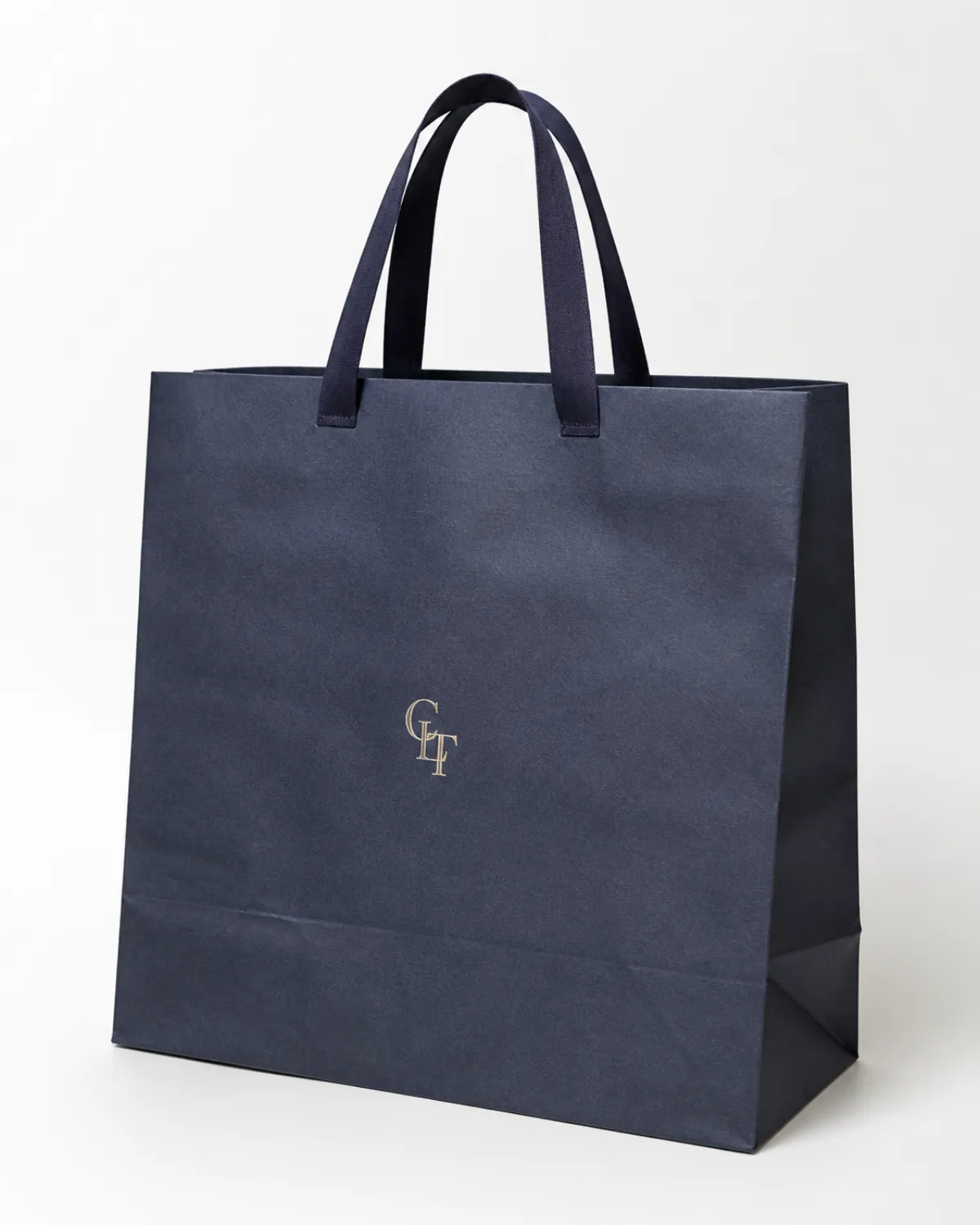
Many brands treat custom paper bags with handles as simple carriers, but that view misses the real role they play. In retail and gifting, the bag becomes part of the purchase moment customers can see and feel, and it often moves through a mall, an office lobby, a trade show floor, or a parking lot where other people notice it too. That visibility turns the bag into a quiet but effective form of package branding.
At the material level, custom paper bags with handles usually come from a few paper families. Kraft paper is common because it is durable, familiar, and accepted in many curbside recycling systems. White kraft gives print a cleaner surface. Coated paper, folded board, and specialty papers can support sharper graphics or a more polished retail look. The best choice depends on whether the bag should feel earthy, refined, elegant, or purely practical.
Handle style changes the customer experience more than many buyers realize. Twisted paper handles are economical and widely used for everyday retail. Flat tape handles often feel softer in the hand and work well for mid-range packaging. Rope handles add a more elevated feel and are often chosen for boutique or gift applications. Ribbon handles create a decorative look, though they are not always the smartest choice for heavier loads. The right custom paper bags with handles are the ones that fit both the product and the brand story.
These bags show up in a wide range of settings: apparel stores, bakery counters, skincare launches, event swag, trade show kits, corporate gifting, and ecommerce inserts that need a more polished handoff than a plain mailer. For some businesses, the bag is a low-cost utility item. For others, it belongs to a broader premium retail packaging system that should feel consistent with shelf presence, printed tissue, or even the custom packaging products used around the item itself.
A bag that looks good but fails in the hand does not feel premium for long. Buyers usually remember the tear, the weak glue line, or the awkward handle before they remember the logo placement.
That is why custom paper bags with handles deserve the same discipline you would apply to Custom Printed Boxes or other product packaging. Size, structure, and finish all matter, but durability and comfort come first. An undersized bag, an overprinted surface, or a weak handle attachment can pull the whole impression down very quickly.
How Custom Paper Bags with Handles Are Made
The production flow for custom paper bags with handles looks simple at a glance, yet several checkpoints can move quality up or down. The process usually starts with material selection, because the paper grade determines how the bag folds, how it prints, and how much weight it can carry before the structure begins to bow.
Once the stock is selected, the artwork is prepared and the print method is chosen. Flexographic printing is common for simpler artwork and larger repeat runs. Offset printing is often preferred when color accuracy and finer detail matter, especially for retail packaging with more polished graphics. Digital printing can work well for shorter runs, test orders, seasonal promotions, or versioned artwork, though it may not always be the most economical choice at volume. Each method affects appearance, lead time, drying, and the number of proofing steps needed for custom paper bags with handles.
From there, the paper is cut, creased, and formed into the bag body. Depending on the construction, the bag may be built as a folded-top bag, a gusseted retail bag, a block-bottom format, or a reinforced-base style. For heavier retail use, bottom reinforcement and side gussets are not minor details; they keep the bag standing properly and carrying weight without distortion. Handle attachment comes later in the sequence, and that stage deserves close attention because a strong-looking bag with weak handle glue is a poor trade.
Typical production also includes inspection, drying or curing time, bundle packing, and final cartonization. Those steps may sound routine, yet each one affects the finished result. A high-gloss print that has not fully cured can scuff. A handle patch that sits slightly off-center can make the whole bag look rushed. A bottom that is misaligned can create a tilt once the bag is filled. Good suppliers build checks into the run because custom paper bags with handles are judged quickly, often before anyone reads the print.
For transit-sensitive programs, many buyers also ask how the bag will hold up in distribution. A reference point like ISTA transport testing protocols can help frame expectations, especially for packed cartons, warehouse handling, and stacked freight. Not every paper bag needs formal lab testing, but for larger programs or premium retail packaging, a clear conversation about shipping abuse is time well spent.
Sample review belongs in the middle of the process for a reason. A bag can look perfect on screen and still feel wrong in the hand, and that is especially true with custom paper bags with handles where print, paper, and structure need to work together. A physical proof can reveal handle comfort, paper stiffness, fold accuracy, and whether the logo lands where the customer will actually see it.
Key Factors That Shape Strength, Finish, and Branding
The first thing to understand about custom paper bags with handles is that paper weight alone does not tell the whole story. A lighter paper can still perform well for apparel or brochures if the bag size is sensible and the handle attachment is strong. A heavier paper can still underperform if the base is weak, the gusset is too shallow, or the bag is sized poorly for the product. Buyers get better results when they think about the full bag structure rather than a single number on a spec sheet.
Common paper weights for custom paper bags with handles often fall in the range of about 120 gsm to 250 gsm for many retail uses, though some specialty builds go higher. Smaller, lighter items can usually sit comfortably in lighter kraft or white kraft. Heavier boxed goods, bottles, or sharply edged products often need thicker stock, stronger handles, and a reinforced base. If the bag is carrying anything with a hard corner, edge pressure should be part of the discussion from the start.
Handle choice affects both feel and cost in a direct way. Twisted paper handles are efficient, recyclable, and familiar. Flat tape handles are comfortable and work well across many retail categories. Rope handles add a more refined grip and can improve perceived value in gift-oriented custom paper bags with handles. Ribbon handles are more decorative and often better suited to light luxury presentation than to daily carryout use. None of these choices is automatically right; the right one depends on the use case, not a trend.
| Bag Style | Typical Use | Approx. Unit Price at 5,000 pcs | Strength / Finish Notes |
|---|---|---|---|
| Kraft with twisted paper handles | Retail carryout, events, light gifting | $0.18-$0.30 | Economical, recyclable feel, good for simple branding |
| White kraft with flat tape handles | Apparel, mid-range retail, bakery | $0.24-$0.38 | Cleaner print surface, softer hand feel, balanced cost |
| Coated paper with rope handles | Boutique, premium gift, luxury packaging | $0.42-$0.85 | Sharper graphics, stronger presentation, higher setup complexity |
| Laminated specialty bag with reinforced base | High-value retail, promotional kits | $0.60-$1.10 | Best for strong package branding, but more expensive and less simple to recycle |
Finish choices change the message immediately. A matte varnish feels quieter and more restrained. Gloss makes color pop, especially on white kraft or coated paper. Soft-touch coating creates a velvety feel, though it can add cost and may not suit every recycling or sustainability goal. Foil, embossing, and spot UV can raise the visual impact of custom paper bags with handles, yet they also add setup work and can stretch lead times if artwork is not approved early.
Branding should never outrun function. I have watched buyers get so focused on the artwork that they forget the bag still has to survive the walk to the car. If the logo is perfect but the side gusset collapses or the handle digs into the hand, the brand message weakens rather than improving. The best custom paper bags with handles support the product, frame the purchase, and stay comfortable enough that customers reuse them.
Sustainability belongs in the spec conversation, but only with honest boundaries. Recycled content, responsibly sourced fiber, and FSC-certified paper can support a strong message, yet those claims should only be printed when they reflect the actual supply chain. The FSC standard matters because buyers increasingly ask for proof rather than wording alone. That is especially true for branded packaging in regulated retail environments or in product packaging that goes to larger chains.
Used well, custom paper bags with handles can reinforce sustainability, quality, and consistency at the same time. Used poorly, they can feel like an afterthought. The difference usually comes down to whether the buyer matched the paper weight, handle type, and finish to the real use case instead of choosing from a catalog by appearance alone.
Custom Paper Bags with Handles: Cost, Pricing, and MOQ
Pricing for custom paper bags with handles depends on a handful of levers, and order quantity usually sits at the top of the list. A small run carries more setup cost per unit because printing, cutting, forming, and handle assembly are spread across fewer pieces. As volume rises, unit pricing usually improves, though the exact break depends on size, paper, print coverage, and finishing. That is why MOQ exists in the first place: the factory still has to cover setup time, tooling, and production changeover.
Paper grade is another major cost driver. Kraft is typically more economical than coated or specialty stock. Twisted paper handles are often less expensive than rope or ribbon. A single-color print on one side is simpler than a two-sided design with multiple colors, foil, or spot effects. Reinforced bases, die-cut windows, laminated coatings, and custom inserts can all add to the final number for custom paper bags with handles.
Here is the practical way to compare offers. Ask each supplier to quote the same bag size, same paper weight, same handle style, same print count, and same finish. If one quote looks dramatically lower, check whether it quietly excludes tooling, setup, freight, sample charges, or a structural upgrade that the others included. A clean comparison saves a lot of confusion later.
| Pricing Factor | Typical Impact | Buyer Takeaway |
|---|---|---|
| Bag size | Medium to high | Larger bags use more paper and often need stronger bases |
| Paper weight | High | Heavier stock raises cost but can improve durability and perception |
| Handle type | Medium | Rope and ribbon usually cost more than twisted paper or flat tape |
| Print colors and coverage | Medium to high | Full coverage artwork usually costs more than a simple logo mark |
| Special finish | Medium to high | Foil, embossing, and soft-touch can raise both material and labor cost |
| Order quantity | Very high | Larger runs usually reduce unit cost by spreading setup charges |
For a rough planning range, simple custom paper bags with handles might land around $0.18-$0.30 per unit at 5,000 pieces, while more polished retail bags with upgraded handles and finish can move into the $0.40-$0.85 range or above. Those are not fixed prices, because freight, current paper market conditions, and print complexity all matter, but they are a useful starting point for budget conversations. A buyer who asks for exact numbers without a spec usually gets a shaky quote back.
That is also why tooling, samples, and freight should appear as separate lines whenever possible. A quote that bundles everything into one number is harder to compare and can hide real differences between suppliers. For custom paper bags with handles, I prefer quotes that identify whether the mold, die, plate, or sample fees are one-time charges or part of the repeat order price. That clarity helps purchasing teams make better decisions and keeps procurement from being surprised later.
Some savings are smart, and some are false economy. Standardizing a few bag sizes can reduce waste. Simplifying the print to one or two colors can improve consistency. Choosing a common handle style can shorten lead times. Cutting paper weight too far or removing reinforcement from a bag that carries real load usually costs more in the long run, either through damage or customer disappointment. The best savings on custom paper bags with handles come from simplifying the spec without weakening the job.
If your packaging program includes other branded items, you can often keep total spend in check by building a consistent visual system across bags, inserts, and custom packaging products. That approach does not mean every item has to match perfectly. It means the materials, print logic, and presentation work together instead of feeling like separate purchases made by different teams.
Step-by-Step Guide to Ordering the Right Bag
The first step in ordering custom paper bags with handles is to define the bag’s job. Is it carrying a single apparel item, a boxed product, a gift set, or a food order? Will it travel a short distance from counter to car, or will it be walked through a crowded venue and reused several times? Those answers determine the weight range, handle style, and construction before anyone starts talking about artwork.
Next, measure the product the bag must hold. Measure width, height, and depth, then think about how much space the item needs to enter and exit the bag comfortably. A bag that is too tight can crease packaging or look awkward on the shelf, while a bag that is too roomy can let the product shift around and feel undersized or loose. With custom paper bags with handles, a precise fit usually looks better than a generous one.
Then choose the structure. For a lighter item, a standard kraft bag with twisted handles may be enough. For retail display or a more polished presentation, white kraft or coated paper can offer a cleaner surface. For heavier loads, reinforced bottoms and stronger handle attachment should be non-negotiable. The point is to make the structure fit the product, not the other way around.
- Confirm dimensions. Measure the item and allow a practical margin for loading and removal.
- Set the carry requirement. Estimate the filled weight so the bag spec is built around reality.
- Choose the paper stock. Match the look and the load with kraft, white kraft, coated, or specialty paper.
- Select the handle style. Consider comfort, cost, and the impression you want customers to keep.
- Prepare artwork properly. Provide vector logos, Pantone or CMYK instructions, bleed, and safe zones.
- Review the proof. Check alignment, color placement, and finish calls before production starts.
Artwork preparation deserves more care than it often gets. A sharp vector file keeps logo edges crisp, and clear color instructions help the printer avoid guesswork. If your print uses Pantone colors, say so. If your artwork depends on a specific paper tone or a soft-touch coating, say that too. With custom paper bags with handles, a clean proof is usually the difference between a calm production run and a chain of revisions.
Sample review is not a delay; it is risk control. Hold the sample, open it, carry it, and look at how the handles sit under load. Check whether the print color feels as expected in daylight and under store lighting. Fold the bag flat again and see whether it stays neat. The same discipline applies to any retail packaging order, whether it is a paper bag, a rigid box, or a series of custom printed boxes for a larger launch.
Before you place the final order, confirm lead time, delivery window, and reorder logic. Ask what the repeat order needs to match the approved spec exactly. If a future run must match a launch bag or holiday version, keep the artwork archive and the sample on file. That small habit helps keep custom paper bags with handles consistent from one order to the next, which matters more than many teams expect.
Common Mistakes to Avoid With Custom Paper Bags with Handles
One of the most common mistakes with custom paper bags with handles is choosing the handle style first and the load requirement second. A bag can look beautiful and still fail if the handle attachment, paper weight, or base construction does not suit the actual item. A handle that feels refined but is attached to the wrong stock can cause stress tears, split glue, or a limp presentation after only a few uses.
Another issue is over-designing the bag. Too many colors, too much coverage, and too many special finishes can make the bag expensive without making it more effective. Strong package branding usually comes from a clean logo, consistent placement, and a paper choice that suits the brand tone. With custom paper bags with handles, simple and well-executed often beats loud and overcomplicated.
Skipping samples is a mistake that costs more than most teams expect. A printed proof can show the artwork, but it cannot fully reveal how the handle feels in hand, whether the paper creases too sharply, or whether the bag sits correctly when loaded. If your program involves premium retail packaging or customer-facing gifting, a sample is part of the decision, not an optional extra.
Timeline planning is another place where buyers get caught. Artwork revisions, special finishes, holiday volume, and freight delays can all stretch the calendar. If the bags are needed for a store opening, a promotion, or a seasonal drop, the safest move is to build extra buffer into the approval process. That is especially true for custom paper bags with handles that involve multiple print colors or custom handle attachment.
There is also a risk in ignoring the end use. A food bag, a garment bag, a luxury gift bag, and a trade show bag do not need the same material behavior. Moisture resistance, grip comfort, stiffness, and appearance all matter differently in each setting. A spec that works well for one product line may feel wrong for another, which is why a single bag for everything usually becomes a compromise that satisfies nobody.
For buyers who want the bag to fit into a larger product packaging strategy, I often recommend comparing it against the rest of the line. Does the bag match the look of the shelf carton? Does it support the same color language as your inserts or labels? Does it feel coherent with your branded packaging overall? Those questions are basic, but they save a lot of mismatch later.
Expert Tips and Next Steps for Your Packaging Plan
My first piece of advice is simple: judge custom paper bags with handles by how they feel in a customer’s hand, not just by how they look on a render. The best bag is easy to carry, folds neatly, and supports the product without drawing attention to itself. That sounds modest, but in the factory and in the store, modest and reliable usually wins.
A second smart move is to build two versions of the spec. One can be the everyday workhorse for standard retail use, and the other can be a higher-end version for launches, gift programs, or special campaigns. That split gives your team flexibility without forcing every order to carry the full cost of the most polished build. For custom paper bags with handles, that kind of tiered planning often keeps budgets stable while protecting the customer experience.
Ask suppliers to compare stock, handle styles, print methods, and delivery timing side by side. A good comparison should show where a lower-cost option saves money and where it gives something up. That transparency matters because a bag is not just a unit price; it is part of the customer’s impression of your product packaging and your company’s attention to detail.
If sustainability is part of your brand story, keep the claims specific and accurate. Recycled content, FSC-certified fiber, and recyclable materials can all matter, but they should connect to the actual build and the actual supply chain. The stronger your claim, the more carefully it should be documented. That is especially true for custom paper bags with handles used in retail programs where customers compare the bag to the rest of the brand promise.
For a cleaner rollout, build a short checklist and use it every time:
- Confirm the product dimensions and filled weight.
- Choose the paper stock and handle style.
- Approve the artwork with bleed and safe zones.
- Review a sample for color, feel, and structure.
- Verify lead time, freight, and reorder details.
That checklist is not flashy, but it keeps the order grounded in reality. It also reduces the chance of costly rework, which is one of the main hidden expenses in branded packaging. If your broader packaging plan includes cartons, inserts, or display materials, you can keep the whole line aligned by working from a single visual standard and referencing the same Custom Packaging Products source when you expand the program.
Start with the product, not the decoration. Measure it, weigh it, and decide what the bag must do. Then ask for one economy quote and one higher-end quote on custom paper bags with handles. That side-by-side view usually makes the right path obvious, because the real difference between options becomes clear once the numbers, the materials, and the customer experience sit on the same page.
Frequently Asked Questions
What paper weight is best for custom paper bags with handles?
Light stock works well for apparel, brochures, and smaller gifts, while heavier stock is better for boxed products, bottles, and anything with sharp edges. The right choice depends on bag size, filled weight, and how long the customer is likely to carry it. For custom paper bags with handles, always ask the supplier how the paper weight translates into real carrying performance, not just appearance.
Are twisted paper handles or rope handles stronger for paper shopping bags?
Twisted paper handles are common, efficient, and good for many everyday uses. Rope handles usually feel more refined and can be more comfortable in the hand. The stronger option depends on the attachment method, reinforcement, and the total load, so the handle alone should never be judged in isolation. For custom paper bags with handles, the full construction matters more than the handle label.
How long does production usually take for custom paper bags with handles?
Lead time depends on artwork approval, print method, quantity, and whether the order needs special finishes or custom tooling. A simple run may move quickly, while a more refined build with foil, lamination, or multiple proof rounds will usually take longer. Build in time for sample review so you are not forced to approve custom paper bags with handles before the size, color, and handle style are fully confirmed.
What affects the price of custom paper bags with handles the most?
The biggest cost drivers are paper grade, handle type, print complexity, finishing, and order volume. Smaller runs usually cost more per bag because setup and production overhead are spread across fewer units. If you want a cleaner quote, give the supplier a precise spec for custom paper bags with handles rather than asking for a generic estimate.
What artwork files do I need for custom paper bags with handles?
Vector files are usually best for logos and line art because they stay crisp at production scale. Include clear color instructions, bleed, and safe-zone guidance so the printer can align the artwork correctly on the final bag. Good file prep makes custom paper bags with handles easier to proof, easier to approve, and less likely to pick up surprises in production.
How do I know whether custom paper bags with handles fit my brand?
Start with the feeling you want the customer to have: practical, refined, friendly, eco-conscious, or gift-ready. Then match the paper, finish, and handle to that feeling without pushing the design past what the bag needs to do. The best custom paper bags with handles make the product look intentional, carry comfortably, and reinforce the brand without shouting over it.
If you are mapping out a packaging upgrade, custom paper bags with handles are a smart place to start because they combine utility, branding, and customer experience in one object. Get the size right, Choose the Right paper and handle, ask for a sample, and compare one economical build against one higher-end option before you place the order. Start with the product, confirm the carry load, and let the bag spec follow that reality; that is how custom paper bags with handles stay practical, polished, and aligned with the rest of your packaging program.

