Custom Paper Labels for Clothing: Buy Smarter
A shirt can be well made and still feel forgettable if the first physical touchpoint is weak. For many apparel brands, custom paper labels are the small piece of packaging that decides whether a folded tee reads as retail-ready or simply boxed-up merchandise.
That matters more than brands sometimes admit. The label is often the first object a customer handles after opening a mailer or box. It carries price, size, SKU, branding, and often the first design signal from the brand itself. A weak label makes the whole package feel improvised. A good one creates order immediately.
Paper still gets chosen because it is quick to customize, comparatively economical, and flexible enough to support many jobs without locking the brand into one look. A boutique can shift from a recycled kraft stock for one drop to a matte black tag for the next. A direct-to-consumer brand can separate size data from promotional copy. That kind of variation is much harder to manage with sewn-in labels alone.
The distinction is important. Paper labels are packaging and presentation tools. They do not replace required garment labeling such as care, fiber content, or country-of-origin information where those rules apply. They work alongside those elements and shape the first impression around them. That is why they remain a core part of branded packaging and broader product packaging systems.
There is also a perception gap that buyers learn quickly. The same hoodie can feel more premium or more basic depending on stock, print sharpness, edge quality, and finish. In online apparel, that first physical reveal is doing work once handled by a store display. If the packaging feels considered, the product inherits some of that credibility before the garment is even tried on.
What custom paper labels do in apparel packaging
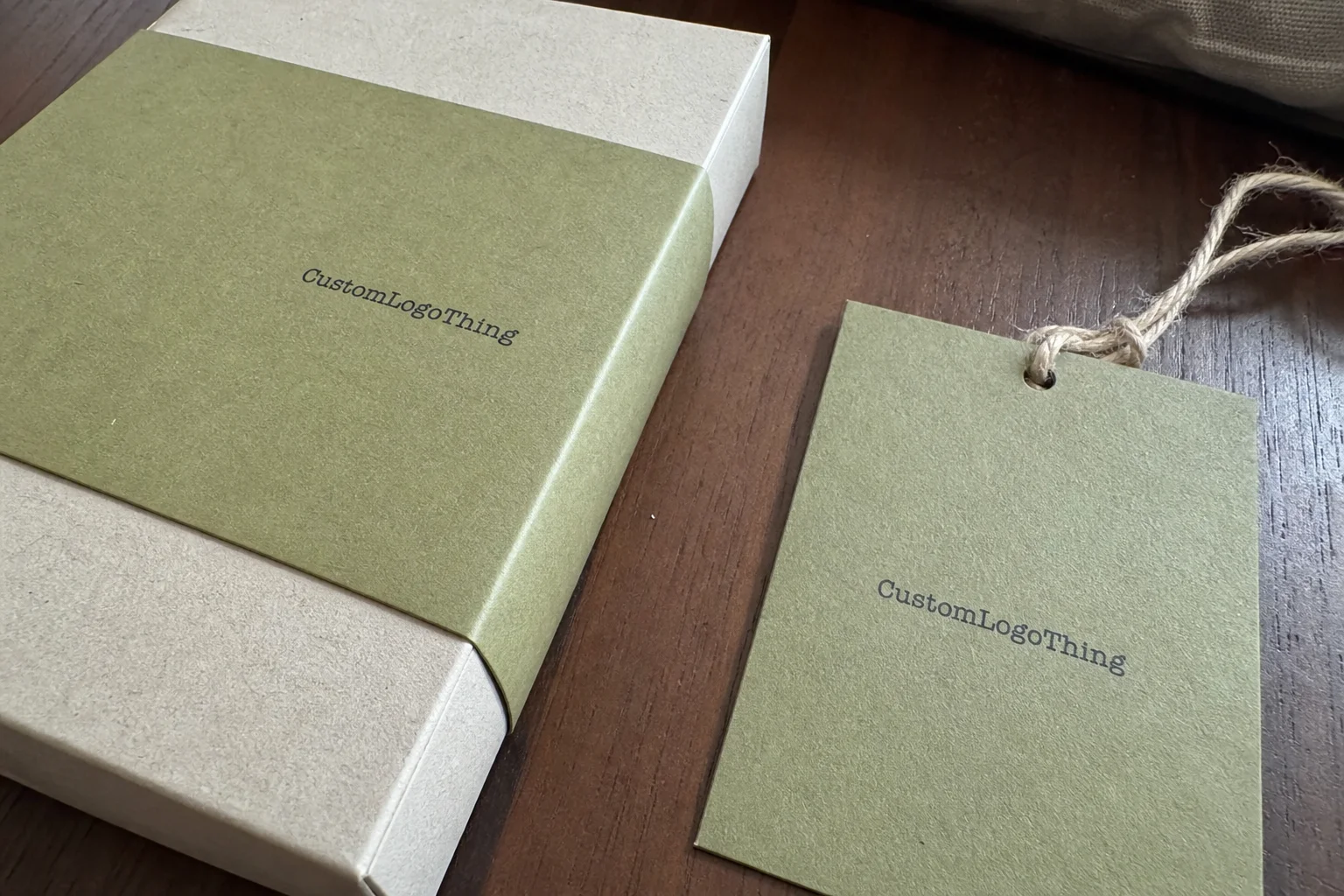
In apparel packaging, paper labels usually sit at the intersection of information and presentation. They can be hang tags, insert cards, adhesive-backed labels, folded tags, or short-run branded pieces tied to a garment or placed inside the pack. Their job is practical, but their effect is visual.
At the simplest level, they identify the item. At a better level, they organize the buyer’s first read of the product. That means size and price should be easy to find, the brand name should be legible, and the hierarchy should make sense in a second or less. If a customer has to search for the information, the label is already working against the package.
Paper labels also help brands segment product lines. A premium collection can use heavier stock and restrained typography while a value line uses a lighter, more economical spec. The garment may be similar, but the presentation can differ enough to support the brand architecture. That is one of the quieter advantages of paper over permanent textile labeling.
Another practical use: labels can carry barcodes, QR codes, batch identifiers, or promo copy without changing the garment itself. For brands moving inventory through warehouses, stores, and pop-ups, that flexibility is useful. It keeps the garment clean while still giving operations the data they need.
Paper labels are not just about aesthetics. They reduce friction in packing, support faster seasonal changes, and give brands a place to test messaging without reworking the apparel item itself. That mix of speed and control is why they continue to show up in retail packaging, mailer kits, and boxed apparel programs.
How the production process works from file to finish
The production flow is straightforward on paper, but the details matter. The process usually starts with artwork review, then moves to material selection, proofing, printing, finishing, inspection, and shipment. Each step can alter cost, color, texture, and turnaround.
Artwork review is where preventable mistakes are usually found. A supplier will check the file size, bleed, safe area, resolution, barcode contrast, and any variable data fields such as SKU, size, or price. If the file is not clean, the proof stage drags. If the data is incomplete, production can stop entirely.
Material selection decides more than appearance. Paper weight changes stiffness. Coating changes how ink sits. Uncoated stock absorbs ink and can soften colors. Coated stock usually produces sharper detail. Heavy board reads as more premium, but it can also increase rigidity and cost. That matters if the label needs to fold, hang, or sit flat against a garment.
Proofing is the point where many buyers misjudge the final result. A digital proof can look correct on a screen and still differ from the finished piece because the physical stock behaves differently. A warm, fibrous paper will mute color. A coated surface can make small type look cleaner. Foil, embossing, spot UV, and soft-touch lamination all change the hand feel as much as the visual finish.
Attachment style adds another layer of complexity. A string-tied hang tag follows one production path. A perforated insert label follows another. Adhesive-backed labels need the right adhesive grade, especially if they will be applied to folded apparel, tissue, or poly bags. The wrong adhesive can peel early, leave residue, or fail under packing pressure.
Specialty finishes are worth using only when they serve the product. A simple one-color tag is easy to produce and hard to break. Add foil, multiple inks, Custom Die Cutting, and a variable barcode system, and the process becomes more sensitive to error. More steps mean more inspection points. They also mean more opportunities for mismatch if the approval cycle is rushed.
A label should support the garment, not compete with it. The best versions make the package feel deliberate without turning it into a design exercise for its own sake.
Cost, pricing, MOQ, and what changes the quote
Pricing for custom paper labels usually comes down to six variables: stock, size, color count, finish, quantity, and variable data. The printed ink is only part of the bill. Setup, press time, finishing, inspection, and packing all sit underneath the unit price.
Minimum order quantities matter because fixed work has to be spread across the run. A 1,000-piece order can make sense for a limited drop, but it will almost always cost more per unit than a 5,000-piece order with the same spec. That is basic production math, and it still catches buyers off guard.
For planning purposes, a simple black-and-white paper tag on standard stock might land around $0.10 to $0.18 per unit at 5,000 pieces, depending on size, attachment, and supplier. A mid-tier branded label with coated stock or a custom shape may move into the $0.20 to $0.45 range. Premium builds with foil, embossing, soft-touch lamination, or multiple production steps can go higher. These are working ranges, not quotes. The final number depends on region, paper grade, and how much approval work is involved.
| Label Type | Typical Specs | Relative Cost | Best Use |
|---|---|---|---|
| Simple paper tag | Uncoated stock, one- or two-color print, standard cut | Lowest | Core basics, price-sensitive lines |
| Mid-tier branded tag | 300-350gsm stock, matte or gloss coating, custom shape | Moderate | DTC apparel, seasonal launches |
| Premium paper label | Soft-touch, foil, spot UV, complex die cut | Highest | Giftable apparel, premium collections |
Buyers should ask exactly what the quote includes. Some suppliers include basic proofing and packing. Others break those out separately. Freight is the item most often underestimated, especially on small runs. A cheap print price can become expensive once shipping, remakes, and extra proofs are added.
The lowest quote is not automatically the lowest cost. If a supplier has a weak proof process, poor packing, or frequent reprints, the real cost can exceed a slightly higher offer from a more disciplined shop. That matters in apparel, where timing often affects sell-through more than a few cents on the unit price.
Lead time and turnaround before you order
Simple paper label jobs can move quickly once the file is approved. A practical window is often 7 to 15 business days after proof approval for straightforward work. Specialty finishes, multiple versions, unusual cutting, or compressed schedules can extend that range.
Most delays happen before production starts. Missing barcode data, vague size tables, unapproved legal copy, or incomplete SKU lists slow proofing more than the printing itself. Brands that keep a master spec sheet for sizes, materials, and labeling text tend to reorder faster and with fewer mistakes. That document pays for itself after the first repeat order.
Shipping also deserves a buffer. If the labels are tied to a launch date, assume freight can move slower than the production schedule suggests. Paper labels are faster than many sewn-in alternatives, but specialty embellishment can erase that advantage if approvals drag or packing instructions are unclear.
For brands ordering Custom Labels & Tags alongside Custom Packaging Products, production should be aligned before anything enters the press queue. Labels are often ready first. The problem is that they are only one piece of the system. If the boxes, inserts, or outer mailers are late, the label loses some of its value simply because it cannot be deployed with the rest of the kit.
How to choose the right paper label spec for clothing
Start with the use case. A hang tag for a jacket is not the same as a small insert card for a folded tee. A promotional seal on a gift box is not the same as a warehouse size marker. If the label spec is not tied to the job, the result usually feels off.
Paper stock comes next. Heavier board often reads as more premium and usually holds shape better in transit. A 300-350gsm stock is common for tags that need to feel substantial in hand. Lighter stocks can work well for inserts or secondary messaging where bending is not a problem. The right choice depends on how the label travels through packing and fulfillment.
Shape and size should match the garment and the package. Oversized labels can overwhelm smaller items. Tiny labels can disappear on premium apparel. A square shape can support a minimal identity. A tall format can look more fashion-led. Either way, the proportions should follow the rest of the packaging design system rather than fight it.
Finish should be selective. Matte usually feels calmer and more contemporary. Gloss can make saturated color stand out, but it can also make the design feel louder than the garment deserves. Soft-touch creates a velvety hand feel. Foil and spot UV add contrast, but too much contrast can make a simple product look overdesigned. The best finish is the one that supports the brand position instead of inflating it.
Content needs to be checked with care. Confirm sizes, SKU numbers, barcode readability, legal wording, and any market-specific requirements. If sustainability claims are part of the label copy, they should be documentable. FSC-certified paper can support sourcing claims, but only if the supplier can provide the right chain-of-custody information. The certification body explains the system clearly at fsc.org.
Finally, think in systems. A good paper label should work with tissue, stickers, insert cards, mailers, or custom printed boxes already in the order. When every piece is speaking the same visual language, the package feels resolved instead of assembled.
Common mistakes buyers make
The most common mistake is overloading the label. Buyers try to fit brand story, price, size, barcode, care notes, promotional copy, and logo hierarchy into one small surface. The result is clutter. Readability drops, and the label ends up looking cheaper than it should.
The next mistake is choosing stock based on appearance alone. A paper sample can look elegant in a screenshot and still curl, scuff, or crease badly in handling. That becomes obvious in apparel packing, where labels are touched, stacked, and inserted multiple times before the customer opens the box.
Attachment details are another weak spot. A hole punched too close to the edge tears easily. An adhesive chosen without testing can peel during packing or leave residue on fabric or tissue. These are small production decisions, but they affect whether the label survives the route from print room to customer hands.
Artwork issues are common as well. Bleed, safe zones, barcode contrast, and tiny type are frequently approved too quickly. A barcode that looks fine in a digital proof can still fail on the production floor. That is not an edge case. It happens often enough that barcode testing should be treated as a normal step, not a nice extra.
There is also a mismatch problem. A premium foil tag can feel out of place on a low-margin basic tee. More decoration does not automatically mean more value. If the label speaks louder than the garment, the package loses credibility.
Durability matters in transit. If labels are packed with cartons or inserted into kits, it helps to think about handling stress the way distribution teams do. Guidance from groups like the ISTA can be useful here, even if you are not testing the label as a standalone shipping product. The point is simple: packaging does not live in a vacuum.
Practical tips for cleaner branding and better results
Use the label as a signal, not a summary. One clear hierarchy is usually better than trying to say everything at once. Brand name first. Product or collection second. Operational details after that. If the structure is clean, the label feels intentional without becoming crowded.
Sample before committing if the spec is new. A small run can reveal more than a proof sheet. Some papers photograph well but feel too flimsy in hand. Others hold ink beautifully and then crease too easily after folding or packing. Physical testing catches that before it becomes a production problem.
Keep a master spec sheet for repeat orders. It is not glamorous, but it avoids drift. Record the exact stock, finish, cut size, print method, attachment type, and approved artwork version. The next order should not require anyone to reconstruct decisions from memory.
Packaging buyers often pay close attention to the box and treat the label as secondary. In apparel, the label is often the first proof that the brand has thought through the entire package.
Think about the full packaging stack. Tissue, mailer, sticker seal, insert card, and label should feel related. If the outer kit uses muted colors and the tag uses an aggressive metallic treatment, the experience breaks. Cohesion matters more than decoration density.
If the line includes gift sets or premium bundles, compare the label against the rest of the unboxing sequence. A label should support the garment and the container, not compete with either one. That is especially true for brands using custom printed boxes as part of the same presentation system.
How to brief a supplier for the first order
Start with a short, specific brief. Include label size, shape, stock preference, print colors, finish, quantity, garment type, and attachment method. If the label will be used on a tee, hoodie, jacket, or bundled set, say so. Context matters because the same paper spec can behave differently across product types.
Prepare the artwork before asking for pricing. Finalize logo files, barcode data, size runs, and any mandatory wording. If variable data is involved, define exactly how many versions are needed. That prevents avoidable proof cycles and keeps production moving.
Ask what the quote includes. Does it cover setup, proofing, finishing, packing, corrections, and freight? If the answer is vague, comparisons between suppliers become meaningless. The cheapest line item can become the most expensive order once extras appear.
For premium launches or tight timing, request a sample or at least a careful digital mockup before sign-off. That extra check is cheap insurance. It also helps you see how the label sits inside the wider product packaging system before volume production begins.
The smartest first order is often not the most elaborate one. It is the one that teaches you something useful about feel, readability, handling, and cost structure. Use the first run to see how the label performs on actual garments, in real packing conditions, and under real shipping pressure. Then revise the next order from evidence rather than guesswork. That is usually how custom paper labels move from a line item to a reliable part of brand presentation.
Frequently asked questions
What are custom paper labels used for in clothing packaging?
They identify the garment, support brand presentation, and display practical details such as size, price, SKU, barcode, or care information. In apparel, they are commonly used as hang tags, insert labels, seals, or branded packaging elements.
Are custom paper labels better than fabric labels for clothing?
Neither is universally better. Paper labels are usually stronger for branding, pricing, and presentation, while fabric labels are better for permanent garment information. Many brands use both because each serves a different role.
What affects the price of custom paper labels the most?
Quantity, paper stock, print coverage, specialty finishes, shape complexity, and variable data all influence pricing. Lower quantities usually raise unit cost because setup and production expenses are spread across fewer pieces.
How long does it usually take to produce custom paper labels?
Timing depends on proof approval, finishing, and shipping, but paper labels are often faster than many sewn-in alternatives. Simple jobs can move in about 7 to 15 business days after approval, while complex finishes or late changes can extend that window.
What should I check before approving a paper label proof?
Check spelling, sizes, barcodes, bleed, safe margins, print color expectations, and attachment details. Confirm that the label size and finish still work with the garment and packaging once produced at full scale, because a proof that looks right on screen can still fail in production.