Buyer Fit Snapshot
| Best fit | Custom Paper Mailers with Logo projects where brand print, material claims, artwork control, MOQ, and repeat-order consistency need to be specified before quoting. |
|---|---|
| Quote inputs | Share finished size, material target, print colors, finish, packing count, annual reorder estimate, ship-to region, and any compliance wording. |
| Proofing check | Approve dieline scale, logo placement, barcode or warning zones, color tolerance, closure strength, and carton packing before bulk production. |
| Main risk | Vague material claims, crowded artwork, missing packing details, or unclear freight terms can make a low unit price expensive after revisions. |
Fast answer: Custom Paper Mailers with Logo: Film, Print, MOQ, and Carton Packing should be specified like a repeatable production item. The safest quote records material, print method, finish, artwork proof, packing count, and reorder notes in one written spec.
Production checks before approval
Compare the actual filled-product size with the drawing, then confirm tolerance on folds, seals, hang holes, label areas, and retail display edges. Reserve space for logos, QR codes, warning copy, and material claims before decorative graphics fill the panel.
Quote comparison points
Review material grade, print process, finish, sampling route, tooling charges, carton quantity, and freight assumptions side by side. A quote is only useful when the supplier can repeat the same color, closure quality, and packing count on the next order.
Custom Paper Mailers with Logo: Smart Sustainable Guide
Custom Paper Mailers with logo do more than carry a product from one address to another. They set the tone before the customer has even touched the item inside, and that first impression can feel crisp and intentional or thin and forgettable. Packaging lives in that awkward but powerful space between operations and branding, so the outer shipper deserves real attention instead of a last-minute file upload.
Used well, Custom Paper Mailers with logo give ecommerce brands, subscription programs, and retail replenishment teams a lighter shipping format that still carries a clear brand presence. They can also support a cleaner sustainability message, though only if the paper stock, print coverage, and sizing actually suit the product. Paper on its own does not solve packaging problems. A poorly chosen spec just turns into expensive scrap and a slower pack line.
The useful way to think about custom paper mailers with logo is practical rather than decorative. The material choice affects cost, the closure affects speed, the dimensions affect protection, and the print approach affects how the brand feels the moment the parcel lands. I have sat through enough sample reviews to know that the pretty option is not always the one that holds up in a real packing room, and that is kinda the whole point here.
Custom Paper Mailers with Logo: Why They Punch Above Their Weight
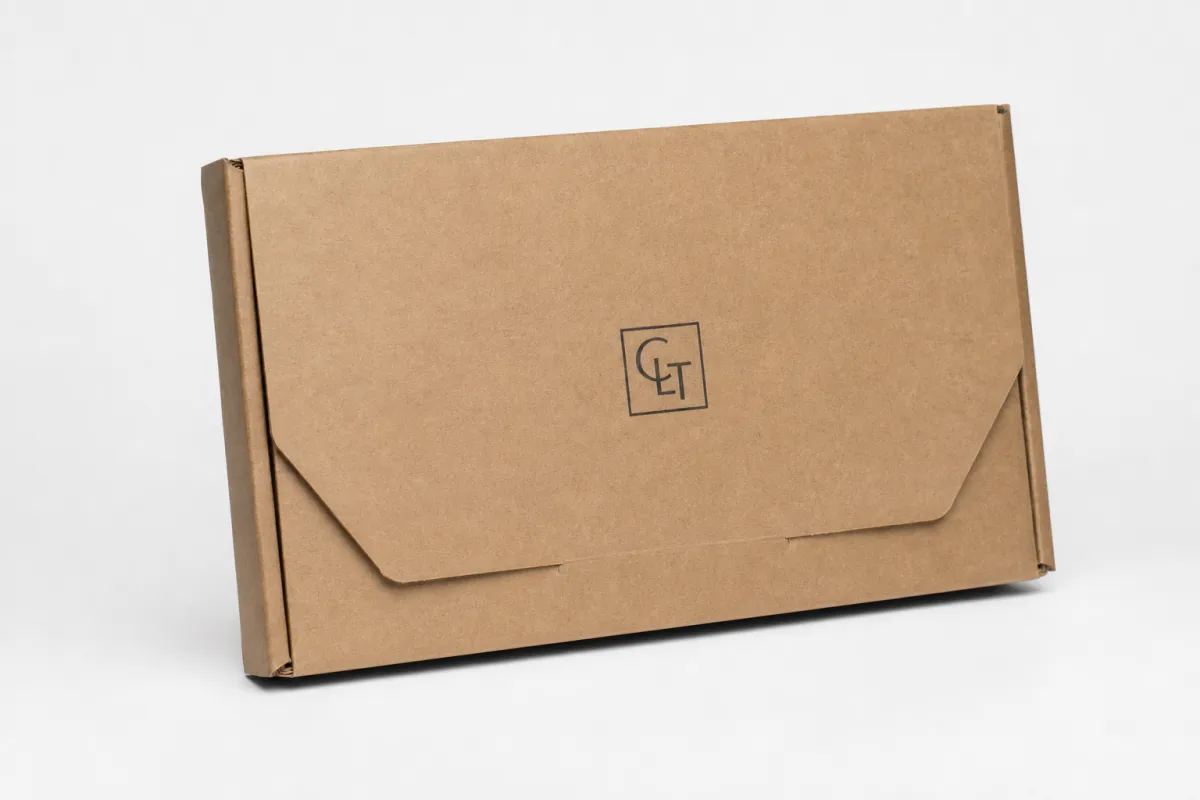
People still underestimate the outer mailer, and that mistake shows up fast in unboxing. The customer sees the package before they see the product, and that means the shipper becomes part of the brand memory whether anyone planned for it or not. custom paper mailers with logo turn an ordinary delivery into branded packaging, which helps apparel, accessories, sample packs, and flat retail goods feel more considered from the start.
Paper-based mailers feel different from standard poly mailers. They photograph well, they have a more natural surface, and they fit neatly into brand stories that talk about recycled fiber or lower plastic use. Compared with custom printed boxes, they are often lighter, easier to store, and less expensive for many flat or soft goods. That does not make them a universal answer. It simply makes them a very useful middle ground for a lot of product packaging programs.
The real value is not only visual. custom paper mailers with logo can lower dimensional weight, simplify packout, and cut down on the extra material that creeps into box-and-fill setups. A mailer that fits the product well saves room in storage, reduces void fill, and keeps the line moving without extra handling. Good packaging design is often quiet like that. It trims waste without making a speech about it.
The outer shipper is not decoration. It shapes the product experience, affects shipping cost, and changes the chance of a clean arrival. Treat it as part of the job, not an afterthought.
There is a sustainability angle here, though it needs careful handling. Paper mailers can be a stronger choice when they use recycled or FSC-certified fiber, avoid plastic lamination, and fit the item closely enough to limit waste. They are not automatically recyclable in every market, and they are not a great fit for every route or every product. Wet lanes, heavy items, and fragile goods can still demand a different construction. Reality always gets the final vote.
For brands that want consistency across shipping formats, custom paper mailers with logo can sit comfortably alongside Custom Packaging Products without forcing every order into a box. That matters because different SKUs need different shippers. A soft accessory, a small apparel drop, and a rigid beauty kit should not all be handled the same way just because one mockup looked nice on a screen.
The strongest use case is easy to define: flat, light, and not easily crushed. In that lane, custom paper mailers with logo create a polished brand moment without the cost and bulk of a carton. If the product needs extra structure, it is worth comparing the option against Custom Poly Mailers or even custom printed boxes. Better packaging decisions usually come from comparison, not loyalty to one material.
What Custom Paper Mailers with Logo Are and How They Work
custom paper mailers with logo are paper-based shipping mailers sized for lightweight retail items, apparel, flat documents, and other products that do not need a rigid carton. The outer face carries your logo or artwork, and the format folds, seals, and ships like a mailer instead of a box. That keeps storage compact and helps warehouses or 3PLs move through orders with less handling.
The structure usually includes a paper stock, scored folds or side seams, a closure area, and sometimes a tear strip or peel-and-seal adhesive. Kraft paper gives a natural look. Reinforced or coated face stocks can improve print appearance and handling. Some versions add inner barriers or liners for strength or moisture resistance, though once mixed materials enter the build, the recycling story deserves a closer look.
Print choice changes the final feel more than many buyers expect. A one-color logo on kraft can feel restrained and premium. Full-coverage graphics make the mailer act like a moving billboard, yet they also raise cost and can erase the raw paper character that some brands want. Spot printing often keeps the look clean and the budget under control. All-over print can work well for package branding if the artwork has enough discipline to hold the design together. Strong packaging design is not about loading more ink onto the surface. It is about making the message readable in a few seconds.
custom paper mailers with logo also behave differently once they enter the workflow. They get packed, sealed, stacked, carted around, shipped, opened, and then discarded or recycled. Every one of those steps creates a chance for failure. I have seen a mailer look excellent on press and then slip in the real world because the adhesive did not love humid storage. A beautiful mailer that tears at the seal, warps in moisture, or scrapes open in transit still ends up as a bad spec. The customer usually remembers two things: whether the package arrived in good shape and whether the brand felt organized.
Packaging teams often run transit checks before approving a production order for a reason. Tests like ISTA drop and vibration standards provide a useful frame for evaluating handling stress. If you want a place to start, the ISTA testing standards site offers a practical reference. And if the sustainability story depends on responsible fiber sourcing, the FSC certification system is worth reviewing before a big print run goes into motion.
custom paper mailers with logo are not limited to ecommerce. Retail replenishment, event kits, wholesale sample packs, and subscription programs use them because the format is efficient. The right version can look polished enough for consumer delivery and still move through a warehouse line at a steady pace. That mix of cost control, speed, and presentation is why they keep showing up in packaging programs that care about more than one metric at a time.
Custom Paper Mailers with Logo Cost, Pricing, and MOQ Basics
Pricing is where many buyers start guessing, and guesswork gets expensive quickly. The cost of custom paper mailers with logo usually depends on paper grade, size, print coverage, color count, closure style, reinforcement, and whether the dimensions are standard or fully custom. Quantity changes the equation too. A 1,000-piece order and a 10,000-piece order may use the same artwork, but they do not live in the same pricing bracket.
For practical budgeting, standard kraft-style custom paper mailers with logo often sit around $0.18-$0.32 per unit at mid-size quantities. Fuller coverage or upgraded constructions can move into the $0.28-$0.55 per unit range. Smaller runs usually cost more per unit because setup gets spread across fewer pieces. Custom sizes, heavier stocks, tear strips, and stronger adhesive can nudge the price higher. A few cents per unit sounds minor until you multiply it across tens of thousands of shipments.
MOQ varies from supplier to supplier. Some will support lower minimums around 500 to 1,000 pieces for simpler builds, though the unit price is usually higher. Many custom paper mailers with logo programs become more efficient between 3,000 and 10,000 pieces, especially if the brand can live with one or two standard sizes. Under that level, flexibility costs more. Over that level, the unit price can improve while storage and cash flow demand more attention. Neither side is wrong. The right answer depends on inventory turnover.
| Option | Typical MOQ | Typical Unit Cost | Best For | Main Tradeoff |
|---|---|---|---|---|
| Unprinted kraft mailer | 500-1,000 | $0.12-$0.20 | Low-cost shipping, internal use, basic protection | Weak brand impact |
| One-color logo mailer | 1,000-3,000 | $0.18-$0.32 | Apparel, subscription orders, clean branded packaging | Limited design complexity |
| Full-coverage printed mailer | 3,000-10,000 | $0.28-$0.55 | Strong package branding, campaign launches, retail packaging | Higher setup and print cost |
| Reinforced or premium-finish mailer | 3,000+ | $0.32-$0.60 | Higher-touch presentation, heavier handling, better unboxing | More material cost and sometimes slower lead time |
| Custom printed boxes | 1,000-5,000 | $0.40-$1.20 | Rigid protection, premium product packaging, fragile goods | More material, higher freight, more storage |
The table gives a useful starting point, not a quote. Freight, artwork prep, sampling, tooling, and packaging inserts can change the total fast. A low unit price that hides a painful freight line is not a good deal. The same goes for a bargain spec that causes overpacking, damage claims, or rework because the mailer was undersized from the start.
That is why cost per shipped order matters more than cost per mailer. If a slightly larger mailer reduces returns, speeds the line, and avoids damage, it can be cheaper overall. If a premium spec slows fulfillment or eats up warehouse space, the "cheap" unit turns into a headache. custom paper mailers with logo should support the workflow, not create one more thing for the team to work around.
For brands comparing formats, it helps to benchmark against other Custom Packaging Products rather than treating one packaging style as the automatic default. A lot of teams end up using more than one shipper: one for lightweight apparel, another for bulkier items, and a different one for premium retail kits. That mix is normal. Good packaging programs usually work that way.
Production Steps, Timeline, and Lead Time for Custom Paper Mailers with Logo
Production is straightforward once the specs are locked, but there are enough moving parts to create delays if the inputs are vague. Most custom paper mailers with logo orders follow the same path: request a quote, confirm size and structure, send artwork, review a proof, approve a sample if needed, move into production, inspect, and ship. Nothing unusual there. The problems usually come from unclear instructions, not from the process itself.
Artwork is often the first place where things slow down. Low-resolution logos, missing dielines, and unclear print areas all create proofing back-and-forth. Color matching can stretch the timeline too, especially when a brand expects a screen color to land exactly the same on paper. It often will not. Paper takes ink differently than a monitor or a coated label, and a good proof review needs to account for that instead of pretending the surface does not matter.
For timeline planning, simple repeat custom paper mailers with logo orders can sometimes move in roughly 10-15 business days after proof approval, while fully custom sizes, multi-color graphics, or new constructions often need 15-25 business days or more. That covers production only. Transit time is separate and can add several days depending on the source and destination. People mix those two clocks all the time, then act surprised when freight does not teleport itself to the warehouse.
Production and shipping need to be treated as different stages. Lead time covers manufacturing. Transit covers movement. If a launch, restock, or seasonal promotion depends on the order, build buffer into both. A package that lands a week early is useful. A package that arrives late with no room for inspection or relabeling becomes a problem fast.
These are the delay points worth watching:
- Incorrect dimensions because the product was measured with the retail carton instead of the actual packed item.
- Artwork sent without bleed, safe zones, or a usable vector logo.
- Slow proof review cycles across marketing, operations, and procurement.
- Last-minute changes to logo placement, coating, or closure style after the job is already moving.
- Unclear delivery destination, which creates avoidable freight confusion.
If you want a smoother order, prepare one spec sheet before asking for quotes. Include product dimensions, target quantity, logo files, preferred material, closure type, delivery deadline, and whether the order is for ecommerce, retail packaging, or a mixed use case. That single sheet saves more time than a long chain of vague emails. It also makes comparing custom paper mailers with logo against other shipper types much easier.
Choosing the Right Specs for Custom Paper Mailers with Logo
Spec selection is where custom paper mailers with logo either work well or turn into a lesson in wishful thinking. Start with the product, not the art. Measure the item as it ships, then add room for tissue, inserts, labels, and a clean seal. If the mailer is too tight, the seams take stress and the package looks swollen. Too loose, and you pay for empty volume while the presentation suffers. Neither outcome helps the brand.
Sizing Without Waste
A good rule is to choose the smallest mailer that still allows the product to sit flat without forcing bends or compression. For apparel, that may mean a flatter format with enough width for folding. For flat accessories or stationery, a slim mailer often works well. For multi-item kits, leave enough width so the order can be packed without forcing the closure or creasing the front panel. custom paper mailers with logo should fit the packing process instead of forcing the team to perform extra steps every time an order goes out the door.
Materials, Closure, and Print Strategy
Kraft paper gives a natural, straightforward look and usually supports solid branding without feeling overworked. Recycled-content paper can strengthen a sustainability story if the sourcing is documented and the construction stays simple. A coated face can sharpen graphics, though it may soften the raw paper feel that some brands prefer. For closure, self-seal adhesive is common because it speeds packout. Tear strips help with opening. Moisture resistance matters if the mailer will face variable weather or longer transit lanes. Each add-on should earn its place, because every extra feature can affect recyclability and cost.
Logo placement should follow the brand goal. A centered front-panel logo gives a clean, safe look. A repeat pattern or all-over print creates stronger package branding. A flap-only mark can feel understated and polished. custom paper mailers with logo do not need to shout if the rest of the brand already has a clear voice. Restraint often reads more expensive than a wall of graphics, and that lesson shows up again and again in packaging design.
Material choice should also reflect the way the mailer will be handled. If the route is rough, consider reinforced seams or a heavier paper weight. If the order is light and mostly moving through indoor handling, a simpler structure may be enough. If sustainability is the main claim, ask for the full construction details: paper basis weight, adhesive type, coatings, and any mixed-material components. Recycling claims only hold up when the build supports them.
The practical balance is clear. A tighter, simpler spec often reduces waste and keeps throughput healthy. A decorative spec may look stronger in photos but can cost more and perform worse in actual operations. From a buyer's point of view, custom paper mailers with logo should solve fit, brand impression, and shipping reliability at the same time. If one of those fails, the package loses value quickly.
Common Mistakes When Ordering Custom Paper Mailers with Logo
The first mistake is sizing by guesswork. A surprising number of people order custom paper mailers with logo based on a product photo or a rough carton estimate, then discover the mailer is too short, too deep, or too narrow once packing starts. That leads to bent corners, extra inserts, or a re-order. It is a preventable mistake, which makes it especially frustrating.
The second mistake is overdesigning. Buyers often assume more colors, more coverage, and more effects automatically produce better branding. That is not how packaging usually behaves. A clean logo on a solid paper surface can look sharper than a crowded design with too much ink and too many claims. If the goal is branded packaging that feels premium, clarity usually beats clutter. custom paper mailers with logo are already doing a lot of work; they do not need extra decoration to prove the point.
The third mistake is lazy proofing. If the artwork ignores fold lines, seal zones, barcode space, or the actual print area, the final result can look off-center or become hard to read. That gets painful fast if the mailer also carries product information, compliance text, or a promo code. If the proof looks wrong, slow down and correct it. Reprints cost more than patience.
The fourth mistake is greenwashing. A paper mailer is not automatically sustainable just because it contains paper. Mixed layers, heavy coatings, laminated finishes, and unknown adhesives can complicate recycling. If the sustainability claim needs to stand up to scrutiny, ask for a material breakdown and source verification. The fiber may be fine, but the full construction still has to back up the claim.
The fifth mistake is forgetting the warehouse. Storage space matters. Sealing speed matters. Stack behavior on the packing table matters too. If the mailer saves material but slows fulfillment, you may have created a labor problem in order to solve a packaging problem. That is not a win. Compare the full workflow before placing a large order, especially if the shipment will be handled by a 3PL or packed inside a tight in-house operation.
Sometimes the better answer is to compare the paper option against other formats instead of forcing one decision. A sturdy apparel drop may do well in custom paper mailers with logo. A wetter or more exposed route may call for a different structure, and a fragile retail set may need custom printed boxes instead. The point is not to be loyal to one packaging style. The point is to ship the product well.
It also helps to run a few sample packs through the full journey. Pack them, drop them, stack them, ship them, and open them. A nice-looking mockup is not proof of performance. It is only a mockup. Real handling is where custom paper mailers with logo either earn repeat orders or quietly fall out of the program.
Expert Tips and Next Steps for Custom Paper Mailers with Logo
Start with one hero SKU. There is no reason to engineer custom paper mailers with logo for every product variant on day one unless you want procurement to become a full-time hobby. A pilot run exposes fit issues, closure strength, and pack speed quickly. It also shows whether the logo placement still looks good once the mailer is filled instead of sitting flat in a render.
Order samples from at least two suppliers. Compare print sharpness, paper hand-feel, seam quality, and how the closure behaves after repeated handling. One sample may look better but pack worse. Another may do the opposite. That comparison keeps the decision grounded in actual use rather than a sales sheet. For product packaging, the sample is usually where the truth shows up.
Prepare a simple spec sheet before requesting quotes. Include product dimensions, target quantity, artwork files, closure preference, material target, budget range, and delivery deadline. If you already know the volume pattern, say so. A steady weekly shipment and a seasonal spike should not use the same purchasing logic. custom paper mailers with logo are easier to buy well when the supplier gets the right inputs from the beginning.
Here is the buying sequence I would use:
- Measure the product as it ships, not as it sits on a shelf.
- Pick two realistic material options, not six fantasy options.
- Request a quote with the same artwork and the same quantity for both.
- Ask for a sample or production proof before full approval.
- Test one sample through packing, transit, and opening.
- Compare cost per shipped order, not just the unit price.
If your team is deciding between paper and plastic, compare the result against Custom Poly Mailers as a benchmark rather than assuming one format wins on every metric. Poly can handle moisture well and sometimes costs less, while paper can deliver a stronger natural look and a different brand feel. custom paper mailers with logo make sense when the product type, shipping route, and brand story all line up. They are not magic. They are a tool that works best in the right conditions.
The practical takeaway is simple: measure the packed item, choose the lightest construction that still protects it, and ask for samples before you commit to a full run. That one discipline keeps custom paper mailers with logo from becoming a marketing expense that gets in the way of fulfillment. If the current shipper already protects the product and keeps the brand feeling deliberate, keep it. If it does not, make the mailer earn its place with fit, print clarity, and a workflow the team can actually live with.
Used thoughtfully, custom paper mailers with logo can tighten logistics, improve package branding, and give customers a more polished first impression without sending the budget into a bad place. That is the sweet spot: enough structure to protect the order, enough print to make the brand recognizable, and enough discipline to avoid paying for features nobody asked for. custom paper mailers with logo work best when they are chosen like a packaging professional would choose them, not like a design mood board wandered into procurement.
How do custom paper mailers with logo compare to poly mailers for apparel?
custom paper mailers with logo usually create a more premium, more natural first impression, which helps if presentation is part of the sale. Poly mailers can be cheaper per unit and often handle moisture better, so the better choice depends on the product, the shipping route, and how much the brand cares about the outer appearance versus the lowest shipping cost.
What is the usual MOQ for custom paper mailers with logo?
There is no universal minimum, because MOQ depends on size, stock, print method, and whether the design is standard or fully custom. In practice, custom paper mailers with logo often start around 500 to 1,000 pieces for simpler specs, while more customized jobs usually make more sense at 3,000 pieces and up.
How long does production take for custom paper mailers with logo?
Production time depends on proof speed, artwork readiness, order complexity, and factory workload. A straightforward repeat run of custom paper mailers with logo may move in roughly 10-15 business days after proof approval, while a new structure or more complex print job can take longer. Shipping time is separate and should be counted separately.
What artwork do I need to order custom paper mailers with logo?
A clean vector logo file is the safest start, plus your brand colors, preferred placement, and a rough idea of how much coverage you want. If a dieline is available, use it. It helps align the artwork to folds, seams, and seal areas so the final custom paper mailers with logo do not rely on guesswork and optimism.
Are custom paper mailers with logo actually recyclable?
Sometimes yes, but not always. It depends on the exact paper stock, coatings, adhesives, and local recycling rules. If recyclability matters, ask for the full material breakdown before you approve custom paper mailers with logo and avoid unnecessary lamination or mixed-material add-ons that make disposal harder.

